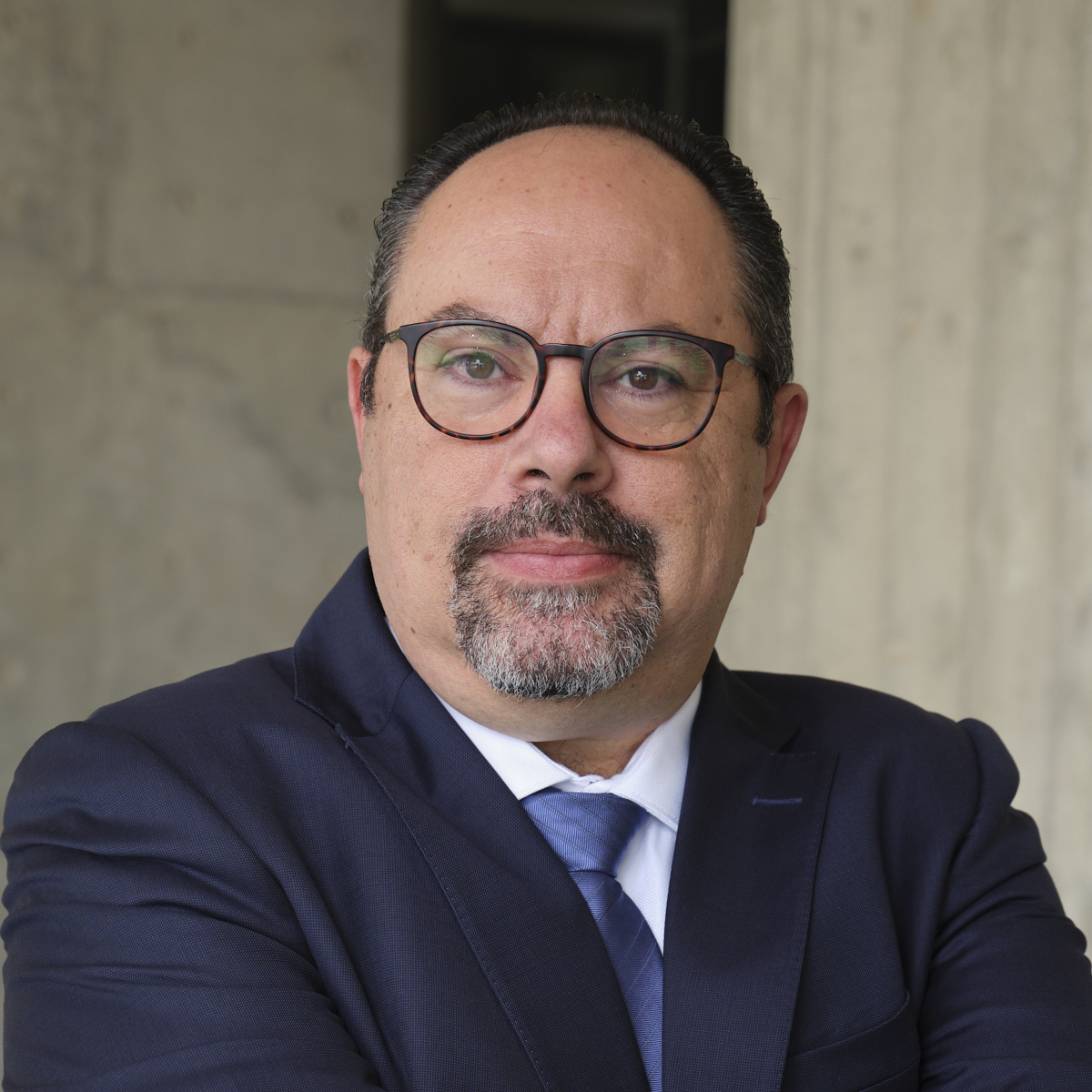
Vasos Vassiliou is an Associate Professor in the Department of Computer Science at the University of Cyprus and Founding Academic Member & Research Group Leader at the Smart Networked Systems (SNS) Multidisciplinary Research Group within the CYENS Research Center. His work focuses on systems and protocols for improving network performance, reliability, and security in next-generation communication systems (5G/6G), with a strong emphasis on distributed AI/ML techniques, device-to-device (D2D) networking, IoT security, programmable metasurfaces, and intelligent network resource management. Department of Computer Science, University of Cyprus CYENS Research Center, Cyprus His research spans multiple subfields including D2D communication (interference management, device discovery), IoT security (blockchain solutions, intrusion detection), network optimization (traffic prediction, power management), and programmable metasurfaces for advanced beam steering. Recent projects like ERMIS (3D Indoor Positioning), ADROIT-6G (DAI-driven architecture), and METACITIES (digital twins/metaverse) demonstrate his leadership in cutting-edge research. His publications reveal a strong focus on distributed intelligence , machine learning applications , and security protocols across wireless systems. He has supervised multiple PhD students to completion and actively contributes to IEEE/ACM as Senior Member. IEEE Senior Member ACM Senior Member Teaching responsibilities include core courses like Computer Networks and specialized postgraduate modules on IoT Networks .
Prof. Nearchos Paspallis is the Head of the School of Sciences and Professor in Mobile and Distributed Systems at UCLan Cyprus. He holds a PhD in Computer Science from the University of Cyprus (2010) and has extensive academic leadership roles, including Deputy Head of School (2020–2022) and Chair of the Teaching and Learning Enhancement Committee (2018–2023). His teaching responsibilities include leading the BSc (Hons) Computing program and delivering modules on software development, mobile computing, and algorithms. Education: PhD Computer Science (University of Cyprus, 2010), MSc Computer Science (University of California, 2002), BEng/MEng Computer Engineering and Informatics (University of Patras, 2001). His research focuses on software engineering , distributed systems , and mobile computing , with recent work on machine learning applications, context-aware systems, and computer science education. He has pioneered initiatives like Code Cyprus to inspire youth in coding and co-led EU-funded projects such as WIDERa (€4.2M) and MentorME (€296K). Key Awards: Shortlisted for 2024 Outstanding Contribution award, Best Paper (2016), Fulbright Scholarship (2001). Prof. Paspallis has supervised multiple research projects, including a PhD on MMOG backend architectures. His outreach efforts extend to judging hackathons and robotics competitions, emphasizing STEM engagement.
Prof. Sitkiye Kuter is a faculty member in the Department of Educational Sciences at Eastern Mediterranean University's Faculty of Education. She holds a PhD in English Teaching from the same university (2009) and prior degrees from Marmara University (BA, 1987) and Eastern Mediterranean University (MA, 1998). Her research focuses on curriculum development, democratic education, teacher education, and learner autonomy with over 20 years of academic contribution. Education Background: BA in English Language Education, Marmara University (1983-1987) MA in English Language Education, Eastern Mediterranean University (1983-1998) PhD in English Teaching, Eastern Mediterranean University (2009) Research interests span critical pedagogy, multicultural education, inquiry-based learning, and technology integration in teacher training. She has supervised 17 theses including studies on educational software evaluation, democratic culture awareness in schools, and teacher self-efficacy perceptions. Her recent publications (2013-2025) explore topics like curriculum design from peace education perspectives, democratic school culture analysis, and collaborative learning strategies. Current ongoing studies investigate academic resilience in preparatory school students and environmental awareness through coding education. Teaching and administrative roles include contributions to the Faculty of Education's strategic planning and curriculum development initiatives. She maintains active involvement in academic mentoring programs and teacher professional development.
Prof. Dr. SEVİNÇ TAŞTAN serves as Department Head of Nursing at Eastern Mediterranean University's Faculty of Health Sciences in Northern Cyprus. With over two decades of academic and clinical experience, she has established herself as a leading scholar in nursing education, surgical nursing, and patient care. Her leadership extends across multiple research domains and educational initiatives within the nursing discipline. PhD in Surgical Nursing from Gülhane Military Medical Academy (2005) MA in Nursing from Dokuz Eylül University (1999) BA in Nursing from Gülhane Military Medical Academy (1993) Professor Taştan's research spans multiple critical areas of contemporary nursing practice, with significant contributions to surgical nursing, geriatric care, disaster preparedness, and nursing education methodologies. Her work demonstrates particular expertise in developing and evaluating innovative educational approaches for nursing students and practitioners. She has pioneered research on the application of simulation techniques, flipped classroom models, and technology-enhanced learning in nursing education, while maintaining strong clinical connections through studies on patient outcomes in cardiac surgery, bariatric care, and chronic disease management. Her recent work increasingly focuses on mental health aspects of nursing practice and patient care. Analysis of Professor Taştan's publication record reveals a sustained trajectory of high-impact research across multiple nursing subdisciplines. Her work consistently appears in SCI and SSCI-indexed journals, demonstrating methodological rigor through numerous randomized controlled trials and cross-sectional studies. A notable pattern shows her evolving focus from foundational surgical nursing research toward broader applications in nursing education, geriatric care, and mental health integration. Her recent publications particularly emphasize innovative educational methodologies, disaster preparedness, and quality-of-life outcomes across diverse patient populations. 18. Nöroşirürji Hemşireliği Kongresi, Sözlü Bildiri Birincilik Ödülü (2024) Multiple EMU Research Incentive Awards (2018, 2020, 2021) 15. Cerrahi Hemşireliği Kongresi, Sözlü Bildiri İkincilik Ödülü (2016) Multiple GATA Askeri Sağlık Bilimleri Üçüncülük Ödülleri (2006-2015) Professor Taştan has supervised numerous graduate students through their thesis work, including PhD candidates like ÖZLEM AYDOĞDU (2023) and multiple master's students researching diverse aspects of nursing practice. Her mentorship extends to ongoing supervision of students examining professional commitment among surgical nurses, occupational error tendencies, and aromatherapy applications in medical procedures. Her research has attracted significant institutional support, evidenced by multiple EMU Research Incentive Awards recognizing the quality and impact of her scholarly contributions. She has also contributed to major collaborative research projects focused on surgical pathways, medication use, and standardized nursing terminologies. While specific laboratory affiliations aren't explicitly detailed in the available information, Professor Taştan's work is closely connected to clinical settings including cardiac surgery units, rehabilitation facilities, and community health contexts. Her research often involves collaboration with multidisciplinary teams across Eastern Mediterranean University's health science faculties and clinical partners in Northern Cyprus. She has been instrumental in developing educational simulation approaches that likely utilize campus-based simulation laboratories for nursing education.
Prof. Mahmood Hosseini is a Faculty Member in the Department of Civil Engineering at Eastern Mediterranean University (EMU). His research focuses on structural engineering, earthquake resilience, seismic retrofitting, and sustainable materials. He holds a PhD from Islamic Azad University and an MS from the University of Tehran. He has supervised numerous theses, including ongoing PhD work on building encasement techniques and master’s projects on topics like seismic behavior of RC buildings and sustainable construction materials. His research interests include advanced damper systems, structural dynamics, and disaster-resilient infrastructure. Notable contributions include studies on multi-stage yielding dampers, steel tube-based energy dissipation systems, and innovative structural systems for low-rise buildings. He has also explored the use of lightweight materials like hair-reinforced clay for sustainable construction. Prof. Hosseini’s work spans experimental, numerical, and analytical assessments, addressing challenges in both theoretical and applied aspects of civil engineering. His recent publications highlight advancements in seismic isolation strategies, progressive collapse analysis of tall buildings, and machine learning applications for building transparency requirements.
Assoc. Prof. Dr. HÜLYA FIRAT KILIÇ is an active faculty member in the Nursing Department at Eastern Mediterranean University's Faculty of Health Sciences. She maintains her office at SBF 134 - 224 and can be reached at +90 392 630 2142 or hulya.firat@emu.edu.tr. Her educational background includes a PhD (2008-2014), MS (2008), and BS (1998-2003) in Nursing from Marmara University and Hacettepe University. Dr. Kılıç's research focuses on critical areas of nursing including health literacy, patient safety, geriatric care, compassion in nursing, and environmental awareness in healthcare. Her work particularly emphasizes nursing education and student development, examining how factors like compassion, spirituality, and environmental awareness impact nursing practice and patient outcomes. Her publication record shows consistent output with significant contributions in 2022-2024 across high-impact journals in nursing and healthcare. Her research demonstrates strong methodological diversity, employing randomized controlled trials, cross-sectional studies, and correlational designs to address important questions in nursing practice and education. EMU Research Incentive Award (2021) EMU Research Incentive Award (2020) Dr. Kılıç has supervised numerous graduate students through their thesis work, demonstrating her commitment to mentoring the next generation of nursing professionals. Her supervision spans both PhD and Master's level research across diverse nursing topics. She has also contributed to nursing reference books, including chapters on bowel management procedures and prone positioning for COVID-19 patients.
Dr. Eleftheria Galatou is an Assistant Professor at the University of Nicosia , affiliated with the School of Life and Health Sciences and the Department of Health Sciences . She holds a PhD in Molecular Physiology and Pharmacology from Aristotle University of Thessaloniki. Her research focuses on molecular mechanisms in drug delivery, pharmacogenomics, cardiovascular precision medicine, and the role of PPAR receptors in heart failure. Education : Bachelor’s degrees in Biology and Pharmacy (Aristotle University of Thessaloniki) Master’s in Applied Genetics and Biotechnology (2009) PhD in Molecular Physiology and Pharmacology (2014) Research Interests : Cardiovascular Disease Mechanisms : Investigating PPARs’ role in heart failure and ischemia-reperfusion injury. Drug Delivery Innovations : Chitosan nanoparticles, peptide-based systems, and nanovesicles. Pharmacogenomics : Leveraging miRNA networks and systems pharmacology for precision medicine in diabetes and cancer. Biochemical Techniques : Expertise in PCR, flow cytometry, and in vivo/in vitro models. Recent Research Trends : Her work spans from synthetic peptides for tissue rejuvenation to AI-driven drug discovery. She explores how PPARβ/δ activation mitigates cardiac dysfunction and advances drug delivery systems for localized therapies. Teaching & Supervision : Lecturer in Molecular Pharmacology, Pharmacogenomics, and Clinical Pharmacy since 2016. Supervised student theses on molecular biology and physiology techniques at Aristotle University. Labs & Collaborations : Her research uses experimental models like diabetic rats and transgenic mice, emphasizing translational studies in drug efficacy and mechanisms.
Chris Christodoulou is a Professor in the Department of Computer Science at the University of Cyprus, where he has been working since 2005. He also maintains his position as a Visiting Research Fellow at Birkbeck College, University of London, a role he has held since 2005. His academic career spans over two decades with significant contributions to computational neuroscience and machine learning. PhD in Neural Networks/Computational Neuroscience from King's College, University of London (1997) BEng degree in Electronic Engineering from Queen Mary and Westfield College, University of London (1991) BA degree in German from Birkbeck College, University of London (2008) Christodoulou's research primarily focuses on Computational Neuroscience, Neural Networks, and Machine Learning. His work explores neural coding, the effect of high firing irregularity on learning, modeling of self-control behavior, computational neuronal modeling, and multi-agent reinforcement learning with both spiking and non-spiking agents. He applies these techniques to various domains including protein secondary structure prediction, brain MRI analysis for Alzheimer's disease detection, and computational modeling of emotional processes. Christodoulou's recent publications demonstrate a consistent focus on applying neural network techniques to biological and cognitive problems. His work spans from fundamental neural modeling (spiking neurons, neural synchrony) to practical applications in bioinformatics (protein structure prediction) and medical imaging (Alzheimer's disease detection). A notable trend is the increasing use of advanced optimization techniques like Hessian-free optimization to improve neural network performance in these domains. While specific scientific awards are not mentioned in the available information, his editorial roles for special journal issues indicate recognition within his field. Christodoulou leads the Computational Intelligence and Neuroscience research group (CIN) at the University of Cyprus. This group focuses on the intersection of computational neuroscience and artificial intelligence, particularly in developing biologically plausible neural models and applying them to real-world problems. His extensive publication record with numerous co-authors suggests active supervision of graduate students and research collaborators.
Konstantinos Zagoris is a Lecturer in Databases and Distributed Systems at Neapolis University Pafos, Department of Computer Science. He coordinates ERASMUS programs and student affairs. Previously, he held research roles at Salford University, Institute of Informatics & Telecommunications (Demokritos), and Democritus University of Thrace. Education: Diploma in Electrical and Computer Engineering (2003) - Democritus University of Thrace, Greece PhD in Content and Metadata Based Image Document Retrieval (2010) - Democritus University of Thrace Research focuses on content-based image retrieval, handwritten text recognition, document image processing, and medical image analysis. He has authored over 40 publications in journals and conferences, emphasizing innovative methods like Fuzzy Delphi Method for staff selection, convolutional recurrent neural networks for historical manuscript recognition, and bio-inspired models for document enhancement. Led projects funded by Hellenic/EU grants, with notable contributions to competitions like ICDAR DIBCO and ICFHR H-KWS. His work bridges computer science and digital humanities, advancing archival digitization and medical diagnostic tools.
Xiaohan Chen is a Postdoctoral Researcher at the KIOS Research and Innovation Center of Excellence, University of Cyprus. He holds a B.Eng. from Northeast Forestry University (2017), M.Eng. from Beijing University of Chemical Technology (2020), and Ph.D. from the University of Liverpool (2024). Research Interests: His work focuses on modern machine learning paradigms, including: Transfer Learning Few-Shot Learning Self-Supervised Learning Applications in Fault Diagnosis Systems
Michalis Michaelides is an Associate Professor in the Department of Psychology at the University of Cyprus, where he has taught since 2013. He holds a PhD in Educational Psychology from Stanford University (2003), an MS in Statistics from Stanford (2002), an MPhil from the University of Cambridge (1999), and a BA from the University of Cyprus (1998). His prior appointments include positions at the European University Cyprus, College Board (New York), and adjunct roles at New York University and Open University of Cyprus. His research specializes in psychometrics , educational assessment , and research methodology , with emphasis on test-taking behaviors, response processes, and validation of psychological instruments. Key investigations include motivation profiling in TIMSS/PISA, response time analysis, and psychometric modeling of self-report data. Recent publications (2023-2025) demonstrate a strong focus on: Innovative assessment metrics (response time/effort indicators) Cross-cultural validation of psychological scales Educational interventions in STEM and professional training Network analysis of psychological constructs Awards & Recognition: IEA Richard M. Wolf Memorial Award (2019) for research on TIMSS motivation scales Supervised Militsa Ivanova (Kathleen Tattersall 2025 Young Researcher Award recipient) He actively contributes to academic communities as editorial board member for International Journal of Testing and organizer of international conferences including ISPA2021 (Nicosia).
Professor Duygu Çelik Ertuğrul is a faculty member in the Computer Engineering Department at the Eastern Mediterranean University (EMU), Faculty of Engineering, located in Famagusta, North Cyprus. She has been affiliated with EMU since her undergraduate studies and has steadily advanced through the academic ranks, achieving Professor status in 2022 after serving as Associate Professor since 2017 and Assistant Professor since 2010. Her educational background includes a comprehensive foundation in both technical and healthcare domains. She earned her Ph.D. (2005-2010), MS (2003-2005), and BS (1999-2003) all in Computer Engineering from Eastern Mediterranean University. Notably, she also holds a BS in Healthcare Services from Kocaeli University (1994-1998), which has significantly informed her interdisciplinary research approach. Professor Ertuğrul's research spans the intersection of semantic web technologies, artificial intelligence, and healthcare applications. Her work focuses on developing intelligent systems that leverage semantic technologies for practical applications in e-health, m-health, and personalized recommendation systems. She has pioneered research in semantic web services composition, ontology-based decision support systems, and AI-powered healthcare solutions. Her recent publications demonstrate a clear trajectory toward increasingly sophisticated applications of AI and semantic technologies, particularly in job recommendation systems, healthcare diagnostics, and accessibility solutions for diverse user groups. Her publication record shows consistent productivity with multiple EMU Research Incentive Awards (2020-2022). The most recent works reveal a strategic expansion into LLM-powered recommendation systems, specialized applications for underserved communities, and broader examinations of AI's societal impact across various sectors. EMU Research Incentive Award (2022) EMU Research Incentive Award (2021) EMU Research Incentive Award (2020) Professor Ertuğrul has supervised an extensive number of graduate students, currently guiding three PhD candidates while having successfully supervised numerous MS theses. Her students' work consistently aligns with her research interests, focusing on medical AI applications, semantic web technologies, and recommendation systems. She has also served as project coordinator for capstone projects in software engineering, demonstrating her commitment to practical, hands-on education. Her research has been supported by university, government, and industrial funding sources, enabling the development of various healthcare knowledge systems and semantic web applications.
Dimitrios Kouzapas is a Research Associate at the KIOS Centre of Excellence, University of Cyprus. He holds a PhD in Computing from Imperial College London (2014), an MSc in Advanced Computing from Imperial College London (2009), and a BSc in Computer Science from the University of Cyprus (2008). Research Interests: His work spans models of computation , programming language semantics , system design and verification , and GDPR compliance . He has pioneered research in session types for concurrent and distributed systems, formal verification of metasurfaces , and ontology-based industrial process optimization . Scientific Awards: EPSRC Doctoral Prize for Excellence Projects: He led the VISORSURF project and contributed to the From Data Types to Session Types program at the University of Glasgow. His work also includes urban policy design via participatory stakeholder engagement in the Volunteering Cities ERDF-funded network. Teaching & Leadership: He taught at the University of Cyprus (2017-2018), supervised PhD students, and co-organized academic seminars and workshops.
Prof. Dr. Duygu Çelik Ertuğrul is a Professor in the Department of Computer Engineering at Eastern Mediterranean University (North Cyprus). She holds academic leadership roles including former Associate Professorship (2017–2022) and Professorship since 2022. Her professional affiliations include: Member of IEEE and editorial boards for journals like Expert Systems (SCI-E) Organizer of international workshops (e.g., ESAS 2018, WEDA 2016) Principal investigator for funded projects in e-Health and semantic technologies Education: PhD in Computer Engineering, Eastern Mediterranean University (2010) MS and BS in Computer Engineering, Eastern Mediterranean University (2005 and 2003) BS in Healthcare Services, Kocaeli University (1998) Research Interests: Her work focuses on semantic web services, AI-driven healthcare systems (e-Health/m-Health), ontologies, and decision support systems . Recent projects include: Smart health tracking systems (e.g., TrackARTI for pediatric respiratory infections) AI-based job recommendation systems for marginalized communities Medical diagnostic tools using machine learning (diabetic retinopathy, breast cancer) Article Trends: Her publications emphasize healthcare innovation (55% of recent articles), semantic technologies (30%), and decision support systems (15%). Notable themes include AI ethics in healthcare, cross-cultural usability of medical apps, and ontology-driven interoperability. Awards & Recognition: EMU Research Incentive Award (2020–2022) Featured as Guest Editor for Expert Systems Journal (2018) Advising & Grants: Supervised 16+ master’s and 2 PhD students (ongoing) Secured grants for projects like "Semantic Web Services Composition" (2021) and "m-Health Solutions for Autism" (2019) Labs & Collaborations: Leads the Healthcare Knowledgebase Systems Lab and collaborates with EU-funded initiatives for digital health solutions in Cyprus and MENA regions.
Assoc. Prof. Dr. Babak Safaei is an Associate Professor in the Department of Mechanical Engineering at Eastern Mediterranean University (EMU), where he also directs the Nanotechnology and Multifunctional Structures Research Center (NMSRC). He holds a PhD from Tsinghua University (China) in Mechanical Engineering, with expertise in Applied Computational Mechanics, Additive Manufacturing, and Composite Materials. His research focuses on energy harvesting, vibration analysis, and advanced materials for lithium-ion batteries. He is a Visiting Professor at the University of Johannesburg (2023–present). Education: PhD (2019, Tsinghua University), MS (2015, Islamic Azad University), BS (2011, Islamic Azad University). Research interests include computational mechanics, nano/micro mechanics, additive manufacturing, and biomechanics. He has supervised 12 PhD and 19 MS theses, focusing on composite materials, energy systems, and structural analysis. His work spans experimental and numerical studies in fracture mechanics, energy dissipation, and smart materials. He teaches advanced courses such as Advanced Mechanical Vibrations, Finite Element Methods, and Elasticity. His awards include ASME membership and leadership roles in academic committees. Current projects involve optimizing additive manufacturing processes, developing novel nanocomposite materials, and advancing energy storage solutions.