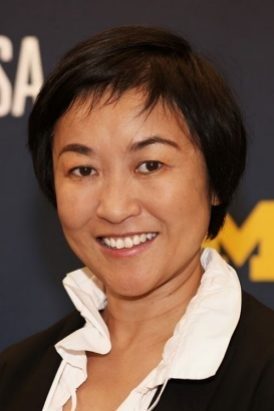
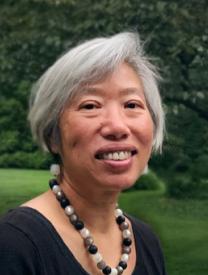
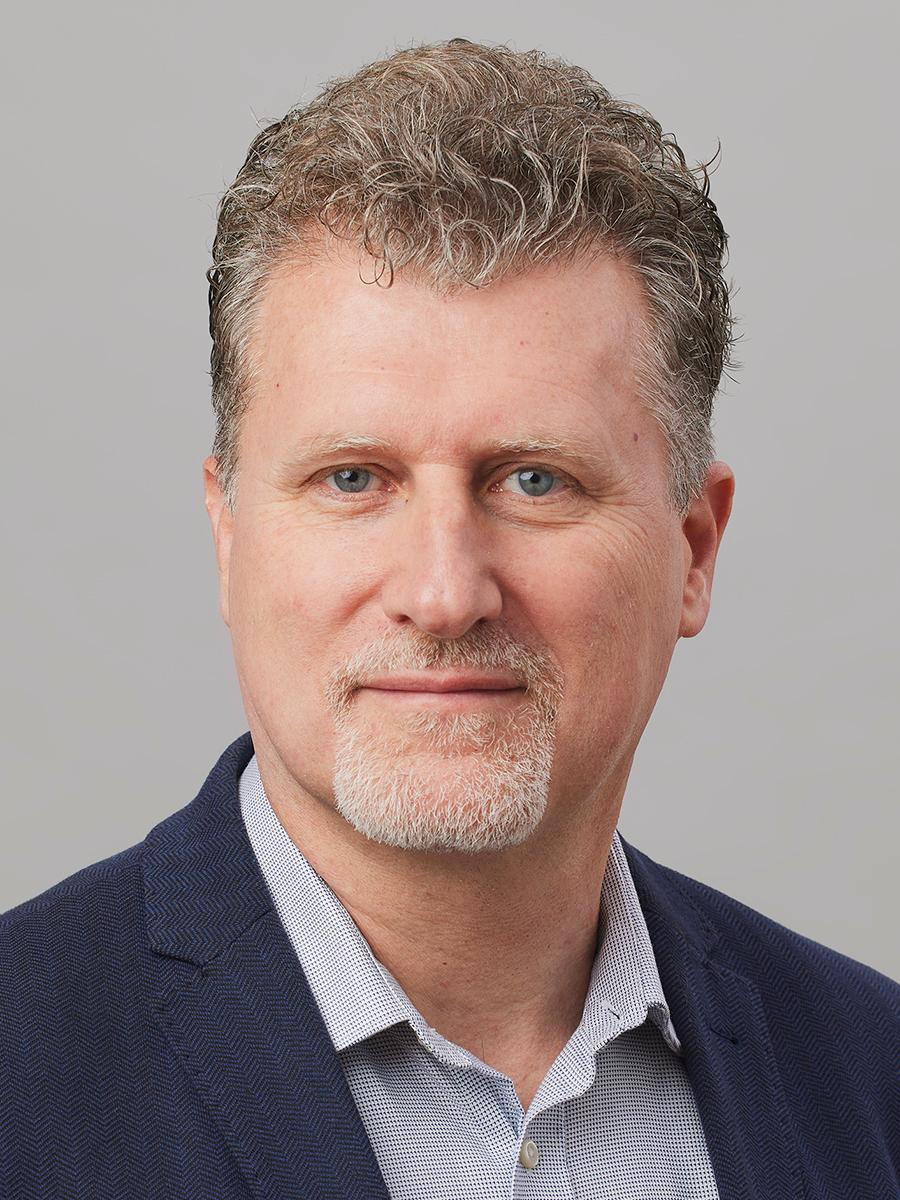
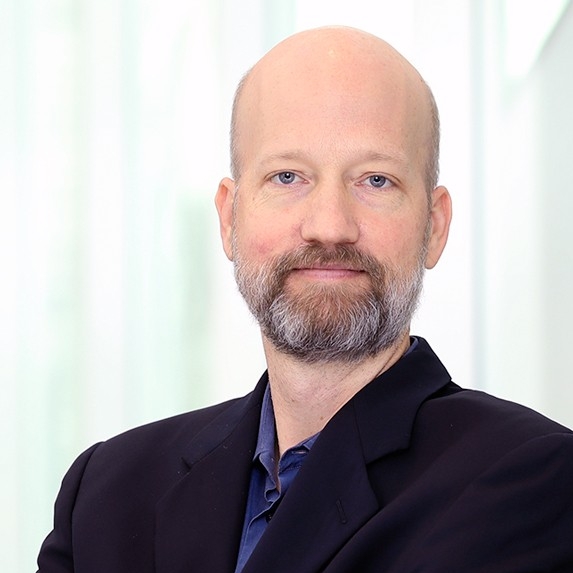
Micah Hale is a Professor and Department Head of Civil Engineering at the University of Arkansas, Fayetteville, and holds the Twenty First Century Endowed Leadership Chair in Civil Engineering. His work focuses on concrete materials, structural performance, and sustainable construction practices. Education: Ph.D., M.S., and B.S. in Civil Engineering from the University of Oklahoma. Dr. Hale’s research explores High-Performance Concrete , Bond Behavior of Prestressing Strands , and Mitigation of Alkali-Silica Reaction (ASR) . He also investigates Thermal Energy Storage applications for solar power systems and sustainable ultra-high-performance concrete (UHPC) development. His publications highlight advancements in concrete durability, prestressed girder analysis, and environmentally conscious material design. Recent studies emphasize calcium oxychloride formation , prestress transfer modeling , and self-consolidating concrete optimization. His scholarly output spans structural mechanics, chemical durability, and material sustainability. Awards: Twenty First Century Endowed Leadership Chair in Civil Engineering As an educator, Dr. Hale teaches Reinforced Concrete Design , Prestressed Concrete Design , and Concrete Materials and Mixture Proportioning . His contributions to engineering ethics education and student engagement further underscore his academic leadership.
Fiona Lee is the Arthur F. Thurnau Professor of Psychology at the University of Michigan, with affiliations in Organizational Studies and the Advisory Committee. She holds a Ph.D. from Harvard University. Her research focuses on three core areas: Identity Integration (how individuals navigate multiple identities), Power Dynamics (effects of power on behavior), and Cultural Differences (impact of cultural contexts on organizations and individuals). She teaches courses on Organizational Psychology and Research Methods in Personality/Social Contexts. Lee’s work bridges social psychology and organizational behavior, emphasizing multicultural experiences and adaptation. Her recent studies explore refugee well-being, racial discrimination coping strategies, and the role of family in resettlement processes. Notably, she investigates how cultural identity integration influences creativity, decision-making, and social tolerance. Her publications span cross-cultural communication, biculturalism, and institutional barriers faced by minorities. Lee’s research often combines qualitative and quantitative methods to address real-world challenges in workplace dynamics and global mobility.
Kenneth J. Falconer is the Regius Professor of Mathematics at the University of St Andrews, where he is a member of the School of Mathematics and Statistics and the Analysis Research Group. He has held prestigious positions at the University of Bristol and Corpus Christi College, Cambridge, and has been a visiting professor at institutions including Oregon State University and the Australian National University. Regius Professor of Mathematics, University of St Andrews (2017–present) Professor of Mathematics, University of St Andrews (1993–2017) Reader, University of Bristol Lecturer, University of Bristol Research Fellow, Corpus Christi College, Cambridge His research centers on fractal and multifractal geometry, geometric measure theory, and related fields. He has made seminal contributions to the understanding of fractal projections, dimensional analysis of self-affine sets, and fractal processes. His work includes the concept of the digital sundial and the introduction of the affinity dimension and Falconer’s distance problem. His research spans dimensional analysis, random fractals, PDEs on fractal domains, and combinatorial geometry. The most recent publications show a sustained focus on intermediate dimensions, projections of fractal sets and measures, and the dimensional properties of stochastic processes. His work frequently involves collaboration with leading mathematicians and appears in top journals such as Transactions of the American Mathematical Society , Ergodic Theory and Dynamical Systems , and Journal of Fractal Geometry . Fellow of the Royal Society of Edinburgh (1998) Shephard Prize, London Mathematical Society (2020) CBE, King’s New Year’s Honours (2024) Kenneth Falconer has supervised numerous students and collaborated with many researchers including Jonathan Fraser, Pertti Mattila, and Xiong Jin. He has served on editorial boards for Fractals , Journal of Fractal Geometry , and Mathematical Proceedings of the Cambridge Philosophical Society . He has been active in professional service, including as Chair of the British Mathematical Colloquium 2018 and Publications Secretary of the London Mathematical Society (2006–2009). He organized major programs at the Isaac Newton Institute and Mittag-Leffler Institute. He is also known for his involvement in the Long Distance Walkers Association, where he served as Chairman and Editor of Strider , and for his mathematical poetry featured in publications like the London Mathematical Society Newsletter .
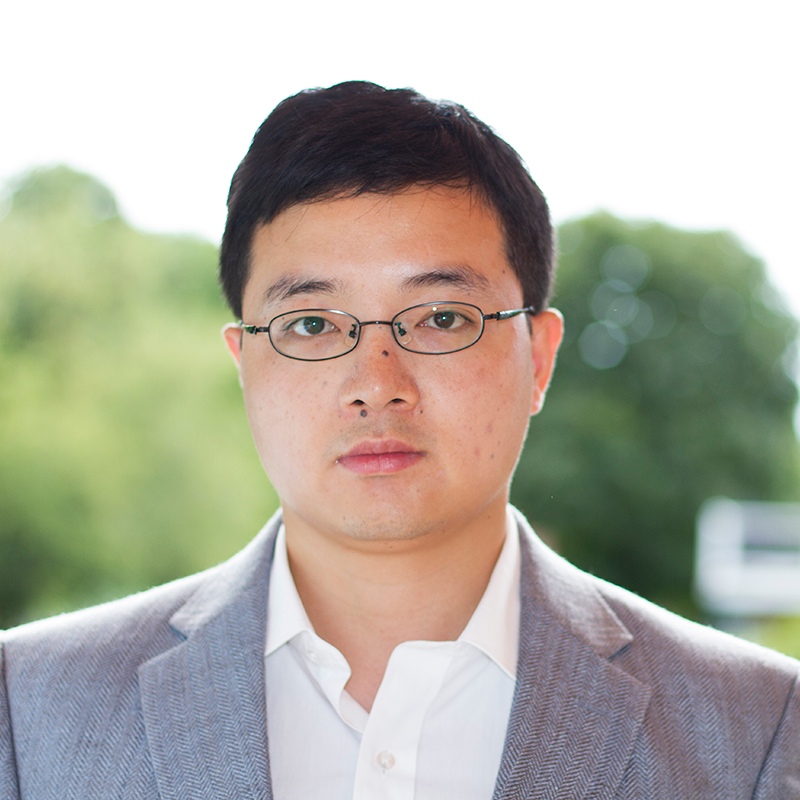
Yang Weng is an Associate Professor at the School of Electrical, Computer and Energy Engineering, Arizona State University. He leads the U.S.-Israel International Consortium on Energy Cyber Initiative on Cybersecurity R&D and directs a research lab focused on smart grid resilience and machine learning applications. Previously, he was a TomKat Postdoctoral Scholar at Stanford University. Education: Ph.D. in Electrical and Computer Engineering, Carnegie Mellon University M.S. in Machine Learning, Carnegie Mellon University Research: His interdisciplinary work bridges power systems, machine learning, and cybersecurity, emphasizing renewable integration, grid optimization, and cyber-physical resilience. Key themes include physics-informed AI, adversarial robustness in energy infrastructure, and real-time control algorithms for dynamic grids. Publications: Recent articles (2024–2025) demonstrate strong trends in AI-driven grid security, adaptive control under uncertainty, and climate-impact modeling. Dominant domains include neural network applications for stability guarantees, cyber-attack mitigation, and data-efficient renewable integration. Awards: NSF CAREER Award (2021), Amazon Research Award (2023) Best Paper Awards at IEEE SmartGridComm (2012, 2013), PES GM (2014), PMAPS (2016) IEEE Senior Member, Sun Award (ASU), Centennial Award (ASU) Grants & Leadership: Secured DOE, NSF, and AFOSR funding for projects on AI-enhanced grid resilience. Advises PhD/postdoc candidates and chairs the U.S.-Israel Energy Center consortium. Organized international workshops (e.g., ICRDE 2023) and validated research via hardware-in-the-loop experiments. Lab & Team: Directs a research group developing deployable ML solutions for utilities (e.g., OPAL-RT collaborations). Focus areas: cybersecurity toolchains, reinforcement learning for grid control, and anomaly detection architectures.
Andrea Liu is the Hepburn Professor of Physics at the University of Pennsylvania, leading the Department of Physics and Astronomy. As Director of the Penn Center for Soft and Living Matter, she bridges physics, biology, and materials science. She joined Penn in 2004 after faculty roles at UCLA (1994-2004) and postdoctoral research at Exxon and UCSB. Her research focuses on theoretical studies of soft and living matter, particularly jamming transitions, glass physics, and emergent phenomena in biological systems. She pioneers the application of machine learning to physical systems, designing self-learning materials and circuits. Education Ph.D., Cornell University (1989) B.A., University of California, Berkeley (1984) Research Interests Soft matter: Glass transition, jamming, and plasticity in disordered solids Living matter: Collective behavior in tissues, fluidization mechanisms, and biopolymer networks Machine learning: Physical implementations, energy-efficient circuits, and adaptive systems Her work combines analytical theory and computation to explain how complex systems achieve functionality through structural and dynamical principles. Publications Trends Recent work emphasizes physical learning networks, clogging dynamics in granular systems, and biophysical tissue mechanics. Key themes include emergent learning in analog systems, topology-driven material design, and interdisciplinary approaches to biological and engineering challenges. Awards 2025 American Physical Society Leo P. Kadanoff Prize 2021-2025 Simons Investigator in Theoretical Physics Member, National Academy of Sciences (2017) Labs & Teams Her research group collaborates on the Center for Soft and Living Matter, advancing theoretical frameworks for adaptive materials and biological systems. Ongoing initiatives focus on machine learning-informed materials design and experimental validation of theoretical models.
Nonappa Nonappa is an Associate Professor (tenure track) in Nanochemistry at Tampere University's Faculty of Engineering and Natural Sciences since 2020. With a multidisciplinary background spanning organic chemistry, supramolecular systems, nanoparticle self-assembly, and advanced electron microscopy, he leads research at the intersection of materials science and biomedical applications. PhD in Organic Chemistry (IISc Bangalore, 2008) Docent in Soft Matter Microscopy (Aalto University, 2017) Executive MBA (Quantic School, 2020) Research focuses on bio-based optical materials using nanocellulose for sustainable photonics, breast cancer models via lab-on-a-chip systems, and precision nanomaterials through tailored self-assembly mechanisms. His team develops 3D extracellular matrices for cancer tissue culture and plasmonic nanodevices for photonic applications. Recent publications highlight gold/silver nanocluster assemblies (43+ citations in 2021-2025), electron tomography for structural analysis, and metastasis modeling systems. Key awards include Italy's Abilitazione Scientifica Nazionale (2018) and Aalto University's Docent title (2017).
Dr. Gavin Mount is a researcher at UNSW Canberra , specializing in non-traditional security studies , ethnic conflict , and the sociopolitical implications of emerging technologies . His work bridges theoretical analysis with practical applications in conflict transformation and defense studies. Research Focus: Global politics of ethnic conflict, hybrid peace/war frameworks, and socio-political impacts of drone technology. Teaching: Courses like Ethnic Conflict in World Politics and Law, Force and Legitimacy , with a focus on military education and strategic studies. Publications: Recent work includes contributions to Thinking Swarms (2025) and Hybridity on the Ground in Peacebuilding and Development (2018). Grants: Leads the Curricula Integration of Student Wellbeing Resources project under HERDSA. Key Themes across his research include the intersection of technology and conflict, evolving defense paradigms, and pedagogical innovations in security studies.
Masaki Nishida is a Professor at the Faculty of Sport Sciences , Waseda University, and Vice President of the Health Support Center at the same institution. He also serves as Chief of the Sleep Research Institute . His research bridges Sleep Science , Sports Medicine , and Clinical Psychiatry , with a focus on the interplay between sleep, cognitive function, and athletic performance. Education: Tokyo Medical and Dental University, Faculty of Medicine (1996) His work has significantly advanced understanding of napping interventions for athletes, sleep quality in competitive divers, and neurophysiological mechanisms linking sleep spindles to memory consolidation. Current research projects include a 2024-2027 study on functional bedding effects funded by Japan Society for the Promotion of Science. Scientific awards include the 15th Japanese Society of Sleep Research Encouragement Award (2010) and the 88th Japanese Society for Occupational Health Award (2015). His publications span topics like REM sleep's role in emotional memory , sleep inertia , and motor adaptation , with recent emphasis on international sports psychiatry standards . He actively contributes to professional societies including the Japanese Association of Sports Psychiatry (Chairman) and Society for Neuroscience .
Prof. Raffaele Mezzenga is a Full Professor at ETH Zürich's Department of Health Sciences and Technology and Head of the Institute of Food, Nutrition, and Health. He earned his master's from Perugia University (Italy) and a PhD in Polymer Physics from EPFL, followed by postdoctoral work at UC Santa Barbara. His career includes roles at the Nestlé Research Center and the University of Fribourg before joining ETH in 2009. His research focuses on self-assembly processes in polymers, biopolymers, and colloidal systems, with applications in environmental remediation, bioplastics, and biomedical materials. Key contributions include pioneering protein-based materials and advancing understanding of amyloid fibrils. Education: Master's, Materials Science & Engineering, Perugia University PhD, Polymer Physics, EPFL Research Interests: Self-assembly, biopolymers, amyloid materials, sustainable technologies, food colloids, and soft condensed matter. Awards: 2011 AOCS Award, 2017 APS Fellowship, and 2013 Biomacromolecules Young Investigator Award. Visiting Roles: Held visiting professorships at Aalto University, RMIT, Monash University, Nanyang Technological University, and others. Labs/Teams: Leads the Institute of Food, Nutrition, and Health at ETH, focusing on interdisciplinary research in food science and biomaterials. His work bridges fundamental science and applied innovation, addressing global challenges in sustainability and health through materials science. Recent projects include creating bioplastics from food waste, developing amyloid-based water purification systems, and advancing targeted drug delivery via lipidic mesophases.
Dr. Julie N.L. Albert is an Assistant Professor in the Department of Chemical and Biomolecular Engineering at Tulane University, holding the Robert and Gayle Longmire Early Career Professorship. She is affiliated with the School of Science and Engineering and serves as co-director of the SMART REU NSF-funded program. Her research focuses on engineering nano- and micro-structured polymeric materials for energy, health, and environmental applications, emphasizing self-assembly processes in block copolymers and polymer blends. Key areas include nanoporous membranes, biocompatible surfaces, and stimuli-responsive materials. Dr. Albert earned her B.S. in Chemical Engineering from the University of Florida (2005) and her Ph.D. from the University of Delaware (2012). She conducted postdoctoral research at North Carolina State University. Her work has been supported by prestigious grants, including the NSF CAREER Award and a Gulf Research Program Fellowship. Her research group explores topics like polymer crystallization, polyorganosiloxanes, and block copolymer architectures. Notable achievements include developing methods for controlling polymer morphology via solvent vapor annealing and surface chemistry gradients. She advises numerous graduate and undergraduate students and mentors organizations like the Society of Women Engineers. Education: B.S., Chemical Engineering, University of Florida, 2005 Ph.D., Chemical Engineering, University of Delaware, 2012 Research Interests: Self-assembly of block copolymers, nanoporous membranes, biocompatible materials, and energy applications. Awards: NSF Graduate Research Fellowship, Gulf Research Program Early-Career Fellowship, AIChE Travel Award. Dr. Albert’s lab houses advanced facilities such as AFM, spectral reflectometry, and GPC, enabling cutting-edge polymer characterization. Her contributions bridge polymer science, materials engineering, and environmental sustainability, addressing challenges in energy recovery and biomedical technologies.
Peter J. Boettke is a Distinguished University Professor of Economics at George Mason University, holding the BB&T Professorship for the Study of Capitalism. He directs the F.A. Hayek Program at the Mercatus Center. His academic roles include editorships of the Review of Austrian Economics and Journal of Economic Behavior & Organization . Boettke earned his Ph.D., M.A., and B.A. in Economics from George Mason University and Grove City College. Research interests span Austrian economics, institutional economics, comparative political economy, and the history of economic thought. He emphasizes market process theory, emphasizing how institutions and entrepreneurship shape social outcomes. His work critiques socialist systems and advocates classical liberal principles, informed by Hayek’s insights on knowledge and spontaneous order. Awarded for teaching excellence and academic contributions, Boettke has supervised over 30 doctoral students. His publications include authored books like The Struggle for a Better World (2021), Money and the Rule of Law (2021), and edited volumes on Hayek, Buchanan, and Tocqueville. His recent articles address monetary policy, socialism, and pandemic governance. Boettke’s work bridges theory and policy, advocating for rule-of-law frameworks in economics and institutions that foster decentralized decision-making. His intellectual contributions span academic entrepreneurship, policy analysis, and interdisciplinary collaboration across economics, philosophy, and political science.
David Melcher is Professor of Psychology and Program Head in Psychology at New York University Abu Dhabi (NYUAD), where he also serves as a Global Network Professor. He is affiliated with the Division of Science and leads the Perception and Active Cognition Lab, focusing on the integration of perception, attention, memory, and action within a cognitive neuroscience framework. PhD in Psychology and Cognitive Science, Rutgers University (2001) Former researcher and professor in Italy and the UK Current leadership: Program Head, Psychology, NYUAD David Melcher's research centers on cognitive neuroscience , particularly how perception, attention, working memory, eye movements, and self-motion interact to shape cognition and behavior. His lab emphasizes active cognition —the idea that perception is not passive but dynamically shaped by action, context, and goals. He investigates how temporal dynamics in neural processing organize perceptual experiences and guide decision-making. His work spans both healthy and clinical populations, exploring individual differences in spatial and temporal processing across the lifespan. The 15 most recent publications reflect a consistent focus on temporal organization in cognition , perception-action coupling , and neural mechanisms of attention and memory . Keywords across these works include cognitive neuroscience, perception, and neuroimaging, with subfields ranging from eye movement research and neural synchrony to computational modeling and clinical neuropsychology. Collectively, they demonstrate a trajectory toward integrative models of brain function that bridge behavioral, neuroimaging, and computational approaches. Among his notable recognitions is the Distinguished Scientific Award for Early Career Contribution to Psychology from the American Psychological Association (2011), highlighting the early impact of his work in cognitive neuroscience. Distinguished Scientific Award for Early Career Contribution to Psychology, APA (2011) David Melcher has advised numerous students through capstone projects in psychology and computer science, fostering interdisciplinary research at the intersection of cognitive science and technology. His research has been generously supported by major funding agencies including the European Research Council , the US National Institutes of Health , the Italian Ministry of Research and Education , and the Chinese Ministry of Foreign Expert Affairs . He also contributes to the academic community as a member of the editorial boards of Journal of Vision , Psychonomic Bulletin & Review , Perception , and iPerception . He leads the Perception and Active Cognition Lab at NYUAD, which employs a multidisciplinary approach combining behavioral experiments, neuroimaging (fMRI, EEG, MEG), eye-tracking, computational modeling, and clinical assessments. The lab’s research aims to understand how the brain constructs stable percepts from dynamic sensory input, particularly during active engagement with the environment.
Danqi Chen is an Associate Professor in the Department of Computer Science at Princeton University's School of Engineering and Applied Science. Their research focuses on advancing large language models (LLMs), with emphasis on model alignment, safety, and long-context reasoning capabilities. Key research areas: LLMs, AI safety, retrieval systems, and model optimization Recent work explores theorem proving, context encoding, and ethical content generation Their 2025 publications highlight innovations in formal verification scaffolding, attention mechanism efficiency, and copyright-aware generation. 2024 studies investigate continual memorization, rule-based chatbot representations, and scientific literature retrieval benchmarks. Current projects demonstrate commitment to improving model robustness, interpretability, and security compliance in multimodal systems.
Qing Li is an Associate Professor in the Department of Electrical and Computer Engineering at Carnegie Mellon University (CMU), part of the College of Engineering. He holds a B.E. in Electronics Engineering from Tsinghua University (2006) and a Ph.D. in Electrical and Computer Engineering from Georgia Institute of Technology (2013). Prior to CMU, he worked as a postdoctoral researcher at the National Institute of Standards and Technology (NIST), where he developed quantum frequency conversion and microresonator-based optical systems. His research focuses on light-matter interactions in integrated photonics, emphasizing nonlinear optics and quantum information processing. He has pioneered silicon carbide and aluminum nitride platforms for chip-scale quantum technologies and optical metrology. Dr. Li has been recognized with prestigious awards including the Darpa Young Faculty Award (2019), OSA Paul F. Forman Team Engineering Excellence Award (2020), and Sigma Xi Best Ph.D. Thesis Award (Georgia Tech). His work bridges classical and quantum information systems, with applications in secure communication, atomic systems interrogation, and high-precision frequency synthesis. He actively contributes to the Pittsburgh Quantum Institute (PQI), advancing regional quantum engineering initiatives. His research group’s key projects include developing compact optical frequency synthesizers, soliton microcombs for communication grids, and entangled photon pair sources for quantum networks. Grants and collaborations support his exploration of novel photonic materials and devices, targeting advancements in both fundamental science and applied technologies.
Dr. Nhiem Tran is a Senior Lecturer in the Department of Applied Chemistry and Environmental Science at RMIT University's School of Science, part of the STEM College. He joined RMIT in 2015 as a Vice Chancellor's Research Fellow after completing his PhD in Physics at Brown University (USA, 2012) and postdoctoral research at Rhode Island Hospital (USA), CSIRO, and the Australian Synchrotron. His research focuses on developing biomaterials for drug delivery, gene therapy, and medical implants, particularly lipid nanoparticles and 3D-printed metallic implants. He leads the Biomaterial Interfaces group, investigating self-assembled lipid nanoparticles for cancer and autoimmune disease treatments. His work has resulted in over 65 high-impact publications and numerous awards, including the RMIT Vice Chancellor's Research Fellowship and the Stein/Bellet Foundation Fellowship. Tran's funding comes from grants such as the ARC Discovery Project, mRNA Victoria, and the CASS Foundation. His research interests span nanomedicine, biomedical engineering, and materials science, with a focus on applications in drug delivery, bacterial infection control, and orthopaedic implants. Education: PhD in Physics (Brown University, 2012) Key Projects: 3D-printed diamond-titanium implants, lipid nanoparticle drug carriers, and antimicrobial coatings. He actively supervises postgraduate research in areas like nanomaterials for drug delivery and biomedical applications.