- Telecommunications
- Networking
- Wireless Networks
- +۹ مورد دیگر
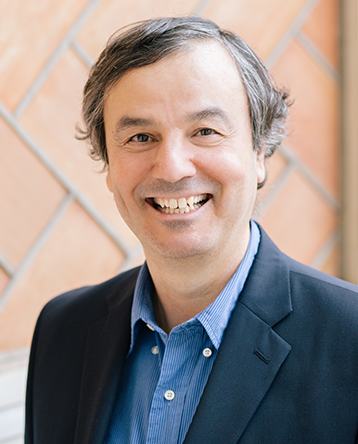
Ozan K. Tonguz is a Professor in the Department of Electrical and Computer Engineering at Carnegie Mellon University's College of Engineering. He holds appointments with CyLab and the Carnegie Mellon-Portugal program, focusing on advanced research in telecommunications, networking, and intelligent transportation systems. His educational background includes: Ph.D. in Electrical Engineering from Rutgers University (1990) M.S. in Electrical Engineering from Rutgers University (1986) B.S. in Electronic Engineering from the University of Essex (1980) Tonguz's research spans telecommunications and networking with emphasis on vehicular networks, wireless communications, cybersecurity, and smart infrastructure systems. His work bridges theoretical networking concepts with practical transportation applications, particularly in vehicle-to-vehicle and vehicle-to-infrastructure communications. He has published approximately 300 papers in IEEE journals and conference proceedings and authored the book 'Ad Hoc Wireless Networks: A Communication-Theoretic Perspective' (Wiley, 2006). His recent publications demonstrate a strong focus on vehicular networks and intelligent transportation systems, with particular attention to traffic flow optimization, virtual traffic light systems, and the application of wireless communication technologies to solve urban transportation challenges. His research has evolved from fundamental networking concepts to applied transportation solutions with real-world implementation potential. Tonguz actively mentors PhD students and has founded Virtual Traffic Lights, LLC, a CMU spinoff company addressing transportation problems through innovative communication paradigms. His work has received attention from IEEE Spectrum and other technical publications, highlighting the practical significance of his research in intelligent transportation systems. He leads research efforts in vehicular ad hoc networks, wireless ad hoc and sensor networks, self-organizing networks, smart grid applications, and security. His Virtual Traffic Lights technology has demonstrated potential to increase urban traffic flows by 60% during rush hours, with implications for reducing commute times, mitigating congestion, and supporting greener environments.