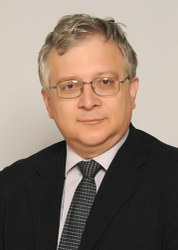
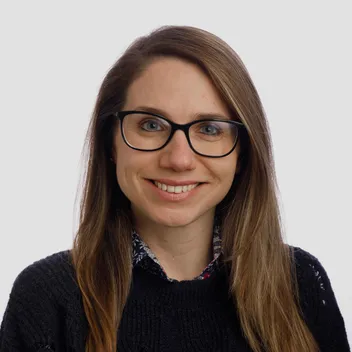
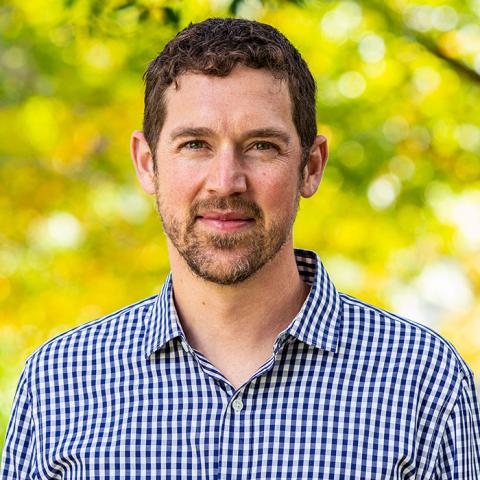
Reinhard Pekrun is a leading Professorial Fellow at the Institute for Positive Psychology and Education , Faculty of Education and Arts. His research focuses on academic emotions , control-value theory , and their interplay with motivation , student engagement , and educational achievement . He has pioneered frameworks like the Achievement Emotions Questionnaire (AEQ) and its adaptations for diverse populations. Key Research Areas : Academic emotions, boredom, motivation theory, emotional self-regulation, cross-cultural educational psychology Methodological Expertise : Longitudinal studies, experience-sampling methods, network analysis, cross-national comparisons Recent publications explore test boredom , emotional contagion in classrooms, and control-value theory as a general model for human emotions. Collaborations span institutions across 72 societies, with methodological synergies in self-concept research and emotional measurement . Awards and grants include international trials on mental well-being apps and large-scale studies on peer victimization.
He Zhu is an Assistant Professor at Rutgers, The State University of New Jersey, affiliated with the Department of Computer Science. His research focuses on programming languages, compilers, wireless communications, IoT systems, and 5G network protocols. He received the PLDI 2019 Distinguished Paper Award for his contributions to formal methods in programming systems. His work addresses challenges in vehicle-to-everything (V2X) communication, resource allocation in sidelink networks, network security, and dynamic authorization frameworks for IoT devices. Key research interests include optimizing 5G NR (New Radio) protocols for vehicular environments, developing efficient data aggregation techniques for user equipment, and enhancing service layer mechanisms for IoT systems. He leads projects funded by the NSF, such as 'Formal Symbolic Reasoning of Deep Reinforcement Learning Systems,' and has contributed to advancements in beam management, RACH protocols, and energy-efficient DRX configurations in wireless networks. His office is located in Core 315. Notable Awards: PLDI 2019 Distinguished Paper Award Grants: NSF Grant: Formal Symbolic Reasoning of Deep Reinforcement Learning Systems His research group explores intersections between compiler design, distributed systems, and network architecture, with applications in smart mobility, edge computing, and secure IoT communication. He actively contributes to standards development for 5G and future generations of wireless networks.
Tristan Clemons is an Assistant Professor in the School of Polymer Science and Engineering at the University of Southern Mississippi. His research integrates polymer chemistry, supramolecular assembly, and biomaterials for therapeutic applications. Current projects focus on antioxidant polymers, peptide-polymer hybrids, photoresponsive materials, and nanoscale drug delivery systems. The Clemons Lab develops biomimetic materials for applications in cancer therapy, neural regeneration, antiviral strategies, and tissue engineering. Recent publications demonstrate innovations in functional polymer design, including dynamic biomolecular condensates, amyloid-based composites, and supramolecular antiviral agents. Materials are characterized for mechanical, biological, and therapeutic properties.
Assoc. Prof. Iliev Atanas is affiliated with the Faculty of Electrical Engineering and Information Technologies (FEIT) at the Ss. Cyril and Methodius University of Skopje. He holds the position of Associate Professor at the Institute for Power Plants and Switchgear. His academic journey includes a PhD (2003), MSc (1993), and BSc (1987) in Electrical Engineering from FEIT. His work experience spans over three decades, starting as a Junior Assistant (1987–1994), progressing to Assistant Professor (1994–2008), and attaining his current rank in 2008. His research focuses on optimizing power systems through advanced algorithms, particularly genetic algorithms applied to unit commitment, hydrothermal scheduling, and microgrid management. Key areas include renewable energy integration, grid reliability, and security-constrained optimization. He has contributed to over 50 publications addressing topics like dynamic programming for hybrid power systems, fuzzy logic for hydroelectric project evaluation, and reliability modeling of substations under distributed generation uncertainty. Notable contributions include developing novel self-adaptive genetic algorithms for short-term scheduling and energy management in hybrid systems. His work bridges theoretical optimization with practical grid challenges, emphasizing sustainability and resilience in power infrastructure.
Talal Shaikh is an Associate Professor at Heriot-Watt University's School of Mathematical and Computer Sciences in Dubai. He serves as Director of Undergraduate Studies and Programme Director for BSc Computer Science, BSc CS (AI), and MSc Software Engineering. With a decade of industry experience as a Chief Information Officer and Software Engineer, he bridges practical insights with academic research. Research Interests: Pervasive Computing, IoT/M2M, AI/ML, WiFi Sensing for Healthcare, Financial Machine Learning, Educational Technology Awards: Teaching Excellence Awards (2017/18), Fellow of the Higher Education Academy (FHEA), multiple Learning and Teaching Oscars (2016, 2017, 2018) His work spans Ubiquitous Computing and IoT , focusing on sensor networks and WiFi-based sensing for healthcare. In Artificial Intelligence , he applies ML to robotics, financial analytics, and educational innovation. Recent articles analyze Reinforcement Learning , Emotion Recognition , and WiFi Sensing applications. His teaching emphasizes student-centric learning, with over 100 supervised dissertations achieving distinctions. Collaborations include international conferences and interdisciplinary research in smart environments and adaptive systems.
Adlen Ksentini is a Professor at EURECOM, a leading graduate school and research center in Sophia Antipolis, France, specializing in digital science and communication systems. His extensive research focuses on next-generation mobile networks (5G/6G), network management, and the integration of artificial intelligence with telecommunications infrastructure. Dr. Ksentini actively contributes to major EU research initiatives including 6G-BRICKS and AC3, serving as a key researcher and project leader in the development of future network architectures. Dr. Ksentini's research interests center around network slicing, intent-based networking, edge computing, and the application of machine learning to network management problems. His work bridges theoretical advancements with practical implementations in 5G/6G systems, with particular emphasis on zero-touch network management, energy efficiency optimization, quality of service assurance, and the integration of large language models with network operations. His research has significantly contributed to the development of O-RAN (Open Radio Access Network) frameworks and the evolution of network automation. His recent publication trends reveal a strategic shift toward AI-native network architectures, with increasing focus on integrating large language models (LLMs) with network management systems. His work demonstrates a clear progression from traditional network management approaches to more autonomous, AI-powered systems capable of intent-based configuration, self-optimization, and predictive maintenance. The publications show strong emphasis on practical implementations within the 6G research ecosystem, addressing critical challenges in network slicing, resource allocation, and energy efficiency. As a research supervisor, Dr. Ksentini mentors several PhD students including Abdelkader Mekrache, Karim Boutiba, Bouziane Brik, and Houda Hafi, who frequently appear as co-authors on his publications. His research is primarily funded through major EU research projects such as 6G-BRICKS (Building Reusable Testbed Infrastructures for Cloud-to-Device Breakthrough Technologies) and AC3 (which focuses on Cloud Edge Continuum). Dr. Ksentini is actively involved with the 6G-BRICKS project consortium and the AC3 project team, where he contributes to developing next-generation network architectures that integrate communication, computing, and sensing capabilities. His work within these projects focuses on creating reusable testbed infrastructures and addressing security and trust management challenges in the cloud-edge continuum.
Camila Biazus-Dalcin is a Lecturer (Teaching & Research) at the University of Dundee's School of Health Sciences, affiliated with the Mother, Infant and Child Health Research Group (MIRU). She holds a PhD in Nursing (2020) and a PhD in Philosophy (2022). Her research focuses on addressing health inequalities in marginalized communities, including Gypsy/Traveller populations, people in prison, and those experiencing homelessness. She employs qualitative methods like ethnography and creative approaches, while expanding into mixed methods. She collaborates internationally with colleagues in Brazil, Portugal, Australia, and the USA. Awards include the 2022 Sigma European Early Career Researcher award and the Dr Doris J. Froebe Leadership Education Grant. Research Interests: Health inequalities, sexual and reproductive health, perinatal mental health, and community-engaged research. Recent work includes studies on HIV outcomes, perinatal healthcare access, and disinfection protocols in pediatric units. Awards: Sigma European Early Career Researcher award (2022) Dr Doris J. Froebe Leadership Education Grant (2022) Teaching & Supervision: Teaches undergraduate/postgraduate modules like Fundamentals of Adult Health and Nursing Skills. Supervises PhD students in global health and public health topics. Nominated for multiple teaching awards (2023–2024). Projects: Leads initiatives such as the 'My Data' Project (co-producing tools with drug users) and the Gypsy/Traveller Community Health Worker evaluation. Collaborates on improving healthcare access for marginalized groups.
Sylvie Nadeau is a Full Professor in the School of Rehabilitation at the University of Montreal's Faculty of Medicine. Her research focuses on locomotor activity assessment, rehabilitation interventions for neurological conditions, and biomechanical analysis of movement. She leads interdisciplinary projects addressing spinal cord injuries, stroke recovery, and mobility challenges in aging populations. Key affiliations include the INTER strategic research group and the REPAR provincial rehabilitation research network. She collaborates with institutions like the Institut de Réadaptation Gingras-Lindsay-de-Montréal (IRGLM) and has secured funding from agencies such as FRQNT, MITACS, and the Rick Hansen Institute. Her work integrates technologies like smart stationary bikes and real-time avatars to enhance rehabilitation outcomes. Research interests span gait analysis, dynamic balance, and sensorimotor rehabilitation. She has supervised over 30 graduate students, contributing to advancements in post-stroke mobility, incontinence management, and telerehabilitation. Recent projects include developing intelligent exercise systems and evaluating environmental impacts on mobility in museum settings. Directed the 2019 SOFPEL international congress Co-led the TRIVEL intelligent cycle prototype development Pioneered studies on bilateral upper limb coordination post-stroke Her teaching includes courses in physiotherapy and evidence-based practice, shaping future generations of rehabilitation professionals. She prioritizes translating research into clinical practice through innovative interventions and technology integration.
Orlagh Feeney is a Research Fellow and Nanomedicine team lead in the Porter Group at Monash Institute of Pharmaceutical Sciences (MIPS), Monash University. She specializes in advanced drug delivery systems with a focus on cancer and autoimmune diseases, emphasizing translational research derived from her six-year pharmaceutical R&D experience in Ireland. Her research interests include controlling pharmacokinetics, lymphatic exposure, and targeted drug delivery strategies such as active targeting and stromal modification. She leads projects like the 'Role of Hyaluronan in Antigen and Immune Cell Trafficking' and developed disease models for solid cancers and collagen-induced arthritis. Key contributions include studies on polymer nanorod-drug conjugates, intestinal lymphatic drug delivery, and lymphatic targeting of immunotherapies. She co-edited a Molecular Pharmaceutics special issue on Australasian innovations and serves as a peer reviewer. Feeney's work aligns with UN SDGs addressing good health and well-being, leveraging lymphatic pathways to enhance therapeutic efficacy in oncology and autoimmune therapies.
David E. Breen is a Professor in the Department of Computer Science within the College of Computing & Informatics (CCI) at Drexel University. He leads the Geometric Biomedical Computing Group and is affiliated with the Metadata Research Center and the Center for Biological Discovery from Big Data. His research spans interdisciplinary domains including biomedical image informatics, geometric modeling, textile modeling, and bio-inspired self-organization algorithms. Education: PhD, Computer and Systems Engineering, Rensselaer Polytechnic Institute MS, Computer and Systems Engineering, Rensselaer Polytechnic Institute BA, Physics, Colgate University His research interests focus on computational methods for biomedical applications, including shape and image analysis for cancer diagnosis, 3D reconstruction of biological tissues, and video analysis of animal behavior. He also investigates geometric modeling techniques for textiles and self-organizing systems. His work integrates computer science with biology, medicine, and engineering to solve complex problems in biomedical computing. The recent publications highlight a strong trend in computational modeling of textiles, biomedical image informatics, and AI-driven data analysis. Key themes include geometric modeling of knitted fabrics, deep learning for medical image classification, agent-based modeling of cancer metastasis, and metadata generation for biological image collections. His work bridges fundamental geometric algorithms with practical applications in healthcare and digital archives. Scientific Awards: No specific awards mentioned in the provided text. Breen has advised numerous students and collaborators across multiple domains, particularly in biomedical computing and textile modeling. His research has been supported through affiliations with major centers and collaborations with institutions such as Johns Hopkins University and the Max Planck Institute. He has been involved in projects related to NSF Center for Visual & Decision Informatics and has contributed to over 100 technical publications. He leads the Geometric Biomedical Computing Group , which conducts research at the intersection of biology, medicine, engineering, and computer science. The group develops algorithms and software for geometry-related computing problems in biomedical applications. Collaborations include the Drexel Integrated Laboratory for Cellular Tissue Engineering, Dr. Dan Marenda's Lab, and Dr. Aleister Saunder's Lab in Drexel's Biology Department.
Prof. Tsuyoshi Sekitani is affiliated with the Institute of Scientific and Industrial Research at Osaka University , leading the Sekitani Lab. His research focuses on flexible and organic electronics with applications in biomedical sensors , stretchable electronics , and large-area sensor technologies . Established advanced integration technology for organic transistors Developed patch-type EEG sensors for telemedicine Created ultraflexible electronics with mechanical stretchability Research Trends : Recent publications highlight advancements in ferroelectric transducers , self-organization phenomena , and low-energy fabrication processes , spanning fields like materials science , applied physics , and biomedical engineering . Scientific Recognition : Recipient of the Jan Rajchman Prize / SID (2023) Awarded JSPS Prize (2015) and MEXT Young Scientist Prize (2015) Frequent recognition for best paper and best poster awards in applied physics and materials science conferences Advising & Collaborations : Mentored numerous PhD and master’s students, including Katsuya Beppu and Koki Taguchi . Collaborated with institutions like University of Tokyo and imec , with press coverage from NHK World and Science View .
June P Tangney is a Professor in the Psychology Department at George Mason University, specializing in moral emotions , self-control , and criminology . Her work bridges clinical psychology and corrections, focusing on interventions for incarcerated populations. Education : PhD in Clinical Psychology from UCLA Her research explores the interplay between shame/guilt dynamics , substance misuse , and recidivism , with recent studies on mindfulness-based interventions and computer-assisted jail programs . She has pioneered tools like the Mindfulness Inventory: Nine Dimensions and the Criminogenic Cognitions Scale . Key article trends show her work spans 2014-2025 , with subtopics including borderline personality disorder in correctional settings, family contact during incarceration , and self-stigma in offenders. Funding sources include NIDA, NICHD, NSF, and the John Templeton Foundation. Awards : International Society for Self and Identity Distinguished Lifetime Career Award Fellow of Association for Psychological Science Fellow of APA Division 8 (Personality & Social Psychology) George Mason University Teaching Excellence Award As Editor of Self & Identity and former Associate Editor of American Psychologist , she has mentored numerous students (e.g., Sajida Yasmeen, Shannon Schrader) and co-authored major texts like Shame and Guilt and Shame in the Therapy Hour . Her lab integrates social-clinical-community perspectives to develop restorative justice interventions .
Ramses Martinez is an Assistant Professor in the Department of Industrial Engineering and Biomedical Engineering at Purdue University . He holds a B.A. in Applied Physics from Universidad Autonoma de Madrid (2004) and a Ph.D. in Physics and Materials Science from the Spanish National Research Council (CSIC) in 2009. Prior to joining Purdue, he conducted postdoctoral research in the lab of Prof. George M. Whitesides at Harvard University, focusing on nanofabrication, microfluidics, and soft robotics. Education B.A. in Applied Physics, Universidad Autonoma de Madrid (2004) Ph.D. in Physics and Materials Science, Spanish National Research Council (CSIC) (2009) His research bridges soft robotics , flexible electronics , and nanofabrication , with a focus on creating self-powered e-textiles , omniphobic paper-based devices , and programmable mechanical metamaterials . His work has led to over 25 publications and 9 patents, emphasizing practical applications in health monitoring and industrial automation . Notable projects include waterproof electronic decals for biofluid monitoring, smart bandages for chronic wound detection, and laser nanoforming methods for scalable metallic structures. His research has been recognized through the Fulbright Fellowship and the Marie Curie IOF Grant .
Gökhan Seçinti is an Assistant Professor in the Department of Computer Engineering at Istanbul Technical University, Faculty of Computer and Informatics. He currently serves as Vice Dean and has previously held the role of Vice Department Head. His research focuses on next-generation wireless networks, UAV communications, semantic communication, and AI-driven networking solutions. Research Interests: His work spans Unmanned Aerial Vehicles (UAVs) , Semantic and Task-Oriented Communication , Software-Defined and Cognitive Networks , 6G Communications , and AI in Networking . He develops practical testbeds for deep learning-based communication architectures and explores digital twin applications in aerial networks. Publication Trends: Recent publications emphasize decentralized UAV service deployment, beam alignment using UWB localization, TDMA scheduling for aerial swarms, and semantic flow control. These reflect a strong trend toward intelligent, adaptive, and context-aware communication systems for IoT and mobility. Best Paper Award, IEEE, 2022 Best Conference Paper, IEEE, 2016 Best Poster Paper Award, IEEE, 2015 Advising and Grants: He has supervised 4 academic works and leads multiple funded research projects, including TÜBİTAK and SRP grants on federated learning in flying networks, semantic VANETs, AI-based intrusion detection, and UAV-assisted IoT for crisis management. Labs and Teams: His work is supported by active research teams at ITU, focusing on testbed development using SDRs, digital twins, and real-world deployment of UAV networks. He collaborates internationally, including past affiliations with Northeastern University.
Zachary Oberfield is Professor and Chair of Political Science at Haverford College, where he teaches courses in American politics, public policy, criminal justice reform, bureaucracy, the presidency, and Congress. He has previously held academic positions at Temple University and the City College of New York. B.A., Political Science, Hobart and William Smith Colleges Ph.D., Political Science, University of Wisconsin-Madison His research centers on organizational change, leadership, and street-level bureaucracy, with a particular focus on public institutions such as schools and police departments. He investigates how frontline public servants are socialized, how diversity climates affect agency performance, and how reforms in criminal justice and education unfold in practice. His recent publications span topics including school finance fairness, charter school governance, police workforce development, and racial bias in public management. His work employs longitudinal and comparative methods, often analyzing policy implementation over time and across institutional contexts. He has published in leading journals such as American Educational Research Journal , Public Administration Review , and Journal of Public Administration Research and Theory , as well as with major university presses. Zachary Oberfield is actively engaged in contemporary policy debates, contributing to public discourse through outlets like the Washington Post 's Monkey Cage blog. His current research examines criminal justice reforms in Delaware County, PA. He advises on public sector leadership and organizational reform, though no formal students are listed. He has not received any explicitly mentioned scientific awards. He is affiliated with the Department of Political Science at Haverford College, contributing to both teaching and administrative leadership as department chair.