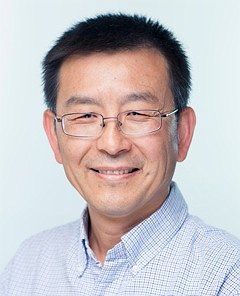
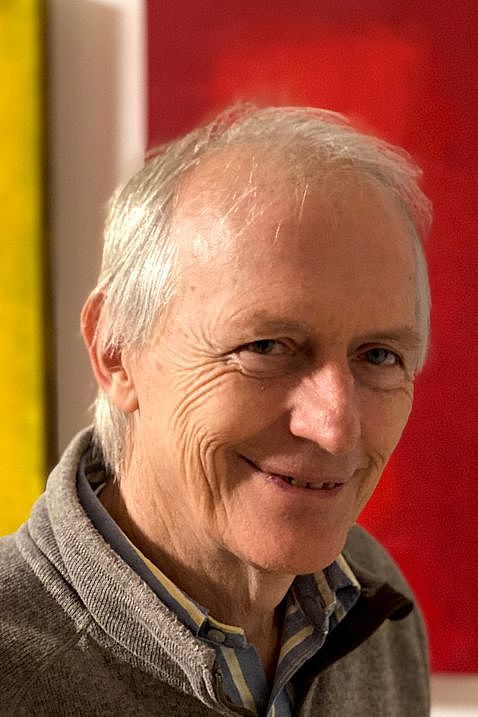
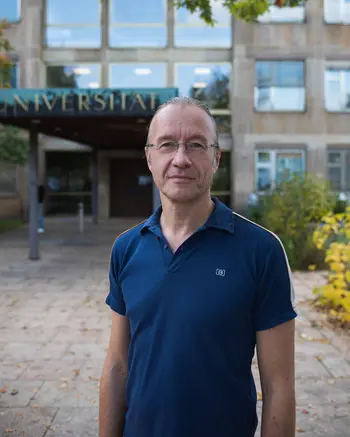
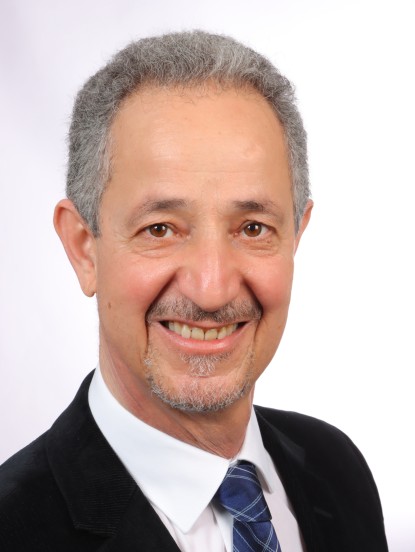
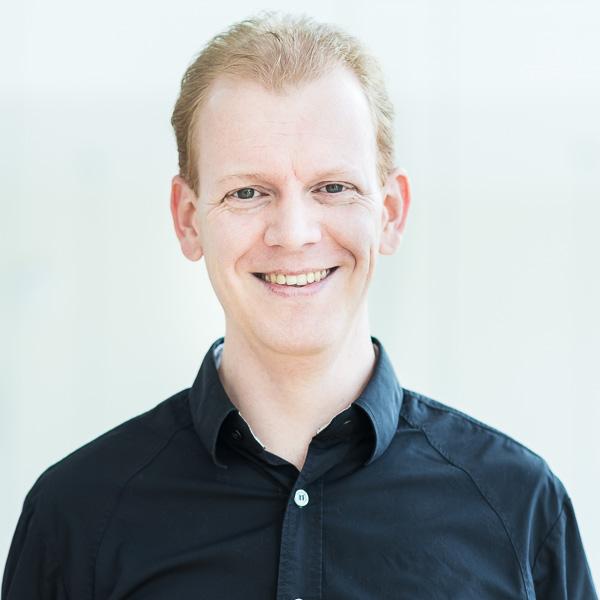
Dongheui Lee is an Assistant Professor at the Institute of Automatic Control Engineering (LSR) within the Faculty of Electrical Engineering and Information Technology at Technische Universität München (TUM). She leads the Dynamic Human Robot Interaction for Automation System Lab. Her research focuses on human motion understanding, physical human-robot interaction, and machine learning in robotics. Education: B.S. and M.S. in Mechanical Engineering from Kyunghee University (2001-2003), PhD in Mechano-Informatics from the University of Tokyo (2007). Prior roles include research scientist at KIST Korea (2001-2004) and project assistant professor at the University of Tokyo (2007-2009). Research Interests: Human-robot collaboration, probabilistic robotics, motion recognition, and incremental lifelong learning mechanisms. She has contributed to advancements in motion primitives, compliant physical interaction, and real-time object tracking. Selected Awards: Finalist for KUKA Service Robotics Best Paper Award (2009), Hirose Scholarship (2006-2007), and multiple grants from KRF, KOSEF, and international robotics competitions. Key Publications: Focus on prioritized inverse kinematics, motion imitation, and adaptive control systems. Her work bridges robotics theory and practical applications in humanoid robots and human-robot interaction.
Jingling Xue is a Scientia Professor at the School of Computer Science and Engineering at the University of New South Wales (UNSW) in Sydney, Australia. As an IEEE Fellow of the Computer Society, he leads the Programming Languages and Compilers research group, focusing on practical applications of compiler optimization and program analysis techniques. His work bridges theoretical foundations with real-world software systems, particularly in developing open-source tools for large-scale program analysis. Professor Xue received his B.Eng and M.Eng degrees from Tsinghua University in 1984 and 1987, respectively, followed by a PhD from the University of Edinburgh in 1992. His academic journey has established him as a leading figure in programming languages and compiler technology. Xue's research spans programming languages, compiler technology, and program analysis with emphasis on practical relevance. His current projects include compiler techniques for improving parallelism and locality, pointer/alias analysis for million-line-scale programs, and static/dynamic analysis for detecting bugs and security vulnerabilities in real-world applications like web browsers and Android apps. His group actively develops open-source tools to support scientific replicability and reproducibility in these areas. His recent publications demonstrate a strong focus on applying program analysis techniques to modern challenges including AI compilers, homomorphic encryption, security vulnerability detection, and graph processing systems. The work shows evolution from traditional compiler optimization to addressing emerging domains like privacy-preserving computation and deep learning systems while maintaining rigorous theoretical foundations. Scientific Awards: Best Paper Award at CGO'13 Best Paper Award at CGO'16 Distinguished Paper Award at ECOOP'16 Distinguished Paper Award at ICSE'18 Distinguished Paper Award at ISSTA'19 Distinguished Paper Award at ASE'19 Distinguished Artifact Award at ISSTA'23 Best Artifact Award at FSE'23 Distinguished Paper Award at ASE'23 Test-of-Time Award at CGO'21 Professor Xue has successfully supervised 30 PhD students to completion, many of whom now work as professors or researchers in academia and industry. He has served as Program Chair for major conferences including LCTES'13, CC'18, CGO'20, and General Chair for LCTES'20. His group currently focuses on memory safety in Rust, smart contract analysis, AI compilers, compilation for privacy-preserving computation, and adversarial attacks in deep learning. The Programming Languages and Compilers group maintains strong connections with industry partners, translating theoretical advances into practical tools for real-world software development challenges. Their work on pointer analysis, memory safety, and compiler optimizations continues to influence both academic research and industrial practice.
Prof. Dr. Karl R. Gegenfurtner is a full Professor for General Psychology at the Department of Psychology, Faculty of Psychology and Sports Science, Justus-Liebig-University Giessen. He has held this position since 2001 and leads a prominent research group on visual perception. His work bridges low-level sensory processing with higher cognitive functions and motor control. Education: Psychology Student at the University of Regensburg, Diploma in Psychology, 1986 Ph.D. in Experimental Psychology, New York University, 1990 Postdoc at Howard Hughes Medical Institute and Center for Neural Science, NYU, 1990–1993 Research Scientist at Max Planck Institute for Biological Cybernetics, Tübingen, 1993–2000 Habilitation in Medical Psychology and Behavioral Neurobiology, 1998 Professor for Biological Psychology, Otto-von-Guericke University Magdeburg, 2000–2001 His research focuses on the neural and cognitive mechanisms of visual perception, particularly color vision, object recognition, eye movements, and sensorimotor integration. He investigates how humans perceive complex scenes and objects in natural environments, how these are represented in the brain, and how visual information guides motor actions. His recent work explores topics such as color categorization in neural networks, lightness perception, dynamic size recalibration, and the role of eye movements in perceptual decisions. The 15 most recent articles reflect a strong trend toward understanding perception in real-world contexts, integrating computational modeling, psychophysics, and neuroscientific methods. Key themes include color and shape perception, attention, eye movement control, and the interplay between perception and action. Scientific Awards: Member, German National Academy of Sciences Leopoldina (2015) Wilhelm Wundt Medal, German Society for Psychology (2016) Palmer Lecture, Colour Group (UK) (2019) Turrell Lecture Berlin (2019) Russell Devalois Memorial Lecture, UC Berkeley (2024) ICVS Verriest Medal (2024) Pineapple Science Award (2024) Prof. Gegenfurtner has supervised numerous research projects and training networks, including the DFG Collaborative Research Center TRR 135 on 'Cardinal mechanisms of perception' and the International Research Training Group BrainAct. He has received major funding, including an ERC Advanced Grant (2020) for 'Color 3.0'. He has served on editorial boards of top journals such as Journal of Vision , Vision Research , and Psychological Review , and was President of the Vision Science Society (2012–2013). He is actively involved in academic service, including the Alexander von Humboldt Foundation’s fellowship selection committee. He leads the Visual Perception research group at Giessen, which investigates cortical mechanisms of vision, perception of natural scenes, and the integration of sensory and motor information. The lab employs psychophysical experiments, eye tracking, computational modeling, and neuroimaging to study perception in ecologically valid settings.
Rasmus Hoffmann is Professor and Chairholder of Sociology, especially Social Inequality, at the Faculty of Social Sciences, Economics, and Business Administration of Otto-Friedrich University of Bamberg, Germany. His office (Room: F21/00.17a) and consultation hours (by appointment via email) confirm active faculty status within the university structure, with no indication of emeritus or former staff designation. His research focuses on: Social inequality in health and mortality Life course analysis of socioeconomic determinants Causal pathways (social causation vs. health selection) European cross-national health disparities Impact of risk factors (obesity, smoking) on mortality gradients Policy implications for reducing health inequities Recent publications (2021-2025) show intensive analysis of pandemic impacts on health behaviors, mental health, and medical attitudes, alongside sustainable consumption studies. Work consistently employs advanced statistical methods on European population data, with strong emphasis on socioeconomic dimensions of dietary transitions and complementary medicine. Scientific awards: No awards documented in source materials Advising and grants: No student advising details listed No grant funding information provided Research teams and affiliations: Core team: Dr. Alexander Patzina, Tillman Claus, Felix Rahberger KLUG - German Alliance for Climate Change and Health membership Collaboration with Emeritus Professor Hans-Peter Blossfeld
Vicky Fasen-Hartmann is a Professor at the Karlsruhe Institute of Technology (KIT) within the Department of Mathematics, specifically affiliated with the Institute of Stochastics. She has held her W3 Professor position since October 2012, with two periods of parental leave (August 2016-August 2017 and October 2018-October 2019). Prior to her current position, she held postdoctoral research positions at ETH Zurich (RiskLab), TU Munich, Université Pierre et Marie Curie, and Cornell University. Her educational background includes: Habilitation (2010) in Heavy Tails in Finance, Insurance and Telecommunication from TU Munich Ph.D. (2004) in Extremes of Lévy Driven Moving Average Processes with Applications in Finance from TU Munich Diploma in Mathematics (2002) from Karlsruhe Institute of Technology Professor Fasen-Hartmann's research spans multiple areas of theoretical and applied statistics with a focus on extreme value theory, heavy-tailed distributions, and their applications in finance and risk management. Her work bridges theoretical probability with practical financial applications, particularly in modeling rare events and systemic risks. She has made significant contributions to the understanding of Lévy processes, continuous-time ARMA models, and multivariate extremes. Her research combines rigorous mathematical theory with practical applications in financial mathematics, insurance, and telecommunications networks. The trends in her recent publications (2020-2025) show a clear evolution toward high-dimensional extreme value theory, financial network risk contagion, and advanced modeling of continuous-time processes. Her work increasingly addresses the challenges of modern financial systems, including systemic risk measurement, high-dimensional dependency structures, and the statistical properties of extreme events in complex systems. She has developed innovative methodologies for analyzing multivariate extremes, risk contagion, and continuous-time state space models. Professor Fasen-Hartmann has served in significant editorial roles including Associate Editor for the Scandinavian Journal of Statistics since 2014, Managing Editor of Lévy Matters (2008-2014), and Editor of Bernoulli News (2009-2011). She has also been active in academic service through committee work, including the Steering Committee of the Probability and Statistics Group in Germany (2014-2016) and the Examination Board of the Department of Mathematics at KIT (since 2017). She has supervised numerous doctoral and master's students, with current PhD candidates including Lucas Butsch (since 2021) and previously Lea Schenk, Celeste Mayer, Markus Scholz, and Sebastian Kimmig. Her teaching portfolio includes advanced courses in Time Series Analysis, Continuous Time Finance, Extreme Value Theory, and Asymptotic Stochastics. She regularly organizes workshops and conferences on specialized topics in probability and statistics, demonstrating her leadership in the academic community.
Lorenz Linhardt is a Researcher and PhD candidate at the Machine Learning Group of Technical University of Berlin, affiliated with the Berlin Institute for the Foundations of Learning and Data (BIFOLD). His research focuses on robustness of deep neural networks, spurious correlations, and representation learning, with applications in explainable AI and medical domains. Educational Background: M.Sc. in Computer Science, 2019 – ETH Zürich B.Sc. in Computer Science, 2016 – University of Vienna Research Interests: Robust Machine Learning : Addressing vulnerabilities in neural networks caused by spurious correlations and adversarial examples. Human Alignment : Bridging gaps between AI outputs and human judgments via representation learning and similarity metrics. Medical Applications : Leveraging machine learning for counterfactual inference in healthcare and dose-response modeling. Article Trends: Recent work emphasizes alignment between human judgments and AI systems, with studies on latent diffusion models, adversarial robustness, and forensic analysis of malware classifiers. Earlier contributions span astronomy surveys and decision tree optimization. Labs/Teams: Active in BIFOLD and the TU Berlin Machine Learning Group, focusing on foundational AI research.
Liang Hu is a Professor at De Montfort University's School of Computer Science and Informatics, with extensive research in machine learning, feature selection, and Internet of Things applications. His work bridges theoretical advancements in multi-label learning with practical implementations in IoT security and edge computing. PhD from Jilin University (1999) Active researcher with 178 publications (2005-2025) Key collaborator with Hongtu Li, Feng Wang, and Wanfu Gao His research focuses on multi-label feature selection , graph neural networks , and IoT security , developing novel frameworks for heterogeneous information networks, privacy-preserving federated learning, and threat detection in smart environments. His recent work integrates large language models with trigger-action programming systems. Analysis of his 15 most recent publications reveals strong emphasis on multi-view learning (40% of papers), IoT security applications (33%), and graph-based representation learning (27%), demonstrating consistent innovation in handling complex label correlations and heterogeneous data structures. His scientific contributions include novel feature selection methodologies that balance personalized and shared features while minimizing redundancy across multiple views and labels. Liang Hu leads research in edge intelligence and secure IoT programming, with recent projects developing conflict detection frameworks (CCDF-TAP) and privacy-preserving federated graph learning for smart home ecosystems. His work bridges theoretical machine learning with practical cybersecurity implementations.
Markus Zanker is a Professor in the Department of Knowledge Engineering within the Faculty of Computer Science at Free University of Bozen-Bolzano, Italy. With an extensive publication record spanning over two decades, he has established himself as a leading expert in recommender systems research, with particular expertise in context-aware, group, and knowledge-based recommendation approaches. His work bridges theoretical foundations with practical applications across diverse domains including tourism, healthcare, and e-commerce. Zanker's research interests center on advancing the theoretical underpinnings of recommender systems while addressing practical challenges in real-world deployments. His recent work has focused on causal decision-making frameworks for recommendation, intent-aware systems, and the integration of generative AI in group recommendation scenarios. He has made significant contributions to explainable recommendation systems, medical recommendation applications, and tourism recommendation systems, demonstrating both theoretical rigor and practical impact. His recent publication portfolio reveals a strong trend toward addressing fundamental challenges in recommendation science, including the growing emphasis on causal reasoning to move beyond correlation-based approaches, the integration of generative AI capabilities for more sophisticated group decision support, and the development of frameworks for ethical and socially beneficial recommendation systems. His work increasingly bridges the gap between traditional recommendation algorithms and emerging AI paradigms while maintaining focus on real-world applicability. Zanker is actively involved in the academic community as a workshop organizer, having co-chaired the Knowledge-aware and Conversational Recommender Systems (KaRS) workshop and the Recommenders in Tourism (RecTour) workshop for multiple consecutive years at major conferences including RecSys. His research has been supported through collaborations with numerous international researchers and institutions, focusing on both theoretical advances and practical implementations of recommendation technology across multiple application domains.
Abdelhak M. Zoubir is a Professor of Signal Processing and Head of the Signal Processing Group at Technische Universität Darmstadt, Germany. He has held leadership roles including Head of the Department of Electrical Engineering and Information Technology (2012–2014 and 2020–2022), and President of the European Association for Signal Processing (EURASIP, 2017–2018). His research focuses on statistical signal processing with applications in radar imaging, biomedical engineering, and automotive systems. Zoubir has authored over 500 publications and is a Fellow of IEEE and EURASIP. He currently leads projects on radar communication integration, robust signal processing algorithms, and radiation-hardened sensor development. Education: Dipl.-Ing. (BSc/MSc) from Fachhochschule Niederrhein and Ruhr-Universität Bochum, followed by a Dr.-Ing. (PhD) in Electrical Engineering from Ruhr-Universität Bochum (1992). Research Interests: Bootstrap techniques, robust detection/estimation, cooperative sensor networks, radar for landmine detection, and automotive safety systems. He has pioneered methods in robust statistical signal processing, including low-rank matrix completion and sparsity-aware algorithms. Recognition: Recipient of the IEEE Meritorious Service Award (2018), IEEE Signal Processing Magazine Best Paper Award (2017), and the M. Barry Carlton Award (2014). He has been a keynote speaker at major conferences such as ICASSP and EUSIPCO, and served as Editor-in-Chief of the IEEE Signal Processing Magazine (2012–2014). Current Projects: Focus on automotive radar signal processing, radiation-hardened sensors (MALTA), and distributed learning robustness. His work bridges theoretical advancements with practical applications in defense, healthcare, and automotive industries.
Anna Nikolei is a research assistant at the University of Kassel in the department of Psychological Research Methods since February 2025. She holds an M.Sc. in Psychology and a B.Sc. in both Mathematics and Psychology from the University of Münster. Education: M.Sc. Psychology (2024), B.Sc. Mathematics (2024), B.Sc. Psychology (2021) Contact: anna.nikolei@uni-kassel.de | +49 561 804-1873 | Room 1303, Dutch Street 36-38, Kassel Her research focuses on statistical inference after model selection and temporal dynamics in experimental longitudinal data . She actively contributes to methodological advancements in multilevel modeling and post-selective inference. Anna's recent publications examine mixed-effects models for time-varying effects and simulation-based validation of inferential techniques in applied linear modeling. Her work bridges methodological rigor with practical applications in psychological experimentation.
Daniel Gutknecht, Ph.D., is a Professor in the Department of Economic Policy & Quantitative Methods (EQ) at the Faculty of Economics, Goethe University Frankfurt am Main. His academic work spans econometrics, applied microeconomics, and quantitative methods, with a focus on causal inference and time series analysis. Econometrics Methodology Quantile Regression Panel Data Analysis Nonlinear Models Recent research contributions include advanced econometric techniques such as staggered adoption DiD designs, sparsity tests for high-dimensional regressions, and intercept estimation in nonlinear selection models. His publications address critical challenges in quantile forecast optimality, nowcasting monotonicity, and heaped duration data modeling, reflecting interdisciplinary applications in public health and macroeconomic policy. Current teaching includes Advanced Econometrics 1 and Fundamentals of Econometrics for the Winter semester 2025/26. Contact details: Office RuW 3.211, Theodor-W.-Adorno-Platz 4, Frankfurt am Main; email: gutknecht@wiwi.uni-frankfurt.de .
Prof. Dr. Jilles Vreeken is tenured faculty at the CISPA Helmholtz Center for Information Security , where he leads the Exploratory Data Analysis group. He also serves as an Honorary Professor at Saarland University . Research focuses on causal inference, machine learning, and data mining Develops unsupervised methods for robust, interpretable models PI on grants like HAICU's Neuro-Explicit Models and Crushing Antimicrobial Resistance His recent work spans causal discovery in non-stationary time series ( SPACETIME ), federated binary matrix factorization, interpretable neural search patterns, and data modification rule mining from event logs. He applies information-theoretic approaches to address hidden confounding, selection bias, and multi-environment causal modeling. Key trends in his publications include: Integrating causal inference with machine learning via algorithmic Markov conditions Advancing federated learning for privacy-preserving causal discovery Creating interpretable pattern mining frameworks for graphs, sequences, and high-dimensional data Developing MDL-based methods for reliable dependency and rule discovery Scientific Recognition: 2018 - IEEE ICDM Tao Li Award 2018 - IEEE ICDM Best Paper 2015 - UdS-CS Busy Beaver Teaching Award 2011 - ACM SIGKDD Best Student Paper 2010 - ACM SIGKDD Doctoral Dissertation Runner-Up 2009 - ECML PKDD Best Student Paper As an educator, he has supervised 15+ PhD/MSc students and taught courses like Topics in Algorithmic Data Analysis and Information-Theoretic Machine Learning . His research group pioneers methods for trustworthy information processing and causal anomaly detection , with applications in materials science, epidemiology, and cybersecurity.
Dr. Jae Hee Lee is a postdoctoral researcher in the Knowledge Technology Group at the University of Hamburg, holding a PhD in Computer Science from the University of Bremen. His research focuses on multimodal language models, explainable AI, and neuro-symbolic integration to enhance model robustness and generalization. Previously, he specialized in spatio-temporal reasoning and multiagent systems, supported by grants like the Feodor Lynen Fellowship (2016–2017). He is an associate editor of AI Communications and co-organizes the International Workshop on Spatio-Temporal Reasoning and Learning. His recent work includes projects like LUMO (DFG-funded, 2025–2029), exploring lifelong multimodal learning through compositional knowledge. Lee advises multiple students, including Björn Plüster, developer of the LeoLM German LLM. Key research interests span explainable vision-language models, causal reinforcement learning, and concept-based explanations. He frequently serves on program committees for AI/NLP conferences (e.g., IJCAI, COLING) and organizes reading groups on LLM/XAI topics.
Max Willsey is an Assistant Professor in the Department of Electrical Engineering and Computer Sciences at the University of California, Berkeley, since 2024. He specializes in program optimization, leveraging techniques from programming languages, databases, and systems to develop robust and accessible compiler frameworks. His research focuses on equality saturation, E-Graphs, and the integration of Datalog with compiler optimizations. He has contributed to advancements in unifying algorithmic approaches, enabling faster and more extensible program analysis. Teaching: CS 164 (Programming Languages and Compilers, Spring 2025), CS 265 (Compiler Optimization, Fall 2024), and CS 294-260 (Declarative Program Analysis and Optimization, Spring 2024). Research Highlights: Development of the egg and egglog projects, co-organizing the EGRAPHS workshop, and leading the EGRAPHS Community for e-graphs researchers. His recent articles highlight trends in unifying traditional hash joins with worst-case optimal joins, applying equality saturation to diverse domains like Datalog and tensor graph optimization, and advancing E-Graphs for program synthesis and formal verification. Scientific Awards: SIGMOD Record Research Highlight, 2024 MIT PL Review Selection, 2024 Distinguished Paper, OOPSLA 2021 and POPL 2021 NSF Graduate Research Fellowship Honorable Mention, 2018 Qualcomm Innovation Fellow, 2019 Service: Committee Member, PLDI 2025, POPL 2025, ASPLOS 2025 Co-organizer, EGRAPHS 2024 and 2023 workshops Interviewer, UC Berkeley Graduate Admissions Committee, 2024
Professor Ingo Rohlfing is a Professor for Methods of Empirical Social Research at the University of Passau, specializing in advanced methodological approaches in social science research. His work focuses on bridging qualitative and quantitative methodologies to enhance causal inference and research transparency. Current position: Professor for Methods of Empirical Social Research, University of Passau Contact: ingo.rohlfing@uni-passau.de, +498515092720 Professional website: https://ingorohlfing.wordpress.com/ Rohlfing's primary research interests center on causal inference, qualitative and multimethod research, and research transparency and credibility. He has made significant contributions to Qualitative Comparative Analysis (QCA), process tracing, and Bayesian approaches to qualitative research. His work emphasizes methodological rigor and the integration of diverse methodological traditions to address complex social phenomena. His recent publications demonstrate a consistent focus on methodological innovation, particularly in integrating Bayesian statistics with qualitative methods. Rohlfing's 2025 article with Lion Behrens on integrating Bayesian regression analysis with Bayesian process tracing represents a cutting-edge contribution to mixed-methods design. His blog content shows ongoing engagement with critical issues in research transparency, open science, and the practical application of advanced methodological approaches. Rohlfing is actively involved in methodological training, offering courses such as the 5-day remote course 'Introduction to Qualitative Comparative Analysis' through the ICPSR Summer Program and an on-demand seminar on process tracing. His teaching reflects his commitment to making sophisticated methodological approaches accessible to social science researchers. Regular instructor at the ICPSR Summer Program Creator of self-paced methodological training materials Active participant in the DORA (Declaration on Research Assessment) movement