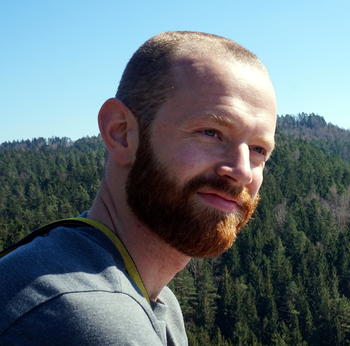
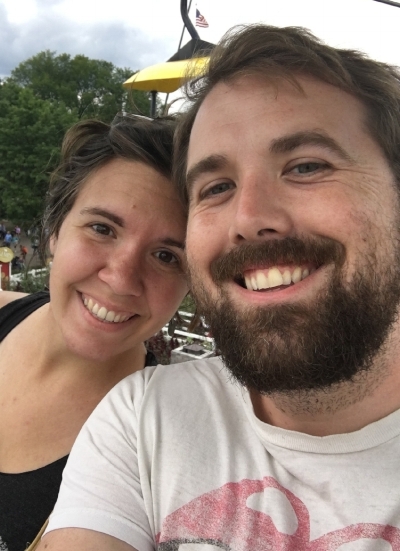
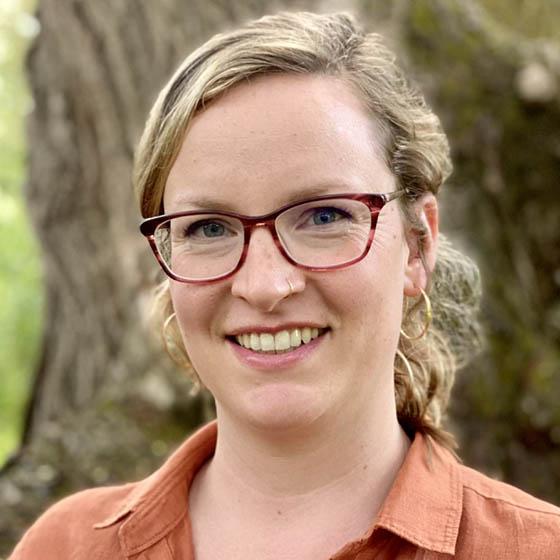
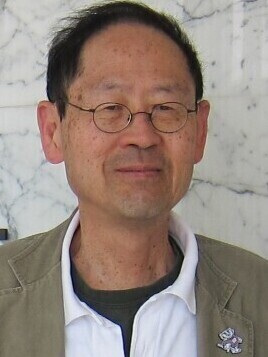
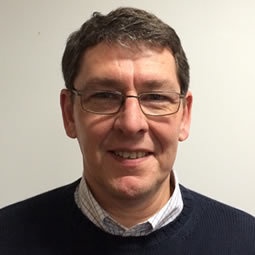
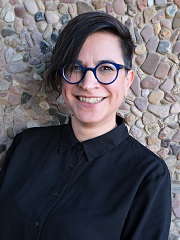
Johannes Aichele, PhD , is a researcher at the Institute of Geophysics of ETH Zürich. His work focuses on advanced wave physics and imaging techniques across geophysical and biomedical domains. Research interests include: Seismic monitoring of geohazards (rock slopes, debris flows) Shear-wave and elastography imaging Wave dynamics in porous/time-dependent materials Acoustic cloning and inverse problems High-frame-rate ultrasound applications Recent publications highlight innovations in distributed acoustic sensing, rupture nucleation imaging, and cross-domain applications of wave physics. Notable trends include real-time monitoring systems, computational wave modeling, and interdisciplinary approaches bridging geophysics and biomedical diagnostics.
Rens Hofman is a Researcher in the Institute of Geological Sciences within the Department of Earth Sciences at Freie Universität Berlin, actively contributing to the Geophysics section and Seismology group since joining as a doctoral candidate in November 2017. His academic background includes: Master of Science in Earth Sciences from Utrecht University (Netherlands), where he developed a shallow seismic velocity model for the Groningen area using passive seismic interferometry. Research internship at LMU Munich's geophysical observatory, focusing on crustal deformation monitoring through ambient seismic noise correlations. Hofman's research centers on seismological methods for analyzing subsurface structures and tectonic processes, with expertise in passive seismic techniques, microseismic event detection, and dense seismic array applications. His current work investigates microseismicity in the South Eastern Alps using the Swath-D network as part of the AlpArray initiative, advancing understanding of Alpine fault systems and stress regimes through innovative waveform analysis. He is integral to the Swath-D project within AlpArray, deploying high-resolution seismic monitoring to study complex Alpine tectonics through ambient noise tomography and microseismic event characterization.
Joseph Byrnes is an Assistant Research Professor at Northern Arizona University, transitioning to UT Dallas. His research focuses on geophysics, seismology, and tectonics, particularly in seismic imaging of subduction zones, mantle dynamics, and lithospheric structure. He leads NSF-funded projects including studies on ocean-mantle dynamics using OBS data and collaborative SZ4D MultiArray initiatives. Key research interests include crustal anisotropy, seismic attenuation tomography, and joint inversion methods applied to surface-wave and scattering data. His work addresses continental margins, cratonic structures, and volcanic systems like the East African Rift and Iceland. Byrnes employs advanced techniques such as transdimensional Bayesian inversion and machine learning for seismic data analysis. Current grants include NSF awards for projects like 'Constraining ocean-mantle dynamics' and 'Data-driven optimization of SZ4D MultiArray.' He collaborates extensively as a Co-PI on multi-institutional initiatives. His fieldwork spans locations such as the Galápagos, Alaska, and the Indo-Burman margin, yielding insights into lithospheric architecture and mantle processes.
Grace Barcheck is an Assistant Professor in the Department of Earth and Atmospheric Sciences at Cornell University, affiliated with the College of Engineering. She holds a B.A. from Washington University in St. Louis (2010) and a Ph.D. from the University of California, Santa Cruz (2018). Her research focuses on understanding deformation processes in geologic materials, particularly ice streams/glaciers and tectonic faults, with applications to sea-level rise and earthquake hazards. Her work integrates seismology, geophysics, and machine learning to study icequakes beneath polar ice sheets, megathrust seismicity in Alaska, and fault slip mechanisms. Notable projects include analyzing icequakes in Antarctica/Greenland, characterizing seismicity near Kodiak Island, and improving marine earthquake detection using transfer learning. Recent publications emphasize migratory earthquake precursors in glacial faults, hydraulically connected subglacial regions, and seismic anisotropy in ice streams. Barcheck collaborates on initiatives like the Alaska Amphibious Community Seismic Experiment and leads DEI efforts through the IDEEAS Working Group at Cornell.
Dr. Chengxin Jiang is an ARC DECRA Research Fellow in Geophysics at the Research School of Earth Sciences (RSES), ANU. He holds affiliations with Harvard University and the University of Tokyo, where he has conducted visiting research. His work focuses on seismology, particularly tectonic and magmatic processes, employing techniques like ambient noise interferometry and seismic tomography. Education: Ph.D. in Geophysics, Macquarie University (2012–2016) M.Sc. in Geology, China University of Geosciences (2010–2012) B.Sc. in Geology (Honor Class), China University of Geosciences (2006–2010) Research Interests: Jiang’s research explores shallow Earth imaging, volcanic and groundwater monitoring, lithosphere deformation, and machine learning applications in geophysics. He develops novel techniques for seismic detection and utilizes dense seismic arrays to study subsurface structures. Recent projects include imaging Zealandia’s lithosphere and monitoring groundwater variations in Australia’s Great Artesian Basin. Teaching: Leads courses in Structural Geology and Tectonics (EMSC3002), Special Topics (EMSC3050), and Research Proposal and Presentation (EMSC8032) at ANU. Advising & Grants: Supervises multiple PhD, Master’s, and Honors students. Leads projects funded by ARC DECRA and industry partnerships, focusing on energy resource exploration and environmental monitoring. Labs & Collaborations: Collaborates with international teams on seismic imaging and hosts datasets like the Eyre Peninsula Nodal Array (DOI:10.7914/ac1p-7y35). Active in editorial roles, including Journal of Earth, Planets and Space .
Prof Louis Moresi is a Professor at the Research School of Earth Sciences, Australian National University. His research focuses on the thermal-mechanical evolution of the Earth's deep interior, particularly mantle convection, plate tectonics, and lithospheric dynamics. He develops computational tools like the Underworld software suite to simulate geodynamic processes, emphasizing open-source practices and reproducible research. Education: DPhil (PhD) in Geophysics, University of Oxford BA (Honors) in Natural Sciences, University of Cambridge Research Interests: Prof Moresi investigates how convective heat loss from the Earth's mantle manifests as plate tectonics, the role of continents in modulating this process, and the interplay between surface processes (e.g., climate change) and deep Earth dynamics. His work integrates numerical modeling, open-source software development, and geodynamic theory to address questions about continental collision, subduction zone dynamics, and lithospheric rheology. Awards: Fellow, Australian Academy of Science (2023) Fellow, American Geophysical Union (2017) Fellow, Royal Astronomical Society (2000) Advising & Grants: He supervises research students and leads projects funded by grants such as "How Large Earthquakes Change Our Dynamically Deforming Planet" (2024–2027). His work includes collaborations on seismic imaging (e.g., Eyre Peninsula Nodal Array) and computational infrastructure for geodynamic modeling (SAM Underworld software system). Labs/Teams: Prof Moresi is a core developer of the Underworld software framework, a collaborative effort advancing numerical geodynamic modeling through Python-based tools for high-performance computing and cloud deployment.
Herbert F. Wang is a Professor in the Department of Geological Engineering at the University of Wisconsin-Madison. His primary affiliation is with the College of Engineering, where he focuses on geodynamical modeling, poroelastic theory, and rock mechanics. His research integrates laboratory experiments and numerical modeling to study subsurface processes, including fracture toughness, hydraulic fracturing, and geothermal reservoir dynamics. Key projects include the kISMET and WHOLESCALE initiatives, exploring hydraulic fracturing in deep mines and geothermal field monitoring. Wang’s work leverages distributed acoustic sensing (DAS) technology for subsurface imaging, seismic analysis, and environmental monitoring. Education details are not explicitly provided in the text, but his professional trajectory indicates advanced training in geological engineering and geophysics. His research spans disciplines such as rock physics, geothermal energy, and mine safety, with field trials at sites like the Sanford Underground Research Facility and Brady Hot Springs. He has contributed to advancements in fiber-optic sensing, poroelastic modeling, and stress analysis through over 50 peer-reviewed articles. Wang’s projects emphasize interdisciplinary collaboration, combining geophysical measurements with computational simulations. Recent studies include analyzing cooling-induced acoustic emissions in granite, calibrating hydro-mechanical behavior in geothermal systems, and optimizing DAS for urban infrastructure monitoring. His work addresses both fundamental science (e.g., anisotropic poroelastic moduli) and applied challenges in energy extraction and subsurface engineering. Key achievements include leading the kISMET project on hydraulic fracturing in deep mines and developing inversion models for poroelastic tomography at Brady Hot Springs. He has pioneered the use of commodity internet fibers for vibration sensing, bridging telecommunications and geophysics. His research also explores machine learning for seismic fault characterization and has produced high-impact findings on fracture propagation and reservoir dynamics.
William Minarik is a Faculty Lecturer and Program Advisor for Earth System Science at McGill University. His expertise encompasses petrology, geochemistry, and laser ablation ICP-MS applications. He teaches courses including Earth System Science, Environmental Geology, and Cosmochemistry. Research focuses on: Melt-rock interactions in mantle lithosphere Deformation fabrics in peridotites GNSS-based environmental monitoring techniques Cosmochemical processes His publications demonstrate technological innovation in geophysical monitoring (particularly GNSS applications for hydrological studies) alongside fundamental research on mantle processes. Recent work includes developing low-cost GNSS instrumentation for flood monitoring and analyzing COVID-19's impact on seismic noise. Current student advising: Mohadeseh Majnoon (Ph.D.): Metamorphism of the Faux Amphibolite, Nuvvuagittuq Greenstone Belt Rachelle Cloutier: Formation of concretions in the Canadian Arctic Ichiko Sugiyama: Petrography of Monteregian Dike systems
Dr. Doyeon Kim is an Assistant Professor in the Department of Earth Science & Engineering at Imperial College London, Faculty of Engineering. His research focuses on terrestrial and planetary seismology, with expertise in planetary interiors, geophysical techniques for subsurface investigation, and seismic analysis of Mars and the Moon. He holds a PhD from Cornell University and has held academic positions including Visiting Assistant Professor at the University of Maryland and Senior Scientist at ETH Zurich. Education: PhD in Earth Science, Cornell University (United States) MSc in Earth Science, Yonsei University (Republic of Korea) BSc in Earth Science, Yonsei University (Republic of Korea) Research Interests: Planetary seismology of Mars and the Moon Core-mantle boundary studies using seismic waves In-situ resource utilization via subsurface geophysical methods Machine learning applications in seismology Lunar crustal thickness analysis Martian crustal composition and tectonics His work integrates seismic data from missions like InSight and Apollo, focusing on crustal structure, mantle dynamics, and impact cratering processes. Key Research Themes (2023-2025): Marsquake catalog refinement and denoising Lunar seismic network development for Artemis missions Core-mantle boundary seismic signatures Impact seismology and multi-messenger observations Grants & Advising: Active in mentoring graduate students/postdocs on planetary seismology projects. Research supported by NASA and European Space Agency grants. Labs/Teams: Collaborates with the Marsquake Service team and InSight mission scientists, contributing to planetary seismology instrument development.
Dr. Ian Bastow is a Senior Lecturer in Earth Science & Engineering at Imperial College London. His research uses earthquake seismology to study crust and mantle evolution, focusing on continental breakup processes in the East African Rift, Turkana Depression, Canadian Shield, and Eastern Mediterranean. Education includes: BSc in Geophysics, University of Edinburgh (1996-2001) MRes in Natural Environment, University of Edinburgh (1996-2001) PhD, University of Leeds (2005) Research combines field deployments with analytical techniques to understand rift dynamics, magmatism, and lithospheric modification. Recent projects examine how mantle plumes influence continental fragmentation and the role of pre-existing structures in rift development. Publications demonstrate strong focus on African rift systems, with increasing emphasis on multi-phase rifting in Turkana. Articles integrate seismology, geochemistry, and structural analysis to resolve continental breakup mechanisms. Supervises PhD students through NERC and Imperial-funded projects. Alumni hold positions at Oxford, Cambridge, and CNRS. Coordinates international collaborations including NSF-funded projects in Canada.
Prof. Heiner Igel is a Professor in the Department of Earth and Environmental Sciences at Ludwig-Maximilians-Universität München. His research focuses on advanced seismic instrumentation, rotational ground motion analysis, planetary geophysics, and nonlinear seismic wave dynamics. He leads multidisciplinary projects such as the NEPOS initiative for planetary exploration and the ROMY ring laser observatory. Key research areas include: Development of 6-component (6C) seismic sensors for structural health monitoring Full-waveform inversion techniques for crustal and mantle imaging Applications of rotational sensing in earthquake engineering and lunar exploration Recent work addresses novel methods for: Nonlinear seismic rupture modeling with discontinuous Galerkin methods Planetary subsurface exploration using autonomous robotic swarms Quantifying seismic anisotropy through multicomponent observations His lab operates cutting-edge facilities including the ROMY ring laser and collaborates globally on projects like the SmartSolo seismic node development for geothermal and environmental research.
Professor James Martin is a faculty member in the Department of Mechanical and Construction Engineering at Northumbria University. His expertise lies in geophysical and geotechnical methods, with a focus on developing innovative exploration, monitoring, and characterization techniques. He specializes in sensor technology, signal processing, and robust measurement systems for harsh environmental conditions. His research integrates advanced instrumentation like IoT platforms, surface acoustic wave sensors, and ground-penetrating radar to address challenges in infrastructure monitoring, cold environment engineering, and material durability. Key research areas include permafrost degradation analysis, pavement structural health assessment, and landslide detection systems. His work often bridges academic and industrial applications, leveraging his experience in oil and gas project management to solve complex engineering problems. Recent projects involve low-cost IoT data capturing systems, anti-icing technologies using propagating surface acoustic waves, and CLT panel moisture monitoring for sustainable construction. His publications span journals such as Permafrost and Periglacial Processes , IEEE Transactions on Instrumentation and Measurement , and Langmuir , reflecting contributions to geophysics, materials science, and civil engineering. His research emphasizes real-time environmental monitoring, subsurface characterization, and holistic infrastructure solutions. James Martin has collaborated on interdisciplinary projects involving cold climate engineering, structural health monitoring, and geotechnical hazard mitigation. His work highlights the application of advanced sensors and data analytics to address global challenges in environmental sustainability and infrastructure resilience.
Gregory Mountain is a Professor at Rutgers University's Department of Earth and Planetary Sciences. His research focuses on sea level rise, marine sediment transport, and sequence stratigraphy, with a strong emphasis on continental margin dynamics. He has conducted extensive studies on the New Jersey continental shelf, Gulf of California, and Mediterranean margins, exploring processes like eustasy, sediment supply, and tectonic influences on stratigraphy. Education: B.A. in Geology/Geophysics from Brown University (1972), M.A. and Ph.D. in Marine Geology from Columbia University (1976, 1981). Courses taught include Geophysics, Marine Geology, and Seismic Processing. Research highlights include collaborations on IODP drilling projects to study Miocene sequences, seismic stratigraphy of abyssal sediment drifts, and the role of submarine canyons in margin evolution. His work integrates seismic data, drilling logs, and numerical modeling to unravel long-term sedimentary and climatic interactions. Recent studies focus on the stratigraphic architecture of passive margins, carbon sequestration potential in offshore basins, and the influence of Milanković cycles on sedimentation patterns. His articles emphasize interdisciplinary approaches to understanding sea-level history and sedimentary processes across geological timescales.
Gregor Hillers is a Professor at the Department of Geosciences and Geography, University of Helsinki, affiliated with the Helsinki Institute of Sustainability Science and Helsinki Institute of Urban and Regional Studies. He leads the Institute of Seismology and serves as a doctoral supervisor in Geosciences. His research focuses on seismology, fault zone dynamics, and geophysical imaging using dense seismic arrays. Key affiliations include the Nordic EPOS Data Hub and the FLEX-EPOS instrument pool initiatives. Education: PhD in Geophysics (ETH Zurich), Diplom in Geophysics (Ruhr-Universität Bochum) Postdoctoral roles at Caltech, UC Santa Barbara, and Université Grenoble Alpes Research interests center on induced seismicity, fault zone structure, seismic hazard assessment, and innovative array-based imaging techniques. Recent projects include the DYNALake study of frozen lake dynamics and seismic risk mitigation in urban environments. Over 39 peer-reviewed publications (2016–2025) highlight work on seismic source analysis, array-derived motion scaling, and instrument pool development. Active in international collaborations and data infrastructure projects. Grants include Academy of Finland funding for DYNALake (2024–2028) and Energiforsk AB-supported SEISMIC RISK project. Leads the FINNSIP mobile seismic instrument pool. Supervised multiple master’s theses and contributes to public outreach initiatives.
Prof. Céline Hadziioannou is a Professor of Seismology at the University of Hamburg, leading the Seismology group within the Department of Earth System Sciences. She serves as Director of the Institute of Geophysics and is affiliated with the Centrum für Erdsystemforschung und Nachhaltigkeit (CEN). Her work focuses on seismic noise sources, microseisms, and their applications in climate and structural health monitoring. Academic Roles: Professor, Director of Institute of Geophysics Affiliations: CEN, CLICCS (Climate, Climatic Change, and Society) Research Interests: Seismology , Geophysics , Ocean-Atmosphere Interactions , and Structural Health Monitoring . She investigates ocean-generated microseisms, rotational seismology, and machine learning applications in seismic data analysis. Recent work includes studies on seismic noise impacts on particle accelerators and volcanic activity monitoring. Grants & Projects: Coordinator of the SPIN Innovative Training Network (EU Horizon 2020), Principal Investigator in projects like 3G-GWD (3rd Generation Gravitational Wave Telescopes) and ErUM-Wave (Wavefield Anticipation). Labs/Teams: Leads the Institute's YouTube Channel and the TwistPy open-source project for wavefield analysis.