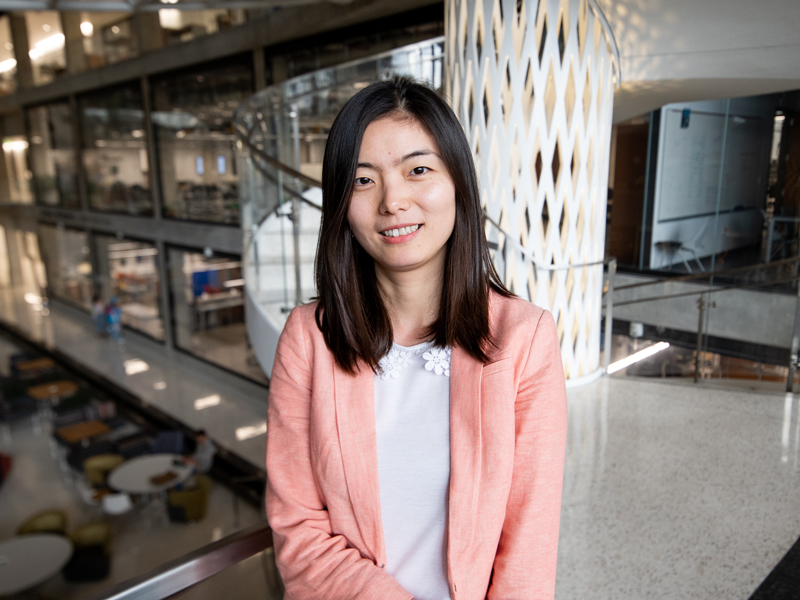
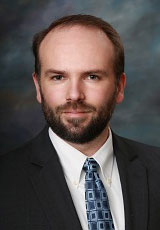
Sarah Billington is the UPS Foundation Professor of Civil and Environmental Engineering at Stanford University and a Senior Fellow at the Woods Institute for the Environment. Her research program focuses on sustainable building design, human wellbeing, and ethical supply chain practices. Education: PhD, University of Texas at Austin, Structural Engineering (1997) MSE, University of Texas at Austin, Structural Engineering (1994) BSE, Princeton University, Civil Engineering & Operations Research (1990) Her lab employs interdisciplinary methods to study how built environments impact human physical, psychological, and social wellbeing. Current projects include developing tools to quantify nature exposure in buildings, exploring affordable housing's role in wellbeing, and using AI to assess forced labor risks in material supply chains. While no longer active in this area, her group previously pioneered research on sustainable construction materials like bio-based composites and ductile cement-based composites. Her recent publications address topics such as nature integration in architecture, workplace design optimization, and health impacts of building materials. The Billington Lab at Stanford fosters collaborative team science, welcoming partnerships to advance occupant-centric engineering solutions.
California State University, Long BeachUnited States
Vesna Terzic is a Professor in the Department of Civil Engineering and Construction Engineering Management at California State University Long Beach's College of Engineering. Her research specializes in seismic performance assessment, infrastructure resilience, and probabilistic risk analysis of structures. Education includes a PhD in Structural Engineering from UC Berkeley, MS in Earthquake Engineering from Ss. Cyril and Methodius University, and BS in Structural Engineering from University of Belgrade. Research focuses on developing advanced computational frameworks for evaluating post-earthquake functionality of buildings and bridges. Her work integrates performance-based engineering with resilience quantification, emphasizing practical applications for seismic design and retrofitting. Recent publications demonstrate consistent focus on functional recovery modeling, structural health monitoring, and optimization of protective systems. Research trends show progression from component-level analysis to regional recovery simulation frameworks. Major awards: ACI Chester Paul Siess Award for Excellence in Structural Research (2017) Popert Fellowship, UC Berkeley (2009) Professional service includes membership on FEMA P-58 project committees and contributions to OpenSees development. Current projects investigate soil-structure interaction effects on tall buildings and recovery-based design methodologies.
Mohamed Noureldin is an Assistant Professor at the Department of Civil Engineering, Aalto University , Finland, with prior academic roles at Sungkyunkwan University, South Korea (2015–2022). His expertise lies in integrating Artificial Intelligence (AI) with Structural Health Monitoring (SHM) , Structural Digital Twin , Predictive Maintenance , and Seismic Retrofitting . Research Focus : AI-powered sustainable structural design, smart retrofitting, predictive maintenance, structural material innovation, and next-generation performance-based seismic/wind design. Industrial Experience : 20+ years in offshore/onshore structural engineering (Hyundai Heavy Industries, Samsung Engineering, Arab-Swiss Engineering Company, Zuhair Fayez Partnership). Teaching : Courses in structural analysis, seismic design, dynamics, and reinforced concrete at Aalto and Sungkyunkwan Universities. Laboratory : Leads the Structural Design AI Lab (SDAI), focusing on AI-driven resilient infrastructure. Contact : mohamed.noureldin@aalto.fi , +358504544861. His publications explore cutting-edge applications of AI, ML, and DL in seismic retrofitting, structural durability, soil stabilization, and hybrid damping systems. Collaborative work emphasizes life-cycle cost assessment and augmented reality for predictive maintenance.
Giuseppe Carlo Marano is a Full Professor at the Department of Structural, Building and Geotechnical Engineering at Politecnico di Torino. He is also a component of the SISCON Interdepartmental Center for Infrastructure Safety. With expertise in civil and structural engineering, his work focuses on machine learning applications, seismic risk reduction, and sustainable structural optimization. Education Graduated cum laude in Structural Engineering from Polytechnic University of Bari PhD in Structural Engineering from University of Florence (2000) Research Interests Marano's research spans structural optimization, seismic engineering, and machine learning applications in civil infrastructure. He develops advanced computational models for: Seismic retrofitting of existing structures Optimization of steel and masonry structures Recycled materials in concrete production AI-driven structural health monitoring Multiobjective design methodologies Publication Trends His recent work emphasizes: Machine learning for concrete mix design and damage assessment Optimization of gridshells and arch structures Seismic isolation systems and vibration control Sustainable construction practices with recycled materials Multiobjective genetic algorithms for structural design Scientific Recognitions National Scientific Qualification - First Band (2013, MIUR Italy) Certificate of Appreciation for Outstanding Lecture (2012, China) Academic Contributions As an educator, he teaches: Consolidamento Strutturale (Structural Consolidation) Dinamica delle Vibrazioni Random (Random Vibration Dynamics) Progettazione Generativa (Generative Design) He also leads Challenge@PoliTo initiatives and contributes to national infrastructure safety regulations. Research Projects ADAPT4CE - Adaptive Digital Systems for Circular Economy (2025-2028) AI-ENVISERS - AI for Seismic Retrofit Environmental Impact (2023-2025) ADDOPTML - Additive Manufacturing Optimization (2021-2025)
Associate Professor Bambang Trigunarsyah holds a position at RMIT University since 2018, affiliated with the School of Property, Construction and Project Management (PCPM). He earned his BSc in Civil Engineering from Colorado School of Mines, a Master's in Civil Engineering (Construction Management) from the University of Indonesia, and a PhD in Engineering Project Management from the University of Melbourne. His career spans industry roles, including project engineering in Indonesia's oil and gas sector, academic leadership at the University of Indonesia, and international teaching/research appointments at Queensland University of Technology (QUT) and King Fahd University of Petroleum and Minerals in Saudi Arabia. Research interests focus on post-disaster reconstruction, infrastructure project governance, constructability of infrastructure, and project management in developing countries. Notable projects include risk management frameworks using blockchain, circular economy in Saudi construction, and BIPV energy solutions. He actively supervises HDR students in areas like public-sector project success determinants and thermal environment studies. Bambang serves as Higher Degree Research Delegate Authority (HDR DA) for the School of PCPM and teaches postgraduate project management programs. Professional memberships include AIPM, PMI, and ASCE. His industry advisory roles include Indonesia's National Construction Service Development Board (2002-2007) and Australia-Indonesia Centre's Infrastructure Cluster (2016-2018). Recent research emphasizes BIM applications in infrastructure preservation, risk assessment methodologies, and climate-resilient construction. His work bridges theory and practice, addressing challenges in emerging economies and complex project environments.
Kevin Mackie is Professor and Chair of the Department of Civil, Environmental and Construction Engineering (CECE) at the University of Central Florida’s College of Engineering. He has been a faculty member since 2006, advancing from assistant to full professor, and previously served as associate chair and interim department chair. His leadership includes spearheading departmental improvements in culture, workload policy, and digital accessibility. Education: Ph.D. in Civil Engineering, University of California, Berkeley (2004) M.S. in Civil Engineering, University of California, Berkeley (2000) B.E. in Engineering, Cooper Union, New York (1998) His research focuses on structural engineering , particularly in bridge engineering , performance-based seismic design , nonlinear analysis , and advanced materials for infrastructure repair . He integrates analytical, numerical, and experimental methods to assess and improve the resilience of civil infrastructure under extreme loads. His work addresses critical challenges in soil-structure interaction, seismic retrofitting, and the use of composites and smart materials. The 15 most recent publications reflect a strong emphasis on nonlinear modeling , seismic performance , and computational structural analysis of bridges and tall buildings. Key themes include fiber-based modeling, contact-friction problems, soil-structure interaction, and probabilistic assessment, demonstrating a consistent trajectory toward resilient and sustainable infrastructure systems. Scientific Awards: Faculty advisor of the year (2022, 2021, 2019) – ASCE East Central Branch and Florida Section Technical Contribution Leader Award Winner (2021) – ASCE East Central Branch Distinguished faculty member at UCF (2018) – Department of Housing and Residence Life Arthur N.L. Chiu Award for excellence as faculty advisor (2018) – Chi Epsilon Honor Society Mackie has been a dedicated mentor, supervising 11 doctoral , 18 master’s , and over 30 undergraduate students . His research has been funded by the National Science Foundation , U.S. Department of Transportation , Caltrans , FDOT , and industry partners. He has published nearly 200 papers and been cited over 7,000 times. He led the reaccreditation of CECE’s undergraduate programs and established the accelerated bachelor’s-to-master’s pathway. He leads the Structures Laboratory at UCF and collaborates with multidisciplinary teams on infrastructure resilience. His vision includes expanding graduate programs, strengthening industry partnerships, and diversifying the Senior Design curriculum to reflect real-world engineering challenges.
Prof. Dr. Ercan Yüksel is a full Professor in the Department of Civil Engineering at Istanbul Technical University (ITU), College of Engineering. He has been a faculty member at ITU since 1990, progressing from Assistant Professor to Professor in 2017. His research focuses on earthquake engineering, structural dynamics, and numerical modeling, with applications in seismic design, energy dissipation, and structural health monitoring. PhD, Civil Engineering, Istanbul Technical University MS, Structural Engineering (with thesis), Istanbul Technical University BS, Civil Engineering, Istanbul Technical University His research interests are centered on earthquake engineering , particularly seismic input energy analysis , energy dissipation systems , reinforced and precast concrete structures , and seismic isolation . He actively investigates the dynamic behavior of structures under earthquake loads and develops innovative solutions for improving structural resilience. His work integrates advanced numerical modeling with experimental validation. Recent publications (2023–2025) highlight a strong focus on energy-based seismic design, performance of mechanical couplers, damping systems for high-voltage insulators, and fatigue behavior of railway tracks. These works are closely tied to real-world seismic events like the 2023 Kahramanmaraş earthquake, demonstrating applied and impactful research. His scientific recognition includes: Notable Work Award, Turkish Academy of Sciences (TÜBA), 2012 Golden Beam Award, Turkish Prefabricated Association, 2011 Prof. Yüksel is an active Principal Investigator on multiple research projects funded by ITU’s BAP program, covering topics such as smart sleepers for railway monitoring, novel seismic input energy spectra, and earthquake isolation for racking systems. He has supervised numerous theses and is involved in professional organizations including UNESCO-IPRED and the Turkish Earthquake Foundation. He leads research on structural health monitoring of ballasted railway lines using smart sleeper technology and is developing earthquake isolation systems for industrial storage racks. His lab integrates experimental testing with numerical simulation to validate new structural components under cyclic and biaxial loading.
Yunlan (Emma) Zhang is an Assistant Professor in the Department of Civil, Architectural, and Environmental Engineering at the University of Texas at Austin, part of the Cockrell School of Engineering. Her research focuses on architected materials, deployable structures, nature-based solutions, and extraterrestrial materials. She holds a B.S. from The Ohio State University (2012), M.S. and Ph.D. from Purdue University (2014, 2019), and completed a postdoc at the University of Oxford (2022). Her work bridges mechanical metamaterials with biomedical and environmental applications, including deployable medical devices and sustainable infrastructure. Education: B.S., The Ohio State University, 2012 M.S., Purdue University, 2014 Ph.D., Purdue University, 2019 Postdoc, University of Oxford, 2022 Her research interests emphasize biomimetic materials inspired by natural systems (e.g., avian feathers) and their translation into engineered solutions. Current projects include developing lightweight superalloys for aerospace, shape-memory materials for medical devices, and artificial reefs for marine conservation. She leads the UT Metamaterials and Advanced Structures Lab (UTMASLab), accessible at https://sites.utexas.edu/utmaslab/ . Recent publications explore novel applications of architected materials in healthcare, disaster-resistant structures, and environmental sustainability. Her work frequently appears in top journals across mechanical engineering, materials science, and biomedical engineering disciplines.
Prof. Dr. Hakkı Polat Gülkan is a Professor at Başkent University's Civil Engineering Department. With a PhD (1971) and Master's (1968) from the University of Illinois in Civil Engineering and a Bachelor's (1966) from METU, his career spans over five decades in earthquake engineering, structural dynamics, and disaster management. PhD: University of Illinois, Civil Engineering (1971) Master's: University of Illinois, Civil Engineering (1968) Bachelor's: Middle East Technical University, Civil Engineering (1966) His research focuses on seismic risk assessment, structural behavior under extreme loads, and disaster mitigation strategies. Key contributions include earthquake simulator development, ground motion analysis, and retrofitting techniques for masonry and reinforced concrete structures. He has published extensively on deformation limits, response spectra, and historical building preservation. Recent work includes 15+ articles from 2024-2012 analyzing Istanbul's seismic hazards, Marmara region dynamics, and post-earthquake structural integrity. Conference papers address Turkey's endemic building vulnerabilities and deformation thresholds for seismic isolation systems. Scientific Achievements: Elected to U.S. National Academy of Engineering (2023) As an active journal reviewer for 13+ publications (2023-2024), he contributes to advancing earthquake engineering discourse. His teaching portfolio includes advanced structural analysis, concrete mechanics, and seismic design courses.
Dr. Esmaeel Esmaeeli is a Senior Lecturer in Civil and Environmental Engineering at Brunel University London, serving as Course Director for the MSc in Structural Engineering. His work focuses on sustainable structural retrofitting solutions, safety, and resilience of concrete and masonry structures. Brunel University London (Current: Senior Lecturer) Queen’s University Belfast (Postdoctoral Fellow, Horizon 2020 MSC Fellowship) University of Minho (PhD research on Hybrid Composite Plate) K. N. Toosi University (MSc research on seismic strengthening) His research spans advanced materials like Strain-Hardening Cementitious Composite (SHCC) and Carbon Fibre Reinforced Polymer (CFRP) for seismic retrofitting, computational modeling of FRP-concrete interfaces, and dynamic response under extreme loads. Recent work includes the SMArtPlate and Hybrid Composite Plate (HCP) systems. Scientific recognition includes the Horizon 2020 Marie Skłodowska-Curie Individual Fellowship and a Portuguese Foundation for Science and Technology (FCT) scholarship. He has advised on structural vulnerability assessments and leads teams in consultancy projects.
Dr. Maria Anna Polak is a Professor in the Department of Civil and Environmental Engineering at the University of Waterloo, cross-appointed in the Faculty of Engineering. Her research focuses on advanced structural analysis, composite materials, and innovative construction technologies. She specializes in concrete structures, fiber-reinforced polymers (FRP/GFRP), and nondestructive evaluation methods. Her work addresses challenges in structural safety, durability, and sustainable design through computational modeling and experimental validation. Research Interests: Finite Element Analysis of Reinforced Concrete Structures FRP/GFRP Reinforcement for Concrete Applications Punching Shear Behavior and Design 3D-Printed Construction Materials Nondestructive Testing (NDT) with LiDAR and Ultrasonics Time-Dependent Behavior of Polymers and Composites Her recent publications emphasize advancements in computational modeling (FEA) for complex structural systems, material characterization of novel composites, and optimization of concrete components under seismic and environmental loads. Notable trends include integration of emerging technologies like smartphone LiDAR for on-site assessment and development of predictive models for FRP-degraded systems. Grants & Collaborations: Her work has been supported by industry partnerships (e.g., Horizontal Directional Drilling research) and academic initiatives. She contributes to international standards through experimental validation of design methods for modern construction materials. Labs/Teams: Active in the University of Waterloo's Structural Engineering and Applied Mechanics research group, focusing on smart infrastructure and material innovation.
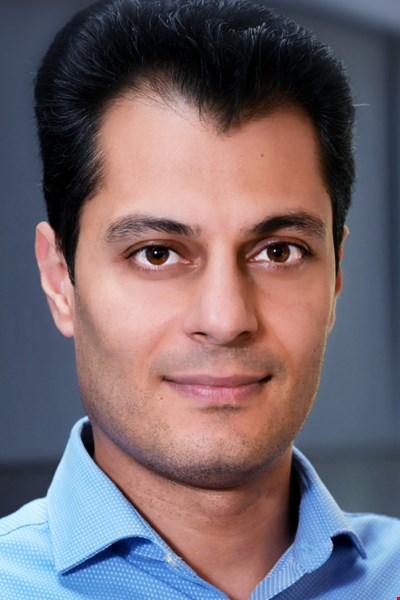
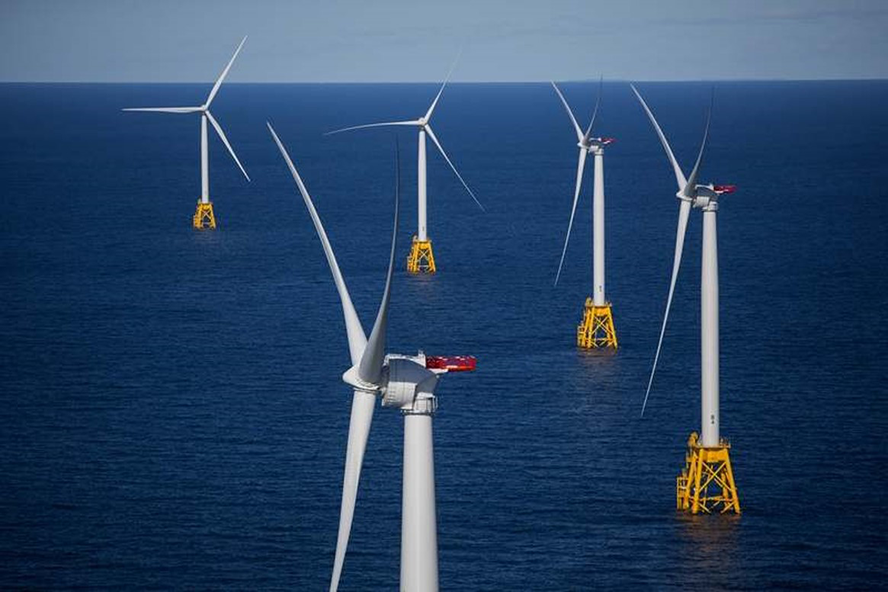
Babak Moaveni is a Professor in the Department of Civil and Environmental Engineering at Tufts University, serving as the Associate Chair since September 2024. He also holds a joint appointment as a Professor in Electrical and Computer Engineering. His research focuses on structural health monitoring, Bayesian inference, earthquake engineering, and offshore wind energy systems. Moaveni earned his Ph.D. in Structural Engineering from the University of California San Diego (2007), following an M.S. (2001) and B.S. (1999) from Sharif University of Technology in Tehran, Iran. His research interests span probabilistic system identification, signal processing, uncertainty quantification, and verification/validation of computational models. Notable grants include leadership in the PIRE project on offshore wind energy digital twins and the Coastal Virginia Offshore Wind Pilot Project. He has supervised multiple Ph.D. and M.S. students, with current advisees including Mehdi Akhlaghi and Nasim Partovi-Mehr. Moaveni has received the Best Presentation Award at the 2022 EDGE Symposium and serves on editorial boards for journals like Structural Health Monitoring and Frontiers in Built Environment . His lab, the Structural Health Monitoring Lab, specializes in infrastructure management and offshore wind energy systems. Key professional activities include membership in the American Society of Civil Engineers (ASCE) and roles on Tufts' Tenure and Promotion Committee. His teaching includes courses on structural health monitoring, numerical methods, and structural reliability.
Prof. Muhittin Eren Uçkan is a Professor in the Department of Civil Engineering at Rafet Kayış Faculty of Engineering. His work focuses on earthquake engineering, structural dynamics, and seismic performance of infrastructure systems. Education: MS in Civil Engineering (1987) from Middle East Technical University, PhD in Earthquake Engineering (1994) from Boğaziçi University Key Research Areas: Seismic response of pipelines, soil-structure interaction, base isolation systems, and infrastructure resilience His recent publications analyze post-earthquake performance of transmission pipelines (2024 Kahramanmaras), liquid storage tanks (2023), and buried steel pipes (2016–2019). Studies emphasize fault crossing effects , sloshing damping , and seismic risk frameworks . Administrative roles include Vice Dean at Gebze Institute of High Technology (1998), Head of Department (1995–1998), and Commission Presidency at Alanya Aladdin Keykubat University (2020).
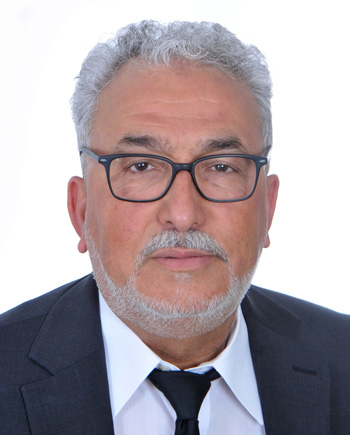
Abdeldjelil Belarbi is the Hugh Roy and Lillie Cranz Cullen Distinguished Professor of Civil and Environmental Engineering at the University of Houston’s Cullen College of Engineering. He holds fellowships from the American Concrete Institute (ACI), Structural Engineering Institute (SEI), American Society of Civil Engineers (ASCE), and other leading organizations. His academic career spans over three decades, including roles as Department Chair (2009–2013) and faculty positions at the University of Missouri-Rolla (now Missouri S&T), where he contributed to research centers like the Intelligent Systems Center and Materials Research Graduate Center. Belarbi’s education includes a Ph.D. (1991) and M.S. (1986) in Civil/Structural Engineering from the University of Houston, and a B.S. (1983) from the University of Sciences and Technology of Oran, Algeria. His research focuses on sustainable infrastructure, corrosion-resistant materials, FRP-reinforced concrete, and seismic resilience. He has pioneered studies on prestressed concrete girders, bridge pile repair, and shape memory alloy confinement for columns. His 150+ publications emphasize FRP applications, structural durability, and innovative repair techniques. Awards include the Cullen Distinguished Professorship and recognition as a Fellow in multiple engineering societies. Belarbi has advised numerous students and led interdisciplinary projects on infrastructure sustainability and advanced materials. Awards: Cullen Distinguished Professorship, ACI Fellow, ASCE Fellow, IIFC Fellow Key Research: FRP-reinforced concrete, corrosion-resistant steels, bridge retrofitting, shape memory alloys Leadership: Department Chair (UH), Dean’s Teaching Scholar (MU-Rolla)
Dr. Alan Lloyd is an Assistant Professor in Civil Engineering at the University of New Brunswick, specializing in structural response to extreme loads. He directs experimental research at the Drop Mass Impact Test Facility, focusing on blast-resistant design and retrofit techniques. Education: PhD Civil Engineering, University of Ottawa MASc Civil Engineering, University of Ottawa BEng Civil Engineering, Lakehead University Diploma Civil Engineering Technology, Camosun College Research: Investigates blast/impact effects on structures, structural retrofitting, material behavior under high strain rates, and experimental validation using shock tubes and impact testing. Current projects include developing blast-resistant building components and retrofit solutions for existing infrastructure. Publications: Focus on blast dynamics, FRP composites for structural strengthening, and experimental mechanics. Recurring themes include concrete/wood material performance under explosive loads and design methodologies for blast mitigation. Awards: NSERC Graduate Scholarships National Security Innovation Competition prizes (2010, 2011) ACI Blast Prediction Contest winner Advising: Supervises graduate students researching FRP materials, concrete properties, and structural modeling. Manages industry collaborations on blast-resistant technologies. Facilities: Leads development of the Drop Mass Impact Test Facility for structural component testing under controlled impact conditions.