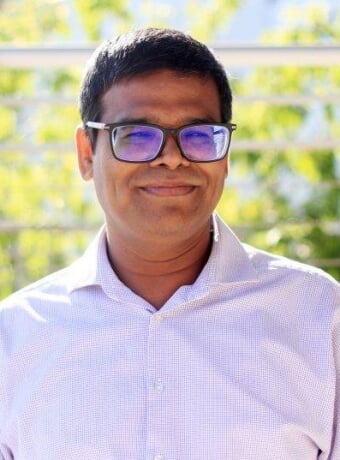
Wenrui Huang is a Professor in the Department of Civil & Environmental Engineering at Florida A&M University-Florida State University (FAMU-FSU). He holds a Ph.D. (1993), M.S. (1986), and B.S. (1982) in Civil Engineering from the University of Rhode Island and Hohai University. His research focuses on Coastal & Estuarine Hydrodynamics, Surface Water Quality Modeling, and Neural Network Applications in Hydrology. Professional Affiliations: Licensed Professional Engineer (PE), Chair of the Professional Development Committee at FAMU-FSU. Key Contributions: Published in coastal hazards, hurricane modeling, and storm surge assessment. Edited the book Coastal Hazards (2010). Research emphasizes numerical modeling of extreme events, including tsunami propagation and hurricane-induced wave dynamics. His work integrates computational methods with environmental systems analysis.
Simon Carn is a Professor in the Department of Geological and Mining Engineering and Sciences at Michigan Technological University, specializing in satellite-based monitoring of volcanic degassing and atmospheric pollution. His work leverages NASA satellite constellations to quantify sulfur dioxide emissions and their climate impacts. Education: PhD in Volcanology from Cambridge University MS in Volcanology and Magmatic Processes from Université Blaise Pascal BA in Earth Sciences from Oxford University Research Focus: Carn pioneers the use of space-borne sensors like OMI and TEMPO to measure volcanic SO 2 , ozone, and other trace gases. His research bridges satellite observations with climate modeling to understand sulfate aerosol formation, volcanic cloud transport, and anthropogenic pollution sources. Key methodologies include DOAS/FTIR remote sensing, satellite-ground data validation, and aviation hazard mitigation systems. Publication Trends: Recent work (2023-2025) centers on high-cadence monitoring via geostationary satellites (TEMPO, DSCOVR/EPIC), analysis of major eruptions (Hunga Tonga, Raikoke), and extending 20+ years of global SO 2 records. Research emphasizes volcanic-climate interactions, eruption response protocols, and quantifying underreported passive degassing that affects climate models.
Keith D. Koper is a Professor in the Department of Geology & Geophysics at the University of Utah and serves as Director of the University of Utah Seismograph Stations (UUSS). He is also the editor-in-chief of The Seismic Record . His work integrates academic research with operational seismic monitoring and public safety initiatives across Utah and the Intermountain West. Education: PhD in Geophysics, Washington University, 1998 BA in Math, Geology, and ISP, Northwestern University, 1993 Dr. Koper's research focuses on array seismology, forensic seismology, deep Earth structure (especially the inner core), earthquake rupture imaging, ambient seismic noise, and seismic hazards in the Intermountain West, including mining-induced and urban earthquakes. His work combines observational seismology with advanced signal processing and machine learning techniques to improve detection, discrimination, and imaging capabilities. He has led or contributed to major projects involving the Wasatch Front, Yellowstone, and regional seismic networks. His recent research emphasizes machine learning for earthquake detection, high-resolution relocation of aftershock sequences (e.g., Magna 2020, Bluffdale 2019), microseism generation in lakes, and fine-scale imaging of the Earth's inner core using seismic reflections. His studies often involve interdisciplinary collaboration, particularly with mining engineering and geodesy. Dr. Koper's research has been consistently funded by federal and state agencies, including the National Science Foundation (NSF), U.S. Geological Survey (USGS), Department of Energy (DOE), Air Force Research Laboratory (AFRL), and the Utah Department of Public Safety. His publications reflect a strong trend toward integrating computational methods with traditional seismological analysis to tackle complex problems in both natural and induced seismicity. Scientific Service and Leadership: Editor-in-Chief, The Seismic Record Director, University of Utah Seismograph Stations Secretary, U.S. Air Force Seismic Review Panel Former Chair and Vice-Chair, Utah Seismic Safety Commission Dr. Koper mentors graduate students in seismology and geophysics, including recent advisees Sean Hutchings and Alysha Armstrong. His research group actively engages in both fundamental and applied seismological research, with strong ties to national labs such as Sandia. The group is involved in deploying portable seismic arrays, analyzing large datasets, and developing new algorithms for event detection and classification. The University of Utah Seismograph Stations, under his leadership, plays a critical role in monitoring seismicity in Utah and Yellowstone, producing real-time earthquake information, ShakeMaps, and public outreach materials. The station also contributes to national and international efforts in nuclear test monitoring and volcanic hazard assessment.
Sanjay Srinivasan is a Professor of Petroleum and Natural Gas Engineering and the John and Willie Leone Family Chair in the Department of Energy and Mineral Engineering at Penn State University. He serves as Director of the EMS Energy Institute and leads the Penn State Initiative for Geostatistics and GeoModeling Applications. His research focuses on petroleum reservoir characterization, CO2 sequestration, and integration of seismic data in reservoir models through advanced geostatistical and machine learning methods. Ph.D., Petroleum Engineering, Stanford University M.S., Petroleum Engineering, University of Southern California B. Tech, Petroleum Engineering, Indian School of Mines Srinivasan’s work addresses reservoir recovery processes, unconventional reservoirs, and subsurface energy security. His methodologies include probabilistic modeling, data assimilation, and AI-driven workflows for fracture network mapping and porous media generation. Key applications span Gulf of Mexico deepwater plays and geological carbon storage. Recent publications highlight trends in: Reinforcement learning for geostatistical workflows and well optimization Physics-informed GANs for 3D porous media modeling Probabilistic integration of geomechanical and geostatistical inferences Machine learning approaches for seismic fracture identification CO2 sequestration in heterogeneous reservoirs Scientific awards include Distinguished Member (SPE, 2022), SPE Faculty Pipeline Award (2012), Cox Visiting Fellowship (Stanford, 2010), and SPE Southwest Region Reservoir Description Award (2009).
Abdullah Mueen is a Professor and Associate Chair in the Department of Computer Science at the University of New Mexico (UNM), where he has been since 2013. Previously, he worked as a Scientist in the Cloud and Information Sciences Lab at Microsoft Corporation. Research Interests : His work focuses on Temporal Data Mining , with emphasis on efficiency , interactivity , and interpretability . Key areas include Blockchain Data Mining (e.g., BitLink for Bitcoin cluster analysis), Seismic Data Mining (e.g., PAW for aftershock detection), and Social Media Mining (e.g., DeBot for Twitter bot detection). Article Trends : His recent publications span four domains: Seismology : Algorithms for earthquake data analysis (e.g., focal depth inference, aftershock classification). Blockchain : Temporal linkage of Bitcoin addresses (BitLink) and cryptocurrency fraud detection. Traffic Safety : Multi-LiDAR data fusion for real-time road safety monitoring. Time Series Methods : Innovations like MASS similarity search and DAMP anomaly detection for massive datasets. Scientific Awards : ACM SIGKDD Test-of-Time Award (2022) UNM Provost Research Leader Award UNM School of Engineering Junior Faculty Research Excellence Award KDD 2012 Doctoral Dissertation Contest Runner-Up KDD 2012 Best Paper Award Advising and Grants : He has mentored 11 PhD students now employed at institutions like Microsoft, Meta, and Lawrence Livermore National Lab. His research is funded by NSF , NIH , DARPA , AFRL , NEC , Exxon , Microsoft , and LANL .
Marat I. Latypov serves as Assistant Professor in the Department of Materials Science and Engineering at the University of Arizona's College of Engineering. He is also a member of the Applied Mathematics Graduate Interdisciplinary Program and leads the Materials Informatics Lab. His research spans computational materials science, sustainable alloy design, and machine learning applications for materials development. Dr. Latypov holds a PhD in Materials Science and Engineering from Pohang University of Science and Technology (POSTECH, South Korea, 2014) and a Dipl.-Ing. in Engineering Physics from Ufa State Aviation Technical University (Russia, 2011). His postdoctoral training included appointments at Georgia Tech/CNRS in France and the University of California, Santa Barbara. His research focuses on materials informatics , physics-informed machine learning , and sustainable structural alloys . Key methodologies include graph neural networks for polycrystal mechanics, vision transformers for microstructure representation, and adaptive experimental design for materials optimization. Recent work emphasizes circular economy applications through construction waste recycling and copper mine tailings valorization. Analysis of his publication record reveals strong emphasis on computational microstructure-property linkages (35% of recent work), machine learning for materials design (30%), and sustainable materials processing (25%), with growing integration of large language models for materials knowledge extraction. NSF CAREER Award (2025) : For damage control in recycled aluminum alloys ISTI Distinguished Faculty Scholar (2024) : At Los Alamos National Laboratory Novelis Hackathon First Prize (2021) : Computer vision application Acta Materialia Outstanding Reviewer (2018) Young Researcher Award (2017) : NanoSPD7 Conference Dr. Latypov advises PhD students including Herbold Fellow Zhuocheng Huang and leads projects funded by NSF and the Grantham Foundation. Current initiatives include chalcopyrite leaching optimization for copper mining and graph neural network development for fatigue prediction. His Materials Informatics Lab maintains collaborations with Los Alamos National Laboratory, MIT, and industry partners including Novelis. The lab operates at the intersection of metallurgy , machine learning , and high-performance computing , with capabilities spanning deep learning, Bayesian inference, and cloud-based computational infrastructure. Recent news highlights participation in CODAS-HEP summer school and publication of vision transformer work in Acta Materialia.
Brandon Schmandt is a Professor in the Department of Earth, Environmental and Planetary Sciences at Rice University, where he leads research using seismology to investigate Earth systems. His work integrates interdisciplinary approaches, data science, and numerical modeling to study tectonic processes, magmatic systems, and environmental interactions. His educational background includes a PhD in Geological Sciences from the University of Oregon (2011) and a BA in Environmental Studies from Warren Wilson College (2006). Dr. Schmandt's research focuses on seismology, tectonics, volcanology, and surface processes , with emphasis on seismic imaging of subsurface structures. His group employs innovative time-series analysis and field projects to resolve geologic history and contemporary Earth dynamics, particularly examining fault zones, magmatic reservoirs, and deep convective processes. Key methodologies include dense seismic arrays and machine learning applications. Analysis of his recent publications (2023-2025) reveals dominant trends in seismic event discrimination (earthquakes vs. explosions), magmatic system imaging (Yellowstone, Cascades), and global mantle structure studies. There is strong emphasis on induced seismicity, machine learning applications, and high-resolution imaging of Earth's discontinuities using dense arrays. His distinguished honors include: Aki Award of the AGU Seismology Section GSA Donath Medal AGU Macelwane Medal Body Dr. Schmandt directs an active research group conducting field projects across diverse settings including the Raton Basin, Yellowstone, Antarctica, and the Caribbean. While specific student advisees and grant details aren't provided in available materials, his group's work involves collaborative data collection, advanced computational modeling, and development of novel seismic analysis techniques applicable to both natural and anthropogenic seismic sources. The research program maintains focus on magmatic systems beneath volcanic regions, induced seismicity mechanisms, and global mantle structure using dense node arrays and interdisciplinary approaches to address fundamental questions in Earth dynamics.
Dr. Steven G. Wesnousky is the Foundation Professor and Director of the Center for Neotectonic Studies at the University of Nevada, Reno (UNR). He holds a Ph.D. in Seismology from Columbia University (1982) and a B.A. in Geology from the University of California, Santa Barbara (1975). His academic career spans over three decades at UNR, where he combines geology and seismology to study earthquake mechanics, seismic hazard quantification, and crustal deformation. Research focuses on neotectonics, active fault systems, and the Himalayan seismic hazard. Key areas include fault slip rates, paleoearthquake reconstruction, and integrating geological data into seismic risk models. He teaches advanced courses on photogeology, neotectonics, and seismic hazard analysis. Publications emphasize Quaternary fault mapping, Himalayan tectonics, and rupture mechanics. Notable works include studies on the Walker Lane deformation zone and the 2015 Gorkha earthquake in Nepal. Awards include the Foundation Professorship (2008), F. Donald Tibbetts Teaching Award (2008), and a Fulbright Scholarship (2005). Professional roles include presidency of the Seismological Society of America (1995–1997), board memberships, and international collaborations at institutions like King Abdul University and the Institute of Nuclear and Geological Sciences, New Zealand. His work bridges field geology, geochronology, and computational modeling to advance understanding of continental deformation and earthquake processes.
Eileen Martin is an Associate Professor in the Department of Geophysics and Applied Math and Statistics at the Colorado School of Mines. Her research focuses on near-surface geophysics, environmental monitoring, and the application of distributed acoustic sensing (DAS) technology. She leads projects involving fiber-optic sensing for permafrost degradation, urban seismic monitoring, and mining safety. Martin has developed open-source tools like DASCore and contributes to scalable computational methods for geophysical data analysis. Education: PhD (2018) in Computational and Mathematical Engineering from Stanford University; MS (2017) in Geophysics from Stanford; BS (2012) in Mathematics and Physics from UT Austin. Research interests include fiber-optic sensing systems, seismic imaging, data-intensive computing, and applications in environmental science. Her work bridges geophysics with computational methods, emphasizing real-world deployment in challenging environments like arctic permafrost sites and underground mines. Her recent work explores DAS for glacier monitoring, mine seismicity detection, and urban infrastructure assessment. Collaborative projects include Arctic permafrost monitoring and developing public datasets for geoscience research (PubDAS repository). Grants and lab activities include NSF CAREER funding for scalable computational seismology and partnerships with industry on fiber-optic monitoring solutions.
Michael R Hudec is a Research Professor at the Bureau of Economic Geology, Jackson School of Geosciences, The University of Texas at Austin. He has been codirector of the industry-funded Applied Geodynamics Laboratory (AGL) since 2002, focusing on salt tectonics and shale tectonics. Previously, he taught structural geology at Baylor University from 1997 to 2000. His research interests include salt tectonics mechanics, kinematic models for salt structures, 3-D computer modeling, and seismic interpretation. Key areas of study involve salt deformation dynamics in passive margins (Brazil, West Africa, Gulf of Mexico), allochthonous salt sheets, and textbook co-authorship on salt tectonics with Martin Jackson. Recent research trends emphasize salt-basement interactions, mobile shale systems, and the evolution of contractional minibasins. His work bridges theoretical models with industry applications, addressing pore pressure prediction, stress analysis, and structural restoration of sedimentary basins. He actively participates in academic committees, including the Initiative Review Committee and Endowment Committee at the Jackson School. AGL's technology transfer initiatives include The Salt Mine resource and partnerships with global energy firms. Laboratory and fieldwork focus on physical modeling, seismic data analysis, and collaborative projects with institutions like Petrobras and BP. His research impacts exploration strategies in deepwater basins and energy transition technologies.
Dante Fratta is a Professor in the Department of Civil & Environmental Engineering at the University of Wisconsin-Madison, where he has been actively involved in research and teaching since 2000. His work focuses on geotechnical engineering, environmental monitoring, and fiber optic sensing technologies. Education: PhD (1999) – Georgia Institute of Technology M.A.Sc. (1995) – University of Waterloo Diploma (1993) – Universidad Nacional de Córdoba Research Interests: Geomaterial process evaluation using elastic and electromagnetic waves, fundamental physical behavior of soils and rocks, geophysical assessment of near-surface environments, and distributed fiber optic sensing methods. Recent Publication Trends: He has pioneered applications of Distributed Acoustic Sensing (DAS) and fiber optic technologies for geotechnical, environmental, and energy infrastructure monitoring, including wind turbines, geothermal systems, and mining operations. Scientific Awards: Benjamin Smith Reynolds Award for Excellence in Teaching (2012) Chi Epsilon Excellence in Teaching Award (2008) Best Paper Award, GeoCongress Sensing Methods and Devices Track (2006) Distinguished Alum, Universidad Nacional de Córdoba (2013) Multiple keynote and invited speaking engagements Teaching: Fratta teaches graduate and undergraduate courses in geotechnical engineering, including Foundations, Applied Geophysics, and Pre-Dissertator Research, with active involvement in Spring 2025 classes.
Karianne Bergen is an Assistant Professor of Data Science and Earth, Environmental & Planetary Sciences at Brown University, with a courtesy appointment in Computer Science. She leads the Scientific Machine Learning (SciML) Research Group, affiliated with the Data Science Institute (DSI), DEEPS, and the SciAI Center. Her research focuses on scientific machine learning (SciML), including surrogate models for climate science, explainable AI (XAI), and foundation models. She holds a Ph.D. and M.Sc. in Computational and Mathematical Engineering from Stanford University and a B.Sc. in Applied Mathematics from Brown University. Her postdoctoral training included a Harvard University HDSI fellowship in Computer Science. Education: B.Sc. Applied Mathematics, Brown University (2009) M.Sc. Computational and Mathematical Engineering, Stanford University (2015) Ph.D. Computational and Mathematical Engineering, Stanford University (2018) Research Interests: Dr. Bergen’s work bridges machine learning and Earth sciences, emphasizing scalable methods for climate modeling and geophysical data analysis. Her group develops emulators for Antarctic ice sheet dynamics, XAI frameworks for climate data interpretation, and scientific foundation models for geoscience applications. Recent projects include GAN-based sea ice resolution enhancement and flow-based neural networks for sea level projections. Awards: Harvard Data Science Initiative Postdoctoral Fellowship (2018–2020) Stanford Graduate Fellowship in Science and Engineering (2011–2015) Outstanding Student Paper Award, American Geophysical Union (2015) Advising & Collaborations: She mentors PhD students in Earth, Environmental, and Planetary Sciences and collaborates with institutions like MIT-Lincoln Laboratory, SciAI Center, and international geoscience groups. Her lab includes postdocs (e.g., Hilarie Sit) and alumni from data science practicum programs. Labs/Teams: The SciML group at Brown University focuses on multidisciplinary projects at the intersection of AI and Earth sciences, with recent presentations at AGU Fall Meetings and the AI for Science Workshop at ICML.
Maria Christina Mariani is a Professor and Department Chair in the Department of Mathematical Sciences at the University of Texas at El Paso (UTEP). Her interdisciplinary research bridges mathematics with applications in public health, geophysics, physics, and finance, with a focus on developing novel mathematical models for complex data analysis. Dr. Mariani earned her Ph.D. in Mathematics from the University of Buenos Aires in 1992, where she received an Outstanding dissertation award. She also holds an M.S. in Physics (1996) and an M.S. in Mathematics (1987), both from the University of Buenos Aires with highest honors. Her research interests span Applied Mathematics, Nonlinear partial differential equations, Stochastic differential equations, Machine Learning techniques, Mathematical Finance, Mathematical Physics, and Numerical Methods. She has developed mathematical models for medical data analysis (particularly breast cancer, heart disease, and prostate cancer), seismic and explosive data, and financial markets. Her work emphasizes the development of mathematical models to enhance understanding of medical data and extreme events in various phenomena. Dr. Mariani's recent research focuses on applying machine learning and stochastic models to complex data sets across multiple domains. Her work demonstrates consistent innovation in developing novel algorithms for medical diagnosis and prognosis, analyzing seismic data, and modeling financial markets using Levy processes, Ornstein-Uhlenbeck models, and wavelet techniques. She has mentored numerous students throughout her career, including PhD candidates, MS students, and post-doctoral researchers, demonstrating her commitment to academic development and knowledge transfer. Dr. Mariani has served as Department Chair and holds the Shigeko K. Chan Distinguished Professor title in Mathematical Sciences, reflecting her significant contributions to the field and institution.
Dr. Xiang Sun is an Assistant Professor in the Department of Electrical and Computer Engineering at the University of New Mexico (UNM). He holds a Ph.D. in Electrical Engineering from New Jersey Institute of Technology (2018), and M.E. and B.E. degrees from Hebei University of Engineering (2011 and 2008). His research focuses on Mobile Edge Computing, IoT, Drone-assisted Networks, Green Computing, and Data Center Optimization. Dr. Sun has been recognized with awards such as the 2018 InterDigital Innovation Award and NJIT Hashimoto Prize. Education: Ph.D., Electrical Engineering, NJIT (2018) M.E., Computer Applications Technology, Hebei University (2011) B.E., Electronic Information, Hebei University (2008) Research Interests: His work emphasizes IoT resource caching, semantic discovery, green communications, and drone-based mobile access networks. He also explores machine learning applications in edge computing and cybersecurity. Publications & Contributions: Dr. Sun has authored over 40 journal/conference papers, including impactful work on cloudlet networks and IoT semantic mashup. His research has been published in IEEE Transactions, Communications Letters, and top-tier conferences like ICC and GLOBECOM. Awards: 2018 InterDigital Innovation Award 2018 NJIT Hashimoto Prize 2017 IEEE Communications Letters Exemplary Reviewer 2016 IEEE ICC Best Paper Award Professional Activities: He serves as a TPC member for IEEE CCNC and MobiEdge, and reviewer for top journals like IEEE Transactions on Cloud Computing and IEEE Internet of Things Journal. He co-chairs the Social Computing and Semantic Data Mining symposium at IEEE ICNC 2019. Labs & Teams: Active in UNM's Electrical & Computer Engineering labs, focusing on mobile edge computing and IoT innovation. Collaborates with industry partners like InterDigital Communications.
Snehamoy Chatterjee serves as Associate Professor and Witte Family Endowed Faculty Fellow in the Department of Geological and Mining Engineering and Sciences at Michigan Technological University. His expertise spans ore reserve estimation, mine planning optimization, and AI-driven safety systems, with significant contributions to remote sensing applications in mining and geological hazard assessment. Chatterjee earned his PhD in Mining Engineering from the Indian Institute of Technology Kharagpur, followed by postdoctoral research at the University of Alaska Fairbanks and the COSMO Stochastic Mine Planning Laboratory at McGill University. His academic journey includes prior faculty positions at India's National Institute of Technology. His research program integrates cutting-edge artificial intelligence with geospatial technologies to solve critical challenges in mining safety and resource management. Key focus areas include: Generative AI frameworks for real-time mining hazard prediction Hyperspectral and InSAR remote sensing for mineral exploration Deep learning applications in geophysical inversion Stochastic optimization of mine planning under uncertainty Machine learning-driven landslide and earthquake hazard mapping Chatterjee's 15 most recent publications (2023-2024) reveal a pronounced shift toward AI-geospatial fusion , with 60% of works applying deep learning to satellite imagery for hazard monitoring. His team's research spans three critical domains: mining safety systems (33%), geological hazard prediction (47%), and resource optimization (20%), demonstrating strong interdisciplinary collaboration across environmental science and engineering disciplines. Professional recognition includes: Editor's Best Reviewer Award 2014 from Mathematical Geosciences Journal APCOM Young Professional Award 2015 at the 37th APCOM conference Chatterjee actively mentors graduate students and leads multiple federally funded research initiatives focused on mine safety innovation and critical mineral exploration. His professional service includes editorial responsibilities for Mining, Metallurgy & Exploration and committee roles in major international conferences through IAMG, SME, and AGU. Current projects emphasize generative AI applications for predictive safety analytics and hyperspectral remote sensing for critical mineral discovery. His research extends through collaborations with the COSMO Laboratory network and industry partners across North America, India, and Australia, with recent fieldwork focusing on Alaskan platinum deposits and Indian coal reserves.