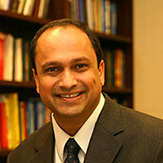
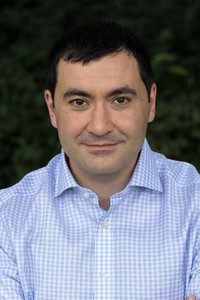
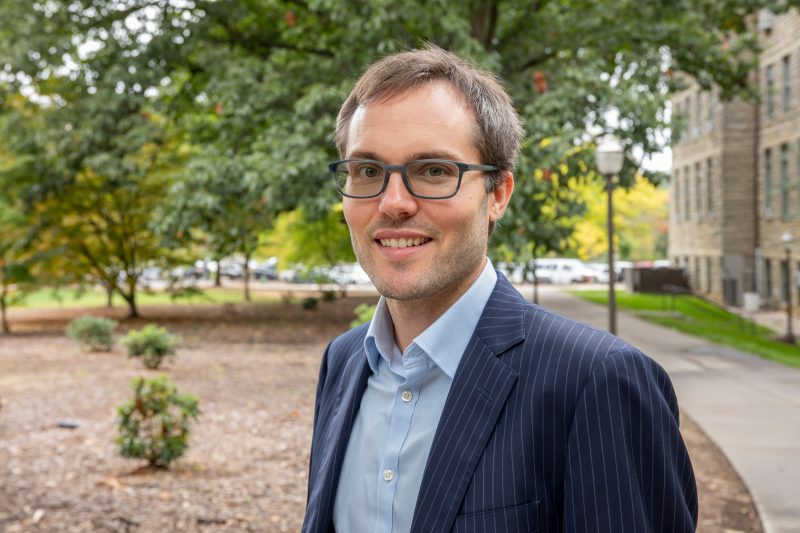
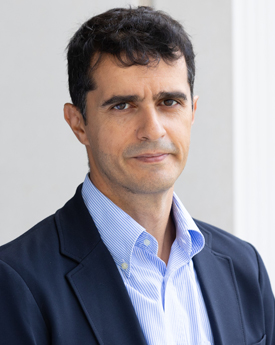
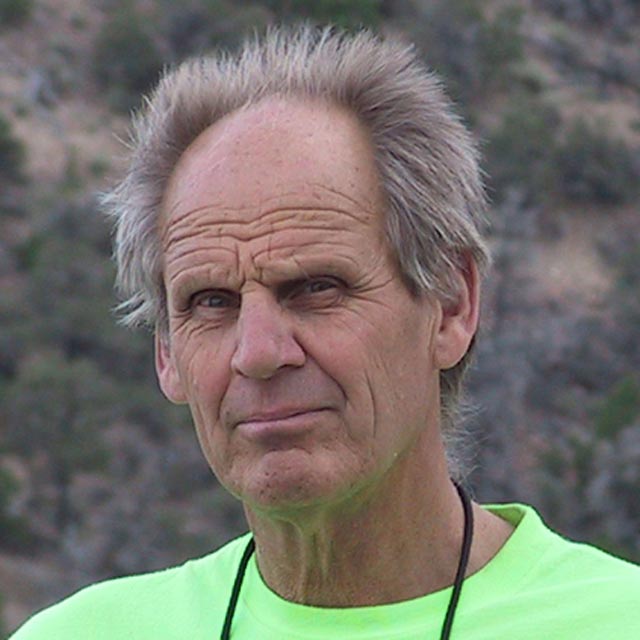
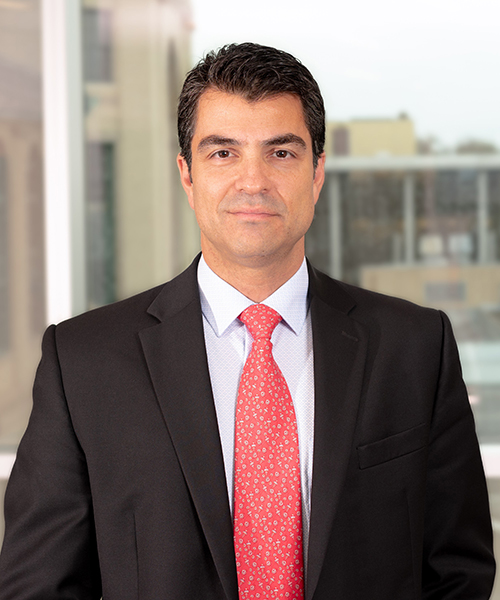
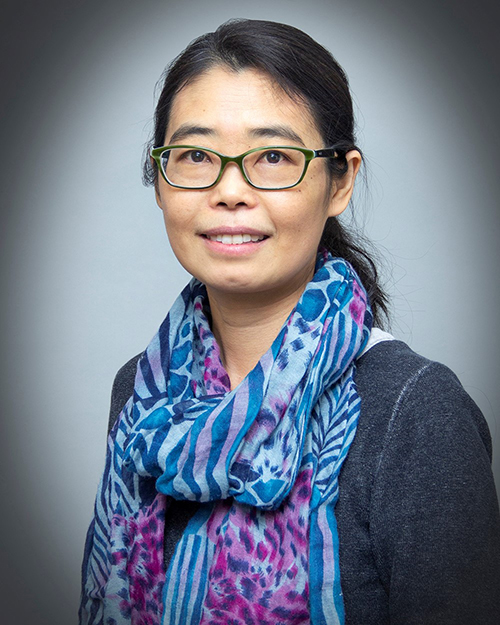
Prof. Dr. Matthias Weidlich is a faculty member at Humboldt University of Berlin within the Institute of Computer Science under the Faculty of Mathematics and Natural Sciences . His research focuses on Process Mining , Complex Event Processing , and Data Privacy with applications in Business Process Management and Scientific Workflows . Research Interests: Business Process Management and Process Mining Complex Event Processing and Stream Data Analysis Data Privacy and Security in Process Systems Scientific Workflow Systems and User Behavior Heterogeneous Network Embeddings Algorithm Design and Optimization Recent Publications (2023-2025) demonstrate expertise in: Efficient stream processing techniques Privacy-preserving process mining frameworks Scientific workflow analysis tools Graph neural network applications Multi-modal data integration Adaptive querying systems Contact: Office: Unter den Linden 6, 10099 Berlin Phone: 030 2093-41277 Email: matthias.weidlich@hu-berlin.de Web: hu.berlin/data
Sanjeev Kulkarni is the William R. Kenan, Jr. Professor of Electrical and Computer Engineering and Operations Research & Financial Engineering at Princeton University. He is associated with the Department of Philosophy and has held significant administrative roles including Dean of the Graduate School (2014-2017), Director of the Keller Center (2011-2014), and Master of Butler College (2004-2012). His research spans Statistics , Machine Learning , Applied Probability , Information Theory , and Signal Processing , with applications to Wireless Networks , Econometrics , and Control Systems . He has co-authored over 100 publications and supervised numerous PhD and Master’s students.
Mikail Rubinov serves as Assistant Professor of Biomedical Engineering (primary appointment), Computer Science, Psychiatry, and Psychology at Vanderbilt University's School of Engineering. His interdisciplinary work bridges computational neuroscience, network science, and clinical applications. His research focuses on integrative statistical models of large-scale neural data , exploring brain network organization across species and scales. Key interests include evolutionary principles of brain networks, transcriptomic basis of neural individuality, information transfer in neural systems, and neuropsychiatric connectivity phenotypes. The Rubinov Lab develops computational frameworks for analyzing complex neural systems and integrates neuroscientific knowledge with multi-omics data. Recent publications reveal strong trends in network neuroscience methodology development (circular analysis frameworks, unbiased sampling techniques) and translational applications (epilepsy networks, autism spectrum connectomics, gut-brain axis interrogation). His work increasingly incorporates transcriptomic data with neuroimaging at biobank scale. NIH Grant Writing Workshop (June 2022) NIH Workshop Short Talks (April 2023) Rubinov actively mentors graduate and undergraduate students across Biomedical Engineering and Computer Science. His lab maintains collaborations with UCSF, HHMI Janelia Research Campus, Weizmann Institute, and international neuroscience consortia. Current projects include integrative models of large-scale neural data and transcriptomic basis of neural individuality. The Rubinov Lab operates within Vanderbilt's Department of Biomedical Engineering with extensive cross-school collaborations. Technical resources include GitHub repositories for constraint network models (cnm-code), volumetric segmentation (voluseg), and brain connectivity toolboxes.
John Bovay is an Associate Professor and Kohl Junior Faculty Fellow in the Department of Agricultural and Applied Economics at Virginia Tech. He leads the department's Extension program and focuses on food and agricultural policy, particularly environmental and health impacts. His roles include membership in the Chesapeake Bay Executive Council's Scientific and Technical Advisory Committee (2024–2026) and Chair of the AAEA Specialty Crop Economics Section (2024–2025). Education: Ph.D. in Agricultural and Resource Economics from UC Davis (2014), B.A. in Mathematics and Politics from Washington and Lee University (2007). His research integrates economic analysis of public policies, including food safety inspections, climate-smart agriculture, SNAP participation, and food waste. Notable projects include a USDA-NIFA grant (2022–25) on vegetable on-farm loss and a study on GMO labeling laws. Teaching includes a Ph.D. course on empirical market and policy analysis with Anubhab Gupta. Selected Awards: Southern Agricultural Economics Association Emerging Scholar (2021), Distinguished Young Alumnus (2017). Outreach efforts emphasize Extension programs like the 'Virginia Sustainable Farms and Agribusiness Education Initiative' and leadership in Virginia Cooperative Extension's Agribusiness Management & Economics team. Grants include the USDA's Climate-Smart Agriculture Alliance and I2GROW initiatives.
Professor Efthymios Pavlidis is a faculty member in the Department of Economics at Lancaster University Management School (LUMS). He holds the rank of Professor and specializes in macroeconomics, international finance, and time series econometrics. His research focuses on housing market dynamics through collaborations like the International Housing Observatory (with the Federal Reserve Bank of Dallas) and the UK Housing Observatory. He is a Fellow of the Higher Education Academy, reflecting his commitment to academic excellence in teaching and research. His research interests include speculative bubble detection, real estate price forecasting, and testing parity conditions in financial markets. Pavlidis actively supervises PhD students in applied time series econometrics, emphasizing practical applications in financial markets and housing economics. He is involved in numerous academic activities, including organizing conferences and workshops such as the Dynare Conference and the Lancaster Economics Seminar. Key contributions include developing econometric methods for detecting market exuberance and analyzing real exchange rates. His work bridges theoretical econometrics with practical policy implications, particularly in housing and energy markets. Pavlidis collaborates internationally, evidenced by his participation in global academic networks and institutions like the European Economic Association and the Royal Economic Society. His teaching includes the course ECON222 Intermediate Macroeconomics I, and he maintains an office in the Management School (B015), with weekly office hours on Tuesdays. A comprehensive overview of his research and projects is available at his personal webpage: https://sites.google.com/view/etpavlidis/ .
Ken Wong is an Associate Professor in the Department of Computing Science at the University of Alberta's Faculty of Science. He also serves as Associate Chair within the same department. Holding a PhD in Computer Science from the University of Victoria (1999), his research focuses on software engineering challenges such as reverse engineering, program understanding, and software visualization. He emphasizes improving software evolution through tools like architecture recovery and root cause analysis, with applications in web/mobile platforms and diverse system understanding. Teaching highlights include developing Massive Open Online Courses (MOOCs) via Coursera, including the 'Software Product Management Specialization' and courses on Agile practices, client needs analysis, and software metrics. His recent publications (2023–2025) span AI-driven healthcare innovations (e.g., medical imaging, photoacoustic tomography) and advanced computer vision techniques (e.g., diffusion models, video inpainting). Notable collaborations include EVAREST studies on heart failure management and lung transplantation outcomes. His work bridges software engineering theory and practical applications in healthcare technology, with contributions to federated learning frameworks (e.g., FedLPPA) and AI-augmented clinical decision support systems. Research also extends to autonomous driving (DriveGPT4-V2) and 3D human avatar generation (DreamAvatar), showcasing interdisciplinary impact.
Dr. Steven G. Wesnousky is the Foundation Professor and Director of the Center for Neotectonic Studies at the University of Nevada, Reno (UNR). He holds a Ph.D. in Seismology from Columbia University (1982) and a B.A. in Geology from the University of California, Santa Barbara (1975). His academic career spans over three decades at UNR, where he combines geology and seismology to study earthquake mechanics, seismic hazard quantification, and crustal deformation. Research focuses on neotectonics, active fault systems, and the Himalayan seismic hazard. Key areas include fault slip rates, paleoearthquake reconstruction, and integrating geological data into seismic risk models. He teaches advanced courses on photogeology, neotectonics, and seismic hazard analysis. Publications emphasize Quaternary fault mapping, Himalayan tectonics, and rupture mechanics. Notable works include studies on the Walker Lane deformation zone and the 2015 Gorkha earthquake in Nepal. Awards include the Foundation Professorship (2008), F. Donald Tibbetts Teaching Award (2008), and a Fulbright Scholarship (2005). Professional roles include presidency of the Seismological Society of America (1995–1997), board memberships, and international collaborations at institutions like King Abdul University and the Institute of Nuclear and Geological Sciences, New Zealand. His work bridges field geology, geochronology, and computational modeling to advance understanding of continental deformation and earthquake processes.
O. Burak Ozdoganlar is a Professor in the Departments of Mechanical Engineering and Biomedical Engineering at Carnegie Mellon University. His research focuses on multiscale (meso/micro/nano) manufacturing science, combining theoretical, numerical, and experimental analyses to advance three-dimensional device fabrication. He leads the Multiscale Manufacturing and Dynamics Laboratory (MMDL), with applications spanning medical, biomedical, energy, robotics, and aerospace fields. B.S., Istanbul Technical University, Turkey M.S., Ohio State University, Columbus Ph.D., University of Michigan, Ann Arbor Post-doc, University of Illinois at Urbana-Champaign Senior Member of Technical Staff, Sandia National Labs His work addresses mechanics of micro-scale material removal, dynamics of micro-scale structures, novel micro/nano-manufacturing techniques, and application-driven research. Key contributions include scalable fabrication of microneedle arrays, freeform 3D ice printing for vascular networks, and high-density soft-matter electronics. His research emphasizes predictability and precision in manufacturing processes. Recent publications highlight advancements in dissolvable microneedle arrays for transdermal delivery, freeform 3D printing of ice structures for biomimetic vascularization, and scalable methods for porous and soft-matter electronics. His work bridges fundamental mechanics with medical device innovation. Blackall Machine Tool and Gage Award, ASME, 2011 Russell V. Trader Career Faculty Fellow, CMU, 2009-2011 NSF CAREER award, 2006 Kuo K. Wang Outstanding Young Engineer, SME, 2007 Organizer, 'Manufacturing...The Future' symposium, NAE EU-American Frontiers Conference, 2011 Best paper award, NAMRI SME, 2007-2008 Struminger Teaching Fellow, CMU, 2007-2008 Ozdoganlar's Multiscale Manufacturing and Dynamics Laboratory (MMDL) develops cutting-edge manufacturing solutions for biomedical applications, including neural probes, cartilage implants, and biosensors. His research integrates mechanics, materials science, and process engineering to address challenges in device predictability and scalability.
Dr. Yongjie Jessica Zhang is a Professor at Carnegie Mellon University, holding appointments in both the Department of Mechanical Engineering and the Department of Biomedical Engineering . She received her B.S. and M.S. in Engineering Mechanics from Tsinghua University, followed by an M.S. in Aerospace Engineering and a Ph.D. in Computational Engineering and Sciences from the University of Texas at Austin. After a postdoctoral fellowship at ICES, she joined CMU in 2007, advancing from assistant to full professor by 2016. Research Interests : Image-based geometric modeling, mesh generation, finite element analysis (FEA), isogeometric analysis, and applications in computational biomedicine, materials science, and computer-assisted surgery. Leadership Roles : Chair of Solid Modeling Association (2019-2020), USACM Executive Committee Member-at-Large (2017-2021), and ELATE Fellow (2017-2018). Her work addresses the critical challenge of automating high-fidelity geometric modeling and mesh generation for complex domains (e.g., human anatomy), which traditionally consumes ~80% of FEA time. Her group develops AI-driven methods for multiscale modeling (molecular to organ), with applications in neuroscience , biomechanics , and 4D printing . Notable awards include the Presidential Early Career Award (PECASE) , NSF CAREER Award , and ASME Van C. Mow Medal (2025) . Dr. Zhang’s publications span over 170 peer-reviewed articles, focusing on truncated hierarchical B-splines , polycube meshing , and neurite transport modeling . She has advised more than 40 students, including PhD candidates and postdoctoral fellows. Her editorial roles include Associate Editor of Computer Aided Geometric Design and editorial board memberships in Computer-Aided Design and Engineering with Computers .
Dr Yulai Zhang is a researcher in the Department of Materials Physics at the Australian National University . His work focuses on advanced imaging techniques for material and geological analysis. Expertise: X-ray micro-computed tomography (μCT), pore-scale and multiscale modeling, coal seam and ore characterization Collaborations: International partnerships in coal bed methane, mineral liberation, and rock failure analysis His research applies 4D/X-ray tomography to study dynamic processes in copper ores, shale, and coal, including fragmentation, diffusion, and fracture networks. Recent publications highlight innovations in super-resolution imaging , feature extraction methods , and in-situ studies of mineral behavior under stress. Dr Zhang actively supervises students and contributes to ore beneficiation, CO2 geo-sequestration, and unconventional reservoir characterization. Collaborative projects involve institutions in Australia and Indonesia, with a focus on digital rock physics and microstructural evolution .
Robert L. Hicks is a Professor of Economics and Marine Science at The College of William and Mary, holding joint appointments in the Department of Economics and the School of Marine Science. He is affiliated with the Environmental Science and Policy Program and the Thomas Jefferson Program in Public Policy. With a Ph.D. from the University of Maryland and a B.A. from North Carolina State University, Hicks has been a visiting professor at institutions in Germany and Spain, including the University of Bonn and the University of Hannover. His research focuses on environmental and natural resource economics, welfare economics, and econometrics, with notable contributions to fisheries management, eco-labeling, and recreational resource valuation. He has served on the editorial board of Marine Resource Economics and received grants from the National Science Foundation, U.S. Department of Commerce, and philanthropic organizations like the Bill and Melinda Gates Foundation. His awards include the Alumni Fellowship Award and the Plumeri Award for Faculty Excellence. Education: B.A., North Carolina State University Ph.D., University of Maryland Research Interests: Environmental economics emphasizes sustainable resource management, while his work in econometrics advances quantitative methods for policy analysis. Key areas include recreational fishing valuation, eco-labeling impacts, and spatial modeling in fisheries. His research bridges theoretical frameworks with practical applications in coastal and marine environments. Grants & Awards: Recipient of grants from NSF, U.S. Department of Commerce, William and Flora Hewlett Foundation, and Bill and Melinda Gates Foundation Alumni Fellowship Award Plumeri Award for Faculty Excellence Labs & Affiliations: Active in interdisciplinary collaborations, Hicks contributes to policy boards such as NOAA’s Science Advisory Board and aids in shaping environmental and marine policy through academic partnerships.
Prof Apostolos Antonacopoulos is a Professor of Pattern Recognition at the University of Salford, leading the PRImA research Lab (Pattern Recognition and Image Analysis). He holds a PhD from UMIST (1995) and has held academic roles at the University of Liverpool and Salford. His expertise spans Document Analysis, Computer Vision, and AI applications in Cultural Heritage. Education: PhD in Computer Science, University of Manchester Institute of Science and Technology (UMIST), UK (1995) Research Interests: Digitisation of historical documents and large-scale data Image Analysis and Pattern Recognition AI-driven solutions for cultural heritage preservation Performance evaluation frameworks for OCR systems Recent Projects: Leading a £750K ONS-funded project (2020–2025) digitising UK census reports Europeana Newspapers (€4M EU project, 2012–2015) for European Digital Library SUCCEED (€1.8M EU project, 2013–2015) for digitisation competencies Awards and Roles: IAPR/ICDAR Young Investigator Award (2005) Former President of International Association for Pattern Recognition (IAPR) Editorial roles in IJDAR and IEEE Transactions on Multimedia Labs/Teams: Director of PRImA Lab, collaborating with institutions like British Library and Wellcome Library. Active in industry partnerships for digitisation solutions.
Dr. Young-Jin Cha is a tenured full Professor in the Department of Civil Engineering at the University of Manitoba, affiliated with the Price Faculty of Engineering. He holds a PhD from Texas A&M University and has postdoctoral experience at MIT. His research focuses on deep learning-based structural health monitoring (SHM), autonomous UAVs for infrastructure inspection, and smart transportation systems, with over 100 peer-reviewed publications and $1.2M in grants. He is a Fellow of ASCE and has received notable awards including the 2021 Merit Award and 2022 International Association of Advanced Materials Scientist Award. His work has been cited over 9,200 times globally. Research interests include automated SHM with UAVs, nonlinear system identification, unsupervised deep learning for damage detection, and sustainable infrastructure design. He serves as an editor for journals like Structural Control & Health Monitoring and Engineering Reports . His lab, the Laboratory for Infrastructure Science and Technology (LIST), develops advanced technologies for infrastructure resilience. Key achievements include pioneering deep learning-based SHM with UAVs, top-cited papers in civil engineering journals, and leadership in organizing international conferences. He actively seeks graduate students for research in AI-driven infrastructure solutions.
Mohit Mendiratta is a PhD student in Computer Science at the Universität des Saarlandes and a Researcher at the Max-Planck-Institut für Informatik, Germany. He is part of the Visual Computing and Artificial Intelligence department (Department 6) under the Graphics, Vision & Video group led by Prof. Dr. Christian Theobalt. His research focuses on advancing computer vision, machine learning, and computer graphics, particularly in areas like 3D human avatars, text-driven editing, and video semantic segmentation. Education includes a Master's in Visual Computing from Universität des Saarlandes (2018–2021) and an undergraduate degree in Electronics and Electrical Engineering from KIIT, Bhubaneswar, India (2013–2017). He has held roles such as Research Assistant at the Max Planck Institute and Fraunhofer Institute, and industry experience as an Associate Software Engineer at Zentron Labs. His research interests span developing novel techniques for photorealistic 3D avatars, text-based editing systems, and zero-shot semantic segmentation using diffusion models. He collaborates on projects like AvatarStudio and TEDRA, advancing applications in virtual reality and human-computer interaction. Mohit contributes to the Saarbrücken Research Center for Visual Computing and is affiliated with the International Max Planck Research School on Trustworthy Computing. His work bridges theory and practical applications in AI-driven visual computing.
Jie Xu is a Scientist at Argonne National Laboratory and a CASE Affiliated Scientist at the University of Chicago, Pritzker School of Molecular Engineering . Her research focuses on engineering durable, scalable, and sustainable polymer semiconductors for skin-like electronics and autonomous material discovery. Education : PhD in Chemistry (Nanjing University), Postdoctoral Fellow (Stanford University) Her research bridges polymer physics , self-driving laboratories , and AI-guided material synthesis to address challenges in stretchable electronics, recyclable polymers, and energy-efficient manufacturing. She pioneered polymer circuits that remain conductive under extreme deformation and developed the first roll-to-roll mass-production method for stretchable semiconductors. Her 15 most recent articles highlight advancements in AI-driven polymer discovery , biodegradable electronics , and multi-modal energy dissipation . Key themes include autonomous experimentation , hydrogen-bonded polymer systems , and machine learning for conjugated polymers , with applications in wearable medical sensors , soft robotics , and human-computer interfaces . Scientific accolades include the Materials Research Society Postdoctoral Award , MIT Technology Review’s Innovators Under 35 , and recognition as a Scialog Fellow . She serves on editorial boards for APL Machine Learning and Flexible Electronics , and her team at Argonne includes postdocs and students working on self-driving labs and degradable polymers .