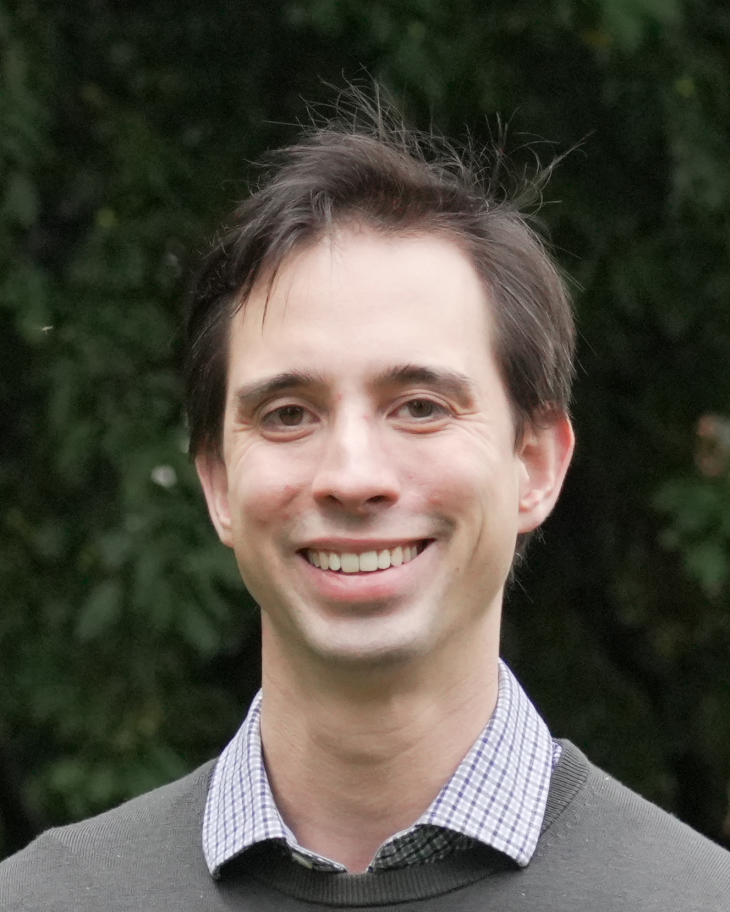
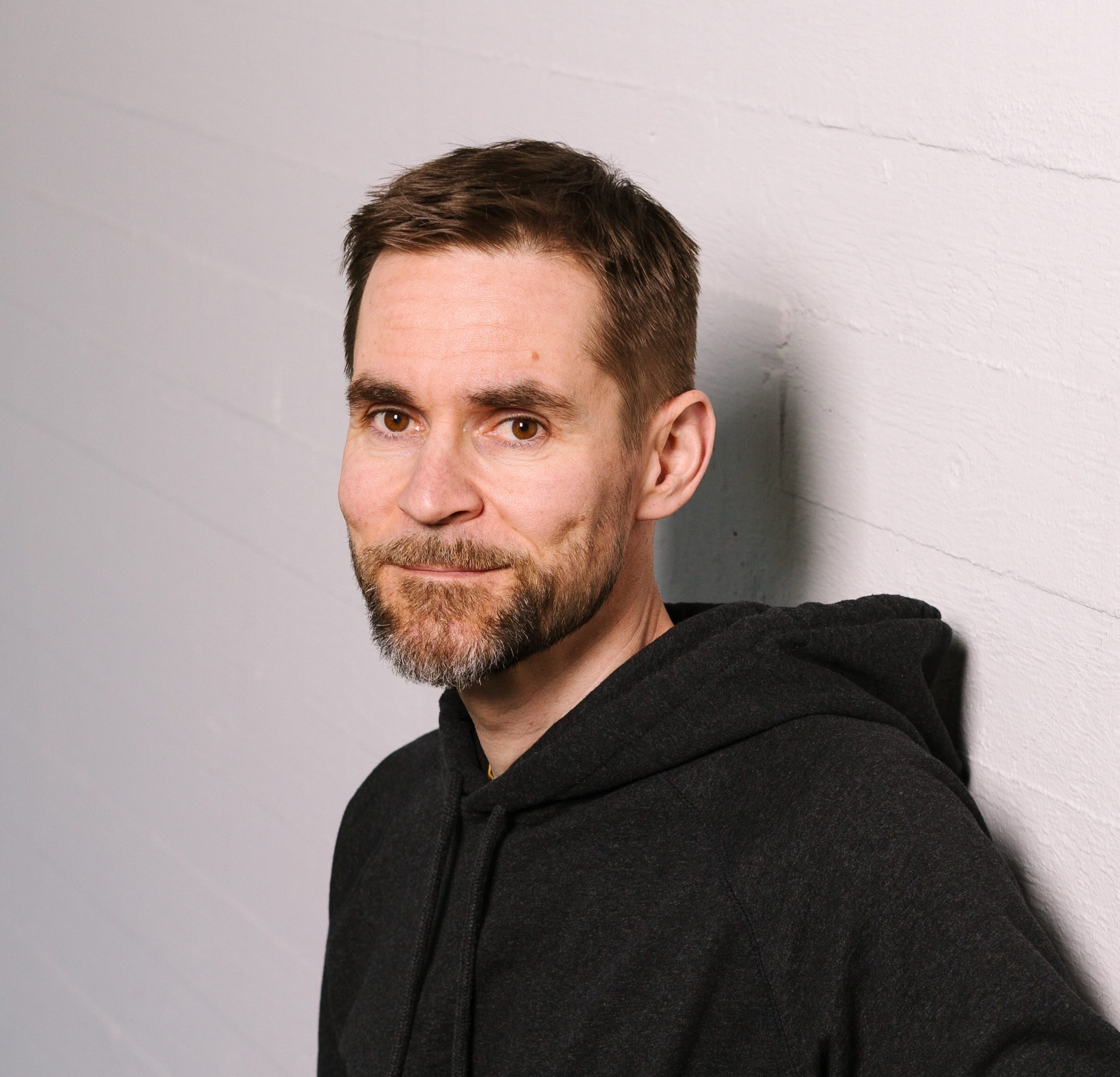
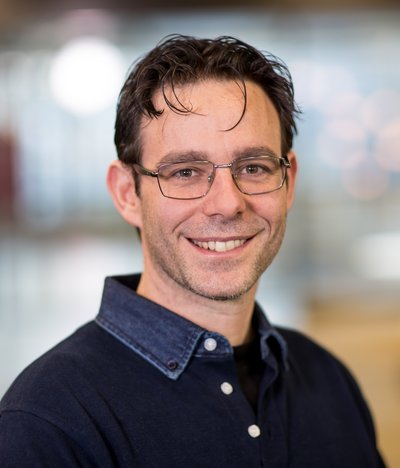
Daniel Sierra Ramos is an Adjunct Professor at IE University, Spain, and Co-Founder of Fitizens, a startup developing AI-driven wearables for physical activity quantification. He has over 6 years of experience as a Lead Data Scientist at Telefónica and Synergic Partners, specializing in AI applications for industries like banking, retail, and telecommunications. His expertise includes machine learning models for customer segmentation, predictive maintenance, and demand forecasting, alongside Big Data and cloud technologies (AWS/Azure). Education: Master in Telecommunication Engineering (Carlos III University, 2015) Master in Multimedia and Communications (Carlos III University, 2015) Bachelor in Telematic Engineering (Carlos III University, 2013) His research focuses on integrating AI into wearable devices and industry-driven data solutions. He trains professionals in AI from technical and business perspectives, emphasizing autonomy in data-centric environments. Active in corporate roles since 2015, he bridges technological innovation with practical business applications.
Francesca De Benetti is a Researcher at the Chair of Computer Aided Medical Procedures (Prof. Navab) at the Technical University of Munich (TUM), affiliated with the Interdisciplinary Research Laboratory (IFL) and NARVIS Lab at the Garching Campus. Her research focuses on Nuclear Medicine and Machine Learning for medical image processing, particularly in internal radiation therapy simulations and AI-driven segmentation. Education : M.Sc. in Biomedical Computing (TUM, 2018-2020), B.Sc. in Information Engineering (Università di Padova, 2015-2018) Francesca's recent publications highlight her work in Monte Carlo dosimetry , dynamic PET tracer modeling , and deep learning-based anomaly detection in medical imaging. Her projects emphasize personalized radiation therapy and cross-modality image translation , often involving collaborations with nuclear medicine experts and radiologists. She contributes to teaching at TUM, leading lectures and practical courses on topics including Medical Augmented Reality , Computer Aided Medical Procedures , and Deep Learning for Medical Applications . Francesca is actively involved in labs such as the IFL Lab and NARVIS Lab , focusing on interdisciplinary applications of computer vision and generative AI in medicine.
Claudia R. Binder is Full Professor at EPFL's School of Architecture, Civil and Environmental Engineering, leading the Laboratory for Human-Environment Relations in Urban Systems (HERUS) since 2016. Previously, she held professorships at the University of Munich (2011-2016), University of Graz (2009-2011), and University of Zurich (2006-2009). She served as Dean of EPFL's ENAC School from 2020-2023 and holds advisory roles with Swiss federal institutions including the Mercator Foundation since 2024. Her academic foundation includes a Biochemistry degree and PhD in Environmental Sciences from ETH Zurich, followed by postdoctoral research at the University of Maryland. This interdisciplinary background underpins her research approach spanning natural and social sciences. Professor Binder's work centers on urban sustainability transitions, examining urban metabolism dynamics through systems science frameworks. She investigates energy-food-transport interdependencies in cities using transdisciplinary methods that integrate material flow analysis, spatial modeling, and socio-technical assessments. Her research particularly emphasizes regulatory mechanisms and transformation drivers in human-environment systems, with case studies across Swiss and global urban contexts. Recent publications reveal evolving focus from foundational urban metabolism studies toward actionable transition strategies. Her 2024-2025 work increasingly addresses social tipping dynamics, circular decarbonization, and spatially explicit waste management, demonstrating methodological innovation through geo-referenced material flow analysis and participatory backcasting frameworks. Key thematic clusters include energy innovation diffusion, plastic waste governance, and demand-side flexibility in residential systems. She actively mentors 7 current PhD candidates while supervising 11 graduates since 2018, with research spanning urban metabolism modeling, sustainability assessment, and transition governance. Her leadership extends to Swiss National Science Foundation committees and National Research Program 71 on energy consumption management. At EPFL, she directs the HERUS laboratory which develops the Sustainability Solution Space methodology for urban assessment. The lab operates at the intersection of data science, environmental engineering, and social theory, maintaining strong field connections in Switzerland, Indonesia, and Germany for empirical validation of transition models.
Mingchen Gao is an Associate Professor in the Department of Computer Science and Engineering at the University at Buffalo, SUNY. He serves as Program Director for the Engineering Sciences (Artificial Intelligence) MS Program and is affiliated with the Institute for Artificial Intelligence and Data Science. Previously, he was a Postdoctoral Fellow at the NIH Clinical Center's Radiology and Imaging Science Department (2014–2017). His research focuses on medical imaging informatics, computer vision, and machine learning applications in healthcare. Notable projects include NSF-funded work on continual learning and federated domain adaptation. He teaches advanced courses like CSE674 (Advanced Machine Learning) and CSE703 (Deep Learning for Medical Imaging). Dr. Gao earned his Ph.D. in Computer Science from Rutgers University (2014), advised by Dimitris N. Metaxas, and a B.S. from Southeast University, China (2007). His lab develops AI systems for medical diagnosis, with recent work on robust neural networks and federated learning frameworks. His team has produced impactful algorithms for segmentation, classification, and domain adaptation in imaging tasks. Current research includes NSF CAREER Award (2023–2028) for deployable medical diagnosis systems and collaborations on drug discovery and toxicity prediction. He advises four PhD students and has authored over 60 peer-reviewed publications in top venues like NeurIPS, CVPR, and MICCAI.
Dylan Campbell is a Lecturer in Computing at the Australian National University (ANU), affiliated with the ANU College of Systems & Society. His research focuses on computer vision, optimization, and robotics, particularly in 3D vision and deep learning applications. He has held prior roles as a Research Fellow at the University of Oxford’s Visual Geometry Group and ANU’s Australian Centre for Robotic Vision. Campbell holds a PhD from ANU (2018) and a BE in Mechatronic Engineering from UNSW (2012). Research interests include geometric sensor alignment, neural radiance fields, and differentiable optimization layers. He actively supervises students (7 PhD/DPhil, 3 MEng, 9 honours) and teaches advanced courses in computer vision and robotics. Notable awards include the Marr Prize Honourable Mention (2017) and the IEEE Australia Council Postgraduate Student Paper Competition (2018). He has organized workshops at ECCV and CVPR, served as a reviewer for top conferences like CVPR/ICCV/ECCV, and contributed to datasets like SEED4D and RefRef. His work emphasizes efficient training of neural networks and leveraging symmetries in data for long-range connections.
Harri Lähdesmäki is an Associate Professor (tenured) at the Department of Computer Science, Aalto University, where he leads the Computational Systems Biology research group. His work focuses on probabilistic machine learning and deep generative models with applications in biomedicine and molecular biology. Key Research Interests: Probabilistic machine learning, deep generative models, computational biology, bioinformatics, longitudinal data modeling Contact: harri.lahdesmaki@aalto.fi | Konemiehentie 2, 02150 Espoo, Finland His recent publications highlight advancements in: Gaussian process priors for scalable deep generative models Single-cell analysis of immune repertoires in leukemia and diabetes Probabilistic deconvolution methods for RNA-seq data Epigenetic analysis using hidden Markov and mixed models Transformer-based survival prediction and missing data handling Harri’s work integrates mechanistic modeling with Bayesian inference, particularly applied to immunology, cancer biology, and early disease prediction.
Massimo Mischi is a Full Professor at the Faculty of Electrical Engineering of the Eindhoven University of Technology (TU/e) and chairs the Signal Processing Systems (SPS) Division , the largest division at TU/e with over 250 researchers. He founded the Biomedical Diagnostics (BM/d) Lab in 2012, which now includes 180 researchers and clinical/industrial advisors, focusing on biomedical signal processing for diagnostics and monitoring.
Matthew B. Blaschko is a Professor in the Department of Electrical Engineering at KU Leuven, Belgium. He serves as director of the KU Leuven ELLIS unit and is a fellow in the ELLIS Health program. He is a Core PI in the Flanders AI Research Program, working as a workpackage lead for Decision Support Systems and Medical Imaging. Blaschko is also a member of the KU Leuven Institute for Artificial Intelligence and one of the leaders of the working group on Machine Learning and Data Science. Professor Blaschko received his B.S. from Columbia University, M.S. from the University of Massachusetts Amherst, and Dr. rer. nat. from Technische Universität Berlin (awarded for work at Max Planck Institutes Tübingen). He was a Newton International Fellow at the University of Oxford and received his Habilitation (HDR) from École Normale Supérieure de Cachan. Prior to joining KU Leuven, he was a Permanent Research Scientist in the INRIA Saclay Research Center and a Faculty Member at Ecole Centrale Paris. His research focuses on machine learning techniques applied to visual data, with particular emphasis on calibration in deep learning, medical image analysis, and federated learning. Blaschko's work bridges theoretical foundations with practical applications, as evidenced by technology developed in his research being incorporated into MONA, software for ophthalmic image analysis. His research group has made significant contributions to the fields of model calibration, uncertainty estimation, and medical imaging analysis, with recent publications showing strong trends toward improving reliability of AI systems in medical contexts and advancing theoretical understanding of calibration metrics. Professor Blaschko has been recognized with several awards including the Université Paris-Saclay STIC Doctoral School Best Scientific Contribution Award, Best Paper Award at CVPR 2008, Main Award at DAGM 2008, and Best Student Paper Award at ECCV 2008. Professor Blaschko has supervised numerous PhD and Master's students, with current and former students including Deniz Soysal, Claire Marchal, Dongli Xu, Sebastian Gruber, Jiameng Li, Marco Mezzina, and many others working on diverse topics from Alzheimer's disease analysis to surgical phase recognition. His research has been supported by various funding sources including the Flanders AI Research Program. He has co-organized several influential workshops including the "Another Brick in the AI Wall: Building Practical Solutions from Theoretical Foundations" at CVPR 2025, Commands 4 Autonomous Vehicles workshop at ECCV 2020, and the Learning from Limited Labeled Data workshop series at NIPS 2017 and ICLR 2019. His laboratory focuses on machine learning for medical image analysis, with applications in ophthalmology, neurology, and surgical robotics. The group maintains active collaborations with medical institutions and participates in international challenges such as the KNee OsteoArthritis Prediction (KNOAP2020) challenge.
Prof. Dr. Julia Vogt is an Assistant Professor at the Department of Computer Science at ETH Zürich, leading the Professur für Medizin. Datenwiss. Her research focuses on medical machine learning, data science, and AI applications in healthcare. She specializes in developing interpretable AI systems for clinical decision support, particularly in pediatric diabetes management, medical imaging analysis, and anomaly detection. Her work bridges translational gaps by emphasizing causal approaches and clinical validation. Her academic role includes teaching courses like the Data Science Lab (263-3300-00L/10L) and Topics in Medical Machine Learning (263-5100-00L). Her lab's research spans predictive modeling for nocturnal hypoglycemia, echocardiogram analysis for pulmonary hypertension detection, and multimodal learning in radiology. She also contributes to national pediatric data initiatives like SwissPedHealth. Key technical areas include concept bottleneck models, stochastic AI frameworks, and generative models for medical signal denoising. Her work often emphasizes model interpretability, fairness, and robustness to distribution shifts. She collaborates on projects involving wearable devices for pediatric monitoring and AI-driven rehabilitation tools for post-stroke gait analysis.
Rui Li is an Associate Professor in the Ph.D. program at Rochester Institute of Technology's Golisano College of Computing and Information Sciences. She directs the Lab for Use-inspired Computational Intelligence (LUCI), focusing on AI applications in computational biology and medical imaging. Education includes: B.Sc. in Computer Science, Harbin Institute of Technology M.Sc. in Computer Science, Tianjin University of Technology Ph.D. in Computing and Information Sciences, RIT Research integrates statistical machine learning with computational biology, medical image analysis, and human visual attention modeling. Current projects include deep learning for histopathology, multimodal medical image registration, and gene network inference. Publications demonstrate consistent focus on medical AI applications, with recent advances in unsupervised image registration, interactive segmentation, and multimodal fusion techniques. Key trends include self-supervised learning, uncertainty-aware models, and human-AI collaboration frameworks. Awards include the NSF CAREER Award for developing adaptive machine intelligence systems. Advises multiple PhD students on projects spanning deep learning architectures, biomedical image analysis, and biological network modeling. Leads several NSF-funded projects including human-centered image understanding systems and gene-protein network inference tools. Directs LUCI lab investigating machine learning for healthcare applications and teaches graduate courses in Statistical Machine Learning and Deep Learning.
Michael Riegler is a Researcher at the AI Department, Simula Research Laboratory , focusing on interdisciplinary applications of Artificial Intelligence in healthcare, sports analytics, and multimedia systems. His work bridges Machine Learning , AI Alignment , and Applied AI across clinical and real-world domains. Key Affiliations: Simula Research Laboratory (AI Department Head) Research Themes: Explainable AI in medicine, multimodal data analysis, and AI-driven health monitoring Research Interests include: Developing AI/ML algorithms for medical imaging (e.g., polyp detection, embryo analysis) Addressing missing data challenges in healthcare through novel imputation techniques Creating multimodal virtual avatars for investigative interview training Designing edge AI systems for sports analytics and sustainable fishing Recent Publications highlight collaborations with institutions in Norway and globally, with a focus on: Medical Applications: Polyp segmentation, ECG analysis, and explainable models for disease detection Sports Analytics: Athlete performance prediction and soccer video processing Data Infrastructure: Lifelogging datasets (ScopeSense), semantic representation frameworks Labs & Teams include leadership in Simula’s AI Department and participation in projects like Medico Multimedia Task , ImageCLEF , and MediaEval workshops. His work emphasizes responsible AI innovation in public sectors and privacy-preserving systems for edge environments.
Stella Yu is a Professor specializing in computer vision, machine learning, and AI applications across medical imaging, robotics, and wildlife recognition. She emphasizes adaptive advising tailored to individual student strengths, with regular one-on-one and group meetings to discuss research progress and paper presentations. Yu's research group focuses on unsupervised learning, deep learning workflows, and interdisciplinary applications such as MRI reconstruction, meibography analysis, and aerial wildlife monitoring. Her work bridges theoretical advancements with practical tools like DeepInPy for inverse problems. She strongly advocates for teaching experience through GSI roles and ensures students have conference funding to present findings at top venues. Education Expectations: Regular literature review, lab presence for junior students, and clear authorship protocols. Key Research Themes: Feature learning, medical AI, computational optics, and wildlife population surveys. Her lab promotes a collaborative environment with structured feedback loops, emphasizing both technical rigor and creative problem-solving. Current projects include BatVision for 3D spatial navigation using audio signals, and AI-driven solutions for dry eye diagnosis and building information modeling.
Per Christian Hansen is a Professor at the Department of Applied Mathematics and Computer Science (DTU Compute), Technical University of Denmark (DTU), where he leads the Section for Scientific Computing. He is a VILLUM Investigator and heads the CUQI (Computational Uncertainty Quantification for Inverse Problems) research initiative, aiming to develop accessible computational platforms for uncertainty quantification in inverse problems. His expertise lies in numerical analysis, numerical linear algebra, iterative reconstruction methods, and computational inverse problems, with applications in tomography, signal analysis, and plasma physics. His research integrates theoretical analysis—such as perturbation and convergence analysis—with the development of robust, adaptive, and efficient computational methods. He has co-authored five books, over 100 scientific papers, and several widely used MATLAB software packages, including IR Tools and Regularization Tools. His recent work (2023–2025) emphasizes uncertainty quantification, Bayesian inversion, and high-dimensional tomography in fusion plasmas, reflecting a strong trend toward probabilistic and robust modeling in inverse problems. He is a SIAM Fellow (2015) for his contributions to computational methods for rank-deficient and discrete ill-posed problems and regularization techniques. His scientific leadership is evident in both theoretical advances and practical software implementations. He actively collaborates across disciplines, particularly in nuclear fusion and medical imaging, and continues to supervise PhD students and publish in top-tier journals such as Inverse Problems , SIAM Journal on Scientific Computing , and Nuclear Fusion . SIAM Fellow (2015) VILLUM Investigator He advises PhD and Master’s students in computational mathematics and inverse problems, and his research is supported by major grants, including the VILLUM Investigator award. He leads the CUQI team, which develops open-source tools for non-experts to apply uncertainty quantification in inverse problems. His lab focuses on creating modeling frameworks that bridge theory, computation, and real-world applications in materials science, imaging, and plasma diagnostics.
Prof. Dr. Raphael Sznitman serves as Director of the ARTORG Center for Biomedical Engineering Research and Head of the Artificial Intelligence in Medical Imaging group at the University of Bern, Switzerland, holding a Full Professor position in AI for Medical Imaging since 2015. Education: PhD in Computer Science, Johns Hopkins University (2011) MSc in Computer Science, Johns Hopkins University (2009) BSc in Cognitive Systems, University of British Columbia (2007) Research Interests: Sznitman's work centers on computational vision , probabilistic methods , and statistical learning applied to medical imaging challenges. His group develops AI algorithms for ophthalmic diagnostics, surgical robotics, and medical image analysis, with emphasis on OCT, surgical phase recognition, and domain adaptation techniques. Key application areas include retinal disease detection and cataract surgery automation. Publication Trends: His 2021-2025 publications reveal concentrated efforts in deep learning for medical imaging , particularly in ophthalmology (OCT analysis) and surgical video understanding. Emerging themes include LLM applications for clinical monitoring, unsupervised out-of-distribution detection for surgical safety, and physics-informed AI for multimodal medical data fusion. Research Leadership: As ARTORG Center Director, Sznitman oversees interdisciplinary research bridging computer science and clinical medicine. His group collaborates extensively with Bern University Hospital clinicians on translational projects, securing funding for AI-driven diagnostic tools and surgical assistance systems. Current initiatives focus on real-time intraoperative guidance and spaceflight ophthalmology applications. Laboratory: The Artificial Intelligence in Medical Imaging group operates within ARTORG's dedicated facilities, maintaining partnerships with surgical robotics labs and ophthalmology departments for clinical validation of AI systems. Their work integrates multimodal data streams including OCT, VR perimetry, and surgical video feeds.
Dr. Divya Jayakumar Nair serves as Senior Lecturer in the School of Civil and Environmental Engineering at the University of New South Wales (UNSW), where she also holds the position of Associate Dean International – South Asia for UNSW Engineering. Her academic work is centered at the Research Centre for Integrated Transport Innovation (rCITI), focusing on transportation systems, network optimization, and disaster management applications. Dr. Nair's research interests span transportation engineering, disaster management, and urban mobility systems. Her work investigates complex network design problems, particularly in pre-disaster evacuation planning, transportation resilience, and food rescue logistics. She employs advanced analytical methods including traffic equilibrium modeling, network optimization techniques, and data-driven approaches to solve real-world transportation challenges with significant societal impact. Her recent publications demonstrate a strong focus on transportation resilience during disasters, with particular attention to equity considerations in pre-event planning. Dr. Nair's research shows how transportation networks can be optimized to improve emergency response while ensuring equitable access to safety for all population segments. Her work bridges theoretical network optimization with practical applications in urban environments facing climate-related challenges. Dr. Nair collaborates extensively with leading researchers in transportation including S. Travis Waller, Vinay V. Dixit, David Rey, and Taha Rashidi. Her collaborative approach spans multiple institutions and addresses pressing challenges in urban transportation systems worldwide.