Hauke Smidt is a Personal Professor at Wageningen University & Research, affiliated with the Molecular Ecology group within the Faculty of Veterinary Medicine and Animal Sciences. His research focuses on microbial ecology, particularly gut microbiota dynamics, antibiotic resistance, environmental microbiology, and the One Health framework. Smidt has supervised over 50 PhD students and contributed to 519 publications, including studies on microbiome resilience, fermented food impacts, and bioremediation strategies. Education and affiliations include leadership roles in projects addressing antimicrobial resistance, pig health, and drinking water microbiology. His work spans collaborations across Europe and Asia, with notable contributions to understanding microbial community responses to environmental stressors and dietary interventions. Smidt is actively involved in public outreach, as seen in media contributions discussing microbiome research and health benefits. Key projects include aquifer treatment for drinking water, microbiome simulation models, and combating plant pathogens. His awards and recognition are not explicitly listed, but his extensive publication record and project leadership highlight significant academic impact.
M.T.O. (Chiel) Jonker is an Assistant Professor at the Faculty of Veterinary Medicine , Utrecht University , affiliated with the Institute for Risk Assessment Sciences (IRAS) and its Toxicology division . He specializes in exposure assessment of hydrophobic organic chemicals (e.g., PFAS , PAHs , PCBs ), focusing on sorption processes , bioaccumulation dynamics , and passive sampling techniques in both in vivo and in vitro settings. His research emphasizes methodological innovation for high-quality chemical analysis (GC-MS, LC-MS) and environmental risk assessment . Recent work includes PFAS degradation , sediment toxicity testing , and temperature/salinity effects on contaminant partitioning. His 2018-2024 publications highlight passive sampling calibration , mechanistic toxicity models , and bioavailability prediction using polyoxymethylene and silicone rubber samplers .
Prof. Han Olff is a Professor of Community and Conservation Ecology at the University of Groningen's Faculty of Science and Engineering, within the Groningen Institute for Evolutionary Life Sciences. He leads research on ecosystem structure, species interactions, and theoretical ecology, with fieldwork in savannas, salt marshes, and coastal systems. His work bridges theory and conservation, advising organizations like WWF and ARK Nature. Education: PhD (Cum Laude) in Biology from the University of Groningen (1992), MSc in Biology (1988). Research Interests: Focuses on plant-herbivore-predator interactions, ecosystem engineering, and the impact of human activities on biodiversity. Key themes include savanna ecology, food web dynamics, and restoration ecology. Awards: Gold Medal from Teyler Museum (2006) and PIONIER Award (2002). Active in grants like the EU Horizon 2020 AfricanBioServices project. Teaching: Coordinates courses in Conservation Biology, Ecological Research Skills, and Advanced Population Ecology. Leadership: Directed the Centre for Ecological and Evolutionary Studies (2011–2015) and chairs the National Research Agenda's 'Green Route'. Fieldwork: Organizes expeditions to the Serengeti-Mara, Banc d'Arguin, and Bijagos Archipelago to study human-wildlife interactions and ecosystem dynamics.
Dr. Martin Rohde is a Professor and Group Leader at the Radiation Science & Technology department within the Faculty of Applied Sciences at Delft University of Technology (TU Delft) in the Netherlands. He leads the Transport Phenomena & Nuclear Applications research group, focusing on advanced nuclear reactor technologies, particularly molten salt reactors, and their associated transport phenomena. Professor Rohde's research interests span across several critical areas in nuclear engineering and fluid dynamics. His work primarily focuses on understanding transport phenomena in nuclear applications, with particular emphasis on molten salt reactors for sustainable and safe nuclear power generation, innovative production techniques of medical isotopes, and advanced energy storage systems like flow batteries. His research group actively investigates complex physical phenomena occurring under extreme conditions such as high pressures, high temperatures, and interactions with radioactive processes. His publication record demonstrates a strong focus on computational methods for nuclear applications, particularly the Lattice Boltzmann Method (LBM), which is used to model fluid flow, heat transfer, and phase change phenomena in nuclear systems. Recent work has concentrated on freezing and melting processes in molten salt reactors, microfluidic separation techniques for medical isotopes, and advanced modeling of flow batteries. His research shows a clear progression toward increasingly sophisticated numerical methods applied to real-world nuclear engineering challenges. Professor Rohde has secured significant funding through multiple European Commission projects including ENDURANCE, MIMOSA, and ReZilient, demonstrating the international recognition of his research. He has supervised numerous PhD and MSc students, many of whom have gone on to complete theses on topics related to molten salt reactors, microfluidics, and flow battery technology. His research group includes several technicians, post-doctoral researchers, and PhD candidates working collaboratively on cutting-edge nuclear technology. The Transport Phenomena & Nuclear Applications laboratory operates several specialized facilities including the ESPRESSO facility for measuring melting and solidification under convective boundaries, and experimental setups for studying molten salt behavior, microfluidic purification, and flow battery technology. The group maintains strong collaborations with international partners including TRIUMF (Canada), NRG, and URENCO (The Netherlands).
Dr. Gualbert Oude Essink is an Associate Professor at the Faculty of Geosciences , Department of Physical Geography at Utrecht University . He is also a senior hydrogeologist at Deltares, specializing in coastal groundwater systems, saltwater intrusion, and delta sustainability. His work focuses on improving freshwater availability in vulnerable coastal zones under climate change, subsidence, and anthropogenic pressures. Dr. Essink holds a PhD in Civil Engineering from Delft University of Technology and has extensive experience in applied hydrogeology. He leads research projects globally, including in the Netherlands, Egypt (Nile Delta), Bangladesh (Kulna region), Singapore, and Vietnam (Mekong Delta). Key initiatives include GO-FRESH (Aquifer Storage and Recovery) and Rise and Fall (Mekong Delta subsidence strategies). His research integrates modeling, geophysical surveys, and stakeholder engagement. Notable areas include variable-density groundwater flow, airborne electromagnetic surveys for salinity mapping, and sustainable groundwater management. He supervises multiple PhD candidates and teaches at IHE Delft, contributing to global water education. Dr. Essink has authored over 100 peer-reviewed articles, focusing on delta sustainability, climate impacts, and groundwater systems. His work bridges academia and practice, addressing freshwater security challenges in coastal regions through innovative solutions like managed aquifer recharge and saltwater intrusion mitigation.
Guy G. Drijkoningen is an Associate Professor in Applied Geophysics at Delft University of Technology (TU Delft), Faculty of Civil Engineering and Geosciences. He is actively involved in teaching and research within the Department of Applied Geophysics & Petrophysics. Education: MSc, Delft University of Technology, The Netherlands PhD, Cambridge University, UK Research Focus: His work centers on Seismic Experiments & Modelling , particularly in exploration and shallow-subsurface contexts. Key areas include: Seismic data acquisition on land Continuous seismic monitoring Shallow shear-wave imaging (land and marine) Seismic wave propagation in porous media Current projects leverage advanced sensor networks (e.g., LOFAR), full-waveform inversion for tunnel-boring machines, and novel vibrator technologies. Publications Trend: Recent works (2011–2016) emphasize seismic modeling, inversion techniques, and experimental validation across marine and terrestrial environments. Topics span poroelastic wave theory, ambient-noise interferometry, and innovative seismic source design, reflecting a blend of theoretical and applied geophysics. Scientific Awards: Best-paper award Geophysics 2015 for "A seismic vertical vibrator driven by linear synchronous motors" Professional Memberships & Editorial Roles: Member: Society of Exploration Geophysicists (SEG) Member: European Association of Geoscientists and Engineers (EAGE) Associate Editor: Geophysics Teaching: He teaches undergraduate and graduate courses including Introduction to Geophysics, Reflection Seismology, and specialized PhD-level modules on seismic data analysis.
Sonja Geilert, PhD, is an Assistant Professor in Geochemistry at Utrecht University's Department of Earth Sciences. Her research focuses on silicate weathering processes, stable isotope geochemistry, and their roles in the Earth's silica-carbon cycle interactions across geological timescales. Institution: Utrecht University Affiliation: Faculty of Geosciences / Department of Earth Sciences Academic Rank: Assistant Professor Her work bridges natural marine geochemical cycles with climate mitigation strategies, particularly carbon dioxide removal (CDR) through ocean alkalinity enhancement (OAE). She investigates mineral-water reactions on the seafloor, their impact on ocean chemistry, and potential applications for CO2 sequestration. Key projects include: Coastal environments as mCDR sites (2025-2029) - Project Leader Constraining Hadean ocean geochemistry (2025-2031) - Project Leader REPAIRS (2024-2026) - Researcher Enhanced benthic weathering (2021-2024) - Project Leader Her recent publications (2022-2025) demonstrate expertise in Stable isotope fractionation Marine sediment geochemistry Carbon-climate feedback mechanisms Mineral dissolution kinetics
Royal Netherlands Institute for Sea ResearchNetherlands
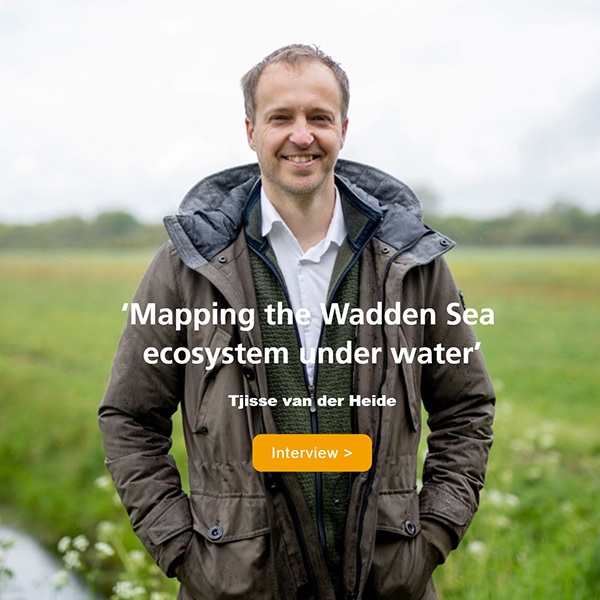
Professor Tjisse van der Heide is a Senior Research Leader at the Royal Netherlands Institute for Sea Research (NIOZ) and holds a professorship in Coastal Ecology at the University of Groningen since 2018. His work focuses on ecological interactions in soft-sediment coastal ecosystems, particularly the role of ecosystem engineers like seagrasses, mussels, and dune-building plants in shaping coastal landscapes and providing ecosystem services. Key Research Areas: Ecosystem restoration, coastal squeeze, biogeochemistry, and feedbacks between organisms and their environment. Awards: NWO Vidi-Award (2018) NWO VICI Grant (2024) NWO Open Technology Programme Grant (2025) Students: PhD candidates Sterre Witte, Clea van de Ven, and Carlijn Lammers. Projects: Waddenmozaïek, BIOPRIME (biodegradable restoration structures), and Sedway (coastal sediment dynamics). His research explores how habitat-modifying species mitigate coastal flooding, enhance carbon sequestration, and support biodiversity. Recent work includes analyzing global coastal squeeze impacts and developing innovative restoration techniques using temporary biodegradable structures. Publications highlight the ecological and societal importance of soft-sediment coasts, with a focus on interdisciplinary approaches bridging marine biology, hydrodynamics, and environmental management.
Pieter C. Roos is an Associate Professor in Water Systems at the University of Twente, specializing in morphodynamics, tidal sand wave formation, and sediment transport. With over 199 research outputs and an h-index of 18, his work spans coastal engineering, estuarine dynamics, and geophysical fluid mechanics. Recipient of multiple teaching awards (2013-2017) Active in nonlinear river dune modeling and GIS-based sand wave analysis Develops nature-based solutions for salt intrusion mitigation Research trends show focus on: Tidal sand wave-induced form roughness quantification Interdisciplinary approaches combining hydrodynamics, sedimentology, and ecology Long-term morphological evolution under anthropogenic and natural influences Recent work (2025) includes joint effects of aquaculture on sediment dynamics and stability analysis on sloping shelves.
Marten Scheffer is a Full Professor at Wageningen University & Research , specializing in Aquatic Ecology and Water Quality Management . His work bridges ecology, climate science, and mental health, focusing on tipping points in ecosystems and social systems. He has received the prestigious Spinoza Prize 2009 , Netherlands' highest scientific honor. Research Interests: His research explores Anthropocene dynamics , ecological resilience , climate change impacts , and psychiatric disorders through dynamical systems theory . Notable projects include studying boreal forest collapse and trust dynamics in economies. His work also addresses global sustainability and early warning signals for critical transitions in social-ecological systems. Recent Articles: His 2025 publications highlight trust erosion in weak governance , ecological tipping points , and revolutionizing psychiatric diagnosis . 2024 work includes computational models of panic disorders and resilience indicators for disease outbreaks. Advising & Grants: He supervises PhD students including Agrawal (river commons), Capriati (marine protected areas), and Delecroix (infection warnings). Active in projects funded across ecosystem resilience , AI applications , and climate policy . Labs & Collaborations: Collaborates globally on tipping points research and mental health systems. Datasets include boreal forest dynamics and human climate niche models.
Tjisse van der Heide is a Professor of Coastal Ecology at the Groningen Institute for Evolutionary Life Sciences (GELIFES) at the University of Groningen and a researcher for the Royal Netherlands Institute for Marine Research (NIOZ). He also serves as Vice Chair of the Dutch OBN Knowledge Network for Nature Restoration and Management's team of experts on dune and coastal landscapes. Van der Heide's research focuses on coastal ecosystems and the role of ecosystem engineers—organisms that create suitable living circumstances for themselves and other species through environmental modification. His work examines how ecosystems function and how dissipated ecosystems can be restored, combining field and lab experiments with computer models. In 2024, he received a prestigious Vici-grant for his research on restoration of coastal ecosystems by temporarily mimicking habitat-forming species, developing a framework that integrates ecology, industrial design, and engineering principles. Analyzing his recent publication record reveals strong emphasis on ecosystem engineering processes, habitat restoration techniques, and climate change impacts on coastal systems. His research spans seagrass beds, mussel and oyster reefs, salt marshes, and dune ecosystems, with particular focus on how biotic interactions shape coastal landscapes and influence restoration success. His interdisciplinary approach frequently bridges theoretical ecology with practical conservation applications. Van der Heide has received significant recognition including the Vici-grant (2024) and the Heineken Young Scientist Award. His research has direct policy implications, as evidenced by his media commentary on coastal development projects like power cables through the Wadden Sea. His work involves extensive collaboration with researchers across multiple institutions, focusing on both fundamental ecological processes and applied restoration techniques. Van der Heide's research group conducts field studies throughout the Wadden Sea region and other coastal areas, contributing to our understanding of ecosystem dynamics and developing practical solutions for coastal conservation challenges.
Prof. Suzanne J.M.H. Hulscher is a Full Professor in Water Systems at the University of Twente, specializing in fluvial and coastal morphodynamics. Her research focuses on flood risk management, sediment dynamics, and climate adaptation. She has contributed to over 845 publications and supervised 55 research projects, including Vera van Bergeijk's PhD work on overtopping flows. Key achievements include the Simon Stevin Meester award (2016) and multiple best paper awards. Her work addresses UN Sustainable Development Goals through studies on saltwater intrusion, dike breach modeling, and nature-based solutions. Research highlights include hydraulic model calibration, estuarine sand wave dynamics, and vegetation effects on hydrodynamics. She actively contributes to editorial roles (CivilEng Journal) and policy advisory bodies (Wetenschappelijke Raad). Her interdisciplinary efforts bridge engineering, ecology, and climate science. Research areas: Coastal morphology, river dynamics, environmental hydraulics Key collaborations: 4TU.Centre for Research Data, IAHR, Netherlands Academy of Engineering Grants: Not explicitly listed, but extensive publications imply significant funding Her lab focuses on combining field data with numerical modeling for real-world applications like flood dashboard development and machine learning-based prediction systems. Current projects explore climate change impacts on engineered estuaries and distributive justice in climate policy.
IHE Delft Institute for Water EducationNetherlands
William Veerbeek is a Professor and co-founder of the Flood Resilience Chair Group at IHE Delft Institute for Water Education. His expertise spans urban climate adaptation, flood risk management, and disaster resilience in rapidly urbanizing regions. He has led impactful projects like the Dutch Knowledge for Climate programme, refining flood impact assessment tools through initiatives such as UFM-Dordrecht and Rotterdam-based studies. His work extends globally, focusing on megacities like Beijing, Dhaka, and Mumbai, where he develops long-term urban growth projections and disaster risk mitigation strategies. He has trained numerous cities in Southeast Asia on climate adaptation and is currently establishing a North Sea region city-to-city learning network on green-blue infrastructure. Dr. Veerbeek’s research emphasizes integrating climate adaptation into urban planning, with a focus on socio-economic equity and policy transferability. His projects often bridge academic research with practical implementation, emphasizing participatory approaches and nature-based solutions. Key contributions include frameworks for evaluating flood resilience strategies and methods for assessing urban vulnerability under climate change scenarios. His publications highlight innovations in flood modeling using UAV and satellite technologies, policy analysis across transnational delta systems, and co-creation of flood mitigation technologies with local communities. He advocates for flexible adaptation pathways that balance technical solutions with social equity considerations.
Dr. Oscar Franken is a Research Fellow and Scientific Coordinator of the Waddenmozaïek project at the University of Groningen's Faculty of Science and Engineering, affiliated with the Groningen Institute for Evolutionary Life Sciences. His research focuses on community ecology in marine sediment ecosystems, particularly investigating how species interactions respond to environmental changes and affect ecosystem functioning. Research interests include: Community dynamics in benthic ecosystems Impact of abiotic/biotic changes on coastal biodiversity Restoration ecology techniques for degraded marine habitats Ecosystem functioning in sediment communities Conservation strategies for the Wadden Sea ecosystem Franken's publications demonstrate consistent focus on marine conservation, with recent work emphasizing: Coastal restoration through substrate introduction Biodiversity patterns in shallow marine systems Conservation policy-biodiversity mismatches Innovative techniques for seagrass and reef restoration Large-scale biodiversity reorganization under global change As scientific coordinator of Waddenmozaïek, he leads interdisciplinary research on Wadden Sea conservation. He mentors PhD candidates in the Govers group and has developed the CLIMECS experimental system for ecological research.
Britas Klemens Eriksson is an Associate Professor of Marine Ecology at the University of Groningen's Faculty of Science and Engineering, affiliated with the Groningen Institute for Evolutionary Life Sciences. His research focuses on biodiversity conservation, coastal ecosystems, and ecosystem engineering, particularly in the Wadden Sea and Baltic Sea regions. He holds a PhD in Ecological Botany from Uppsala University (2002). Key research interests include understanding how biodiversity loss impacts ecosystem function, the role of ecosystem engineers in shaping coastal landscapes, and the effects of climate change on marine communities. Notable projects include the 'Swimway Waddenzee' initiative and contributions to the ZEN seagrass research network. Award-winning educator and researcher, Eriksson has been recognized with the Best Teacher in Biology award (2014) and the Ecological Research Award (2013). He leads over 90 publications and supervises numerous PhD and master's students, focusing on topics like artificial reefs, soundscape ecology, and stickleback wave dynamics. Active in international collaborations, he serves on editorial boards and advisory committees, including the EUROMARINE network and Mistra EviEM's systematic reviews. His work bridges ecological theory with applied conservation, emphasizing the need for adaptive management of coastal ecosystems under climate change.