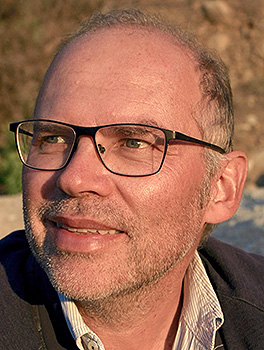
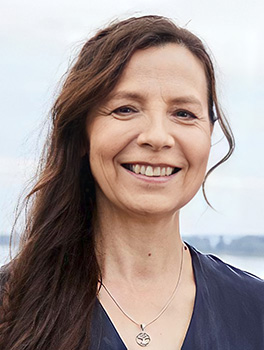
Prof. Willy Tinner is a leading academic at the University of Bern, serving as Head of the Paleoecology section and Vice Executive Director within the Institute of Plant Sciences. His research focuses on reconstructing past environmental changes through pollen analysis, vegetation dynamics, and human-ecosystem interactions. Tinner's work integrates paleoecological data with climatology, archaeology, and conservation biology to understand long-term ecological processes. His expertise spans Holocene climate impacts, Neolithic land use patterns, and biodiversity conservation challenges in alpine and Mediterranean ecosystems. Notable research includes studies on Fagus-Quercus forest coexistence in Italy, Abies alba climatic adaptations, and human-driven vegetation changes across Europe. Tinner collaborates internationally, contributing to projects in Greece, Ukraine, and the Balkans. He has published extensively on topics such as fire regimes, lake sediment archives, and the ecological consequences of ancient agricultural practices. His leadership positions reflect his role in shaping Switzerland's ecological research priorities through institutions like WSL Cadenazzo.
Swiss Federal Institute of Technology in LausanneSwitzerland
Christophe Ancey is an Associate Professor at the École Polytechnique Fédérale de Lausanne (EPFL), where he serves in the School of Architecture, Civil and Environmental Engineering (ENAC), specifically in the Institute of Civil Engineering (IIC) and the Environmental Hydraulics Laboratory (LHE). He also holds teaching appointments in SGC-Teaching and EDME-Teaching departments at EPFL. His office is located at GC A1 401, Station 18, 1015 Lausanne, Switzerland. Dr. Ancey holds both a PhD and engineering degree from Ecole Centrale de Paris and Grenoble National Polytechnic Institute. After completing his doctoral work (1994-1997) on rheology of granular flows under Pierre Evesque, he worked as a researcher at Cemagref before joining EPFL in 2004. He directs the Environmental Hydraulics Laboratory and serves as associate editor for Water Resources Research, a leading journal in hydrology. Dr. Ancey's research spans fluid dynamics, rheology, and hydraulics with emphasis on geophysical flows and natural hazards. His work focuses on three interconnected themes: rheology of concentrated suspensions (particularly granular flows in avalanches and mudflows), inverse problems in rheology (determining microscopic behavior from macroscopic measurements), and particle entrainment in turbulent suspensions (erosion and sediment transport processes). His recent publications (2022-2025) demonstrate continued innovation in sediment transport modeling, experimental techniques like PIV for complex flows, and integration of machine learning approaches. The research shows progression from fundamental fluid mechanics to practical applications in natural hazard assessment and river engineering, with particular attention to granular segregation, avalanche-obstacle interactions, and river morphodynamics. Associate Editor, Water Resources Research Co-founder of Toraval, an engineering consulting firm specializing in avalanche risk management Dr. Ancey teaches courses on Fluid Mechanics, Flood and Dam Break Waves, Hydrological Risks and Structures, and Similarity and Transport Phenomena in Fluids. He has supervised numerous PhD students whose work spans environmental hydraulics, granular flows, and sediment transport, with current students including Chen Yanan, Farazande Sofi, and Giboulot Axel Loïc among others.
Prof. Dr. Virginia Ruiz-Villanueva is a Professor and leader of the Geomorphology Unit at the Institute of Geography, University of Bern. Her research focuses on river processes, particularly large wood dynamics, flood hazards, and sediment transport in mountainous regions. She holds a prominent role in international collaborations, addressing climate change impacts and river management challenges. Key areas of expertise include geomorphology, environmental hazards, and interdisciplinary approaches to understanding river systems. Her work integrates field observations, numerical modeling, and remote sensing to study processes such as large wood accumulation in rivers, flood risk assessment, and the influence of human activities on hydrological systems. She has contributed to projects across Europe, South America, and the Western United States, emphasizing practical applications for disaster risk reduction and sustainable river management. Recent research highlights include exploring historical changes in mountain river hydrodynamics, quantifying large wood supply in Swiss catchments, and analyzing cascading hazards in Chilean river systems. Her publications frequently appear in high-impact journals such as Earth Surface Processes and Landforms and Science of the Total Environment .
Prof. Ioannis Anastasopoulos is a Full Professor and Head of the Department of Civil, Environmental and Geomatic Engineering at ETH Zurich. He leads the Chair of Geotechnical Engineering, focusing on advanced geotechnical modeling, seismic resilience, and infrastructure systems. His research integrates experimental and numerical methods to address challenges in tunnel engineering, offshore foundations, and seismic protection. Key research areas include seismic response of geotechnical structures, soil-structure interaction, metamaterial-based vibration mitigation, and innovative foundation technologies. He directs the Geotechnical Centrifuge Center and Soil Testing Laboratories at ETH Zurich, advancing physical modeling and material characterization. Recent work emphasizes earthquake engineering applications, including fault rupture interactions with tunnels, pile group dynamics under combined loading, and hybrid modeling of scour effects on bridge foundations. His contributions span geotechnical design methodologies, nuclear facility safety, and additive manufacturing for masonry structures. Prof. Anastasopoulos collaborates internationally on projects like the GEOLAB initiative, advancing Europe's geotechnical physical modeling infrastructure. His teaching includes courses on geotechnical design and theoretical soil mechanics, bridging academic research with practical engineering solutions.
Prof. Flavio Anselmetti is a Full Professor of Quaternary Geology and Paleoclimatology at the University of Bern , where he has been employed since 2012. He also serves as the Managing Director of the Institute of Geological Sciences . Prior to this, he held significant roles at ETH Zurich, including SNSF Assistant Professor, and at EAWAG Dübendorf as Head of the Sedimentology Group, while remaining a Titular Professor at ETH Zurich until 2012. His academic training includes a Diploma in Geology (1990) from the University of Basel , followed by a PhD (1994) from ETH Zurich and University of Miami (USA) . He spent three years as a Postdoctoral Fellow and Research Associate at the University of Miami between 1994 and 1997. Paleoseismology : Using lacustrine and marine sediments to reconstruct earthquake and tsunami records Climate Change Studies : Investigating Holocene and Pleistocene climate shifts through sediment cores Sediment Dynamics : Analyzing source-to-sink systems and glacial sediment properties His recent publications focus on sedimentary archives in Science Advances , Quaternary Research , and Environmental Modelling and Software , with an emphasis on deep learning applications in sediment analysis , multi-proxy paleoenvironmental reconstructions , and human impact assessments over millennia. He has contributed to major projects in the Alpine foreland and Caribbean regions . Prof. Anselmetti leads the Quaternary Geology and Paleoclimatology Research Group and collaborates with international teams on ICDP-DOVE drilling campaigns and multibeam bathymetry mapping in Swiss lakes. His work extends to geohazard assessment , carbonate-siliciclastic shelf dynamics , and subaqueous fault analysis in active tectonic zones.
Marcus Christl is a Lecturer at the ETH Zürich Department of Physics and Head of the Laboratory of Ion Beam Physics (LIP) . His academic profile focuses on Accelerator Mass Spectrometry (AMS) , cosmogenic nuclide dating, and environmental applications of isotope geochemistry. Office: HPK H 33, Otto-Stern-Weg 5, 8093 Zürich, Switzerland Phone: +41 44 633 38 84 / +41 44 633 65 07 Email: mchristl@phys.ethz.ch ORCID: 0000-0002-3131-6652 Dr. Christl teaches courses in Accelerator Mass Spectrometry and Quaternary Dating Methods , including: 402-0180-00L Ethics and Scientific Integrity for Doctoral Students in Physics 402-0620-00L Current Topics in Accelerator Mass Spectrometry and Its Applications 402-0621-00L Introduction to Accelerator Mass Spectrometry His research spans multiple disciplines through cosmogenic isotope analysis: Climate Science : Using 10 Be and 14 C records to reconstruct solar activity cycles and climate fluctuations over millennial timescales Geochronology : Developing novel dating techniques using 36 Cl/ 10 Be ratios for ice cores and landscape features Geomorphology : Quantifying erosion dynamics in diverse environments from the Alpine foreland to South African pediments Oceanography : Tracing Atlantic water transport patterns using 129 I– 236 U dual tracers Radiochemistry : Advancing methods for nuclear forensics and environmental pollutant analysis Recent publications reveal trends in: Refining AMS systems for analyzing transuranic elements Quantifying landscape evolution through multi-isotope approaches Understanding ocean circulation pathways using artificial radionuclides Investigating soil dynamics in glaciated and tropical environments Correlating cosmogenic production with sea level and climate changes
Dr. Mauro Werder is a Lecturer at the Department of Civil, Environmental and Geomatic Engineering at ETH Zurich. His work focuses on glaciology, subglacial hydrology, and numerical modeling, combining computational methods with field measurements. He has developed widely used models such as GlaDS (Glacier Drainage System) and BITE (Bayesian Ice Thickness Estimation), and contributed to projects like SHMIP and 4D-Antarctica. Current Projects: Gladder (2025-2028), DIWING (2023-2026), LEAD (2020-2026), 4D-Antarctica (2019-2022), CORDS (2023-2024) Education: PhD in Glaciology (2009, Swiss National Science Foundation funded) His research spans subglacial drainage systems, sediment transport (SUGSET model), Bayesian inversion techniques, and field experiments involving artificial lakes and R-channels. He actively teaches courses on GPU-based PDE solving, applied glaciology, and reproducible scientific computing. Scientific Awards: Swiss National Science Foundation (SNF) Fellowship for Prospective Researchers (2010-2011) European Union (FP7) Marie Curie International Outgoing Fellowship (2011-2014) He collaborates with institutions like the Swiss Federal Institute for Forest, Snow and Landscape Research (WSL), and contributes to software development through packages like BITEmodel.jl and Parameters.jl. His fieldwork includes experiments on Greenland's Jakobshavn Isbræ and Switzerland's Plaine Morte glacier.
Swiss Federal Institute of Technology in LausanneSwitzerland
Mohamed Farhat is a Senior Scientist at EPFL's School of Engineering, Department of Mechanical Engineering, where he leads the Research Group on Cavitation and Interface Phenomena. He serves as PhD Director, Lecturer, and Member of EPFL Doctoral Committee (Mechanics), while also representing EPFL at CLUSER association and coordinating activities at the Société Hydrotechnique de France (SHF). His research expertise spans Cavitation & Multiphase flows, Flow Induced Noise & Vibration, Fluid-Structure Interaction, Flow control, Flow instabilities in hydro turbines and pumps, Condition monitoring of Hydraulic Machines, Hemodynamics, and Advanced Instrumentation in Fluid Dynamics. Farhat's work uniquely bridges fundamental fluid mechanics with practical applications across hydropower, marine propulsion, healthcare, and water management sectors. Analysis of his recent publications reveals strong focus on cavitation bubble dynamics, with particular emphasis on measurement techniques for collapsing bubbles, vortex shedding control, hydrodynamic monitoring of hydraulic machinery, and biomedical applications of cavitation phenomena. His work increasingly integrates advanced imaging techniques with computational modeling to understand complex multiphase flow phenomena. 2021: Life Sciences Book Award of the International Academy of Astronautics 2019: 1st Prize Winner of Scientific Image Contest (Swiss National Science Foundation) 2020: EPFL-Rhyming Prize (Best PhD thesis in Fluid Mechanics) 2018: EPFL-EDME Prize (Best PhD thesis in Mechanics) 2015: Edmund Optics Educational Award 2014: APS-DFD Gallery of Fluid Motion Award Farhat has successfully supervised numerous PhD students including Ali Amini, Philippe Ausoni, and Outi Supponen, with research spanning from fundamental bubble dynamics to practical hydraulic machinery applications. His Cavitation Research Group maintains strong collaborations with industry partners in hydropower and medical device sectors. Current research directions include advanced instrumentation for cavitation monitoring, condition-based maintenance of hydraulic machinery, and biomedical applications of cavitation phenomena in therapeutic ultrasound and drug delivery.
Peter Molnar is a Professor at ETH Zürich's Department of Civil, Environmental and Geomatic Engineering, where he leads research in hydrology, geomorphology, and environmental engineering. His work spans river basin dynamics, sediment transport, precipitation modeling, and climate-water interactions, with field sites focused on Alpine systems. His research interests center on river basin water and sediment dynamics , precipitation analysis and stochastic modeling , fluvial systems including river networks and riparian zones , and geomorphic processes in mountain streams . Key projects include the Maggia River Experimental Site, basin sediment cascade modeling, and hydroclimatic analysis of rainfall intensity-temperature relationships. His publication record shows consistent high-impact work in journals including Nature , Nature Climate Change , and Water Resources Research , with recent focus on climate change impacts, sensor development, and sustainable agriculture. Golden Owl Award for best teaching (2011) Organizer of international workshops on geomorphology complexity and urban precipitation Patron of CometX initiative Molnar actively mentors PhD students including current candidates working on droughts in Ethiopia, Alpine Rhine sediment budgets, and mountain ecohydrology. His research is supported by Swiss National Science Foundation grants, ETH funding, and international collaborations. He leads experimental work at the Maggia River site and develops warning systems for rainfall-triggered landslides.
Philip Brunner is a Professor of Hydrogeology at the University of Neuchâtel's Faculty of Science since 2012. He is based at the Center for Hydrogeology and Geothermics (CHYN), leading the Laboratory of Hydrogeological Processes. His work centers on sustainable water resource management through quantitative tools. He earned his PhD from ETH Zurich, focusing on sustainable salt and water management in Western China's agricultural basins. Post-PhD, he conducted three years of postdoctoral research in Australia, developing new approaches for simulating river-aquifer interactions. Brunner's research spans surface water-groundwater interactions, numerical modeling, and remote sensing. He integrates methods from numerical modeling, remote sensing, scientific computing, and isotopic chemistry. His interdisciplinary collaborations with mathematicians, biologists, and physicists address challenges in agriculture, ecohydrology, engineering, and sustainable resource management. Recent publications highlight innovative tracer techniques (noble gases, microbes), low-cost monitoring systems, and advanced numerical models. His work tackles climate change impacts on ecosystems, groundwater in conflict zones, and sustainable practices in diverse environments including mountains and agricultural regions. He teaches courses such as Introduction to Hydrological Processes (Master), Numerical Modeling (Master), Remote Sensing (Master), and Introduction to Soil Physics (Bachelor, in French). His laboratory serves as a center for experimental and computational hydrogeological research.
Dr. Maria Giuditta Fellin is a Lecturer at the Department of Earth and Planetary Sciences at ETH Zurich, affiliated with the Institute of Geochemistry and Petrology. She is part of the Earth Surface Dynamics Group and specializes in low-temperature thermochronology, using fission-track and (U-Th)/He dating techniques on zircon and apatite to study mountain belt exhumation and erosion processes. Her work focuses on linking tectonic activity, erosion patterns, and long-term landscape evolution. Her research spans global tectonic regions including the Pamir, Alps, Apennines, and Andes. She teaches courses on sedimentary petrography, microscopy, geochronology, and climate-soil-water interactions. No specific scientific awards are listed in the provided information. Her technical expertise includes advanced geochronological methods and quantitative modeling of tectonic-erosional systems.
Maria Schönbächler is a Full Professor and Deputy Head of the Institute of Geochemistry and Petrology at ETH Zürich. Her research focuses on the formation of the Solar System and planets, with expertise in cosmochemistry, isotopic analysis, and meteorite studies. She leads projects on nucleosynthetic isotope anomalies, volatile element distribution, and planetary accretion processes. Her recent publications highlight isotopic studies of asteroid Ryugu samples, titanium and zirconium isotope heterogeneity, and volatile depletion in carbonaceous chondrites. Key themes include early solar system water circulation, presolar grain dynamics, and Hadean mantle evolution. Collaborations span planetary science, analytical chemistry, and astrophysics. Notable trends in publications: Isotopic constraints on planetary formation (Ryugu, Vesta, Earth's mantle) Volatile element mobility in meteorites and planetary bodies Protoplanetary disk heterogeneity and nucleosynthetic processes Advanced mass spectrometry techniques (MC-ICPMS, TIMS) Implications for solar system accretion and core formation
Antoine Di Ciacca is a Postdoctoral Researcher and Lecturer at the University of Neuchâtel, affiliated with the Faculty of Science and the Centre for Hydrogeology and Geothermics (CHYN). His research focuses on quantifying interactions between groundwater, surface water, soils, vegetation, and the atmosphere, employing numerical models, remote sensing, and field data. He leads the URBA-SOIL project, investigating urban soil ecosystem services in water and heat regulation. Past roles include a Postdoctoral position at Lincoln Agritech Ltd., New Zealand (2020–2024), and a PhD at SCK CEN (Belgian Nuclear Research Center) and KU Leuven, Belgium (2015–2020). Teaching responsibilities include courses on Soil Physics and Introduction to Hydrology and Hydrogeology within the Bachelor in Natural Systems program. His research interests span hydrology, soil physics, and hydrogeology, with a focus on global change impacts on water resources and ecosystem renaturalization. His work bridges field observations, advanced modeling, and remote sensing to address contemporary environmental challenges. Contact: antoine.diciacca@unine.ch | Office E307, Rue Emile-Argand 11, 2000 Neuchâtel
Dr. Christine Christ is a Researcher at the Faculty of Theology of the University of Basel. Her work spans theological disciplines with a focus on historical, ethical, and intercultural perspectives. Institution: University of Basel School: Faculty of Theology She contributes to research areas including theology, religious studies, ecumenism, and ethics, though specific projects are not detailed in the provided texts. Her role involves academic collaboration and guest research initiatives. Recent publications highlight trends in soil science, environmental monitoring, and climate-related research, suggesting potential interdisciplinary engagements or data inconsistencies. These works address multi-scale soil quality frameworks, sediment source apportionment, peatland carbon dynamics, and radionuclide tracing methodologies. Dr. Christ's contact details include the email christine.christ@unibas.ch . No scientific awards or student supervision details are mentioned in the provided data.
Dr. Erika Gobet is a Lecturer in Paleoecology at the University of Bern's Institute of Plant Sciences. Her work focuses on reconstructing long-term environmental changes through multi-proxy analyses of lake sediments, ice cores, and macrofossil records. She specializes in understanding interactions between climate, vegetation dynamics, and human activities, particularly during the Holocene and Late Glacial periods. Her research spans multiple regions including Switzerland, Greece, Ukraine, the Mediterranean, and Central Asia. Key themes include the impact of Neolithic land use on ecosystems, climate-driven vegetation shifts, and teleconnections between distant ecosystems via monsoon patterns. She employs cutting-edge methods like high-resolution chronologies, machine learning for pollen sequence analysis, and genetic studies of plant species adaptation. Dr. Gobet collaborates across disciplines, integrating archaeology, climatology, and ecology to address questions about human-environmental interactions. Her work highlights biodiversity conservation challenges posed by historical and modern environmental changes, especially in mountainous and mediterranean ecosystems. Recent studies emphasize methodological advancements in paleoenvironmental reconstruction (e.g., ice-core microfossil extraction) and interdisciplinary projects like Burgäschisee archaeological excavations. Though no awards are explicitly mentioned, her prolific publication record and methodological innovations indicate significant contributions to the field.