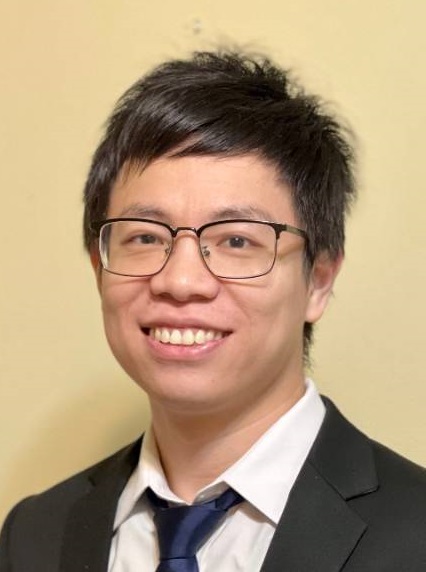
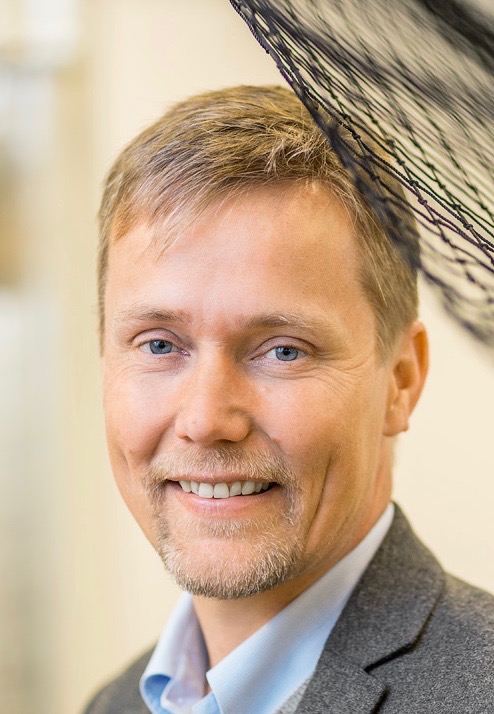
Mohammed Aledhari is an Assistant Professor at the University of North Texas, specializing in cybersecurity, machine learning, and data science. His research focuses on applications in computational medicine, bioinformatics, and autonomous systems. He holds a Ph.D. from Western Michigan University and degrees from the University of Basrah and the University of Anbar. His research interests include social cybersecurity techniques, federated learning in IoT, and AI-driven solutions for healthcare and transportation. Recent work explores blockchain-enabled digital twins, DDoS attack detection, and equitable ASD diagnostics using machine learning. His publications span cybersecurity frameworks, autonomous vehicle communication protocols, and biomedical IoT innovations. Notable contributions include optimizing intrusion detection in IoMT networks and developing interpretable machine learning models for healthcare. While no formal awards or grants are listed, his work emphasizes interdisciplinary applications of AI in healthcare, transportation, and energy markets. His email is Mohammed.Aledhari@unt.edu .
Hanbyul Joo is an Assistant Professor in the Department of Computer Science and Engineering at Seoul National University (SNU). Prior to joining SNU, he was a Research Scientist at Facebook AI Research (FAIR) in Menlo Park. He completed his Ph.D. in the Robotics Institute at Carnegie Mellon University, working with Yaser Sheikh, and received his M.S. in Electrical Engineering and B.S. in Computer Science from KAIST, Korea. Dr. Joo's educational journey began at KAIST, where he earned both his Bachelor's and Master's degrees. He then pursued his Ph.D. at Carnegie Mellon University's Robotics Institute, completing his dissertation titled "Sensing, Measuring, and Modeling Social Signals in Nonverbal Communication." His doctoral work focused on developing the Panoptic Studio, a unique sensing system with over 500 synchronized cameras for capturing social interactions. Dr. Joo's research primarily focuses on endowing machines and robots with the ability to perceive and understand human behaviors in 3D . His goal is to build "social Artificial Intelligence" that can interact with humans using social signals (body languages). He pursues this direction using data-driven methods where data is collected by measuring the wide spectrum of social signals transmitted during interpersonal social interaction. His research spans computer vision, machine learning, computer graphics, and robotics , with particular emphasis on 3D human pose estimation, human-object interaction, and social signal processing. His recent publications demonstrate a clear trend toward leveraging diffusion models for 3D reconstruction and generation tasks, with a focus on human-centric applications. His work bridges the gap between 2D image understanding and 3D scene reconstruction, often utilizing pre-trained models to overcome data limitations. The research consistently addresses fundamental challenges in understanding human behavior, interaction with objects, and social dynamics in 3D space. Dr. Joo is a recipient of several prestigious awards including the Samsung Scholarship and the CVPR Best Student Paper Award in 2018 . His paper "Total Capture: A 3D Deformation Model for Tracking Faces, Hands, and Bodies" received this honor at CVPR 2018. His research has been widely recognized in top computer vision and AI conferences, with multiple oral presentations at venues like CVPR, ICCV, and ECCV. Dr. Joo actively mentors a large group of students, with approximately 15 current students working toward MS/PhD degrees under his supervision. His lab, the SNU VCLab, focuses on cutting-edge research in computer vision and graphics. He has secured significant research funding through his work, though specific grant details aren't provided on his website. Dr. Joo frequently serves as an area chair for major conferences including CVPR, ICCV, and NeurIPS, demonstrating his standing in the academic community. Dr. Joo leads the SNU VCLab, which has developed several notable datasets and tools including SNU ParaHome, FrankMocap, and the CMU Panoptic Studio Dataset. His lab maintains strong industry connections, with students interning at leading companies like Meta. The lab's research focuses on building the infrastructure and algorithms needed for social AI, with an emphasis on practical applications that can be deployed in real-world settings.
Shungeng Zhang serves as an Assistant Professor in the Department of Computer & Cyber Sciences at Augusta University's School of Computer and Cyber Sciences. He holds a Ph.D. in Computer Science from Louisiana State University (2021) and a B.E. in Computer Engineering from Huazhong University of Science and Technology (2014). His educational background includes: Ph.D. in Computer Science, Louisiana State University, 2021 B.E. in Computer Engineering, Huazhong University of Science and Technology, 2014 Dr. Zhang's research spans distributed systems, cloud computing, and cybersecurity with a focus on enhancing performance and scalability of web applications and IoT stream processing in cloud environments. He employs sophisticated timeline analysis and fine-grained monitoring to identify transient bottlenecks causing long-tail latency problems, addressing propagation effects in complex dependency chains among application components. His publication record (2017-2022) reveals consistent contributions to cloud systems performance, particularly in n-tier architectures, concurrency control, and latency optimization. Key themes include stream processing synchronization, fanout query performance, adaptive concurrency for SLO compliance, and mitigation of transient resource contention attacks across distributed systems. No scientific awards were mentioned in the provided information. Dr. Zhang actively seeks graduate students with strong computer systems backgrounds for research collaboration. His departmental service includes Faculty Assembly participation (2021-2022) and faculty interviewing duties. Professionally, he serves as a reviewer for ACM SoCC'23, ACM TOIT, SmartCom 2023, The Journal of Supercomputing, and ACM SoCC'22. Teaching responsibilities include AIST 4720 (Enterprise System Architectures), CSCI 1200 (Introduction to Computers and Programming), and graduate courses such as CSCI 8940 (Dissertation Research) and AIST 3310 (Advanced Networking). No dedicated research labs or teams were specified in the available documentation.
Krishna Gummadi is a Scientific Director and Professor at the Max Planck Institute for Software Systems (MPI-SWS) in Germany, where he leads the Networked Systems Research Group. He also holds a professorship at the University of Saarland, demonstrating his dual commitment to research and academic instruction in computer science. His educational background includes: Ph.D. in Computer Science and Engineering from the University of Washington (2005) B.Tech. in Computer Science and Engineering from the Indian Institute of Technology, Madras (2000) Gummadi's research spans networked and distributed computer systems with a current focus on social computing systems. His work addresses critical challenges in algorithmic fairness, privacy in social media, trustworthiness of online identities, and information dissemination in social networks. He approaches these problems through interdisciplinary methods combining user-centric studies, data-centric analysis, and systems-centric design to create practical solutions that enhance fairness, transparency, and user control in online platforms. His methodology integrates large-scale observational studies, computational modeling, and system implementation to tackle complex human-computer interaction challenges at societal scale. His recent publications reveal a strong emphasis on fairness in algorithmic decision making, with significant contributions to quantifying and addressing discrimination in machine learning systems. His work bridges computer science, social science, and ethics, creating frameworks for fair classification, understanding media bias, and developing privacy-preserving techniques that maintain functionality while protecting user data. The research demonstrates a progression from technical system design to addressing societal implications of computing systems. Among his notable scientific achievements: ERC Advanced Grant in 2017 for 'Foundations for Fair Social Computing' Test of Time Awards at ACM SIGCOMM and AAAI ICWSM Casper Bowden Privacy Enhancing Technologies (PET) and CNIL-INRIA Privacy Runners-Up Awards IW3C2 WWW Best Paper Honorable Mention Multiple Best Paper awards across prestigious conferences Gummadi has advised numerous PhD students and postdoctoral researchers who have gone on to prominent positions in academia and industry. His ERC Advanced Grant has supported extensive research into fair social computing, while his leadership in major conferences (including serving as General Chair for ICWSM 2016 and Program Chair for WWW 2015) has shaped research directions in the field. His teaching portfolio includes courses on Distributed Systems, Human-Centered Machine Learning, and Social Media Analysis. He leads the Networked Systems Research Group at MPI-SWS, which has developed several publicly available systems including tools for fair classification, privacy risk assessment, trust evaluation in social media, and information diet management. The group's work bridges theoretical advances with practical implementations that address real-world challenges in social computing, with numerous software releases and datasets made available to the research community.
Shantanu Dutt is a full Professor in the Department of Electrical and Computer Engineering at the University of Illinois at Chicago , located in Chicago, IL. His office is in 930 SEO at 851 S. Morgan St, and he can be reached at dutt@uic.edu . Education Ph.D. in Computer Science and Engineering, University of Michigan, Ann Arbor (1990) M.Tech. in Computer Engineering, Indian Institute of Technology Kharagpur (1984) B.E. in Electronics and Communication Engineering, Maharaja Sayajirao University of Baroda (1983) Research Interests Professor Dutt’s research agenda centers on VLSI Computer-Aided Design (CAD) , with particular emphasis on physical design and incremental synthesis targeting both ASICs and FPGAs. He explores discrete optimization techniques to solve placement, routing, and partitioning problems. Another major thrust is FPGA built-in self-test (BIST) and trusted design , ensuring provable diagnosability and security against hardware Trojans. He also investigates fault-tolerant computing at both chip and system levels, and develops parallel and distributed computing algorithms for scalable performance. Scientific Awards 1996 Best Paper Award , ACM/IEEE Design Automation Conference, for “A probability-based approach to VLSI circuit partitioning” 1995 Most Influential Paper Award , Fault-Tolerant Computing Symposium, for “Design and reconfiguration strategies for near-optimal k-fault-tolerant tree architectures” Research Impact and Funding Professor Dutt has published extensively in top-tier journals (IEEE TVLSI, ACM TRETS, IEEE TCAD) and premier conferences (ICCAD, DAC, DATE, FTCS). His work has shaped incremental placement, timing-driven routing, FPGA security, and fault-tolerant multiprocessor architectures. While specific grant numbers are not listed, the breadth and longevity of his publication record indicate sustained funding from NSF, industry, and other agencies. Laboratory and Collaborations Although no formal laboratory name is provided, Professor Dutt’s research is conducted within the ECE department’s VLSI CAD and Fault-Tolerance groups, collaborating with graduate students and colleagues across the US and internationally.
Emmett Witchel is a Professor of Computer Science at the University of Texas at Austin , with research spanning computer architecture, systems, networking, security, and privacy . His work focuses on low-level systems optimization and secure concurrent execution. Research Interests: Concurrent systems, secure execution environments, GPU integration, distributed systems. Teaching: CS 380L (Advanced Operating Systems), CS 371M (Mobile Computing). Scientific Awards: Runner-up Best Paper, ASPLOS 2013 Runner-up Award for Outstanding Research, USENIX Symposium 2012 IEEE Micro Top Pick Award 2007 ACM Honorable Mention 2004 George M. Sprowls Award, MIT EECS 2004 Recent Publications demonstrate leadership in CXL pod databases ( Tigon ), stateful serverless computing ( Boki ), SmartNIC-accelerated file systems ( LineFS ), and GPU security ( Telekine ). His work bridges hardware-software co-design and practical systems implementation.
Saurabh Amin is a Professor in the Department of Civil and Environmental Engineering at the Massachusetts Institute of Technology (MIT), where he also serves as the Edmund K. Turner Professor and Undergraduate Officer. He is a Principal Investigator at the Laboratory of Information and Decision Systems and holds affiliations with the Operations Research Center and the Center for Computational Science and Engineering. His educational background includes: B.Tech. 2002, Indian Institute of Technology (IIT) Roorkee M.S. 2004, University of Texas (UT) Austin Ph.D. 2011, University of California (UC) Berkeley Saurabh Amin's research focuses on the design and control of infrastructure systems using game theory and optimization in networks. His work spans three main areas: resilient network control, information systems and incentive design, and optimal resource allocation in large-scale infrastructure systems. By concentrating on critical infrastructure domains including highway transportation, electric power distribution, and urban water networks, his research develops innovative theory and tools to enhance system performance against both stochastic and adversarial disruptions. His approach involves modeling cyber-physical interactions in infrastructures to assess vulnerabilities, developing detection and response tools for failures at various scales, and designing economic incentive schemes that improve aggregate public good while accounting for dependencies and private information among strategic entities. Amin's work bridges mathematical systems theory with practical civil engineering applications, creating a rigorous theoretical foundation for infrastructure resilience that addresses diverse failure mechanisms from natural disasters to deliberate malicious actions. His recent publications demonstrate a strong focus on decarbonization of energy systems, resilient infrastructure planning under climate uncertainty, optimization methods for complex networked systems, and game-theoretic approaches to sustainable infrastructure management. His work increasingly integrates artificial intelligence and machine learning techniques with traditional control theory to address contemporary challenges in infrastructure resilience and sustainability. The research shows a clear trajectory toward addressing climate change impacts on infrastructure systems while maintaining economic efficiency and operational reliability. Professor Amin has received numerous prestigious awards and honors: Common Ground Excellence in Teaching Award, 2025 HSCC Test-of-Time Award, 2024 MIT CEE, Distinguished Service and Leadership Award, 2023 Samuel M. Seegal Prize (SoE) – inspiring students in pursuing and achieving excellence, 2022 Earll M. Murman for Excellence in Undergraduate Advising, 2022 C3.ai Digital Transformation Institute Research Award, 2020 MIT, Ole Madsen Mentoring Award, 2020 MIT, Energy Initiative Research Award, 2020 National Academy of Engineering, China-America Frontiers of Engineering Symposium speaker, 2019 MIT, Robert N. Noyce Career Development Professor, 2015-2018 Google Faculty Research Award, 2015 National Science Foundation CAREER Award, 2015 Siebel Energy Institute Research Award, 2015 MIT, Solomon Buchsbaum AT&T Research Fund Award, 2012 Professor Amin has been actively involved in significant research projects including the C3.ai DTI project on Causal Reasoning for Real-Time Attack Identification in Cyber-Physical Systems and another on Learning in Routing Games for Sustainable Electromobility. He serves as the chief scientist on multi-institutional NSF grants, including the $9 million Foundations of Resilient Cyber-Physical Systems (CPS) project. His teaching portfolio includes courses such as 1.008 Engineering for a Sustainable World, 1.104 Sensing and Intelligent Systems, 1.020 Engineering Sustainability: Analysis and Design, and 1.208 Resilient Networks. As Undergraduate Officer, he plays a key role in shaping the educational experience for civil and environmental engineering students at MIT. Professor Amin leads the Resilient Infrastructure Networks Lab at MIT, where his team develops theoretical foundations and practical tools for infrastructure resilience. The lab focuses on the intersection of control theory, game theory, and optimization applied to cyber-physical infrastructure systems. Current research directions include pandemic-resilient urban mobility and hurricane-resilient smart grid operations, reflecting the lab's commitment to addressing pressing societal challenges through rigorous systems engineering approaches.
Cyrille Artho is an Associate Professor in the Division of Theoretical Computer Science at KTH Royal Institute of Technology, actively contributing to research in formal methods, software testing, and cybersecurity. His work spans model checking, smart contract security, and concurrent systems verification, with significant contributions to tools like Java Pathfinder and Modbat. PhD from ETH Zurich (2005) with dissertation on multi-threading fault detection Teaches Software Safety and Security, Software Engineering Fundamentals, and supervises degree projects His research focuses on developing formal techniques for safety-critical systems, particularly in blockchain security and distributed applications. Recent work emphasizes smart contract verification, anomaly detection in microservices, and trusted execution environments for secure cloud analytics. The 15 most recent publications reveal a strong trend toward blockchain security (6 articles), formal verification of distributed systems (5), and novel testing methodologies (4), with increasing integration of machine learning for vulnerability detection. As chair of the FTSCS workshop series and contributor to major conferences like ASE and ICST, Artho has significantly shaped the formal methods community. His leadership in organizing workshops demonstrates commitment to advancing safety-critical systems research. Principal investigator for C3.ai DTI Cyber Safety Cage for Networks project Develops Modbat framework for model-based API testing Active in Digital Futures research initiative at KTH
Gautam Kamath is an Assistant Professor at the University of Waterloo's Cheriton School of Computer Science, a Faculty Member at the Vector Institute, and a Canada CIFAR AI Chair. He leads The Salon, a research group focused on statistics, algorithms, machine learning, and optimization. His work bridges theoretical foundations with practical applications in data privacy and robustness, contributing to both academic research and real-world deployments that impact millions of users. Dr. Kamath earned his PhD and SM degrees in Electrical Engineering and Computer Science at MIT, where he was advised by Costis Daskalakis. Prior to MIT, he graduated from Cornell University in May 2012 with a degree in Computer Science and Electrical and Computer Engineering, where he worked with Bobby Kleinberg. His academic journey reflects a strong foundation in both theoretical computer science and practical applications. His research focuses on developing solutions for trustworthy and reliable machine learning and statistics, with particular emphasis on data privacy and robustness. He addresses fundamental problems in these areas, revitalizing statistical toolkits for the modern data era where privacy preservation is paramount. His work spans theoretical foundations of differential privacy to practical applications that have been deployed at scale, including contributions to systems that protect the sensitive information of hundreds of millions of individuals. Analysis of his recent publications reveals a strong trend toward addressing the interplay between privacy, robustness, and machine learning performance. His work increasingly examines practical deployment challenges while maintaining theoretical rigor, with growing emphasis on diffusion models, generative AI, and the legal implications of AI systems. There's a clear trajectory from foundational privacy theory toward addressing real-world implementation challenges across diverse application domains. Canada CIFAR AI Chair Ontario Early Researcher Award 2024 Caspar Bowden Award for Outstanding Research in Privacy Enhancing Technologies STOC Best Student Presentation Award ICML 2024 Best Paper Award Microsoft Research Fellow at the Simons Institute for the Theory of Computing Dr. Kamath actively mentors students, with notable successes including Valentio Iverson winning the Germain-Erdős Undergraduate Award and Chris Trevisan receiving the CRA Outstanding Undergraduate Researcher Award. His service to the research community is extensive, serving as Editor-in-Chief of TMLR, on the Executive Committee of the Learning Theory Alliance, and on steering committees for major conferences including ICML, COLT, and ALT. He has organized numerous workshops focused on privacy-preserving machine learning and differential privacy. Through The Salon research group, Dr. Kamath fosters a collaborative environment where postdoctoral fellows, graduate students, and undergraduates work together on cutting-edge problems at the intersection of statistics, algorithms, machine learning, and optimization. The group maintains strong connections with industry partners and participates in major research initiatives, including the Vector Institute's privacy and security research efforts. Looking forward, Dr. Kamath will be moving to the Computer Science department at NYU's Courant Institute of Mathematical Sciences in September 2026, where he plans to expand his research program.
Thomas Peyrin is a Full Professor at Nanyang Technological University (NTU) in Singapore, leading the Symmetric Key and Lightweight Cryptography Lab (SyLLab) since 2012. He co-founded TT-logic.ai, focusing on cryptographic innovations. His academic journey includes a Ph.D. in Cryptology from Orange Labs and University of Versailles (2008), a Master in Computer Science from MPRI (2005), and engineering training at CPE Lyon (2004). Education : Ph.D. (2008), MPRI Master (2005), EPFL Exchange (2003-2004), CPE Lyon (1999-2004) Career : Full Professor at NTU (2022-present), Associate Professor (2017-2022), Nanyang Assistant Professor and NRF Fellow (2012-2017), Research Fellow at NTU (2010-2012), Cryptography Expert at Ingenico (2008-2010) Thomas specializes in symmetric cryptography, cryptanalysis of hash functions and block ciphers, and machine learning applications to security. His work includes groundbreaking research on SHA-1 collisions, lightweight cryptographic primitives (e.g., GIFT, PHOTON), and automated cryptanalysis frameworks. Recent projects explore integrating AI with cryptographic verification and fault attack resistance. His publications span top conferences like CRYPTO, EUROCRYPT, and CHES, with awards including the FSE Test of Time Award (2025), FSE Best Paper (2023), and NRF Investigatorship (2022). He has advised numerous students in cryptographic research and co-founded SyLLab, a leading lab for symmetric cryptography innovation. Scientific Awards : Test of Time Award at FSE 2025 Best Paper Award at FSE 2023/ToSC NRF Investigatorship (2022) Lee Kuan Yew Postdoctoral Fellowship Best Paper Awards at FSE 2012 and ASIACRYPT 2007
Karl Henrik Johansson is a Professor at the School of Electrical Engineering and Computer Science, KTH Royal Institute of Technology in Stockholm, Sweden, where he also serves as the Founding Director of Digital Futures. He is a Fellow of both IEEE and the Royal Swedish Academy of Engineering Sciences, and has held leadership positions including Immediate Past President of the European Control Association and IEEE Control Systems Society Vice President Diversity, Outreach & Development. Dr. Johansson earned his MSc in Electrical Engineering and PhD in Automatic Control from Lund University. His academic journey includes visiting positions at prestigious institutions such as UC Berkeley, Caltech, and NTU. His research focuses on networked control systems and cyber-physical systems with applications in transportation, energy, and automation networks. His work investigates fundamental challenges in connecting physical world systems through communication networks, exploring how wireless communication and sensor technology can enhance system robustness, reliability, energy efficiency, and safety. Current research directions include security of cyber-physical systems, distributed optimization, multi-agent systems, and applications to intelligent transportation and energy networks. Analysis of his recent publications reveals a strong focus on distributed optimization algorithms, secure networked control, multi-agent systems, and applications to transportation and energy networks. His work increasingly integrates machine learning techniques with traditional control theory, addressing challenges in privacy-preserving distributed computation, resilient state estimation, and resource allocation in complex networked systems. IEEE Control Systems Society Hendrik W. Bode Lecture Prize (2024) Swedish Research Council Distinguished Professor (2018-2027) Wallenberg Scholar (2009-2026) IFAC Young Author Prize IEEE CSS Distinguished Lecturer (2017-2019) IFAC Outstanding Service Award IEEE Fellow Dr. Johansson has supervised over 100 postdocs and PhD students, with many now holding prominent positions at institutions worldwide. His research has been supported by significant grants including the Swedish Research Council Distinguished Professor Grant (2018-2027), multiple Wallenberg Foundation grants, and numerous EU and national research projects. He has directed major research centers including ACCESS Linnaeus Centre (2009-2016) and Strategic Research Area ICT TNG (2013-2020). His research group operates within the Digital Futures initiative and maintains strong connections with industry partners through projects like the Integrated Transport Research Lab (supported by Scania and Ericsson) and Smart Mobility Lab. The group actively collaborates with international institutions and participates in major EU-funded projects addressing challenges in cyber-physical systems, transportation, and energy networks.
Steffi Haag is a Professor of Digital Innovation and Entrepreneurship at the Institute of Computer Science , Heinrich Heine University Düsseldorf (HHU) . She bridges the Faculty of Mathematics and Natural Sciences and Faculty of Business Administration and Economics , collaborating with the Center for Entrepreneurship Düsseldorf (CEDUS) to inspire tech startups. Her research focuses on sustainable information systems, digital experiences, and business models. Steffi Haag’s research integrates Shadow IT , Usable Cybersecurity , and Digital Idea Management . Her work emphasizes theoretical , quantitative , qualitative , and mixed-methods research , including experimental and survey methodologies. Steffi Haag’s publications (2018–2024) span Information Systems , Cybersecurity , Digital Twins , and Sustainable Design . Common themes include Shadow IT dynamics , user behavior in security , and innovation management . Hermann Gutmann Award for special scientific achievements (2023) Schöller Fellow (2020) HMD Best Paper Award (2018) Research Award in Data Protection and Data Security (2017) Dissertation Prize (2017) Steffi Haag has secured grants such as the TU Darmstadt Postdoctoral Fellowship for Female Researchers (2016–2018) and Deloitte Foundation Fellowship (2009–2011). She actively moderates conferences and serves as Associate Editor of Business & Information Systems Engineering .
Jiaxin Lin is an Assistant Professor in the Department of Electrical and Computer Engineering at Cornell University , affiliated with the Computer Systems Laboratory . She earned her Ph.D. in Computer Science from UT Austin (2025) , preceded by an M.S. from University of Wisconsin-Madison and a B.S. from ShenYuan Honors College at Beihang University. Her research focuses on co-designing software and hardware systems to enable high-performance data center communication, particularly through: Programmable network interface controllers (SmartNICs) Terabit network system stacks Cache/memory interconnects Compilers for in-network computing Chip-to-chip interconnects Her work addresses challenges in portability across heterogeneous SmartNICs, demonstrated through the development of the Alkali compiler framework (NSDI '25). Key themes include hardware abstraction, data center scalability, and network-compute co-design. Scientific Awards: Google Junior Faculty Award (2025) MIT EECS Rising Star (2024) Google Ph.D. Fellowship (2021) Meta Ph.D. Fellowship (2021)
Thomas Gillespie is a Professor and Co-Chair of the Environmental Science and Engineering (D.Env.) Program at the Department of Geography, University of California, Los Angeles (UCLA). His research integrates Geographic Information Systems (GIS), remote sensing, and biogeography to study tropical dry forests in biodiversity hotspots and develop predictive models for species distribution and conservation. Education: Ph.D. in Geography, UCLA (1998) M.A. in Geography and Planning, California State University, Chico (1994) B.A. in International Affairs, University of Colorado, Boulder (1990) Research Interests: Gillespie’s work focuses on field-based floristic surveys and remote sensing analysis of tropical dry forests across the Pacific, Caribbean, and California. He combines GIS with ecological data to model biodiversity patterns, anthropogenic disturbance impacts, and climate change scenarios. His research spans biogeography, conservation science, and environmental policy. Scientific Awards: NASA Earth and Space Science Fellowship Grants: Gillespie has secured major grants from the National Science Foundation (NSF), Environmental Protection Agency (EPA), National Institutes of Health (NIA, NICHD), and MacArthur Foundation for projects on urban greening, disaster recovery, and tropical forest conservation.
Professor Sir Nigel Shadbolt is Principal of Jesus College Oxford and Professor of Computing Science at the University of Oxford. He is Chairman and Co-founder of the Open Data Institute which he established with Sir Tim Berners-Lee. His career spans multiple prestigious institutions including the University of Southampton and University of Nottingham, where he held leadership roles in AI research. He has served in significant government advisory positions including as Information Advisor to the UK Prime Minister and member of the Public Sector Transparency Board. Nigel Shadbolt earned his undergraduate degree in Philosophy and Psychology from the University of Newcastle (1st Class Honours, 1978) followed by a PhD in Artificial Intelligence from the University of Edinburgh. His academic journey includes positions as the Allan Standen Professor of Intelligent Systems at Nottingham and leadership of the Web and Internet Science Group at Southampton before joining Oxford. Shadbolt's research spans the interdisciplinary field of Web Science, which he helped originate, focusing on human-centered AI, social machines, open data, and ethical considerations in technology. His work examines how humans and computers integrate at web scale to create novel applications, with recent emphasis on children's digital autonomy and privacy. He has published over 500 articles exploring topics from cognitive psychology to computational neuroscience, Artificial Intelligence to the Semantic Web. His notable contributions include the development of data.gov.uk and leadership in establishing Oxford's Institute of Ethics in AI. His 2018 book 'The Digital Ape: how to live (in peace) with smart machines' has been described as a 'landmark book' in the field. Knighted in 2013 for services to science and engineering Fellow of The Royal Society (FRS) Fellow of the Royal Academy of Engineering (FREng) Fellow of the British Computer Society (FBCS) Technology Pioneer status by the Davos World Economic Forum UK national BT Flagship IT Award As an advisor, Shadbolt has supervised numerous PhD students who have gone on to positions at Google DeepMind, the World Bank, and other prestigious institutions. His research has been supported by multiple grants including SOCIAM, KOALA, and ReTiPS projects. He co-founded Garlik Ltd, which was acquired by Experian, demonstrating his commitment to translating research into practical applications that benefit society. Shadbolt leads the Web and Internet Science research group at Oxford, focusing on social machines - applications that succeed at web scale by integrating humans and computers in novel ways. His work on the KOALA Hero Toolkit and CHAITok system addresses critical challenges in children's data autonomy on social media platforms, reflecting his commitment to ethical technology design.