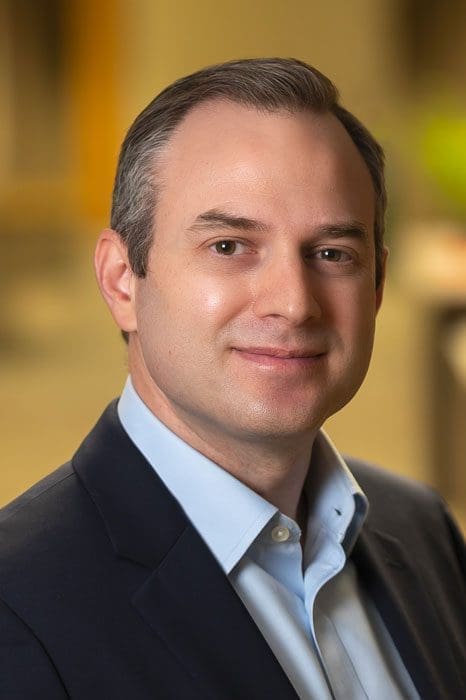
Pascale Lorber is an Associate Professor at the Leicester Law School, University of Leicester, specializing in employment law. She holds an LLM in Employment Law from the University of Leicester and graduated from the University of Strasbourg in France. Her research focuses on collective voices at work, equality, and the integration of AI into legal education. She currently serves as the UK representative on the European Working on Labour Law and sits on the editorial board of the Revue de Droit Compare du Travail et de la Securite Sociale. Dr. Lorber was awarded Senior Fellowship of the Higher Education Academy (HEA) and led the successful School Athena Swan application, demonstrating her commitment to equality and institutional advancement. Her recent work explores innovative applications of artificial intelligence in legal pedagogy, marking a strategic shift in her research trajectory.
Anne Orford is Melbourne Laureate Professor and Michael D Kirby Chair of International Law at Melbourne Law School, University of Melbourne, with visiting appointments at Harvard Law School. Her research spans international law, dispute settlement, economic law, climate change, and legal history. She has served on the Permanent Court of Arbitration and advised the Pacific Islands Forum on climate law. Her research focuses on decolonizing international legal frameworks and examining power asymmetries in global governance. Recent work explores historical imperialism's impact on modern legal systems and climate securitization. Award recognition includes the 2022 European Society of International Law Monograph Prize, Woodward Medal, and honorary doctorates from Lund, Gothenburg, and Helsinki universities. She directs the Laureate Program in International Law and has mentored 27 early-career researchers globally. Grants include ARC Kathleen Fitzpatrick Laureate Fellowship and Swedish Research Council funding for climate security research. She established the Institute for International Law and Humanities and co-founded the Annual Junior Faculty Forum.
Paul Ali is an Associate Professor and Director of Studies for Banking and Finance Law at Melbourne Law School, University of Melbourne. With prior experience in corporate law firms, his research focuses on structured finance, credit derivatives, and corporate governance reforms. He serves on editorial boards of multiple finance law journals. Research Impact: His doctoral work on equitable marshalling has been cited in supreme court decisions internationally. Authored books include analyses of market-based environmental instruments and international corporate governance frameworks, with one publication translated into Chinese.
Maria Patterson is a Clinical Assistant Professor of Business at New York University's Leonard N. Stern School of Business since 2012, following an adjunct role during 2011-2012. She is a retired partner from The Law Offices of Patterson & Aschheim, LLP. Her academic affiliations include teaching ethics, law, professional responsibility, and social impact in business. Education: J.D., Columbia Law School B.A. in History (magna cum laude), Davidson College Research & Expertise: Focuses on ethics in business decision-making, legal frameworks for corporate responsibility, and the intersection of law and social impact initiatives. She integrates practical legal experience into classroom discussions on topics like mortgage securitizations and bankruptcy law. Professional Service: Serves as a board member and secretary for a Bronx-based nonprofit providing supportive housing, and has volunteered as an arbitrator in NYC small claims court. Active in legal advocacy through roles in the Association of the Bar of the City of New York, including chairing the Foreign and Comparative Law Committee.
Professor Stephen Thomas is a Professor of Finance at Bayes Business School, City, University of London. He holds a BSc (Econ) from LSE, MSc and PhD from Southampton University. His research focuses on asset pricing, hedge funds, and retirement planning, with a particular emphasis on decumulation strategies and annuity utilization. He has held visiting roles at institutions like the University of Reading and Queen's University (Canada). Notable awards include being ranked 11th in Europe for Finance Research (JBFA, 2005) and receiving best paper awards at global finance conferences. His work often addresses practical financial challenges, such as optimizing withdrawal rates during retirement and managing sequence risk. He has advised major financial institutions like Bear Stearns and Firecrest Hambro and contributed to policy reviews for the Welsh Government. His research spans over four decades, with key publications on topics like momentum investing, securitization, and behavioral finance. Education: BSc (Econ), London School of Economics MSc, University of Southampton PhD, University of Southampton Research Interests: Professor Thomas’s research emphasizes retirement finance, including perfect withdrawal rates, deferred annuities, and adaptive retirement planning. He also investigates hedge fund dynamics, market microstructure (e.g., bid-ask spreads), and the impact of macroeconomic factors on asset returns. His work bridges theoretical finance with practical applications, such as optimizing investment strategies for individuals and institutions. Awards & Recognition: JBFA Europe Finance Research Rank #11 (2005) Best Paper Award, Global Finance Conference (2005) Best Market Microstructure Paper Award (2006) Academy of Experts Membership (2013–present) Advising & Grants: He has supervised PhD students like Rob Roy and Richard Mason. His professional roles include directorships at Bear Stearns Global Alpha Macro Hedge Fund and Solent Systematic Investment Strategies. He has served on investment committees and contributed to policy reviews for SME business finance. Labs & Teams: While no specific labs are mentioned, his collaborative work involves interdisciplinary teams addressing financial market dynamics and retirement economics.
Philip Ashton is a Professor and Department Head in the Urban Planning and Policy Program at the University of Illinois Chicago (UIC), part of the College of Urban Planning and Public Affairs. His work focuses on the intersection of urban governance, financial markets, and racial inequality. He has held visiting appointments at l’Université Gustave Eiffel in Paris and the American Bar Foundation, and collaborates with institutions like the Laboratoire Techniques Territoires et Sociétés (LATTS). Education: BA (Honours) from University of Winnipeg (1990), MUP from McGill University (1993), PhD from Rutgers University (2005). His career includes roles as a research associate at Rutgers’ Center for Urban Policy Research and technical advisor to housing cooperatives in North America. Research interests center on the financialization of urban spaces, particularly how private financial instruments reshape urban policy responses to racial exclusion and austerity. Current projects examine climate action planning within financialized frameworks and the legal adjudication of racialized mortgage discrimination. His interdisciplinary work integrates socio-legal studies, economic geography, and heterodox economics. Publications span leading journals including Economy & Society , Urban Studies , and Environment & Planning A . Key themes include infrastructure privatization (e.g., Chicago’s Skyway lease), subprime mortgage crises, and the political economy of law. His upcoming book Doe v. Subprime critiques legal barriers to reparations for systemic mortgage exploitation. Grants and collaborations include work with Rachel Weber (UIC) and Marc Doussard (UIUC) on financial statecraft in urban infrastructure. His lab focuses on emergent financial practices shaping urban governance, with an international lens informed by his Paris-based research.
Boram Lee is a Senior Lecturer in Arts and Cultural Management at the University of South Australia (UniSA Business). Her research focuses on behavioral finance, cross-cultural studies, and the valuation of arts/culture. She holds a PhD in Finance and has professional experience in arts management, including international theatre tours and festival production. Affiliations: Board Member of Patch Theatre, Vice-President of Asia Pacific Business Council for Women Research Grants: Secured $333,000 from KOFICE (2023), Korea Foundation Fellowship (2023), and Australian Cultural Diplomacy Grants (2021). Teaching: Received 2020 UniSA Business School Staff Excellence Award for Teaching. Her work explores arts governance, creative fundraising, and disability arts policy. Notable projects include the Connect2Abilities initiative with Restless Dance Theatre and the 'Dancing Against the Odds' documentary.
Brent W. Ambrose is the Jason and Julie Borrelli Faculty Chair in Real Estate and Professor of Real Estate at The Pennsylvania State University's Smeal College of Business. He holds multiple leadership roles, including Director of the Borrelli Institute for Real Estate Studies, Director of the Smeal College Ph.D. Program, and Editor-in-Chief of the Journal of Real Estate Finance and Economics . Previously, he held faculty positions at the University of Kentucky and University of Wisconsin-Milwaukee, and served as a Visiting Associate Professor at the University of Pennsylvania Wharton School and a Visiting Economist at HUD. Dr. Ambrose specializes in real estate finance, corporate finance, and fixed-income securities. His research focuses on Real Estate Investment Trusts (REITs), mortgage default/foreclosure mitigation, Government Sponsored Enterprises (GSEs), and consumer credit contracts. He has advised U.S. government agencies on FHA mortgage policies and GSE privatization. His work appears in top journals like The Journal of Finance and Review of Economics and Statistics , with over 5,000 citations. He earned a Ph.D. and M.B.A. in Real Estate (Finance) from the University of Georgia (1987–1989) and a B.S. in Business from Wake Forest University (1986). He is a Fellow of the Real Estate Research Institute, FDIC Center for Financial Research, and Homer Hoyt Institute. In 2010, he served as AREUEA President and received the George Bloom Award (2016) for academic contributions. His research portfolio spans topics like tax policy effects on housing, appraisal bias in mortgages, and the role of small-dollar mortgages. He has collaborated on projects analyzing the Paycheck Protection Program's impact on commercial real estate and racial disparities in rental markets.
Brendan Daley is the Ralph S. O’Connor Associate Professor of Economics at Johns Hopkins University’s Krieger School of Arts & Sciences, affiliated with the Department of Economics and the Center for Financial Economics. His research focuses on economic theory and finance, particularly the role of information in markets, including its impact on pricing, liquidity, and efficiency. He holds a PhD in Economic Analysis and Policy from Stanford University’s Graduate School of Business and a B.S. in Applied Economics from Cornell University. His work explores informational frictions in entrepreneurship, real estate, and negotiations, as well as the effects of ratings and due diligence on financial markets. Notable contributions include studies on securitization, credit supply, and the Brattle Group Distinguished Paper Prize-winning analysis of liquidity dynamics. Professor Daley has held roles at Duke University, the University of Colorado, and the Leeds School of Business. His research has been disseminated through top-tier journals like the American Economic Review, Journal of Finance, and Review of Financial Studies. He actively participates in global conferences and serves on editorial boards, including the AER Excellence in Refereeing Award (2012, 2017). His affiliations include the American Economic Association and Finance Theory Group.
Bohdana Kurylo is an LSE Fellow in Qualitative Methodology at the Department of Methodology, London School of Economics. She holds a PhD in International Relations and East European Studies from University College London (School of Slavonic and East European Studies). Her research focuses on three interconnected areas: critical security studies in Eastern Europe, populist discourses and aesthetics, and feminist-decolonial ethics in qualitative research. She employs hermeneutic-contextualist methods and visual analysis to explore civil society agency, security politics, and knowledge hierarchies, particularly in post-Soviet contexts. Education: PhD from UCL, MA/BA unspecified Her work examines how security imaginaries are constructed through populist movements like Ukraine's Zelenskyy administration, while advocating for collaborative ethical frameworks in conflict research. She critiques Western-centric knowledge production through autoethnographic narratives and emphasizes civil society's role in resistance during wartime. Publications span Security Dialogue , International Studies Review , and Journal of International Relations and Development , focusing on themes like vernacular security, counter-populist resistance, and ethical reflexivity in war zones. Teaching experience includes roles at Oxford Brookes, King's College London, and Queen Mary University of London, specializing in International Relations and qualitative methodologies.
Dr. Sohini Kar is a socio-cultural anthropologist in the Department of Anthropology at the London School of Economics and Political Science, specializing in economic anthropology of South Asia, particularly urban India. Her research examines the impact of financialization on society, with a focus on poverty, labor, and gender dynamics within financial systems. Dr. Kar earned her MA and PhD in Anthropology from Brown University and held a postdoctoral position as a Harvard College Fellow in the Department of Anthropology at Harvard University before joining LSE. Her academic trajectory reflects a strong foundation in anthropological theory combined with deep regional expertise in South Asia. Her research interests span economic anthropology, financialization, microfinance, financial inclusion, urban poverty, labor studies, and gender studies. Dr. Kar's work critically examines how financial systems transform social relations, particularly how the poor become integrated into financial markets through microfinance and other financial inclusion initiatives. She investigates the gendered dimensions of finance, exploring how women's bodies and labor become financialized through banking systems and insurance products. Her research also addresses the impact of climate change on urban poor workers in India and emergent forms of social protections. Dr. Kar's publications reveal a consistent focus on the intersection of finance, poverty, and social relations in India. Her work demonstrates how financialization reshapes social welfare, labor relations, and gender dynamics, with particular attention to how financial systems absorb and transform social critique. Her research spans ethnographic studies of microfinance institutions, analyses of financial inclusion policies, and examinations of gendered financial products. 2020 Bernard Cohn Book Prize sponsored by the Association for Asian Studies for Financializing Poverty: Labor and Risk in Indian Microfinance Dr. Kar is currently pursuing two major research projects: one examining financial activism and how activists influence financial actors to achieve social change, and another investigating the impact of extreme heat on urban poor workers in India and the emergent forms of social protections. Her work bridges anthropological theory with practical implications for financial policy and social welfare systems in the Global South.
Professor Kathy Yuan is a Professor of Finance at LSE with expertise in asset pricing, market liquidity, and financial network analysis. She holds a PhD from MIT and previously worked as an economist at JP Morgan. Her research examines how financial networks transmit risk and the design of stable financial systems. Professor Yuan has published extensively in top finance journals including Journal of Finance and Review of Financial Studies. She has received major grants including an ERC Consolidator Grant and serves as Director for the MSc Risk and Finance program at LSE. Her current research focuses on decentralized finance platforms and digital payment systems. She teaches courses in Financial Risk Analysis and Management and Regulation of Risk.
Dr. Zhang Hai is a Senior Lecturer in Accounting and Finance at the University of Strathclyde's Strathclyde Business School, where he joined in 2017 as a Chancellor's Fellow. He holds a PhD in Finance from the University of Glasgow (2013-2016), funded by the Economic and Social Research Council (ESRC). His research focuses on financing innovation in incomplete markets, particularly addressing asymmetric information challenges in SME financing. He has published in journals like European Journal of Operational Research and Journal of Economic Dynamics and Control. Dr. Zhang serves as a peer reviewer for journals including International Review of Financial Analysis and Quantitative Finance. Research Interests: Financing innovation for SMEs Asset securitization strategies Debt overhang and capital structure Hedge fund strategies and risk management Algorithmic trading and portfolio selection Behavioral finance applications Professional Activities: EFMA Annual Conference Participant (2024) Peer reviewer for multiple finance journals since 2020 Principal Co-Investigator in the SME asset securitization research project (2021-2024) Awards: Adam Smith Business School PhD Excellence Prize (2018) Outstanding Reviewer - International Review of Economics and Finance (2018)
Vahe Andonians is a Senior Lecturer at the Frankfurt School of Finance & Management, combining academic roles with his expertise as a banker, data scientist, and entrepreneur. He founded Cognaize (2020), specializing in hybrid intelligence for financial document automation, and co-founded Traidum, a blockchain-based platform for trading structured credit products with Moody's Analytics. Previously, he sold SCDM (2013–2017), a startup offering AI-driven analytics and valuations for fixed-income securities, splitting its operations between Moody's Analytics and Deloitte. His work serves clients like Deutsche Bundesbank, KfW, and major financial institutions. Education includes an engineering degree from Höhere Technische Bundeslehr- und Versuchsanstalt (Austria) and an MBA from the University of Liverpool. His research focuses on machine learning and blockchain applications in finance, including automated document processing, securitization analytics, and cash flow simulations. He also managed a statistical equity arbitrage hedge fund for Erste Bank prior to his entrepreneurial ventures. At the Frankfurt School, he teaches courses such as 'Computational Semantics,' 'Algorithms & Data Structures,' and 'Operational Value Creation,' integrating practical industry insights into academic instruction. His AI Lab collaborations highlight his commitment to bridging financial innovation with academic research.
Dr. Marine Gueguin is a Research Fellow at the University of Leeds' School of Politics and International Studies (POLIS), affiliated with the Centre for Global Security Challenges. Her work focuses on Critical Terrorism Studies and Critical Security Studies, examining the securitization of terrorism in French political discourse and its colonial underpinnings. She holds a PhD in Security Studies (Leeds, 2023), MA (Leeds, 2023), LLM (University of Southampton, 2016), and Licence de Droit (Université de Rennes 1). Research: Explores exceptionalism in French CT policies, colonial legacies in security frameworks, and military interventionism in Sahel/Iraq/Syria. Methodology: Uses post-Copenhagen School securitization theory and decolonial conceptual approaches. Her doctoral research analyzed the framing of terrorism as an existential threat in France (2015-2020), revealing embedded coloniality in emergency powers. Current work extends this into French military interventions abroad. Teaching includes International Relations, Security Studies, and Terrorism Studies at POLIS.