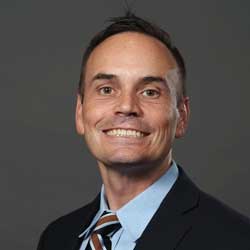
Benjamin Carrion Schaefer is an Assistant Professor of Electrical Engineering at the University of Texas at Dallas (UTD), affiliated with the Erik Jonsson School of Engineering and Computer Science. His research focuses on reconfigurable computing, FPGA-based systems, and hardware security. He holds a PhD in Electrical Engineering from the University of Birmingham, UK (2003). His work emphasizes high-level synthesis (HLS), electronic design automation (EDA), and secure hardware design. Key research interests include FPGA optimization, embedded systems security, and accelerating runtime reconfiguration in CGRAs. His recent publications address challenges in cloud-based split logic synthesis, mitigating side-channel attacks on legacy hardware, and HLS-driven RTL bug detection. He leads research on resource-sharing architectures like MOSAIC and PEPA for performance enhancement in embedded processors. No scientific awards are explicitly listed, but his contributions to hardware-aware design automation highlight his technical expertise. Advising and grant details are not provided in the text. Schaefer is associated with a lab at UTD, though specific lab name or focus areas are not detailed here.
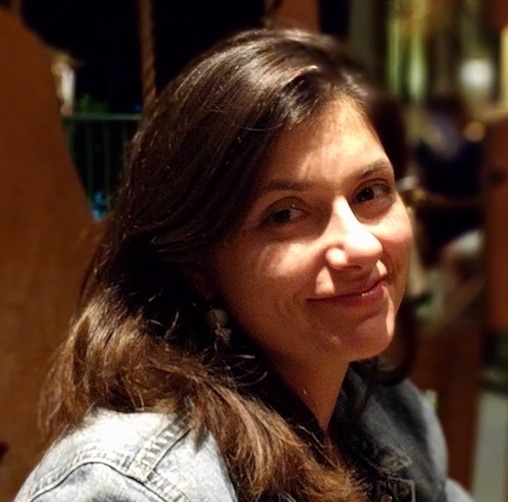
Diala Naboulsi is a Professor at the École de technologie supérieure (ÉTS) in the Department of Software Engineering and IT. Her research focuses on mobile networks, wireless systems, and cybersecurity, with a strong emphasis on machine learning applications in network optimization. She holds an M.Eng. from the Lebanese University and M.Sc. and Ph.D. degrees from INSA Lyon. Research Units: Summit Tech Research Chair, LASI Lab, Imagin Lab Expertise: Network virtualization, resource allocation, mobility management, UAV-based computing Her work spans resilience in wireless backhaul networks, energy-efficient frameworks in RAN slicing, and federated learning for privacy-aware traffic forecasting. She has advised numerous doctoral students, including Ahmed Abdelmoaty, Hnin Pann Phyu, and Philippe Lavoie. Key contributions include deep reinforcement learning approaches for network topology optimization and UAV-assisted MEC systems for Industry 5.0. Recent publications highlight advancements in 6G networks, network slicing, and edge computing. Her research aligns with strategic initiatives in sustainable and secure communication systems.
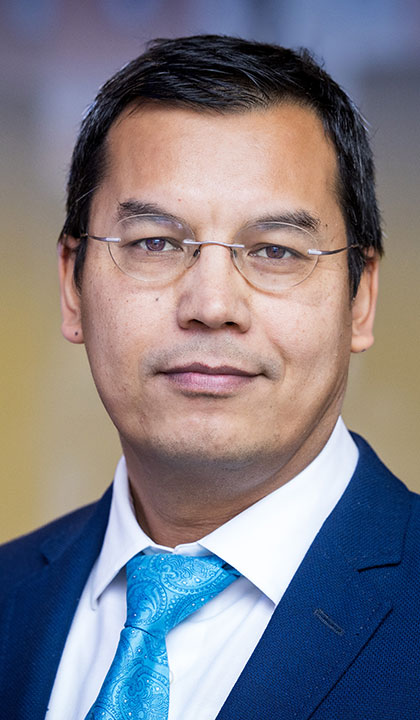
Dr. Jie Wu is the Laura H. Carnell Professor and serves as Director of the Center for Networked Computing at Temple University's Department of Computer and Information Sciences. He has held leadership roles including Chair of the department (2009-2016), Associate Vice Provost for International Affairs (2015-2017), and Director of International Affairs in the College of Science and Technology. Previously, he was a distinguished professor at Florida Atlantic University (1989-2009) and held NSF program director roles (2007-2009). Education: PhD in Computer Engineering, Florida Atlantic University (1989) MSc in Computer Science, Shanghai University of Science and Technology (1985) BSc in Computer Science, Shanghai University of Science and Technology (1982) Research focuses on mobile/wireless networks, cloud computing, distributed systems, and cybersecurity. He has led NSF-funded projects and pioneered protocols for ad hoc networks. His work integrates machine learning with network trust mechanisms. Awards highlight his contributions: AAAS/IEEE Fellowships, ACM Distinguished Membership, and multiple best paper recognitions. He chairs major conferences like IEEE MASS and ICDCS, and serves on editorial boards for IEEE Transactions on Mobile Computing and others. Professional service includes leadership roles in IEEE Technical Committees, CCF (Chinese Computer Federation), and organizing over 20 international conferences. His lab at Temple University drives innovations in networked systems and distributed computing.
Feng Hao is a Professor of Security Engineering and Head of the Systems & Security research theme at the Department of Computer Science, University of Warwick. He holds a PhD from the University of Cambridge, supervised by Ross Anderson and John Daugman. His research focuses on real-world security problems, including cryptographic protocols, electronic voting systems, and IoT security. He has contributed to standards like ISO/IEC 11770-4 and RFC 8236 (J-PAKE), and his work has been recognized with grants such as the ERC Starting Grant (2012) and the ERC Proof of Concept Grant (2015). Education: PhD in Security Group (Computer Laboratory), University of Cambridge. Research interests include designing secure protocols for e-voting, password authentication, and privacy-preserving systems. Notable contributions include DRE-i, DRE-ip, and J-PAKE protocols. Professional service includes roles as a journal editor (IEEE Security & Privacy, Journal of Information Security and Applications), standards committee member (ISO/IEC), and grant reviewer (EPSRC, EU). Teaching includes advanced computer security and cryptography courses at both undergraduate and postgraduate levels. Awards and grants highlight his impactful work: top Google Scholar paper in Computer Security & Cryptography (2017), 3rd place in Economist Cybersecurity Challenge (2016), and significant ERC funding. His research team has conducted trials in e-voting systems, such as the Gateshead local elections (2019), demonstrating real-world application of his protocols.
Brian Mitchell is a Teaching Professor in the Department of Computer Science at Drexel University's College of Computing & Informatics (CCI). He brings over two decades of combined industry and academic experience, transitioning fully into academia in 2022 after serving as a Distinguished Engineer at a Fortune 15 company. His work bridges cutting-edge research and practical innovation in software systems. Drexel University, College of Computing & Informatics, Department of Computer Science Education: PhD in Computer Science, Drexel University MS in Computer Science, Drexel University BS in Computer Science, Drexel University ME in Computer & Telecommunication Engineering, Widener University Brian Mitchell's research centers on the intersection of Software Engineering, Software Architecture, Cloud Native Computing, and AI . His early foundational work helped establish the field of Search-Based Software Engineering (SBSE) , particularly in automated software clustering and architecture recovery. Recently, his focus has shifted to modern challenges in cloud-native environments , including misconfiguration detection, malware analysis, and resilient system design. He integrates security, scalability, and intelligent automation into software engineering practices. His recent publications reflect a clear trend toward AI-enhanced cloud-native systems , emphasizing automated analysis, security, and architectural robustness. These works appear in AI and cloud computing venues, showing interdisciplinary engagement. The evolution from source code clustering to cloud-native engineering illustrates his adaptability and leadership in emerging domains. Scientific Awards: Best Paper Award, GECCO'03 Best Paper Award, WCRE'01 Brian is actively involved in mentoring students and encourages research collaboration, particularly with those seeking deeper engagement beyond coursework. He emphasizes hands-on learning and uses modern tools like GitHub and Discord in his teaching. While no specific grants are listed, his industry leadership in digital innovation and open-source contributions suggests strong applied research support. He previously led large engineering teams and drove disruptive technological adoption in enterprise settings. Though no formal lab name is mentioned, his research group appears focused on software architecture, cloud systems, and AI-driven engineering , likely operating under informal or course-based research initiatives. His website and GitHub presence (@ArchitectingSoftware) suggest an active, open, and collaborative environment for student research.
Dr. Jordan Shropshire is the Lawrence Minto Sylvestre Endowed Chair in Computing and a Professor in the Information Systems and Technology Department at the University of South Alabama's School of Computing. His academic journey includes a Ph.D. in Management Information Systems from Mississippi State University (2008) and a B.S. in Business Administration from the University of Florida (2004). Dr. Shropshire's research focuses on cybersecurity, data center management, cloud computing, IoT ecosystems, and systems architecture. His work addresses critical challenges such as post-quantum cryptography, embedded system vulnerabilities, and compliance frameworks for autonomous systems. He has also contributed to studies on developer platform risks, real-time operating system security, and AI-driven systems hardening. Education: Ph.D. – Management Information Systems, Mississippi State University, 2008 B.S. – Business Administration, University of Florida, 2004 His teaching career spans roles at the University of South Alabama (2008–present) and Georgia Southern University, where he held tenure (2008–2014). His publications emphasize practical cybersecurity solutions, including tools for drone compliance and frameworks for secure cloud infrastructure. He has also explored behavioral aspects of security policy adherence and IT professional retention. Dr. Shropshire's work often bridges theoretical research and real-world implementation, with a focus on mitigating emerging threats in cloud systems, IoT, and embedded devices. His research has been supported by grants such as the NSF TWC Small Grant for hypervisor security detection techniques.
Susanne Lloyd-Jones is a Cyber Security CRC Post-Doctoral Fellow at the UNSW Allens Hub for Technology, Law and Innovation, affiliated with the School of Law, Society & Criminology. Her research focuses on cyber security law, critical infrastructure regulation, national security frameworks, and the legal implications of quantum computing. She holds a PhD (UNSW), LLM (UNSW), and multiple legal qualifications, with significant experience across academia, government (e.g., Australian Communications and Media Authority), and industry (e.g., Foxtel). Her work bridges public law, regulatory theory, and political economy to address challenges in national security obligations of regulated industries. Key projects include analyzing regulatory overlap in cloud services and developing quantum-resilient legal frameworks. She has contributed to high-profile submissions on Australia’s cyber security strategy and critical infrastructure protection. Recent engagements include presentations at CyberCon 2022, PlatGov 2023, and RUMLAE’s Digital Resilience Conference. Publications span cyber security policy, quantum computing governance, and telecommunications regulation. She is writing a book on national security regulation in Australia’s communications sector and actively collaborates with institutions like the Centre for Media Transition at UTS.
Athinagoras Skiadopoulos is a computer systems researcher at Stanford University's School of Engineering, Department of Computer Science, focusing on the intersection of database systems and operating systems. His work centers around the innovative DBOS (Database-oriented Operating System) project and large-scale machine learning infrastructure, collaborating with prominent researchers including Christos Kozyrakis and Michael Stonebraker. His primary research interests include: Database-oriented Operating Systems (DBOS) Distributed systems for large-scale machine learning Resource management and optimization in data-intensive systems Transaction processing and data governance High-performance networking for accelerated computing Fault tolerance in distributed training systems Skiadopoulos's research trajectory shows a clear evolution from foundational DBOS architecture toward applications in large-scale machine learning systems. His early publications established the DBOS framework for operating system design using database principles, while his recent work addresses critical challenges in distributed training of massive neural networks. Systems like ReCycle and SlipStream demonstrate innovative approaches to pipeline adaptation and failure recovery during distributed training. His most recent 2025 work on accelerating Mixture-of-Experts training represents the cutting edge of efficient large model training infrastructure. Through his research, Skiadopoulos has established himself in both the database and systems research communities, with publications in premier venues including SOSP, OSDI, VLDB, and CIDR. His work consistently bridges theoretical database concepts with practical systems implementations, demonstrating how database techniques can solve real-world systems challenges in modern computing environments.
Dr. Shaun Aghili serves as an Assistant Professor in the Faculty of Management at Concordia University of Edmonton (CUE), bringing extensive industry experience from the financial services sector. His academic focus centers on internal audit, fraud prevention, and information systems assurance within financial institutions. His educational credentials include: D.B.A. from Argosy University, USA (2003) M.Sc. in Financial Planning and Wealth Management from College for Financial Planning, USA (1999) B.A. from The Catholic University of America, USA (1985) Dr. Aghili's research integrates Risk Management , Cybersecurity , and Financial Services through frameworks like COBIT 5 and Lean Six Sigma. His work develops methodologies for fraud detection using data analytics, improves information systems audit protocols, and addresses security challenges in cloud computing and biometric authentication systems. Notable contributions include operational audit frameworks and corporate forensics governance models. His publication trend (2009-2014) reveals a strategic shift toward interdisciplinary solutions combining information security standards with financial risk management. This evolution demonstrates increasing focus on automated forensic approaches, e-government security models, and cloud computing SLA evaluations within financial contexts. Award recognitions include: IMA Certificate of merit for advancing management accounting literature 2009 IMA merit award for Lean Six Sigma audit framework research As a doctoral advisor, Dr. Aghili has successfully guided three PhD candidates through dissertation research on leadership dynamics in Taiwanese hospitality, workers' compensation fraud patterns, and RFID privacy implications in identification systems. His professional certifications—including CISSP, CISA, and CIA—enhance his industry-relevant research approach within the ISSAM Research Cluster. He actively contributes to CUE's ISSAM (Information Systems Security and Assurance Management) Research Cluster, focusing on cybersecurity risk mitigation strategies for financial institutions through collaborative framework development.
Hongxin Hu is a Professor and Associate Chair in the Department of Computer Science and Engineering at the University at Buffalo, State University of New York (SUNY). His research spans security, networking, and machine learning, with publications across top conferences including security (S&P, CCS, USENIX Security, and NDSS), networking (SIGCOMM and NSDI), machine learning (NeurIPS, ICML, and EMNLP), and human-computer interaction (CHI and CSCW). His work has been funded by NSF (SaTC, CNS, IIS, OAC, SOC), USDOT, VMware, Amazon, Google, and Dell. Dr. Hu earned his PhD in Computer Science and Engineering from Arizona State University in 2012. His academic journey has led him to become a prominent researcher in cybersecurity with a strong publication record and significant research impact. Dr. Hu's research interests encompass a wide range of topics at the intersection of security, networking, and artificial intelligence. His work focuses on Emerging Network Technologies and Security (5G/Future-G, NFV, SDN, Edge computing), Machine Learning for Security and Privacy , Security and Privacy in IoT and Cyber-Physical Systems , and AI for Social Good (addressing online abuse, unsafe children's games, and cyberbullying). His interdisciplinary approach has enabled him to tackle complex security challenges through innovative solutions that combine networking expertise with machine learning techniques. His recent publications demonstrate a strong trend toward applying large language models and advanced machine learning techniques to security challenges, particularly in content moderation, vulnerability detection, and privacy protection. The research spans multiple domains including voice assistant security, IoT security, network security, and social media safety, showing a consistent pattern of addressing real-world security problems with cutting-edge technical approaches. IEEE Big Data Security Senior Research Award (2025) ACM SACMAT Test-of-Time Award (2024) NSF CAREER Award (2019) Multiple Best Paper Awards from ACM ASIACCS (2022), ACSAC (2020), IEEE ICC (2020), and ACM SIGCSE (2018) Amazon Faculty Research Award (2022) First Place Award in ACM SIGCOMM 2018 Student Research Competition Dr. Hu has successfully advised multiple PhD students, including Nishant Vishwamitra who joined UT San Antonio as a tenure-track Assistant Professor. His research has been generously funded by major agencies and industry partners. As an active member of the academic community, he serves as Associate Editor for IEEE Transactions on Dependable and Secure Computing and Computers & Security, and has held numerous leadership roles in major security conferences including TPC Co-Chair for ASONAM 2025 and IWSPA 2024/2025. Dr. Hu leads a vibrant research group that has produced significant contributions in network security function virtualization, intrusion detection systems, and privacy-preserving technologies. Current projects include developing LLM-assisted vulnerability detection systems, defenses against jailbreak attacks on large language models, and security mechanisms for emerging networking technologies. His team's work on IoT security, voice assistant applications, and online content moderation has received wide recognition and press coverage.
Bina Ramamurthy is a Professor of Teaching in the Department of Computer Science and Engineering at the University at Buffalo, affiliated with the School of Engineering and Applied Sciences. With over three decades of experience in STEM education and research, her work focuses on blockchain technology, data-intensive computing, and decentralized systems. PhD in Electrical Engineering, University at Buffalo (1997) Her research centers on blockchain application development, smart contracts, and decentralized finance (DeFi). She directs the Blockchain ThinkLab at UB and developed the SUNY-approved certificate program in Data-Intensive Computing. Her Coursera MOOC specialization on Blockchain (launched 2018) has enrolled over 400,000 learners globally. Selected for prestigious recognition: SUNY Chancellor’s Award for Excellence in Teaching (2019) UB President's Circle Award (2017) She has secured multiple NSF grants, including as Principal Investigator on four HDR/IIS-CISE grants, and co-led six SUNY Instructional Technology grants. Her teaching emphasizes hands-on learning, with in-person lectures and practical exercises in courses like CSE4/506 and CSE4/526.
Lillian Wang is a Lecturer at the School of Information Technology, Monash University Malaysia. She holds a PhD in IT from Multimedia University (2020), MEngSc from Multimedia University (2012), and BSc (Hons) in Software Engineering (2006). With 15+ years of experience, she has served as an educator, trainer in educational technologies (e.g., Google Education, Blended Learning), and reviewer for international journals/conferences. Research focuses on Cloud e-learning, IoT in wastewater treatment, and security/privacy in educational platforms. Contributions to UN SDGs: Education (4) and Clean Water & Sanitation (6). Active in IoT-based solutions for healthcare (medication dispensing), smart attendance systems, and environmental monitoring. Her work includes 19+ peer-reviewed publications and collaborations across multiple disciplines. She is currently accepting PhD students in VR in education and AI/ML in wastewater management.
Magdalini Eirinaki is a Professor and Academic Program Coordinator for the MS in Artificial Intelligence at San José State University's Charles W. Davidson College of Engineering. With a career spanning two decades, her work bridges recommender systems , machine learning , and smart city applications . PhD in Computer Science (2006), Athens University of Economics and Business MSc in Advanced Computing (2000), Imperial College London BSc in Computer Science (1998), University of Piraeus Her research focuses on machine learning and recommender systems with extensions to generative AI , privacy-sensitive algorithms , and social network analysis . Recent publications explore federated learning , multi-resolution diffusion models , and autonomous network defense using reinforcement learning. Current projects include NSF-funded CollaborAIte (2024) EU Horizon/Marie Sklodowska-Curie's MUSIT (2024) IBM SkillsBuild Cloud Credits for Sustainability (2024) She has received multiple teaching and mentorship awards including: Newnan Brothers Award (2019) Applied Materials Award (2017) 5-time SJSU Distinguished Faculty Mentor Award Dr. Eirinaki advises students in AI , ML , and smart city projects, with recent graduates presenting at IEEE CAI (2025) and CSU Conference (2025).
Lars Dittmann is a Professor at the Department of Electrical and Photonics Engineering at the Technical University of Denmark (DTU), leading the Networks Technology and Service Platforms section. His work bridges advanced networking technologies with real-world applications in healthcare and transportation. Academic Role: Professor, Head of Section University: Technical University of Denmark (DTU) Department: Networks Technology and Service Platforms Research Interests: Professor Dittmann specializes in Software-Defined Networking (SDN) , 5G and IoT technologies , and energy-efficient network design , with a focus on applications in telemedicine and transportation systems . His work integrates machine learning for privacy-preserving traffic analysis and explores optical networks for high-bandwidth scenarios. Scientific Contributions: His recent publications emphasize green cellular networks using SDN/NFV/C-RAN, IoT benchmarking for coverage and mobility, and secure edge architectures for railways. Collaborative projects like the Future Patient telerehabilitation program highlight his interdisciplinary impact. Supervision: He supervises PhD candidates such as Radheshyam Singh, focusing on SDN-based IoT security and 5G network optimization. Labs & Projects: Leads initiatives like EXplorative network PLAnnINg and Broadband Trial Integration , addressing challenges in network reliability , emergency communication , and optical data center scaling .
Vasit Sagan is a Professor of Geospatial Science and Computer Science at Saint Louis University's School of Science and Engineering . He directs the Remote Sensing Lab , serves as Deputy Director of the Taylor Geospatial Institute , and holds the role of Associate Vice President for Geospatial Science in the Office of the Vice President for Research and Partnership. Education: Ph.D. from Peking University (2006) Leadership: Director of Remote Sensing Lab; Deputy Director, Taylor Geospatial Institute Research Interests center on geospatial computer vision , integrating remote sensing, photogrammetry, machine learning/AI, and imagery analysis. His work addresses critical challenges in food and water security , ecosystem monitoring , and social instability at scales ranging from local to global. He has secured over $50M in grants as PI/Co-PI and authored 150+ peer-reviewed publications. Recent Publications highlight his interdisciplinary approach, with studies on crop yield prediction via satellite/UAV imagery, disease detection in wheat, urban tree species classification, and deep learning applications for water quality monitoring. These works span agricultural technology , environmental science , and security informatics , emphasizing data fusion and AI-driven geospatial analysis. Scientific Awards include: 2021 Best Paper Award (Remote Sensing) Best Paper Award (International Archives of Photogrammetry) Advising and Grants : He has mentored numerous doctoral, master's, and postdoc researchers, and led major funded projects focused on geospatial AI and environmental sustainability. Labs and Facilities : Remote Sensing Lab at Saint Louis University and collaborative work with the Taylor Geospatial Institute.