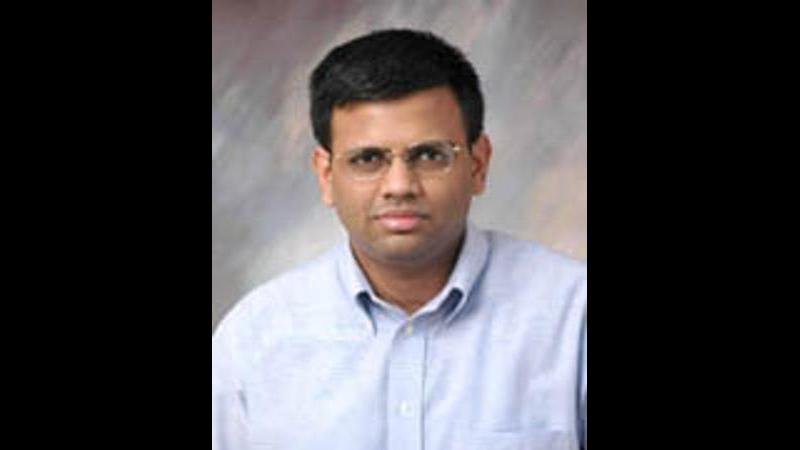
Sanjay G. Rao is a Professor in the School of Electrical and Computer Engineering at Purdue University, with a courtesy appointment in Computer Science. He joined Purdue in 2005 and has held positions as Assistant, Associate, and full Professor since then. His research focuses on network synthesis, verification, and Internet video distribution. He has been recognized with the NSF CAREER Award and ACM SIGMETRICS Test of Time Award for his foundational work on End System Multicast. Education: B.Tech in Computer Science and Engineering, Indian Institute of Technology, Madras (1997) M.S. and Ph.D. in Computer Science, Carnegie Mellon University (2000, 2004) Research Interests: His work spans network design and verification, Internet video distribution, and cloud computing. Recent projects include causal reasoning for video streaming, 360° video optimization, and resilient routing algorithms. He leads the Internet Systems Laboratory at Purdue, which develops systems for network performance guarantees and video delivery innovations. Articles Trends: Recent work emphasizes causal inference in video streaming (e.g., Veritas) and perceptual quality for next-generation video (e.g., Dragonfly). Longstanding focus on network synthesis: PCF (2020) and Robust Validation (2017) address resilient design under uncertainty. Early contributions like End System Multicast (2002) pioneered peer-to-peer video streaming. Awards: NSF CAREER Award (2010) ACM SIGMETRICS Test of Time Award (2011) ACM Distinguished Member (2021) Purdue Seed of Success Award (2017) Advising & Grants: Supervised 15+ PhD students, many now in academia and industry (e.g., Meta, Google, AT&T). Secured $4M+ in grants from NSF, industry (Google, Cisco, Amazon), and federal programs. Notable grants include NSF support for video optimization (2022-2025) and network synthesis (2023-2027). Labs & Teams: Internet Systems Laboratory (ISL): Focuses on scalable network solutions and video streaming. Collaborations with industry (e.g., Amazon Prime Video, Meta) on real-world deployment challenges.