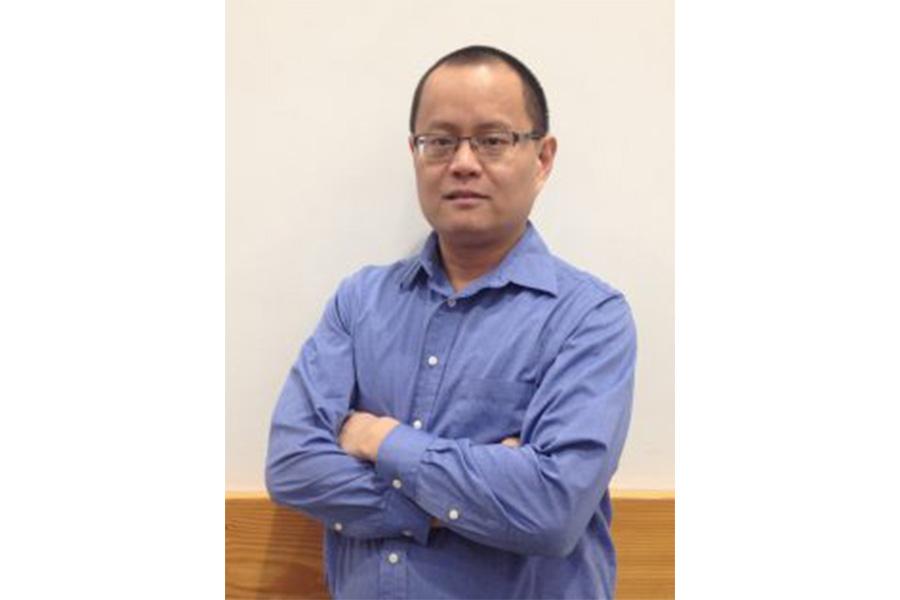
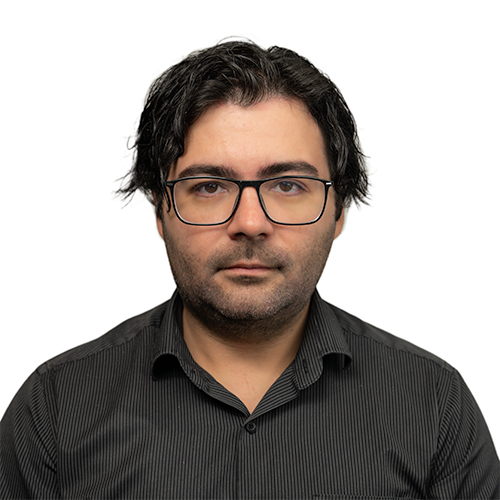
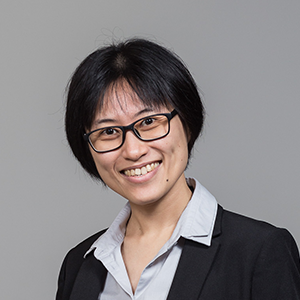
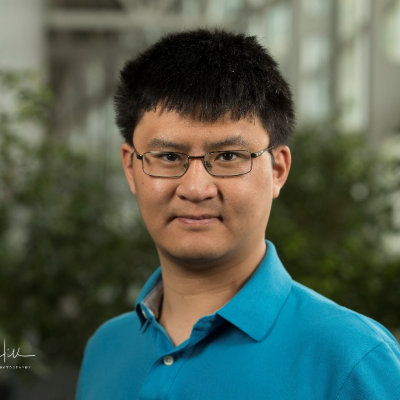
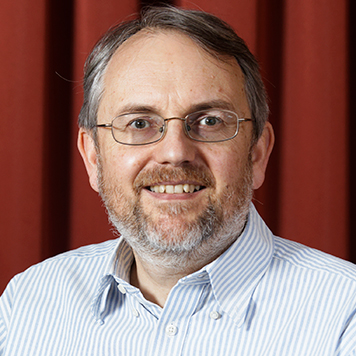
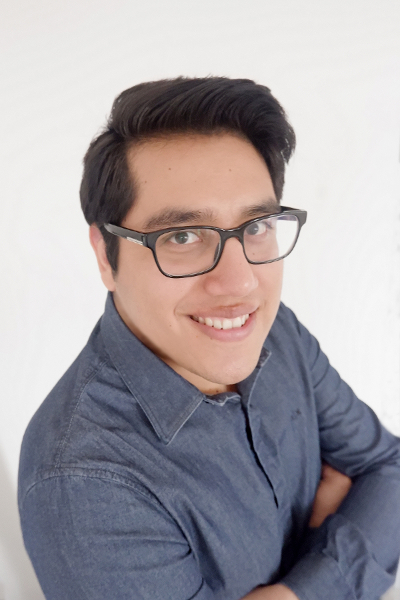
Yang Wang is an Associate Professor in the Department of Computer Science and Software Engineering at Concordia University, holding an adjunct position since 2022. Previously, he served as an Associate Professor at the University of Manitoba (2012–2022) and worked as Chief Scientist in Computer Vision at Huawei Canada (2020–2022). He holds a PhD from Simon Fraser University, MSc from the University of Alberta, and BEng from Harbin Institute of Technology. His research focuses on computer vision, machine learning, and deep learning, particularly in meta-learning, test-time training, and continual learning. Key areas include crowd counting, anomaly detection, video highlight detection, and gaze estimation. His work has been recognized with awards such as the Falconer Emerging Researcher Rh Award (2017) and a Faculty of Science Research Chair (2019–2022). Recent research emphasizes AI models that are personalized and adaptable, leveraging techniques like meta-learning and few-shot learning. He has published extensively in top venues (CVPR, ICCV, ECCV) and holds patents in related fields. His group collaborates with industry partners like Huawei and Sightline Innovation.
Paul Van Oorschot is a Professor at the School of Computer Science, Carleton University. He has held the Canada Research Chair in Authentication and Computer Security from 2002 to 2023. His expertise spans authentication, applied cryptography, and network security. He co-authored the seminal Handbook of Applied Cryptography and led the NSERC Internetworked Systems Security Network (2008–2013). His research focuses on enhancing security in systems, software, and web authentication, including methods to augment passwords with geolocation and device recognition. He holds a Ph.D. from the University of Waterloo and was awarded the J.W. Graham Medal (2000) and Fellowship in the Royal Society of Canada (2011). Education: Ph.D. in Computer Science from the University of Waterloo (1988) His research interests include authentication systems, public-key infrastructure, smartphone security, and usability challenges in security design. He has contributed to frameworks like OWL for password-based key exchange and SLV for server location verification. His work addresses both technical and human factors in securing modern computing environments. Key contributions include analysis of TLS interception, memory safety in programming languages, and evaluating IoT security best practices. He has published extensively on topics ranging from side-channel attacks to cryptographic protocol vulnerabilities. Awards: J.W. Graham Medal in Computing and Innovation (2000), Fellow of the Royal Society of Canada (2011) His academic leadership includes roles in shaping cybersecurity education and policy, emphasizing the need for rigorous scientific approaches in security research. His research group, the Carleton Computer Security Lab (CCSL), drives interdisciplinary projects in software security and system administration tools.
Overview Amir Rahmati is an Assistant Professor in the Department of Computer Science at Stony Brook University , where he directs the Ethos Security & Privacy Lab and is a member of the National Security Institute. His work focuses on securing emerging technologies like IoT, AR, and ML systems. Education PhD in Computer Science & Engineering, University of Michigan (2017) Research Focus His research addresses security threats in emerging systems, including: Cyber-Physical System vulnerabilities Adversarial ML attacks Hardware security Privacy-preserving frameworks Notable contributions include work on cryptocurrency scam detection, neural network robustness, and AR system security. Grants & Awards Supported by the Air Force Office of Scientific Research (AFOSR), Office of Naval Research (ONR), Meta, NVIDIA, and IBM. His research has been featured in MIT Technology Review , Washington Post , and Bloomberg . Advising Seeking students with expertise in hardware, software, ML, UX, or network protocols passionate about security/privacy. Apply via the graduate program and fill out his interest form. Labs & Collaborations Leads the Ethos Lab focusing on securing IoT, AR, and ML systems. Collaborates on projects like Erebus (AR access control) and Valve (serverless computing security).
Denise Ranghetti do Pilar is a Professor of UX Design at Savannah College of Art and Design (SCAD) in Savannah, GA, since 2022. Her academic background includes a Postgraduate Certificate in Applied Positive Psychology and a Ph.D. in Psychology from Pontificia Universidade Catolica do Rio Grande do Sul, and a B.S. in Computer Science from Catholic University of Louvain. Her research focuses on User Experience Design and User Experience Research , with specific interests in UX strategy, design thinking, UX metrics, and user research methodologies. She has taught at multiple institutions including Product Arena, UFRGS, UniRitter, and Feevale. Professionally, she has served as Staff User Experience Researcher at Nubank and User Experience Lead at SAP Labs Latin America. She is affiliated with professional organizations BayCHI and AnthtroDesign.
Aydin Aysu is an Associate Professor at the Department of Electrical and Computer Engineering, College of Engineering, North Carolina State University. His research focuses on hardware-based security , applied cryptography , and computer architecture , with an emphasis on secure systems to counter advanced cyber threats. Ph.D. in Computer Engineering, Virginia Tech (2016) M.S. in Electrical Engineering, Sabanci University, Turkey (2010) B.S. in Microelectronics Engineering, Sabanci University, Turkey (2008) Aysu’s work addresses hardware vulnerabilities through secure design automation, side-channel attack mitigation, and next-generation cryptographic systems. His research extends to AI/ML security , FPGA security , and quantum-resistant cryptography . Notable scientific awards include: NSF CAREER Award (2020) University Faculty Scholars (2024) Bennett Faculty Fellow Award (2020) Best Paper Awards at DATE Conference (2020), ACM GLSVLSI (2019), and others Aysu leads the Hardware Cybersecurity Research Lab (HECTOR) , focusing on pre-silicon security analysis, secure accelerator sharing, and societal impacts of cybersecurity. He actively mentors Ph.D. students and collaborates on funded research projects like the SATC: CORE: SMALL grant.
Vivy Suhendra serves as Associate Professor of Practice and Programme Director for Master Programmes at the National University of Singapore's School of Computing, while also holding the position of Assistant Dean for Graduate Studies. Previously, she led the Singapore Cybersecurity Consortium (SGCSC) as Executive Director from 2016 to 2022, driving collaborative cybersecurity research between academia, industry, and government agencies. Her career at NUS spans over two decades, beginning as a Research Assistant before advancing to her current leadership roles. Her academic credentials include: Ph.D. in Computer Science, National University of Singapore (2009). Thesis: "Memory Optimizations for Time-predictable Embedded Software". Advisors: Abhik Roychoudhury and Tulika Mitra. B.Comp. (Honors) in Computer Science, National University of Singapore (2004). Dr. Suhendra's research integrates Software Assurance, Cybersecurity, Security and Privacy, and Embedded Systems domains. Her work bridges theoretical foundations with practical applications, particularly in national cybersecurity ecosystem development, smart grid security protocols, denial-of-service mitigation techniques, and real-time embedded system optimization. This interdisciplinary approach enables innovative solutions for critical infrastructure protection and time-predictable software execution in multi-core environments. Her 14 selected publications (2004-2020) demonstrate an evolving research trajectory from foundational embedded systems timing analysis to applied cybersecurity solutions. Early work focused on memory optimization for predictable execution in multi-core embedded systems, which naturally transitioned into cybersecurity applications for smart grids, cloud environments, and national infrastructure. This progression highlights her ability to translate low-level system expertise into high-impact security frameworks for complex real-world systems. Scientific recognition includes: Microsoft Research Asia Fellowship (2006) Valedictorian at NUS School of Computing Ph.D. Commencement (2010) While specific graduate student advising details aren't provided, her leadership as SGCSC Executive Director involved extensive mentorship across academic-industry partnerships. She has also contributed significantly to the research community through roles including Conference Chair for ESEC/FSE 2022 and Workshops Committee Member for ICSE 2024. Dr. Suhendra established the Singapore Cybersecurity Consortium as a national platform for collaborative R&D during her directorship (2016-2022). Though no personal laboratory is specified, her research leadership manifests through cross-institutional teams focused on cybersecurity innovation, particularly in critical infrastructure protection and embedded systems security where she maintains active publication records.
Robert Xiao is an Assistant Professor in the Department of Computer Science at the University of British Columbia (UBC), affiliated with the Designing for People research cluster. He holds a Ph.D. from Carnegie Mellon University and a BMath from the University of Waterloo. His research focuses on interactive technologies, including VR/AR interfaces, sensing systems, and cybersecurity. Notable contributions include Lumitrack (tracking system), TouchTools (touch interaction), and CVE-2023-37271 (Python sandbox exploit). Education: Ph.D., Human-Computer Interaction Institute, Carnegie Mellon University; BMath, Computer Science & Combinatorics, University of Waterloo Affiliations: Core member of UBC's Designing for People cluster Research interests span novel input modalities, mixed-reality systems, and security challenges. He actively competes in DEF CON CTF (multiple 1st places) and publishes in top venues like CHI, UIST, and ISMAR. Recent work explores VR decision-making, low-latency tracking, and collaborative AR/VR environments. Awards: SIGCHI Outstanding Dissertation Award, CHI Honorable Mention, DIS Honourable Mention Teaching includes courses on computer systems (CPSC 213), human-computer interaction (CPSC 554X), and cybersecurity (CPSC 436S). His lab develops tools like SurfShare (surface sharing) and VirtualNexus (collaborative AR).
Dr. Hyungwoong Ahn is a Senior Lecturer in Chemical Engineering at the University of Edinburgh and an Adjunct Professor at Yonsei University. His expertise lies in adsorption process engineering, particularly for CO2 capture and gas separation. He leads the Carbon Capture Group and coordinates exchange programs for chemical engineering students. Dr. Ahn holds a BSc, MSc, and PhD in Chemical Engineering from Yonsei University. Roles: Senior Lecturer (Edinburgh) & Adjunct Professor (Yonsei) Research Focus: Pressure Swing Adsorption (PSA), CO2 capture technologies, hydrogen purification, and industrial decarbonisation Key Projects: PSA-SPUR technology development, ship-based carbon capture, and collaboration with HD Korea Shipbuilding Awards: KOFST Brain Pool Fellow, IChemE Global Awards finalist, and Honeywell UniSim Design Challenge winner His research integrates equilibrium theory analysis, numerical simulation, and experimental validation to advance carbon capture systems. He has authored over 50 publications (H-index 32) and secured funding from EPSRC, BEIS, KETEP, and others.
Simon Moore is a Professor of Computer Engineering at the University of Cambridge's Department of Computer Science and Technology. He leads the Computer Architecture research group, focusing on secure processors and subsystems, particularly the CHERI project. His work emphasizes formal verification, hardware-software co-design, and scalable security solutions. He is a Fellow and Director of Studies at Trinity Hall, overseeing undergraduate admissions and mentoring in Computer Science. Research Interests: Moore's primary focus is the CHERI secure processor architecture, integrating RISC-V cores with formal verification. His work spans secure hardware design, memory safety, and embedded systems. Notable contributions include the CHERI-RISC-V microarchitecture, CheriABI, and formal verification frameworks. Key Projects: CHERI, CheriBSD, Morello (ARM collaboration) Recent Achievements: Test of Time Award (IEEE Security & Privacy 2025), finalist for Bhattacharyya Award (2022) Grants: Innovate UK Digital Security by Design, DARPA Mission Oriented Resilient Clouds Publications: Over 200 papers on secure architectures, including influential work on CHERI's capability model, formal verification, and hardware security. Recent focus areas include temporal memory safety, embedded system security, and GPU-based capability systems. Labs/Teams: Directs the Computer Architecture Group and collaborates with industry partners like ARM and Microsoft on CHERI implementations.
Frank Stajano is a Full Professor of Security and Privacy at the University of Cambridge, leading the Academic Centre of Excellence in Cyber Security Research. He is a Fellow of Trinity College, where he collaborates with Nobel laureates. His research focuses on security, privacy, and usability in ubiquitous computing, IoT, and digital finance. He holds a PhD from Cambridge and a Laurea in Electronic Engineering from La Sapienza University. Frank's work includes the Pico project (ERC-funded), aiming to replace passwords with secure, usable alternatives. He co-founded Cambridge Cyber, offering cybersecurity consulting. Notable achievements include the Resurrecting Duckling authentication protocol and contributions to location privacy (Mix Zones). He has authored over 50 refereed publications and a research monograph on ubiquitous computing security. His awards include the Toshiba Fellowship (2000) and an ERC Starting Grant (2017). Frank teaches cybersecurity and lectures globally via his YouTube channel. Beyond academia, he is a 5th-dan kendo practitioner and a scholar of Disney comics.
Professor Marius Portmann is the UQ-Cisco Chair of Network Security at the School of Electrical Engineering and Computer Science (EECS), University of Queensland. His expertise spans Cybersecurity, IoT, and Applied AI. He holds a PhD from ETH Zurich (2003) and has led research in Software Defined Networking (SDN), blockchain, and energy-harvesting IoT systems. Education: PhD in Electrical Engineering from Swiss Federal Institute of Technology (ETH Zurich), 2003. Research focuses on securing IoT networks, AI-driven intrusion detection, and sustainable sensor systems. He has pioneered self-powered IoT systems using energy harvesters and developed frameworks like FlowTransformer for network analysis. His work bridges theoretical advancements with practical applications in smart tourism, energy efficiency, and edge computing. Recent publications highlight innovations in DDoS detection (P4-Secure), sensor-based environmental monitoring (EcoShower), and graph-based anomaly detection (XG-BoT). His datasets (e.g., NF-ToN-IoT-v3) are widely used in ML-based cybersecurity research. Collaborations include industry partners like Cisco and institutions like RMIT. Grants and leadership roles in interdisciplinary projects underscore his impact. He advises on IoT security standards and contributes to open-source tools for network research. Current projects explore edge-AI integration and sustainable sensor networks.
Annie Antón is a Professor in the School of Interactive Computing at Georgia Institute of Technology. Former Chair of her school, she specializes in privacy, security, software engineering, and public policy. Dr. Antón advises national defense and intelligence entities, including roles in the IDA/DARPA Defense Science Study Group (2005-2006) and the Obama-appointed 2016 Commission on Enhancing Cybersecurity for the Nation. She serves on numerous boards, including NIST Information Security & Privacy Advisory Board, Future of Privacy Forum, and former roles in U.S. DHS Data Privacy Committee and NSF Advisory Council. Her research focuses on aligning software systems with federal privacy/security regulations, emphasizing legal compliance, secure development practices, and IoT privacy challenges. Notable projects include UCON_LEGAL for HIPAA compliance and frameworks for analyzing regulatory requirements. She has contributed to policy implementations via empirical studies on user privacy perceptions and legal text mining. Dr. Antón's work bridges technical and policy domains, addressing ethical AI education, cross-border data governance, and cybersecurity preparedness. Her leadership spans academia, government, and industry through advisory roles at Intel, Microsoft Research, and the Georgia Tech Alumni Board.
Yu Huang is an Assistant Professor of Computer Science at Vanderbilt University with a secondary appointment in the Department of Teaching and Learning at the Peabody School of Education. She is affiliated with the Institute for Software Integrated Systems, the Frist Center for Autism and Innovation, the Vanderbilt Lab for Immersive AI Translation (VALIANT), and the Vanderbilt LIVE Learning Innovation Incubator. Her research focuses on human-centered AI for software engineering, combining human cognition with machine intelligence to enhance software development processes. Educated at the University of Michigan (PhD, 2021), University of Virginia (MS, 2015), and Harbin Institute of Technology (BS, 2011), her work spans software engineering, human factors, AI, and medical imaging. Key projects include the MIND Lab, studying programmer expertise and cognitive processes, and the HumanAISE workshop on Human-Centered AI for Software Engineering. Huang has received significant recognition, including the 2025 ICPC Vaclav Rajlich Early Career Achievement Award and three ACM SIGSOFT Distinguished Paper Awards. Her research is supported by NSF, GitHub, and Vanderbilt initiatives. She advises numerous graduate and undergraduate students, emphasizing diversity and innovation in programming education.
Dr. Damian Arellanes is a Lecturer (Assistant Professor) in Computer Science at Lancaster University, UK, affiliated with the Software Engineering Group and Lancaster Centre for Intelligent, Robotic and Autonomous Systems (LIRA). He holds a PhD from The University of Manchester (2020) and a Postgraduate Certificate in Academic Practice from Lancaster University (2023). His research focuses on theoretical foundations of algebraic composition for high-level computation models, including emergent/self-organising systems and software composition. He has contributed to areas such as category theory, control-flow separation, and compositional programming for IoT systems. Education: PhD in Computer Science, University of Manchester (2020) Postgraduate Certificate in Academic Practice, Lancaster University (2023) MSc in Computer Science, supported by CONACYT (2012–2014) BEng in Computer Engineering, supported by PRONABES (2009–2012) Research Interests: Damian’s work emphasizes algebraic semantics, compositional models for software, and theoretical computer science principles. He explores how abstract mathematical frameworks (e.g., category theory) can formalize computational systems and enable scalable IoT solutions. Publications: Damian has published extensively on algebraic composition, IoT systems, and formal methods. Key themes include compositional programming, self-organizing software, and scalable service architectures. Awards: Official Nominator for the VinFuture Prize (2024) Honourable Mention for Most Outstanding Mexican Student in STEM (2021) Nick Sanders Kickstarter Fund (2019) Outstanding Doctoral Paper Award (2019) Best MSc Thesis in AI (2015) Advising & Grants: Damian supervises PhD students, such as Mina Yavari, and actively reviews for journals like IEEE TSC and conferences like TASE. He has secured scholarships and fellowships from CONACYT and the Mexican government. Labs/Teams: Member of LIRA’s Fundamentals Section and the Software Engineering Group at Lancaster University.
Ediz Cetin is an Associate Professor in Digital Electronics Engineering at Macquarie University's School of Engineering and a member of the Astrophysics and Space Technologies Research Centre. He serves as Course Director for the MEng Electronics Engineering program and Chair of the School's Postgraduate Coursework Committee. His research focuses on radio frequency interference mitigation, fault-tolerant reconfigurable circuits for space applications, machine learning in RF signal analysis, and low-power digital circuit design. Education: PhD in Signal Processing (Unsupervised Adaptive Signal Processing Techniques for Wireless Receivers) B.Eng. (Hons.) in Control and Computer Engineering Research Interests: RF interference detection and localization GNSS anti-jamming and spoofing detection FPGA-based reconfigurable systems Space instrumentation and CubeSat technologies Machine learning for signal processing Awards: Excellence in Learning Innovation (FSE Teaching Award, 2022) Highly Commended Finalist – Vice-Chancellor’s Award for Learning Innovation (2022) Innovative Approaches – Highly Commended (FSE Teaching Award, 2020) Key Projects: SmartSat CRC (2020–2026): Smart Satellite Technologies and Analytics Spacecraft Innovation Lab (2021–2022) CubeSat Biological Payload (2019–2022) Teaching Contributions: Led the 'Improving Student Engagement with Anywhere and Any-time Laboratory Access' initiative (2019–2020), enhancing remote lab accessibility for students.