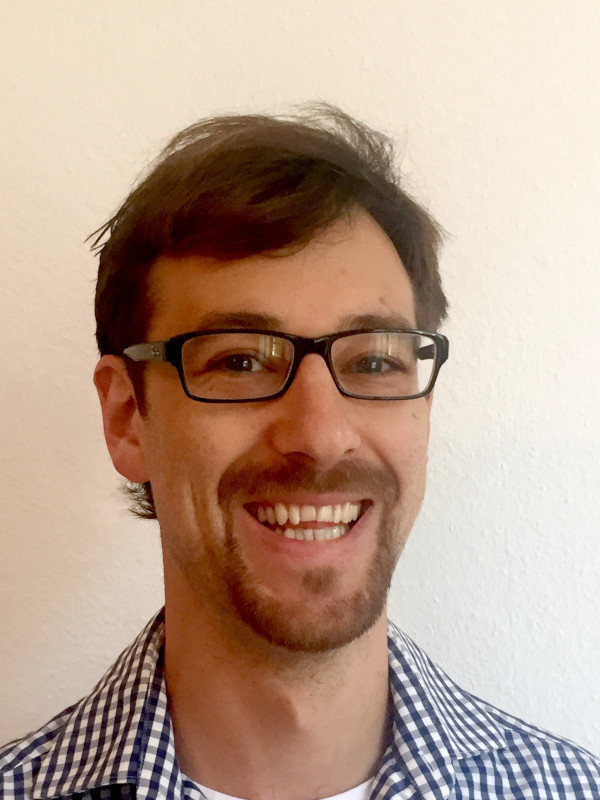
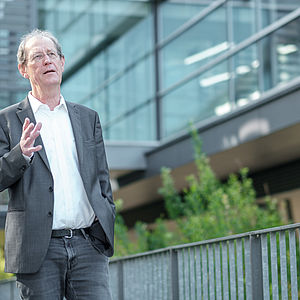
SubbaReddy Oota is a Researcher at the Max Planck Institute for Software Systems (MPI-SWS), focusing on interdisciplinary research in computer science and systems engineering. His work spans multiple domains including algorithms, programming languages, cybersecurity, and distributed systems. Research interests include theoretical foundations of logic programming, verification techniques for cyber-physical systems, and privacy-preserving distributed computing. While specific academic roles beyond 'Researcher' are not explicitly detailed in the text, his affiliation with MPI-SWS indicates active involvement in cutting-edge research initiatives. No specific publications, awards, or student advisees are listed in the provided text, suggesting this may be a truncated or navigational page snippet.
Svetlana Peltsverger is a Professor in the Department of Information Technology within the College of Computing and Software Engineering at Kennesaw State University. With over two decades of academic contributions since 2004, she has established herself as a leading figure in Information Technology education, particularly in curriculum development and assessment. Specializes in IT curriculum design and implementation Active contributor to ACM/IEEE curriculum standards Principal investigator on multiple educational research projects Regular presenter at major computing education conferences including SIGITE and ITiCSE Professor Peltsverger's research focuses on practical approaches to IT education, with particular emphasis on privacy education, cybersecurity curriculum development, and data systems education. Her work consistently bridges theory and practice, developing hands-on learning experiences that prepare students for real-world IT challenges. She has pioneered innovative approaches to program assessment using data-driven methodologies and has developed comprehensive frameworks for evaluating IT curricula. Recent research has increasingly focused on diversity and inclusion in computing education, with several publications examining women's participation in computing fields and developing strategies to improve gender balance in IT programs. Her 2023-2025 publications reveal a strong commitment to equitable student allocation methods and understanding the factors that influence women's elective choices in computing disciplines. Developed hands-on privacy labs integrated into standard IT curriculum Created data-driven program review models adopted by multiple institutions Conducted extensive research on IT alumni career trajectories using LinkedIn data Contributed significantly to the ACM/IEEE-CS Information Technology Curriculum 2017 Published influential work on adapting IT curricula for transfer students from two-year programs Professor Peltsverger's collaborative approach is evident in her extensive co-authorship network, particularly with colleagues Lei Li, Guangzhi Zheng, and Rebecca Rutherfoord at Kennesaw State University. Her work has had significant impact on how Information Technology programs are designed, implemented, and assessed across multiple institutions, with practical applications that directly improve student learning outcomes and career preparedness.
Christopher D. Hundhausen is a Professor in the School of Electrical Engineering and Computer Science at Washington State University, with a distinguished career spanning over 25 years in computing education research. His work bridges computer science education, human-computer interaction, and learning analytics, focusing on innovative pedagogical approaches for teaching programming and software engineering. Dr. Hundhausen's research interests center on studio-based learning models, algorithm visualization, and the design of educational programming environments that promote social interaction and reflection. He has pioneered approaches for using activity streams, code reviews, and learning analytics to enhance computing education. His recent work investigates the impact of AI tools like GitHub Copilot on student programming processes and outcomes, representing the cutting edge of computing education research. Analysis of his recent publications reveals a strong focus on team software development education, with particular attention to agile practices, retrospective analysis, and methods for assessing individual contributions in team projects. His work consistently applies rigorous empirical methods to evaluate educational interventions in authentic classroom settings. Dr. Hundhausen has received recognition through consistent publication in top-tier venues including SIGCSE, ICER, and VL/HCC, with over 100 publications spanning from the mid-1990s to upcoming 2025 publications. His research has evolved from foundational work on algorithm visualization to contemporary studies on AI in education, demonstrating remarkable adaptability to emerging technologies while maintaining focus on core educational principles. He has advised numerous graduate students who have become active researchers in computing education, including Adam S. Carter, Phillip T. Conrad, and Daniel M. Olivares. His collaborative network includes prominent researchers across multiple institutions, reflecting his significant standing in the computing education community. His research has been supported by various grants focused on improving computing education through evidence-based practices and technological innovation.
Huili Chen is an Assistant Professor in the Department of Electrical and Computer Engineering at the University of California San Diego's Jacobs School of Engineering. Her research spans the intersection of hardware security, deep learning, and human-robot interaction, with a particular focus on intellectual property protection for AI systems and socially interactive robotics for education and family settings. Her research interests focus on hardware-software co-design for secure and robust deep learning systems, with specific expertise in neural network watermarking, hardware Trojan detection, and privacy-preserving AI. She has made significant contributions to federated learning security, developing frameworks like GALU for logic unlocking and AdaTest for hardware Trojan detection. In human-robot interaction, she investigates long-term multi-person interactions, particularly in home environments with children and parents, exploring how robots can enhance engagement and learning through adaptive role-playing. Her publication trends reveal a dual research trajectory: one branch focused on deep learning security and hardware co-design (accounting for approximately 60% of her recent work), and another dedicated to socially assistive robotics and human-robot interaction (40%). The security research often involves innovative approaches combining reinforcement learning with hardware constraints, while her HRI work emphasizes longitudinal studies of robot-child-parent dynamics in naturalistic settings. Dr. Chen actively collaborates with leading researchers including Farinaz Koushanfar at UC San Diego and Cynthia Breazeal at MIT Media Lab. Her work has been published in top-tier venues including IEEE Transactions on Affective Computing, ACM Transactions on Embedded Computing Systems, International Conference on Computer Vision (ICCV), and the ACM/IEEE International Conference on Human-Robot Interaction (HRI). She is a key contributor to the DAMI-P2C project, which has developed datasets and models for analyzing parent-child multimodal interactions, and leads research on hardware security frameworks for deep neural networks. Her laboratory combines expertise in computer architecture, machine learning, and social robotics to develop systems that are both technically secure and socially effective.
Thomas Schneider is a Professor at Darmstadt University of Technology (TU Darmstadt) in the Department of Computer Science, with strong affiliations to the European Center for Security and Privacy by Design in Germany. His academic journey began with a PhD from Ruhr-Universität Bochum's Horst Görtz Institute for IT-Security in 2012, establishing his foundation in security research. Dr. Schneider's research spans multiple critical areas in computer security and privacy, with particular emphasis on secure multi-party computation, privacy-preserving technologies, cryptography, and federated learning. His work bridges theoretical cryptographic foundations with practical applications in real-world systems. He has made significant contributions to encrypted search, privacy-preserving machine learning, mobile security, and oblivious database systems. Analysis of his recent publications reveals a strong trend toward practical implementations of privacy-enhancing technologies that maintain both security guarantees and computational efficiency. His research consistently addresses the tension between privacy protection and system performance, developing innovative protocols that minimize overhead while maintaining strong security properties. Key themes include secure computation frameworks, leakage-resilient protocols, and privacy-preserving analytics for sensitive domains like healthcare and government data processing. Dr. Schneider actively collaborates with researchers across multiple institutions, contributing to the advancement of cryptographic techniques that have practical relevance in today's data-driven world. His work demonstrates a consistent focus on developing solutions that are not only theoretically sound but also deployable in real systems.
Steve Cooper is a Senior Lecturer in the Department of Computer Science at Stanford University's School of Engineering. With a career spanning over four decades, he has established himself as a leading figure in computer science education research and practice, particularly in K-12 education and innovative teaching methodologies. Dr. Cooper's research centers on making computer science education more accessible and engaging for learners of all ages. His work emphasizes visual programming environments, curriculum development, and assessment strategies that support effective learning. He has been instrumental in advancing the field of computing education research through numerous publications and collaborations with prominent researchers in the field. His publication record demonstrates a consistent focus on educational tools, particularly the Alice programming environment which revolutionized introductory programming education through its visual, drag-and-drop interface. Analysis of his recent work shows increasing attention to language-independent assessment methods, community building among CS educators, and the evolving landscape of computing education research. Dr. Cooper has played pivotal roles in major educational initiatives including the development of the CSTA K-12 computer science standards and Stanford's MOOC programs. His collaborative approach is evident in his extensive co-authorship network spanning multiple institutions and research areas within computing education.
Gidon Ernst is a Junior Professor (Assistant Professor) for Software Verification at the Department of Computer Science, LMU Munich, where he leads research in the Software and Computational Systems Lab. His work focuses on formal methods for software engineering, with particular emphasis on verification, testing, and security analysis of complex systems. His research interests span formal methods for software engineering, software testing, interactive and automated proofs, hybrid systems, and falsification. Ernst's work addresses challenges in relational proofs for substitution principle, software testing with Legion (a tool combining concolic execution and fuzzing), concurrent information flow security with SecCSL and SecC, and falsification of temporal logic requirements for hybrid systems. His approach often combines theoretical foundations with practical tool development. Ernst's publication record shows a strong focus on verification of security properties, particularly information flow security in concurrent systems, and falsification of hybrid systems. His recent work has advanced techniques for adaptive probabilistic search in falsification, compositional vulnerability detection, and contract-based software specification. He actively contributes to the verification community through competitions like VerifyThis and ARCH. Best Master Lecture 2022 in Computer Science (awarded by Gruppe Aktiver Fachschaftika) Ernst has supervised PhD student Dongge Liu on software fuzzing with machine learning (2018-2022), co-supervised with Toby Murray and Ben Rubinstein from the University of Melbourne. His teaching includes courses on formal specification and verification, methods in software engineering, and various seminars on software quality assurance and deductive verification. He has also served on numerous program committees and organized major verification events including SPIN 2025 and the VerifyThis challenge series. Ernst maintains active collaborations with researchers worldwide, particularly in the areas of hybrid systems verification (with Ichiro Hasuo, Sean Sedwards, and Zhenya Zhang) and information flow security (with Toby Murray). His work bridges theoretical computer science with practical software engineering challenges, developing tools that have seen adoption in both academic and industrial settings.
Professor Safdar Mahmood is a faculty member in the Department of Computer Engineering at Brandenburg University of Technology Cottbus-Senftenberg. His research focuses on machine learning, reconfigurable computing, robotics, and embedded systems with applications in FPGA acceleration, biomedical signal processing, and safety-critical systems. He leads projects in the UBICO team and has contributed to hardware-software co-design frameworks for AI applications. Research interests include domain-specific processor architectures, high-level synthesis for CNNs, and FPGA-based implementations of robotics algorithms. Recent work addresses challenges in landmine detection using deep learning, autonomous medical robotics, and spectroscopic data analysis. Notable contributions include a design-space exploration framework for machine learning accelerators and tooling for Tensilica ASIP architecture exploration. His work frequently bridges theoretical computer science with practical hardware implementations in reconfigurable systems. Advising includes mentoring doctoral candidates such as Dr. Mitko Veleski and Dr. Stefan Scharoba. He is affiliated with the Computer Engineering Group and has collaborated on projects like the InjectMeAI humanoid injection system and GPR-based landmine detection frameworks.
Andreas Metzger is an Adjunct Professor at the University of Duisburg-Essen and a leading researcher in Software Systems Engineering . He has held significant leadership roles, including Vice Chair of the European Technology Platform NESSI , Deputy General Secretary of the Big Data Value Association , and Technical Coordinator of the EU lighthouse project TransformingTransport . His research focuses on Artificial Intelligence applications in Software Engineering and Business Process Management , with domain expertise in Cloud , Fog Computing , Mobility , and Logistics . Metzger’s work integrates Reinforcement Learning for Self-Adaptive Systems , emphasizing Data Protection and Runtime Adaptation . The 15 most recent articles highlight his contributions to Explainable AI , Decentralized Coordination of adaptive systems, ML-Based Fault Prediction , and Prescriptive Process Monitoring . His publications span top-tier venues like IEEE Transactions , ACM , and Springer , often addressing Big Data Challenges and Trustworthy IoT Systems .
Prof. Dr. Stephan Kleuker is a faculty member at Osnabrück University of Applied Sciences , specifically within the Faculty of Engineering and Computer Science . He focuses on Software Development , Quality Assurance , and Theoretical Computer Science , with a particular interest in formal methods and practical software engineering education. Role: Chair of Software Development Contact: s.kleuker@hs-osnabrueck.de | Phone: 0541 969 3884 Research Interests Quality Assurance through Testing and Model Checking Formal Methods in Software Development Model-Driven Development and UML Business Process Modeling and Optimization Integration of Requirements Analysis with Quality Measures Teaching Current courses: Object-Oriented Analysis and Design, Software Quality Management, Theoretical Computer Science Focus on practical software development education with tools like Eclipse, Netbeans, and Apache Derby Projects Developed environments for teaching (e.g., 2 GB SEU package) Research on test automation, requirements modeling, and distributed Java programs Tools & Publications: Creator of tools like Interaction Board for Java beginners, and author of textbooks on Software Engineering with UML and Quality Assurance through Software Testing .
Ralf Tönjes is a Professor of Mobile Communications and Project Management at Osnabrück University of Applied Sciences , leading the Mobile Communications Working Group . His affiliation is under the Faculty of Engineering and Computer Science . Previously, he held roles at Ericsson Corporate Research and earned a doctorate summa cum laude in Electrical Engineering from the University of Hanover (1998). He holds dual degrees: a Dipl.-Ing. in Electrical Engineering/Communications (University of Hanover, 1989) and an M.Phil. in Biomedical Engineering (University of Strathclyde, Glasgow, 1990). Research Focus: Mobile communication networks, IoT applications in Industry 4.0/smart cities, data security, and service platforms. Key areas include 5G networks, network synchronization, and secure IoT device configurations. He chairs conferences like the VDE/ITG Mobile Communications Conference (since 2005) and contributes to standardization bodies such as the ITG Technical Committee 5.2. Patents & Innovation: Holds patents on cellular radio network design, multicast transmission protocols, and IoT broadcast systems. Notable projects include OPeRAte (IoT-based cooperative farming) and CityPulse (smart city data analytics). Awards & Leadership: Recognized for his doctoral achievement and as a founding member of the Lower Saxony Data Protection Center (NDZ) . Active in industry partnerships, including the Agricultural Industry Electronics Foundation (AEF) and the iuk Business Network Osnabrück . Teaching: Offers courses on mobile communications, IoT, telematics, and project management across B.Sc./M.Sc. programs in Electrical Engineering and Computer Science. Future Work: Focused on advancing 5G/6G networks, secure IoT deployments, and resilient agricultural process management using BPMN and blockchain technologies.
Michael Truong Ngoc is an external doctoral student at the Chair of Information Systems, University of Bamberg, since February 2024. He holds a BSc in Computer Science (Goethe University Frankfurt) and MSc in Business Informatics (TU Darmstadt, focusing on deep learning). Currently, he works as an IT Technology Consultant at SAP SE in Data Science & AI, developing intelligent enterprise solutions. His research focuses on trust/security frameworks for AI applications in businesses. Education: BSc Computer Science (Goethe Frankfurt), MSc Business Informatics (TU Darmstadt) Research emphasizes ethical AI deployment, organizational trust-building mechanisms, and secure AI implementation strategies. His publications address crisis response via digital activism and schema matching techniques using embeddings. Teaching involvement includes thesis supervision and research project support. Consultation hours available by appointment at GU13/03.03, Gutenbergstraße 13, Bamberg.
Prof. Hermann de Meer holds the Chair of Computer Networks and Computer Communications at the University of Passau and is an Honorary Professor at University College London. He previously served as a Junior Professor at the University of Hamburg and a Visiting Professor at Columbia University. His research focuses on energy systems digitalization, smart grids, smart cities, and distributed computing. Key projects include STARS (satellite communication for blackouts), cells4.energy (regional energy cells), and META BUILD (digital twins for electrification). Research Interests: His work integrates IT security, cloud computing, and network virtualization to advance the energy transition. He emphasizes interdisciplinary collaboration to address societal and political challenges alongside technical issues. Notable contributions include modeling protection systems in smart grids and analyzing interdependent power-communication networks. Projects: The RENergetic project explores renewable energy hubs, while ESN4NW leverages wind energy for sustainable computing. He has advised doctoral researchers like Dr. Ammar Alyousef (electric vehicle grid challenges) and Abdorasoul Ghasemi (resilience in power systems). Grants & Collaborations: Involved in EU Horizon projects (e.g., EASY-RES, EasyRes) and initiatives like Science Bench. His work intersects ICT design, energy policy, and social acceptance of decentralized energy systems.
Björn Näf is a Lecturer at the Lucerne School of Computer Science and Information Technology, part of the Lucerne School of Applied Sciences and Arts (HSLU). His expertise spans cybersecurity, software architecture, agile development, and web technologies. He holds a Master of Arts in Publizistik und Informatik from Universität Zürich (2003), a CAS in Business Software Development from HSLU (2007), and a MAS in Business Information Technology from HSLU (2009). His research focuses on internet technologies, darknet phenomena, database systems, and information security. He has led the long-term project "eBanking – aber sicher!" since 2018, producing annual reports on cybersecurity challenges in online banking. He also contributed to a conference presentation on live phishing techniques at the Generalversammlung GRID Lucerne (2023). Professional strengths include software architecture design, agile methodologies, C# development, and web application engineering. No academic awards or grants are explicitly listed.
Prof. Dr. Christian Hänig is a Professor at the Department of Computer Science and Languages and a Temporary Lecturer at the Department of Electrical Engineering, Mechanical Engineering and Industrial Engineering at Anhalt University of Applied Sciences. He advises the Data Science (Full-Time Program) Master of Science degree and teaches courses such as Artificial Intelligence, Data Mining, and Deep Learning. His research focuses on Machine Learning, Deep Learning, Natural Language Processing (NLP), Computer Vision, Medical Imaging, Multimodal Document Processing, and Data Science. Recent work emphasizes applications in financial domains (e.g., German financial language models and corpus development) and agricultural sector benchmarking. Earlier research includes VR education analytics, unsupervised NLP techniques, and knowledge extraction from unstructured data. Key publications (2024) include developing benchmarks for Ukrainian language models, evaluating agricultural LLMs, and creating financial domain corpora. His contributions span over 20 years, addressing challenges in domain-specific NLP, clinical text mining, and industrial quality analysis. Prof. Hänig’s academic service includes roles as a degree program advisor and committee member. Office hours are Thursdays 4:30–6:00 PM (by appointment) at the Ratke Building, Room 23-114, Köthen campus.