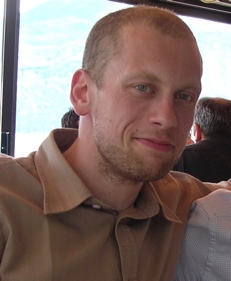
Geert Deconinck is a full professor at KU Leuven , leading the Electrical Energy Systems and Applications (ELECTA) research group within the Department of Electrical Engineering (ESAT). He also serves as scientific leader of the EnergyVille research center's algorithms domain, focusing on smart electrical networks and thermal systems. M.Sc. and Ph.D. from KU Leuven Head of ELECTA since 2012 (10 professors, 8 postdocs, 70+ PhDs) Over 8 million EUR research budget in last 5 years 44 completed PhDs and 10 current advisees IEEE Transactions editorial board member His research spans smart grid architectures , distributed control , and cyber-physical security , with recent focus on EV-grid integration , renewable energy democratization , and multi-carrier energy systems . Current projects include: Smart Charging - E-Mobility meets Renewable Energy Early Detection and Defense Systems for Smart Grids Open-source P2P energy sharing platforms Microgrid control strategies for PV-battery systems Awarded IET Fellow and IEEE Senior Member status, his work combines machine learning with power systems engineering through both theoretical modeling and experimental validation . He has contributed over 575 publications with 9800+ Google Scholar citations.
Matthew B. Blaschko is a Professor in the Department of Electrical Engineering at KU Leuven, Belgium. He serves as director of the KU Leuven ELLIS unit and is a fellow in the ELLIS Health program. He is a Core PI in the Flanders AI Research Program, working as a workpackage lead for Decision Support Systems and Medical Imaging. Blaschko is also a member of the KU Leuven Institute for Artificial Intelligence and one of the leaders of the working group on Machine Learning and Data Science. Professor Blaschko received his B.S. from Columbia University, M.S. from the University of Massachusetts Amherst, and Dr. rer. nat. from Technische Universität Berlin (awarded for work at Max Planck Institutes Tübingen). He was a Newton International Fellow at the University of Oxford and received his Habilitation (HDR) from École Normale Supérieure de Cachan. Prior to joining KU Leuven, he was a Permanent Research Scientist in the INRIA Saclay Research Center and a Faculty Member at Ecole Centrale Paris. His research focuses on machine learning techniques applied to visual data, with particular emphasis on calibration in deep learning, medical image analysis, and federated learning. Blaschko's work bridges theoretical foundations with practical applications, as evidenced by technology developed in his research being incorporated into MONA, software for ophthalmic image analysis. His research group has made significant contributions to the fields of model calibration, uncertainty estimation, and medical imaging analysis, with recent publications showing strong trends toward improving reliability of AI systems in medical contexts and advancing theoretical understanding of calibration metrics. Professor Blaschko has been recognized with several awards including the Université Paris-Saclay STIC Doctoral School Best Scientific Contribution Award, Best Paper Award at CVPR 2008, Main Award at DAGM 2008, and Best Student Paper Award at ECCV 2008. Professor Blaschko has supervised numerous PhD and Master's students, with current and former students including Deniz Soysal, Claire Marchal, Dongli Xu, Sebastian Gruber, Jiameng Li, Marco Mezzina, and many others working on diverse topics from Alzheimer's disease analysis to surgical phase recognition. His research has been supported by various funding sources including the Flanders AI Research Program. He has co-organized several influential workshops including the "Another Brick in the AI Wall: Building Practical Solutions from Theoretical Foundations" at CVPR 2025, Commands 4 Autonomous Vehicles workshop at ECCV 2020, and the Learning from Limited Labeled Data workshop series at NIPS 2017 and ICLR 2019. His laboratory focuses on machine learning for medical image analysis, with applications in ophthalmology, neurology, and surgical robotics. The group maintains active collaborations with medical institutions and participates in international challenges such as the KNee OsteoArthritis Prediction (KNOAP2020) challenge.
Yves Wautelet serves as an Associate Professor at the Faculty of Economics and Business at KU Leuven, where he conducts research in conceptual modeling, business process management, and digital transformation. His work addresses critical challenges at the intersection of information systems engineering and business strategy, with particular focus on sustainability-driven modeling approaches and IT governance frameworks. His primary research interests include: Conceptual modeling methodologies and frameworks Business process management and information systems design Digital transformation strategies and implementation IT governance and business-IT alignment Sustainability-driven modeling for circular economy Agile software development practices and methods Requirements engineering with user stories Wautelet's recent publication record demonstrates significant scholarly productivity with numerous 2024-2025 publications spanning conceptual modeling frameworks for sustainability (Circulise), tools for identifying ambiguity in user stories (AmbiTRUS), and approaches to align strategic and operational agility. His work bridges theoretical foundations with practical applications across diverse domains including healthcare, circular economy, software development, and organizational transformation. His research consistently applies model-driven approaches to solve complex real-world problems, often integrating sustainability considerations into information systems engineering. As a promotor and co-promotor, Wautelet currently supervises multiple doctoral research projects including: Automatic generation of conceptual models from textual descriptions (2024-2028) Sustainability-Driven Modeling Assistant for Twin Transition in Vietnam (2024-2028) Home Care Business Process Management using Distributed Ledger Technologies (2024-2028) Teaching Modeling Skills in BPMN formalism (2021-2025) His research is conducted through the Information Systems Engineering Research Group (LIRIS) at KU Leuven's Brussels campus, where he contributes to advancing model-driven approaches for addressing contemporary business and technological challenges.
Ruben Verborgh is a Professor of Decentralized Web Technology at the Ghent University – imec and a Visiting Fellow at the Oxford Martin School (University of Oxford). He leads the Internet Technology and Data Science Lab (IDLab) and co-founded the Solid platform with Tim Berners-Lee to re-decentralize the Web. His research focuses on Linked Data Fragments , a paradigm for Web-scale query execution, and explores decentralized data governance , user-controlled data ownership , and rule-based Web agents for policy enforcement. He has co-authored two books on Linked Data and contributed to over 250 publications. Recent articles highlight trends in decentralized data ecosystems , including ODRL policy interoperability , event notification systems , and personal data vaults . His work bridges Linked Data , hypermedia APIs , and privacy-preserving technologies . Verborgh collaborates with institutions like MIT, Oxford, and the European Commission, and advises companies through Inrupt . His labs ( IDLab , Solid Ecosystem ) focus on sustainable data-driven societies.
Bruno Volckaert is a Professor in the Department of Information Technology at Ghent University and Senior Researcher at imec. He obtained his Master of Computer Science (2001) and PhD in Grid Computing Resource Management (2006) from Ghent University. His research focuses on distributed cloud systems for Smart Cities and Industry 4.0 applications. Volckaert's expertise spans: Reliable distributed cloud backend systems Autonomous optimization of cloud applications Cybersecurity through machine learning IoT data processing architectures Kubernetes-based container orchestration Edge-to-cloud continuum computing His publications demonstrate strong focus on: cloud-native technologies, Kubernetes optimization, cybersecurity frameworks, and distributed AI systems. Recent work emphasizes reinforcement learning for auto-scaling, secure edge computing, and intrusion detection systems. He has contributed to over 40 national/international research projects and authored 100+ publications. Current affiliations include leadership roles in: IDLab Research Unit (Ghent University) imec Research Center
Charles-Henry Bertrand Van Ouytsel is a Research Assistant and Visiting Lecturer at Université catholique de Louvain , affiliated with the Louvain Polytechnic School (EPL) and the Computer Engineering Center (INGI) . His work focuses on malware analysis , symbolic execution , and machine learning for cybersecurity applications. Research Areas : Packing detection, intrusion detection systems, side-channel security, and adversarial machine learning. Teaching : Involved in courses like Secured systems engineering (LINFO2144) and Software engineering and programming systems seminar (LINFO2359) . His recent publications emphasize malware obfuscation techniques and security evaluation frameworks . Collaborations with Axel Legay and others highlight his contributions to tool development (e.g., Packing-Box , SEMA ). No scientific awards are explicitly mentioned.
Bruno Tiago da Silva Gomes is a Researcher in the Department of Electronics and Informatics at Vrije Universiteit Brussel (VUB), Belgium. His work focuses on FPGA-based hardware acceleration, biomedical signal processing, and embedded systems. He leads several high-impact projects, including ENACT (environmental health interventions) and Tech4Health (future health technologies). His research spans FPGA design, machine learning acceleration, and real-time signal processing. Education: PhD in Electronics and Informatics (2019, VUB), supervised by Professors Touhafi and Braeken. His thesis addressed streaming application acceleration on FPGAs. Research interests include Field-Programmable Gate Arrays (FPGA), biomedical sensors (e.g., photoplethysmography), beamforming, and high-level synthesis. He has co-authored over 60 publications and holds an h-index of 439. Key projects include OZR4103 (power-efficient AI for biomedical applications) and NSIS3 (decarbonisation technologies). His work integrates hardware-software co-design for edge computing and secure TinyML systems. Advising includes a Master’s thesis on PPG signal analysis. He contributes to datasets like the AMIVU Acoustic Map Imaging Dataset.
Peter Karsmakers serves as Associate Professor at KU Leuven's Department of Computer Science within the Faculty of Engineering Technology, based at the Geel Campus. He coordinates the Declarative Languages and Artificial Intelligence (DTAI) research group and holds leadership roles including coordinator of Research and Education for Computer Science across Geel and Diepenbeek Campuses. Karsmakers earned his PhD in Engineering Science in May 2010, focusing on kernel-based learning algorithms for sparse modeling and efficient predictions from large datasets. His doctoral work established foundations for his current research trajectory in resource-constrained machine learning systems. His research integrates machine learning with signal processing for real-time sensor data interpretation, specializing in anomaly detection from acoustic, radar, and accelerometer signals on embedded devices. Current projects address industrial condition monitoring, elderly care systems, and livestock facility monitoring through three main tracks: acoustic monitoring (e.g., SINS, WATCHDOG), radar-based systems (e.g., FARADAY, NextPerception), and smart electronics for power converters. Recent publications demonstrate strong trends in constraint-guided deep learning architectures for industrial applications, cross-environment robustness in sensor systems, and domain-knowledge integration to reduce data requirements. His work consistently bridges theoretical machine learning with practical implementations in resource-constrained environments. No scientific awards or fellowships were mentioned in the provided materials. Karsmakers supervises over 10 master's theses annually and coordinates a research team of 10 PhD students and a post-doc within DTAI-ADVISE. He has secured approximately 2.3 million euros in funding through VLAIO, EU-ECSEL, and bilateral industry contracts, including 10 active projects such as AutoEdgeML (2024-2028) and Fault Tolerant Neural Networks for Space Applications (2024-2027). He leads the DTAI-ADVISE research group focused on developing software that attaches semantics to sensor data on resource-constrained devices. The team operates across multiple campuses with specialized labs for acoustic monitoring (Geel), radar-based systems (in collaboration with ESAT-TELEMIC), and smart electronics (with Electrical Engineering department), maintaining strong industry partnerships with companies in healthcare, manufacturing, and agriculture sectors.
Frank Piessens is a Full Professor in the Department of Computer Science at KU Leuven's Faculty of Engineering Science, where he leads the Distributed and Secure Software (DistriNet) research group. His research focuses on cutting-edge security challenges at the hardware-software interface. His research interests span: Hardware-software co-design for end-to-end security Confidential computing architectures Microarchitectural side-channel mitigation Secure IoT development Compiler-based security mechanisms Control-flow integrity techniques Recent publications (2024-2025) demonstrate strong focus on: Hardware security cost/performance tradeoffs Processor-level security enhancements (RISC-V, high-end CPUs) IoT device lifecycle security Control-flow leakage prevention Microcontroller IP protection He currently supervises PhD students including M. Bognár and H. Winderix, and leads major research initiatives such as: Hardening confidential computing through vertically integrated system design (2025-2031) Designing secure hardware for software-exploitable attacks (2025-2029) Compiler-based mitigations for microarchitectural side-channels (2023-2027) Security Arms Race at the Hardware-Software Boundary (2020-2025)
Tom Goethals is an FWO Junior Postdoctoral Fellow affiliated with the Department of Information Technology at Ghent University , where he conducts research in edge computing, container networking, and decentralized systems. Current role: IMEC Postdoctoral Researcher Research focus: Secure and intelligent edge service management for decentralized IoT applications His work explores edge intelligence , orchestration frameworks , and AI-driven network optimization , with trends in lightweight virtualization (e.g., Feather), Kubernetes adaptation for edge environments, and intent-based decentralized orchestration. Publications emphasize scalability, security, and energy efficiency in fog-native workflows. Scientific Awards : FWO Junior Postdoctoral Fellowship He collaborates with researchers like Bruno Volckaert and Filip De Turck on projects funded by the Research Foundation - Flanders (FWO) , including grants for edge container networking and decentralized learning frameworks. His projects align with Ghent University’s focus on smart city infrastructure and edge-to-cloud systems.
Maxime Gobert is a researcher at the University of Namur's Faculty of Computer Science, specializing in database systems and software engineering. Having completed his PhD in March 2023 titled 'Design, Manipulation and Evolution of Hybrid Polystores,' Gobert has established himself as an expert in hybrid database systems, particularly focusing on the HyDRa framework for modeling and evolving polystores. His research interests span database systems, hybrid polystores, database schema evolution, software engineering, data-intensive systems, and static program analysis. Gobert's work bridges theoretical database concepts with practical applications, particularly in NoSQL databases like MongoDB and complex hybrid data storage environments. His publication record demonstrates a clear trajectory from his 2013 Master's thesis on database reverse engineering through to his recent work on database testing best practices and sign language processing applications. His research shows strong collaboration with colleagues at the University of Namur, particularly with Professor Cleve A., and extends to international collaborations as evidenced by his 2016 guest researcher position at the University of Geneva. Best New Idea and Emerging Results (NIER) Paper Award at the 20th IEEE Working Conference on Source Code Analysis and Manipulation (SCAM 2020) Jean Fichefet 2013 award Gobert has contributed significantly to the development of the HyDRa framework for hybrid polystore management and has extended his research into sign language processing through collaborative projects creating bilingual sign language dictionaries and parallel corpora. His work demonstrates both technical depth in database systems and a commitment to applying this expertise to accessibility-focused applications.
Ingrid Moerman is a part-time Professor at Ghent University and a staff member at the Internet Technology and Data Science Lab (IDLab), a core research group of imec embedded within Ghent University and the University of Antwerp. She coordinates mobile and wireless networking research and leads a team of over 30 researchers at Ghent University, with extensive involvement in European and national funding initiatives. She received her Electrical Engineering degree (1987) and Ph.D. (1992) from Ghent University. Her research spans collaborative networks, cognitive radio, software-defined radio, IoT, LPWAN, and high-density wireless access, emphasizing experimentally-supported development of next-generation wireless systems with practical implementations in spectrum management and real-time control. Recent publications (2024-2025) reveal a strong pivot toward AI-integrated wireless networking, featuring OFDMA scheduling innovations, Wi-Fi 6/7 interference mitigation, and time-sensitive networking for industrial applications. Key trends include 5G/6G convergence, vehicular communication enhancements, and digital twin frameworks for network observability, reflecting her focus on mission-critical industrial use cases. Her accolades include: 9 Best Paper Awards 2 FWO Prizes (Research Foundation - Flanders) IMEC Prize of Excellence 2001 MSc Thesis Award (as promoter) Best Demo/Exhibit Award at ICT 2013 DARPA Spectrum Collaboration Challenge Prize ($750,000) She has coordinated major EU projects (FP7/H2020: CREW, WiSHFUL, eWINE, ORCA) with industry partners, securing substantial funding for experimental wireless research. Her grant portfolio emphasizes collaborative innovation in spectrum sharing and neutral-host architectures for multi-operator environments. At IDLab, she directs advanced wireless testbeds supporting real-world validation of technologies like openwifi and White Rabbit, with active experimentation in time-sensitive networking and spectrum collaboration for industrial IoT deployments.
Moharram Challenger is a tenure-track Assistant Professor in the Department of Computer Science at the University of Antwerp's Faculty of Sciences. Previously, he served as an assistant professor at Ege University (2017-2018) and as a post-doctoral researcher at the University of Antwerp (2019-2020) working on Flanders Make projects PACo and DTDesign. His academic journey includes R&D leadership roles at UNIT IT Ltd. (2012-2016), post-doctoral research at Wageningen University (2016-2017), and tenure-track faculty positions at IAU-Shabestar University (2005-2009). His research spans Cyber-physical Systems , Multi-agent Systems , and Domain-specific Modeling Languages , with recent publications focusing on quantum machine learning, digital twinning, and IoT optimization. Key projects include ITEA ModelWriter, ITEA Assume, and Flanders Make initiatives. His work demonstrates strong integration of model-driven engineering with emerging technologies like quantum computing and reinforcement learning. Challenger actively contributes to the academic community as a member of IEEE and ACM . His publication record shows consistent output across top venues, with 2025 featuring significant work in quantum-enhanced learning and CPS security. Current research emphasizes practical applications in drone energy modeling, medical diagnostics, and industrial IoT systems. His advising activities focus on cyber-physical systems and agent-based modeling, supported by grants from TUBITAK and Flanders Innovation & Entrepreneurship. Key collaborations include European ITEA projects and partnerships with industrial entities through UNIT IT Ltd. Challenger maintains active development through GitHub repositories related to code refactoring, model-driven engineering, and legacy system modernization, reflecting his commitment to practical software engineering solutions.
Dr. Patrick Heymans is an Associate Professor at the Faculty of Computer Science, University of Namur, Belgium. His research focuses on Software and Information Systems Engineering , with particular emphasis on Requirements Engineering, Software Product Lines, and Conceptual Modeling. Namur Digital Institute (NADI) research group Director of METADONE project - graphical environments for domain-specific modeling Research interests include: Formal Methods and Computer-Aided Software Engineering Software Evolution and Security Human-centric software configurators Recent publications examine: Variability-intensive systems analysis with RNNs (2024) Ontology-based product configuration (2022) User Experience of web configurators (2022) Scientific honors: Three Most Influential Paper Awards (2016-2024) Keynote speaker at major software engineering conferences Professional engagements: Member of multiple journal editorial boards Co-founder of VaMoS workshop on variability modeling Active in international conference program committees
Prof. Jan De Beenhouwer is a faculty member at the University of Antwerp, affiliated with the Department of Physics and the imec Vision Lab. His research focuses on advanced computational imaging techniques, particularly in X-ray tomography, phase contrast imaging, and reconstruction algorithms for medical and industrial applications. His primary research interests include: Development of novel X-ray imaging methodologies like edge illumination phase contrast Advanced CT reconstruction algorithms for sparse-view and dynamic systems Integration of deep learning with tomographic reconstruction Industrial applications including defect detection and material characterization Biomedical imaging such as bone structure analysis and tissue modeling Analysis of recent publications (2024-2025) reveals strong emphasis on: Innovations in phase contrast imaging hardware and simulation tools Advanced reconstruction techniques for motion compensation and sparse data AI-powered approaches for industrial inspection and biomedical research Development of open-source tools (CAD-ASTRA) for the tomography community He leads research at imec Vision Lab, focusing on both fundamental imaging physics and practical applications. The lab collaborates extensively with industrial partners on non-destructive testing solutions.