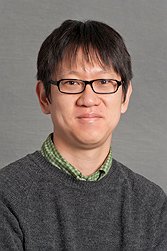
Prof. Dr. Chunyang Chen is a Full Professor at the Department of Computer Science, Technical University of Munich (TUM), Heilbronn, Germany. He holds the Chair of Software Engineering & AI, serves as a core member of the Munich Data Science Institute, board member of the Heilbronn Data Science Center, and Fellow at Fortiss. He also maintains an Adjunct Professor role at Monash University, Australia. Research Focus: His work bridges Software Engineering, Deep Learning, and Human-Computer Interaction (HCI), specializing in AI/ML, NLP, and program analysis for mobile app development, testing, and security. Key areas include LLM-assisted app development, robustness of deep learning models, and accessibility testing. Scientific Awards: Best Paper Honorable Mention in CHI 2024 Discovery Early Career Researcher Award (DECRA), Australian Research Council ACM SIGSOFT Early Career Researcher Award Facebook Research Award in Probability and Programming Dean's Award for Research Impact at Monash University Academic Leadership: He actively mentors PhD students, supervises postdocs, and leads research teams focusing on software security, automated testing, and LLM applications. His recent work explores the intersection of software security and large language models, with a special issue call for EMSE journal.
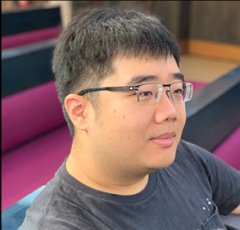
Peter Schwabe is a scientific director at the Max Planck Institute for Security and Privacy and holds academic positions as a part-time professor for cryptographic engineering in the Digital Security Group at Radboud University, Faculty of Science, and as an adjunct professor in the Faculty of Computer Science at Ruhr University Bochum. His career spans multiple prestigious institutions including Academia Sinica and National Taiwan University. Dr. Schwabe's research focuses on cryptography, particularly post-quantum cryptography, cryptographic engineering, and implementation security. His work addresses critical challenges in secure cryptographic implementations, side-channel resistance, and the transition to quantum-resistant algorithms. He has made significant contributions to NIST's post-quantum cryptography standardization project, particularly with CRYSTALS-Kyber which was selected for standardization in July 2022. His publication record shows a strong emphasis on practical implementations of cryptographic algorithms, formal verification of security properties, and addressing real-world security challenges. Recent work centers on verifying Kyber implementations, protecting against Spectre variants, and developing high-assurance cryptographic software. Dr. Schwabe has received significant recognition in the field, serving as an elected member of the IACR Board of Directors and participating in various steering committees including the IACR CHES and RWC Steering Committees. He also serves on advisory boards for several security-focused companies. As an advisor, he has supervised numerous PhD students working on cutting-edge cryptographic research, with recent graduates focusing on post-quantum cryptography, side-channel resistance, and formal verification of cryptographic implementations. His research group actively contributes to both theoretical advances and practical implementations in cryptography.
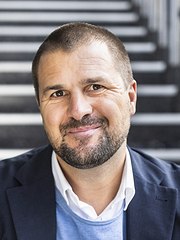
Jürgen Cito is an Associate Professor with tenure at Vienna University of Technology (TU Wien), specializing in software engineering, explainable AI, and performance engineering. He leads research at the IPA Lab (as indicated by his personal website) and maintains a visiting researcher position at Google. His academic journey began with joining TU Wien as an Assistant Professor in Spring 2020, with promotion to Associate Professor announced in April 2024. His research interests span multiple critical areas of modern software development, with particular focus on developer experience, program comprehension, and the intersection of AI with software engineering practices. His work bridges theoretical foundations with practical industrial applications, as evidenced by collaborations with major technology companies. Analysis of his recent publications reveals a strong emphasis on practical tools and methodologies that enhance software quality, performance, and security. His research trajectory shows increasing focus on explainable AI techniques applied to software engineering problems, performance prediction from source code, and automated security testing approaches that leverage large language models. best teaching award for distance learning for Web Engineering (2020) Cito actively contributes to the software engineering community through numerous conference committee roles, including program committee positions at ASE, ICSE, ESEC/FSE, and other major venues. His lab appears to focus on developer tools, program analysis, and AI-assisted software engineering, with connections to both academic and industrial research environments.
Shin Yoo is a tenured Full Professor in the School of Computing at Korea Advanced Institute of Science and Technology (KAIST), where he leads the Computational Intelligence for Software Engineering (COINSE) research group. He received his PhD from King's College London in 2009 under the supervision of Prof. Mark Harman. Currently, he serves as the General Chair for ASE 2025, which will be held in Seoul, Korea. Professor Yoo earned his PhD in Computer Science from King's College London (2009), following an MSc in Software Engineering with Distinction from the same institution (2006). His academic journey includes positions as Tenured Associate Professor (2021-2025), Associate Professor (2018-2021), and Assistant Professor (2015-2018) at KAIST, as well as Lecturer and Research Associate positions at University College London and King's College London. His research focuses on the intersection of software engineering and artificial intelligence, particularly in search-based software engineering, software testing, automated debugging, SE4AI (Software Engineering for AI), and AI4SE (AI for Software Engineering). Professor Yoo's work bridges theoretical foundations with practical applications, developing innovative techniques for fault localization, test case generation, and debugging using machine learning and genetic programming approaches. His research has significant implications for improving software reliability and development efficiency in both traditional software systems and AI-powered applications. Professor Yoo's recent publications demonstrate a clear trend toward leveraging large language models and deep learning techniques for software engineering tasks. His work spans fault localization, automated debugging, GUI testing, and program analysis, with increasing focus on the challenges and opportunities presented by AI systems. His research shows a consistent evolution from traditional search-based software engineering to AI/ML-enhanced approaches, reflecting the broader trends in the field. ACM SIGEVO HUMIES Silver Medal (2017) for human competitive application of genetic programming to fault localization research IEEE TCSE Most Influential Paper Award (ICST 2024) for work on mutation-based fault localization Professor Yoo has supervised five PhD students to completion, with his former students now holding positions as assistant professors, post-doctoral researchers, and software engineers at institutions including Kyoungpook National University, Max-Planck Institute Security & Privacy, Università della Svizzera Italiana, Roku Korea, and NUS. He currently serves as an associate editor for the Journal of Empirical Software Engineering and ACM Transactions on Software Engineering and Methodology, and has held significant leadership roles in major software engineering conferences including Program Co-chair for SSBSE (2014), ICST (2018), and ICSE NIER track (2020), General Chair for SSBSE (2022), and Testing & Analysis Area Chair for ICSE (2024). As leader of the Computational Intelligence for Software Engineering (COINSE) group at KAIST, Professor Yoo directs research that combines computational intelligence techniques with software engineering challenges. The group focuses on developing novel approaches to software testing, debugging, and analysis using search-based and AI-driven methods. Their work spans both theoretical foundations and practical implementations, with strong connections to industry challenges and applications.
Tse-Hsun (Peter) Chen is an Associate Professor in the Department of Computer Science and Software Engineering at Concordia University in Montreal, Canada. He serves as Director of the SPEAR lab (Software Performance, Analysis, and Reliability lab), which focuses on improving the quality of large-scale software systems through research in log analysis and AIOps, software performance analysis, software testing, and mining software repositories. His research group maintains extensive collaborations with industry partners including ERA Environmental, Ericsson, Microsoft, and BlackBerry. Dr. Chen received his PhD and MSc in Computer Science from Queen's University and his BSc in Computer Science from the University of British Columbia. Dr. Chen's research addresses critical challenges in modern software engineering, including leveraging Large Language Models to assist developers with development, debugging, and maintenance; helping developers debug production systems by utilizing rich software data; providing optimization suggestions by analyzing user usage data; improving software quality assurances in DevOps environments; and mining software development history for useful developer suggestions. His work spans Software Engineering, Performance Engineering, DevOps & AIOps, Software Testing, and Mining Software Repositories, with a strong emphasis on practical applications that bridge academic research and industrial practice. His recent publications (2024-2025) demonstrate a pronounced shift toward integrating Large Language Models into various aspects of the software engineering lifecycle, particularly in log analysis, fault localization, code generation, and performance testing. This trend reflects the growing importance of AI in software engineering research and practice. Gina Cody Research award (2022) Ranked as one of the most active software engineering researchers worldwide by an independent study published in JSS Dr. Chen has successfully advised numerous PhD and Master's students, many of whom have secured prestigious academic positions. Several of his graduated PhD students now hold tenure-track assistant professor positions at institutions including York University, University of Alberta, DePaul University, and IIT Gandhinagar. His SPEAR lab has developed research tools that have been integrated into industrial practice for ensuring the quality of large-scale enterprise systems. The SPEAR lab, under Dr. Chen's leadership, has established itself as a leading research group in software engineering, with particular expertise in software performance analysis, log analysis, and AI applications for software engineering. The lab maintains strong industry connections and has produced numerous high-impact publications in top-tier software engineering venues including ICSE, FSE, ASE, and TSE.
Tien N. Nguyen is a Professor in the Computer Science Department at the Erik Jonsson School of Engineering and Computer Science, University of Texas at Dallas. He has been actively contributing to the software engineering research community since 2005, with significant publications and service to major conferences including ASE, ICSE, and ESEC/FSE. His extensive research portfolio spans multiple areas at the intersection of artificial intelligence and software engineering. Dr. Nguyen's research focuses on AI/ML4Code, encompassing Machine Learning, Natural Language Processing for Software Engineering and Software Security. His work specifically addresses Program Analysis, Software Evolution and Mining, Software Security, Software Maintenance, Mining Software Repositories, Version and Configuration Management, and Web Code Analysis and Security. His research has been consistently funded by multiple NSF grants including NSA NCAE-C-002-2021, CNS-2120386, CCF-1723215, CCF-1723432, CNS-1723198, and others dating back to CCLI-0737029. His recent publications demonstrate a strong trend toward leveraging large language models for various software engineering tasks including program analysis, bug detection, code completion, and automated program repair. The research spans both theoretical foundations and practical applications, with numerous papers accepted at top-tier conferences across multiple years. His scientific contributions have been recognized with several prestigious awards: ACM SIGSOFT Distinguished Paper Award at FSE 2024 IEEE Computer Society TCSE Distinguished Paper Award at SANER 2022 ACM SIGSOFT Distinguished Paper and ASE Best Paper Award at ASE 2014 ACM SIGSOFT Distinguished Paper Award at ASE 2012 ACM SIGSOFT Distinguished Paper Award at ESEC/FSE 2009 Dr. Nguyen has served in numerous leadership roles including Program Co-Chair for ICSE 2020 Demonstrations, Doctoral Symposium Co-Chair for ESEC/FSE 2021, NIER Track Chair for ASE 2020, and Tutorials Co-Chair for ASE 2024. He has received multiple NSF grants supporting his research in software analysis, mining, and security. His work with the Boa infrastructure for ultra-large-scale code mining has established significant infrastructure for the research community. His laboratory focuses on AI for software engineering, with particular emphasis on program analysis, software security, and mining software repositories. The research group develops techniques that bridge the gap between artificial intelligence and practical software engineering challenges, creating tools that are both theoretically sound and practically applicable to real-world software development.
Jan Christof Recker is Nucleus Professor and holder of the chair for Information Systems and Digital Innovation at the University of Hamburg Business School, funded through the Excellence Strategy of the Federal and State Governments. He also holds adjunct professor positions at the University of Agder (Kristiansand, Norway) since 2022 and at the QUT Business School (Brisbane, Australia) since 2018, and has previously served as Professor for Information Systems and Systems Development at the University of Cologne (2018-2021) and Full Professor for Digital Innovation at QUT Business School. Dr. Recker holds bachelor's and master's degrees in information systems from the University of Münster and a PhD in Information Systems from the Queensland University of Technology. His educational background forms the foundation for his expertise in bridging technical and organizational aspects of digital transformation. His research focuses on how organizations deal with digital innovation, digital transformation, and digital entrepreneurship. As a field researcher, he has collaborated with large organizations including Woolworths, SAP, Hilti, Commonwealth Bank, Federal Police, Lufthansa, and Ubisoft, as well as various startups. Dr. Recker employs quantitative, qualitative, and mixed field methods in his research and is also competent in design research. His current research interests include technology analysis and design in the digital age, digital entrepreneurship and new venture creation, digital innovation and transformation in large organizations, digitalization of products, services, and processes, and digital solutions for sustainable development. His work aligns with multiple UN Sustainable Development Goals including Industry, Innovation and Infrastructure (SDG 9), Responsible Consumption and Production (SDG 12), and Reduced Inequalities (SDG 10). Dr. Recker's recent publications demonstrate a sophisticated exploration of the intersection between physical and digital experiences, generative AI development methodologies, societal impacts of crises on business growth patterns, and responsible digital innovation frameworks. His work spans multiple high-impact journals across information systems, management science, and entrepreneurship disciplines, consistently addressing practical organizational challenges with theoretically grounded approaches. His notable awards and honors include: AIS Fellow Award (2018) Outstanding Associate Editor Award by MIS Quarterly (2019) SIGGreen Best Paper Award (2021) Best Paper Award by the Journal of Information Technology Theory and Application (2014) Vice Chancellor's Award for Excellence (2014) Dr. Recker has secured significant research funding for projects related to digital innovation and transformation, including the HIVESOUND start-up scholarship (2024-2025) and research on how digital products are created through hardware-software interactions (2022-2024). As Editor-in-Chief for Communications of the Association for Information Systems (2015-2020) and current Senior Editor for the MIS Quarterly, he has shaped scholarly discourse in the field. His supervision of doctoral students has been recognized with multiple awards, reflecting his commitment to developing the next generation of information systems scholars. His Management Transfer Lab at the University of Hamburg serves as a nexus for academic-industry collaboration, focusing on translating theoretical insights into practical solutions for digital transformation challenges. The lab maintains strong partnerships with major corporations and startups alike, ensuring research relevance while providing students with real-world experience in digital innovation contexts.
Dr. Dima Alhadidi is an Associate Professor in the School of Computer Science at the University of Windsor. His research focuses on Cybersecurity, Data Privacy, Machine Learning, and their applications in Health Informatics, Cloud Computing, and Smart Grids. He holds a PhD in Computer Science and Software Engineering from Concordia University (2010). His research interests include secure federated learning frameworks, privacy-preserving techniques for genomic and health data, and adversarial machine learning defenses. Notable contributions include Trustformer (2025), secure aggregation methods in federated learning, and hybrid malware classification using deep learning. Recent work emphasizes mitigating membership inference attacks and developing privacy-preserving analytics for distributed systems. Dr. Alhadidi actively advises graduate students on topics like social network clustering (NICASN 2022) and federated learning security. No scientific awards are explicitly listed. His research spans theoretical frameworks (e.g., λ_AOP calculus) to applied systems in smart grids and healthcare informatics.
Hanne Leth Andersen is the Rector of Roskilde University and a Professor of University Pedagogy. She holds a PhD and has extensive experience in higher education leadership, including roles as director of the Centre for Teaching Development at Aarhus University and director of the Learning Lab at Copenhagen Business School. Her research focuses on foreign language didactics, university pedagogy, educational quality, and innovative teaching methods. Education: PhD in University Pedagogy. Previous academic positions include Professor of University Pedagogy at Aarhus University and Copenhagen Business School. Research interests emphasize exam form innovations, teaching development, language learning methodologies, and the role of foreign languages in education. She advocates for educational quality and pedagogical strategies to enhance student learning environments. Key awards include Chevalier de l'Ordre de la Légion d'Honneur (France), Commandant of the Ordre des Palmes Académiques (France), and Dannebrog Order (Denmark). Notable contributions include developing teacher training programs and advising on educational policies in Norway, Sweden, Finland, and France. Advising and grants: Pioneered collegial supervision methods for teacher competence development at Aarhus University, contributed to Norway’s university quality systems evaluations, and advised on French bachelor’s program reforms. Engaged in strategic board roles within research, education, and cultural institutions. Labs/teams: Active in Roskilde University’s Rectorate leadership, previously directed Learning Lab at CBS, and collaborates internationally on educational strategy initiatives.
J. Alex Halderman is the Bredt Family Professor of Computer Science & Engineering at the University of Michigan, directing both the Center for Computer Security and Society and the Michigan CSE Systems Lab. His work critically examines the societal impacts of security and privacy technologies through empirical research and policy engagement. Halderman's research spans computer security and privacy with emphasis on election integrity, censorship resistance, and the intersection of technology with law and policy. He investigates real-world vulnerabilities in systems ranging from voting infrastructure to encrypted communications, prioritizing measurable societal impact through forensic analysis and large-scale measurement studies. His publication record demonstrates consistent focus on high-stakes security challenges, particularly in democratic processes and user privacy. Notable contributions include internet-wide scanning tools (ZMap), forensic investigations of election systems, and foundational work on cryptographic vulnerabilities affecting global infrastructure. Scientific recognitions include: USENIX Security Best Paper Award (2024) USENIX Security Best Paper Award (2022) USENIX Security Best Paper Award and Internet Defense Prize (2022) IEEE Symposium on Security and Privacy Best Student Paper Award (2020) Pwnie Award for Best Crypto Attack (2016) ACM CCS Best Paper Award (2015) ACM IMC Applied Networking Research Prize (2015) ACM IMC Best Paper Award (2014) USENIX Security Best Paper Award and Test of Time Award (2012) USENIX Security PET Award Runner-up (2011) USENIX Security Best Student Paper Award (2008) Halderman advises a dynamic research group including current members Braden Crimmins, Erik Chi, and Dhanya Narayanan, with over two dozen alumni who have advanced the field. His leadership extends to developing practical security solutions like Let's Encrypt and conducting court-admissible forensic analyses of election systems. He directs the Michigan CSE Systems Lab, which pioneers research in computer systems security, and the Center for Computer Security and Society, which bridges technical research with policy impact through cross-disciplinary collaboration.
Prof. Dr.-Ing. Michael Möhring is a Professor of Data Science at Reutlingen University's Faculty of Informatics. He serves as Prodekan for the Herman Hollerith Zentrum (HHZ) and leads research in data analytics, Industry 4.0, and process mining. Previously, he held roles as an IT consultant, project manager at Bosch Group/BSH, and academic researcher. Education: Dr.-Ing. (PhD) in Business Informatics M.Sc. in Business Informatics B.Sc. in Business Informatics Research Interests: Focuses on leveraging structured/unstructured data for industrial applications, enterprise architecture management, digital twins integration, and AI-driven decision support. Specializes in bridging technical systems with organizational processes in manufacturing and service industries. Lab Affiliations: AI-Real Lab AIDA Future Mobility Lab Internet of Things Lab Virtual Reality Lab Articles Trends: Recent work emphasizes practical implementations of AI in production failure analysis (language models), energy optimization systems (HollerithEnergyML), and technical debt management in SMEs. Consistently explores data integration challenges across manufacturing, service ecosystems, and digital twin frameworks. Grants & Collaborations: Active in EU-funded projects like 5G-PreCiSe and bwHealthApp. Collaborates with industry partners on digital transformation initiatives through HHZ's applied research programs.
Babak Akhgar serves as Professor of Informatics and Director of CENTRIC (Centre of Excellence in Terrorism, Resilience, Intelligence and Organised Crime Research) at Sheffield Hallam University's College of Business, Technology and Engineering, with additional affiliation to the Culture and Creativity Research Institute. Recognized as a Fellow of the British Computer Society (FBCS), he maintains active leadership in security informatics research and education. His academic foundation includes a Software Engineering degree from Sheffield Hallam University, complemented by a Master's degree with distinction in Information Systems in Management and a PhD in Information Systems. This academic trajectory followed substantial industry experience as a Strategy Analyst and Methodology Director for multiple organizations. Professor Akhgar's research program bridges theoretical knowledge management with practical security applications, focusing on cyber security, counter-terrorism, intelligence frameworks, and big data analytics for national security. His scholarly output demonstrates consistent evolution from foundational knowledge management systems toward contemporary security challenges including cryptocurrency tracing, AI accountability in law enforcement, and smart city security frameworks. Recent work shows particular emphasis on ethical considerations, citizen acceptance of security technologies, and practical implementation of security solutions. Fellow of the British Computer Society (FBCS) Co-editor of influential security publications including 'Intelligence Management: Knowledge Driven Frameworks for Combating Terrorism and Organised Crime' Member of editorial boards for three international journals Chair and program committee member for numerous international security conferences As a doctoral supervisor, Professor Akhgar has guided research on cyber situational awareness, digital music ontology, and e-government services. His leadership extends to major EU-funded security initiatives including the MIICT project for migrant integration and development of the AP4AI accountability framework for artificial intelligence in security contexts. Through CENTRIC, he directs a research ecosystem that connects academic inquiry with real-world security challenges while addressing ethical, legal, and societal implications of security technologies.
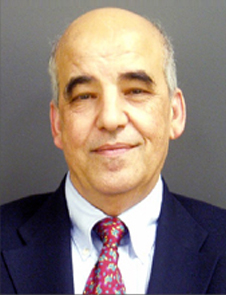
Professor Ahmed Karmouch is a faculty member at the University of Ottawa's School of Electrical Engineering and Computer Science. He holds a Ph.D. and specializes in advanced networking research, including Network Slicing, Software Defined Networks (SDN), Named Data Networking (NDN), and Cloud Computing. His IMAGINE Lab focuses on developing innovative solutions for autonomic and cognitive networks, emphasizing programmable data planes and in-network computing. Research Interests: Network Slicing Software Defined Networking Named Data Networking Programmable Data Plane Intelligence In-Network Computing Ambient Intelligence & IoT Publications reflect a focus on SDN, NDN, and cloud infrastructure optimization. His work often bridges theory and practical implementation, addressing challenges in network efficiency, reliability, and scalability. Supervised over 30 graduate students, contributing to advancements in edge computing, virtual networks, and autonomic systems. Labs/Teams: Leads the IMAGINE Lab, dedicated to research in mobile autonomic networks, context-aware systems, and future broadband infrastructure. Projects include WiMAX security, policy-based overlay networks, and semantic resource discovery.
Margaret-Anne Storey is a Professor of Computer Science at the University of Victoria and holds the Canada Research Chair Tier I in Human and Social Aspects of Software Engineering. She is affiliated with the Faculty of Engineering and Computer Science and leads the Computer Human Interaction and Software Engineering Lab. Her research focuses on software engineering, human-computer interaction, information visualization, and collaborative work practices. Storey earned her PhD from Simon Fraser University (SFU). Her work bridges socio-technical systems, developer experience (DevEx), and the ethical integration of AI in software engineering. She has pioneered studies on remote work productivity during the pandemic, developer satisfaction, and the human-centered design of tools. Key research interests include understanding developer productivity through frameworks like SPACE (2021), analyzing code review strategies, and exploring the impact of generative AI on software engineering research. Her work often employs mixed-methods approaches and emphasizes empirical validation. Storey has been recognized with the Canada Research Chair Tier I (2020–present). Her contributions span keynote addresses at major conferences (e.g., ICSE), framework development (e.g., DASP for security practices), and interdisciplinary collaborations with organizations like Microsoft. Her research also addresses societal challenges, such as drug-checking technology and participatory culture in education. She advocates for human-centric AI in software engineering and critical questioning of AI’s societal impacts.
Christopher Brooks is an Assistant Professor at the University of Michigan's School of Information, specializing in educational technologies and data science education. He directs the Educational Technology Collective (etc), a multidisciplinary research group focused on learning analytics, educational data mining, and collaborative learning systems. His work bridges computer science and education, with a focus on improving teaching methods through AI-driven tools and platforms. Research Interests: Development and impact assessment of educational technologies Predictive modeling for student success Data science pedagogy Privacy in smart home technologies Publications reflect a focus on learning analytics, MOOC design, and educational AI, with notable contributions to conferences like CHI, LAK, and AIED. Awards include multiple best paper recognitions. Teaching includes applied data science courses at UMich and Coursera. He leads the Master of Applied Data Science (MADS) program and collaborates with institutions like Microsoft to build AI-driven educational tools.