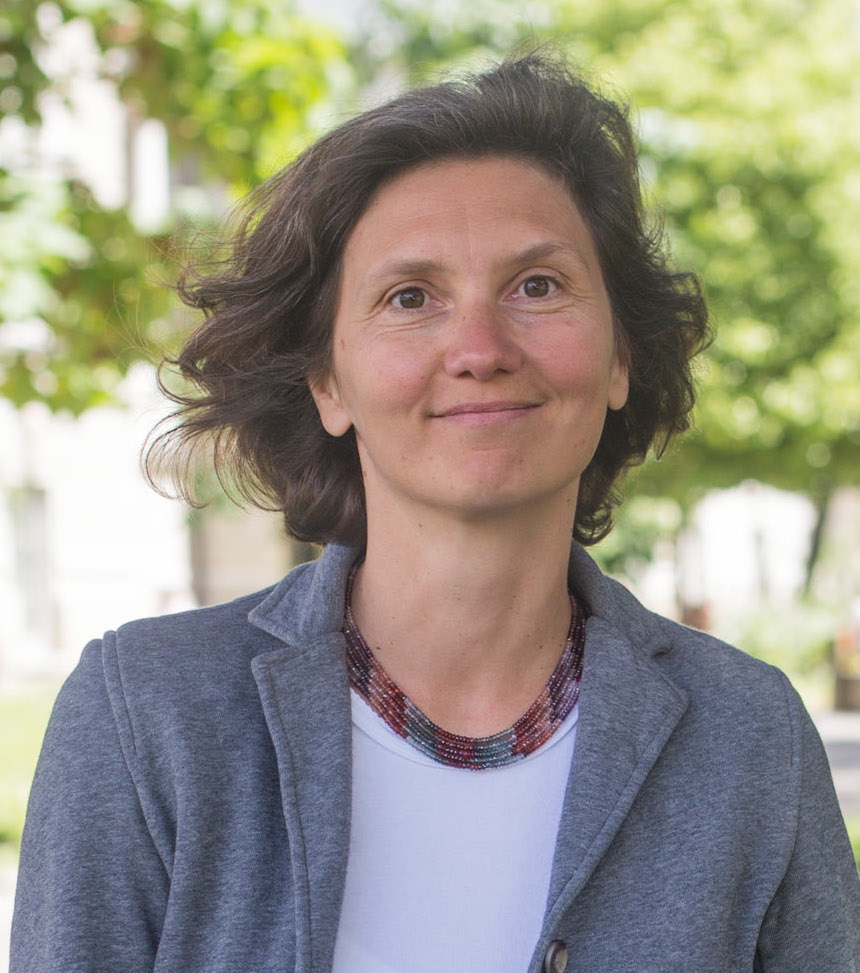
Cesare Pautasso is a Full Professor at the Software Institute within the Faculty of Informatics at the Università della Svizzera italiana (USI) in Lugano, Switzerland. His research focuses on software composition techniques, Web 2.0 mashups, cloud computing, business process management, and RESTful API design. He has led projects like JOpera, a service composition tool, and contributed to frameworks such as Liquid Software for adaptive distributed systems. Education: PhD in Computer Science from ETH Zurich (2004) and a Computer Science Engineering Degree (cum laude) from Politecnico di Milano (2000). Research Interests include model-driven engineering, service-oriented architectures, and API analytics. He has authored over 200 publications and serves on numerous program committees, including IEEE and ACM. His work has been funded by grants from Swiss National Science Foundation (SNSF), EU projects like S-CUBE, and industry collaborations. Teaching and Training: Focuses on Web Development, Enterprise Architecture, and emerging technologies. Active in conferences as general chair of ECOWS 2011 and ICWE 2016. Labs/Teams: Leads research groups exploring API design, blockchain applications, and adaptive systems. Collaborates with institutions like HPI Potsdam and ETH Zurich on projects like FC4MC and API-ACE.
Laura Pozzi is a Full Professor at the Faculty of Informatics, Università della Svizzera italiana (USI), Switzerland, since 2015. She previously held positions as Associate Professor (2011–2015) and Assistant Professor (2005–2011) at USI. Prior to joining USI, she was a postdoctoral researcher at EPFL's Processor Architecture Laboratory (2001–2005), a research engineer at STMicroelectronics (2000), and an Industrial Visitor at UC Berkeley (2000). Education: MS and PhD in Computer Engineering from Politecnico di Milano, Italy (1996–2000). Her research focuses on the interaction between compiler and architecture design, particularly in embedded systems , with key areas including approximate computing , coarse-grained reconfigurable arrays (CGRAs) , high-level synthesis (HLS) , and fuzz testing . She has led projects on automated design space exploration, compiler optimizations for reconfigurable architectures, and error estimation in approximate circuits. Recent Publications span topics like SAT-based mapping for CGRAs , grammar-based fuzzing of shell interpreters , and approximate logic synthesis , reflecting her interdisciplinary work bridging hardware/software co-design and software verification. Scientific Awards: Credit Swiss Best Teaching Award IEEE DAC Best Paper Award Leadership Roles: Co-Program Chair, IEEE Symposium on Application Specific Processors (SASP) Editorial Board Member, IEEE Design and Test Students: Current: Rodrigo Otoni (Postdoc), Morteza Rezaalipour (PhD), Riccardo Felici (PhD), Cristian Tirelli (PhD) Alumni: Ilaria Scarabottolo (PhD/Postdoc), Lorenzo Ferretti (PhD/Postdoc), Georgios Zacharopoulos (PhD), Giovanni Ansaloni (PhD/Postdoc), Paolo Bonzini (PhD)
Andrea Guerrieri serves as an Associate Professor at the School of Engineering, University of Applied Sciences and Arts Western Switzerland Valais (HES-SO Valais-Wallis), specializing in reconfigurable computing and electronics design automation. His research has established significant industry impact through tools like DynaRapid and Dynamatic, with technology adopted by major semiconductor companies including MIPS, Intel, and AMD-Xilinx. BSc HES-SO in Industrial Systems - System-on-Chip specialization BSC HES-SO in Computer and Communication Systems - Digital Design specialization MSc HES-SO in Engineering - Embedded Hardware and Firmware specialization Professor Guerrieri's research focuses on reconfigurable computing, electronics design automation (EDA), and security, with particular emphasis on FPGA design, high-level synthesis, and post-quantum cryptography implementations. His work bridges the gap between theoretical computer architecture and practical hardware implementations, with strong applications in space technology and embedded security systems. His recent publications demonstrate increasing focus on energy-efficient implementations for space applications and quantum-resistant cryptographic systems. Analysis of his 15 most recent publications reveals a clear research trajectory toward optimizing FPGA implementations for post-quantum cryptography and space applications. His work consistently addresses the performance bottlenecks in high-level synthesis while maintaining practical applicability for industry partners like NASA, CERN, and major semiconductor companies. The recent surge in best paper awards (three in 2024 alone) reflects growing recognition of his contributions to efficient FPGA compilation techniques and cryptographic implementations. Scientific Awards: Best Paper Award at FPL 2024 Best Paper Award at HPEC 2024 Best Paper Award at ISFPGA 2020 Outstanding Short Paper Award at IEEE HPEC 2024 Outstanding TPC Member Award at DAC 2024 IEEE Senior Member (2021) Multiple Best Paper nominations (FCCM 2022, FPL 2022, HiPEAC 2022) Professor Guerrieri actively participates in international research projects including the DyReCte project (2019-2021) on dynamically reconfigurable cryptoengines for nano-satellites. He currently chairs the Onboard Computing topic for the Swiss consortium CHEESE affiliated with NASA SSERVI and collaborates extensively with industry partners including AMD-Xilinx, NVIDIA, Arm, NASA, and CERN, as well as academic institutions like ETH Zurich and University of Geneva. His current research focuses on developing next-generation EDA tools and reconfigurable computing platforms for both terrestrial and space applications. His laboratory work centers around FPGA-based prototyping and validation, with specialized facilities for space applications testing. Professor Guerrieri leads a research team that includes Andres Upegui, Quentin Berthet, Laurent Gantel, and Gabriel Da Silva Marques, focusing on practical implementations of reconfigurable architectures for security and space applications.
Prof. Nico Ebert is a Professor of Business Information Systems and Head of the Information Systems Human Factors & Risks Group at the ZHAW School of Management and Law. His work focuses on human factors in privacy/security, usable security, and organizational cybersecurity practices. He leads research projects such as the Cyber Resilience Network (Canton of Zurich) and studies TikTok privacy behavior among Swiss youth. Ebert has authored over 50 peer-reviewed articles, with recent emphasis on cybersecurity decision-making, privacy-aware design, and organizational data collaboration frameworks. Education background not explicitly stated in provided texts, but his academic career spans over 20 years with a focus on business information systems and cybersecurity. Active in professional networks including ACM's Swiss CHI Chapter and the Digital Society Initiative (DSI). Research integrates behavioral science principles with technical cybersecurity solutions. Key research areas include: human-centered cybersecurity strategies, privacy-by-design frameworks, and evaluating security technologies like trusted execution environments. His work bridges organizational practices with user behavior studies, often employing mixed-methods approaches. Grants and collaborations include leadership in multiple EU-funded projects and industry partnerships. Advises on cybersecurity policies for regulated industries and publishes regularly in top venues like Communications of the ACM and Computers & Security.
Dr. Sina Rafati Niya serves as a Senior Researcher at the Blockchain and Distributed Ledger Technologies (BDLT) group, University of Zurich (UZH), where he specializes in blockchain data governance and analytics for PoS-based systems including Cardano, Tezos, Casper, and Polkadot since 2022. His research spans decentralized applications in DeFi, supply chain tracking, identity management, and IoT domains, building on continuous work since 2017. He completed his Ph.D. at UZH in 2021 with the dissertation "Efficient Designs for Practical Blockchain-IoT Integration," establishing foundational work for his current research trajectory. Rafati Niya's research centers on Blockchain Data Engineering and Analysis, with specific expertise in transaction untangling (Cardano shared send transactions), address clustering heuristics, privacy-preserving micro-payment systems for resource-constrained IoT devices, and GDPR-compliant blockchain adaptations. His methodology emphasizes practical implementation challenges in scalability and real-world deployment across financial, supply chain, and industrial IoT contexts. Publication analysis reveals concentrated advancements in Cardano analytics (60% of recent work), including novel transaction analysis frameworks and network structure investigations in Polkadot, alongside persistent exploration of blockchain-IoT integration patterns. This body of work demonstrates evolving sophistication from protocol design (2017-2020) toward advanced analytics and privacy solutions (2021-2025). No scientific awards were documented in the source material. While specific advisees and grants remain unlisted, his extensive co-authorship pattern (27+ publications 2017-2025) indicates active mentorship within the BDLT group and collaboration with researchers including C. J. Tessone, Burkhard Stiller, and M. Chegenizadeh. Current projects focus on offline micro-payment verification and Cardano transaction analytics. As a core contributor to UZH's BDLT research group, he drives initiatives in blockchain analytics infrastructure and practical protocol development, maintaining strong industry-academia connections through publications in IEEE ICBC, Springer, and Elsevier venues.
Markus Enzweiler serves as Professor of Computer Science and Autonomous Systems at Esslingen University of Applied Sciences within the Department of Computer Science and Engineering. He concurrently holds the leadership position of Director at the Institute for Intelligent Systems, where he oversees research initiatives focused on intelligent systems development for real-world autonomous applications. His research program centers on computer vision for autonomous systems , with specialized expertise in visual-inertial SLAM, collective perception, and neural rendering techniques. Key investigation areas include environmental robustness across agricultural and urban settings, real-time processing constraints for embedded systems, sensor fusion methodologies (particularly camera-radar integration), and the application of generative models for perception enhancement. His work consistently addresses practical implementation challenges such as computational efficiency and sensor calibration in unstructured environments. Analysis of his 2023-2025 publications reveals three dominant research trajectories: (1) Advancement of lightweight perception systems through stixel-based representations and neural rendering; (2) Development of infrastructure-supported collective perception frameworks with datasets like CoopScenes and OPNV; and (3) Rigorous benchmarking of SLAM components in domain-specific contexts including agricultural robotics and multi-season navigation. His recent systematic review on LLM-based vulnerability detection also demonstrates expanding interest in software security for autonomous systems. As Director of the Institute for Intelligent Systems, Prof. Enzweiler leads a research ecosystem focused on translating theoretical advances into practical autonomous vehicle technologies. His team develops specialized datasets (Rover, OPNV) and software stacks for smart city environments, emphasizing the integration of novel perception approaches with vehicle dynamics modeling and real-time operational constraints.
Franck Iutzeler is a Professor of Applied Mathematics at Université de Toulouse, working within the Statistics & Optimization team of the Institut Mathématique de Toulouse and teaching in the Department of Mathematics. He previously served as an Assistant Professor at Université Grenoble Alpes from 2015 to 2023 and completed his Habilitation à Diriger des Recherches in 2021. His research focuses on the intersection of optimization, statistics, and optimal transport theory to develop robust data-driven models. Key areas include numerical optimization, statistical learning, stochastic programming, and optimal transport. He is particularly interested in distributionally robust optimization using Wasserstein metrics and has developed the skwdro Python library for implementing these methods. Iutzeler's recent publications demonstrate a strong focus on Wasserstein Distributionally Robust Optimization (WDRO), with multiple papers in top venues like NeurIPS and SIAM Journal on Optimization. His work bridges theoretical guarantees with practical implementation, particularly through the skwdro library which provides efficient code for WDRO in machine learning applications. ANR JCJC grant for project STROLL: Harnessing Structure in Optimization for Large-scale Learning Co-PI of ANITI chair on Trust and Responsibility in Artificial Intelligence led by JM. Loubes and J. Bolte Iutzeler actively supervises PhD students including Yu-Guan Hsieh (awarded Université Grenoble Alpes's PhD award), Gilles Bareilles, Waïss Azizian, and Victor Mercklé. He has secured research funding through the ANR (MAD project on Automatic Differentiation) and ANITI. His current research includes statistical fairness using optimal transport theory and automatic differentiation for stochastic optimization. He leads the development of the skwdro library for Wasserstein Distributionally Robust Optimization and is involved with ANITI (Toulouse's AI Cluster), where he also took responsibility for the 2nd year of the Master SID in Data Science & Engineering in September 2024.
Prof. Dr. Stefan Brönnimann serves as a Professor and Unit Leader of Climatology at the Institute of Geography, University of Bern. His extensive research portfolio spans historical climatology, climate dynamics, and atmospheric circulation reconstruction, with particular focus on the past 400 years. He plays a leadership role in major international climate initiatives including the IPCC assessment reports and various climate reanalysis projects. Brönnimann's research centers on reconstructing historical weather and climate patterns through the innovative combination of early instrumental data, proxy records, and climate models. His work examines large-scale climate variability, interannual-to-decadal atmospheric circulation patterns, volcanic eruption effects on climate, and climate-society interactions. His methodologies often involve transforming historical documents into usable climate datasets and applying advanced machine learning techniques to weather reconstruction challenges. Recent publications reveal a strong emphasis on European climate patterns, hydroclimate extremes, and the development of novel datasets and tools for climate research across high-impact journals in climate science, paleoclimatology, and climate informatics. Notable scientific achievements include: Lead author for Chapter 2 of the IPCC Working Group I 5th Assessment Report President of the Commission 'Atmospheric Chemistry and Physics' (ACP) of sc.nat Editorial leadership for multiple prestigious journals including Meteorologische Zeitschrift, Climate of the Past, and Geographica Bernensia Leadership roles at the Oeschger Centre for Climate Change Research Active participation in international initiatives like the Twentieth Century Reanalysis Project and Atmospheric Circulation Reconstructions over the Earth (ACRE) Brönnimann has secured substantial funding through numerous national and international projects including SNF, NCCR Climate, EU FP-7, HORIZON2020, COST, and ERAnet.RUS. He has organized multiple international workshops on weather and climate extremes, atmospheric circulation variability, and historical climate events like the Tambora eruption. His work connects closely with the Oeschger Centre for Climate Change Research at the University of Bern, where he leads Work Package 2 and serves on the Steering Group, demonstrating his significant institutional leadership within Bern's climate research community.
Iyán Méndez Veiga is a Research Associate and Doctoral Student at the Lucerne School of Computer Science and Information Technology, part of the Lucerne University of Applied Sciences and Arts (HSLU). Their research focuses on quantum cryptography, post-quantum security protocols, and privacy amplification. They have conducted studies on adversarial wiretap channels and reproducible builds in open-source systems like Arch Linux. Education includes a BSc in Physics from the University of Oviedo, Spain, and an MSc in Physics from Ulm University, Germany. Their work bridges theoretical cryptography with practical implementations, such as developing the randextract library for validating privacy amplification algorithms. Key projects include quantum-safe hardware security modules, implications of post-quantum cryptography on certificate management, and quantum cryptography in practice. Presentations emphasize topics like quantum hardware verification and secure communication protocols. Collaborations with institutions like the University of Applied Sciences and Arts Northwestern Switzerland highlight their applied research focus.
Matteo Biagiola is a Researcher in the Faculty of Informatics at Università della Svizzera italiana (USI), Lugano, Switzerland, and a PostDoctoral researcher at the University of St. Gallen (HSG). He specializes in software testing, particularly test generation for Web applications, deep reinforcement learning systems, and autonomous driving software. His work focuses on enhancing AI robustness through testing and improving software testing via AI techniques. Biagiola holds a Ph.D. from Università degli Studi di Genova (Italy) in collaboration with Fondazione Bruno Kessler, Trento. He has conducted postdoctoral research at USI on the Precrime ERC Advanced Grant project under Paolo Tonella. His research tools include μPRL (mutation testing for RL agents), STILE (web test parallelization), and GenBo (boundary state generation for autonomous systems). Education: Ph.D.: Università degli Studi di Genova / Fondazione Bruno Kessler (2016–2020) M.Sc.: Università Politecnica delle Marche (2014–2016) Affiliations: PostDoc & Scientific Collaborator: University of St. Gallen / USI (2025–present) PostDoc: USI (2020–2025) Visiting Ph.D. Student: University of British Columbia (2018) His research interests span AI-driven testing tools, autonomous system validation, and simulation-based testing. He has received the Distinguished Paper Award at ICST 2025 and serves on program committees for major conferences like FSE, ICSE, and ICST. He co-organizes workshops like DeepTest (co-located with ICSE) and the Cyber-Physical Systems tool competition (SBFT).
Roberto Minelli is a Scientific Collaborator and Academic Coordinator at the Software Institute, Faculty of Computer Science, Università della Svizzera italiana (USI), where he also completed his Bachelor, Master, and PhD in Informatics. His work bridges research, education, and technology outreach, with a strong focus on software engineering, visualization, and developer interaction analysis. His research centers on leveraging interaction data from development environments to enhance software comprehension and evolution. Key areas include software visualization , mining software repositories , reverse engineering , and program comprehension . He has pioneered work in visual metaphors such as Software Cities and explored immersive environments like virtual reality for code visualization. The recent publications reflect a consistent trend in visual analytics for software engineering, with increasing emphasis on social and collaborative aspects of development (e.g., Discord, GitHub issues), large-scale system comprehension, and the integration of diverse data sources into unified visual models. His work combines empirical studies, tool development, and human-centered evaluation. Best Paper Award, IWESEP 2016 Most Influential Paper Award, ICPC 2015 Distinguished Reviewer Award, ICPC 2020 Minelli actively mentors students, co-supervising numerous Bachelor and Master theses in software visualization and analytics. He has secured multiple research and development mandates, including projects like Self-Driving Cars on Interactive Dynamic Tracks (SNF Agora) and Sphere Two: Swiss Pavilion @ Expo 2025 . He plays a central role in organizing key events such as VISSOFT, SIESTA, and #FormulaUSI, and contributes to curriculum development and outreach programs targeting secondary education. He is involved in several labs and teams, primarily the REVEAL research group (led by Prof. Michele Lanza) and the Software Institute at USI. His leadership in initiatives like CodeLounge and #FormulaUSI underscores his commitment to experiential learning and public engagement in computing.
Matthias Stürmer serves as a Professor at Bern University of Applied Sciences (BFH) within the School of Management and Head of the Institute for Public Sector Transformation (IPST). He concurrently holds a lecturer position at the University of Bern. His professional identity centers on Swiss digital governance initiatives, with active leadership roles in @Parldigi, @DigitalImpactCH, @CH_Open, and @OpendataCH advocating for open source, open data, and transparent public sector innovation. His research program bridges legal technology and digital governance, specializing in multilingual (German/French/Italian) processing of Swiss jurisprudence. Core focus areas include developing AI systems for judicial summarization and criticality prediction, advancing digital sovereignty frameworks, and analyzing sustainable public procurement practices. He investigates the tension between open justice principles and privacy preservation in court documentation, while pioneering methods for anonymizing legal texts against re-identification threats from large language models. Stürmer's publication trajectory reveals a strategic shift toward legal AI applications since 2020, with 12 of his 15 most recent works addressing multilingual legal processing challenges. His scholarship consistently targets Swiss institutional contexts, creating specialized datasets like Multilegalpile and Lextreme while examining practical implementation barriers for open source adoption in public administration. As director of IPST at BFH, he leads institutional efforts to transform public sector services through open standards and collaborative governance models. His team develops practical frameworks for digital sovereignty implementation and sustainable ICT procurement, directly influencing Swiss federal policies on open data and public sector technology adoption.
Michael Doerk is a Lecturer and Project Manager at the Lucerne School of Social Work, Lucerne University of Applied Sciences and Arts, a position he has held since 2004. His work integrates teaching with project leadership in digital innovation, organizational development, and educational technology within social work contexts. His educational background includes a Diplom in Psychology from the Universities of Bielefeld, Cologne, and Munich (with minors in Sociology and Pedagogy), complemented by numerous certifications: Master of Advanced Studies in Risk Management (Lucerne University), Certificates in Blended Learning, Stress Management for Children (University of Münster) and Students (University of Cologne), and Excellence in Teaching (Lucerne University). Dipl. Psychologe, Universität Bielefeld, Köln und München Master of Advanced Studies in Risk Management, Hochschule Luzern Zertifikat Exzellente Lehre, Hochschule Luzern Zertifikat Blended Learning, Fachhochschule Zentralschweiz Zertifikat Stressmanagement für Kinder, Universität Münster Zertifikat Stressmanagement für Studierende, Universität Köln International EOQ TQM Assessor und SAQ Business Excellence Assessor Risk Manager, SAQ Schweiz Marketing Grundlagen, Fern-FH Schweiz Klientenzentrierter Berater, GWG Deutschland Doerk's research centers on digital transformation in social work , with key interests in educational technology, stress management tools for students (e.g., relax-concentrate-create), and voice assistant applications in work environments. His interdisciplinary approach bridges social sciences with computer-human interaction, aiming to enhance resilience in social systems through innovative digital solutions. Recent publications (2022-2024) reveal a strong focus on applied digital tools —from voice assistant studies (VA PEPR) to school digitalization (DigiKanti) and sexuality education platforms (herzfroh 2.0). This work underscores his commitment to translating research into practical, award-winning educational media. His scientific achievements include three Comenius-EduMedia Awards (2018, 2021, 2024) for outstanding digital educational resources. These accolades highlight his impact in merging pedagogy with digital innovation. Comenius-EduMedia-Award 2024 Comenius-EduMedia-Award 2021 Comenius-EduMedia-Award 2018 As a project manager, Doerk has secured funding for initiatives like the CreaLab innovation hub and the relax-concentrate-create application. His mentorship extends to student projects in social computing and international study weeks, fostering hands-on learning in digital social work. He directs the interspin CreaLab spin-off and the Kompetenzzentrum EBBL, driving interdisciplinary collaboration on lifelong education and digital innovation. These platforms enable community engagement in co-creating solutions for social challenges.
Patrick Eugster is a full professor at the Università della Svizzera italiana (USI) and leads the Software Systems (SWYSTEMS) group within the Computer Systems Institute . He has held academic positions at Purdue University, TU Darmstadt, and MIT as a visiting faculty. His research focuses on distributed software systems , addressing challenges in consistency, efficiency, and security in decentralized environments. Current affiliation: USI Faculty of Informatics Prior affiliations: Purdue University (2005-2016), TU Darmstadt (2014-2017), MIT (2012/2013) Research Interests Distributed Systems : Investigating reliable failure detection, deterministic data paths for 6G, and hybrid synchronous/asynchronous architectures. Network Innovation : Optimizing TCAM encoding, analyzing microbursts, and developing quantum network protocols. Security & Verification : Creating confidentiality-preserving mechanisms and formal verification approaches for distributed software. Scientific Contributions 2025: Best paper at TACAS on Horn clause validation 2025: IFIP Jean-Claude Laprie Award for dependable computing 2024: Key papers at IEEE Network, ACM PLDI, and IEEE INFOCOM Funding & Collaborations Swiss National Science Foundation grants #200021_197353 and #200021_192121 EU Horizon Europe MSCA staff exchange project CloudStars Industry partners: Cisco, Amazon AWS, Facebook Research, SAP, Northrop Grumman Cybersecurity Research Consortium Labs & Teams Directs the SWYSTEMS group, which includes postdocs like Sina Darabi and Shamiek Mangipudi, PhD students such as Anita Buckley and Jérôme Graf, and alumni who have become faculty at institutions like Télécom Paris and University of Southern California.
Dominique Jaccard is a Professor at the Haute école d'Ingénierie et de Gestion du Canton de Vaud (HEIG-VD) , specifically within the Institut d'ingénierie des Médias (MEI) . He leads the Serious Games and Edtech Competency Group , focusing on digital pedagogy, learning analytics, and project management education through game-based approaches. Developed HUMAn real-time patient simulation model for emergency triage training Created the co.LAB collaborative framework for serious game development Secured major grants from Innosuisse and Swiss National Science Foundation Collaborated with institutions like University of Agder, Université de Genève, and Université de Fribourg Research Interests: His work bridges educational sciences and computer science , emphasizing: Digital games for emergency medicine and oncology training Systemic approaches to collaborative design processes Holistic learning analytics systems Overcoming development barriers for non-programmers Scientific Contributions: Through 15+ years of research, he has: Validated serious games as educational tools Developed adaptive simulation frameworks for healthcare Explored NLP integration in educational games Published in International Journal of Serious Games and JMIR Serious Games Implementation: His projects have created: WEGAS authoring system for rapid simulation game development PRITS software prototype for patient rights education co.LAB digital platform for cross-disciplinary collaboration