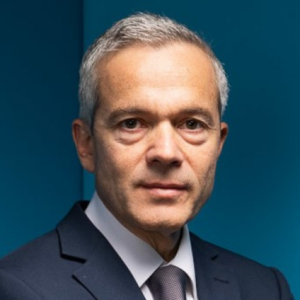
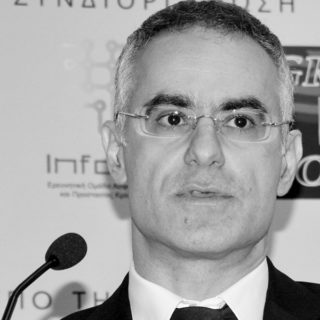
Evangelos Papapetrou is an Associate Professor in the Department of Computer Science and Engineering at the University of Ioannina, Greece. He holds a Diploma (1998) and PhD (2003) in Electrical and Computer Engineering from Aristotle University of Thessaloniki. His research focuses on wireless and mobile networks, including mobile ad-hoc networks, opportunistic networks, satellite networks, quality of service (QoS), and network coding. He has contributed to over 50 peer-reviewed publications and actively participates in EU/nationally funded projects. Research interests include: Wireless/Mobile Network Architectures Opportunistic and Social Mobile Networks Satellite Communication Systems Network Coding Techniques Routing Protocol Design His work emphasizes practical implementations of network protocols, with recent trends focusing on ultra-reliable low-latency communication, energy-efficient broadcasting, and protocol optimizations for 5G/IoT environments. He has developed simulation tools like Adyton for opportunistic networks and contributed to privacy-preserving routing solutions. Teaching responsibilities include courses on Computer Networks I and Wireless Networks (2024/25). He maintains active IEEE/ACM memberships and serves on conference review committees.
Gérard Berry (born December 25, 1948) is a distinguished French computer scientist currently serving as Professor at the Collège de France, holding the permanent chair Algorithmes, machines et langages (Algorithms, Machines, and Languages) since 2012. He previously held the Informatique et sciences numériques chair (2009-2010) and the Technological Innovation Liliane Bettencourt chair (2007-2008) at the same institution. Before joining Collège de France full-time, he served as Director of Research at INRIA Sophia Antipolis (2009-2012) and at École des Mines de Paris (1977-2001). His research spans over 30 years in three main fields: lambda calculus and functional programming, parallel and real-time programming languages, and design automation for synchronous digital circuits. He is particularly renowned for developing the Esterel programming language. His work bridges theoretical computer science with practical industrial applications. Berry's research has evolved to include current work in Hop and HipHop for Web programming, formal verification of compilers, and languages for computer music. His publications demonstrate consistent contributions to programming language theory, formal methods, and their applications in hardware and software systems. Gold Medal of CNRS (2014) Chevalier de l'Ordre de la Légion d'Honneur (2012) Member of French Academy of Sciences (2002) Member of Academia Europaea (1993) Monpetit Prize of Académie des sciences (1990) Berry has advised 17 PhD students and reviewed numerous theses. His industrial experience includes serving as Chief Scientist Officer of Esterel Technologies (2000-2009), where he directed the implementation of the Esterel v7 compiler. He has also held significant leadership roles including President of the Scientific Council of IRCAM and membership on the Scientific Council of the National Education. His teaching at Collège de France has covered topics ranging from the foundations of computation to the societal impact of digital technology, with courses including The Informatics of Time and Events and Proving Programs: Why? When? How? His laboratory work has focused on developing practical applications of theoretical computer science concepts.
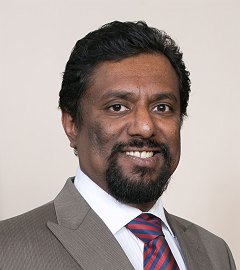
Professor Saman Amarasinghe is a faculty member in the Department of Electrical Engineering and Computer Science at the Massachusetts Institute of Technology (MIT), where he leads the Commit compiler research group at MIT's Computer Science and Artificial Intelligence Laboratory (CSAIL). His research focuses on programming languages and compilers that maximize application performance on modern computing platforms, with a particular emphasis on high-performance domain-specific languages. Professor Amarasinghe received his bachelor's degree in electrical engineering and computer science from Cornell University in 1988, followed by master's and PhD degrees in electrical engineering from Stanford University in 1990 and 1997, respectively. He joined the MIT faculty as an assistant professor in 1997 and has since become a world leader in his field. Professor Amarasinghe's research interests span programming languages, compiler design, and high-performance computing, with a particular focus on domain-specific languages. His group has developed numerous influential languages and compilers including Halide, TACO, Simit, StreamIt, StreamJIT, PetaBricks, MILK, Cimple, and GraphIt, which deliver unprecedented performance for application domains such as image processing, stream computations, and graph analytics. He has also pioneered the application of machine learning for compiler optimizations, from Meta optimization in 2003 to the OpenTuner autotuner framework. Professor Amarasinghe's publication history reveals a consistent research trajectory toward creating specialized language and compiler solutions that address performance challenges in specific domains while hiding complexity from application developers. His recent work focuses heavily on sparse computing, tensor algebra, graph processing, and the integration of machine learning techniques into compiler technology, demonstrating his ability to identify and address emerging computational challenges. ACM Fellow (2019) As an educator, Professor Amarasinghe has developed the popular Performance Engineering of Software Systems (6.172) class with Professor Charles Leiserson and created innovative project-based courses including the Open Source Software Project Lab, the Open Source Entrepreneurship Lab, and the Bring Your Own Software Project Lab. He also serves as the faculty director of MIT Global Startup Labs, which has helped create more than 20 startups across 17 countries. His research has translated into practical applications through startups like Determina, Inc. (acquired by VMware), demonstrating the real-world impact of his academic work. Professor Amarasinghe co-led the Raw architecture project with Professor Anant Agarwal, which did pioneering work on scalable multicores. His entrepreneurial activities include founding Determina, Inc. based on computer security research from his MIT lab and co-founding Lanka Internet Services, Ltd., the first Internet Service Provider in Sri Lanka, showcasing his ability to bridge academic research with commercial applications.
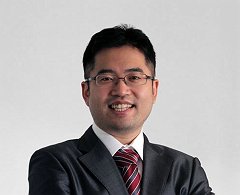
Sang Kil Cha is an Associate Professor at KAIST's Graduate School of Information Security and School of Computing, where he also serves as Director of the Cyber Security Research Center (CSRC). His research focuses at the intersection of computer security and software engineering, with emphasis on building and evaluating systems that analyze programs. Dr. Cha received his B.S. from Korea University, and both his M.S. and Ph.D. from Carnegie Mellon University (CMU). His educational background forms the foundation for his experimental approach to computer science research. His primary research interests include software security, software engineering, program analysis, binary code analysis, and fuzzing. Dr. Cha's work centers on developing practical security tools and methodologies that bridge theoretical concepts with real-world applications, particularly in program analysis and vulnerability detection. His research has significant implications for improving software reliability and security through advanced analysis techniques. Dr. Cha's publication record shows a strong focus on fuzzing techniques, binary analysis, and program understanding, with recent work expanding into blockchain security and decompilation. His research consistently appears in top-tier security and software engineering conferences including IEEE S&P, USENIX Security, and CCS. ACM Distinguished Paper Award (2024, 2022, 2014) USENIX Distinguished Paper Award (2023) IEEE Best Paper Award (2021) NDSS Best Paper Award (2019) As Director of CSRC and leader of SoftSec Lab at KAIST, Dr. Cha oversees multiple research projects focused on practical security solutions. His lab develops tools like B2R2 (a binary analysis framework) and OFuzz (a fuzzing platform), which have gained recognition in the security community. Dr. Cha actively contributes to the research community through program committee roles at major conferences including PLDI, ICSE, and ISSTA.
Aggelos Bletsas Aggelos Bletsas is a Professor at the School of Electrical and Computer Engineering (ECE) at the Technical University of Crete (TUC). He holds a PhD from MIT and has expertise in wireless communication, backscatter radio, and IoT. His research focuses on ultra-low-cost sensor networks and ambiently-powered systems. Education PhD in Media Arts and Sciences, MIT (2005) MSc in Media Arts and Sciences, MIT (2001) 5-year Diploma in Electrical & Computer Engineering, Aristotle University of Thessaloniki (1998) Research Interests Bletsas' work spans scalable wireless networks, backscatter radio, RFID systems, and energy harvesting. He pioneers batteryless IoT devices and environmental sensing technologies. His lab develops hardware and algorithms for low-cost, long-range communication. Awards & Recognition IEEE Fellow (2023) 2012-2013 TUC Research Excellence Award Multiple Best Paper Awards (ISWCS, RFID-TA, SENSORS) IEEE ComSoc and RFID Council Distinguished Lecturer (2022-2025) Labs & Projects Bletsas leads the Telecommunications Laboratory at TUC, focusing on batteryless sensors, scatter radio, and robotic inventory systems. Key projects include 'Internet of Plants' and ambiently-powered inference networks.
Nick Bassiliades is a Professor at the School of Informatics , Aristotle University of Thessaloniki , Greece. His academic roles include serving as President of the Digital Governance Committee and the Digital Transformation of Greek Universities Committee, as well as Director of the Web, Data, and Knowledge Engineering Sector. Education: B.Sc. in Physics, Aristotle University of Thessaloniki (1991) M.Sc. in Applied Artificial Intelligence, University of Aberdeen (1992) Ph.D. in Parallel Knowledge Base Systems, Aristotle University of Thessaloniki (1998) His research focuses on Semantic Web , Ontologies , Knowledge Graphs , and applications in Artificial Intelligence , eGovernment , and Intelligent Agents . Recent publications emphasize ontological frameworks for requirements engineering, explainable AI, and electric vehicle knowledge graphs. He actively contributes to scientific communities as a Senior Member of IEEE and ACM , and serves as Co-Editor-in-Chief for the International Journal of Artificial Intelligence in Business and Management . His work involves collaborations with the Intelligent Systems laboratory and projects like XR4DRAMA for disaster management.
Nikolaos Papaspyrou is a Professor at the School of Electrical and Computer Engineering of the National Technical University of Athens (NTUA) and a member of the Software Engineering Laboratory . His research focuses on the theory and implementation of programming languages, including semantics, type systems, compilers, static analysis, and formal verification. Since October 2021, he has been on leave from NTUA, working as a Software Engineer for Google in the memory management team for the V8 JavaScript and WebAssembly engine. He previously served as Director of the Division of Computer Science (2017-2019) and was on sabbatical with Google's compiler group in Munich (2015-2016). His work includes the RELEASE project (EU FP7 STREP) for reliable large-scale server software and uncertainty handling in distributed databases (European Social Fund). Ph.D. and Diploma in Electrical and Computer Engineering from NTUA M.Sc. in Computer Science from Cornell University His research interests span programming languages , software engineering , and formal verification , with recent publications on coinductive proofs in Liquid Haskell, concurrency semantics, and quantum compilation. He has supervised over 50 diploma projects and mentored numerous students now at institutions like MIT, Princeton, and UC Berkeley. Awards include conference organizing and program committee roles, though no formal scientific prizes are listed.
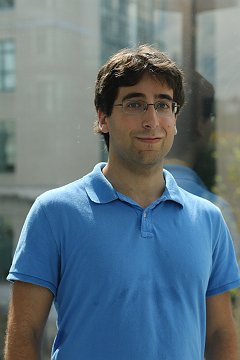
Stefan K. Muller is the Gladwin Development Chair Assistant Professor in the Computer Science Department at Illinois Institute of Technology. He previously served as a Postdoctoral Researcher at Carnegie Mellon University from 2018-2020 following completion of his PhD there under advisor Umut A. Acar. His academic journey began with an AB from Harvard University in 2012 under Stephen Chong. Dr. Muller's research centers on programming language techniques to improve correctness and efficiency of software, particularly in parallel computing domains. His work spans language and type system design, static resource analysis, and parallel computing methodologies. He leads the Responsive Parallelism research project which extends implicit parallelism models to handle features of consumer software like user interaction and responsiveness requirements. His publication record shows consistent output in top-tier venues including PLDI, POPL, ICFP, and SPAA, with recent work focusing on graph types, responsive parallelism, and resource-aware GPU programming. His research has been supported by NSF grant CCF-2107289. Current advisees include Marelle León (BS), Godha Pallavi Bhogadi (MS), and Alex Friedman (PhD) Former students have gone on to positions at Apple, Amazon, Bloomberg, American Express, and PhD programs at UPenn Teaching responsibilities at Illinois Tech include graduate courses CS534 (Types and Programming Languages), CS536 (Science of Programming), CS440 (Programming Languages and Translators), and CS443 (Compiler Construction). Previously at CMU, he taught Principles of Functional Programming.
Michael L. Scott is the Arthur Gould Yates Professor of Engineering in the Department of Computer Science at the University of Rochester's Hajim School of Engineering and Applied Sciences. He received his Ph.D. from the University of Wisconsin-Madison in 1985 and has been a faculty member at Rochester since 1985, serving as Department Chair multiple times (1996-99, 2007, 2017, 2020-2024). He is a Fellow of the ACM, IEEE, and AAAS, and recipient of numerous awards including the Edsger W. Dijkstra Prize in Distributed Computing. Dr. Scott's research focuses on parallel and distributed systems, with particular expertise in synchronization mechanisms, transactional memory, and persistent memory systems. His work spans theoretical foundations to practical implementations, with numerous influential publications and open-source systems like RSTM and Ralloc. His research has addressed critical challenges in concurrent programming, memory management, and system reliability. His publications show a consistent focus on improving the reliability and performance of concurrent systems, with recent work centered on persistent memory technologies. The trajectory of his research demonstrates a progression from fundamental synchronization algorithms to sophisticated systems addressing modern hardware challenges. His publications span top venues in systems, architecture, and programming languages. His scientific honors include: ACM Fellow (2006) IEEE Fellow (2010) AAAS Fellow Edsger W. Dijkstra Prize in Distributed Computing (2006) University of Rochester's Goergen Award for Teaching (2001) Hajim School Lifetime Achievement Award (2018) IEEE TCCA/HPCA Test of Time Award (2022) Dr. Scott has advised over 25 Ph.D. students who have gone on to successful careers in academia and industry at institutions including Lehigh University, Google, Intel, Facebook, and NVIDIA. His textbook 'Programming Language Pragmatics' is a standard reference in the field, now in its 5th edition. He also co-authored 'Shared-Memory Synchronization,' a comprehensive treatment of the field. He spent the 2014-2015 academic year as a Visiting Scientist at Google. His research group, the Rochester Concurrent Systems Group, has developed numerous influential systems including RSTM (a software transactional memory system), Ralloc (a persistent memory allocator), and Montage (a system for persistent data structures). His work often bridges theoretical correctness with practical performance considerations.
Professor Diomidis Spinellis is a renowned academic in Software Technology at Athens University of Economics and Business (AUEB). He specializes in software engineering practices, code quality, AI ethics, and system architecture. His work bridges theoretical advancements with practical applications in industry, emphasizing reproducibility and empirical methods. Recipient of the IEEE Computer Society's prestigious 'Distinguished Contributor Recognition,' Spinellis is the sole Greek scientist to achieve this honor. His research spans software evolution, security, and open-source ecosystems, with a focus on methodologies like refactoring, static analysis, and debugging strategies. Key research interests include AI-generated content detection, modular data analytics, and incident management systems. His studies often leverage large-scale datasets (e.g., Unix evolution, Linux supercomputing analysis) to uncover patterns in software behavior and development practices. Publications frequently address emerging technologies' societal impacts, such as energy-efficient computing and ethical AI deployment. He advocates for reproducible research through tools like the Alexandria3k framework and contributes to open-source initiatives.
Georgios Styliaras serves as an Associate Professor in the Department of Computer Engineering and Informatics at the University of Patras, where he teaches Informatics I and II courses. His office is located in the Old Building on the 1st floor at G. Seferi 2, with regular office hours Tuesday-Wednesday from 12:00-14:00. His research focuses on Multimedia Systems , Cultural Technology , and Spatial Hypermedia , with particular emphasis on applications in cultural heritage environments. His work bridges computer science with cultural preservation, creating innovative solutions for museums and educational contexts. Analysis of his publication record from 2009-2013 reveals a strong trajectory toward mobile applications for cultural heritage sites, with increasing focus on smartphone-based multimedia services. His research consistently addresses security, trustworthiness, and user experience in digital cultural environments, demonstrating both technical expertise and cultural sensitivity. His scientific contributions include collaborations with researchers like Dimitrios Koukopoulos across multiple publications in journals such as Journal of Educational Multimedia and Hypermedia, Journal of Cultural Heritage, and Electronic Commerce Research.
Prof. Christos Xenakis is a Professor at the Department of Digital Systems of the University of Piraeus, where he has been a faculty member since 2007. He is also the director of the Postgraduate Degree Programme on "Digital Systems Security" and a member of the Systems Security Laboratory at the University of Piraeus. Prof. Xenakis received his B.Sc. in Computer Science in 1993, M.Sc. in Telecommunication and Computer Networks in 1996, and Ph.D. in 2004, all from the Department of Informatics and Telecommunications at the University of Athens. His research interests focus on systems, networks and application security . He has participated in numerous European (ACTS, ESPRIT, IST, AAL, DGHOME, Marie Curie, Horizon2020) and National research programs, coordinating several Horizon2020 projects including CUREX, SealedGRID, INCOGNITO and SECONDO. He has also served as Principal Investigator for Horizon Europe projects like ENTRUST and ERATOSTHENES. Prof. Xenakis has authored over 90 publications in peer-reviewed journals and international conferences, focusing on cybersecurity topics such as blockchain security, smart contracts, self-sovereign identity, adversarial machine learning, smart grid security, cyber insurance, phishing detection, wireless security, and authentication protocols. He has served on editorial boards of several scientific journals including Computers & Security , Computer Communications , and IET Information Security . He is also a member of the steering committee of the European Cyber Security Challenge and leader of the Hellenic Cyber Security Team.
Thomas Spyrou is an Assistant Professor in the Department of Product and Systems Design Engineering at the University of the Aegean. He holds a Physics degree from the National and Kapodistrian University of Athens and a PhD in Decision Support Systems - Artificial Intelligence from the University of the Aegean. His research focuses on Information Systems, Design Methodologies, and Sustainability, with an emphasis on Decision Support Systems, Simulation, and Cybernetics. Key affiliations include the Department of Product and Systems Design Engineering at the University of the Aegean, where he has contributed to curricula development and interdisciplinary projects. His work spans design theory, digital tools for art and sustainability, and systems thinking applied to creative processes. Research interests include Design Support Systems, Biomimetic Service Design, and the integration of tacit knowledge into design frameworks. His recent projects involve tools like DDArtS for street art creation and Spyractable for tangible user interfaces. Over 50 publications highlight his contributions to design, technology, and cybersecurity.
Dr. Christos Antonopoulos is an Associate Professor at the Department of Electrical and Computer Engineering, University of Patras. He holds a Diploma and PhD in Electrical Engineering from the University of Patras (2002, 2008) and has participated in over 16 European research projects (FP5, FP6, FP7, Horizon 2020) and 6 national projects. Research Interests: Wireless Networks Cyberphysical Systems Embedded Software Architecture Internet of Things Cross-Layer Protocols Sensor Networks Technical Expertise: His work involves network simulation, power optimization, and reconfigurable computing. He has published >100 journal/conference papers and 13 book chapters with over 1000 citations.
Professor Dimitra Kaklamani is a distinguished faculty member at the School of Electrical and Computer Engineering at the National Technical University of Athens (NTUA), where she serves as a Professor in the Division of Information Transmission Systems and Material Technology. With over 300 publications to her name, she has established herself as a leading researcher in microwave engineering, wireless communications, and computational electromagnetics, having progressed through academic ranks from Lecturer (1995) to Professor (2009). Her research spans numerous critical areas in electrical engineering: Microwave Theory and Techniques Wireless Communications and MIMO Systems Computational Electromagnetics Object-Oriented and Distributed Computing Security & Privacy in Networked Systems Machine Learning Applications in Telecommunications Professor Kaklamani's research trajectory demonstrates a natural evolution from traditional microwave engineering toward cutting-edge areas like AI-enabled wireless communications and privacy-preserving network architectures. Her recent work (2023-2025) shows particular focus on intelligent metasurfaces for wireless communications, federated learning applications in next-generation networks, and security aspects of 5G/6G systems. This reflects both continuity with her foundational work in computational electromagnetics and adaptation to emerging technological frontiers. She serves as Editor of an international book by Springer-Verlag (2000) in applied Computational Electromagnetics and regularly reviews for IEEE journals, demonstrating her standing in the scholarly community. Her teaching portfolio is equally comprehensive, ranging from foundational courses like Linear Circuits Analysis to advanced topics such as Computational Electromagnetics and Machine Learning in Mobile Computing, reflecting her broad expertise across electrical engineering disciplines.