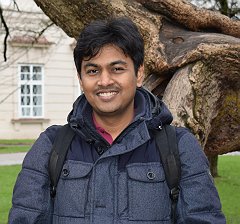
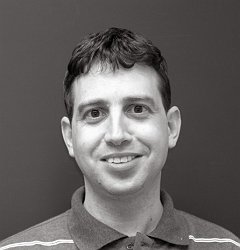
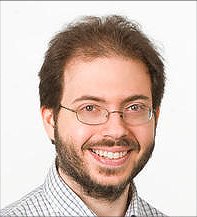
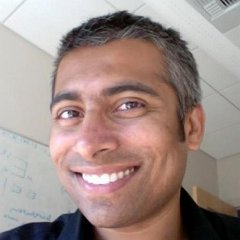
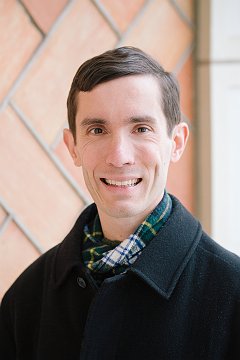
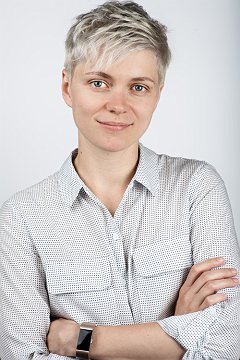
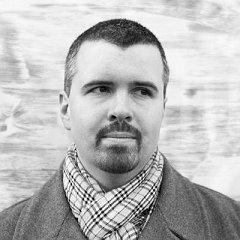
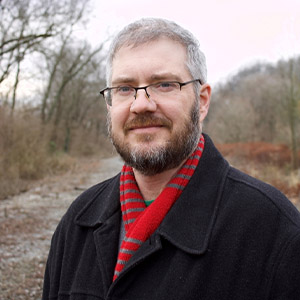
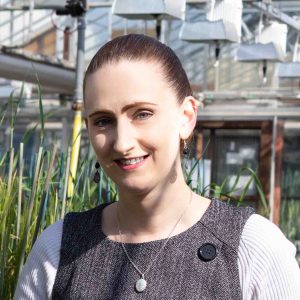
Dr. Mukesh Prasad is an Associate Professor at the School of Computer Science , University of Technology Sydney (UTS). With expertise in Machine Learning , Artificial Intelligence , and Computer Vision , his research addresses applications in healthcare, biomedical science, and smart infrastructure. He holds a Ph.D. in Computer Science from National Chiao Tung University, Taiwan, and an M.S. in Computer and Systems Sciences from Jawaharlal Nehru University, India. Key research areas: Machine Learning, AI, Brain-Computer Interfaces, IoT, and Evolutionary Computation Industry experience: Principal Engineer at TSMC (2016-2017), Postdoctoral Researcher at National Chiao Tung University Dr. Prasad has secured competitive grants for AI applications in disaster response, conversational agents, and medical diagnostics. His work has been published in high-impact venues like IEEE , ACM Transactions , and Springer Nature , with over 200 peer-reviewed papers. He serves on editorial boards for journals including Frontiers in Neurorobotics and ACM Computing Surveys . Scientific Awards: Vice Chancellor Teaching and Learning Citation Award (2019) Alumni Fellowship for Ph.D. (2014) Golden Bamboo NCTU Fellowship (2010) Professional Members: IEEE (2011), ACM (2019)
Jenna DiVincenzo is an Assistant Professor in the Elmore Family School of Electrical and Computer Engineering at Purdue University, where she conducts research at the intersection of programming languages, software engineering, and formal methods. Her work focuses on making verification techniques more usable and scalable for developers. Dr. DiVincenzo earned her PhD in Software Engineering from Carnegie Mellon University in December 2023, where she was co-advised by Dr. Jonathan Aldrich and Dr. Joshua Sunshine. Her dissertation focused on gradual verification technology for recursive heap data structures. She also holds a BS in Mathematics and Computer Science from Youngstown State University. Her primary research area is gradual verification, which seamlessly combines static (compile time) and dynamic (run time) verification techniques to support incremental specification and verification of code. She takes a holistic approach to research, exploring new techniques through mathematical formalizations, user studies, and tool development. Her current projects include gradual verification for Rust, proof synthesis and repair for gradual verifiers, educational impact of gradual verification, evaluating gradual verifiers' soundness, and gradual program analysis. Analysis of her recent publications reveals a strong focus on practical verification techniques that balance developer productivity with software assurance. Her work consistently bridges theoretical foundations with practical implementation, often incorporating empirical evaluation through user studies and performance measurements. She has made significant contributions to understanding how to make verification more incremental and accessible to developers. Google PhD Fellow NSF GRFP Fellow 2022 Rising Star in EECS Dr. DiVincenzo is actively mentoring PhD students in her research group, with recent student achievements including Craig Liu winning first place in the undergraduate category of the SPLASH'24 SRC and Conrad Zimmerman receiving an NSF GRFP award. She previously interned at IBM Research, MIT Lincoln Laboratory, and contributed to language designs for Penrose and Obsidian. Her research has been supported by various grants, though specific current grants aren't detailed in the provided text. Her lab focuses on building practical verification tools, with projects including Gradual C0 (a gradual verifier for recursive heap data structures) and developing gradual verification techniques for Rust. She collaborates with researchers across institutions, including Dr. Lin Tan at Purdue on LLM applications for verification.
Dirk Müller is a Professor of Software Technology/Operating Systems at the Faculty of Computer Science/Mathematics, Dresden University of Applied Sciences (HTW Dresden). He has been in this position since 2016 and is an active member of the Faculty Council since June 2021. He was awarded IEEE Senior Member status in April 2023. His academic journey includes a doctorate in Engineering from the University of Kassel in 2006, habilitation at Chemnitz University of Technology in 2014, and prior research positions at Philipps University of Marburg and Florida State University. 1995-2002: Studies in Medical Informatics at University of Leipzig 2003-2006: Research Assistant/Doctoral Student at University of Kassel 2006-2008: Research Associate at Philipps University of Marburg 2008-2014: Academic Councillor at Chemnitz University of Technology 2014-2016: Private Lecturer at TU Chemnitz 2016-present: Professor at HTW Dresden Professor Müller's research focuses on real-time systems and scheduling, model-driven software development, digitalization in companies and administration, and the concept of information. His work particularly emphasizes Rust language applications in software engineering. He has published extensively on real-time scheduling algorithms, mixed-criticality systems, and embedded systems. His teaching responsibilities include Operating Systems I, Software Engineering I & II, Model-Driven Software Development, and Programming in Rust. His publication record shows a consistent focus on real-time systems, with a clear progression from theoretical scheduling algorithms to practical implementations. His recent work has expanded into public administration digitization and biometric conference systems, while maintaining his core expertise in scheduling theory. The publications demonstrate strong international collaboration, particularly with researchers like Matthias Werner, Alejandro Masrur, and Robert Baumgartl. IEEE Senior Member (2023) Erdős number: max. 4 Strict Erdős number: max. 5 Professor Müller actively supervises student theses, with over a dozen bachelor's and diploma theses completed between 2023-2025. His students work on diverse topics including Rust programming, workflow automation, user experience optimization, and real-time event processing. He serves as a reviewer for multiple prestigious journals including IEEE Transactions on Parallel and Distributed Systems, Real-Time Systems, and The Computer Journal. He also acts as Senior Editor for Computer Science Books at Versita. His laboratory work focuses on practical implementations of real-time systems, often using Raspberry Pi as a platform for traffic analysis and other embedded applications. His research group maintains strong connections with industry, as evidenced by the applied nature of student projects at companies like IntraConnect GmbH.
Prof. Dr. Kerstin Lemke-Rust is a Professor at the Department of Computer Science at Bonn-Rhein-Sieg University of Applied Sciences (H-BRS) and a key member of the Institute for Cyber Security and Privacy (ICSP). Her affiliations include leadership roles in the Gesellschaft für Informatik (GI) and the International Organisation for Cryptologic Research (IACR). Her research spans: Cryptographic algorithm security (side-channel/fault analysis) Blockchain and IoT security Automotive cybersecurity Hardware vulnerability detection She teaches courses in IT Security, Applied Cryptography, and Embedded Systems across bachelor’s and master’s programs. Recent publications (2021-2025) focus on blockchain privacy, side-channel attacks, and hardware security, reflecting her emphasis on real-world cryptographic vulnerabilities. She leads research initiatives at ICSP and collaborates internationally on cybersecurity projects.
Soham Chakraborty is an Assistant Professor at the Programming Languages Group, TU Delft since 2021. He previously served as an Assistant Professor at the CSE Department, IIT Delhi before joining TU Delft. His academic journey includes a PhD from Max Planck Institute for Software Systems (MPI-SWS) in 2019 and a Master's degree from CSE Department, IIT Kharagpur in 2008. Affiliation: TU Delft, IIT Delhi, MPI-SWS Research Interests: Programming Languages, Compilers, Architecture, Verification, Concurrency His research focuses on formal semantics, compiler correctness, architecture-to-architecture translation, and verification of weak memory models. He has contributed to major conferences including POPL, PLDI, CGO, and ASPLOS. His work addresses challenges in heterogeneous concurrency, relaxed memory concurrency, and binary translation for weak memory architectures. Recent works include How Hard is Weak-Memory Testing? (POPL'24) and Toast: A Heterogeneous Memory Management System (PACT'24). He also received the Distinguished Paper Award at DATE'25 and Distinguished Artifact Award at PODC'22 . Teaching: Courses like Concepts of Programming Languages (CS2120), Parallel and Concurrent Programming (CS4555), Compiler Construction (CS4555), Analysis of Concurrent and Distributed Programs (CS4405), Software Fundamentals (Rust), and Seminar Programming Languages (COL 380) Students: PhD student Dennis Sprokholt, MSc students Michal Raczkiewicz, Alexandru Dumitriu, Huixuan Wu, and alumni including Pieter van den Ham, Mingyu Gao, Jeroen Kloppenburg, and others. Service: Served on program committees for POPL, PLDI, CGO, VMCAI, APLAS, and Eurosys workshops.
Dr. Ying Wang is an Associate Professor and Assistant Dean at the Software College of Northeastern University in China, where she also serves as a doctoral supervisor. She received her PhD in Software Engineering from Northeastern University in January 2019 and joined the faculty in February 2019. Her academic career includes a postdoctoral fellowship at the Hong Kong University of Science and Technology (2022-2023) and a visiting scholar position at Microsoft Research Asia (2021) through the StarTrack Program. Her research focuses on dependency management, software ecosystem governance, software refactoring, and software supply chain security. She has made significant contributions to understanding cross-language dependencies, vulnerability propagation across ecosystems, and developing tools for dependency conflict detection and resolution. Her work spans multiple programming language ecosystems including Java, C#, Python, Go, JavaScript, Android, and Rust. Dr. Wang's publication record shows a consistent trajectory of high-impact research in top software engineering conferences (CCF-A level) including ASE, ICSE, ESEC/FSE, and ISSTA. Her recent work increasingly integrates large language models with traditional software engineering techniques, particularly in dependency analysis and software refactoring. The publications demonstrate a strong emphasis on practical tool development with industry applications. Microsoft Research Asia Star Program Scholar (2020) CCF Outstanding Doctoral Dissertation Award nomination (2020) Liaoning Province Outstanding Doctoral Dissertation Award (2021) ACM SIGSOFT Distinguished Paper Award (ICSE 2021 and ESEC/FSE 2023) Multiple CCF ChinaSOFT Software Prototype Competition awards (2020, 2023) OpenHarmony Community Security Governance Contributions (2024, 2025) Dr. Wang actively mentors a large group of graduate students working on various aspects of software engineering, with many graduates securing positions at major technology companies including Huawei, Microsoft, Alibaba, and Tencent. She serves on the editorial board of IEEE Transactions on Software Engineering and has held numerous program committee positions at top software engineering conferences. Her research has strong industry connections, with several tools developed by her team being integrated into commercial platforms at Huawei and Microsoft.
Shachar Itzhaky is an Associate Professor in the Department of Computer Science at Technion - Israel Institute of Technology, Haifa. His research spans multiple areas of programming languages, formal methods, and software engineering, with a focus on making program development and verification more accessible and efficient. He has served on program committees for numerous prestigious conferences including PLDI, POPL, SPLASH, and ICFP. Dr. Itzhaky's research interests center around program synthesis, automated reasoning, and formal verification. His work in program synthesis explores techniques for automatically generating programs from high-level specifications, with applications in end-user programming and software development. In automated reasoning, he has made significant contributions to e-graph based reasoning, invariant inference, and property-directed verification. His research in formal methods focuses on practical applications for program verification, particularly for data structures and security properties. An analysis of his recent publications reveals a strong focus on leveraging advanced formal techniques for practical program understanding and generation. His work consistently bridges theoretical foundations with practical applications, particularly in program synthesis, verification, and end-user programming tools. The trend shows increasing integration of machine learning techniques with traditional formal methods, as well as expanding applications to security and privacy domains. ACM SIGPLAN John C. Reynolds Doctoral Dissertation Award Dr. Itzhaky has been actively involved in the programming languages research community, serving on numerous program committees and contributing to the advancement of formal methods and program synthesis. His work has practical implications for software development tools, security analysis, and end-user programming environments. While specific grant information isn't detailed in the provided text, his extensive publication record in top-tier venues suggests successful funding for his research endeavors. His work on projects like Object Spreadsheets and Lifty demonstrates a commitment to creating practical tools that address real-world programming challenges. Dr. Itzhaky's research is conducted within the vibrant programming languages and formal methods group at Technion's Computer Science department. His work intersects with multiple research threads including program synthesis, verification, and security, suggesting collaboration across these areas within the department. His tools like EPR-based Verification, PDR∀, and VeriCon represent significant technical contributions that likely form the basis of ongoing research projects with students and collaborators.
Derek Dreyer serves as Scientific Director at the Max Planck Institute for Software Systems (MPI-SWS) and holds the position of Honorarprofessor (Honorary Professor) of Computer Science at Saarland University's Saarland Informatics Campus. With a PhD from Carnegie Mellon University, he has established himself as a leading researcher at the intersection of programming language theory and practical software verification. Dreyer's research focuses on developing formal methods that bridge theoretical foundations with real-world systems programming challenges. His work has significantly advanced the theoretical understanding of programming languages, particularly in the areas of type systems, separation logic, and concurrency. He is renowned for his contributions to the formal verification of the Rust programming language, including the influential RustBelt project. His recent publications demonstrate a consistent focus on making formal verification practical for industrial-strength codebases. The research trajectory shows increasing sophistication in handling complex systems properties while maintaining theoretical rigor. His work spans from foundational logical frameworks to applied verification techniques for specific language features and system components. As an academic leader, Dreyer has served as Program Chair for major conferences including POPL and ICFP, and has mentored numerous students and postdocs. He is known for his insightful commentary on academic life, including a widely-read blog post addressing impostor syndrome in research careers. Dreyer leads a vibrant research group at MPI-SWS that collaborates extensively with both academic and industrial partners. His team's work has influenced both theoretical developments in programming languages and practical verification tools used in industry.
Ranjit Jhala is a Professor of Computer Science Engineering in the Jacobs School of Engineering at the University of California, San Diego. His research focuses on building reliable computer systems through programming languages and software engineering techniques. His primary research interests include Programming Languages, Formal Verification, and Software Engineering. He draws from and contributes to areas such as Type Systems, Model Checking, Program Analysis, and Automated Deduction, bridging theoretical foundations with practical implementations for real-world software development. Prof. Jhala's publication record shows a consistent trajectory in refinement type systems, evolving from Liquid Haskell to Flux for Rust, while also exploring neurosymbolic approaches to error repair and type error diagnosis. His work demonstrates a commitment to making formal verification techniques accessible to practitioners. He leads the Programming Systems Group at UCSD, mentoring graduate students and collaborating with researchers across the programming languages community. His service includes General Chair roles for POPL 2018 and PLDI 2022, reflecting his leadership position in the field. Prof. Jhala is also known for his mentoring activities, including talks on academic presentation skills and participation in ICFP's mentoring programs for students and early-career researchers.
Sam Lindley is a Reader in Programming Language Design and Implementation at the Laboratory for Foundations of Computer Science within the School of Informatics at The University of Edinburgh. He holds a prestigious UKRI Future Leaders Fellowship focused on Effect Handler Oriented Programming. His academic career spans multiple institutions including Heriot-Watt University and Imperial College London. His research interests center on programming language theory and implementation, with specific expertise in type systems, effect handlers, session types, and functional programming. Lindley's work bridges theoretical foundations with practical implementation, particularly in compiler design and language semantics. His research has significant implications for language safety, efficiency, and expressiveness. Lindley's publication record demonstrates consistent contributions to top programming languages venues including PLDI, POPL, ICFP, and OOPSLA. His recent work explores modal effect types, scoped effects, and the application of effect handlers to systems programming and WebAssembly. The trend shows increasing focus on practical applications of theoretical concepts in real-world language implementations. Major Awards: UKRI Future Leaders Fellowship in Effect Handler Oriented Programming Lindley has served in significant leadership roles including ICFP 2023 Program Chair and PLDI 2025 Area Chair. He actively participates in the programming languages community through numerous program committees and workshop organization. His research is conducted within the Laboratory for Foundations of Computer Science, a leading center for theoretical computer science research at Edinburgh.
Bryan Parno is the Kavčić-Moura Professor of Electrical & Computer Engineering and Computer Science at Carnegie Mellon University, where he leads the Secure Foundations Lab within CyLab, CMU's Security & Privacy Institute. His research combines theory and practice to provide formal, rigorous security guarantees about concrete systems, with emphasis on creating solid foundations for practical solutions. His research spans secure systems , formal software verification , applied cryptography , data privacy , and usable security . Current work focuses on protocols for verifiable computation and zero-knowledge proofs, building practical formally verified secure systems, and developing next-generation application models. His lab maintains a strong commitment to reproducibility, open-sourcing code under permissive licenses, and avoiding patenting results to maximize public benefit. His recent publications demonstrate a clear trend toward practical verification of real-world systems, particularly through the Verus project for verifying Rust code, Everest for building verified HTTPS stacks, and Ironclad for provably secure systems. These works bridge the gap between theoretical security guarantees and practical implementation, with applications ranging from blockchain protocols to verified cryptographic libraries deployed in the Linux kernel. His scientific achievements include multiple Distinguished Paper/Artifact Awards (USENIX Security, SOSP, PLDI), the IEEE Cybersecurity Award for Practice , the Sloan Fellowship , and the ACM Doctoral Dissertation Award . His work on verifiable computation protocols has influenced blockchain systems, while his research on secure code execution environments contributed to Intel's SGX and TDX technologies. As an advisor, Parno has mentored numerous PhD students including Aymeric Fromherz (recipient of the ACM SIGSAC Doctoral Dissertation Award) and Jay Bosamiya. His lab receives funding from diverse sources including NSF, industry partners, and security foundations. Notably, his work has been incorporated into Windows 8+, iOS 13+, and the Linux kernel. He also serves in leadership roles including Chair of IEEE Computer Society's Technical Committee on Security & Privacy. The Secure Foundations Lab maintains strong industry connections, with alumni joining Microsoft Research, Inria, Northeastern University, and other leading institutions. Recent projects like Verus, Everest, and Ironclad represent the lab's commitment to building end-to-end verified systems that provide rigorous security guarantees while maintaining practical performance.
Nadia Polikarpova is an Associate Professor in the Computer Science and Engineering Department at the University of California, San Diego. She leads the Programming Systems group and serves as a member of IFIP Working Group 2.8 on Functional Programming since 2022. Her academic journey includes a PhD from ETH Zurich (Switzerland) under Bertrand Meyer's supervision in 2014, followed by postdoctoral work at MIT CSAIL with Armando Solar-Lezama. Her research interests center around program synthesis, program verification, and type systems, with a focus on building practical tools that enhance software security and reliability. Polikarpova's work bridges theoretical foundations with real-world applications, particularly in the emerging area of AI-assisted programming. Her recent publications demonstrate a strong trajectory in program synthesis techniques, with increasing integration of machine learning approaches. The research spans from foundational type-driven synthesis methods to practical applications for validating AI-generated code and synthesizing heap-manipulating programs. Her work frequently appears in top-tier programming languages venues including PLDI, POPL, ICFP, and OOPSLA. 2020 Sloan Fellow 2020 Intel Rising Stars Award 2020 NSF CAREER Award Distinguished paper awards at PLDI'21, ICFP'20, and POPL'19 Best paper award at FM'15 Polikarpova actively mentors PhD students and has advised numerous graduates who now work at Microsoft Research, University of Michigan, and various tech companies. She teaches core programming languages courses including CSE 130 and specialized graduate courses on program synthesis (CSE 291). Her service to the community includes program committee roles for major conferences and co-chairing the Haskell conference in 2022.
Ilya Sergey is an Associate Professor at the National University of Singapore (NUS) School of Computing, with previous faculty appointments at University College London (2015-2018). His academic career spans multiple prestigious institutions including IMDEA Software Institute (postdoctoral position) and KU Leuven (PhD). His educational background includes a PhD in Computer Science from KU Leuven (2012), an MSc in Mathematics and Computer Science from Saint Petersburg State University (2008), and professional experience as a software engineer at JetBrains prior to academia. Sergey's research focuses on the intersection of programming language theory and practical software verification, with particular emphasis on concurrent systems , smart contracts , and program synthesis . His work bridges theoretical foundations in type theory and separation logic with practical applications in blockchain technology and Rust programming. He has developed novel techniques for verifying heap-manipulating programs, analyzing commutativity in distributed transactions, and synthesizing correct-by-construction code. Analysis of his recent publications reveals a clear trajectory toward practical verification of blockchain systems and concurrent data structures, with increasing focus on Rust programming language applications. His work demonstrates consistent innovation in mechanized reasoning techniques while maintaining relevance to real-world software challenges, particularly in the domains of smart contracts and distributed systems. Sergey maintains an active research group at NUS, as evidenced by his social media references to lab traditions and student collaborations. He frequently participates in major programming languages conferences as both author and committee member, serving in leadership roles including General Chair for ICFP 2025. His research lab follows distinctive traditions, including location-based Mattermost status updates when traveling. Sergey is deeply engaged with the programming languages community through conference organization, mentoring activities, and outreach initiatives such as nature walks for conference attendees.
Dr. S. Paul O'Hara serves as Associate Professor in the Department of History at Xavier University, where he teaches courses spanning US history from colonial contact to contemporary periods. His contact information includes email oharas@xavier.edu and phone 513-745-3253. Academic credentials include: PhD, Indiana University, Bloomington (2007) BA, University of Minnesota (1997) Professor O'Hara's research program centers on Modern US History with distinctive expertise in Industrialization and Deindustrialization, Immigration and Migration, Folklore and Narrative, and Cultures of capitalism. His scholarship critically examines how cultural narratives construct regional identities in industrial America, particularly through the lens of urban decline in Rust Belt cities. This focus manifests in recurring analyses of Gary, Indiana as both industrial archetype and cultural symbol across multiple publications. His publication record demonstrates consistent scholarly output since 2003, with increasing emphasis on narrative construction in urban history. The 2016 monograph 'Inventing the Pinkertons' represents his most recent major work, extending his analysis of cultural mythology into labor and security history. Teaching responsibilities encompass both survey courses and specialized topics including: Historical Perspectives: Immigration to America Historical Perspectives: Appalachia and the Upland South Civil War and Reconstruction Age of Big Business (1869-1912) America and the Great Depression Sports and Leisure in US History
Professor Diane Saunders leads a research group at the John Innes Centre focused on combating plant pathogens threatening global agriculture, particularly wheat rust fungi. Her lab pioneers genomic approaches to understand host-pathogen interactions and develops surveillance tools like field pathogenomics and MARPLE diagnostics for real-time pathogen tracking. Research interests include: Molecular mechanisms of wheat rust susceptibility/resistance Climate-driven pathogen evolution Wild plant roles in disease cycles Point-of-care diagnostic development International disease surveillance networks Recent publications (2024-2025) demonstrate strong focus on: genomic surveillance platforms, stem rust resurgence drivers in Europe, and global strategies for durable wheat disease resistance, frequently employing cutting-edge sequencing technologies and cross-continental datasets. Advises postgraduate researchers including Rita Domingues Carvalho and Sarah Bailey. Research supported by: BBSRC European Research Council Bill & Melinda Gates Foundation FCDO (Foreign, Commonwealth & Development Office) Leads the Saunders Lab with postdoctoral scientists, research assistants, and students. Founded the Rosalind Franklin Women in Wheat initiative to advance gender equity in agricultural research through mentorship and career development programs.