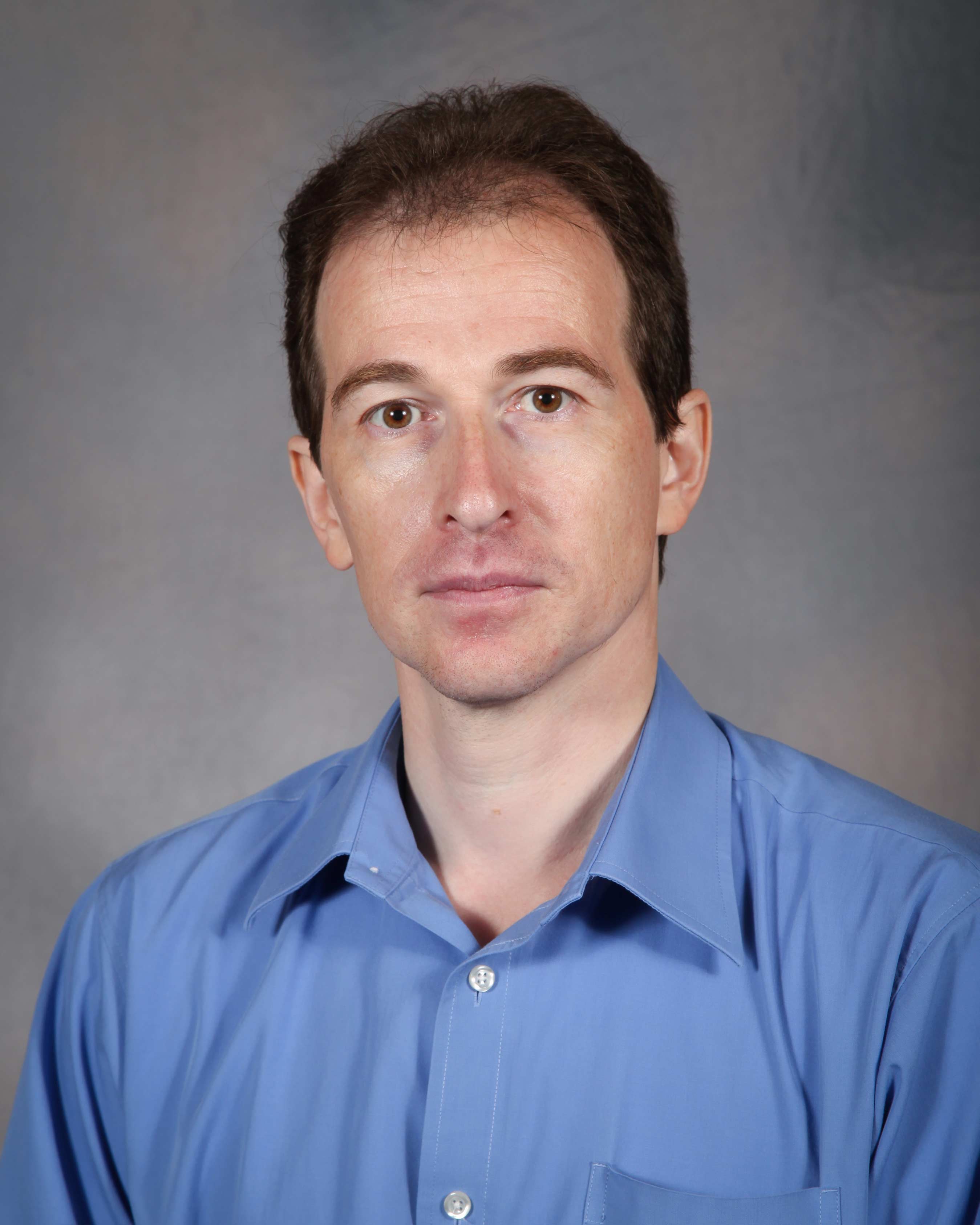
Santiago Torres-Arias is an Assistant Professor at Purdue University, affiliated with the Elmore Family School of Electrical and Computer Engineering . His research spans computer systems security , software supply chain security , and applied cryptography . Campus: West Lafayette, Indianapolis Office: BHEE 324B Contact: santiagotorres@purdue.edu , +1 765-496-6610 Research Interests: Computer systems security Software supply chain security Distributed systems security Applied cryptography Password storage mechanisms Publication Trends: His recent work focuses on software supply chain security , including code signing , provenance mechanisms , and IoT vulnerabilities . Key projects address Sigstore , DevSecOps , and zero-trust dependencies . Scientific Awards: Advising & Grants: No student details provided No grant information listed
Professor Pavel V. Tsvetkov is a faculty member at Texas A&M University , holding the rank of Professor of Nuclear Engineering and serving as the Director of the Graduate Program in Nuclear Engineering . He is also an Affiliated Faculty member of the Multidisciplinary Engineering program . His office is located in the AIEN M205B building, and he can be contacted at tsvetkov@tamu.edu . Educational Background: Ph.D. in Nuclear Engineering, Texas A&M University (2002) M.S. in Theoretical & Experimental Reactor Physics, Moscow State Engineering Physics Institute (1995) Research Interests: Professor Tsvetkov's research spans a wide range of advanced nuclear engineering topics. His primary focus includes system analysis and optimization methods , complex engineered systems , and symbiotic nuclear energy systems . He is deeply involved in waste minimization and sustainability , particularly through the development of high-temperature gas-cooled reactors (HTGRs) and molten salt reactors (MSRs) . His work also explores direct nuclear energy conversion systems and the integration of AI and deep learning into nuclear reactor control and monitoring systems. Research Trends in Publications: Over the past few years, Professor Tsvetkov has published extensively on the application of machine learning and deep learning in nuclear engineering. His recent works focus on autonomous reactor control , reactor dynamics simulation , and remote monitoring systems using satellite data and AI. He has also contributed to the design and analysis of microreactors for space applications and molten salt reactor dynamics . Scientific Awards: George Armistead, Jr ’23 Faculty Excellence Teaching Award Advising and Grants: As Director of the Graduate Program in Nuclear Engineering, Professor Tsvetkov plays a key role in mentoring and advising graduate students. While specific student names are not listed, his leadership in the program and extensive research output suggest active involvement in student research and training. Labs and Teams: Professor Tsvetkov is associated with the Nuclear Power Engineering group at Texas A&M University, contributing to both academic and applied research in nuclear systems design and safety.
Lianne Lefsrud serves as Associate Professor and Risk, Innovation, and Sustainability Chair (RISC) in the Department of Chemical and Materials Engineering at the University of Alberta's Faculty of Engineering. Her interdisciplinary research bridges engineering, social sciences, and policy to transform risk management practices across energy, mining, construction, and railroading industries, directly influencing regulations, building codes, and industry operations for sustainable development. Her academic credentials include: BSc in Civil Engineering (Cooperative Program), University of Alberta (1994) MSc in Interdisciplinary Civil & Environmental Engineering and Sociology, University of Alberta (1996) PhD in Strategic Management and Organization, Alberta School of Business (2014) Dr. Lefsrud's research centers on risk management frameworks for sustainability challenges. She examines hazard identification, social license to operate, and technology adoption drivers in high-hazard industries, with emphasis on prospective risk assessment (e.g., hydrogen infrastructure design) and retrospective analysis (e.g., microplastic pollution impacts). Her work integrates circular economy principles into energy systems while addressing unintended consequences across UN Sustainable Development Goals. Recent publications (2024-2025) demonstrate heavy focus on machine learning applications for rail and construction safety, hydrogen infrastructure risk analysis, and science denial mitigation. Key patterns show cross-industry adaptation of AI for incident prediction, regulatory gap analysis for emerging energy systems, and socio-technical approaches to reconcile sustainability goals with operational realities. Scientific recognition includes: Erb Post-Doctoral Fellowship (University of Michigan) Dow Sustainability Research Fellowship (Ross School of Business) Dr. Lefsrud mentors graduate students through industry-integrated projects like her Sustainable Design course where teams generated patents and city solutions. Her research secures Alberta Innovates funding with 1:4 industrial-to-federal matching, collaborating with Suncor, Transport Canada, and Canadian Standards Association. Grants target practical implementations including railcar inspection systems and hydrogen safety protocols. She co-founded Insight Risk Systems and leads the Lefsrud Lab, prioritizing inclusive teams with under-represented groups (women, Indigenous, LGBTQ2S+, neurodiverse) to tackle 'wicked problems' in sustainability. The lab leverages interdisciplinary partnerships across engineering, computer science, psychology, and environmental sociology for real-world risk management solutions.
Cecilia Marcela Bailliet is a Professor at the Department of Public and International Law of the University of Oslo , where she directs the Masters Program in International Law. She holds a J.D./M.A. (honors) from The George Washington University Law School and Elliott School of International Affairs and a Doctorate in Law from the University of Oslo. Her research focuses on International Law , Human Rights , Refugee Law , Peace , and Counter-Terrorism , with a particular emphasis on gender rights and collective rights . Education: J.D./M.A., The George Washington University Doctorate in Law, University of Oslo Bailliet has authored or edited 14 books, including Research Handbook on International Solidarity and the Law (2024) and Promoting Peace Through International Law (2015). She has published extensively on topics such as: Refugee Law (e.g., gender-based persecution, asylum procedures) Human Rights (e.g., women’s rights, counter-terrorism) Peace Law (e.g., normative foundations, inter-American jurisprudence) Migration (e.g., burden-sharing, asylum-humanitarian protection grey zones) Her work has influenced UN guidelines and inspired the International Solidarity Map . Bailliet has advised international organizations and served on the Academic Review Board of the Cambridge International Law Journal . She co-hosts a series of interviews with international judges and contributes to the Intl Law Grrls Blog as an editor.
Eleanor Goerss serves as a Research Fellow at the Institute of Art History within the Faculty of Humanities at the University of Tübingen, working since 2023 on the DFG-funded project 'History as a Visual Concept: Peter of Poitiers’ Compendium historiae' under Prof. Andrea Worm’s direction. Her position involves reconstructing medieval visual epistemology through manuscript analysis and digital editing methodologies. Her academic foundation includes a PhD in History of Art and Architecture from Harvard University (2016–2023) and a dual BA in Art History and Mathematics from Columbia University (2012–2016). This quantitative-humanistic training informs her analytical approach to medieval diagrammatic systems. Goerss specializes in the visual representation of knowledge in 13th–14th century Europe, with particular focus on Lullian art, genealogical diagrams, and manuscript transmission networks. Her research interrogates how medieval thinkers encoded theological and philosophical concepts through recursive visual structures, examining the interplay between mathematical logic and religious epistemology in diagrammatic forms. This work bridges art history, cognitive science, and medieval studies through rigorous paleographic analysis. Her 2024 publications reveal a cohesive trajectory exploring recursive structures in Lullian figures, manuscript adaptation of dialogue forms, and Peter of Poitiers’ historiographical diagrams. Collectively, these works demonstrate how medieval visual systems functioned as cognitive tools for knowledge organization, with particular attention to the materiality of manuscripts and cross-institutional transmission patterns across European intellectual centers. Her scientific recognition includes: Kress Institutional Fellowship at Institut national d’histoire de l’art, Paris (2021–2023) DAAD Research Grant at University of Freiburg (2019–2020) Frederick Sheldon Traveling Scholar Grant from Harvard University (2019–2020) Certificate of Distinction in Teaching, Harvard University (2018–2019) Art History Senior Thesis Prize, Columbia University (2016) As lead researcher on the DFG project, Goerss directs manuscript digitization efforts and develops analytical frameworks for reconstructing Peter of Poitiers’ genealogical systems. Her grant portfolio demonstrates consistent success in securing competitive funding from German, French, and American institutions, reflecting the international significance of her work. Though no current advisees are documented, her Harvard teaching award indicates pedagogical excellence in undergraduate instruction. She operates within the DFG project team at Tübingen’s Institute of Art History, collaborating with Prof. Andrea Worm on the scholarly edition of Peter of Poitiers’ Compendium. This interdisciplinary team integrates codicology, digital humanities, and historical theology to produce critical editions and visual reconstructions of medieval knowledge systems.
Dr Nicholas Simm is a Principal Research Fellow in the Department of Mathematics at the University of Sussex, affiliated with the School of Mathematical and Physical Sciences. He has been funded by the Royal Society since October 2018 as a University Research Fellow. His research focuses on random matrix theory, probability, and mathematical physics, with applications to areas such as quantum physics and statistical mechanics. Key research interests include orthogonal polynomials, eigenvalue statistics, multiplicative chaos, and Painlevé transcendents. His work bridges pure mathematics and applied problems, leveraging tools from probability theory and integrable systems. Notable publications include studies on asymptotics of orthogonal polynomials, fluctuations in eigenvalues of random matrices, and connections to the Riemann zeta function. His recent work explores high-frequency limits in holomorphic multiplicative chaos and large deviations in elliptic random matrices. Dr Simm has secured grants from the Royal Society and Leverhulme Trust for projects on random matrices, log-correlated fields, and mesoscopic statistics. He collaborates widely, with co-authors including leading researchers in probability and mathematical physics.
Professor Michael Lewis holds the rank of Professor at the University of Bath’s School of Management, Department of Information, Decisions & Operations. His academic career began at the University of Cambridge (PhD, 1995), followed by roles at Warwick Business School (1995–2004) and visiting positions at Harvard Business School and Georgetown University. His research focuses on operations strategy, complex business relationships (including PFI/PPP contracts), and efficiency in public/private service sectors. He co-authored the influential textbook Operations Strategy and leads initiatives like the Cabinet Office/IPA Project Excellence Initiative and Cornell’s Healthy Futures program. His current projects include UKRI’s Secure & Resilient World Hub and green transition research. He advises government on industrial measurement and contributes to policy frameworks through roles like the Chartered Management Institute Advisory Council. Education: PhD in Competence Analysis and Strategy Process from University of Cambridge (1995). Research interests span operations management, supply chain governance, project scale dynamics, and sustainable systems. Recent work examines drone adoption methodologies, conflict resolution in supply chains, and post-crisis trauma recovery in uniformed services. He has supervised 9 students and holds grants totaling £multi-million across 13 projects, emphasizing governance, healthcare innovation, and project delivery excellence. Key affiliations include the Centre for Sustainable Chemical Technologies, Institute of Sustainability & Climate Change, and Institute for Digital Security & Behaviour. His work aligns with UN SDGs related to industry, innovation, and infrastructure. Professional activities include policy fellowships and participation in global expert groups shaping industrial and project management practices.
Kaushik Nagarajan Muthusamy Ragothaman is an Assistant Professor in the Department of Computer Science at the University of Wisconsin-Parkside. His teaching portfolio includes courses such as Operating Systems, Network Security, Cybersecurity Program Planning, and Offensive Security/Threat Management. His research focuses on cybersecurity, IoT security, access control systems, and trusted data processing within information systems. Ragothaman has published works addressing IoT access control dynamics, organizational vulnerability to advanced persistent threats (APTs), and systematic studies of IoT security frameworks. His recent publications emphasize future directions in IoT security policies and paradigm shifts for APT mitigation. He teaches both undergraduate and graduate courses related to computer architecture, programming languages, and security risk management. No scientific awards or grants are explicitly listed in the provided material. His academic contributions are primarily through教学 and research in cybersecurity domains without noted funded projects or lab affiliations mentioned.
Professor Atula Abeysekera is a Professor of Practice in Risk Management at the Department of Civil and Environmental Engineering, Faculty of Engineering, Imperial College London. He holds Honorary Fellow status of the Royal Academy of Engineering and advises government bodies on risk strategies. His career spans 40+ years in global engineering (Mott MacDonald) and financial institutions (Morgan Stanley, Schroders). Education: Graduate of Imperial College London’s Civil Engineering Department. Affiliations include visiting professorship at Universidad de Navarra (Spain), advisory roles at the Institution of Civil Engineers, and membership in the Worshipful Company of International Bankers. He chairs the UK Government’s Industry Steering Group for building safety post-Grenfell and advises on risk culture improvements. Research focuses on extreme risk management, systems resilience, and infrastructure safety. Notable contributions include work on 'Black Swan' risks (unpredictable high-impact events) and innovative funding models for flood defenses. His 2015 book What’s the small idea? explores risk culture in government. Scientific Recognition: Freedom of the City of London (2017), Fellowship by HRH Princess Royal Advisory Roles: Non-Executive Director (Institution of Civil Engineers), Board Member (City & Guilds College Association) Labs/Teams: Active in Imperial’s Centre for Systems Engineering and Innovation. Leads interdisciplinary projects combining engineering, finance, and policy to address systemic risks.
Amritanshu Pandey is an Assistant Professor in Electrical Engineering at the University of Vermont, with a part-time adjunct appointment in Electrical and Computer Engineering at Carnegie Mellon University. His research focuses on enhancing the efficiency, reliability, and security of electric grids through methods in circuit theory, optimization, and machine learning. He pioneered the SUGAR simulation engine for power systems and collaborates globally on grid challenges. Research Interests: Pandey's work spans renewable integration, grid cybersecurity, digital twins, and decarbonization. Key projects include developing algorithms for large-scale grid optimization, anomaly detection, electric vehicle infrastructure modeling, and cyber-resilient energy systems. His research addresses real-world challenges in rapidly evolving grids across Asia and Africa. Awards: Best Paper Award, IEEE PES General Meeting (2017, 2021) Best-of-the-Best Paper Award, IEEE PES General Meeting (2021) Best Student Paper Runner-up, ECML-PKDD (2018) Students & Labs: He advises 7 PhD students and has graduated 11 advisees (PhD/MS/BS). His lab focuses on power systems innovation, including the SUGAR simulation framework and projects on grid cybersecurity and sustainable electrification.
Frank E. Curtis is a Professor in the Department of Industrial and Systems Engineering at Lehigh University, where he has been since 2009. He holds a B.S. in Mathematics and Computer Science from the College of William and Mary (2003), an M.S. and Ph.D. in Industrial Engineering from Northwestern University (2004 and 2007), and completed a postdoctoral fellowship at New York University’s Courant Institute (2007–2009). His research focuses on developing numerical methods for large-scale nonlinear optimization, with applications in machine learning, operations research, and energy systems. Key achievements include the 2021 SIAM/MOS Lagrange Prize for Continuous Optimization (with Bottou and Nocedal) and the 2018 INFORMS Computing Society Prize (with Burke, Lewis, and Overton). He has secured significant funding from the NSF, DoE, and ONR, including a TRIPODS grant and ARPA-E awards. His work on the ARPA-E Grid Optimization Competition earned second place in 2020. Curtis’s research interests span mathematical optimization, numerical analysis, and algorithm design. His recent articles emphasize stochastic optimization, fairness in machine learning, and robust algorithm development for constrained systems. He serves as an Area Editor for Mathematics of Operations Research and Associate Editor for multiple top journals, including Mathematical Programming and SIAM Journal on Optimization . Notable grants include DoE ASCR Early Career Awards and NSF TRIPODS funding for collaborative projects with Northwestern, Boston University, and Cornell. His OptML @ Lehigh team develops cutting-edge optimization tools and frameworks for real-world applications.
Luis Nunes Vicente is the Timothy J. Wilmott '80 Endowed Faculty Professor and Chair of Lehigh University's Department of Industrial and Systems Engineering since August 2018. He previously served as a faculty member at the University of Coimbra's Department of Mathematics. His research focuses on Continuous Optimization, Computational Science and Engineering, and Machine Learning/Data Science. Education: Ph.D. in Applied Mathematics (Rice University, 1996), M.A. in Applied Mathematics (Rice University, 1994), B.S. in Mathematics and Operations Research (University of Coimbra, 1990). Honors include the Lagrange Prize (2015), SIAM Fellowship (2024), and Fulbright Scholarship (1996). He co-authored the influential book Introduction to Derivative-Free Optimization (2009). Research Interests: Development of optimization algorithms for derivative-free and stochastic scenarios, multi-objective optimization, machine learning applications, and computational methods for engineering problems. Key contributions include trust-region methods, bilevel optimization frameworks, and fairness-aware machine learning models. Grants and Leadership: Secured over $1M from the Office of Naval Research (2024) and the Air Force Office of Scientific Research (2023). Served as Editor-in-Chief of Portugaliae Mathematica (2013–2018) and on editorial boards of top journals like SIAM Journal on Optimization . Elected President of the Operations Research Association of Chairs (2024). Visiting Positions: IBM T.J. Watson Research Center (2002/2003), Courant Institute/NYU (2009/2010), and CERFACS/Toulouse (2010–2015). Active in international conferences, delivering plenary lectures at 13th French-German Conference on Optimization, ICCOPT III, and ISMP 2018.
Ken Duffy is a Professor and Chair of the Department of Mathematics at Northeastern University, with a joint appointment in the Department of Electrical and Computer Engineering. He joined Northeastern in 2023 and previously served as Interim Chair of the latter department. Previously, he was a professor at the National University of Ireland, Maynooth, where he directed the Hamilton Institute (2016–2022) and co-directed the Science Foundation Ireland Centre for Research Training in Foundations of Data Science. He earned a PhD in Mathematics from Trinity College Dublin. His research focuses on collaborative, multi-disciplinary algorithm design using probability and statistics, with applications in digital circuits, DNA, and network coding. Notable contributions include the Royal Statistical Society’s Applied Probability Section (co-founded in 2011) and numerous award-winning papers in IEEE conferences and journals. Recent work emphasizes decoding algorithms like GRAND (Guessing Random Additive Noise Decoding), applied to error correction, wireless systems, and biomedical imaging. His articles address topics like soft-output decoding, interference mitigation, and cellular lineage tracing. Awards: Best Paper Awards (IEEE ICC 2015, IEEE TNSE 2019), COMSNETS Best Demo (2022–2023), and the IEEE Ellersick Award (2024). Advising: The SFI Centre he co-directed funded over 120 PhD students. Labs/Teams: Hamilton Institute, Royal Statistical Society’s Applied Probability Section, and collaborative projects in cellular dynamics and secure communication.
Prof. Dr. Tobias Brandt serves as a Full Professor and Chair of Digital Innovation and the Public Sector at the University of Münster's School of Business and Economics. His academic journey includes roles as Assistant Professor at Rotterdam School of Management (2016-2021) and Research Assistant at the University of Freiburg (2011-2015). He co-founded Geospin GmbH in 2016 and holds memberships in VHB, INFORMS, and AIS. Research Interests: Brandt focuses on digital innovation in public sectors, sustainable urban systems, e-government, and platform ecosystems. His work bridges information systems and operational research to address challenges in mobility, energy, and public service delivery. Recent projects include developing tools for sustainable urban planning, digital platforms for elderly care, and leveraging AI for crisis management. Notable Projects: Current initiatives include the PIONEER II Master's program on public innovation, SMARD-Gov (LLMs for government decision-making), and comuneo (digital sustainability management platform). Completed projects include INNO4S (integrating sustainability in business education) and studies on pandemic-driven digitalization in public administration. Awards: RSM Teaching Award (2020), Daniel H. Wagner Prize (2020), IBM Faculty Award (2016). Grants: €5M+ secured from EU Erasmus+, DFG, and German Federal Ministry of Research. Labs/Teams: Leads the Chair of Digital Innovation & Public Sector, collaborating with ERCIS (European Research Center for Information Systems). Active in GovTech and digital sustainability initiatives.
Mame Bigué GNINGUE is an Associate Professor in Supply Chain Management at EM Normandie since 2011. She holds a PhD in Management Science (2011) from the University of Le Havre-Normandie, focusing on security risk management in global cargo transportation. Her research emphasizes supply chain resilience, risk assessment frameworks, and sustainability in logistics operations. She teaches subjects including Logistics, Supply Chain Management, and Risk Management. Her academic work spans port performance measurement systems, stakeholder theory applications, and digital transformation impacts on supply chain vulnerability. Key contributions include integrating FMEA and HACCP methodologies for cargo security and developing expert systems for container transport security. She actively participates in international conferences such as LOGISTIQUA, ICBME, and IEEE GOL, addressing topics like Industry 4.0 challenges and humanitarian supply chain practices. No scientific awards are explicitly mentioned in the text. Her professional experience includes roles in industrial operations management prior to her academic career. Research focuses on bridging theoretical risk models with practical industry applications, particularly in multinational logistics contexts.