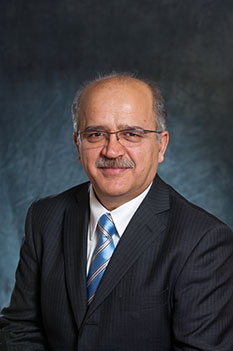
Dr. Ali Ghorbani is a Professor and Tier 1 Canada Research Chair in Cybersecurity at the University of New Brunswick's Faculty of Computer Science, where he served as Dean from 2008-2017. He is the founding Director of the Canadian Institute for Cybersecurity (CIC), established in 2016. Ghorbani holds BSc (Tehran), MSc (George Washington University), and PhD (UNB) degrees. With 42+ years in academia, his research spans cybersecurity, machine learning, adaptive systems, and critical infrastructure protection. Ghorbani has co-founded three cybersecurity startups (Sentrant Security, EyesOver Technologies, Cydarien Security) and co-invented four awarded patents. He has published 300+ peer-reviewed papers and supervised 250+ researchers. Professional roles include co-founding the National Cybersecurity Consortium (NCC) and serving as co-editor-in-chief of Computational Intelligence journal. Awards & Honors: Canada Research Chair in Cybersecurity Startup Canada Senior Entrepreneur Award (2017) RBC Top 25 Canadian Immigrants (2019) CAIAC Lifetime Achievement Award (2024)
Dr Adam Barwell is a Lecturer and Researcher at the School of Computer Science, University of St Andrews. His research focuses on parallel programming, dependently typed languages, and formal methods in concurrent systems. He advises PhD student Leonid Nosovitskiy and has contributed to projects involving session types, distributed systems, and type-safe refactoring techniques. His educational background includes a PhD (not explicitly detailed here), and he actively engages in academic activities such as organizing events like Doors Open @ Computer Science 2025. Key research themes include concurrency control, functional programming paradigms, and improving code security through dependent types. Recent publications emphasize advancements in parallel language design, fault-tolerant protocols, and type-driven development. Collaborations span international conferences and institutions, reflecting his contributions to both theoretical and applied computer science domains.
Ross Horne is a Senior Lecturer in the Department of Computer & Information Sciences at the University of Strathclyde, Glasgow, United Kingdom. He is a member of the StrathCyber and Mathematically Structured Programming research groups. Education: PhD (University of Southampton, 2012), BA (Oxford University, 2005) Prior Appointments: Research Fellow at University of Luxembourg (2018-2023), Senior Research Fellow at Nanyang Technological University (2015-2018), Associate Professor at Kazakh-British Technical University (2012-2015) Research Interests: Dr. Horne's work focuses on security and privacy protocols for digital systems, particularly addressing threats in payment technologies, ePassports, and decentralized identity management (e.g., Solid protocol). His theoretical contributions bridge concurrency theory, proof theory, and logic through applications to security verification and process calculi. Developed formal models for unlinkability in EMV payment protocols Created intuitionistic logical frameworks for process equivalence Explored graphical proof systems beyond formulaic representations Investigated legal-compliant AI for space systems (CubeSat anomaly detection) Scientific Contributions: He has published extensively in top venues including ACM CCS, IEEE CSF, LICS, and CONCUR. His 2017 CONCUR best paper introduced intuitionistic characterizations of bisimilarity. Principal Investigator for EU COST Action on Distributed Knowledge Graphs Co-developed privacy models adopted in Luxembourg parliamentary responses Advising: Currently accepting PhD students with strong mathematical and computer science skills for research in security/privacy of emerging systems. Former student Semen Yurkov completed a thesis on privacy-preserving smart card payments. Interdisciplinary Work: Collaborates with space lawyers through the Interdisciplinary Master Program in Space Resources. Projects include AI for CubeSat reliability and legal-compliant software certification frameworks.
Rafail Ostrovsky is a Distinguished Professor of Computer Science and Mathematics (by courtesy) at UCLA's Henry Samueli School of Engineering and Applied Science. He holds the Norman E. Friedman Chair in Knowledge Sciences and serves as Director of the Center for Information and Computation Security. With over 350 refereed publications and 15 issued USPTO patents, he is one of the most influential researchers in theoretical computer science and cryptography. Professor Ostrovsky's research spans cryptography, network algorithms, and search and classification of large-scale, high-dimensional data. His work focuses on foundational aspects of secure computation including zero-knowledge proofs, secure multi-party computation, private information retrieval, and privacy-preserving data analysis. His contributions to streaming algorithms, metric embedding, and clustering for high-dimensional data have established important theoretical frameworks with practical applications. He has pioneered techniques for secure computation that maintain privacy while enabling collaborative data analysis. His recent publications demonstrate continued leadership in advancing secure computation protocols, with emphasis on efficiency improvements, practical implementations, and novel applications in blockchain technology and distributed systems. His work consistently addresses fundamental theoretical challenges while maintaining relevance to real-world security problems, bridging the gap between theoretical cryptography and practical security solutions. Selected Honors: 1993 Henry Taub Prize 2017 IEEE Computer Society Edward J. McCluskey Technical Achievement Award 2018 RSA Award for Excellence in Mathematics 2022 W. Wallace McDowell Award (the highest award given by the IEEE Computer Society) Professor Ostrovsky has served in significant leadership roles including chair of the IEEE Technical Committee on Mathematical Foundations of Computing (2015-2018) and chair of the IEEE FOCS 2011 Program Committee. He has served on over 40 international conference program committees and currently serves on the editorial boards of the Journal of ACM and Algorithmica Journal. As a Fellow of the National Academy of Inventors, AAAS, ACM, IEEE, and IACR, and as a foreign member of Academia Europaea, his contributions have been widely recognized across multiple disciplines. He actively teaches advanced courses including Introduction to Cryptography (CS183), Foundations of Cryptography (CS282A/M209A), and Cryptographic Protocols (CS282B/M209B), mentoring the next generation of security researchers while continuing to push the boundaries of secure computation through his research.
Isabel Fortier, PhD , is a Scientist at the Research Institute of the McGill University Health Centre (RI-MUHC) and Assistant Professor in the Department of Medicine , Faculty of Medicine and Health Sciences , McGill University . She specializes in epidemiology , data harmonization , and research data management , focusing on child, youth, and maternal health . Fortier leads the Maelstrom Research Platform , which develops methods and software for data harmonization across interdisciplinary cohort studies. Her research interests include: Retrospective and prospective data harmonization Metadata cataloguing and infrastructure development Collaborative epidemiological research Population health through cohort studies Recent publications highlight her work on harmonization in global initiatives like the Healthy Life Trajectories Initiative and MINDMAP project , addressing challenges in maternal stress, prenatal alcohol exposure, and international data integration. She has secured the OCR-144561/CIHR Canada grant and collaborates with networks such as EUCAN Connect and LifeCycle Project . Fortier’s contributions include open-source tools like Opal and Mica , advancing data dissemination in epidemiology. Scientific Awards: CIHR Grant OCR-144561
Wei-Kai Lin is an Assistant Professor in the Department of Computer Science at the University of Virginia. He holds a Ph.D. from Cornell University and previously worked as a postdoctoral researcher at Northeastern University and CMU, advised by Professors Daniel Wichs and Elaine Shi. His research focuses on cryptography and theoretical computer science, particularly private accesses on big data, oblivious RAM (ORAM), and private information retrieval (PIR). Lin's work has been recognized with the Best Paper Award at STOC 2023 for his breakthrough in doubly efficient PIR and FHE for RAM programs. Lin's education includes a B.S. and M.S. from National Taiwan University, followed by roles as a software engineer and a research assistant at Academia Sinica. He teaches courses such as Introduction to Cryptography (CS 6222) and Cryptography (CS 4501) at UVA. He actively organizes the UVA Theory Seminar, fostering discussions on topics like expander codes, multiplicative weights algorithms, and privacy-preserving techniques. His research interests include cryptographic protocols that minimize computational overhead while ensuring privacy, such as OptORAMa (the first optimal ORAM scheme) and NanoGRAM (garbled RAM with logarithmic overhead). Lin collaborates with industry and academia, addressing challenges in secure computation and privacy in distributed systems.
Jorge Bernal Bernabe is an Associate Professor at the University of Murcia , affiliated with the Faculty of Informatics and the Department of Information and Communication Engineering . He holds a PhD in Computer Science from the University of Murcia (2015), focusing on 'Authorization and Trust Management in Distributed Systems Based on the Semantic Web.' His research group, Intelligent Systems and Telematics , explores cutting-edge cybersecurity solutions for IoT, 5G/6G networks, and privacy-preserving technologies. He is a key contributor to frameworks like OLYMPUS (privacy-aware identity management) and ARIES (European identity ecosystem). Education : PhD in Computer Science, University of Murcia (2015) Research Interests : His work centers on securing next-generation networks (e.g., 5G/6G), IoT privacy, federated learning applications for intrusion detection, blockchain-based identity systems, and policy-driven security enforcement. He emphasizes privacy-by-design principles and explores challenges in digital sovereignty and decentralized governance. Notable Projects : OLYMPUS: Oblivious identity management system ARIES: Pan-European identity framework ANASTACIA: Security agents for CPS/IoT INSPIRE-5Gplus: Cognitive security for 5G networks Labs/Teams : Active in the Intelligent Systems and Telematics Group , collaborating with industry partners on secure IoT deployments and 5G cybersecurity solutions.
Seth Gilbert is the Dean's Chair Associate Professor and Head of the Department of Computer Science at the National University of Singapore. His research focuses on designing robust, scalable algorithms for large-scale distributed systems, particularly in the domains of Byzantine agreement, dynamic networks, and contention resolution. He holds a PhD from MIT (advised by Nancy Lynch) and completed a postdoc at EPFL under Rachid Guerraoui. His work emphasizes three core techniques: accountability (identifying network failures), work-sharing (task distribution in asynchronous environments), and contention resolution (efficient resource allocation). Notable contributions include the DConstructor (PODC 2020) and Polygraph (ICDCS 2021) protocols for accountable Byzantine agreement. He has received multiple awards, including the Edsger W. Dijkstra Prize (2021) and Best Paper Awards at DISC, ICDCS, and IPDPS. Prof. Gilbert has served as program chair for DISC 2021, OPODIS 2019, and SPAA 2016, and currently chairs the DISC Steering Committee. His career includes industry experience at Microsoft (Visual Studio team) and early work on solar car engineering at Yale University.
Esther Hänggi is a Professor and Co-Head of the Applied Cyber Security Research Lab at Lucerne University of Applied Sciences and Arts (HSLU), within the Lucerne School of Computer Science and Information Technology. She holds a Dr. sc. ETH Zurich in quantum information and cryptography and a MSc in Physics from EPF Lausanne. Her research focuses on cyber security, quantum cryptography, and quantum computing, with emphasis on practical applications like quantum-safe cryptography and post-quantum algorithms. She has led projects such as the Quantum-safe Hardware Security Module and contributed to initiatives like the IFZ FinTech. Her work bridges theoretical advancements and real-world implementations, including privacy amplification libraries and quantum key distribution systems. Notable awards include the ETH Medal for her doctoral thesis. She actively collaborates with institutions like the Swiss Quantum Initiative and the European Cyber Security Organisation, promoting quantum resilience in security systems.
Bernardo Machado David is an Associate Professor at the IT University of Copenhagen (ITU) within the Theoretical Computer Science department and a member of the Center for Information Security and Trust. Previously, he was an Assistant Professor at Tokyo Institute of Technology (2017–2018) and completed his Ph.D. in Computer Science at Aarhus University (2013–2017) under Ivan Damgård and Jesper Buus Nielsen. His research focuses on cryptography and information theory, particularly secure multiparty computation (MPC), blockchain technologies, and privacy-preserving protocols. He has held visiting positions at NTT Secure Platform Laboratories and Bar Ilan University’s Cryptography Group. Educational Background: Ph.D. in Computer Science, Aarhus University (2017) Visiting Researcher at NTT Secure Platform Laboratories and Bar Ilan University Research Interests: Bernardo’s work bridges theoretical and practical aspects of cryptography, emphasizing MPC protocols, blockchain consensus mechanisms, and privacy-enhancing technologies. Key areas include constructing efficient cryptographic primitives with provable security guarantees, exploring asymptotic limits of protocols, and designing scalable solutions for privacy in decentralized systems. His projects are funded by institutions like the Danish Independent Research Fund (DFF), Concordium Foundation, and Protocol Labs. Recent Research Trends: His publications (2023) highlight advancements in privacy-preserving smart contracts, differential privacy in financial systems, and composable MPC frameworks. He frequently collaborates on blockchain security, time-based cryptographic primitives, and anonymous credential systems. Awards and Grants: Best Paper Awards at SBSEG 2012 and ICoFCS 2011 Principal Investigator for projects like PUMA (Publicly Verifiable MPC), TrA²C (Transaction Anonymity in Cryptocurrencies), and Scalable Proof-of-Stake Blockchain Protocols Advising & Teams: Supervises PhD students (e.g., James Hsin-yu Chiang, Anders Konring) and collaborates with postdocs (e.g., Esra Yeniaras). Leads research groups focused on MPC, blockchain, and privacy-preserving applications. Active in organizing academic events like the Summer School on Privacy-Preserving Machine Learning and workshops at CRYPTO and Eurocrypt. Labs & Collaborations: Engages with industry via roles like Scientific Advisor at Concordium. His work integrates academic rigor with real-world applications, such as privacy-preserving decentralized exchanges and audit-compliant financial systems.
Travis Mayberry is an Assistant Professor in the Cyber Security department at the United States Naval Academy. His research focuses on cryptographic protocols, cloud security, privacy-preserving technologies, homomorphic encryption, and secure voting systems. He holds a PhD in Computer Science from Northeastern University, with a dissertation on practical Oblivious RAM (ORAM) protocols for private data outsourcing. He also contributed to the Scantegrity project at the University of Maryland, Baltimore County, developing end-to-end verifiable voting systems. Key areas of research include privacy in mobile devices, secure communication protocols, and cryptographic mechanisms for data protection. His work has been published in top venues like Privacy Enhancing Technologies Symposium (PETS), Network and Distributed Systems Security Symposium (NDSS), and ACM Computer and Communications Security (CCS). He received a Distinguished Paper Award in 2014 for his research on combining ORAM and PIR for efficient private file retrieval. Mayberry’s publications analyze vulnerabilities in Bluetooth Low Energy protocols, TLS client authentication tracking, and MAC address randomization in mobile devices. He has collaborated extensively on secure voting systems (e.g., Scantegrity) and practical ORAM implementations like ObliviSync and rORAM. His contributions bridge theoretical cryptography with real-world applications in privacy and security.
Prof. Georg Carle is a full Professor in Network Architectures and Network Services at the Technical University of Munich (TUM), affiliated with the TUM School of Computation, Information and Technology. He leads research in Internet technology, focusing on future network architectures, security, and real-time communication. Prior roles include positions at the University of Tübingen and Fraunhofer Institute for Open Communication Systems (FOKUS). Education: Electrical Engineering diploma from University of Stuttgart (1992), Master of Science in Digital Systems (Brunel University, London), and PhD in Telematics from University of Karlsruhe (1996). He held scholarships in complex systems and European Union-funded research at Institut Eurécom. Research Interests: Prof. Carle's work spans network security, sensor networks, autonomous systems, and future Internet protocols. His group develops tools like MoonGen (packet generator) and pos (experiment workflow system). Recent focus includes QUIC protocol analysis, network slicing, and reproducible experimentation frameworks. Key Contributions: Award-winning research includes Applied Networking Research Prizes (2017-2018), Best Paper Awards in IMC/PAM, and innovations in network measurement, security, and programmable data planes. His lab explores cutting-edge topics like post-quantum cryptography, low-latency networking, and 6G automation. Recognition: Honors include ACM SIGCOMM Community Contribution Award, IRTF ANRP, and multiple conference best paper accolades. He advises on network infrastructure for industrial IoT, automotive systems, and secure multiparty computation.
Luisa Siniscalchi is an Assistant Professor (tenure track) in the Department of Applied Mathematics and Computer Science at the Technical University of Denmark (DTU), affiliated with the Cybersecurity Engineering Center and the Center for Quantum Technologies. Her research lies at the intersection of cryptography, cybersecurity, and theoretical computer science. Her research interests focus on secure multiparty computation (MPC) , zero-knowledge proofs , non-malleable and deniable protocols , post-quantum cryptography , and cryptographic primitives . She investigates foundational aspects of secure computation under minimal assumptions, aiming to achieve optimal round complexity and strong security guarantees in both synchronous and asynchronous settings. The recent publications highlight a consistent trend in designing efficient, secure, and practical cryptographic protocols, particularly in MPC and deniable authentication. Her work often appears in top-tier venues such as EUROCRYPT, CRYPTO, and TCC, demonstrating strong theoretical rigor and innovation. Key themes include black-box constructions, post-quantum security, and privacy-preserving mechanisms. Scientific Awards: No awards listed in the provided text. Luisa Siniscalchi is actively supervising PhD students in cutting-edge projects related to proactive post-quantum cryptography, long-term security of protocols, and dynamic graph algorithms. She collaborates with principal investigators such as Claudio Orlandi, Ivan Damgård, and Carsten Baum, indicating integration into major research initiatives at DTU. While specific grants are not detailed, her involvement in multi-year PhD projects suggests active grant funding. Labs and Research Groups: Cybersecurity Engineering Center, DTU Center for Quantum Technologies, DTU Active research in cryptographic protocols and algorithms
Akshayaram Srinivasan is an Assistant Professor in the Department of Computer Science at the University of Toronto and the Department of Mathematical and Computational Sciences at the University of Toronto Mississauga. He is a member of the Theory Group, with a focus on foundational cryptography. Previously, he was at the Tata Institute of Fundamental Research (TIFR) and earned his Ph.D. from UC Berkeley under Prof. Sanjam Garg. His research emphasizes Secure Multiparty Computation, Zero-Knowledge Proofs, and Post-Quantum Cryptography. He has received awards such as the Eurocrypt 2018 Best Paper Award and the Google India Research Award (2022). He teaches courses like Cryptography from Lattices and has advised students including Ziyang Jin and Siddharth Agarwal. He serves on program committees for major cryptography conferences and contributes to cryptographic inference systems like Delphi and Muse.
Mohamed-Lamine Messai is a Professor at Université Lyon 2, France, specializing in cybersecurity, IoT security, and networking. He teaches courses such as Computer Security, Hacking Labs, and Cryptography, and is actively involved in research projects like ROMANCE (knowledge graph modeling for organizational vulnerabilities) and GLADIS (graph-based intrusion detection). His work focuses on key management systems, resource-constrained networks, and AI-driven cybersecurity solutions. He has supervised numerous PhD and master's students, including Abel Oroke, Floribert Katembo, and Sami Bettayeb. His research spans IoT security, blockchain applications, and graph neural networks for threat detection. He frequently presents at international conferences and workshops, including GRASEC, ARES, and IWCMC. Current projects include Federated Learning with Hybrid Encryption for APT detection and autonomous bio-inspired 5G deployment strategies. Key Projects: ROMANCE, GLADIS, CyberSecGraph, DATACAP Teaching: M1/M2 courses in Computer Security, IoT, Networking, and Distributed Computing Lab Affiliations: Involved in L3i lab activities and Open Days at the University of La Rochelle