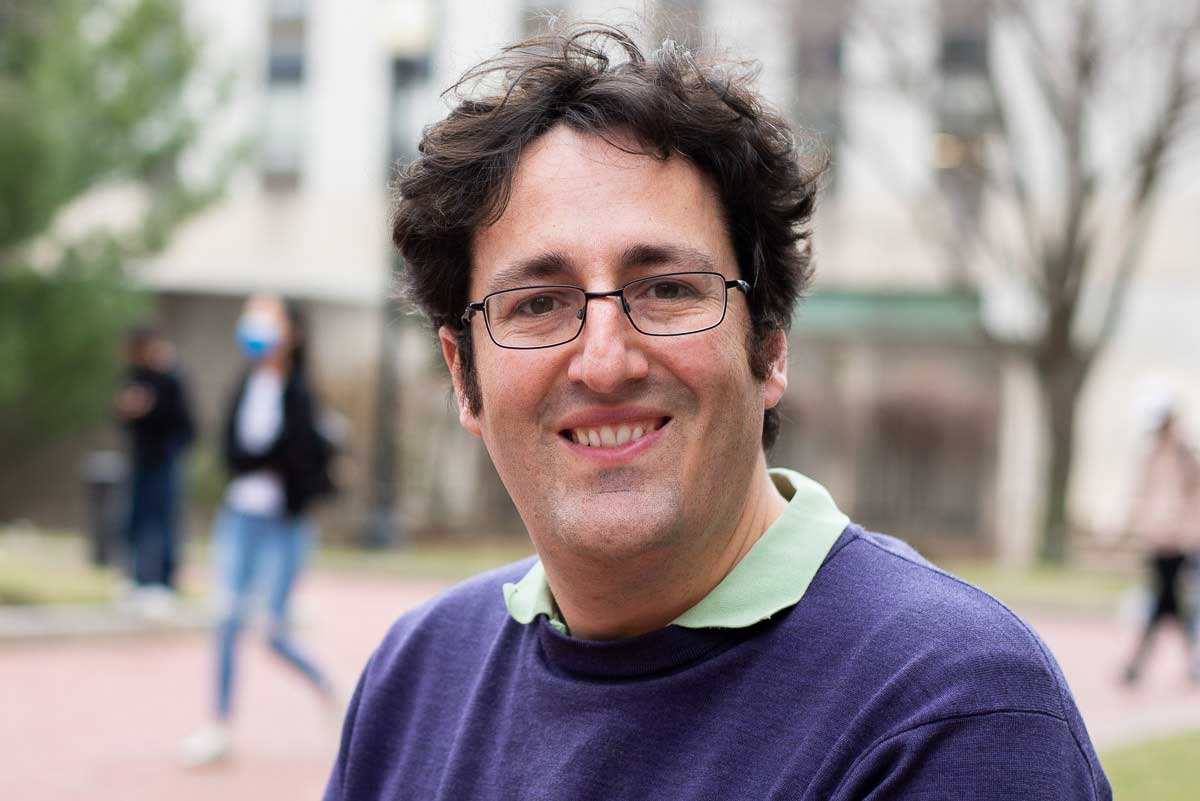
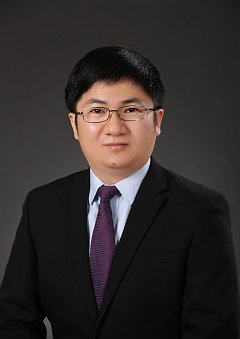
Chunsheng "Sam" Xin is Professor and Department Chair of Computer Science at Iowa State University, having joined in August 2025. He earned his Ph.D. in Computer Science and Engineering from the University at Buffalo in 2002 and is an IEEE Fellow. His research spans three interconnected domains: Cybersecurity : Developing novel protection mechanisms for systems and AI models Artificial Intelligence : Focusing on efficient and privacy-preserving machine learning Next-Generation Wireless : Securing emerging network infrastructures Dr. Xin has secured $18 million across 49 grants from agencies including NSF, NSA, and ONR. His extensive publication record includes over 130 works, a book, and 2 patents. Recent publications focus on privacy-preserving neural networks, secure vehicle localization, and backdoor detection in AI systems. His scientific recognitions include: IEEE Big Data Security Leadership Award Three Best Paper Awards IEEE Fellow distinction He maintains editorial leadership as Co-Editor-in-Chief/Associate Editor for international journals and conference symposium chair roles.
Daniel Wichs is a tenured Professor at the Khoury College of Computer Sciences at Northeastern University in Boston. He is a prominent researcher in the field of cryptography and serves as a Senior Scientist at NTT Research. His academic journey includes a PhD from New York University under Yevgeniy Dodis, a postdoctoral fellowship at IBM Research T.J. Watson, and degrees from Stanford University. Current Position: Professor at Northeastern University Prior Positions: IBM Josef Raviv Memorial Postdoctoral Fellow (2011-2013) Education: PhD NYU (2011), BS/MS Stanford (2005) Professor Wichs specializes in cryptography with research interests spanning computing on encrypted data, program obfuscation, lattice-based cryptography, information-theoretic cryptography, and foundational aspects of cryptography. He also maintains broad interests in computer security, algorithms, complexity theory, coding theory, and information theory. His research group includes current PhD students Manu Kondapaneni, LaKyah Tyner, and Ethan Mook, along with numerous successful alumni who have become professors at institutions worldwide. His recent publications demonstrate a strong focus on advanced cryptographic primitives including homomorphic encryption, zero-knowledge proofs, private information retrieval, and functional encryption. These works frequently appear at top-tier conferences like STOC, FOCS, CRYPTO, and EUROCRYPT, with several receiving best paper awards. His research often bridges theoretical foundations with practical applications in privacy-preserving computation. Best Paper at STOC 2023 Alfred P. Sloan Research Fellowship (2018) NSF CAREER Award (2018) J.P. Morgan Faculty Research Award (2022) IBM Postdoctoral Fellowship (2011-2013) Professor Wichs actively contributes to the academic community through service as Area Chair for CRYPTO 2025 and EUROCRYPT 2024, Program Chair for ITC 2020, General Chair for STOC 2016, and membership on numerous program committees. He teaches advanced courses including Foundations of Cryptography (CS 7810) and Theory of Computation (CS 3800), and has organized events like the Charles River Crypto Day and the Simons Summer Program in Cryptography 2025. His research group operates at the forefront of cryptographic theory, addressing fundamental questions about secure computation on encrypted data while developing practical cryptographic tools for real-world applications.
Dr. Vicente Alarcon-Aquino is a Professor in the Department of Computing, Electronics, and Mechatronics at Universidad de las Americas Puebla (UDLAP), Mexico. He received his Ph.D. and D.I.C. degrees in Electrical and Electronic Engineering from Imperial College London in 2003. He previously served as department head from October 2012 to June 2018 and spent a research stay at King's College London in 2017. Dr. Alarcon-Aquino is a Senior Member of IEEE, a Level I member of the Mexican National System of Researchers (SNI), and a Fellow of the Mexican Academy of Sciences. His educational background includes: Ph.D. and D.I.C. in Electrical and Electronic Engineering, Imperial College London, UK (2003) Dr. Alarcon-Aquino's research focuses on cybersecurity, network monitoring, anomaly detection, wavelet analysis, and machine learning. His work spans theoretical foundations to practical applications in network security, with significant contributions to intrusion detection systems, cryptographic techniques, and machine learning approaches for security applications. He has developed innovative methods combining wavelet transforms with neural networks for various security and signal processing applications. His scholarly contributions include over 180 research articles in refereed journals and conference proceedings, a book on MPLS networks, and numerous citations. As an editor, he serves as Associate Editor for IEEE Access Journal and as Academic & Section Editor for PeerJ Computer Science, focusing on Security & Privacy. Notable professional recognitions include: Senior Member of IEEE Mexican National System of Researchers (SNI Level I) Member of the Mexican Academy of Sciences Dr. Alarcon-Aquino has supervised over 70 theses, including 8 Ph.D. dissertations, 15 Master's theses, and more than 37 Bachelor's theses. His supervision spans topics including network intrusion detection, information security, encryption algorithms, wavelet-based signal processing, neural networks, EEG signal processing, and biometric cryptosystems. He has hosted international research students from institutions including the Polytechnic University of Madrid and Kiel University of Applied Sciences. His research group at UDLAP focuses on developing advanced security solutions for modern network environments, with particular emphasis on applying machine learning techniques to cybersecurity challenges. Current projects include blockchain-based security solutions, federated learning approaches for intrusion detection, and advanced anomaly detection systems for IoT environments.
Nicola Zannone serves as Associate Professor and Chair of the Data Protection research group within the Department of Mathematics and Computer Science at Eindhoven University of Technology (TU/e). He holds a PhD in Computer Science from the University of Trento (2007), where his dissertation focused on security requirements engineering during a research visit to the Center for ... Research Focus: His work centers on cybersecurity with emphasis on data protection, phishing defense mechanisms, and access control systems. Recent investigations explore emerging threats like quishing and LLM-generated phishing attacks, autonomous navigation security, and industrial control system vulnerabilities. His research uniquely bridges technical security solutions with human behavioral factors in organizational contexts. Publication Trends: Between 2024-2025, Zannone's output demonstrates growing attention to AI-powered threats and automated vulnerability mitigation. His systematic reviews and empirical studies consistently address practical security challenges in critical infrastructure and software supply chains, reflecting industry relevance through collaborations with security practitioners. Leadership Roles: As Chief Editor for Computer Security (Frontiers in Computer Science) and Associate Editor for Cybersecurity and Privacy (Frontiers in Big Data), he shapes discourse in security research. His editorial work on topics like "Generative AI for Cybersecurity" highlights forward-looking engagement with evolving threat landscapes.
Dmitry Alekseevich Ilvovsky is an Associate Professor at the Department of Data Analysis and Artificial Intelligence within the Faculty of Computer Science at the National Research University Higher School of Economics (HSE University) in Moscow. He also serves as a Research Fellow at the International Laboratory of Intelligent Systems and Structural Analysis. Having joined HSE in 2011, he has accumulated over 10 years of scientific and teaching experience in the field of computational linguistics and artificial intelligence. Dr. Ilvovsky holds a Candidate of Technical Sciences degree (2017) and a Specialist degree in Applied Mathematics and Computer Science from the Moscow Aviation Institute (2010). His professional interests focus on natural language processing, formal concept analysis, and discourse-based approaches to text analysis. He has made significant contributions to developing methods for detecting disinformation, propaganda, and unreliable information in text data. His recent research demonstrates a clear trend toward integrating discourse structure with deep learning approaches for various NLP tasks. His work spans fact-checking systems, dialogue management, propaganda detection, and text complexity assessment. He has pioneered approaches using discourse trees and structural linguistic information to enhance the performance of language models, particularly in identifying manipulative content and verifying claims against trusted sources like Wikipedia. Gratitude from HSE University (January 2024) Letter of gratitude from the Vice-Rector of HSE (August 2021) Letter of Gratitude from the Faculty of Computer Science at HSE (August 2017) Rector's personal allowance (2016-2017) Academic Work Allowance (2020-2021) Bonus for publication in journal from List A (2023-2026) Bonus for publication in international peer-reviewed journal (2017-2023) Dr. Ilvovsky actively supervises PhD research, notably guiding A. Chernyavskiy's work on models for automatic detection and verification of unreliable information. His teaching portfolio includes courses such as Automatic Text Processing for Bachelor's students and Mentor's Seminar for Master's students. He has also contributed to the development of the International Laboratory of Intelligent Systems and Structural Analysis, where he has worked since 2012, organizing international conferences including the Concept Lattices and Their Applications conference in 2016—the first time it was held in Russia.
陳恭 is a Professor at the Department of Information Management, College of Business, National Chengchi University. With expertise spanning blockchain technology, information security, and software engineering, he has established himself as a leading academic in Taiwan's fintech research community. His work bridges theoretical computer science with practical business applications, particularly in digital finance and secure information systems. Dr. 陳恭 earned his PhD in Computer Science from Yale University (1989-1994), following Bachelor's and Master's degrees from National Taiwan University. His academic journey at National Chengchi University spans over two decades, progressing from Associate Professor to his current position as Professor, with significant administrative roles including Department Chair and Director of the Computer Center. Professor 陳恭's research primarily focuses on blockchain and smart contracts, Open API technology and security, social big data analysis, and programming languages. His work demonstrates a clear evolution from foundational programming language research to cutting-edge blockchain applications. He has made significant contributions to secure multi-party computation, aspect-oriented programming, and blockchain-based systems, with publications in top journals and conferences across computer science, public administration, and business innovation. An analysis of Professor 陳恭's recent publications (2016-2024) reveals a strong concentration on blockchain technology and its financial applications, particularly in smart contracts, consensus algorithms, and secure data dissemination. His research increasingly integrates with IoT systems and demonstrates practical applications in financial technology, showing a clear trajectory from theoretical foundations to real-world business solutions. His notable achievements include: Senior Excellent Teacher (20 years) from National Chengchi University Multiple Distinguished Professor appointments Special Outstanding Talent Award from the National Science Council Multiple Internationalization Excellent Research Awards Professor 陳恭 has secured numerous research grants from both governmental agencies like the Ministry of Science and Technology and private sector organizations including financial institutions and technology companies. His projects often focus on blockchain applications, fintech innovation, and information security, demonstrating strong industry-academia collaboration. He is actively involved in establishing National Chengchi University as a leading center for blockchain research in Taiwan, contributing to research centers focused on fintech innovation and digital transformation. His work has fostered significant collaborations between academia and industry in the rapidly evolving field of digital finance.
Carla Silva Gonçalves is a Postdoctoral Researcher at the Centre for Power and Energy Systems, INESC TEC, Portugal. She holds a Ph.D. (2021) and M.Sc. (2015) in Applied Mathematics from the Faculty of Sciences of the University of Porto (FCUP), and previously served as an Invited Auxiliary Professor at the University of Porto for two semesters. Education: Ph.D. in Applied Mathematics, FCUP, 2021 M.Sc. in Applied Mathematics, FCUP, 2015 Her research pioneers probabilistic and collaborative forecasting methods for renewable energy systems, with critical innovations in data privacy preservation and monetization frameworks. She develops incentive mechanisms to overcome data-sharing barriers in energy forecasting through auction-based markets and blockchain architectures. Recent publications reveal a cohesive trajectory toward privacy-aware collaborative forecasting, emphasizing blockchain-integrated data markets and interpretable regression models. Her work bridges theoretical advances in spline LASSO methods with practical industry applications in wind and solar forecasting, published in Q1 journals like IEEE Transactions on Sustainable Energy. Advising and Projects: Supervised Tiago Guedes Teixeira's 2024 thesis on energy data markets at UP-FCUP H2020 Smart4RES project contributor (until 2022) Current participant in ENERSHARE and GREEN.DAT.AI European projects As core member of INESC TEC's Power and Energy Systems Centre, she maintains active industry collaborations with REN, EDP Renewables, RTE, and EDP Gestão on real-world forecasting implementations.
Chao Zhang is a Tenured Associate Professor at Tsinghua University, specializing in software security, system security, data security, and AI security. He leads the VUL337 research group and serves as the coach of the Blue-Lotus CTF team. His educational background includes a Ph.D. in Computer Science from Peking University (2008-2013), a B.S. in Mathematical Science from Peking University (2004-2008), and a postdoctoral position at UC Berkeley (2013-2016). Dr. Zhang's research focuses on Software Security , System Security , Data and AI Security , Program Analysis , and Vulnerability Discovery . His work spans binary code analysis, fuzzing techniques, blockchain security, and AI security. His recent publications demonstrate a strong emphasis on developing novel frameworks for vulnerability detection, binary code analysis, and securing AI systems against adversarial attacks. His publication trends show a consistent focus on practical security solutions with increasing attention to AI security challenges. Over the past decade, he has published extensively in top security conferences including IEEE S&P, USENIX Security, CCS, NDSS, and ISSTA, with a significant acceleration in publications since 2020. Tencent CSS TSec Professional Prize (2nd place, 2019) Tencent CSS TSec Breakthrough Prize (1st place, 2018) DARPA Cyber Grand Challenge CFE, 2nd in exploiting (2016) DARPA Cyber Grand Challenge CQE, 1st in defense (2015) Microsoft BlueHat Prize Contest's Special Recognition Award (2012) 5th place in Defcon CTF 2017 2nd place in Defcon CTF 2016 5th place in Defcon CTF 2015 Dr. Zhang leads the VUL337 research group at Tsinghua University, which focuses on vulnerability discovery and security analysis. He also serves as the coach of the Blue-Lotus CTF team and is a member of the V group of LiST. His research has received significant attention in the security community, with numerous publications in top-tier security venues and practical contributions to vulnerability discovery and mitigation techniques.
Prof. Dr.-Ing. Dirk Roos is a Professor for Computersimulation und Design Optimization at the Department of Mechanical Engineering and Process Engineering, Niederrhein University of Applied Sciences, where he has served since March 2011. He is also the Head of the Institute for Modeling and High Performance Computing (IMH) since December 2016. His academic career includes previous positions as Head of Robust Design Optimization at DYNARDO Dynamic Software and Engineering GmbH (2002-2011) and Technical Solutions Specialist at CADFEM GmbH (2000-2008). Prof. Roos specializes in machine learning, robust design optimization, stochastic analysis, and probabilistic modeling for virtual product development. His research focuses on developing mathematical methods for stochastic structural and fluid simulation, robustness and reliability analysis, multidisciplinary optimization, and software development for complex system development. He has established strong collaborations with academic institutions including RWTH Aachen, Ruhr-Universität Bochum, and industrial partners like Siemens AG and Robert Bosch GmbH. His recent work explores Probabilistic Intelligence, cyber-physical systems, digital twins, and Big Data Analysis, with applications spanning power plant flexibility, renewable energy, turbomachinery, automotive, aerospace, and medical technology. Prof. Roos has successfully secured numerous third-party funded research projects totaling over 1.8 million euros, including collaborations with Siemens AG, Robert Bosch GmbH, and various universities. optiSLang Award 2012 Weimar Optimization and Stochastic Days Gutachter BMBF im Programm FH-Kooperativ since 2019 Mitglied des Scientific Committee International Probabilistic Workshop since 2017 Mitgliedschaft im Graduierteninstitut für angewandte Forschung der Fachhochschule in NRW since 2017 Prof. Roos supervises multiple doctoral students and has successfully completed several cooperative PhD projects. His current research projects include AI-driven optimization for medical care, reinforcement learning for emergency room planning, and machine learning algorithms for power plant component lifetime prediction. The Institute for Modeling and High Performance Computing (IMH) under his leadership develops mathematical methods and software competence in machine learning and CAE-based robust design optimization for virtual product development.
Dr. Gregor Wiedemann serves as a Senior Researcher in Computational Social Science at the Leibniz Institute for Media Research (Hans Bredow Institute) since September 2020, co-heading the Media Research Methods Lab (MRML) with Sascha Hölig. His work bridges computer science and social sciences through methodological innovation in empirical media research. Wiedemann holds a doctorate in computer science from Leipzig University (2016), where his dissertation focused on automating discourse analysis using text mining and machine learning. His educational background combines political science and computer science studies at Leipzig University and the University of Miami, followed by postdoctoral work in Language Technology at the University of Hamburg under Prof. Chris Biemann. His research centers on natural language processing and text mining applications for social and media analysis, with significant contributions in hate speech detection, argument mining, and cross-platform misinformation tracking. Recent work demonstrates a strategic shift toward building research infrastructures for sensitive data handling, including the Community Data Trust model for extremism research and the Social Media Observatory open-science platform. His methodology development specifically targets unsupervised information extraction from large document corpora to support investigative journalism and social science inquiry. Wiedemann's publication trends reveal deepening specialization in computational infrastructure development, with 7 of his 11 most recent works (2024-2025) focusing on data trust frameworks, cross-platform methodologies, and AI-driven analysis systems. His projects consistently intersect computational linguistics with pressing social issues including election integrity, climate discourse, and child safety in digital spaces. He has secured major funding through the German Research Foundation (DFG) for the FAME project on argument mining and evaluation, and leads collaborative initiatives including NOTORIOUS (mis- and disinformation tracking) and ComAI (communicative AI impact studies). His work with state media authorities on family influencing content demonstrates applied policy relevance. As co-director of the Media Research Methods Lab, Wiedemann oversees a dynamic team developing cutting-edge computational approaches for media analysis. The lab functions as an interdisciplinary hub connecting computer scientists with social researchers, with current projects spanning TikTok political campaigning analysis, right-wing extremism data infrastructure, and ethical AI applications in public discourse monitoring.