Jia Liang is a researcher at Henan Polytechnic University's School of Electrical Engineering and Automation, with a focus on Machine Learning , Compressed Sensing , and Privacy-Preserving Techniques . His work bridges Computer Science and Signal Processing , particularly in Radar Imaging and Medical Image Analysis . Key Collaborations: Di Xiao, Ying Luo, Qun Zhang, Hui Huang Technical Expertise: Federated Learning, SAR Imaging, Compressive Sensing, Adversarial Learning His research emphasizes secure data processing in IoT and cloud environments, with recent innovations in cross-disciplinary applications like biosignal analysis for cysticercosis diagnosis . Publications span top venues including IEEE Transactions on Aerospace Systems and Remote Sensing . Notable trends include privacy-preserving machine learning for federated systems and 3D radar imaging of rotating targets, alongside medical imaging solutions for chest radiographs and optical coherence tomography .
Ivan Beschastnikh is an Associate Professor in the Department of Computer Science at the University of British Columbia (UBC), affiliated with the Faculty of Science. He leads research in distributed systems, software engineering, and formal methods, with a focus on privacy-preserving technologies, blockchain systems, and machine learning. His work bridges theoretical foundations and practical system implementations, emphasizing empirical validation and real-world deployment. Research Interests: His primary areas include distributed systems (e.g., consensus algorithms, transaction processing), formal methods for system correctness (e.g., PGo compiler for verified implementations), and privacy in federated learning and blockchain. He also explores interdisciplinary topics like AI ethics, human-computer interaction for developers, and system security. Key Projects: Includes PGo (formal specification to Go compiler), Biscotti (decentralized federated learning), Erlay (Bitcoin transaction relay optimization), and Teleoscope (text corpus analysis tool). His work has practical impact in blockchain scalability, secure multi-party ML, and distributed system validation. Awards: Recognized with the ASPLOS Distinguished Artifact Award, UBC Faculty Teaching Award, and ESEM Best Paper Award. His contributions span academic excellence, pedagogy, and collaborative research. Lab Affiliations: Active in the Systopia Lab and Software Practices Lab (SPL) , and collaborates with UBC’s Data Science Institute and Blockchain@UBC. He emphasizes interdisciplinary research, mentoring students in both theoretical and applied systems work.
Melek Önen is a Full Professor at EURECOM's School of Digital Security, specializing in applied cryptography, cloud security, and privacy-preserving technologies. Her work focuses on cybersecurity challenges in federated learning, big data, and IoT systems. She leads research on secure aggregation techniques, privacy-preserving machine learning, and cryptographic protocols for real-world applications like healthcare. Key research interests include federated learning security, homomorphic encryption, and privacy-aware data analytics. She has developed frameworks such as PAPAYA for privacy-preserving data analytics and UPRISE-IoT for IoT privacy solutions. Her projects often address regulatory compliance (e.g., GDPR) in cloud and distributed systems. Recent research trends show a strong focus on mitigating adversarial attacks in distributed systems, optimizing secure computation efficiency, and balancing privacy with functionality in machine learning. Notable contributions include secure biometric authentication protocols ( Nomadic ), fault-tolerant federated learning systems, and privacy-preserving image analysis methods. Önen collaborates on EU-funded initiatives like TREDISEC (trustworthy cloud security) and PAPAYA , emphasizing practical implementations. She actively contributes to open-source tools like Fed-BioMed for federated healthcare AI. Her work bridges theoretical cryptography with real-world deployment challenges.
Shruti Tople is a Principal Researcher at Microsoft Research in the Azure Research – Security and Privacy group. She holds a Ph.D. from the School of Computing at the National University of Singapore (NUS) , where she received the Dean's Graduate Research Excellence Award . Her work focuses on quantifying and mitigating information leakage in machine learning models while preserving their utility. Key Research Areas include: Systems Security Privacy in Machine Learning Differential Privacy Causal Learning Transfer Learning for Vision & Language Models Recent Publications address challenges such as membership inference attacks, federated backdoor defense, and privacy-enhanced deep learning. Her open-source projects like Analyzing PII Leakage and RobustDG provide practical tools for differential privacy and domain generalization. She collaborates with interns from institutions like NUS , University of Waterloo , and Imperial College London . Scientific Awards : Dean's Graduate Research Excellence Award (NUS)
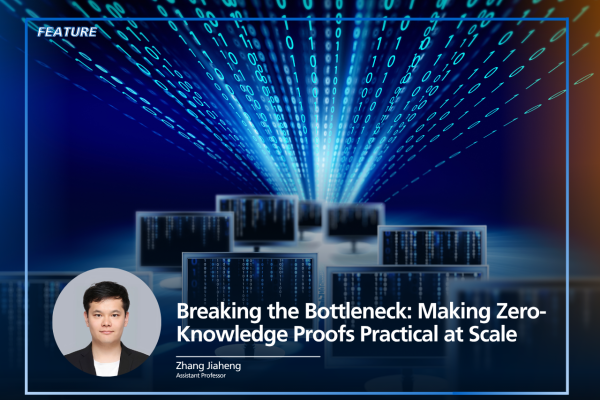
ZHANG Jiaheng is an Assistant Professor in the Department of Computer Science at the National University of Singapore (NUS), School of Computing. His work bridges cryptography, artificial intelligence, and system security, with a focus on scalable and privacy-preserving technologies. He teaches CS3235 – Computer Security and leads research in zero-knowledge proofs, LLM safety, and trustworthy AI. Research Interests: His research spans Cryptography , Security , Machine Learning & AI , Privacy , and Algorithms & Theory . He specializes in making zero-knowledge proofs practical at scale and securing large language models against jailbreaking, backdoors, and privacy leaks. His recent projects include zkGPT, BatchZK, and Guardreasoner, highlighting his dual focus on theoretical foundations and real-world applications. The recent publications show a strong trend toward scalable zero-knowledge systems and AI security , particularly in verifying and protecting LLMs. These works integrate cryptographic rigor with modern AI challenges, reflecting a cohesive research vision at the frontier of trustworthy computing. Scientific Contributions: Developed scalable collaborative zk-SNARKs for efficient proof generation. Pioneered techniques for secure LLM inference and jailbreak detection. Advanced GPU-accelerated and distributed zero-knowledge proof systems. Advising & Grants: While specific students and grants are not listed, his active publication record in top-tier venues suggests ongoing research supervision and external funding in cybersecurity and AI. He is likely involved in advising PhD and Master’s students in cryptography and AI security. Labs & Teams: He is part of the NUS School of Computing research ecosystem, potentially affiliated with cybersecurity or AI labs, contributing to Singapore’s leadership in privacy-preserving technologies.
Associate Professor Kee Siong Ng is affiliated with the School of Computing at the Australian National University (ANU). His research focuses on privacy-preserving technologies, reinforcement learning, distributed systems, and blockchain applications. He has contributed extensively to areas such as privacy-preserving machine learning, federated learning, entity resolution, and scalable database systems. His work emphasizes balancing computational efficiency with privacy guarantees in data-driven environments. Key research contributions include methodologies for secure data processing in federated learning frameworks, privacy-preserving reinforcement learning for population-level systems, and blockchain-based digital identity solutions. He has led projects like Integrated Graph Analytics and contributed to initiatives involving the Australian Medicare dataset. His research often intersects theoretical foundations with practical implementations, addressing challenges in scalability and real-world applicability. Ng has published over 24 peer-reviewed articles, with notable works appearing in venues like IEEE Transactions on Parallel and Distributed Systems and Transactions on Machine Learning Research . His articles frequently explore cutting-edge topics such as differential privacy, approximation algorithms, and multi-agent systems. Collaborations include industry partnerships and interdisciplinary efforts involving health informatics and financial intelligence. His projects include Integrated Graph Analytics (2018–2021): Focused on scalable graph-based data analysis. Translational Fellowship (2018–2022): Bridging theoretical research with practical applications. Research on Data Sets for Health and Pharmaceutical Schemes (2020): Analyzing Medicare and pharmaceutical data with privacy safeguards. Ng's work prioritizes ethical AI and privacy-by-design principles, with a focus on real-world deployment challenges in distributed and federated systems.
Ruzena Bajcsy is the NEC Distinguished Professor of Electrical Engineering and Computer Sciences at UC Berkeley. She founded the GRASP Lab at the University of Pennsylvania and later became the inaugural director of CITRIS, a UC-wide research center. Her work spans robotics, computer vision, medical imaging, and tele-immersion. She holds dual PhDs from Stanford and Slovak Technical University. Education: Ph.D., Computer Science, Stanford University, 1972 Ph.D., Electrical Engineering, Slovak Technical University, 1968 M.S., Electrical Engineering, Slovak Technical University, 1957 Research Interests: Bajcsy’s research focuses on robotics, computer vision, assistive technologies, and tele-immersion. She pioneered the Digital Humanities program at UC Berkeley and developed medical imaging techniques for anatomical analysis. Current work includes kinematic analysis of human movement and assistive devices for mobility. Awards: Benjamin Franklin Medal in Computer and Cognitive Science (2009) IEEE Robotics & Automation Award (2013) Member of National Academy of Engineering and Medicine Grants & Labs: Directed GRASP Lab (1978–2001) and CITRIS (2001–2005). Current labs include the Tele-immersion Lab and collaborations with the CITRIS Health initiative.
Thomas Courtade is an Associate Professor in the Department of Electrical Engineering and Computer Sciences at the University of California, Berkeley. He joined Berkeley in 2014 after a postdoctoral fellowship at Stanford University, supported by the NSF Center for Science of Information. His research focuses on information theory, data science, and their intersections with machine learning and privacy-preserving algorithms. Education: Ph.D. in Electrical Engineering, University of California, Los Angeles (2012) M.Sc. in Electrical Engineering, University of California, Los Angeles (2008) B.Sc. in Electrical Engineering, Michigan Technological University (2007, summa cum laude) Research Interests: Information Theory and its applications to network communication Privacy-preserving data analysis and differential privacy Statistical estimation under heterogeneous privacy constraints Optimization in distributed systems and market design Functional inequalities (Brascamp-Lieb, Poincaré-Korn) Machine learning with emphasis on model robustness and efficiency Awards and Fellowships: Electrical Engineering Award for Outstanding Teaching (2020) Hellman Fellow (2016) Advising and Grants: Supervised no listed students (student names not provided in text) Recipient of NSF CAREER Award (2018) Labs and Collaborations: Berkeley Laboratory for Information and System Sciences (BLISS) Center for Theoretical Foundations of Learning, Inference, and Mathematics (CLIMB)
Timos Antonopoulos is a Research Scientist and Lecturer in the Department of Computer Science at Yale University. He is a member of the Rigorous Software Engineering (ROSE) group, led by Ruzica Piskac. His office is located in Dunham Laboratory (Room 404) at 10 Hillhouse Avenue, New Haven, CT. Antonopoulos's research focuses on formal methods and their applications in security and reliability. Key areas include: Logic and Verification : Developing tools and algebras for relational verification, termination analysis, and program correctness. Cryptography & Privacy : Designing zero-knowledge protocols (e.g., ZKSMT, ppSAT) and privacy-preserving techniques for automated decision-making and model checking. Automated Reasoning : Creating frameworks for intentional behavior analysis, SMT-based oracles, and invariant inference to handle uncertainty and complexity. His recent publications (2020–2024) reflect a strong emphasis on cryptographic code security, zero-knowledge proofs, and formal accountability tools. Trends include scalable privacy protocols (e.g., parallelization of zero-knowledge systems), legal/ethical AI verification (e.g., soid for automated decisions), and novel graph/algebraic methods for secure computation. Antonopoulos collaborates extensively within the ROSE group, contributing to projects involving oblivious algorithms, timing-attack mitigation, and secure multi-party SAT solving. His work bridges theoretical foundations (e.g., automata theory, relational algebra) with practical systems security challenges.
Dr. Muhammed Ali Bingol is a Senior Lecturer in Cyber Security and Programme Leader for the BSc in Computer Networks and Security at De Montfort University, UK, within the School of Computer Science and Informatics, Faculty of Computing, Engineering and Media. He is affiliated with the Cyber Technology Innovations and Digital Future Institute research groups. Education: Ph.D. in Computer Science and Engineering, Sabanci University, 2019 M.Sc. in Electronics and Communication Engineering, Istanbul Technical University, 2012 B.Sc. in Telecommunications Engineering, Istanbul Technical University, 2008 His research focuses on cryptography , information security , blockchain , secure multi-party computation , private function evaluation , authentication systems , and e-voting . He has contributed significantly to RFID security, distance-bounding protocols, and cryptographic protocol design. His work bridges theoretical cryptography and practical security implementations in wireless, cloud, and mobile environments. His recent publications (2022–2025) span topics from flexible threshold signatures and homomorphic encryption to blockchain-based voting and pedestrian safety analysis , indicating an interdisciplinary reach while maintaining a core in cryptographic protocol development. Trends show increasing focus on blockchain integration, privacy-preserving technologies, and real-world security applications. Scientific Awards and Memberships: Fellowship of the Higher Education Academy (FHEA) Member, Institute of Electrical and Electronics Engineers (IEEE) Cisco Networking Academy (CNA) Dr. Bingol has advised on multiple EU, public, and government cybersecurity projects and has served as a visiting scientist at Université Catholique de Louvain and a visiting lecturer at Istanbul City University. He has held industrial research roles at TÜBİTAK BİLGEM (Chief Researcher, 2008–2020), TSSG, and AOL. He leads curriculum development for undergraduate cybersecurity programs and teaches courses in cryptography, networks, malware analysis, and security management. He is actively involved in the Cyber Technology Innovations research group, where he contributes to advancing secure communication protocols, blockchain applications, and privacy-preserving technologies.
Dr. Marten van Dijk is a Full Professor in the Computer Security department at Vrije Universiteit Amsterdam (VU) since 2022 and a Group Leader for Computer Security at CWI since 2020. He also holds a Gratis Full Research Professor position at the University of Connecticut's ECE Department since 2020. Previously, he served as Associate and Full Professor at the University of Connecticut and held research roles at MIT CSAIL, RSA Laboratories, and Philips Research. PhD in Mathematics (1997, Eindhoven University of Technology) M.S. in Mathematics (Cum Laude, 1993) M.S. in Computer Science (Cum Laude, 1991) His research focuses on foundational computer security problems using cryptographic principles, including secure processor design, oblivious computation, and privacy-preserving machine learning. Notable contributions span Physical Unclonable Functions (PUFs), Aegis secure processor architecture, and oblivious RAM protocols. 15+ publications in 2023-2025 address topics like PUF cryptanalysis, differential privacy in federated learning, and Byzantine fault tolerance Key journals: IEEE Transactions on Computers, Journal of Cryptology, ACM CCS Conference Award highlights include: IEEE Fellow (2022) for secure processor design and encrypted computation IEEE Technical Achievement Award (2023) Intel Test of Time Award (2022) ACM CCS Best Paper (2013) A. Richard Newton Technical Impact Award (2015) His technical leadership spans hardware security (blu-ray error correction codes), cryptographic protocol design, and machine learning privacy frameworks. Current projects focus on secure processors with hardware-enforced isolation and differential privacy optimization.
Xiaoxue Zhang is an Assistant Professor in the Department of Computer Science & Engineering at the University of Nevada, Reno, commencing her tenure-track position in July 2024 after completing her Ph.D. at the University of California Santa Cruz. She holds a Bachelor of Engineering from the University of Science and Technology of China (2019). Her educational background includes: Ph.D. in Computer Engineering, University of California Santa Cruz (2024) Bachelor of Engineering in Computer Science and Technology, University of Science and Technology of China (2019) Dr. Zhang's research focuses on securing and optimizing next-generation distributed systems, with core expertise in blockchain architectures, quantum network routing, and IoT security protocols. Her work bridges theoretical models with practical implementations, particularly in payment channel networks and entanglement routing frameworks. Analysis of her 14 publications (2018-2024) reveals an evolving research trajectory: early work on backscatter communication (2018-2019) transitioned to blockchain payment networks (2020-2023), culminating in recent breakthroughs in quantum networking and federated learning (2024). This progression demonstrates consistent innovation across computer networks, security, and emerging quantum technologies. Dr. Zhang is actively recruiting Ph.D. students for her research group, requiring applicants to submit CVs, academic transcripts, and relevant publications. Prospective students must demonstrate strong motivation in networks and security research, with emphasis on practical implementation skills.
Daniele Micciancio is a Professor in the Computer Science & Engineering Department at the University of California, San Diego, where he has been faculty since 1999. He is a member of both the Cryptography and Security group and the Theory of Computation group within the Jacobs School of Engineering. His academic journey began with a PhD in computer science from the Massachusetts Institute of Technology in 1998. PhD in Computer Science, Massachusetts Institute of Technology (1998) Micciancio's research focuses on the intersection of theoretical computer science and cryptography, with particular emphasis on lattice-based cryptographic systems. His work spans lattice algorithms, complexity of lattice problems, symbolic analysis of cryptographic protocols, and various cryptographic primitives including zero-knowledge proofs. His research has significantly advanced the field of post-quantum cryptography, particularly in developing cryptographic systems based on the hardness of lattice problems that could withstand attacks from quantum computers. His recent publications demonstrate a continued focus on homomorphic encryption, lattice-based cryptography, and secure computation protocols. The trend shows increasing practical applications of his theoretical work, with publications addressing real-world implementation challenges in privacy-preserving computation, medical data analysis, and genomic research. Matchey Award (FOCS 1998) Sprowls Award (MIT EECS, 1999) CAREER Award (NSF, 2001) Hellman Fellowship (2001) Sloan Fellowship (2003) 20-years Test of Time Awards (FOCS 2022, FOCS 2024) Fellow of the IACR (1999) Professor Micciancio has advised numerous graduate students who have gone on to successful careers in academia and industry, including prominent researchers in lattice-based cryptography. His professional activities include serving on editorial boards for prestigious journals including SIAM Journal on Computing, Journal of Cryptology, and Information and Computation. He has also been heavily involved in conference organization, serving as program chair for TCC 2010, CRYPTO 2019, and CRYPTO 2020, and as general chair for TCC 2014. As a member of both the Cryptography and Security group and the Theory of Computation group at UCSD, Micciancio contributes to a vibrant research environment focused on foundational aspects of computer security and theoretical computer science. His work continues to influence both theoretical developments and practical implementations of cryptographic systems, particularly as the field prepares for the post-quantum era.
Lawrence Roy is a Postdoctoral Researcher in the Crypto group at Aarhus University, previously completing his PhD at Oregon State University under advisor Mike Rosulek. His academic background includes: PhD from Oregon State University supervised by Mike Rosulek Dr. Roy's research centers on cryptographic theory and applications, specializing in secure multi-party computation protocols alongside homomorphic secret sharing and garbled circuits. His work extends into obfuscation techniques and proof systems, reflecting deep engagement with foundational cryptographic challenges. His scientific recognition includes: DOE CSGF fellowship during doctoral studies Paper award at IACR Crypto 2021 Supported by the DOE CSGF fellowship during his PhD, Dr. Roy continues advancing cryptographic research through institutional affiliations and upcoming collaborations. He actively contributes to the Crypto research group at Aarhus University and is scheduled as a Visiting Scientist for the Simons Institute's "Cryptography 10 Years Later" program from May 19 to August 15, 2025.
Johan Gustav Bellika is a Professor of Medical Informatics at the Department of Clinical Medicine, Faculty of Health Sciences, UiT The Arctic University of Norway, and serves as Chief Research Informatics Officer (CRIO) for PraksisNett, a national research infrastructure for primary health care. He has worked at the National Center for e-Health Research at the University Hospital of North Norway since 1997. Master’s (1997) and PhD (2006) in Informatics from UiT Research focus: Privacy-preserving health data reuse and learning healthcare systems Contributed to >100 scientific publications Supervision of Master’s, PhD, and postdocs His work spans health data security , ontology-based terminologies , e-health modernization , and federated learning . Key projects include DigSam (digital security), PraksisNett (primary care research infrastructure), and ASCLEPIOS (secure cloud solutions). Articles highlight expertise in distributed health analytics , patient confidentiality , and clinical decision support systems . Scientific contributions include: Advancing privacy-preserving statistical computation with Statistics Norway Implementing SNOMED CT standardization Developing secure platforms for health data analysis