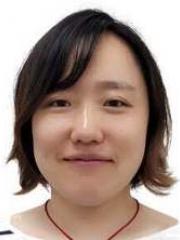
Dr. Tao (Kevin) Huang is a researcher at James Cook University's College of Science and Engineering, with expertise spanning autonomous driving, wireless communication systems, and medical imaging applications. His work integrates machine learning, sensor fusion, and multimodal data analysis to address complex challenges in vehicular networks, environmental monitoring, and healthcare technology. Research Interests: Dr. Huang's research focuses on Autonomous driving perception systems IoT-enabled vehicular networks AI for medical diagnostics and environmental sensing Signal processing and privacy-preserving communication protocols Recent Publications: His 2025 work emphasizes advancements in V2X cooperative perception, radar-LiDAR-camera fusion, and diffusion models for medical imaging. Key trends include cross-modal robustness, real-time processing for autonomous systems, and AI applications in sustainability.
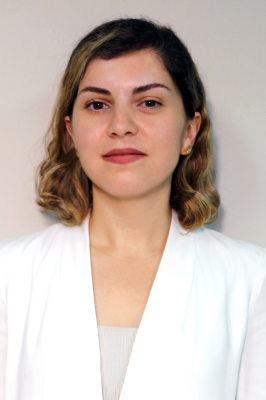
Dr Miao Xu is a Research Fellow at the University of Queensland (UQ), affiliated with the School of Electrical Engineering and Computer Science within the Faculty of Engineering, Architecture and Information Technology. She holds an Australian Research Council DECRA Fellowship (ARC DECRA), recognizing her early-career research excellence. Her research focuses on machine learning, data science, and time series analysis, with applications in healthcare, materials science, and algorithmic fairness. Dr Xu's work addresses challenges in noisy label handling, unlearning mechanisms, and adaptive modeling for irregular data. Education: She earned a Doctor of Philosophy (PhD) from Nanjing University. She is actively involved in supervising research and contributes to the Centre for Enterprise AI at UQ. Research Interests: Dr Xu’s expertise spans machine learning , time series analysis , deep learning , and unsupervised learning . Her recent work emphasizes robust learning with noisy or incomplete labels, model unlearning, and applications in alloy design and medical informatics. She explores methods like instance-attention GNNs for irregular time series and confidence-guided techniques for adversarial attack detection. Publications: Her recent work includes advancements in GNN-based time series modeling, bias mitigation in text classification, and active learning for alloy design. Key themes include improving generalization, reducing algorithmic bias, and enhancing model transparency. Awards: Her ARC DECRA fellowship (202X–202X) supports her research on data-driven methodologies. Supervision & Grants: Available for PhD supervision in machine learning and data science. Her grants include funding for projects in unlearning mechanisms and spatiotemporal modeling. Labs/Teams: Affiliated with the Centre for Enterprise AI at UQ, collaborating on enterprise-scale AI applications and interdisciplinary research.
Professor Dominic O'Brien is a Professor of Engineering Science at the University of Oxford and Senior Research Fellow at Balliol College. He serves as Director of the UK National Hub in Quantum Computing and Simulation. His research focuses on optoelectronics, optical wireless communications, and quantum key distribution. He leads the optical communications group and has authored over 200 publications in these areas. His work emphasizes high-speed free-space optical systems, UV-based secure communication, and beam-steering technologies. Education: MA and PhD from the University of Cambridge, followed by a DPhil from the University of Oxford. His research interests include quantum networks, photonics, and energy-efficient optical systems. Notable projects include handheld low-cost quantum key distribution systems and terabit-per-second fiber-wireless links. He collaborates on initiatives like the WORTECS project for virtual reality applications using optical wireless. Publications span topics from UV solar-blind OWC to liquid crystal beam steering. His work bridges academic and industrial applications, addressing challenges in both classical and quantum communication systems. He contributes to standards for visible light communications and next-generation wireless infrastructure.
Azadeh Ansari is an Associate Professor in the School of Electrical and Computer Engineering at Georgia Institute of Technology, holding the Sutterfield Family Early Career Professorship. She received her B.S. from Sharif University of Technology (2010), and M.S. and Ph.D. from the University of Michigan (2013, 2016), followed by a postdoctoral fellowship at Caltech (2016–2017). Her research focuses on nano/micro-electro-mechanical systems (N/MEMS), with emphasis on III-V semiconductors and piezoelectric materials. Key areas include resonant devices for RF applications, nonlinear devices, and integrated microsystems. Ansari leads projects in microscale robotics, phononic frequency combs, and III-V electro-acoustic devices. Research Interests: Resonant devices for timing, sensing, and RF applications III-V mm-wave acoustic filtering Microscale robot design and control Nonlinear resonators and phononic frequency combs III-V electro-acoustic devices and HEMTs Her recent work includes collaborations with NASA JPL on extraterrestrial micro-swimmers and DARPA-funded projects on inertial sensors and high-temperature pressure sensors. Ansari has secured grants from DARPA DSO and presented at IEEE Transducers 2025 with four papers. She advises graduate students such as Zhijian (Chris) Hao, who defended his PhD in 2024. Ansari’s awards include the 2017 ProQuest Distinguished Dissertation Award and the University of Michigan Towner Prize (2016). She serves on the IEEE Sensor’s Young Professional Committee and technical committees for IEEE IFCS 2018. Lab and Collaborations: The Ansari Lab is part of Georgia Tech’s Institute for Electronics and Nanotechnology. Collaborators include Prof. Kimberly Hoang (PBS-featured neurosurgery micro-drillers) and teams at Penn State University. Current projects include DARPA-funded frequency comb inertial sensors and underwater micro-robot sensor development for ICRA 2025.
Dr. Judith Verstegen is an Assistant Professor in the Department of Human Geography and Spatial Planning at Utrecht University's Faculty of Geosciences. Her research focuses on geosimulation modeling and spatial optimization, with applications in urban planning, environmental vulnerability assessment, and policy analysis. She leads projects such as HEADS 4 Health (2023-2024), which integrates agent-based models into urban digital twins, and coordinates the GeoSIM research group. Her work emphasizes interdisciplinary collaboration, including projects analyzing linguistic diversity in South America and environmental threats to Amazonian indigenous lands. She is the Program Chair of the MSc Geographical Information Management and Applications (GIMA) program and serves as Editor-in-Chief of the Journal of Spatial Information Science. Notable contributions include methodologies for spatial optimization under uncertainty and agent-based modeling of pedestrian behavior in urban environments. Key research areas include applied data science, complex systems analysis, and the PtS - Transforming Cities initiative. She has advised PhD students on topics ranging from fire prevention optimization to indigenous land vulnerability. Her lab at the University of Münster previously focused on spatial modeling frameworks, and she collaborates internationally with institutions like Leiden University and the PBL Netherlands Environmental Assessment Agency. Recent projects highlight innovation in computational methods, such as Python-based open-source tools for land-use modeling (IMAGE-land) and immersive video experiments for behavioral studies. Her work bridges theoretical modeling with practical policy applications, addressing challenges in sustainable urban development and environmental conservation.
Shareq Mohd Nazir is an Associate Professor at KTH Royal Institute of Technology, affiliated with the Division of Energy Processes in the Department of Chemical Engineering. He holds a joint appointment within the Digital Futures Faculty, a cross-disciplinary research center addressing societal challenges through digital technology innovation. Nazir earned his PhD in Energy and Process Engineering from NTNU (2018) and holds Master and Bachelor degrees in Chemical Engineering from BITS Pilani. His research focuses on decarbonization strategies including CO2 capture/utilization (CCUS), bioenergy conversion, and methane mitigation. Key methodologies involve techno-economic analysis and process modeling for industrial systems. Nazir leads projects integrating catalytic conversion, waste heat recovery, and gas switching technologies to achieve low-carbon energy systems. He teaches courses on chemical engineering systems, process design, and carbon-neutral energy systems at KTH. Recent publications emphasize multi-gas mitigation strategies, synthetic fuel production via biomass gasification, and cost-effective hydrogen production pathways. His work bridges academia and industry through collaborations with RISE Research Institutes and NTNU. Nazir’s research directly supports Sustainable Development Goals (SDGs), particularly targeting climate action (SDG13) and affordable clean energy (SDG7).
Prof. Gregorio Iglesias is a Professor of Marine Renewable Energy at University College Cork (UCC) and Honorary Professor of Coastal Engineering at the University of Plymouth. His expertise lies in Marine Renewable Energy and Coastal Engineering, with a focus on wave and tidal energy systems, offshore wind integration, and coastal protection strategies. He has secured over €12M in research funding as Principal Investigator and authored/edited key texts such as Wave and Tidal Energy (Wiley) and Ocean Energy and Coastal Protection (Springer). Education: BEng (Civil Engineering, 1992), MEng (Civil Engineering, 1993), PhD (Engineering, 2001). Research Interests: Advanced modeling of wave energy converters, floating offshore wind turbines, coastal erosion mitigation, and climate change impacts on marine energy resources. His work bridges theoretical advancements and practical applications, including coasts like the Port of Gijón (Spain) and the Shannon Estuary. Recent publications highlight climate-driven renewable energy transitions, multi-hazard coastal resilience frameworks, and techno-economic assessments of offshore systems. He chairs the IEC Standards panel for wave energy device testing and serves as Subject Editor for Energy (Elsevier) . Professional Activities: Lead of Marine Renewable Energy research at MaREI (Ireland), former Head of the COAST Engineering Group at Plymouth (2012–2018), and member of PIANC’s Universities Consortium. His work has generated 5,459 citations with an h-index of 41. Teaching: Delivers modules on Ocean Energy (NE4003/NE6005) and Hydraulics (CE3007).
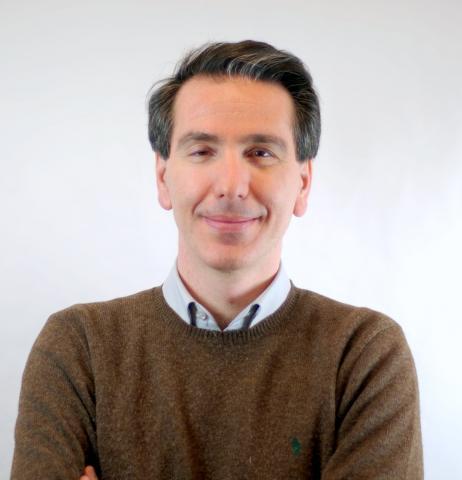
Salvatore Ruggieri is a Full Professor at the Department of Computer Science, University of Pisa, Italy. He coordinates the National PhD Program in Artificial Intelligence for Society and teaches in the Master Program in Data Science and Business Informatics. His research focuses on algorithmic fairness, explainable AI, causality, and discrimination discovery, with contributions to tools like YaDT, X-SPELLS, and SCube. He co-chaired FAT*2020 and contributed to projects such as NoBias and HumanE-AI. His work bridges theoretical foundations with practical applications in fairness, privacy, and societal impact. Education: Ph.D. in Computer Science (1999), University of Pisa. Research Interests: Algorithmic Fairness and Non-Discrimination Explainable AI (XAI) Causal Inference Methods Decision Tree Algorithms Social Network Analysis Key Contributions: Developer of YaDT (decision tree tool) and SCube (segregation discovery). Advocacy for ethical AI through policy frameworks and GDPR-compliant explanations. Scientific Awards: Recipient of the Best Ph.D. Thesis in Theoretical Computer Science (EATCS, 1999).
Jouni Kuha is a Professor of Social Statistics and MSc Social Statistics Programme Director at the London School of Economics and Political Science (LSE), Department of Statistics. His expertise lies in latent variable modeling, survey data analysis, measurement error, and missing data, with applications in social sciences. He collaborates on projects addressing education mobility, public attitudes toward policing, family support dynamics, and global medicine accessibility. He contributed to the UK General Election exit poll analysis and was elected a Fellow of the British Academy in 2021. Education: MSocSc (Statistics) from the University of Helsinki (1992), PhD (Social Statistics) from the University of Southampton (1996). Prior roles include postdoctoral research at Nuffield College, Oxford, and Assistant Professor at Pennsylvania State University. Teaching includes courses on applied regression analysis, multivariate analysis, and statistical modeling. Research interests span latent variable models, categorical data analysis, and methodological advancements in multilevel and latent class analysis. Recent work focuses on digital trace data biases, procedural justice in policing, and intergenerational welfare dynamics. His methodological contributions include R package implementations for multilevel latent class analysis. Scientific awards include Fellowship of the British Academy (2021). Key grants and collaborations involve cross-national studies on citizenship norms, crime victimization, and healthcare policy. He advises on statistical methodologies for social science applications and maintains active involvement in the LSE’s Department of Methodology.
Dr. Wesley J. Marrero is an Assistant Professor of Engineering at Dartmouth College's Thayer School of Engineering. He holds core affiliations with the Health Equity and Advocacy Lab at The Dartmouth Institute for Health Policy and Clinical Practice and is a faculty affiliate in the Quantitative Biomedical Sciences Graduate Program at the Geisel School of Medicine. His research integrates operations research and statistics to address healthcare challenges in substance use disorder, cardiovascular disease, and organ transplantation, collaborating with institutions like Massachusetts General Hospital and the University of Michigan. Dr. Marrero received a B.S. in Industrial and Management Engineering from the University of Turabo (2014), an M.S. in Industrial and Operations Engineering (2017), an M.A. in Statistics (2021), and a Ph.D. in Industrial and Operations Engineering (2021) from the University of Michigan. His research focuses on stochastic simulation and optimization for decision-making in healthcare. Key areas include machine learning applications in predictive modeling, inferential statistics for medical decisions, and sequential decision-making frameworks for health policy optimization. His work emphasizes practical implementations in clinical settings and health systems. Dr. Marrero's publications demonstrate a consistent focus on healthcare optimization, with recent trends in machine learning for organ transplantation and genetic testing strategies. His articles frequently appear in high-impact journals and conference proceedings, reflecting interdisciplinary collaborations. Awards: INFORMS MIF Best Paper Award (2024) INFORMS Annual Meeting Minority Issues Forum Poster Competition Best Poster Award (2020) INFORMS Judith Liebman Award (2020) National Science Foundation Graduate Research Fellowship (2017) Michigan Student Symposium Best Poster Award (2017) Rackham Merit Fellowship (2015) He actively advises graduate and undergraduate students, with current PhD candidates in engineering and biomedical sciences. His research group has secured grants from organizations including the National Science Foundation and the American Medical Association. Dr. Marrero leads a dynamic research group focusing on healthcare decision analytics. He collaborates with medical institutions and government agencies, including the U.S. Department of Veterans Affairs, to translate research into clinical practice.
Petar Popovski is a Professor at the Department of Electronic Systems within the Technical Faculty of IT and Design at Aalborg University, Denmark. His research focuses on next-generation wireless communication systems, with a strong emphasis on ultra-reliable low-latency communication (URLLC), Internet of Things (IoT), multiple access, and 6G technologies. He leads several high-impact research projects, including the Classique - Center for Classical Communication in the Quantum Era funded by the Danish National Research Foundation and WATER (Wireless Architectures for intelligent and Trusted connectivity in the posT-5G ERa) supported by Villum Fonden. His research interests span key areas in modern communication theory and systems, including random access , non-terrestrial networks , satellite communication , and machine learning for reliable communication . He is actively involved in advancing the integration of sensing and communication, digital twin technologies, and quantum-era classical communication frameworks. The recent publications highlight a strong trend toward deterministic and reliable access in wireless networks, integration of sensing and communication for industrial automation, and novel physical-layer techniques using reconfigurable intelligent surfaces. These works are published in top IEEE journals such as IEEE Transactions on Communications , IEEE Transactions on Haptics , and IEEE Transactions on Vehicular Technology . Award highlights include the Best Student Paper Award (2021) , recognizing his mentorship and collaborative research excellence. Prof. Popovski serves as a principal investigator (PI) and supervisor in multiple research projects, securing significant funding from national and international bodies such as the Danish National Research Foundation and the European Space Agency (ESA). He hosts visiting researchers regularly and contributes to scientific leadership through editorial roles and conference participation. He is a key figure in the Connectivity section at Aalborg University and leads cutting-edge research in future wireless systems, contributing to both theoretical foundations and practical implementations in smart infrastructure, space communication, and dependable 6G networks.
Yan Kyaw Tun is a Tenure Track Assistant Professor in the Department of Electronic Systems at Aalborg University's Technical Faculty of IT and Design, located in Copenhagen, Denmark. His research lies at the intersection of wireless communications, edge computing, and artificial intelligence, with a strong focus on next-generation networks (5G/6G), UAV-assisted systems, and intelligent resource management. His educational background includes a Ph.D. in Computer Engineering from Kyung Hee University, South Korea, where he was awarded the Best Ph.D. Thesis Award in 2021, and a Bachelor of Engineering in Marine Electrical Systems and Electronic Engineering from Myanmar Maritime University. Dr. Tun's research interests span Edge Computing , Multi-Access Edge Computing (MEC) , Resource Allocation , Unmanned Aerial Vehicles (UAVs) , Reinforcement Learning , Energy Efficiency , and Integrated Sensing and Communication (ISAC) . His work leverages AI and optimization techniques to enhance the performance of wireless networks, particularly in space-air-ground integrated systems and satellite-HAP environments. The recent publications highlight a clear trend toward intelligent and sustainable networking: the integration of STAR-RIS (Simultaneously Transmitting and Reflecting Reconfigurable Intelligent Surfaces), Federated Learning for satellite-HAP systems, and AI-driven optimization for UAV trajectories and beamforming. These works are published in high-impact venues such as IEEE Transactions on Mobile Computing and IEEE ICC , showcasing his leadership in cutting-edge communication technologies. His scientific accolades include: IEEE ComSoc Outstanding Young Researcher Award for EMEA Region (2024) Best Ph.D. Thesis Award (2021) Student Best Paper Award at APNOMS 2019 Korea Network Operation and Management Conference Award (2020) Korea Computer Congress 2018 Award Dr. Tun is actively engaged in the academic community as an advisor and grant participant. Though no direct advisees are listed, his involvement in large collaborative projects—evidenced by co-authorship with senior researchers like Prof. Choong Seon Hong—indicates mentorship and team leadership. He has served on the editorial boards of IEEE Internet of Things Journal , IEEE Open Journal of the Communications Society , and IEEE Network , and has secured research support through participation in IEEE-organized workshops and special issues. He is a key organizer of upcoming workshops, including the 'Sustainable AI for Next-Generation Wireless Communications and Networking' at IEEE GLOBECOM 2025 and the 'Digital Twin Networks' workshop at IEEE/CIC International Communications in China 2025, reflecting his role in shaping future research directions in intelligent and green networking.
Susan Løvstad Holdt is an Associate Professor at the National Food Institute, Technical University of Denmark (DTU), where she leads research in bioactives – analysis and application. Her work focuses on algal biomass for food, feed, and high-value ingredients, with expertise in cultivation, breeding, and regulatory frameworks. She is actively involved in national and international seaweed research initiatives and networks. University: Technical University of Denmark Institute: National Food Institute Research Group: Bioactives – Analysis and Application Her research interests span seaweed biotechnology, sustainable food systems, biorefinery concepts, and food safety. She investigates how algal biomass can be utilized as a biofilter, food source, and platform for extracting high-value compounds, with residual biomass used for bioenergy and fertilizer. Her work aligns with UN Sustainable Development Goals, particularly in sustainability and responsible consumption. The recent publications highlight trends in kelp processing, fermentation, nutrient retention, and enzymatic extraction of seaweed. These studies focus on species like Saccharina latissima , Alaria esculenta , and Palmaria palmata , addressing iodine reduction, flavor enhancement, and bioactivity. The interdisciplinary nature of her work bridges food science, microbiology, and environmental sustainability. Susan Løvstad Holdt supervises multiple PhD students and leads or participates in key projects such as EAT-pack and VALUEKELP, which aim to develop edible food packaging and high-value seaweed products. She has secured research funding through Danish programs like GUDP and leads initiatives that integrate academic research with industry and policy. She chairs the Seaweed Network in Denmark and serves as Secretary General of the International Seaweed Association Council. These roles involve organizing symposia, facilitating cross-sector collaboration, and promoting seaweed research. She frequently delivers keynote and invited talks at international conferences, emphasizing science, safety, and sustainability in future food systems.
Associate Professor Nalin Arachchilage is a leading academic in Cyber Security at RMIT University's School of Computing Technologies. He holds an honorary role at the University of Warwick and advises DEFSAFE Cyber Security Inc. His research focuses on usable security, privacy engineering, and AI-driven cybersecurity solutions. Key roles include revamping RMIT's Master of Cyber Security program and leading the Usable Security Engineering group at UNSW ADFA. Education: PhD in Cyber Security (Brunel University), Postdocs at Oxford and UBC. Research spans interdisciplinary areas including HCI, machine learning for threat modeling, and serious games for security education. He has published extensively in top venues like ACM CCS and SOUPS, contributing to global standards like OWASP. Leadership: Previously Assistant Head of School (Research) at the University of Auckland, and Director of the MProfStuds in Digital Security. Active in program committees for major conferences (ACM CCS, SOUPS). Current supervision includes 5 PhD students across RMIT and Auckland. Media Impact: Featured in Sky News Australia, ABC, and TVNZ. Collaborations with HP and Facebook. Awards include impactful contributions to security frameworks and standards. Teaching: Coordinates courses like INTE2625 (Cyber Security) and COSC2738 (Human-Centric Cyber Security). Supervises projects on topics like blockchain security and responsible AI. Non-Academic Roles: Chair of the Academic Board at Canberra Business & Technology College (2020-2021). Advisor to DEFSAFE, focusing on novel cyber-security products.
Stan Sclaroff is a Professor of Computer Science and Dean of the College of Arts & Sciences at Boston University. He holds affiliated faculty status in the Department of Electrical and Computer Engineering. His research focuses on computer vision, pattern recognition, and machine learning, with expertise in tracking, human motion analysis, and multimedia retrieval systems. He co-leads the Image and Video Computing research group and has contributed pioneering work like the ImageRover content-based image retrieval system. Education: PhD in Media Arts & Sciences from MIT (1995), SM from MIT (1991), and BS in Computer Science and English from Tufts University (1984). Research Interests: Human motion tracking, sign language analysis, deformable shape matching, and multimedia indexing. Notable contributions include early work on content-based image retrieval and foundational techniques in video analysis. Honors: IEEE & IAPR Fellowships, NSF CAREER Award (1996), ONR Young Investigator Award (1996), and BU's Mentor of the Year (2018). Over 40+ students advised, many now in academia and industry leadership roles. Key roles: Chair of BU Computer Science (2007–2013), Associate Dean for Mathematical & Computational Sciences (2015–2018), Interim Dean (2018–2019), and current Dean since 2019.