Gene Tsudik is a Distinguished Professor of Computer Science at the University of California, Irvine (UCI), with a career spanning over two decades. He obtained his Ph.D. in Computer Science from the University of Southern California (USC) in 1991, focusing on access control in the Internet. His research spans multiple areas including computer and network security, applied cryptography, and digital privacy, with a recent emphasis on database privacy, genomic privacy, and usable security. His notable contributions include the Inter-Domain Policy Routing (IDPR) protocol, KryptoKnight for network security, and Tree-Based Group Key Agreement protocols. He has over 210 publications and 8 patents. From 2002 to 2007, he served as Associate Dean of Research and Graduate Studies at UCI's School of Information and Computer Sciences and currently directs the UCI Secure Computing and Networking Center (SCONCE). Research Keywords : Cybersecurity, Cryptography, Privacy, Network Security, Digital Signatures, Genomic Data Protection. Scientific Awards : IEEE Fellow (2012), ACM Fellow (2014), AAAS Fellow (2016), Fulbright Senior Scholar (2007), and IFIP Fellow (2020). Professor Tsudik has supervised 18 PhD students and held visiting positions at universities across Europe and Asia. His recent publications focus on secure hardware attestation, biometric authentication, and social media data privacy.
Dr. Amin Sakzad is an Associate Professor in the Department of Software Systems & Cybersecurity at Monash University's Faculty of Information Technology. His research focuses on lattice-based cryptography, wireless communications, and post-quantum security protocols. He holds a PhD in Applied Mathematics from Amirkabir University of Technology (2011) and has held academic roles at Carleton University and Monash since 2012. Dr. Sakzad’s expertise spans lattice coding theory, MIMO systems, and privacy-preserving technologies for genomic databases and blockchain applications. He leads multiple ARC-funded projects, including work on secure databases (SRDBMS) and post-quantum cryptographic primitives for FinTech and energy sectors. His research has been recognized through awards such as the FIT Dean’s Award for Teaching Excellence (2021). Key collaborations include projects on blockchain security (CollinStar Lab), genomic data privacy, and energy market cybersecurity. His work addresses UN SDGs through contributions to quality education (SDG 4) and industry innovation (SDG 9). Recent publications highlight advancements in lattice-based cryptography (e.g., CRYSTALS-Kyber variants), privacy-preserving energy trading, and secure blockchain protocols like FPPW watchtower systems. His research bridges theoretical cryptography with practical implementations in embedded systems and 5G telecommunications. Grants: 16 active/completed projects including $1.2M in ARC funding Advising: Supervising PhD projects on lattice applications in post-quantum crypto and blockchain Labs: Core member of Monash’s Software Defined Telecommunications (SDT) Lab and CollinStar Lab
Sushmita Ruj is an Associate Professor in the School of Computer Science and Engineering at the University of New South Wales (UNSW), Sydney. She serves as the Faculty of Engineering Lead for the UNSW Institute for Cybersecurity (IfCyber) and as the Taste of Research (ToR) Coordinator within the School of Computer Science and Engineering. Her academic journey includes previous positions as a Senior Research Scientist at CSIRO's Data61 (2019-2022), Associate Professor at the Indian Statistical Institute, Kolkata, and Assistant Professor at the Indian Institute of Technology (IIT), Indore. Dr. Ruj's primary research interests focus on applied cryptography, post-quantum cryptography, cybersecurity, blockchains, and data privacy. She designs practical, efficient, and provably secure protocols for real-life applications, with particular emphasis on critical infrastructure including smart grids, cloud computing, ad hoc networks, and data sharing frameworks. As quantum technology advances, her work increasingly focuses on developing quantum-safe algorithms to ensure a more secure Internet infrastructure. Her research spans multiple domains including cryptographic key management, proofs of storage, verifiable computation, vector commitments, and privacy-enhancing technologies for cloud and IoT environments. Her recent publications demonstrate a strong trend toward post-quantum cryptography solutions, with particular emphasis on blockchain applications, DNS security, and privacy-preserving protocols for industrial IoT. The research shows increasing focus on practical implementations of theoretical cryptographic concepts, with applications across multiple sectors including finance, healthcare, and critical infrastructure. Her work bridges the gap between theoretical cryptography and real-world security challenges, with growing emphasis on the transition from classical to quantum-resistant systems. Best Paper Award at ACISP 2024 JNCA Best Survey Award (2023) NSW Innovation Award (iAward) Merit Winner (2022) Women in Science Award from CSIRO (2020) ACM Senior Member (2016) IEEE Senior Member (2015) Samsung GRO award (2014) Dr. Ruj has successfully mentored numerous PhD and Master's students, with many of her former students now holding academic positions at institutions like IIT Indore, TU Wien, and CISPA Helmholtz Center. She has secured significant competitive funding including multiple Australian Research Council (ARC) grants, Samsung GRO Award, NetApp Faculty Fellowship, Cisco Academic Grant, and IBM Research grant. Her current research portfolio includes projects on blockchain-based quantum-safe digital medical passports, embedding trust in digital IDs, and resilience of supply chain unstructured data. As Faculty of Engineering Lead for IfCyber, Dr. Ruj plays a key role in UNSW's cybersecurity research initiatives. She has served on editorial boards for prestigious journals including IEEE Transactions on Information Forensics and Security and has held leadership positions in major conferences such as ACISP 2021 and Indocrypt 2020. She was also a member of the working group on "Blockchain For Cybersecurity" for the National Blockchain Roadmap of Australia and the first Blockchain Working group set up by the Reserve Bank of India.
David Jao is a Professor in the Department of Combinatorics and Optimization at the University of Waterloo. His research focuses on post-quantum cryptography, particularly leveraging isogenies of supersingular elliptic curves for secure cryptographic protocols. He is renowned for co-developing the Supersingular Isogeny Key Encapsulation (SIKE) protocol, a leading candidate for post-quantum cryptography standards. His work spans theoretical foundations and practical implementations, including optimizing isogeny-based systems for embedded devices and ARM processors. Research interests include isogeny-based cryptosystems, elliptic curve cryptography, zero-knowledge proofs, and cryptographic security against quantum attacks. He explores applications of expander graphs and Ramanujan graphs in cryptography, alongside algorithmic improvements for cryptographic protocols such as SIDH (Supersingular Isogeny Diffie-Hellman). Key contributions include advancements in key compression techniques for SIKE, side-channel attack mitigation, and formalizing security models for post-quantum key exchange. His publications analyze cryptographic hardness assumptions, such as the discrete logarithm problem in finite groups and the semidirect product structure in isogeny-based systems. Jao’s work bridges theoretical mathematics and applied cryptography, with a focus on ensuring practical security in next-generation cryptographic systems. His research addresses challenges in quantum-resistant authentication, key establishment, and digital signatures, often emphasizing efficiency and resistance to both classical and quantum attacks.
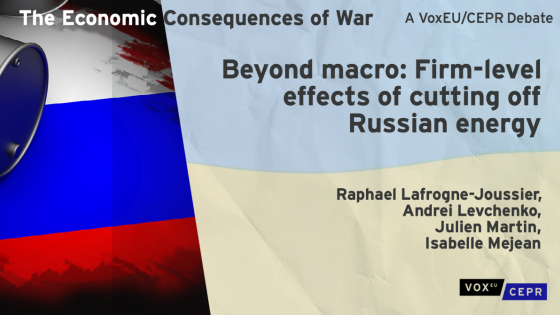
Isabelle Mejean serves as Professor in the Department of Economics at Sciences Po, specializing in international macroeconomics and international trade. Her prior academic appointments include Ecole Polytechnique, CEPII (Centre d'Etudes Prospectives et d'Informations Internationales), and the IMF Research Department. Education: PhD in Economics, University of Paris 1-Panthéon-Sorbonne (2006) Mejean's research explores micro-foundations of global trade systems, emphasizing firm-level adaptations to geopolitical shifts, environmental regulations, and supply chain disruptions. Her work bridges macroeconomic phenomena with granular trade data, investigating how carbon taxes reshape supply networks, how trade fragmentation affects economic security, and how labor market structures influence volatility resilience. This approach reveals critical mechanisms behind inflation transmission and policy spillovers across borders. Analysis of her 2022-2025 publications shows consistent focus on empirical trade dynamics using French manufacturing datasets and global firm networks. Key trends include quantifying carbon leakage through supply chains, mapping shock propagation in firm-to-firm trade, and evaluating de-risking strategies amid geopolitical tensions. Her research directly informs contemporary debates on climate-trade policy coherence and energy security. Scientific Awards: No awards documented in source material. Advising and Grants: Doctoral supervision activities and research funding sources remain unspecified in available records. Labs and Teams: Affiliation with specific research collectives or laboratories is not referenced in current institutional profiles.
Judith Altrogge is a Researcher at the Institute for Migration Research and Intercultural Studies (IMIS) at the University of Osnabrück . Since August 2019, she has served as a Research Associate in the project TRANSMIT - Transnational Perspectives on Migration and Integration . Her academic journey includes completing her PhD (2017-2020) at the University of Basel and Osnabrück, and prior roles as a Research Associate (2017-19) and Project Assistant (2012-17) at the Arnold-Bergstraesser-Institute (ABI) in Freiburg. Education: PhD candidate (2017-2020) at University of Basel and University of Osnabrück Her research spans Migration and Border Regimes , International Political Sociology , and Practice Theories , with geographic focus on North and West Africa . She critically examines policies of externalization, humanitarianism, and the role of international organizations in migration governance. Her work often addresses postcolonial dimensions of sovereignty and deportation practices. Judith's publications (2018-2022) reflect a thematic concentration on EU-African migration cooperation , forced return mechanisms , and diaspora dynamics . Key contributions include analyses of Gambian migration governance, EU-African policy challenges, and the political economy of migration. Her methodological approach integrates practice theory with empirical fieldwork in West Africa. Currently affiliated with IMIS and involved in the Collaborative Research Center 'Production of Migration' , she contributes to projects under the DeZIM Research Association and participates in networks like IMISCOE . Judith actively collaborates with institutions such as the German Society for International Cooperation (GIZ) and the Arnold Bergstraesser Institute (ABI).
Professor Peter Y. K. Cheung is a Professor of Digital Systems at Imperial College London, holding dual affiliations within the Department of Electrical and Electronic Engineering and the Dyson School of Design Engineering. His work focuses on reconfigurable systems, FPGA architectures, and high-level synthesis tools. He co-founded one of the UK's leading FPGA research groups with Professor Wayne Luk, addressing challenges in variability mitigation, reliability, and application-specific FPGA deployments. His research spans Field-Programmable Gate Arrays (FPGAs) Reconfigurable computing Neural network acceleration Cryptographic protocols Embedded systems He has pioneered techniques such as logic shrinkage for FPGA-based neural networks and developed frameworks like LUTNet for efficient inference. His contributions also include fault-tolerant FPGA designs and methodologies for distributed computation protocols. Key collaborations include work with the Department of Computing on FPGA-based AI acceleration and cybersecurity applications. His recent work explores edge computing, secure decentralized systems, and pandemic modeling using adaptive control strategies. Notable projects include the DSCS protocol for secure distributed computation, acceleration of gravitational wave detection algorithms, and energy-efficient CNN implementations. His research bridges hardware-software co-design with real-world applications in healthcare, finance, and aerospace.
Dr Francis Maravillas is a Senior Lecturer and Programme Leader of the BA (Hons) Art Histories and Curatorial Practices: Asia and the World at LASALLE College of the Arts, Singapore. His academic work bridges art historical research, curatorial practice, and interdisciplinary teaching with a focus on contemporary Asian art contexts. His educational background includes a PhD in Humanities and Social Sciences from the University of Technology Sydney and a First Class Honours BA in Politics from Macquarie University, Australia. Maravillas' research centers on modern and contemporary Asian art, with particular expertise in curatorial practices, exhibition histories, and socially engaged/performatory art forms. His current projects investigate the aesthetics and politics of food in contemporary Asian art, examining how food functions in performance, installation, and community-based practices within post-colonial and global contexts. This research explores intersections between alimentary practices, political economies of survival, and post-colonial histories across Asia. His publication record reveals consistent engagement with Southeast Asian contemporary art worlds, food-art practices, and diasporic visual cultures. Key projects include the co-edited World Art special issue on Southeast Asian art publics (2020) and the forthcoming Routledge anthology 'Tastes of Justice' (2025), which examines food, art, and justice politics in Asian-Australian contexts. Maravillas has secured significant research funding including a SGD 20,000 LASALLE College of the Arts grant for 'Tastes of Justice' (2024) and an AUD 49,526 Creative Australia grant for related art, performance, and symposia activities in Sydney and Singapore (2024). He actively collaborates internationally through co-curated exhibitions like 'Bruised Food: A Living Laboratory' (2019) and the symposium 'Shifting Grounds, New Horizons' (2022), demonstrating commitment to building transnational networks in contemporary Southeast Asian art.
Ben McWilliams is a Research Fellow at Bruegel, focusing on Energy and Climate Policy . His work combines data-driven analysis to critique and inform European public policy, with particular emphasis on energy sector decarbonisation , industrial policy , and hydrogen-based economic geography . Recently, he has analyzed European energy crises and proposed policy responses , while tracking clean tech trends and natural gas dynamics across Europe. Education : MSc in Economic Policy (Utrecht University, thesis on carbon taxation in British Columbia); BSc in Economics (University of Warwick) with exchange year at Monash University Research Focus : Energy Security , Climate Policy , Hydrogen Economics , and Industrial Decarbonisation Key Contributions : Co-authored 15 major analyses (2021-2025) on topics including EU-Russia energy divorce , transatlantic clean investment , and hydrogen strategy Awards : No scientific awards mentioned in available records Affiliations : Bruegel (Affiliate Fellow), dual citizenship (British/Dutch)
Qiang Tang is currently an Associate Professor (Level D) at the School of Computer Science of The University of Sydney. Previously, he was a Senior Lecturer (2021.1-2024.12) at USYD and an Assistant Professor at the Computer Science Department of New Jersey Institute of Technology (2016.8-2021.1), where he co-directed the JACOBI Blockchain Lab with Prof. Jian Pei and Prof. Zhenfeng Zhang. He completed his PhD at the University of Connecticut under Prof. Aggelos Kiayias and Prof. Alexander Russell, following postdoctoral research at Cornell University with Prof. Elaine Shi. His research spans applied and theoretical cryptography, blockchain technology, privacy, and computer security. His work is supported by ARC, Google, Ethereum Foundation, Stellar Foundation, Protocol Labs, Algorand Foundation, Oracle, and USYD. Previous funding includes NSF, JD.com, AFRL, DoE, and Particl Foundation. His research has led to significant contributions in consensus protocols, distributed randomness generation, secure multi-party computation, and privacy-preserving technologies. Tang's publications reveal a strong focus on practical cryptographic solutions for blockchain and distributed systems. His recent work demonstrates expertise in asynchronous consensus, optimal protocol design, and secure implementations for real-world applications. His research shows consistent innovation in improving efficiency, security, and scalability of distributed systems. Scientific Awards: 2025 DSN Best Paper Award 2024 ICDCS Distinguished Paper Award 2023 SOAR Prize, USYD 2023 Oracle for Research Award 2022 Stellar Foundation Research Awards 2022 Ethereum Academic Award 2019 MIT Technical Review, 35 Chinese Innovators Under 35 Tang actively mentors PhD and Master's students, with several alumni now holding faculty positions or research roles at institutions like City University Hong Kong, Chinese Academy of Sciences, and A*STAR Singapore. He has received significant research funding including a multi-year Google project on End-to-End Secure Cloud and an ARC DP grant on Order Fairness in Decentralized Systems. He leads the research in his lab focusing on blockchain protocols and cryptographic applications, with strong industry connections through collaborations with Google, Ethereum Foundation, Stellar Foundation, and Protocol Labs. His team regularly publishes in top security and cryptography venues including CRYPTO, CCS, USENIX Security, and S&P.
Diego Garlaschelli is Professor of Theoretical Physics at the IMT School for Advanced Studies in Lucca, Italy, and at the Lorentz Institute for Theoretical Physics, University of Leiden, the Netherlands. He leads the NETWORKS research unit at IMT and the Econophysics and Network Theory group at Leiden. He is also an external faculty member at the Complexity Science Hub in Vienna and an associate member of the Enrico Fermi Research Center in Rome. His affiliations reflect a strong international and interdisciplinary research profile in network science and statistical physics. He holds a master's degree in theoretical physics from the University of Rome III (2001) and a PhD in Physics from the University of Siena (2005). His postdoctoral experience includes positions at the Australian National University, the University of Siena, the University of Oxford, and the Sant’Anna School of Advanced Studies in Pisa. Garlaschelli’s research spans network theory, statistical physics, econophysics, financial complexity, ecological networks, and social dynamics. He applies maximum entropy models, information theory, and random graph frameworks to understand complex real-world systems. His teaching includes courses in Network Theory, Econophysics, and Complex Systems at both PhD and MSc levels. The 15 most recent publications highlight a consistent focus on network reconstruction, ensemble inequivalence, renormalization, and applications to financial and socio-economic systems. Key themes include statistical inference in networks, resilience, and multi-scale modeling, with publications in top journals such as Nature Reviews Physics , Physics Reports , Science , and Physical Review Letters . His scientific awards include the Best Paper Award at the 6th International Workshop on Self-Organizing Systems (2012) and the Jan Kijne Prize (2013) as supervisor. He has secured multiple grants from NWO, the European Union, and the Royal Society, and has supervised over 40 students at PhD, master’s, and bachelor’s levels. He also mentors postdocs and visiting scientists. Garlaschelli leads and organizes major international workshops and schools in network science and complex systems. He serves on scientific committees and is an active referee for journals like Nature and Physical Review Letters , as well as funding agencies including the ERC and NWO.
Professor Merje Kuus is a distinguished political geographer at the Department of Geography , Faculty of Arts , University of British Columbia . Her work bridges political geography , international relations , and sociology to examine knowledge production in policy-making contexts. PhD from Syracuse University (1999) WSET Level 3 Award in Wine holder Active in Arctic Circle's Mission Council on the GlobalArctic Research focuses on expertise in diplomatic practices , with empirical specializations in European Union and Arctic governance . She also explores geographical imaginaries in wine production , connecting policy analysis to cultural geography. Key publications include: Geopolitics and Expertise: Knowledge and Authority in European Diplomacy (Wiley Blackwell, 2014) Geopolitics Reframed: Security and Identity in Europe’s Eastern Enlargement (Palgrave Macmillan, 2007) Ashgate Research Companion to Critical Geopolitics (co-edited, 2013) Recent scientific awards include: Fulbright Fellowship Killam Fellowship SSHRC Canada grants Her supervision portfolio spans climate governance, disaster response expertise, and transnational policy networks, with completed PhD theses on topics ranging from Vancouver's climate governance to Arctic resource governance .
Stephan Schmidt is an Associate Professor at Cornell University's College of Architecture, Art and Planning, affiliated with the Department of City and Regional Planning. His research bridges urban spatial patterns, planning institutions, and sustainability outcomes across Europe, sub-Saharan Africa, and China. Education: PhD in Urban Planning from Rutgers University MS in Landscape Architecture from the University of Washington His work examines: land-use policy evolution in Europe; urbanization dynamics in African cities; and polycentricity trends in Chinese metropolises. Recent studies focus on climate risk mitigation through urban form, including urban heat island effects and air pollution in German regions. Key trends in his 2024-2022 publications: comparative analysis of polycentric urban systems; GIS-based spatial pattern evaluation; and institutional impacts on sustainable development. Awards include Cornell's Global Strategic Collaboration Award and German Academic Exchange Service grants. Scientific Awards: Cornell Global Strategic Collaboration Award (2024) Cornell Center for Social Sciences Accelerated Research Grant (2024) German Academic Exchange Service (2019) Advising includes mentoring graduate students like Juan Fernandez, Justin Peng, and Hassan Yakubu on projects analyzing urban morphology. His lab investigates intersections between spatial patterns and environmental outcomes, including climate change adaptation in Tanzanian cities and park fragmentation in German metropolises.
Philip Poole is a Professor of Plant Microbiology at the University of Oxford's Department of Plant Sciences and Senior Research Fellow at Somerville College. His research focuses on plant-microbe interactions, nitrogen fixation, and rhizosphere microbiology. He has led major international projects including the BBSRC-NSF Synthetic Symbioses program (2014-2019) and the India-UK Nitrogen Fixation Consortium (2016-2019). With 26 grants as PI from the UK's BBSRC, he has secured over £10.5 million in funding. His work includes pioneering bacterial Lux biosensors for metabolite analysis, transcriptomics under sterile conditions, and metatranscriptomics in soil to study microbiome-plant interactions. Current projects model nitrogen fixation biochemistry in legume nodules and investigate rhizobia lifecycle transitions from rhizosphere colonization to symbiotic bacteroid differentiation. He co-directs the Oxford Centre for Plants for the 21st Century and serves on editorial/advisory boards for Microbiology UK, The Journal of Bacteriology, and Pivot Bio. His contributions include elucidating the ammonia-alanine pathway for nitrogen secretion and demonstrating symbiotic auxotrophy dependencies in bacteroids. Key achievements include developing global mutagenesis strategies (INSeq) and advancing understanding of microbial community structures in the rhizosphere. His research integrates molecular, genetic, and systems biology approaches to address global challenges in sustainable agriculture.
Joachim Rosenthal is a Professor of Applied Mathematics at the University of Zurich's Department of Mathematics, leading the Applied Algebra Group. His research integrates coding theory, cryptography, and algebraic geometry with applications in communications and security systems. His primary research explores algebraic coding theory including convolutional codes, subspace codes, and post-quantum cryptography. He develops algorithms for error correction, code optimization, and cryptographic protocol analysis, with emphasis on mathematical structures in finite fields and rings. Professor Rosenthal serves as President of the Swiss Mathematical Society (2024-2025) and sits on IEEE Information Theory Society's Board of Governors. He has organized multiple international conferences on coding theory and cryptography, including the Zurich COST Meeting and Workshop on Convolutional Codes. His editorial contributions include roles at Archiv der Mathematik and SIAM Journal on Applied Algebra and Geometry. Recent publications focus on code construction methods, complexity analysis in group-based cryptography, and algebraic approaches to error-correcting codes.