

Adam J Rothman is a Professor in the Department of Statistics at the University of Minnesota, Twin Cities campus, specializing in high-dimensional statistical methodologies. His research focuses on covariance estimation, multivariate analysis, and developing innovative regression frameworks for complex data structures. His primary research interests include High-Dimensional Statistics, Covariance Estimation, Multivariate Analysis, and Statistical Machine Learning. Rothman develops penalized likelihood methods and shrinkage estimators to address challenges in matrix-valued predictors, categorical responses, and large covariance matrices, with applications spanning scientific domains requiring scalable high-dimensional analysis. Rothman's recent publications (2019-2024) demonstrate consistent innovation in high-dimensional regression and classification. Key trends include covariance matrix regularization, sufficient dimension reduction techniques, and likelihood-based approaches for categorical multivariate responses. His work emphasizes computational efficiency and theoretical guarantees for datasets where variables exceed sample sizes. He has secured major National Science Foundation funding as Principal Investigator for two projects: Sufficient Dimension Reduction of High-Dimensional Data (2011-2015) and New methods for multivariate analysis in high dimensions (2015-2021). These grants supported foundational work in dimension reduction and covariance estimation, advancing methodologies for modern statistical challenges.
جستوجوی استاد و پژوهشگر
استاد راهنما، استاد دانشگاه یا پژوهشگر مناسب برای مسیر پژوهشیتان را پیدا کنید و با او ارتباط بگیرید.
نمایش ۷۲۱-۷۳۵ از ۵٬۲۶۵ استاد راهنما
اطلاعات این پروفایلها از صفحات عمومی دانشگاهها جمعآوری شده و ممکن است بهروز نباشد.
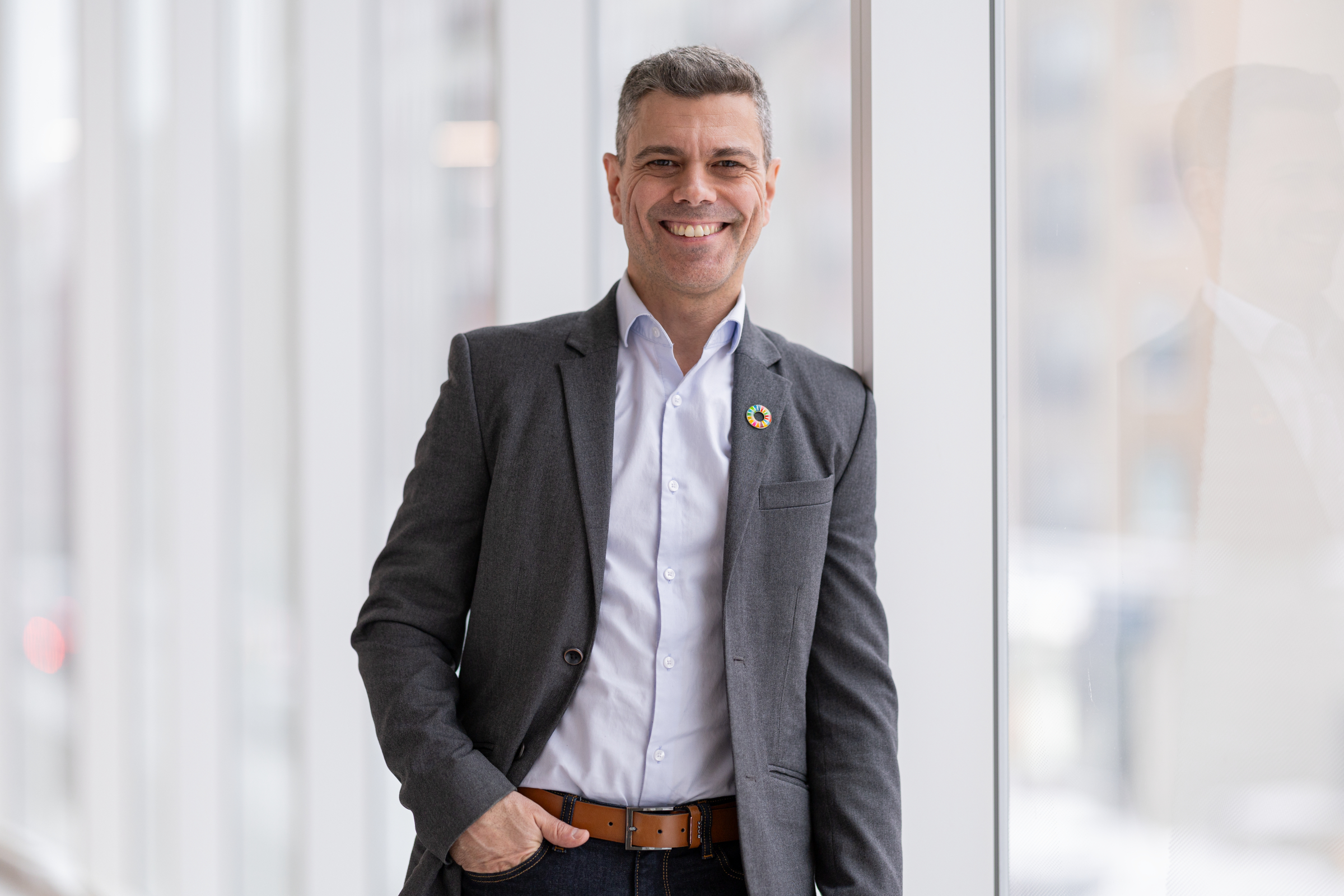
Ghyslain Gagnon is a Professor in the Department of Electrical Engineering at École de technologie supérieure (ÉTS) in Montreal, Canada. He leads research activities within the LACIME – Communications and Microelectronic Integration Laboratory, focusing on cutting-edge developments in microelectronics, sensors, and communication systems. His work bridges theoretical research and practical applications across multiple domains including health technologies, wireless communications, and quantum engineering. Education: B.Ing. from École de technologie supérieure M.Ing. from École de technologie supérieure Ph.D. from Université de Carleton Professor Gagnon's research spans several interconnected domains with emphasis on Radiofrequency circuits and antennas, Microelectronics, Wireless communications, Sensors and monitoring systems, Machine learning applications, Health technologies, and Quantum engineering. His work demonstrates a strong commitment to translating theoretical concepts into practical solutions with real-world impact, particularly in the areas of health monitoring systems and advanced communication technologies. His recent publications reveal a clear trajectory toward increasingly interdisciplinary research, combining traditional electrical engineering with machine learning, health monitoring, and quantum technologies. The trend shows growing emphasis on practical applications in automotive safety systems, wireless communications for next-generation networks, and health monitoring technologies that leverage flexible electronics and novel sensor designs. Professor Gagnon has successfully supervised numerous graduate students through their doctoral and master's research, with recent theses focusing on smart hearing protection devices, machine learning applications, energy monitoring systems, and flexible sensor technologies. His supervision record demonstrates consistent productivity and relevance to contemporary engineering challenges. He is an active member of the LACIME research laboratory, which focuses on six key areas: Functional materials, Micro- and nanofabrication processes, Conception and design of integrated circuits, Design and fabrication of hybrid components, Photonic and electronic microsystems, and Signal processing and communication. This environment provides students with access to cutting-edge tools and fosters innovation through interdisciplinary collaboration.
Tanushree Royمشاهده پروفایل
استادیار
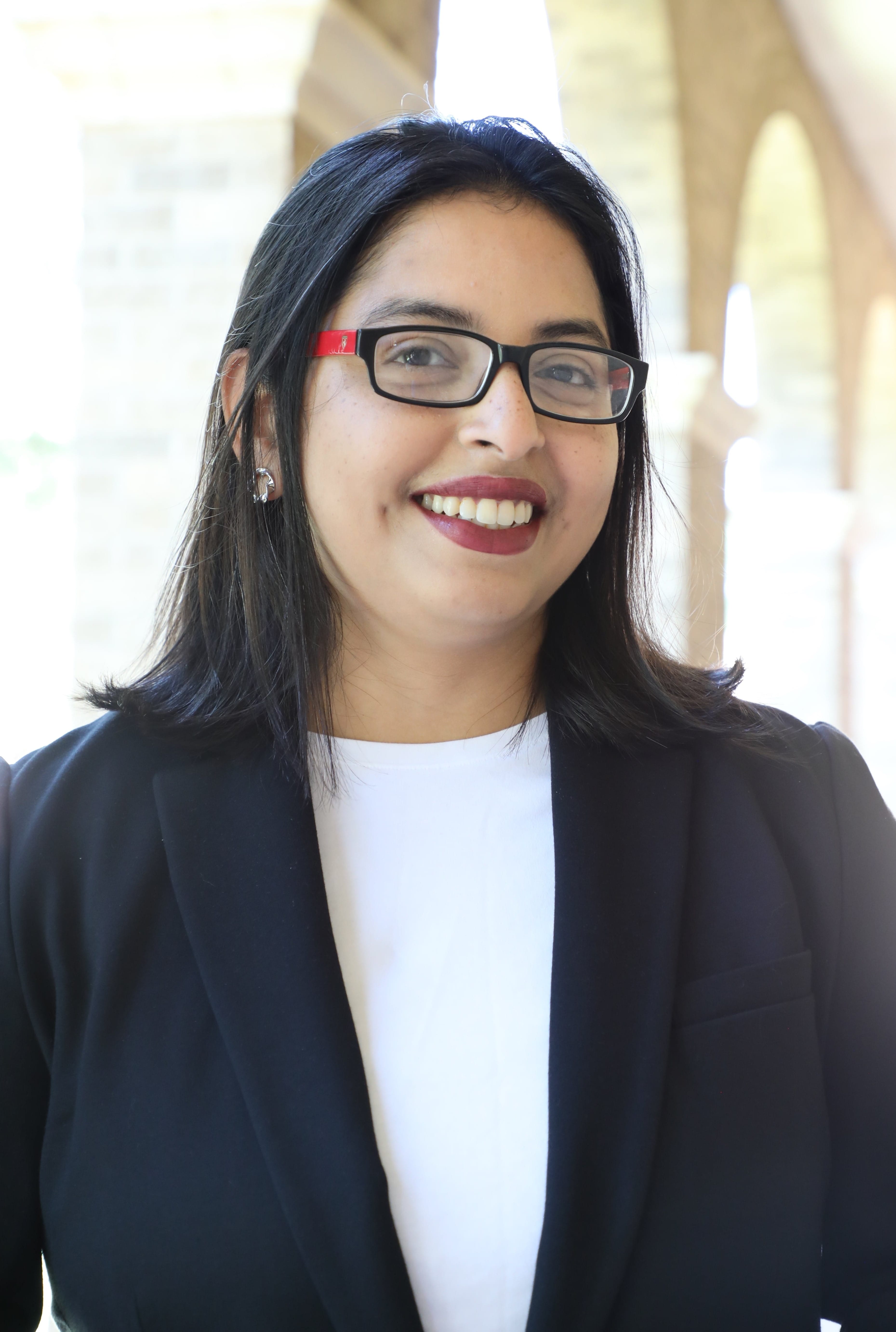
Dr. Tanushree Roy serves as an Assistant Professor in the Department of Mechanical Engineering at Texas Tech University's Whitacre College of Engineering and is an Affiliate Faculty member at the National Wind Institute. Her research pioneers resilient human-centric smart city infrastructures through the integration of control theory, mathematical modeling, and machine learning to address critical challenges in safety, security, and resource optimization for urban systems. Her academic foundation includes: Ph.D. in Mechanical Engineering from The Pennsylvania State University (2022) M.S. in Mathematics from University of Central Florida (2015) M.E. in Electrical Engineering from Indian Institutes of Engineering Science and Technology, India (2011) B.Tech in Applied Electronics and Instrumentation from Maulana Abul Kalam Azad University of Technology, India (2009) Dr. Roy's research centers on cybersecurity , fault diagnostics , and socio-technical systems with specialized applications in smart transportation networks and battery energy storage systems. She develops innovative frameworks that merge human-centric sensing with technical measurements to combat cyberattacks and physical faults in cyber-physical-social systems, emphasizing safety-critical resilience for urban citizens. Her methodology uniquely combines model-based control with data-driven machine learning to address challenges like social data integrity, human behavior modeling, and multi-scale anomaly characterization. Analysis of her 15 most recent publications (2021-2025) reveals dominant trends in cyberattack detection for connected vehicles, thermal fault tolerance in battery systems, and socio-technical traffic modeling. Key technical approaches include Koopman operator theory for secure estimation, control barrier functions for safety certification, and redundancy-based data fusion techniques. These works consistently bridge theoretical control systems with practical smart city implementation, demonstrating strong interdisciplinary connections between transportation engineering, energy systems, and cybersecurity. No scientific awards are documented in the provided information. Dr. Roy actively mentors three PhD students—Sanchita Ghosh (since 2022), Faysal Ahamed, and Soumyoraj Mallick (both since 2024)—alongside undergraduate researcher Mercedes Hernandez. Her research is executed through the Smart Human-centric Automation Resilience (SHARE) Lab, which has secured projects including the secure autonomous mobility testbed and participates in workforce development via Texas Tech's Engineering Research Internship Experience (ERIE) program for high school students. The SHARE Lab operates at the intersection of transportation and energy systems, maintaining two primary research thrusts: resilient human-centric transportation networks and safeguarding battery energy storage infrastructure. Current projects include SUMO-based cyberattack validation for connected vehicle platoons, self-learning voltage estimation under sensor attacks, and thermal fault-tolerant battery management. The lab maintains active collaborations with national conferences (ACC, CCTA) and industry partners to advance real-world implementation of resilient smart city technologies.
Luis Castedo Ribas is a Professor at the Faculty of Informatics , University of A Coruña (UDC) , Spain, since 2001. Previously held research positions at the University of Southern California (USC) and École supérieure d'électricité (SUPELEC). PhD in Telecommunications Engineering (1993), Technical University of Madrid Department of Computer Engineering Research Group: Electronic and Communications Technology Group Research Interests: Specializing in Signal Processing and Information Theory for Wireless Communications Engineering , with focus on MIMO Communication Systems , 5G Radio Interfaces , Joint Source-Channel Coding , and High-Speed Wireless Communications . His work bridges theoretical advancements with practical prototyping of digital communication systems. Recent Article Trends: Publications span Massive MIMO , Beamforming , AI/ML for Wireless , and Quantum-Inspired Coding , reflecting his leadership in evolving telecom standards (5G→6G). Collaborative work with institutions like IEEE and European consortia. Scientific Awards: Best Student Paper (2007, 2013, 2017) General Co-Chair, IEEE Sensor Array Workshop (2014) General Co-Chair, European Signal Processing Conference (2019) Grants & Collaborations: Principal Investigator in over 50 projects funded by Spanish Ministry of Science, EU programs, and companies like Atos Origin. Key roles in national and international research consortia.

Professor Georg Gottwald is a distinguished academic in the School of Mathematics and Statistics at the University of Sydney, where he has been a faculty member since 2002, progressing from Lecturer to his current position as Professor since 2013. He also holds a Visiting Professor position at the University of Surrey in the UK since 2013. His extensive research career spans dynamical systems theory, geophysical fluid dynamics, and the intersection of machine learning with complex systems. Professor Gottwald's research focuses on dynamical systems theory as an abstract formalism for studying systems evolving in time and space. His work has significant applications across diverse fields including climate modeling, biological systems, and complex networks. He is particularly known for developing methods for model reduction of complex dynamical systems, stochastic modeling approaches, and the application of machine learning techniques to dynamical systems. His research aligns with the Faculty of Science Research Strengths in Understanding the Universe, Fundamental Laws of Nature, Complex Systems, Climate and Environmental Change, Data and Decisions, and National Security. His most recent publications demonstrate a strong trajectory toward integrating machine learning with dynamical systems theory, particularly in developing stable generative models, learning dynamical systems with random feature maps, and combining data assimilation with machine learning for forecasting. His work spans pure mathematical theory to practical applications in climate science, finance, and biological systems, showing remarkable breadth while maintaining deep mathematical rigor. Future Fellowship, 'Stochastic methods in mathematical geophysical fluid dynamics', Australian Research Council, 2010-2014 Australian Research Fellowship, 'Stochastic methods in mathematical geophysical fluid dynamics', Australian Research Council, 2010-2015 (declined) Australian Research Fellowship, 'Geometric methods in geophysical fluid dynamics', Australian Research Council, 2004-2009 Professor Gottwald has successfully supervised numerous PhD and Master's students who have gone on to academic and industry positions worldwide. His current research group includes postdocs and PhD students working on machine learning for dynamical systems, stochastic model reduction, physics-informed machine intelligence, and tensor methods for scientific machine learning. He has secured multiple ARC Discovery Project grants and has been involved in significant international collaborative research projects. He is actively involved with the Sydney Dynamics Group, which he co-founded in 2007, fostering collaboration between the University of Sydney and UNSW. Professor Gottwald maintains strong editorial commitments as Associate Editor for Geophysical and Astrophysical Fluid Dynamics, SIAM Journal of Applied Dynamical Systems, and Journal of Computational Dynamics, and serves on the Editorial Advisory Board for Chaos and the Editorial Board for Physical Review E. His professional activities demonstrate leadership in the dynamical systems community through organizing workshops, seminars, and special journal issues.

Jie Gaoمشاهده پروفایل
استادیار
- Machine Learning for Communications and Networking
- Internet of Things (IoT) and Industrial IoT
- Cloud and Multi-Access Edge Computing
- +۷ مورد دیگر
Dr. Jie Gao is an Assistant Professor at the School of Information Technology , Carleton University, with cross-appointments at Dalhousie University (Adjunct Faculty, 2024) and Carleton University (2025). He holds a Ph.D. in Electrical and Computer Engineering from the University of Alberta (2014) and has held postdoctoral and research associate positions at Ryerson University (2017-2019), University of Waterloo (2019-2020), and Marquette University (2020-2022). His research focuses on machine learning for communications/networking , 6G wireless networks , cloud/multi-access edge computing , IoT/industrial IoT solutions , and network virtualization/digital twins . Research Leadership: Co-investigator on projects related to AI-assisted network slicing, digital twin-driven resource allocation, and integrated satellite-terrestrial networks Led work on energy-efficient UAV-assisted edge computing (IEEE Best Land Transportation Paper Award 2024) Professional Roles: Senior Member, IEEE Lead Associate Editor, IEEE Access Vehicular Technology Society Section (2020-present) Associate Editor, Springer Peer-to-Peer Networking and Applications (2020-present) IEEE Vehicular Technology Society Young Professional Ambassador (2024) Notable Contributions: Authored/co-authored books on Intelligent Computing and Communication for the Internet of Vehicles (Springer, 2023) and Connectivity and Edge Computing in IoT (Springer, 2021) Holds patents on medium access control methods (US Patents 2022, 2024) Received multiple IEEE service awards (2018-2024)

Yoann Altmann is Professor in the School of Engineering & Physical Sciences at Heriot-Watt University and a member of the Institute of Sensors, Signals & Systems. Since 2024 he holds the Chair in Electrical, Electronic & Computer Engineering (EECE), directing a research programme that bridges statistical signal processing, computational imaging and quantum & neuromorphic sensing. Education & career: 2010 – Eng. degree (Electrical Engineering), ENSEEIHT, Toulouse, France 2010 – M.Sc. (Signal Processing), National Polytechnic Institute of Toulouse 2013 – Ph.D. (Signal & Communications), IRIT Laboratory, Toulouse 2014-2017 – Post-doctoral Research Fellow, Heriot-Watt University 2017 – Royal Academy of Engineering Research Fellow & Assistant Professor, HWU 2024 – promoted to Professor, School of Engineering & Physical Sciences, HWU Research interests: Prof. Altmann develops mathematical and algorithmic tools for Bayesian inverse problems, with emphasis on single-photon LiDAR, low-illumination imaging, neuromorphic computational sensing, variational inference and sparse reconstruction. His work combines principled statistical modelling with efficient computational schemes to enable imaging in extreme scenarios such as underwater scattering, photon-starved environments, quantum metrology and real-time 3-D scene reconstruction. Publication trends: Across 160 outputs (2011-2025) his recent articles reveal a clear trajectory toward integrating modern machine-learning paradigms—variational autoencoders, diffusion generative models, spiking neural networks—with rigorous physics-based forward models. Applications span quantum parameter estimation, multimode-fiber endoscopy, hyperspectral & Compton imaging, nuclear safeguards and cultural-heritage spectroscopy, demonstrating both methodological breadth and high-impact interdisciplinary deployment. Honours & recognition: Royal Academy of Engineering Research Fellowship – competitively awarded (2017) Grants & datasets: He has generated four open datasets supporting reproducible research in quantum sensing, variational autoencoders, underwater single-photon LiDAR and multispectral fluorescence imaging, reflecting sustained funding and commitment to open science. Continuous peer-review service for IEEE and Elsevier journals since 2013 underlines his standing within the signal-processing community. Labs & teams: He leads the Bayesian Imaging & Sensing Computing (BISC) group ( https://bisc.site.hw.ac.uk ) which hosts post-docs, PhD researchers and international visitors working on statistical machine-learning for imaging, sensing and quantum technologies.
David Rouecheمشاهده پروفایل
دانشیار
- Extreme wind loads on low-rise buildings
- Post-disaster field investigations
- Performance-based wind engineering
- +۲ مورد دیگر
David Roueche serves as the Gottlieb Associate Professor of Structural Engineering within the Department of Civil and Environmental Engineering at Auburn University's Samuel Ginn College of Engineering. His research focuses on structural performance under extreme wind events, forensic engineering methodologies, and improving building resilience against hurricanes and tornadoes through interdisciplinary approaches. Dr. Roueche's academic foundation includes advanced degrees from the University of Florida, with complementary physics training: Ph.D. in Structural Engineering, University of Florida M.S. in Civil Engineering, University of Florida B.S. in Civil Engineering, University of Florida B.S. in Engineering Physics, Jacksonville University His primary research explores extreme wind loads on low-rise buildings , post-disaster field investigations , and performance-based wind engineering , with specialized expertise in light wood-frame structures and surge/flood modeling. He integrates engineering analysis with social science through survivor interviews to reconstruct tornado events and identify vulnerabilities in residential construction, particularly for mobile and manufactured housing in the Southeastern United States. Analysis of his recent publications reveals a dominant focus on post-disaster assessment frameworks, field data collection protocols, and performance-based evaluation methods for wind-affected structures. His work increasingly emphasizes interdisciplinary collaboration—combining engineering, social science, and geospatial technologies—to develop comprehensive disaster response systems and improve building codes. Key trends include standardization of forensic engineering practices through organizations like StEER and application of computational modeling to predict structural failures. Dr. Roueche's significant recognitions include: Ginn Faculty Achievement Fellow designation NSF CAREER Award (2020) for advancing post-windstorm assessment methodologies He directs substantial research funding including a $500,000 USDA grant for timber-steel composite research and leads the Auburn Mass Timber Collaborative—an interdisciplinary initiative uniting forestry, architecture, and engineering faculty. Through the Structural Engineering Emergency Response (StEER) network, he coordinates Field Assessment Structural Teams for disasters like Hurricane Ian and the 2022 Arabi tornado, developing standardized protocols adopted nationally for post-disaster evaluations. His mentoring extends to doctoral students in civil engineering, with recent success in securing competitive fellowships for advisees. As a core member of StEER, Dr. Roueche develops and implements field assessment protocols used in rapid disaster response. He leads FAST teams deploying UAVs, LiDAR, and ground surveys to document structural performance after hurricanes and tornadoes, with datasets informing FEMA guidelines and building code revisions. His work with the Auburn Mass Timber Collaborative advances sustainable construction methods through experimental testing of innovative structural systems.
Prof. Dr. Haris Gačanin is a faculty member at RWTH Aachen University, affiliated with the Institute for Distributed Signal Processing under the College of Electrical Engineering. His research focuses on integrating machine learning with wireless communication systems, particularly in industrial IoT, edge computing, and network optimization. Current academic rank: Professor Contact: harisg@dsp.rwth-aachen.de Research Interests: Wireless systems, machine learning, signal processing, and network optimization. Key contributions include: Adaptive resource allocation in IIoT and vehicular networks AI-driven channel estimation and feedback mechanisms Security-oriented emitter identification via metric learning Federated/transfer learning for edge environments Hardware-efficient deep learning models for mmWave and THz communications Methodological Focus: Combines reinforcement learning, attention mechanisms, and robust neural architectures with practical implementations on FPGA and vehicular systems.
Bin Yao is a Professor of Mechanical Engineering at Purdue University, located in West Lafayette, Indiana. He holds positions within the School of Mechanical Engineering and has affiliations with Purdue's broader Engineering College. His research focuses on adaptive and robust control systems, nonlinear control, precision mechanical systems, vehicle control, and robotics, with applications in human-machine interaction, transportation, and advanced robotics. Yao earned his B.Eng. from Beijing University of Aeronautics & Astronautics (1987), M.Eng. from Nanyang Technological University (1992), and Ph.D. from UC Berkeley (1996). He has received numerous awards, including the 2010 Changjiang Chair Professorship and the 2007 ASME Outstanding Young Investigator Award. His work emphasizes theoretical advancements in control systems and their practical implementation in industrial and robotic applications. Key research trends in his publications include precision motion control of gantry systems, adaptive strategies for hydraulic manipulators, and teleoperation systems with haptic feedback. His articles often bridge theoretical control methodologies with real-world mechanical systems, emphasizing robustness and adaptability. Awards: Over 10 prestigious awards spanning from 1985 to 2010, including international recognitions in control systems and academic excellence. Grants: Secured major funding through NSF CAREER Award (1998) and other industrial collaborations. His research lab focuses on advanced control systems integration in mechanical and robotic platforms, with ongoing projects in precision manufacturing and autonomous vehicle dynamics.
Alexander Bastounis is a Lecturer in Applied Mathematics at King's College London, affiliated with the Department of Mathematics and the King’s Institute for Artificial Intelligence. His research focuses on computational mathematics, optimization, and the trustworthiness of AI systems. He holds a PhD from the University of Cambridge and has held academic roles at institutions including Leicester University, City University of Hong Kong, and TU Berlin. Education: PhD in Applied Mathematics from DAMTP, University of Cambridge (2018). Earlier academic qualifications not specified. Research interests include foundational aspects of computational mathematics, AI limits and robustness, adversarial attacks, and inverse problems. His work explores computational barriers in estimation and learning, with recent attention on stealth attacks in AI models and feature selection reliability. Received the Leslie Fox Prize (2019) for work on inverse problems Contributed to SIAM News articles on compressed sensing and AI challenges Advising and grants: Currently supervises the EPSRC-funded project '50:50 Haleon/EPSRC DLA Studentship' (2025–2029). No listed students. Labs/teams: Active in King’s Institute for Artificial Intelligence and collaborates on interdisciplinary projects across computational mathematics and AI security.
- Power System Dynamics and Control
- Wide-Area Monitoring Systems
- Power Electronics in Power Systems
- +۶ مورد دیگر
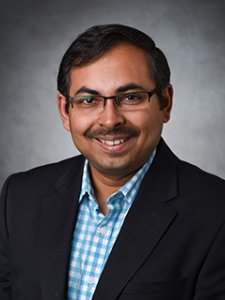
Nilanjan Ray Chaudhuri is an Associate Professor of Electrical Engineering at Pennsylvania State University , affiliated with the Institute of Energy and the Environment (IEE) . His research focuses on power system dynamics and control , including wide-area monitoring systems, power electronics integration, renewable energy systems, and grid resilience. He has been recognized as an IEE Fellow and has contributed to projects like Smart Traction Systems for Weak Power Grids . Research Interests : Power system dynamics and control Wide-area monitoring systems Renewable energy integration (wind, solar) FACTS and HVDC systems Cascading failure analysis Cyber-physical security Recent Contributions : His work emphasizes grid stability in high-renewable systems, cascading failure mitigation , and frequency support from grid-forming converters. Publications (2023–2025) highlight advancements in control strategies for inverter-dominated grids, cyber-physical attack resilience, and fast simulation methods for dynamic failures. Grants & Awards : Selected grants include DOE-funded projects on grid modernization and resilience. Awards include IEE Fellow (2024) and recognition for student mentorship (e.g., 2020 Department of Energy Collegiate Wind Competition). Labs & Teams : He leads research in power grid resilience and collaborates with industry partners on MTDC grid control and wide-area monitoring solutions.
Davood B. Pourkargar is an Assistant Professor in the Tim Taylor Department of Chemical Engineering at Kansas State University (K-State), part of the Carl R. Ice College of Engineering. He is also a graduate faculty member at the Food Science Institute and a faculty researcher at the Johnson Cancer Research Center. His professional experience includes roles at ExxonMobil Research and Engineering, the University of Minnesota, and the University of Delaware. Education: Ph.D. in Chemical Engineering, Pennsylvania State University (2015) M.S. in Chemical Engineering, Sharif University of Technology (2010) B.S. in Chemical Engineering, Sharif University of Technology (2008) Research Interests: Focuses on computational multiscale modeling, artificial intelligence, optimal control, and automation for sustainable energy/chemical production. Key areas include physics-informed machine learning, cyber-physical systems, and smart materials synthesis. His lab integrates process systems engineering with digital twin technology to enhance decision-making in complex systems. Key Research Trends: Recent work emphasizes distributed control architectures, resilient process networks, and applications in renewable energy (e.g., green ammonia, solar cell production). His publications span AI-driven modeling, cybersecurity for manufacturing systems, and data-driven predictive frameworks. Awards: 2024 Carl R. Ice College Outstanding Assistant Professor NSF EPSCoR Fellowship AFOSR Faculty Fellowship Multiple Best Presentation Awards at AIChE/ACC conferences Advising & Grants: Advises over a dozen graduate/undergraduate students. Secured grants including NSF funding for physics-informed machine learning in organ-on-a-chip systems. Active in lab automation and robotic additive manufacturing initiatives. Labs & Teams: Director of the Intelligent Sustainable Process Systems Lab (ISPSL), with computational and experimental facilities in Durland Hall. Collaborates across disciplines including food science, cancer research, and biomedical engineering.
- Hydrology
- Ecological Modeling
- Watershed Management
- +۶ مورد دیگر
Dr. Fan-Rui Meng is a Professor at the Faculty of Forestry and Environmental Management, University of New Brunswick (UNB). He holds an adjunct professorship at Fujian Agriculture and Forestry University, China. His expertise spans hydrology, ecological modeling, watershed management, and climate change impacts. Dr. Meng earned his PhD in forest ecology from UNB and has held research leadership roles at institutions like the Noranda/Avenor and Bowater/Nexfor Forest Watershed Research Centres. He has extensive experience in soil conservation, GIS applications, and drone technology for environmental protection. Education: Bachelor and Master of Forestry Engineering, Northeast Forestry University, China PhD in Forest Ecology, UNB Research Interests: Hydrological processes in agricultural and forested watersheds Climate change adaptation in forest ecosystems Soil erosion and conservation strategies Integration of drone technology for environmental monitoring Carbon cycling in forest systems Modeling forest growth under climate projections Recent Research Trends: His recent work focuses on nitrate dynamics in agricultural watersheds, impacts of climate change on crop yields, and improving SWAT model accuracy through detailed land-use data. He has explored innovative methods for riparian zone mapping using UAVs and photogrammetry, emphasizing precision in environmental assessments. Awards: None explicitly listed in the provided texts. Grants & Advising: Dr. Meng has led numerous research projects but no specific grants or student advisees are mentioned. His work has been published in journals like Hydrological Processes , Journal of Hydrology , and Water Resources Management . Labs & Teams: He has directed research at the Noranda/Avenor and Bowater/Nexfor Forest Watershed Management Centres, focusing on applied ecological and hydrological research.
Johes Baterمشاهده پروفایل
استادیار
Johes Bater is an Assistant Professor of Computer Science at Tufts University's School of Engineering. He joined Tufts in 2022 after postdoctoral research at Duke University's Database Group and a Ph.D. in Computer Science at Northwestern University. Education B.Sc. in Electrical Engineering (2011) from Stanford University M.Sc. in Electrical Engineering; Computer Systems (2013) from Stanford University Ph.D. in Computer Science (2020) from Northwestern University Research Focus Bater's research focuses on privacy-preserving analytics , balancing security , privacy , and utility in trustworthy database systems . His work spans differential privacy , secure computation , and data federation to enable robust distributed analytics with provable guarantees. Publications & Trends His publications since 2016 emphasize secure multi-party computation (SMCQL, 2016), differentially private indexing (Longshot, 2023), and privacy-utility trade-offs in federated databases. Key subfields include private data sharing , access pattern security , and incremental computation for outsourced systems. Awards & Grants 2022: Cisco Systems grant for "A Usable and Shareable Tool for Software Threat Modeling" Teaching & Service Bater teaches courses like Database Systems , Dissertation Research , and Special Topics in Data Infrastructure . He served on Tufts' CS PhD Admissions Committee (2022) and as a reviewer for the ACM Conference on Computer and Communications Security (2022).
فقط ۷۵۰ نتیجه اول نمایش داده میشود. برای رسیدن به نتایج دقیقتر، جستوجو را با فیلترها محدودتر کنید.