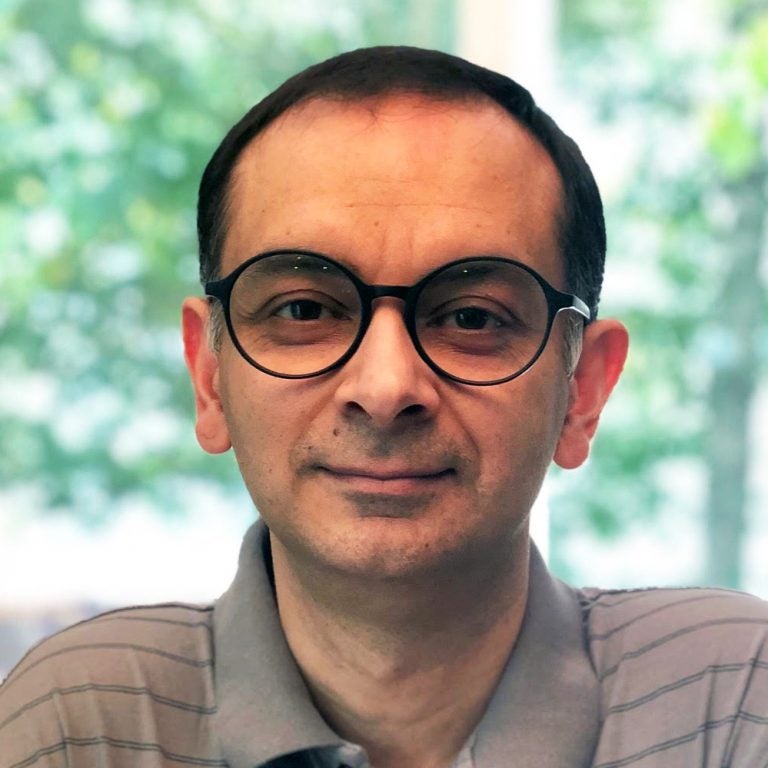
Xiangyu Zhu is a faculty member at the University of Chinese Academy of Sciences (UCAS), School of Artificial Intelligence, and affiliated with the State Key Laboratory of Multimodal Artificial Intelligence Systems, Chinese Academy of Sciences, Beijing, China. His research focuses on Computer Science , Artificial Intelligence , and 3D Face Reconstruction . His work spans Face Recognition , Image Processing , and Computer Vision , with recent advancements in Masked Face Recognition , 3D Avatar Reconstruction , and Face Anti-Spoofing . He has contributed to Neural Network Architectures for High-Fidelity 3D Face Modeling and Image Fusion . Xiangyu Zhu has co-authored numerous high-impact publications in journals like IEEE Transactions on Image Processing and conferences such as CVPR and ICCV , including recent works on Diffusion Models , Mamba Networks , and Weakly Aligned Feature Fusion . His research emphasizes Deep Learning and Optimization Techniques for Computer Vision applications.
Karan Singh serves as an Assistant Professor of Operations Research at Carnegie Mellon University's Tepper School of Business, where he develops theoretically rigorous algorithms for machine learning systems with emphasis on reinforcement learning and control theory. His work synthesizes techniques from online learning, optimization, and statistics to address complex interactive learning challenges. His academic journey includes: PhD in Computer Science from Princeton University under Elad Hazan Postdoctoral research at Microsoft Research (Redmond) Bachelor's degree in Computer Science from Indian Institute of Technology (IIT) Kanpur Singh's research program centers on three interconnected pillars: Algorithmic Reductions : Creating efficient methods to solve complex learning problems (e.g., reinforcement learning) using solvers for simpler tasks, yielding breakthroughs in online boosting and RL with concave rewards Nonstochastic Control : Establishing an algorithmic foundation for control theory through provably efficient instance-optimal algorithms that extend online learning to stateful systems Privacy-Preserving Online Learning : Investigating fundamental limits of regret minimization under differential privacy constraints while maintaining performance His approach consistently bridges theoretical computer science and practical control applications. Analysis of his 15 most recent publications reveals a clear evolution toward integrating algorithmic reductions with nonstochastic control frameworks. Recent work (2023-2025) demonstrates increasing focus on sample efficiency in agnostic boosting, privacy-aware optimization without smoothness assumptions, and competitive ratio analysis in online control. A unifying thread is the development of regret-optimal algorithms for linear dynamical systems under adversarial disturbances. His contributions have earned significant recognition: Best Paper Award at OptRL workshop (NeurIPS 2019) Spotlight Prize from New York Academy of Sciences' ML Symposium (2018) Multiple oral presentations at NeurIPS/ICML (acceptance rate Though specific student advisees aren't listed, Singh's extensive publication record with junior co-authors indicates active mentorship. His research has secured substantial support including a US patent (11,138,513 B2) for dynamic learning systems and collaborations through CMU's Machine Learning and Optimization group. Current projects involve interdisciplinary work on differentiable control libraries (Deluca) and medical applications like mechanical ventilation control. Singh leads research within CMU's Machine Learning and Optimization ecosystem, collaborating across computer science and engineering departments. His team develops foundational tools like the Deluca differentiable control library while pursuing real-world applications in healthcare systems, demonstrating strong cross-disciplinary integration.
Seth Blumsack is a Professor at the Pennsylvania State University in the Department of Energy and Mineral Engineering and serves as Director of the Center for Energy Law and Policy . He holds an Adjunct Research Professor position at the Carnegie Mellon Electricity Industry Center and is affiliated with the Santa Fe Institute as an External Faculty member. His research spans energy economics , power grid reliability , and complex infrastructure networks . Key projects include: Interdependent natural gas and electricity systems analysis Governance of regional transmission organizations Smart grid consumer behavior studies Power grid reliability tools development He has secured funding from the U.S. National Science Foundation , Department of Energy , Environmental Protection Agency , and private industry. His Best paper award at Hawai’i International Conference on System Sciences (2011) and John T. Ryan, Jr. Fellowship (2011-17) highlight his scientific recognition. Publications emphasize electricity market deregulation , energy infrastructure resilience , and consumer response to smart grid technologies . His work has been cited in major media outlets like The New York Times and The Los Angeles Times , and he has consulted for National Renewable Energy Laboratory , U.S. Department of Energy , and other industry stakeholders.
Professor Dahlia Malkhi is a leading academic and researcher in distributed systems and blockchain technology. She currently holds a faculty position at the University of California, Santa Barbara (UCSB), where she heads the Foundations of Financial Technology (FfTech) research lab. Her work focuses on reliability, security, and consensus mechanisms in distributed systems, with a recent emphasis on blockchain innovations like HotStuff, which underpins Diem, Aptos, and other blockchains. She has held influential roles at industry leaders such as Chainlink Labs, Diem Association, VMware, and Microsoft Research. Education: Ph.D. in Computer Science from The Hebrew University of Jerusalem. Past roles include CTO of Diem Association (2019–2022), Principal Researcher at VMware (2014–2019), and Partner Principal Researcher at Microsoft Research (2004–2014). Research Interests: Blockchain consensus algorithms (e.g., HotStuff, Flexible Paxos), Byzantine Fault Tolerance (BFT), secure multi-party computation (FairPlay), and distributed database systems (CorfuDB). Her work bridges academic theory with industrial applications, emphasizing practical scalability and security. Awards: ACM Fellow (2011), IEEE TCDP Outstanding Technical Achievement Award (2021), IBM Faculty Award (2003/2004). She has also held leadership roles in conferences like Usenix ATC and program chairs for multiple distributed systems events. Advising & Grants: Advises projects at Space Computer, Lyquor Labs, and Chainlink Labs. Her research labs and collaborations include work on BBCA-Chain, Lumiere, and BFTBrain, advancing consensus mechanisms in decentralized systems. Labs/Teams: Leads UCSB’s FfTech lab, co-founded VMware Research, and contributed to foundational blockchain projects like DiemBFT and Espresso Systems. Her work impacts technologies such as NSX-T control planes and distributed financial infrastructure.
Professor Ewa Luger serves as Professor and Chair of Human-Data Interaction at the University of Edinburgh, co-Programme Director of AHRC’s Bridging Responsible AI Divides (BRAID), and codirector of the EPSRC Responsible NLP Centre for Doctoral Training. She actively bridges academia, policy, and industry through roles in the DCMS college of experts and Centre for Artificial Intelligence (Future of Privacy Forum). Her educational background spans: BA (Hons) in International Relations & Politics MA in International Relations PhD in Computer Science Luger’s research investigates social, ethical, and interactional dimensions of AI systems, with emphasis on policy design, user consent, and exclusion frameworks. She pioneers work on responsible AI implementation across critical domains including voice interfaces, journalism, public service media, and accounting institutions. Her specific research trajectories include: Responsible AI governance and ethical deployment Human-Data Interaction paradigms Intelligibility of AI for expert/non-expert users Security/safety of cloud/edge systems AI adoption readiness in professional contexts Language model applications in real-world settings Her scholarly recognition includes: Alan Turing Institute Fellowship Fellowship at Corpus Christi College, University of Cambridge Luger has secured over £40 million in research funding since 2016 through EPSRC, ESRC, AHRC, and DataLab grants. Current leadership roles span the AHRC BRAID programme, EPSRC Fixing the Future project, UKRI Digital Twinning Network, and Responsible NLP CDT. She founded the annual 'Conversations' workshop on chatbot research in 2015, fostering global academic-industry collaboration. Her interdisciplinary work operates through dynamic project teams including the Network Plus in Human Data Interaction, DCODE EU consortium, and BBC-focused PubVIA initiative, integrating computer science, social sciences, and humanities perspectives to address AI’s societal challenges.
Xiaofan Yu is an Assistant Professor in the Department of Electrical Engineering at the University of California, Merced. He holds a Ph.D. (2025), M.S. (2020), and B.S. (2018) from the University of California, San Diego and Peking University, respectively. His research focuses on embedded systems , edge AI , and neuromorphic computing , with applications in IoT, federated learning, and hyperdimensional computing. ML&Systems Rising Star (2024) CPS Rising Star (2023) EECS Rising Star (2022) His work addresses on-device AI for real-world IoT deployments, reliability-driven sensor networks , and next-generation edge intelligence . Recent publications highlight advancements in federated learning (TIOT 2025), multimodal sensor interaction (IMWUT 2025), and noise-resilient sensor systems (Sensors 2024). Key subfields include hyperdimensional computing , asynchronous distributed training , and resource-efficient edge models . Dr. Yu actively mentors students across institutions and programs, including the Early Research Scholarship Program (UCSD) and ENLACE Summer Research Program. He has advised projects on smart elderly monitoring , LLM-based sensor reasoning , and hyperdimensional algorithm optimization . Collaborations span UCSD, TUM, and Stanford, with industry partnerships in IoT design automation (RelIoT simulator) and biomedical applications (bladder fullness restoration system).
Roummel F. Marcia is a Professor and current Chair of the Department of Applied Mathematics at the University of California, Merced, within the School of Natural Sciences. He received his Ph.D. from UC San Diego under Professor Philip Gill and previously held postdoctoral positions at the San Diego Supercomputer Center and University of Wisconsin-Madison, as well as a research scientist position in electrical engineering at Duke University. His research spans multiple areas in optimization and its applications, with a focus on signal processing, data science, machine learning, linear algebra, and mathematical biology. Dr. Marcia's work has significant interdisciplinary impact, particularly in biomedical imaging, computational biology, and quantum computing applications. His research methodology often combines theoretical optimization approaches with practical applications in data-intensive fields. Dr. Marcia's recent publications demonstrate a strong trend toward integrating optimization theory with deep learning architectures, particularly in applications requiring sparse data handling, biomedical imaging, and quantum computing. His work shows increasing focus on developing novel optimization algorithms specifically designed for machine learning contexts, including quasi-Newton methods adapted for deep learning and specialized techniques for handling non-convex optimization problems. School of Natural Sciences Faculty Award for 'Developing or Improving Academic Programs and Tracks' (2021-22) Leadership roles in SIAM Activity Group on Applied Mathematics Education Recognition as a Math Alliance Mentor for supporting underrepresented students Dr. Marcia has successfully mentored numerous doctoral students to completion, with graduates moving to positions at Meta, Johns Hopkins University Applied Physics Laboratory, Lawrence Livermore National Laboratory, and other prestigious institutions. His research has been consistently funded by major agencies including NSF (with grants IIS 1741490, DMS 1840265, DMS 2229495, CCF 2343610), DARPA, and ARPA-E. As the current graduate chair of the Applied Math Graduate Program, he plays a key role in shaping the next generation of mathematical scientists. His work with the SMaRT (Scientific Mathematics Research and Training) team demonstrates his commitment to collaborative, interdisciplinary research.
Markus Vincze is an Associate Professor at the Institute of Automation and Control Engineering (ACIN) at Vienna University of Technology (TU Wien). He founded the Vision for Robotics (V4R) group in 1996 to advance robotic perception, particularly in real-world environments and homes. His work focuses on cognitive computer vision techniques for robotics. Education: Diplom in Mechanical Engineering (1988) and PhD (1993) from TU Wien; M.Sc. (1990) from Rensselaer Polytechnic Institute. V4R coordinates EU projects like ActIPret, robots@home, HOBBIT, and national initiatives like vision@home. Markus has edited a book on Robust Vision with Gregory Hager and authored 62 peer-reviewed journal articles and over 400 reviewed publications. His recent research explores zero-shot 6D pose estimation, sim-to-real transfer, and transparent object detection. Markus has served as program chair for ICRA 2013 and organized HRI 2017 in Vienna. He has advised numerous students and secured grants from the Austrian Academy of Sciences for work at HelpMate Robotics and Yale's Vision Laboratory. The V4R group leads innovations in robotic vision, including frameworks for synthetic data generation (Unrealgensyn), depth completion (CAGT), and educational robotics applications for sustainability. Their work spans household robotics (RH3), agricultural robotics (EdgeSoil), and human-robot collaboration.
JuHyun Lee is an Associate Professor of Architecture and Computational Design in the School of Built Environment at the Faculty of Arts, Design and Architecture (ADA), University of New South Wales (UNSW) Sydney, where they also hold the prestigious title of Scientia Academic. With a professional background in architecture and construction (1998-2002), they have held academic positions across Australia including a five-year post-doctoral fellowship at the University of Newcastle (2012-2017) and a senior research fellowship at the University of South Australia (2018), following earlier research and teaching roles in South Korea (2003-2011). Lee specializes in architectural design computing, design cognition, and urban complexity, integrating computational methods, cognitive science, and architectural theory to advance architectural intelligence and human-centered design. Their research spans architectural visualization, analysis and design methods, algorithm/protocol design, and data visualization with computational approaches. They have established a strong research program examining the intersection of language, culture, and design cognition, particularly focusing on cross-cultural design communication between Australia and Korea. Lee's recent publications demonstrate a clear trajectory toward increasingly sophisticated integration of computational methods with architectural design theory, particularly in the areas of shape grammar, space syntax, and machine learning applications. Their work shows consistent focus on practical applications of computational design methods to real-world architectural problems, with growing emphasis on cross-cultural collaboration and intelligent design systems. The research portfolio reveals a deepening engagement with AI and machine learning techniques applied to architectural design assessment and generation. Scientia Academic at UNSW Sydney Associate Fellow of the Higher Education Academy (AFHEA, 2020) As an educator, Lee develops cutting-edge courses in computational design and Building Information Modeling (BIM), integrating experiential learning and industry engagement. They have secured over $11 million in research funding, including multiple ARC Discovery Projects and an Australia-Korea Foundation grant. Lee co-directs the Advanced Architectural Analytics Laboratory (A 3 LAB), leading interdisciplinary research on design automation, spatial analysis, and machine learning applications in architecture, while also leading cross-cultural initiatives like the Australia-Korea Architects' Network (AKAN). Lee supervises multiple HDR students working on culturally sustainable urban design, socio-spatial patterns in public housing, and computational layout generation. Their research has significant implications for improving design communication across cultural boundaries and developing more coherent, clear, and accessible built environments through computational design approaches.
Gaurav Khanna is a Professor in the Department of Physics at the University of Rhode Island (URI) and serves as the Director of Research Computing at URI. He is a key member of the UMass-URI Gravity Research Consortium (U²GRC), a collaborative effort between the gravity research groups at URI and the University of Massachusetts Dartmouth focused on gravitational physics research. Dr. Khanna earned his Ph.D. in Physics from Pennsylvania State University in 2000 and his B.Tech. in Electrical Engineering from the Indian Institute of Technology Kanpur, India in 1995. His academic journey reflects a strong foundation in both theoretical physics and engineering principles that inform his current research. His primary research focuses on theoretical and computational aspects of gravitational physics, particularly the coalescence of binary black hole systems using perturbation theory and estimation of emitted gravitational radiation properties. This work is directly relevant to the NSF LIGO laboratory and upcoming space-borne gravitational wave detection missions. His research spans black holes, gravitational waves, quantum gravity, and high-performance scientific computing. Dr. Khanna has developed advanced computational techniques for modeling extreme mass ratio inspirals and has made significant contributions to understanding black hole singularities in both classical and quantum gravity frameworks. Dr. Khanna has published nearly 100 research papers in top international journals and secured over $2 million in research funding. His work has been featured in prominent media outlets including Nature Magazine, Quanta Magazine, and Physics World. He has advised numerous graduate students, with Tousif Islam (Ph.D. '24) receiving an honorable mention in the GWIC-Braccini Thesis Prize, and Som Bishoyi earning UMass Dartmouth's Research in the Media Award. American Physical Society Fellow As Director of Research Computing, Dr. Khanna oversees high-performance computing resources and provides expertise in parallel and scientific computing. His work with the U²GRC involves collaboration with major research groups including the Simulating Extreme Spacetimes (SXS) Collaboration, Kavli Institute for Astrophysics at MIT, Black Hole Initiative at Harvard, and the Max Planck Institute for Gravitational Physics in Germany. The consortium's research is funded through multiple National Science Foundation grants, NASA, and private foundations.
Bonnie Berger is the Simons Professor of Mathematics at the Massachusetts Institute of Technology and head of the Computation and Biology group at MIT's Computer Science and AI Lab. She holds additional appointments as an Associate Member of the Broad Institute, Faculty member of Harvard/MIT Health Science & Technology, and Affiliated Faculty of Harvard Medical School. Her career has been dedicated to pioneering computational approaches in molecular biology, where she has been instrumental in defining the field. Professor Berger's research focuses on designing algorithms to extract biological insights from large-scale data sets. Her work spans Compressive Genomics, Network Inference, Structural Bioinformatics, Genomic Privacy, and Medical Genomics. She actively collaborates with experimental biologists to maximize the power of computation for biological discovery, developing methods that address the challenges of modern high-throughput biological data. Her recent publications demonstrate a strong trend toward integrating machine learning with structural biology and genomic privacy. The articles show increasing sophistication in using deep learning for protein structure prediction, developing privacy-preserving techniques for genomic data sharing, and creating efficient algorithms for massive biological data sets. Her work bridges theoretical computer science with practical biological applications. Professor Berger's scientific recognition includes: Election to the National Academy of Sciences (2021) ISCB Accomplishments by a Senior Scientist Award SIAM Sonya Kovalevsky Lecture Prize Fellowships in ACM, ISCB, AMS, and other prestigious societies Multiple RECOMB Test of Time Awards NIH Margaret Pittman Director's Award She has mentored numerous students who have gone on to make significant contributions in computational biology, including Ellen Zhong, Yun William Yu, and Hyunghoon Cho. Her lab receives substantial research funding supporting projects in genomic privacy, structural bioinformatics, and compressive algorithms for biological data. Professor Berger serves on the Executive Editorial Board of the Journal of Computational Biology and multiple other editorial boards. The Computation and Biology group at MIT CSAIL, which she leads, is at the forefront of developing computational methods for biological discovery. The group combines expertise in algorithms, machine learning, and biology to tackle fundamental challenges in genomics and structural biology. They are currently organizing the Machine Learning in Structural Biology workshop at NeurIPS 2025, highlighting their leadership in this rapidly evolving interdisciplinary field.
Jan Aart Scholte is Professor of Global Transformations and Governance Challenges at Leiden University, with joint appointments in the Faculty of Social and Behavioural Sciences and the Faculty of Governance and Global Affairs. He leads Leiden’s interfaculty GTGC programme, focusing on global governance dynamics. Research Interests : Globalization, polycentric governance, legitimacy in international systems, global democracy, civil society, and Internet governance. Grants : Funded by Ford Foundation, German Ministry of Education, Global Challenges Foundation, Nuffield Foundation, and others. His recent publications emphasize multistakeholder legitimacy, data governance, and polycentrism in global affairs. He teaches courses on governing a global world and supervises PhD candidates in related fields. Labs/Teams : Collaborates with the Legitimacy in Global Governance (LegGov) programme and regional internet governance networks in Africa, Asia-Pacific, and Latin America.
Rudy Hirschheim is a Professor at the Stephenson Department of Entrepreneurship & Information Systems within the E.J. Ourso College of Business at Louisiana State University. He previously held faculty positions at the University of Houston, Templeton College - Oxford, London School of Economics, and McMaster University, with visiting appointments at Monash University, University of New South Wales, University of Bayreuth, University of Jyvaskyla, University of Warwick, and University of Paris-Dauphine. PhD in Information Systems, London School of Economics (1985) MS in Computer Science, University of Toronto (1974) BCom in Business Administration, University of Toronto (1975) His research interests span outsourcing, management of information systems, research methods, and philosophical issues in research. His recent publications focus on agile software development, crowdsourcing, social justice in IT, service-oriented architecture maturity, and theoretical critiques of the IS discipline. He emphasizes methodological rigor and philosophical foundations in information systems research. Key scientific awards include the LEO Award for lifetime achievement (2013), two honorary doctorates (University of Oulu, 2006; University of Bern, 2012), and Fellow status from the Association for Information Systems (2007). He has also received multiple best paper awards and LSU's Rainmaker Award (2012).
Cecilia R. Aragon is a Professor in the Department of Human Centered Design & Engineering at the University of Washington, where she also serves as an Adjunct Professor in Computer Science & Engineering, Electrical and Computer Engineering, and the Information School. She is additionally a Senior Data Science Fellow at the eScience Institute. Aragon directs the Human-Centered Data Science Lab and has made significant contributions at the intersection of human-computer interaction and data science. Her research interests focus on human-centered data science, human-centered artificial intelligence, human-centered machine learning, human-computer interaction (HCI), computer-supported cooperative work (CSCW), visual analytics, aviation and astronautics sociotechnical systems, and emotion in informal text communication. Aragon's work bridges technical and social aspects of data science, particularly examining how humans interact with and gain insight from large datasets through both quantitative and qualitative methods. Aragon's recent publications demonstrate a strong focus on understanding online communities, sentiment analysis, distributed mentoring systems, and the ethical implications of AI. Her work spans multiple disciplines including social computing, data visualization, and astrophysics data analysis, showing her interdisciplinary approach to human-centered data science. Presidential Early Career Award for Scientists and Engineers (PECASE) 2008 Fulbright Fellowship 2017-18 HCDE Faculty Innovator in Research Award, University of Washington, 2015 Distinguished Alumni Award, Computer Science, University of California, Berkeley, 2013 Top 25 Women of the Year, Hispanic Business Magazine, 2009 Aragon has secured over $28 million in research funding from organizations including the National Science Foundation, National Institute of Standards and Technology, Department of Energy, Gordon and Betty Moore Foundation, Alfred P. Sloan Foundation, Washington Research Foundation, and industry partners like Microsoft and Intel. Her educational background includes a Ph.D. in Computer Science from UC Berkeley (2004), an M.S. in Computer Science from UC Berkeley, and a B.S. with Honors in Mathematics from Caltech. She leads the Human-Centered Data Science Lab and is affiliated with the eScience Institute, the Nearby Supernova Factory, and various research groups focused on data-intensive scientific collaborations. Her work on collaborative visual analytics systems like Sunfall has had significant impact in both academic and applied settings.
Thomas Pasquier is an Assistant Professor in the Department of Computer Science at the University of British Columbia, affiliated with the Systopia Lab and UBC Security & Privacy Group. His research focuses on digital provenance, system auditing, intrusion detection, and performance optimization. He investigates systems security through provenance graph analysis, developing practical frameworks for intrusion detection (including PROVNET and Kairos) and provenance summarization tools. His work combines machine learning with systems research to enhance cybersecurity transparency. Recent Publications (2022-2025) Provenance-based intrusion detection systems analysis Whole-system provenance for practical security eBPF kernel extension security enhancements LLM-driven provenance summarization Research code quality assessment Scientific Awards Incredible Instructor Awards Amazon Science Research Award He supervises graduate students in systems security research and teaches courses on security & privacy and operating systems. His lab welcomes diverse students for thesis-based research opportunities.