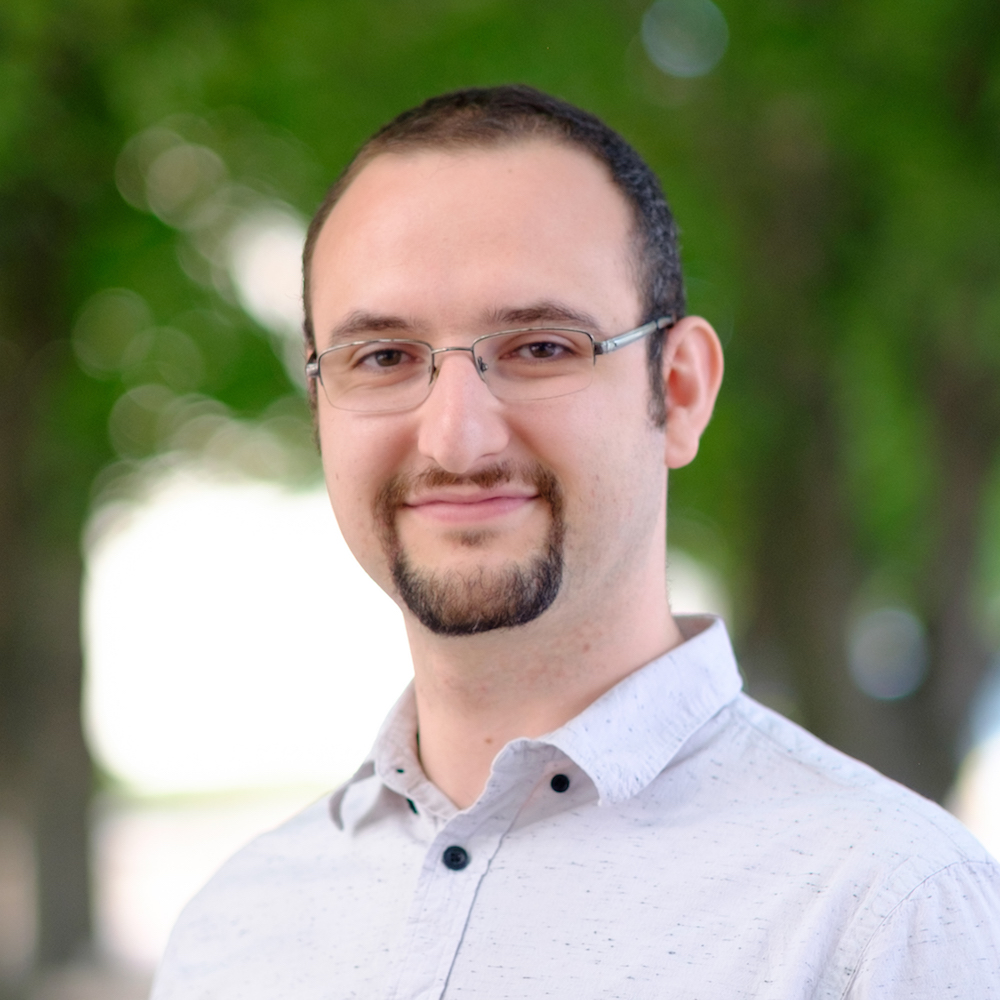
Joost de Moor is an Assistant Professor in Political Science at Sciences Po’s Centre for European Studies and Comparative Politics (CEE) . His research bridges Environmental Politics , Social Movements , and Political Participation , with a focus on climate activism, lifestyle politics, and post-political strategies. He holds a PhD in Social Sciences: Political Science from the University of Antwerp (2016) and has held postdoctoral positions at Keele University (2016-2018) , Stockholm University (2018-2021) , and Leiden University (2021) . A visiting scholar at the University of Mannheim (2015) , his work spans urban environmentalism, climate summit dynamics, and strategic movement adaptation.
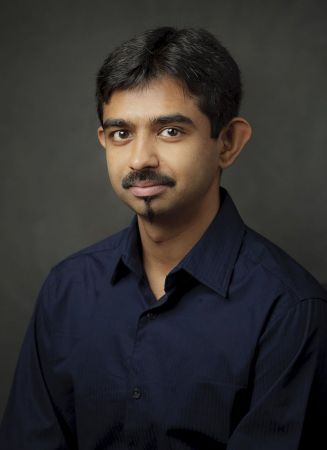
Dr. Alfred Chong is an Associate Professor in the Department of Actuarial Mathematics and Statistics at Heriot-Watt University (HWU). Previously, he served as an Assistant Professor at the University of Illinois at Urbana-Champaign (UIUC) and co-founded the Illinois Risk Lab. His research focuses on Actuarial Science, Financial Mathematics, and Quantitative Risk Management, addressing emerging risks like cyber, pandemic, and climate risks, leveraging machine learning, optimization, and stochastic control. He holds a PhD from The University of Hong Kong and King's College London, and is an Associate of the Society of Actuaries. Chong actively contributes to academic governance, including roles in the EPSRC Mathematical Sciences Early Career Forum and the Maxwell Institute's Data and Decisions research theme. Education: PhD in Actuarial Science, University of Hong Kong & King's College London Research Interests: Chong explores risk sharing mechanisms, forward preferences in insurance, and mitigation strategies for large-scale risks. His work integrates data analytics and machine learning to solve decision-making challenges, such as cybersecurity risk assessment, pandemic resource allocation, and climate risk modeling. Recent projects include incident-specific cyber insurance design and delegated investment strategies for retirement savings. Awards: Michael V. Colla Prize for Mathematics Related to Medicine (2022) Best of 2020 in the Annual Meeting of the Casualty Actuarial Society (2021) Advising & Grants: Chong supervises PhD students in holistic risk management, forward preferences, and reinforcement learning applications. He has secured grants supporting interdisciplinary research in risk modeling and insurance innovation. Labs & Teams: Co-founder of the Illinois Risk Lab (UIUC), now leading research at HWU's Actuarial Mathematics & Statistics department. Engaged with the International Centre for Mathematical Sciences for knowledge exchange initiatives.
Professor Daniel Quevedo is a leading academic in Electrical and Computer Engineering at The University of Sydney. Previously, he held positions at Queensland University of Technology and Paderborn University, Germany, where he founded the Chair in Automatic Control. He earned his PhD from the University of Newcastle (Australia) and MSc/Ing. degrees from Universidad Técnica Federico Santa María (Chile). His research focuses on networked control systems, cyber-physical systems, and cybersecurity, with contributions to state estimation, control of power converters, and human-in-the-loop systems. He has pioneered work integrating machine learning, behavioral economics, and advanced mathematics to address challenges in interconnected digital-physical environments. Quevedo serves as Associate Editor for IEEE Transactions on Control of Networked Systems and IEEE Control Systems. He chairs the Committee of Experts for Germany’s Excellence Strategy on Digital Methods and has held leadership roles in IEEE technical committees. Notable awards include the IEEE Axelby Outstanding Paper Award (2018) and multiple fellowships. Teaching includes advanced control systems courses like Reinforcement Learning and Optimal Control. He is a Fellow of the IEEE and has published over 200 peer-reviewed articles, with recent work emphasizing privacy-preserving state estimation, resilient control systems, and energy-efficient wireless control. His research labs explore topics such as human-machine collaboration, cybersecurity in Industry 5.0, and data-driven control strategies. Current projects include secure remote state estimation frameworks and adaptive control under adversarial conditions.
Roberto Togneri is a Professor and Senior Honorary Research Fellow at the University of Western Australia's School of Electrical, Electronic and Computer Engineering. He has been affiliated with the university since 1988, following his PhD in 1989. His research focuses on signal processing, speech recognition, machine learning, and biometrics, with notable contributions to audio-visual recognition systems and fraud detection. Education: PhD in Electrical Engineering (University of Western Australia, 1989). Research interests include feature extraction for audio signals, neural network models for speech and speaker recognition, and applications of machine learning to fraud prevention. His work has been recognized with awards such as the Education Innovation Award (ICASSP 2019) and grants from the Australian Research Council (e.g., DP110103336 for a 3D Audio-Visual Speech Recognition System). Key projects include developing robust speech recognition systems in adverse environments and advancing graph-based fraudster group detection using spatio-temporal data. He has also contributed to editorial roles in IEEE Signal Processing Magazine and authored over 214 research outputs. Funding highlights include $279,000 for a 3D audio-visual speech recognition system (2011–2013) and $230,000 for robust speech recognition in hostile environments (2010–2012). His research aligns with UN SDGs related to innovation and infrastructure.
Min Chen is an Assistant Professor in the Department of Forest and Wildlife Ecology at the University of Wisconsin–Madison, affiliated with the Russell Labs. His research focuses on terrestrial ecosystem modeling, remote sensing applications, and human-Earth system interactions. He holds a PhD in Earth & Atmospheric Sciences from Purdue University, an MS in Remote Sensing and GIS from Beijing Normal University, and a BS in Computer Science from Beijing Normal University. His postdoctoral work included roles at the Carnegie Institution for Science and Harvard University. Research interests include forest carbon dynamics, methane emissions from wetlands, wildfire risk analysis, and the integration of remote sensing with Earth system models. His work emphasizes advancing methods for global-scale environmental monitoring using satellite and drone technologies. Notable contributions include studies on forest edge dynamics, vegetation-climate feedbacks, and the application of machine learning in ecological modeling. Recent publications highlight advancements in leaf trait prediction using transfer learning, global wetland methane flux modeling, and the impacts of climate change on land-use patterns. His lab develops innovative approaches to track terrestrial carbon cycles and assess human-driven environmental changes. Ongoing projects explore urban land expansion effects on carbon balances and phenological shifts under global change scenarios.
Saleh A. Alshebeili is a Professor in the Department of Electrical Engineering at King Saud University's College of Engineering, Riyadh, Saudi Arabia. With over 139 publications spanning from 1991 to 2024, his research demonstrates significant contributions across multiple engineering disciplines. His academic profile shows consistent collaboration with Saudi research institutions and international partners, particularly in communications and signal processing fields. Dr. Alshebeili's research interests span wireless communications, optical networks, radar systems, and biomedical signal processing. His work bridges theoretical signal processing with practical applications in 5G/6G communications, IoT security systems, and healthcare monitoring. The interdisciplinary nature of his research connects electrical engineering with computer science, particularly through machine learning applications for signal analysis and system optimization. His publications demonstrate expertise in both traditional signal processing techniques and emerging AI-driven approaches to engineering problems. Analysis of his recent publications (2021-2024) reveals a strong focus on next-generation communication technologies including 6G systems, optical wavelength conversion, and OAM-SDM communication. Simultaneously, he maintains active research in biomedical applications, particularly EEG signal processing for seizure detection and biometric authentication using physiological signals. His work consistently appears in top IEEE journals including IEEE Access, IEEE Transactions on Wireless Communications, and IEEE Journal of Biomedical and Health Informatics, reflecting the high quality and relevance of his research. Dr. Alshebeili has established extensive collaborations with researchers across King Saud University, particularly with Fathi E. Abd El-Samie (29 co-authored papers), Turky N. Alotaiby (22 papers), and Amr Ragheb (21 papers). These long-term collaborations suggest leadership in research groups focusing on communications systems and biomedical signal processing. His work spans theoretical development, simulation, and experimental validation, as evidenced by publications with 'Experimental Investigation' and 'Experimental Demonstration' in their titles.
Dr. Ivan Puddu is a Researcher affiliated with the Institute for Information Security at ETH Zürich. His work focuses on advancing cybersecurity, particularly in the realms of Trusted Execution Environments (TEEs), hardware security, and privacy-preserving technologies. He explores vulnerabilities in modern computing systems, including attacks on enclave-based security mechanisms and side-channel exploits. His research also addresses distributed systems, blockchain, and FPGA-accelerated architectures, aiming to enhance system sovereignty and data integrity. Notable contributions include studies on code confidentiality in TEEs, disaggregated memory systems, and mitigating security threats in low-power networks.
Timothy Rogers is an Associate Professor in the Department of Electrical and Computer Engineering at Purdue University, located in West Lafayette. His research focuses on GPU architecture, parallel processing, and simulation frameworks, with particular emphasis on optimizing hardware acceleration, memory systems, and concurrency management. He holds an office at BHEE 326A and can be reached at timrogers@purdue.edu. His work spans GPU performance modeling, SIMT architecture analysis, and energy-efficient computing. Recent contributions include frameworks like ThreadFuser for MIMD program analysis, CRISP for concurrent rendering, and Simr for data center microservices. He has also contributed to hardware ray tracing units and RISC-V core integration studies. Rogers has been active in conference leadership, serving as General Chair for ISPASS 2024 and securing NSF travel grants for student participation. His research bridges theoretical architecture design with practical implementation, addressing challenges in modern massively parallel systems.
Zhendong Su is a full professor in the Department of Computer Science at ETH Zurich since August 2018. Previously, he held a full professorship at UC Davis from 2003 until June 2019. He earned his Ph.D. in Computer Science from UC Berkeley and dual Bachelor’s degrees in Computer Science and Mathematics from UT Austin in 1995. Affiliations: ETH Zurich: Full Professor (since 2018) UC Davis: Full Professor and Chancellor’s Fellow (2003–2019) IEEE Fellow, ACM Fellow, and Member of Academia Europaea His research focuses on programming languages, compilers, software engineering, computer security, and education technologies . Key contributions include compiler validation (e.g., Project Yin-Yang for SMT solvers and DBMS testing), testing tools like SQLancer, and educational innovations such as the Algot visual programming language. Recent work emphasizes secure AI (e.g., CipherSteal for TEE-shielded models) and compiler reliability (e.g., Artemis/Apollo for JIT validation). He has pioneered techniques like metamorphic testing and equivalence modulo inputs (EMI) for compiler validation, uncovering thousands of bugs in GCC/LLVM and SMT solvers. Awards: ICSE MIP Award (2022), ACM SIGSOFT Impact Paper (2018), NSF CAREER Award, and multiple industrial awards. His students have won IEEE TCSE Rising Star and SIGSOFT Impact Paper awards, securing roles at top universities and companies like Google and NVIDIA. Service: Steering committee member of ISSTA and ESEC/FSE, ACM Distinguished Speaker, and Associate Editor for ACM TOSEM. Program chaired ISSTA 2012 and co-chaired FSE 2016. Labs/Teams: Leads research groups on compiler validation, secure AI, and education technologies. Projects include Yin-Yang (SMT testing), SQLancer (DBMS fuzzing), and Algot (visual programming for education).
Dr. Lucy Hederman is an Associate Professor in Computer Science at Trinity College Dublin (TCD), affiliated with the O'Reilly Institute. Her research focuses on leveraging data and documents to support clinical decision-making, particularly in healthcare knowledge work. She has led interdisciplinary projects addressing data integration for rare diseases (e.g., ANCA-vasculitis, MND) and socio-technical challenges in adopting patient-generated health data (PGHD) into clinical practice. Dr. Hederman has secured over €xxxk in research funding and leads the Heterogeneity and Interoperability (H&I) challenge in the SFI-funded ADAPT 2 Centre. Her educational background includes advanced studies in computer science and healthcare informatics, though specific degree details are not explicitly stated in the text. She has supervised 4 PhDs, 2 research MScs, and co-supervised 6 PhDs, while currently mentoring 8 graduate students. Her career includes founding TCD spinouts PBOC and BIOLOGIT, which align with her research in health informatics and technology. Key research interests include: Interdisciplinary collaboration between clinicians, researchers, and technologists Data harmonization for multi-national clinical studies (e.g., FAIRVASC, Precision-ALS) Development of clinical decision support systems (CDSS) Design of mobile health (mHealth) tools for underserved populations Recent work emphasizes FAIR principles for healthcare data and socio-technical factors influencing PGHD adoption. She has contributed to over 70 peer-reviewed publications and actively participates in initiatives like the EU-funded TRANSFORM project and HRB Primary Care Research Centre. Dr. Hederman’s professional memberships include the Irish Computer Society, ACM, and Healthcare Informatics Society of Ireland. Her research has impacted healthcare practices in Ireland, with many MSc student projects influencing local health services.
Onur Varol is an Assistant Professor at Sabanci University's Computer Science Department and leads the VIRAL Lab, which focuses on computational social science, network science, and machine learning. He has affiliations with the Center of Excellence for Data Analytics. His research spans social bot detection, misinformation analysis, and online behavior modeling.
Parv Venkitasubramaniam is a Professor in the Department of Electrical & Computer Engineering at Lehigh University, affiliated with the P.C. Rossin College of Engineering. Previously, he served as a postdoctoral researcher at UC Berkeley under Prof. Venkat Anantharam. His research focuses on theoretical foundations of privacy and security in networks, leveraging statistical signal processing, information theory, and game theory. Key application areas include smart grids, transportation systems, and peer production networks. Education includes a Ph.D. and M.S. in Electrical Engineering from Cornell University, and a B.Tech from the Indian Institute of Technology. His doctoral work concentrated on wireless sensor networks, particularly distributed communication and statistical inference. Research interests span privacy-utility tradeoffs, cybersecurity in control systems, and resilient network design. He explores topics like stealthy attacks on dynamical systems, privacy-aware stochastic games, and resilient energy storage systems. Recent work emphasizes transportation system resilience and cyber-physical system security. His publications address cutting-edge challenges in anonymizing networks, detecting cyber attacks, and optimizing privacy-preserving mechanisms. Notable projects include NSF-funded research on anonymous networking and information-theoretic security frameworks.
Sanjeev Dewan is a Professor of Information Systems and Associate Dean of Masters Programs at the Paul Merage School of Business, University of California, Irvine. He also serves as Faculty Director of the Master of Science in Business Analytics program. Prior to joining UCI in 2001, he held faculty positions at the University of Washington and George Mason University. PhD, University of Rochester MS, University of Rochester Bachelor of Technology, Indian Institute of Technology, Delhi His research focuses on the economics of digital platforms , social and mobile analytics , and the valuation of technology investments . He investigates how information technology creates business value, impacts consumer behavior, and influences firm performance. His work spans electronic markets, Web 2.0 technologies, IT productivity, and the digital divide. The most recent publications reveal a strong emphasis on empirical analysis of digital platforms , including studies on gender bias in open source communities, quality certification in the sharing economy (e.g., Airbnb), personalized ranking in app stores, and mobile health applications. His research frequently uses large-scale datasets to examine behavioral patterns, market dynamics, and the economic implications of IT innovations. Faculty Service Award for 2023-24, UCI Paul Merage School of Business Best Paper Award, INFORMS 2019 e-Business Cluster Faculty Service Award for 2016-17, UCI Paul Merage School of Business Best Paper Award, INFORMS Conference on Information Systems and Technology (2009) INFORMS Service Award (2009) INFORMS Certificate of Appreciation (2008) Beta Gamma Sigma Honor Society (1991) University of Rochester Fellowship (1985–1990) Sanjeev Dewan has advised numerous PhD students who have secured faculty positions at leading institutions such as the University of Wisconsin-Madison, HKUST, Penn State, and the University of Hong Kong. His editorial service includes senior editor roles at Information Systems Research and associate editor at Management Science . He has also chaired tracks at ICIS and served as program co-chair for PACIS. There is no indication of external grant funding in the provided text, but his sustained publication record and leadership roles suggest significant research activity and institutional support. He is actively involved in academic leadership and research dissemination, contributing to major conferences and editorial boards. His work bridges theory and practice, particularly in digital platform ecosystems and analytics-driven decision-making.
Karan Singh serves as an Assistant Professor of Operations Research at Carnegie Mellon University's Tepper School of Business, where he develops theoretically rigorous algorithms for machine learning systems with emphasis on reinforcement learning and control theory. His work synthesizes techniques from online learning, optimization, and statistics to address complex interactive learning challenges. His academic journey includes: PhD in Computer Science from Princeton University under Elad Hazan Postdoctoral research at Microsoft Research (Redmond) Bachelor's degree in Computer Science from Indian Institute of Technology (IIT) Kanpur Singh's research program centers on three interconnected pillars: Algorithmic Reductions : Creating efficient methods to solve complex learning problems (e.g., reinforcement learning) using solvers for simpler tasks, yielding breakthroughs in online boosting and RL with concave rewards Nonstochastic Control : Establishing an algorithmic foundation for control theory through provably efficient instance-optimal algorithms that extend online learning to stateful systems Privacy-Preserving Online Learning : Investigating fundamental limits of regret minimization under differential privacy constraints while maintaining performance His approach consistently bridges theoretical computer science and practical control applications. Analysis of his 15 most recent publications reveals a clear evolution toward integrating algorithmic reductions with nonstochastic control frameworks. Recent work (2023-2025) demonstrates increasing focus on sample efficiency in agnostic boosting, privacy-aware optimization without smoothness assumptions, and competitive ratio analysis in online control. A unifying thread is the development of regret-optimal algorithms for linear dynamical systems under adversarial disturbances. His contributions have earned significant recognition: Best Paper Award at OptRL workshop (NeurIPS 2019) Spotlight Prize from New York Academy of Sciences' ML Symposium (2018) Multiple oral presentations at NeurIPS/ICML (acceptance rate Though specific student advisees aren't listed, Singh's extensive publication record with junior co-authors indicates active mentorship. His research has secured substantial support including a US patent (11,138,513 B2) for dynamic learning systems and collaborations through CMU's Machine Learning and Optimization group. Current projects involve interdisciplinary work on differentiable control libraries (Deluca) and medical applications like mechanical ventilation control. Singh leads research within CMU's Machine Learning and Optimization ecosystem, collaborating across computer science and engineering departments. His team develops foundational tools like the Deluca differentiable control library while pursuing real-world applications in healthcare systems, demonstrating strong cross-disciplinary integration.
Dr. Mary Lacity is a Distinguished Professor of Information Systems at the Sam M. Walton College of Business, University of Arkansas, and holds the David D. Glass Endowed Chair. She is also a Visiting Professor at the London School of Economics for Spring 2025. Director of Walton College’s Blockchain Center of Excellence (2014-2019) Former Curators’ Distinguished Professor at University of Missouri Holds visiting positions at MIT, Washington University, and Oxford University Senior Editor for MIS Quarterly Executive Contributing Editor for Journal of the British Blockchain Association Her research focuses on enterprise adoption of emerging technologies, particularly blockchain, metaverse, service automation, and ethical technology use. She has conducted extensive case studies and surveys on automation and Web3 implementation across hundreds of organizations globally. Recent publications include books like Human Privacy in Virtual and Physical Worlds (2024) and Blockchain Fundamentals for the Web 3.0 (2022). She has over 30 books and 26,300 Google Scholar citations (h-index: 68). 2014: Inducted into IAOP’s Outsourcing Hall of Fame 2024: Recognized as top 2% scholar in Business and Management (Stanford) 2024: Top 1% scholar in Business and Management (ScholarGPS) Fellow of the Association of Information Systems She actively contributes to blockchain standards via the Global Standards Mapping Initiative (GSMI) of the Global Blockchain Business Council and the Linux Foundation’s Trust over IP (ToIP). Her work bridges academic research and practical applications in enterprise technology adoption.


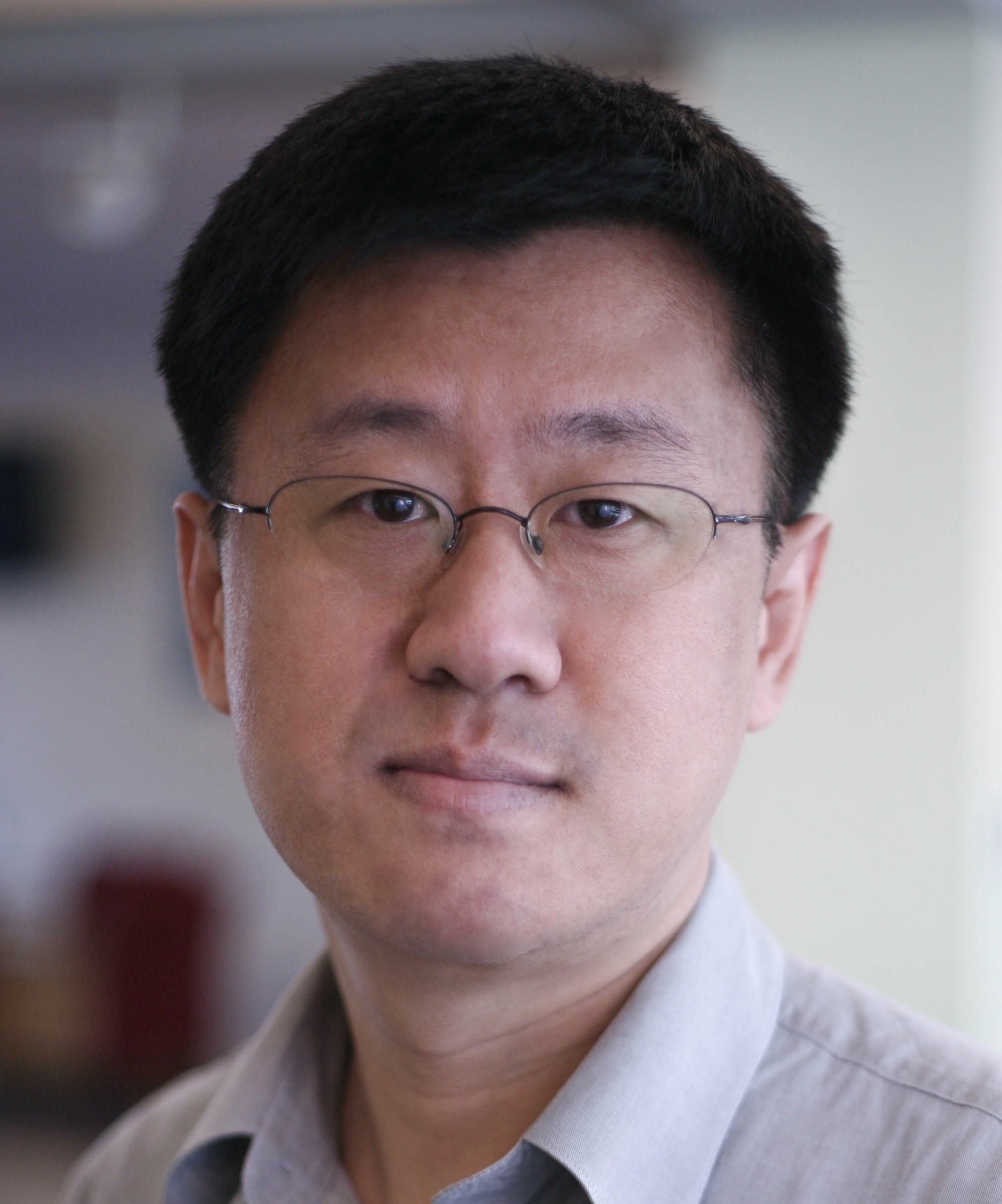
/prod01/channel_3/media/tcd/scss/headshots/Lucy-Hederman-BW-1.jpg)