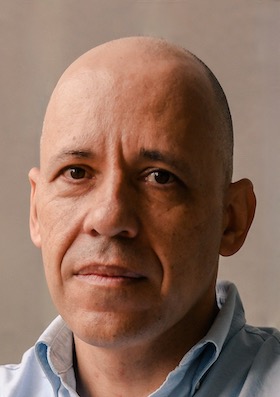
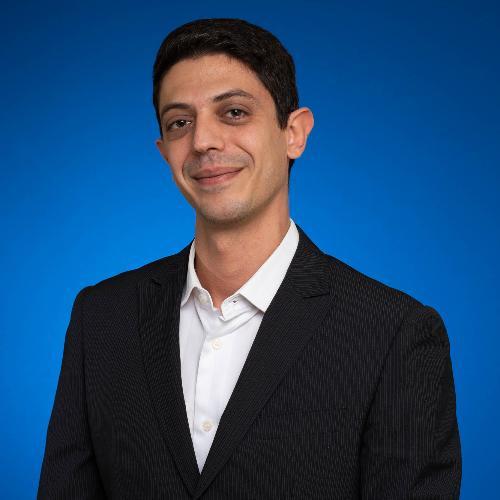
Dr. Abbas A. Fairouz is an Assistant Professor in the Computer Engineering Department at Kuwait University. He holds a PhD from Texas A&M University (2019) and BS/MS degrees from Kuwait University (2006/2011). He previously served as a system engineer at Kuwait's Ministry of Electricity & Water (2006–2014) and as a part-time faculty member at PAAET's Higher Institute of Telecommunication and Navigation (2008–2010). Affiliations: Academic Visitor at University of Oxford (OSCAR Research Group) Research Focus: VLSI design, AI/ML processor architecture, secure computer systems, microarchitecture optimization, and FPGA-based acceleration. His current projects include hardware-based sorting networks, privacy-preserving instant messaging systems, and chiplet-based secure architectures. He has received the President of Kuwait Award (2012) and was a best paper nominee at GLSVLSI'17. His work spans hardware-software co-design for cryptographic accelerators, special function units (SFUs), and low-power NoC routers. Collaborations include the Oxford Secure Computer Architecture Research (OSCAR) group.
Prof. Katie Skinner is an Assistant Professor of Robotics at the University of Michigan, leading the Field Robotics Group (FRoG). Her research focuses on enabling autonomy in dynamic environments through advancements in perception, multi-sensor fusion, and robot learning. She specializes in underwater and space robotics, with applications in marine archaeology, autonomous vehicles, and planetary exploration. Her work has led to innovations in sonar-based perception, underwater SLAM, and neural radiance fields for 3D reconstruction. She has secured prestigious grants, including the NSF CAREER Award, and actively mentors PhD students like Advaith Sethuraman and Anja Sheppard. Prof. Skinner collaborates with institutions such as NOAA and NASA, contributing to real-world field deployments like the Thunder Bay National Marine Sanctuary surveys. The FRoG lab has developed datasets like AI4Shipwrecks, advancing machine learning for underwater exploration. Her educational background and prior roles are not explicitly detailed in the provided texts, but her extensive conference presentations (IROS, CVPR, ICRA) and leadership in major robotics initiatives underscore her expertise. She emphasizes bridging simulation and real-world deployments, with recent work on GPU-accelerated underwater simulation frameworks (OceanSim) and radar/sonar fusion techniques. Her lab’s contributions span both theoretical advancements and practical tools for autonomous systems in challenging environments. Awards: NSF CAREER Grant Key Collaborations: NOAA Ocean Exploration Program, Thunder Bay National Marine Sanctuary Labs/Teams: University of Michigan Field Robotics Group (FRoG)
Lance Sherry is a Professor in the Department of Systems Engineering and Operations Research at George Mason University’s College of Engineering and Computing. He serves as Director of the Center for Air Transportation Systems Research (CATSR), where he leads cutting-edge research in air transportation systems, data analytics, and autonomous systems. Education: PhD, Industrial and Systems Engineering, Arizona State University MS, Industrial and Systems Engineering, Arizona State University BS, Electrical Engineering, Brown University His research focuses on the modeling and simulation of complex adaptive systems in aviation, including air traffic control, airport operations, and unmanned aerial vehicles. He has pioneered work in human-computer interaction, operator training, and big data applications in aviation safety. His recent publications reflect strong trends in predictive analytics, environmental sustainability in aviation, and decision support systems for complex operational challenges. Scientific Awards and Recognitions: U.S. Patent and Provisional Patent for probabilistic alerting of aircraft unstable approaches using big data Multiple 1st and 2nd place awards in IEEE SIEDS, PITCH-IT, and Capstone competitions Best paper award at ICRAT Conference (2016) Senior design teams consistently recognized for innovation in systems engineering Lance Sherry has advised numerous PhD students, many of whom have gone on to prominent roles in aviation, government, and tech. He has secured research funding from organizations such as the Decision Science Research Institute, Crown Consulting Inc., and LMI. His leadership extends to professional service, including chairing the IEEE ICNS Conference and serving on NSF merit panels and AIAA technical committees. He is also actively involved in promoting drone technology education and urban air mobility research. Laboratories and Teams: He leads the Center for Air Transportation Systems Research (CATSR), which conducts interdisciplinary research in aviation systems, big data analytics, and human factors. The center supports undergraduate and graduate student teams in national design competitions and collaborates with FAA, NASA, and industry partners.
Dr. Elke Duncker-Gassen is an Associate Professor in the Department of Computer Science at Middlesex University, where she contributes to research and academic instruction with a focus on human-centered computing. Her work bridges technology and cultural context, particularly in interface design and usability. Her research interests lie at the intersection of human-computer interaction and cultural diversity. She investigates how digital systems can be designed to respect and accommodate different cultural backgrounds, focusing on topics such as cross-cultural usability, digital libraries, interface metaphors, and e-learning environments. Her studies often explore how cultural assumptions embedded in technology affect user experience, especially among marginalized or underrepresented groups. The analysis of her recent publications reveals a consistent trajectory in examining cultural dimensions in technology design. Her work spans areas including digital libraries, health informatics, security visualization, and distance learning, all unified by a critical perspective on cultural inclusivity. She frequently employs qualitative and sociotechnical methods to understand user behavior and system impact across diverse populations. Dr. Duncker-Gassen has contributed to numerous international conferences and peer-reviewed journals, including IEEE, ACM, and Springer publications. While no formal awards are listed in the provided text, her sustained scholarly output since the late 1990s reflects a significant contribution to the field of cross-cultural interaction design. She has collaborated extensively with researchers such as B. Fields, J. Sheikh, and Y. Theng, suggesting active participation in research teams focused on sociotechnical systems and inclusive design. Although specific details about student supervision or grant funding are not mentioned, her role as an Associate Professor implies involvement in academic mentoring and research leadership. Her ORCID ID (0000-0002-2452-2124) confirms her active scholarly presence.
Karthikeyan Muthumayandi is an Assistant Professor in Musculoskeletal Physiotherapy at the University of Birmingham, Dubai Campus, where he also serves as Programme Director for the MSc Musculoskeletal Physiotherapy. He plays a pivotal role in curriculum development, academic leadership, and student mentorship, ensuring alignment with international clinical and educational standards. Education: Bachelor of Physiotherapy (B.P.T), The Tamil Nadu Dr. M.G.R Medical University, Chennai, India (1993–1997) Master of Physiotherapy (M.P.Th), Jamia Hamdard University, New Delhi, India (2000–2002) Master of Philosophy (M.Phil.), Northumbria University, Newcastle upon Tyne, United Kingdom (2007–2011) Postgraduate Certificate in Higher Education (PGCHE), University of Kent, United Kingdom (2014–2018) LEAP (Leadership and Education for Academic Professionals), University of Kent, United Kingdom (2022–2023) His research interests span musculoskeletal rehabilitation, orthopaedic research, sports biomechanics, patient-reported outcome measures (PROMs), and the integration of digital technologies in education such as gamified learning, flipped classrooms, MOOCs, and AI in teaching. His work emphasizes evidence-based practice and innovation in both clinical and academic settings. The recent publications reflect a strong focus on orthopaedic outcomes, rehabilitation technologies, surgical comparisons (e.g., hip resurfacing vs. replacement, knee arthroplasty), and the psychosocial impact of chronic conditions. The research consistently employs patient-reported outcomes, biomechanical assessment, and clinical evaluation methods, highlighting a patient-centered and data-driven approach. Scientific Awards: Gold Medal awarded by Dr. Manmohan Singh, the then Prime Minister of India, for outstanding academic performance in Master of Physiotherapy Karthikeyan has secured research funding from esteemed organizations such as the National Institute for Health Research (NIHR) and Sarcoma UK. He has advised and collaborated with numerous students and researchers, contributing to impactful studies in physiotherapy and orthopaedics. His leadership in curriculum development extends across institutions in the UK and India, reflecting a global commitment to advancing healthcare education. He is affiliated with professional bodies including the Health and Care Professions Council (UK), the Chartered Society of Physiotherapy (UK), and the Spinal Cord Society (India). His work bridges clinical excellence, academic innovation, and leadership in healthcare education.
Giuseppe Pirro is an Associate Professor at the Department of Computer Science, Sapienza University of Rome. His research focuses on Semantic Web technologies, graph databases, and adversarial social network analysis. Specializes in RDF(S) inference, ontology alignment, and knowledge graph analytics Develops methods for community deception in networks and privacy-preserving data publishing Active in temporal query languages and web cartography Research trends include: Advancing graph embedding techniques for knowledge representation Exploring intersection of differential privacy and neural networks Designing novel algorithms for community detection and network deception Improving query languages for semantic web and temporal data Scientific awards: ERC PE6_7 grant ERC PE6_10 grant KET Big data & computing recognition
Marcelo Arenas is a Professor at the Department of Computer Science and the Institute for Mathematical and Computational Engineering at the Pontifical Catholic University of Chile. He is a Fellow of the Association for Computing Machinery (ACM), former director of the Millennium Institute for Foundational Research on Data, and co-founder of the Center for Semantic Web Research. His Ph.D. in Computer Science was obtained from the University of Toronto in 2005. Research interests include data management , applications of logic in computer science , and Semantic Web technologies. He has published extensively on topics such as SPARQL query complexity , graph database systems , and incomplete database theory , with notable works like MillenniumDB and Foundations of Data Exchange . Scientific accolades: 2016 SWSA Ten-Year Award for "Semantics and Complexity of SPARQL" IBM Ph.D. Fellowship (2004) Nine Best Paper Awards across PODS, ISWC, ICDT, ESWC, WWW, and NeurIPS His work on approximate counting algorithms (e.g., FPRAS for #NFA) and explainable AI frameworks has influenced database theory, while serving on program committees for ICDT 2015, ISWC 2015, and PODS 2018 demonstrates leadership in the field. Current projects focus on probabilistic explanations for decision trees and temporal regular path queries in knowledge graphs.
Prof. Horst Hellbrück is an esteemed academic at the Lübeck University of Applied Sciences , where he holds a professorship in Communication Systems and Distributed Systems since 2008. He leads the Center of Excellence CoSA (Communications - Systems - Applications) and focuses on wireless mobile networks, sensor networks, and their applications in medical and underwater technologies. His work bridges theoretical research with practical implementations, including projects like 5G-TELK-NF (autonomous driving/flying), Baltic Future Port (5G drone-based data optimization), and DAVE (digital twin for inland vessel navigation). Education: Diplom (equiv. to Master’s) in Electrical Engineering (1994, University of Saarland); PhD in Computer Science (2004, TU Braunschweig). Research Interests: Modern network structures, sensor systems for healthcare, underwater object detection, and 5G/AI integration. Scientific Contributions: His recent publications focus on UWB-based localization, 5G industrial deployments, and multisensor platforms for underwater applications. He has developed tools like ANSim (Ad-Hoc Network Simulator) and JGPSMap (GPS visualization). Leadership Roles: Active in GI/ITG Fachgruppe KuVS , program committee memberships, and long-term support for internationalization as part of the university’s governance bodies.
Dr. Yee Wei Law is a Senior Lecturer at the University of South Australia's (UniSA STEM) Mawson Lakes Campus. His research expertise spans cybersecurity, machine learning, and wireless sensor networks, with a focus on secure communication systems and autonomous vehicle localization. He serves as a Research Degree Supervisor and actively contributes to publications in IoT security, space systems, and privacy-preserving technologies. Research Trends : Recent work emphasizes domain adaptation for predictive maintenance, adversarial attack analysis in computer vision, and quantum key distribution for satellite-IoT networks. Key themes include security in smart grids, UAV-based gesture recognition, and collaborative privacy-preserving algorithms. Publications highlight interdisciplinary applications of machine learning in fault diagnostics, cloud detection via satellite, and secure networking protocols. His work bridges theoretical advancements with real-world implementations in hypersonic tracking and RFID security.
Dr. Erke Arıbaş is a Lecturer at Istanbul Technical University's Faculty of Computer and Informatics , specializing in the Department of Computer Engineering . His research spans interdisciplinary domains including artificial intelligence, simulation modeling, and biophysics applications. Education: PhD in Computational Science and Engineering (2001-2013), Istanbul Technical University MA in Information Systems Design and Management (2001), Istanbul Technical University (Evening Education) BS in Physics (1992-1996), Istanbul Technical University BS in Physics (1996-2000), University of Missouri-Rolla His research focuses on generative AI applications , autonomous systems , and multi-phase flow simulations with thermal modeling. He has contributed to fields ranging from smart city cybersecurity to biomechanical modeling of blood flow. Article trends show expertise in AI-personality modeling integration , unmanned aerial vehicle design , and biofluid dynamics with specialized focus on red blood cell aggregation and arterial hemodynamics.
Luís Eduardo Teixeira Rodrigues is a Professor Catedrático at the Department of Computer Engineering , Instituto Superior Técnico (IST) , Universidade de Lisboa . He is also affiliated with INESC-ID's Distributed, Parallel and Secure Systems Group . With a career spanning over three decades, he has pioneered research in distributed systems, fault tolerance, edge computing, and microservices consistency. PhD from IST (1996) "Agregação" in Informatics (2003) Co-founder of LASIGE's Navigators group His research focuses on transactional causal consistency , Byzantine fault tolerance , and edge computing systems . He leads the GLOG project for distributed shared logs and the DACOMICO project for microservices consistency. His work bridges theoretical distributed algorithms with practical systems engineering. Recent publications emphasize geo-replicated transactional systems , proof-of-storage mechanisms , and automated microservices decomposition . Notable collaborations include projects with institutions in Italy, Japan, and Luxembourg. Scientific contributions include: Prémio Prof. Luís Vidigal (awarded to student Mário Rui Vazão) Co-author of foundational books on Reliable Distributed Programming and Distributed Systems for System Architects Mentorship highlights: Supervised over 40 PhD and MSc students in distributed systems, including: Diogo Barrinha - Unobservable Covert Streaming Xavier Vilaça - N-Party BAR Transfer João Queirós - Transactional Causal Consistency Current projects include the GLOG distributed shared log system and DACOMICO for microservices consistency. Active in international collaborations with institutions in the USA, Switzerland, and Brazil.
Sauman Chu is a Professor and Graphic Design Leader in the Administration (OUE) at the University of Minnesota. His work focuses on applying design principles to healthcare, particularly in the field of organ transplantation. With over 68 research outputs throughout his career, he has established himself as a specialist in human-centered design within medical contexts. Chu's research interests center on human-centered design, design and health, multilingual design, user experience design, and visual communication. His work particularly emphasizes patient-centered approaches to complex healthcare challenges, with significant contributions to transplant medicine. He has developed innovative tools and systems to help patients navigate the complex organ transplant process, focusing on decision support, information accessibility, and patient empowerment. Analysis of Chu's recent publications reveals a strong trend toward patient-centered design solutions for transplant candidates. His work consistently addresses the information needs of patients facing organ transplantation, developing tools that help them understand program performance, make informed decisions about transplant centers, and navigate the complex medical landscape. His research bridges design theory with practical healthcare applications, creating tangible tools that improve patient experiences in high-stakes medical situations. Horace T. Morse - University of Minnesota Alumni Association Award for Outstanding Contributions to Undergraduate Education (2018) Outstanding Teaching Award (2013) Chu has secured significant research funding for projects related to patient-centered design in transplant medicine. His three major funded projects include 'Creating a patient-centered report card for solid organ transplant candidates' (2019-2020), the same project funded earlier by NIH (2016-2017), and 'Smart House, Livable Community, Your Future' (2010-2011). These projects demonstrate his consistent focus on applying design principles to improve healthcare experiences and outcomes. While specific lab information isn't provided in the available text, Chu's collaborative work suggests he leads or participates in interdisciplinary teams combining design expertise with clinical transplant knowledge. His research outputs consistently involve collaboration with medical professionals, transplant specialists, and healthcare researchers, indicating a team-based approach to solving complex healthcare design challenges.
Michele Martelli is an Associate Professor at the University of Genoa's Department of Naval, Electrical, Electronic and Telecommunications Engineering (DITEN). He specializes in marine propulsion systems, autonomous vessel navigation, and maritime safety technologies. Academic Rank: Associate Professor Department: DITEN Primary Research Areas: Ship Propulsion, Autonomous Navigation, Collision Avoidance His recent publications focus on integrating LiDAR and AIS data for situational awareness, optimizing thrust allocation in autonomous ferries, and developing COLREG-compliant collision avoidance algorithms. Key trends include multiphysics modeling for electric propulsion, cybersecurity threats to MASS, and environmental impact assessments for dynamic positioning systems. As director of courses like Ship Propulsion Plants and Maritime Systems Design, he bridges theoretical research with practical applications in naval engineering and yacht design curricula. While specific scientific awards aren't explicitly mentioned in the dataset, his work on marine automation and propulsion control systems demonstrates significant technical contributions.
Dr. Daniel Burgwinkel is a Lecturer at Kalaidos University of Applied Sciences , where he teaches in the Certificate of Advanced Studies (CAS) programs in Digital Strategy & Performance , Digital Transformation of Companies , and Cybersecurity Management . He is actively involved in advising companies on digital data management, with a focus on compliance, security, blockchain, and knowledge graphs. His research and teaching interests span across digital transformation , data-centric security , and blockchain applications in enterprise environments . He emphasizes practical, industry-relevant approaches to cybersecurity and digital strategy, helping organizations navigate complex regulatory and technological landscapes. Dr. Burgwinkel has contributed to the academic and professional discourse through blog posts and publications, including a 2024 article on data-centric security concepts and a 2022 piece exploring the potential breakthrough of blockchain in enterprise settings. These works reflect his commitment to bridging theory and practice in digital innovation. While no formal awards or student advisement records are listed in the provided text, his role as a lecturer and consultant highlights his ongoing engagement with both academic and industry communities.
Phong H. Nguyen is an active researcher in visual analytics and information visualization, with verified affiliation to RedSift. His work spans interdisciplinary collaborations across institutions like City University London, Fraunhofer IAIS, and Middlesex University. Key research themes include time-oriented data visualization , user behavior analytics , and human-computer interaction . He contributes to spatio-temporal analysis , security visualization , and emergency response systems . Research Trends in his publications emphasize analytic provenance for sensemaking, time-set relationships in data visualization, and machine learning integration for behavioral pattern recognition. Notable applications include cybersecurity monitoring , epidemiological modeling , and laser material processing . Collaborative Networks involve partnerships with leading experts in visual analytics, including Professor Cagatay Turkay (University of Warwick) and Professor Jason Dykes (City St George's, University of London).