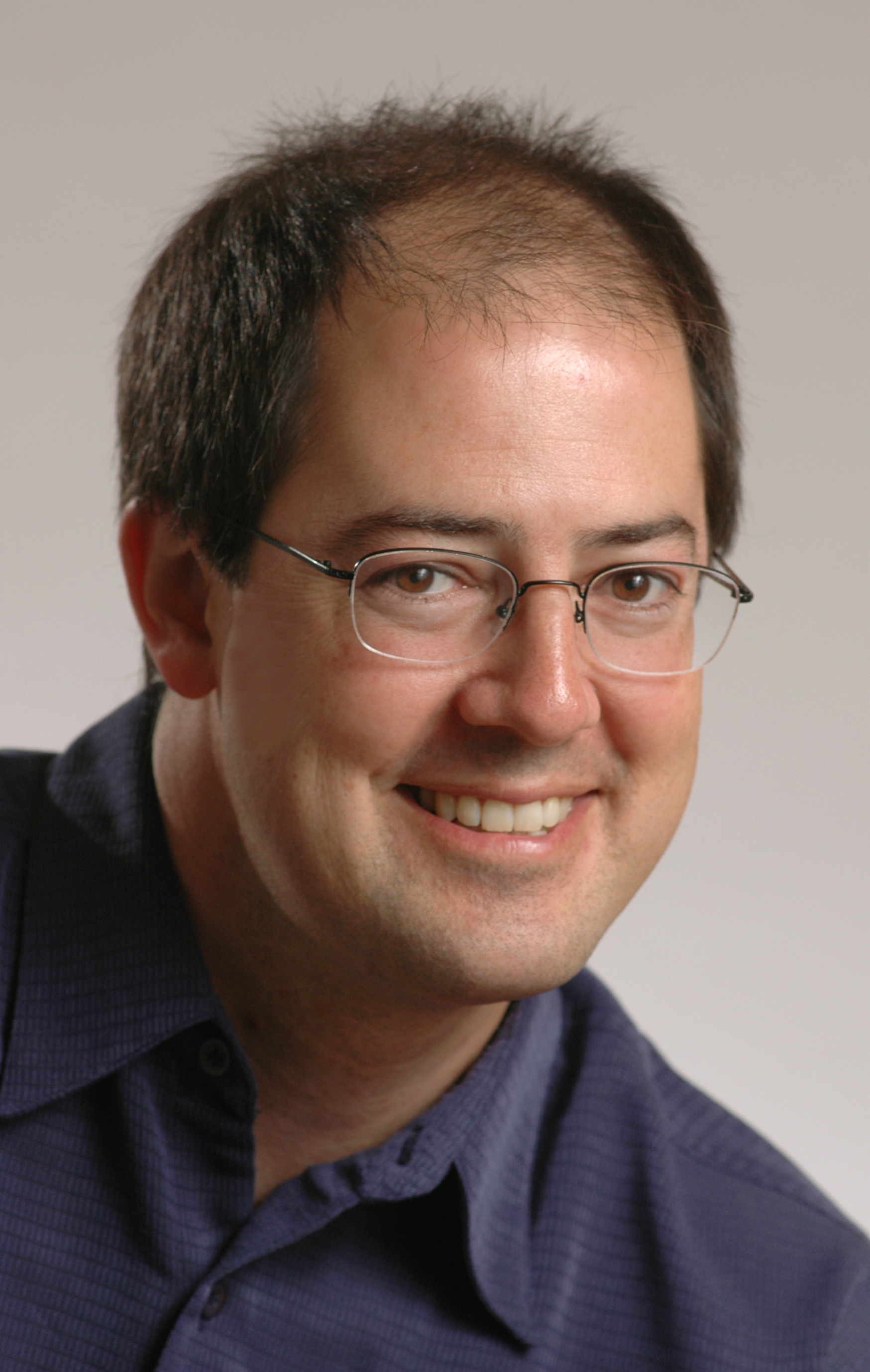
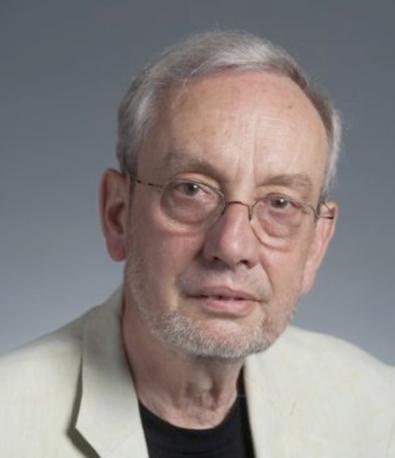
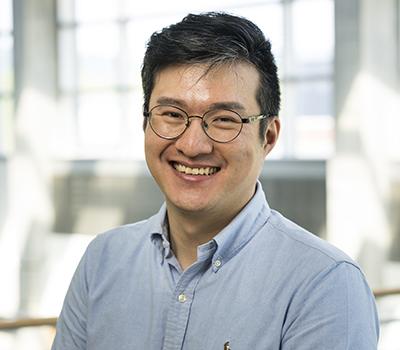
CHAN Mun Choon is a Professor at the School of Computing, National University of Singapore (NUS) , where he directs the NUS-NCS Joint Laboratory for Cyber Security . He previously worked at Bell Labs (1997-2003) and holds a PhD from Columbia University (1997). His research spans systems and networking with specific interests in mobile computing, software-defined networking, and cyber-physical systems . PhD, Electrical Engineering (1997), Columbia University M.Phil., Electrical Engineering (1993), Columbia University MS, Electrical Engineering (1993), Columbia University BS, Computer & Electrical Engineering (1990), Purdue University His recent work focuses on 5G network architecture , data center fault debugging , and energy-efficient mobile sensing . He has published over 100 papers and holds 7 US patents , including cache-based compaction techniques with 210+ citations. His projects include fronthaul slicing for 5G, network-wide packet history frameworks, and participatory indoor localization. Scientific recognition includes: Best Paper Awards: IEEE ICNP 2019, ACM SOSR 2019, ICDCN 2016 Best Demo: IPSN 2016 Distinguished Member, INFOCOM TPC (2016, 2020, 2021) He serves as Vice-Dean, Graduate Studies and Vice-Dean, Academic Affairs at NUS Computing, and has graduated 21 PhD students . His lab develops solutions for network security , latency-sensitive applications , and mobile sensing .
Dr. Arno Solin is a tenured Associate Professor in Machine Learning at Aalto University's Department of Computer Science and an Academy of Finland Research Fellow . He leads the Aalto machine learning research group and serves as Director of the Finnish Doctoral Program Network in AI (AI-DOC) . His work bridges probabilistic modeling with practical applications in sensor fusion and real-time inference. ELLIS Scholar (European Laboratory for Learning and Intelligent Systems) Adjunct Professor at Tampere University Member of Young Academy Finland (2021–2025) Research Interests focus on data-efficient machine learning with probabilistic methods for real-time inference and sensor fusion. Key areas include Gaussian processes, diffusion models, stochastic differential equations, and uncertainty quantification in deep learning. His group develops methods that combine structural constraints with adaptive learning for deployment on resource-limited hardware. Publication Trends show consistent output in top venues (NeurIPS, ICML, ICLR, AISTATS) with emphasis on diffusion models , 3D scene reconstruction , and real-time probabilistic modeling . Recent works explore physics-informed learning, heterophily-aware graph models, and compressed representations for world models in reinforcement learning. Scientific Recognition : Awarded AI Researcher of the Year 2024 by AI Finland Teacher of the Year 2023 at Aalto CS ISIF Jean-Pierre Le Cadre Best Paper Award (2018) MLSP Schizophrenia Classification Challenge Winner (2014) NeurIPS/ICML Reviewer Awards Research Leadership includes coordinating Finland's AI Center of Excellence program and directing the Finnish Doctoral Program Network in AI (AI-DOC). He supervises 15+ doctoral/postdoctoral researchers and has spun off Spectacular AI , a company commercializing sensor fusion technology.
Wei Xiang is an Assistant Professor of Economics at the University of Michigan's Department of Economics, housed within the College of Literature, Science, and the Arts. He earned his Ph.D. in Economics from Yale University in 2024, focusing on international trade, macroeconomics, and environmental economics. His research bridges economic theory with applied analyses, addressing global trade dynamics, macroeconomic policies, and environmental sustainability. Education: Ph.D. in Economics, Yale University (2024). Research Interests: His work explores the intersection of international trade policies, macroeconomic stability, and environmental regulations. He examines how trade agreements influence economic growth and environmental outcomes, with a focus on empirical methodologies to assess policy impacts. Additionally, he investigates macroeconomic models to understand global economic fluctuations and their implications for sustainable development. Publications: His recent articles highlight contributions to vehicle communication systems, signal processing, and wireless technologies, reflecting interdisciplinary engagement with engineering applications. These include real-time prediction models for GPS errors and beamforming optimization in vehicular networks. Labs/Teams: Not explicitly stated, but his research collaborations likely involve interdisciplinary teams in economics, engineering, and environmental science.
Nirupam Roy is an Assistant Professor at the Department of Computer Science, University of Maryland, College Park, and Director of the iCoSMoS research lab. His work bridges wireless networking, mobile computing, and acoustic sensing with applications in IoT, localization, healthcare, security, and wearables. Research Focus: Wireless Networking & Mobile Sensing Awards: Best paper award, MobiSys 2022 Best demo award, MobiSys 2021 CSL Ph.D. Thesis Award, UIUC 2019 Students: Nakul Garg, Yang Bai, Irtaza Shahid, Harshvardhan Takawale, Aritrik Ghosh, Ayushi Mishra, Sumbul Zehra, Justin Goodman Grants: NSF CAREER award (2023), Meta Research Award (2023)
Xiaoming Liu is the Anil K. and Nandita Jain Endowed Professor of Engineering and MSU Foundation Professor in the Department of Computer Science and Engineering at Michigan State University . Holding a Ph.D. from Carnegie Mellon University (2004), he leads cutting-edge research in computer vision and machine learning. Research Interests : Computer Vision Pattern Recognition Image and Video Processing Machine Learning Medical Image Analysis Multimedia Retrieval Recent Research Trends : Focus on 3D object detection and depth estimation Development of robust biometric recognition systems Integration of radar-camera fusion for autonomous systems Advancements in self-supervised and multimodal learning Exploration of adversarial AI security Creation of interpretable forgery detection frameworks Teaching : Spring 2013: CSE891-006 Computer Vision Seminar Fall 2012-2015: CSE803 Computer Vision Spring 2014-2017: CSE 471 Media Processing and Multimedia Contact Information : Email: liuxm@cse.msu.edu Office: EB 3137, Michigan State University Phone: +1 (517) 355-2359
Paolo Gardoni is the Alfredo H. Ang Family Professor and an Excellence Faculty Scholar in the Department of Civil and Environmental Engineering at the University of Illinois Urbana-Champaign, with additional professorial appointments in Industrial & Enterprise Systems Engineering and Biomedical & Translational Sciences. He also serves as Director of the MAE Center and Editor-in-Chief of Reliability Engineering & System Safety. Education Ph.D. in Civil Engineering, University of California, Berkeley (2002) M.A. in Statistics, University of California, Berkeley (2001) M.Eng. in Structural Engineering, University of Tokyo (1997) Laurea (BS+MS equivalent) in Structural Engineering, Politecnico di Milano (1997) Research Interests Gardoni’s scholarship integrates probabilistic methods with large-scale infrastructure systems to advance reliability, risk, and life-cycle analysis. His work quantifies the performance of deteriorating systems under natural and anthropogenic hazards, models societal impacts of disasters, and develops decision frameworks for sustainable and resilient infrastructure. He also examines ethical, social, and legal dimensions of risk, and investigates optimal strategies for hazard mitigation, disaster recovery, and climate adaptation. Across more than 250 refereed journal papers, he has advanced sub-fields ranging from probabilistic mechanics and earthquake engineering to catastrophe bond pricing and engineering ethics, leveraging tools such as stochastic differential equations, Bayesian networks, and physics-informed machine learning. Awards & Honors Alfredo Ang Award on Risk Analysis and Management of Civil Infrastructure (ASCE, 2021) Best Paper Awards in ASCE Journal of Sustainable Water in the Built Environment (2019) and Geotechnical Research (2018 Telford Premium Prize) Fellowships and named professorships: Alfredo H. Ang Family Professor, Excellence Faculty Scholar, and courtesy or honorary professorships at Tsinghua, IIT Guwahati, Tongji, Jianghan, and Loughborough universities. Research Leadership & Funding Gardoni has secured over $58 million in research funding from NSF, DHS, NIST, USAID, Qatar National Research Fund, and other agencies. He directs the MAE Center—formerly an NSF Engineering Research Center—focused on multi-hazard engineering approaches, and is Editor-in-Chief of Reliability Engineering & System Safety (Elsevier, IF 9.4). He founded and formerly led the journal Sustainable and Resilient Infrastructure (Taylor & Francis) and serves on editorial boards of nine additional journals. Advising & Mentorship He has graduated 27 PhD and 35 Master’s students, many of whom now hold faculty positions worldwide. His group maintains an active pipeline of doctoral and post-doctoral researchers working on resilience analytics, infrastructure monitoring, and risk-informed decision-making. Laboratories & Collaborations He leads the MAE Center and is affiliated with the Critical Infrastructure Resilience Institute (CIRI) and the Biomedical and Translational Sciences group. International collaborations span the UK (Loughborough), India (IIT Guwahati), and China (Tsinghua, Tongji, Jianghan), fostering cross-disciplinary research in reliability and resilience engineering.
Joydeep Biswas is an Associate Professor in the Computer Science Department at the University of Texas at Austin, where he serves as the Director of the Autonomous Mobile Robotics Laboratory (AMRL). He is also affiliated with Texas Robotics, the UT Machine Learning Laboratory, and UT Good Systems. Previously, he was an Assistant Professor in the College of Information and Computer Sciences at the University of Massachusetts Amherst. Dr. Biswas earned his PhD in Robotics from Carnegie Mellon University in 2014 and his B.Tech in Engineering Physics from the Indian Institute of Technology Bombay in 2008. His educational background has provided him with a strong foundation in both theoretical and applied aspects of robotics and artificial intelligence. Dr. Biswas's research focuses on enabling long-term autonomy for mobile robots operating in human environments. His work spans robot perception, motion planning, control systems, and AI, with the ultimate goal of creating self-sufficient autonomous mobile robots that can perform tasks accurately and robustly in real-world settings. He is particularly interested in perception, planning, and failure recovery for autonomous mobile robots, which supports his vision of having autonomous service mobile robots deployed at campus-to-city scale, both indoors and outdoors, performing assistive tasks over deployments spanning years. His IJCAI 2019 Early Career Spotlight talk summarizes much of his research to date and ongoing interests. His recent research has shown a strong trend toward social navigation, human-robot interaction, and the application of machine learning techniques to robotics problems. There's a clear progression from fundamental robotics research toward more complex, real-world applications that require robots to understand and navigate human social spaces effectively. His work increasingly integrates large language models and other advanced AI techniques with traditional robotics approaches, as evidenced by his recent publications on topics like preference-conditioned navigation, social navigation benchmarks, and instruction-following navigation systems. Dr. Biswas has received numerous prestigious awards including the NSF CAREER Award (2021), J.P. Morgan Faculty Research Award (2019), Amazon Research Award (2019), and a grant from Northrop Grumman Mission Systems (2018). These awards recognize his innovative contributions to the field of robotics and autonomous systems. As a dedicated educator and mentor, Dr. Biswas actively supervises PhD and master's students, with his PhD student Sadegh Rabiee winning the student poster award at the Northrop Grumman University Symposium 2019. He has secured significant grant funding from the National Science Foundation for projects including 'Introspective Perception and Planning for Long-Term Autonomy' and 'Interactive Synthesis and Repair For Robot Programs,' demonstrating his ability to secure competitive research funding and his commitment to advancing the field. Dr. Biswas leads the Autonomous Mobile Robotics Laboratory (AMRL), which serves as a hub for interdisciplinary research in mobile robotics. The lab has developed notable resources such as the UT Campus Object Dataset (CODA) for 3D perception research and SOCIALGYM, a framework for benchmarking social robot navigation. His team regularly deploys robots on the UT Austin campus and in urban environments to test and refine their approaches in realistic settings, bridging the gap between simulation and real-world application.
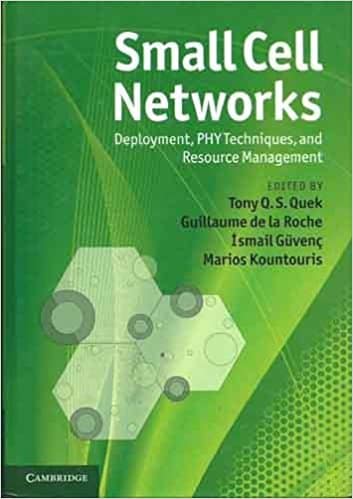
Dr. Ismail Guvenc is a Full Professor in the Department of Electrical and Computer Engineering at North Carolina State University. He holds an IEEE Fellowship and is a Senior Member of the U.S. National Academy of Inventors. His research focuses on 5G/6G wireless systems, UAV communications, heterogeneous networks, and spectrum management. He leads the NSF AERPAW project and serves as the NC State Site Director for the NSF BWAC I/UCRC center. Dr. Guvenc has authored/co-edited four books and holds over 30 U.S. patents. Education: Ph.D. in Electrical Engineering, University of South Florida (2006) Master's in Electrical and Computer Engineering, University of New Mexico (2003) Bachelor's in Electrical Engineering, Bilkent University, Turkey (2001) Research Interests: Dr. Guvenc’s work spans UAV communication systems, 5G/6G networks, spectrum sensing, and machine learning for network optimization. He emphasizes experimental validation through platforms like AERPAW, focusing on drone-based networks, radio dynamic zones, and testbed-driven innovation. His contributions address challenges in UAV localization, interference management, and energy-efficient networks. Grants & Leadership: PI and Director of NSF AERPAW (2019–Present) NC State Site Director for NSF BWAC I/UCRC (2019–Present) Recipient of NSF CAREER Award (2015) and NC State Faculty Scholar Award (2021) Publications & Awards: He has authored over 130 peer-reviewed papers and contributed to standardization efforts. His awards include the R. Ray Bennett Faculty Fellow Award (2019) and the USF Outstanding Dissertation Award (2006). Labs & Teams: Dr. Guvenc directs research in the ECE’s wireless communications group, leveraging AERPAW’s experimental capabilities to advance UAV networks and 6G technologies. His team collaborates with industry and government on spectrum policy and autonomous systems.
Rong Zheng is a Professor in the Department of Computing and Software and a member of the School of Biomedical Engineering at McMaster University, Canada. She holds a Tier-1 Canada Research Chair in Mobile Computing and serves as Acting Chair of the Computing and Software department from July to December 2025. She is also an Associate Member of the Electrical & Computer Engineering department. Education: Ph.D. in Computer Science, University of Illinois, Urbana-Champaign, USA Master of Engineering (thesis) in Electrical Engineering, Tsinghua University, Beijing, China Bachelor of Engineering in Electrical Engineering, Tsinghua University, Beijing, China Dr. Zheng's research lies at the intersection of mobile computing, wireless networking, and machine learning, with a strong focus on applications for aging populations. She directs the NSERC Smart Mobility for the Aging Population CREATE program. Her work encompasses sensor development, wireless network design, and mobile data analytics to address real-world challenges in healthcare, mobility, and data center monitoring. She has developed innovative solutions like the MacQuest campus navigation app and has captured first prize in indoor localization competitions. Her recent publications demonstrate a clear trajectory toward applying wireless sensing technologies (particularly acoustic, Wi-Fi, and mmWave) to health monitoring and mobility assessment for older adults. There's a strong emphasis on developing efficient edge computing solutions that can process data in real-time on resource-constrained devices, as exemplified by her TeamNet framework for collaborative inference on the edge. Her work bridges theoretical advances with practical applications that have social impact. Scientific Awards: Tier-1 Canada Research Chair in Mobile Computing US National Science Foundation CAREER Award (2006) Joseph Ip Distinguished Engineering Fellow (2015-2018) Dr. Zheng leads the Wireless System Research Group (WiSeR) at McMaster University, which has secured significant funding including a $1.65M NSERC CREATE grant for smart mobility research for older adults. Her research has been supported by multiple funding agencies including NSERC, NSF, UH GEAR, and DURIP. She actively mentors graduate students and has developed specialized courses including CAS 772 (Mobile Data Analytics) and CAS 781 (Mobility in the Aging Population). The WiSeR group conducts impactful research on communication, networking, and data analytics issues in Cyber Physical Systems, with applications spanning healthcare, smart infrastructure, and data center monitoring. Their work on data center infrastructure monitoring networks has been featured in EurekAlert and Data Center Dynamics, and they've made significant contributions to indoor localization technology.
Kristofer Pister is a Professor in the Department of Electrical Engineering and Computer Sciences at the University of California, Berkeley. He co-directs the Berkeley Sensor and Actuator Center (BSAC) and the Ubiquitous Swarm Lab. His career spans groundbreaking innovations in Micro/Nano Electro Mechanical Systems (MEMS), Control Systems, and Low-Power Circuits, with a focus on Smart Dust and synthetic insects. Education: Ph.D. and M.S. in EECS from UC Berkeley (1992, 1989); B.A. in Applied Physics from UC San Diego (1986). His research areas include MEMS , Control Systems , Robotics , and Integrated Circuits , with recent work on self-powered micro-sensors, crystal-free radios, and interplanetary swarm networks. Key awards include the ISA Albert F. Sperry Founder Award (2009) , Alexander Schwarzkopf Prize (2006) , and the NSF CAREER Award (1996) . He has authored numerous influential publications in wireless sensor networks and microrobotics. His lab, Ubiquitous Swarm Lab , explores distributed robotics and swarm intelligence. Pister emphasizes open collaboration in research, ethical conduct in academia, and efficient resource utilization for graduate students.
John Baillieul is Distinguished Professor at Boston University with joint appointments in Mechanical Engineering, Systems Engineering and Electrical & Computer Engineering. He directs experimental laboratories for real-time control of lightweight robotic systems and applies nonlinear control theory to complex multi-body, networked, and bio-inspired systems. Education: Ph.D., Harvard University Research Interests: Baillieul’s work spans robotics, nonlinear control, and networked systems. Early contributions resolved motion-planning for kinematically redundant manipulators; current themes include neuromimetic learning, vision-based navigation, and resilience of infrastructure networks such as power grids. His group couples rigorous geometric control with real-time hardware to create lightweight, high-performance robots and to uncover fundamental information limits in feedback systems. Recent Publication Trends (2021-2025): Over the past five years his output has concentrated on three synergistic directions: (i) neuromimetic and Koopman-based data-driven methods for estimating and controlling nonlinear systems, (ii) vision-based guidance and sparse optical-flow primitives for agile autonomous flight, and (iii) network-theoretic decomposition and information-rate studies for resilient operation of power grids and collective dynamics. Honors & Awards: IEEE Fellow 2025 Roger W. Brockett Control Systems Award Former Editor-in-Chief, IEEE Transactions on Automatic Control Affiliations & Service: He is a member of Boston University’s Center for Information and Systems Engineering (CISE), has served as Editor-in-Chief of IEEE Transactions on Automatic Control, and remains active in editorial and organizational roles across the IEEE control systems community.
Witold J. Henisz serves as Vice Dean and Faculty Director of the Impact, Value, and Sustainable Business Initiative at The Wharton School, University of Pennsylvania, holding the Deloitte & Touche Professorship in Management. His research centers on political and social risk identification, ESG impact materiality, and corporate diplomacy frameworks that transform stakeholder relationships into strategic assets. His educational background includes a Ph.D. in Business and Public Policy from UC Berkeley's Haas School and an M.A. in International Relations from Johns Hopkins SAIS. Henisz has served as Departmental Editor at Journal of International Business Studies and Associate Editor at Strategic Management Journal , reflecting his scholarly influence. Research interests converge on geopolitical risk quantification, stakeholder engagement optimization, and sustainable business model innovation. His work demonstrates how political hazards materially impact firm valuation and how corporate diplomacy can mitigate conflict through strategic stakeholder alignment. Recent publications leverage massive media datasets (4+ billion articles) to model populism dynamics, indigenous land conflicts, and ESG-credit risk linkages. Award highlights include the Aspen Institute Ideas Worth Teaching Award (2020), Iron Prof recognition (2019), and Academy of International Business Fellowship. His geostrategy framework Geostrategy by Design (2024) provides executives with actionable methods for navigating geopolitical volatility. Aspen Institute Ideas Worth Teaching Award (2020) Iron Prof recognition (2019) Academy of International Business Fellow (2014-present) Multiple Wharton Excellence in Teaching Awards (2006-2021) Industry Studies Association Best Paper Award (2019) Henisz consults through PRIMA LLC for multinational firms (Rio Tinto, Shell), financial institutions (Eaton Vance, World Bank), and NGOs. His executive education programs train leaders in ESG integration and geopolitical risk management, while his KEROVKA crisis simulation develops real-time strategic response capabilities. Media frequently cites his expertise on ESG controversies, with 50+ major publications featuring his analysis since 2022 including Financial Times , Bloomberg , and Wall Street Journal .
Professor Yasamin Mostofi is a faculty member in the Department of Electrical and Computer Engineering at the University of California, Santa Barbara. She is also affiliated with the Department of Computer Science and the Center for Control, Dynamical Systems and Computation. Her work bridges wireless systems, robotics, and machine learning. PhD, Stanford University MS, Stanford University MS, Sharif University of Technology Research Interests : Her lab focuses on wireless systems and autonomous agents , developing novel mathematical models for RF sensing and communication-aware robotics. Current directions include WiFi/millimeter wave/6G-based imaging and analytics, networked robotics for cellular systems, human-robot collaboration, and machine learning integration. Recent Publications : Her work spans through-wall crowd analytics , robot-assisted connectivity , and vision-aided wireless sensing , with applications in smart health, security, and retail optimization. Key trends include cross-modal integration (WiFi and vision), synthetic data generation, and real-world clinical validation. Scientific Recognition : Presidential Early Career Award for Scientists and Engineers (PECASE) Antonio Ruberti Prize, IEEE Control Systems Society NSF CAREER Award IEEE Region 6 Outstanding Engineer Award IEEE Fellow (2020) Advising and Leadership : She mentors PhD students in systems research, with graduates joining leading companies like Qualcomm and Google. She co-founded NPJ Wireless Technology (Nature Portfolio) and serves on editorial boards including IEEE Transactions on Control of Network Systems .
Sanghyun Hong is an Assistant Professor at Oregon State University's School of Electrical Engineering and Computer Science , focusing on Trustworthy AI and Cybersecurity . He holds a Ph.D. in Computer Science from the University of Maryland, College Park (2021) and a B.S. in Electrical Engineering and Computer Science from Seoul National University (2015). His research bridges machine learning , security , and privacy-preserving systems . Current research themes: Robustness of AI systems to adversarial attacks Privacy-preserving machine learning Security of pre-trained and large language models Hardware fault vulnerabilities in neural networks Cybersecurity workforce development Publication Trends (15 most recent): Focus on adversarial machine learning (jailbreaking LLMs, membership inference) Advances in physics-informed neural networks and time series forecasting Key contributions to AI security and malware detection Interdisciplinary work in visualization design and tsunami warning systems Scientific Accolades : Google Faculty Research Award (2023) Samsung Global Research Award (2022, 2023, 2024) DARPA Riser (2022) NSF SFS Award (co-PI, 2023) USENIX Enigma Speaker (2021) Academic Leadership : Mentors 5 Ph.D. students and has graduated 8 M.S. and B.S. students. Currently developing next-generation auditing frameworks for AI systems while on medical leave until Winter 2026.
Andrea Cavallaro is a Full Professor at the École Polytechnique Fédérale de Lausanne (EPFL) and Director of the Idiap Research Institute. He holds dual appointments in the School of Engineering (STI) within the Institute of Electrical Engineering and Measurements (IEM) and the School of Engineering's Education Unit (SEL-ENS). His research focuses on machine learning for multimodal perception, privacy-preserving AI, and autonomous systems. Cavallaro earned his PhD in Electrical Engineering from EPFL in 2002 and has held leadership roles including Director of Research at Queen Mary University of London and Turing Fellow at The Alan Turing Institute. Education: PhD in Electrical Engineering (EPFL, 2002) Leadership: Idiap Director, Affiliate at ELLIS Society Editorial Roles: Editor-in-Chief of Signal Processing: Image Communication (2020–2023), Senior Area Editor for IEEE Transactions on Image Processing Research Interests: Machine learning for audio-visual sensing, privacy in AI, autonomous systems perception, and ethical AI frameworks. Key projects include AlignAI (trustworthy AI alignment) and CORSMAL (multimodal object manipulation). Recent articles explore privacy-aware AI models, adversarial attacks, and multimodal perception systems. His work bridges theoretical advancements with practical applications in robotics, healthcare, and education. Awards include the Royal Academy of Engineering Teaching Prize and IAPR Fellowship. Teaching: Leads courses on deep learning ethics and multimodal AI at EPFL. Advising: Supervises 11 PhD students in areas like privacy-preserving algorithms and autonomous systems. Labs/Teams: Coordinates Idiap’s Audiovisual Intelligence and Learning Lab (LIDIAP) and collaborates on projects like GraphNEx (explainable AI via graph neural networks).