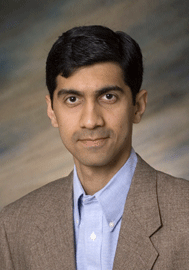
Vijay Raghunathan is a Professor in the Department of Electrical and Computer Engineering at Purdue University's College of Engineering. His work focuses on hardware and software architectures for embedded systems, wireless sensors for IoT, and wearable/implantable electronics with emphasis on low power design, energy harvesting, emerging memory technologies, and secure system design. Academic Rank: Professor Department: Electrical and Computer Engineering University: Purdue University Research Focus: Energy-efficient embedded systems, IoT, wearable devices His research explores low power design at both board-level and system-on-chip scales, micro-scale energy harvesting , and reliable/secure system design for medical devices. Recent work focuses on Processing-in-Sensor/Memory for battery-free AIoT devices, state space models for neural processing units, and security coprocessor integration in autonomous systems. Analysis of his publications reveals trends in energy-efficient neural network acceleration , approximate computing for edge inference , and compute-in-memory architectures . Key subfields include collaborative edge-cloud partitioning , sparse DNN accelerators , and security frameworks for medical devices. Vijay's work also addresses energy-accuracy tradeoffs in multimodal cognitive systems and intermittent computing using non-volatile memory technologies. His contributions span from microcontroller energy management to security protocols for implantable electronics.
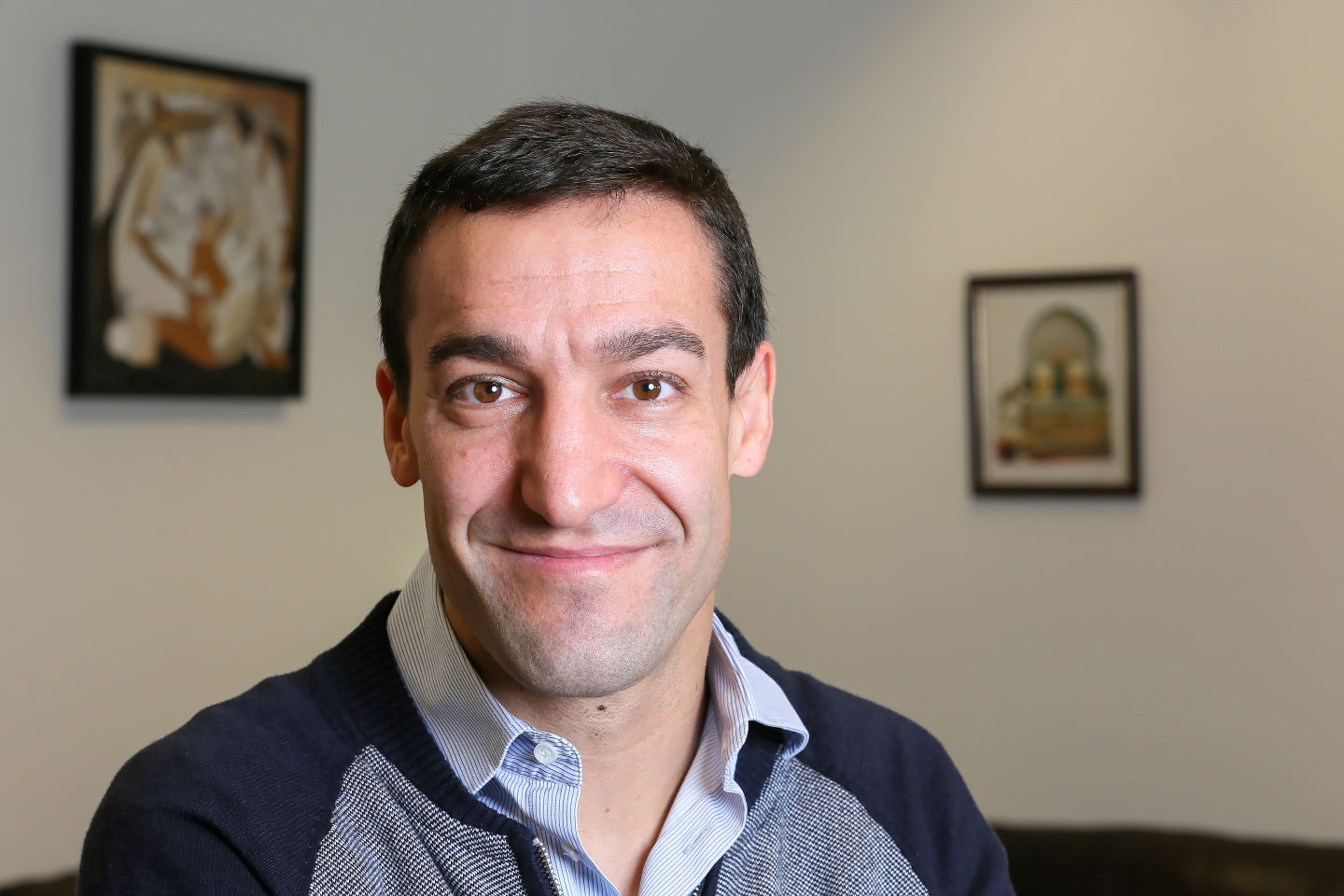
David Atienza is a Professor in the Department of Electrical Engineering at the School of Engineering, Swiss Federal Institute of Technology in Lausanne (EPFL), renowned for pioneering embedded systems education and research in ultra-low power computing. His innovative teaching methods, including using Nintendo DS consoles and smartphones to teach embedded systems, earned him the 2015 EPFL Teaching Award in Electrical Engineering. His research focuses on Embedded Systems , Edge AI , and Wearable Healthcare , with breakthroughs in energy-efficient hardware-software co-design for biomedical applications. Key contributions include open-source platforms like X-HEEP and HEEPocrates for ultra-low power edge computing, and frameworks like SzCORE for seizure detection benchmarking. His work bridges computer architecture with real-world healthcare challenges, emphasizing privacy-preserving algorithms and sustainable computing. Recent publications (2023-2025) reveal a dominant trend toward biomedical edge AI and sustainable computing , with 70% of articles targeting healthcare wearables (seizure detection, cough monitoring) and 30% addressing energy efficiency in data centers and edge devices. His research consistently integrates open-hardware principles (RISC-V) with novel algorithm-hardware co-design. Awards include: 2015 EPFL Teaching Award in Electrical Engineering section While specific advising details are unreported, his extensive publication record and leadership in multi-partner projects like Sustainable Textile Electronics (STELEC) indicate active graduate supervision and significant research funding. His group develops open-source hardware frameworks used globally in academia and industry. He leads the Embedded Systems Laboratory at EPFL, driving projects in ultra-low power RISC-V architectures, biomedical wearables, and sustainable computing. Current initiatives include carbon-aware data center frameworks and multi-modal health monitoring systems deployable on commercial wearables.
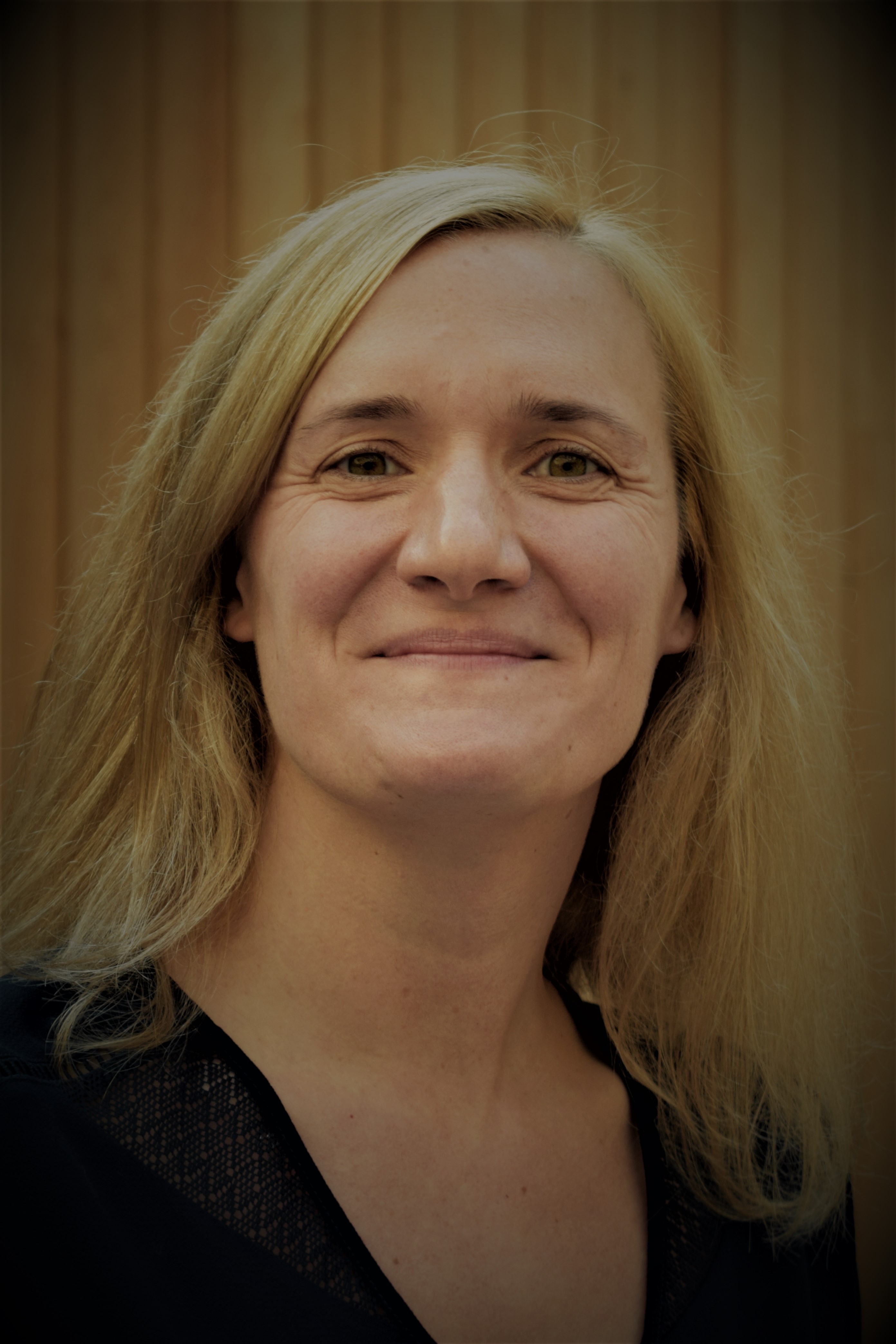
Nele Mentens is a full professor at both KU Leuven and Leiden University, where she leads cutting-edge research in applied cryptography, hardware security, and secure embedded systems. At KU Leuven, she is affiliated with the Faculty of Engineering Technology and the Electrical Engineering Department (ESAT), leading the Emerging Technologies, Systems & Security (ES&S) research group at the Diepenbeek campus. Simultaneously, she holds a full professorship at Leiden University’s Leiden Institute of Advanced Computer Science (LIACS), focusing on applied cryptography and security. She has been instrumental in numerous national and international research initiatives, including Horizon Europe and NWO-funded projects. Full Professor, KU Leuven (since 2023) Full Professor, Leiden University (since 2020) Associate Professor, KU Leuven (2014–2023) Post-doctoral Researcher & Lecturer, KHLim / KU Leuven (2007–2014) Ph.D. in Engineering Science, KU Leuven (2007) M.Sc. in Electrical Engineering, KU Leuven (2003) Her research focuses on secure and efficient hardware design, particularly for cryptographic applications on FPGAs, reconfigurable architectures, IoT security, and neuromorphic computing. She explores physical attack resistance, side-channel analysis protection, and trusted computing architectures, with applications in healthcare, industrial monitoring, and endpoint AI. Her work bridges theoretical cryptography with practical hardware implementations, emphasizing energy efficiency and real-time performance. The 15 most recent publications reflect a strong trend toward secure, energy-efficient, and intelligent embedded systems. Topics include neuromorphic AI accelerators, trusted IoT architectures, dynamic reconfiguration for side-channel protection, and secure medical data processing. These works span disciplines such as computer architecture, cybersecurity, digital design, and embedded systems, with a focus on hardware-software co-design and real-world deployment. Nele Mentens has received recognition for her contributions, including: Best Paper Award, DATE'16 Best Paper Nomination, AsianHOST'17 Best Paper Award, CHES'19 She has supervised over 15 Ph.D. students and post-docs, both current and former, and has served as principal investigator in approximately 25 funded research projects. Her work has attracted significant grants from Horizon Europe, NWO, FWO, and national innovation programs. She actively contributes to the academic community through editorial roles in top journals and leadership in major conferences. Nele Mentens leads the ES&S research group at KU Leuven and collaborates closely with LIACS at Leiden University. Her team includes Ph.D. students, post-docs, and research experts working on projects like NimbleAI, NeuroSoC, and TrustedIoT. She has also established secure electronics labs through infrastructure grants and maintains strong international ties with institutions such as EPFL, Ruhr University Bochum, and ETH Zurich.
Glenn Gulak is a Professor in the Department of Electrical and Computer Engineering at the University of Toronto's Faculty of Applied Science and Engineering. He holds the Canada Research Chair in Signal Processing Microsystems and the Edward S. Rogers Sr. Chair in Engineering. A Senior IEEE Member and Professional Engineer in Ontario, he received his Ph.D. from the University of Manitoba. His research spans: Digital Communication Systems: VLSI implementations of MIMO detectors, lattice reduction algorithms, and homomorphic encryption accelerators Lab-on-Chip Microsystems: CMOS biosensors for rapid pathogen detection and integrated fluorescence imaging Recent publications (2019-2025) demonstrate a dominant focus on privacy-enhancing technologies, with 73% concentrated in cryptographic hardware and homomorphic encryption. This reflects industry-aligned work on confidential computing and secure data processing. Awards & Honors: IEEE Millennium Medal (2001) Canada Research Chair in Signal Processing Systems (Tier 1, 2005-2012) Edward S. Rogers Sr. Chair (2005-2010) RBC Research Prize L. Lau Chair (1999-2004) Teaching Award (1999) He has supervised 44+ graduate students (PhD/MASc) with thesis topics spanning VLSI communication systems, CMOS biosensors, and cryptographic accelerators. Notable industry collaboration includes serving as CTO of a semiconductor startup (2001-2003). His lab develops hardware for quantum cryptography and secure medical computation.
Dr. Alastair Kay is a Lecturer in the Department of Mathematics at Royal Holloway, University of London. His research focuses on theoretical quantum computation, quantum information theory, and quantum cryptography, particularly addressing challenges in quantum state transfer, error correction, and networked quantum systems. He holds a PhD from the University of Cambridge under Prof. Artur Ekert and a physics degree from Keble College, University of Oxford. His research spans topics such as Quantum state transfer protocols using engineered Hamiltonians Quantum error correction mechanisms for experimental systems Entanglement properties in graph states and spin networks Applications of quantum computing in cryptography and information theory The articles listed reflect his work in quantum information science, computational physics, and theoretical cryptography. Key trends include advancements in fault-tolerant quantum communication, optimization of spin chain dynamics, and foundational studies in quantum correlations and nonlocality. Alastair actively develops software tools like quantikz for quantum circuit diagrams and ConTeXi for LaTeX equation integration in Microsoft Office. He also emphasizes open science principles and reproducibility in quantum research through personal commentary and collaboration with his fiancée, a Panton Fellow in open research practices.
Cristina Emma Margherita Rottondi is an Associate Professor at the Department of Electronics and Telecommunications (DET) of Politecnico di Torino . She is a member of the Photonext Interdepartmental Center and contributes to research in telecommunications, computer music, and network optimization. Her work spans privacy-preserving protocols, smart grid communication, and low-latency audio streaming. Research Interests : Networked Music Performance, Optical Networks, Smart Grid Privacy, Machine Learning. Education : Not explicitly listed. Research Areas include: Smart Grid Privacy : Developing secure protocols for data aggregation and distributed energy optimization. Optical Network Design : Investigating machine learning-driven solutions and spatial division multiplexing. Networked Music Performance : Addressing latency and inclusivity in remote musical collaboration. Publication Trends highlight interdisciplinary work at the intersection of telecommunications , machine learning , and music technology . Recent articles focus on privacy-preserving smart grids , 5G-enabled musical IoT , and UDP packet trace datasets . Scientific Awards : 2020 Charles Kao Award Best Paper Awards at IEEE Online Greencomm (2014), DRCN (2017), and others N2Women Rising Star (2020) Advising includes PhD candidates working on networked music performance , accessible musical education , and medical wearable devices . She has contributed to national patents for inclusive audio hardware.
Overview Peter Puschner is a full Professor at the Faculty of Informatics at TU Wien, specializing in Computer Engineering and Real-Time Systems. He serves as Faculty Representative for Research and Infrastructure, overseeing strategic initiatives in informatics research and infrastructure development. His academic role also includes leading the Service Unit Infrastructure (E199-02) and heading the Cyber-Physical Systems department (E191-01). Education and Roles Puschner holds a Diplom-Ingenieur (Dipl.-Ing.) and a Dr.techn. from TU Wien, alongside the title Ao.Univ.Prof. His roles include teaching and supervising students in advanced topics such as Operating Systems, Real-Time Systems, and Scientific Research methodologies. He has been actively involved in curriculum design for Computer Science and Business Informatics programs. Research Interests His research focuses on: Timing Analysis: WCET analysis for real-time systems, especially in multi-core and mixed-criticality environments. Embedded Systems: Designing time-predictable architectures for safety-critical applications. Communication Networks: Time-triggered protocols for automotive and industrial systems. Publications and Tools Puschner has authored over 160 publications, including seminal work on the Platin WCET analysis tool and the T-CREST multi-core architecture. His recent work emphasizes compiler-driven timing predictability and dual-path code paradigms. Grants and Awards Recipient of the Marie-Curie Fellowship (2003) and a founding member of the IFIP 10.2 WG on Embedded Systems. His projects have been funded by the EU (e.g., T-CREST, Multicores Partitioning), FWF, and industry collaborations. Students and Supervision He has supervised numerous PhD and Master’s students, including Elias Maroun (2024), Matthias Platzer (2022), and Bledar Cilku (2018). Key topics include WCET analysis, memory hierarchy design, and secure communication protocols. Labs and Teams Puschner leads the Real-Time Systems Lab, collaborating with industry partners (e.g., automotive, aerospace) to develop safety-critical embedded systems. His team contributes to open-source tools like Platin and the Patmos processor.
Dr. Kieran McLaughlin is a Reader at Queen's University Belfast, leading research in cyber security for operational technologies (OT), including smart grids and industrial control systems (ICS). He focuses on threat analysis, intrusion detection/prevention, and digital twins for incident response. His work addresses SCADA systems, ICS protocols (e.g., IEC61850), and cyber-physical resilience. He leads projects like XANDAR (H2020) and CAPRICA, and collaborates with UK's RITICS institute. He teaches Network Security (CSC3064) and actively publishes in top-tier venues. His research spans over 100 publications, with recent focus on digital twins, AI-driven malware detection, and secure IoT communications. Projects include EU-funded initiatives targeting critical infrastructure security and embedded system safety. He advises on cybersecurity for energy sectors and contributes to global standards like DO-326A for avionics systems. Key areas of innovation include deception platforms using digital twins, lightweight AI for IoT security, and blockchain-based predictive maintenance in vehicular networks. His work integrates machine learning for automated response and explores novel networking architectures (e.g., Named Data Networking) to enhance security.
Jonathan Webster is a Professor in the Department of Mathematical Sciences at Butler University. He holds a Ph.D. from the University of Calgary and has a dual background in Mathematics and Computer Engineering from Rose-Hulman Institute of Technology, along with a Master's in Mathematics from the University of Illinois at Urbana-Champaign. His academic work bridges mathematics and computer science with a strong emphasis on undergraduate research mentorship. Education Ph.D., University of Calgary, 2010 M.S. in Mathematics, University of Illinois at Urbana-Champaign, 2004 B.S. in Mathematics, Rose-Hulman Institute of Technology, 2001 B.S. in Computer Engineering, Rose-Hulman Institute of Technology, 2001 Jonathan Webster's research focuses on algorithmic and computational number theory , particularly in areas such as Carmichael numbers, pseudoprimes, Legendre's conjecture, and the multiplication table problem. He develops and implements algorithms to explore deep number-theoretic questions, often pushing computational limits. His work is highly collaborative, frequently involving undergraduate students and established researchers like Andrew Shallue and Jonathan Sorenson. His recent publications (2024–2025) highlight a consistent trend in computational number theory, with several papers accepted to the prestigious Algorithmic Number Theory Symposium (ANTS) and journals like INTEGERS and Mathematics of Computation . These works involve extensive data generation, algorithm design, and verification, often accompanied by publicly released source code and datasets. In parallel, he contributes to mathematics education, particularly in designing and promoting undergraduate research experiences. His scientific contributions include: Tabulation of all Carmichael numbers below 10^22 Verification of Legendre’s conjecture up to 7·10^13 Advancing the understanding of absolute Lucas pseudoprimes Developing efficient algorithms for the multiplication table problem Historical research on inessential discriminant divisors with Fernando Gouvêa Webster actively mentors undergraduate researchers, with students like Chloe Helmreich, Nick Sorenson, and David Purdum co-authoring peer-reviewed publications. He has secured research support through collaborative grants and institutional funding, enabling student participation in conferences and computational projects. His pedagogical work, including publications in MAA Focus and PRIMUS , emphasizes creating accessible research opportunities for undergraduates. While not explicitly mentioning a lab, his research group functions as a computational number theory team, producing open-source tools and large-scale datasets. Future work likely includes extending computational bounds, exploring new pseudoprime families, and expanding undergraduate research models.
Prof. Dr. habil. Reinhard Rauscher is a retired professor at the Osnabrück University of Applied Sciences, affiliated with the Faculty of Management, Culture and Technology. He holds a Diplom in Informatics from the Christian-Albrechts-Universität Kiel (1982), a PhD in Computer Science from the University of Hamburg (1987), and a habilitation in Computer Science focusing on 'Design and Methodology of Application-Specific Digital Systems' (1998). His teaching responsibilities include courses such as Algorithms, Programming, and Databases. Research Interests: His work spans digital system design, VLSI architecture, CAD tools for hardware design, microprogramming optimization, and real-time image processing ASICs. Notable contributions include methodologies for microcode transformation verification, CAD systems for digital circuit design, and research on numerical stability in systolic arrays. Publications: Over 30 peer-reviewed papers in conferences like EUROMICRO, CONPAR, and journals such as Microprocessing and Microprogramming. His research emphasizes practical applications of theoretical computer science in hardware-software co-design. Grants & Labs: Involved in projects like CAMILOD (correctness-proven hardware design), BOSSDIS (automated hardware description transformation), and collaborations on ASIC development for image processing and SCHEME coprocessors. His work integrates algorithmic theory with embedded system implementation challenges.
Dr. Abbas A. Fairouz is an Assistant Professor in the Computer Engineering Department at Kuwait University. He holds a PhD from Texas A&M University (2019) and BS/MS degrees from Kuwait University (2006/2011). He previously served as a system engineer at Kuwait's Ministry of Electricity & Water (2006–2014) and as a part-time faculty member at PAAET's Higher Institute of Telecommunication and Navigation (2008–2010). Affiliations: Academic Visitor at University of Oxford (OSCAR Research Group) Research Focus: VLSI design, AI/ML processor architecture, secure computer systems, microarchitecture optimization, and FPGA-based acceleration. His current projects include hardware-based sorting networks, privacy-preserving instant messaging systems, and chiplet-based secure architectures. He has received the President of Kuwait Award (2012) and was a best paper nominee at GLSVLSI'17. His work spans hardware-software co-design for cryptographic accelerators, special function units (SFUs), and low-power NoC routers. Collaborations include the Oxford Secure Computer Architecture Research (OSCAR) group.
Dr. Michael Schwarz is a tenured professor at CISPA Helmholtz Center for Information Security in Saarbrücken, Germany. His research focuses on microarchitectural side-channel attacks and system security , with notable contributions to vulnerabilities like Meltdown , Spectre , and ZombieLoad . He leads the RootSec Research Group and is a regular speaker at top-tier conferences including Black Hat and IEEE S&P. PhD in Computer Science from Graz University of Technology (2019) Two master’s degrees in Computer Science and Software Engineering His work spans CPU security , transient execution attacks , and side-channel defenses , with 15 recent publications on topics like cache timing analysis, browser sandbox breaches, and compiler-induced vulnerabilities. Awards include multiple Busy Beaver Awards , Pwnie Awards , and recognition for foundational papers like Meltdown . Collaborated with Daniel Gruss (PhD advisor) Advises on hardware-software security interactions Publications reveal a trend toward microarchitectural attack surfaces and practical exploitation frameworks , often leveraging hardware features (e.g., CPU caches, prefetchers) for security analysis. He has also contributed to secure memory allocation and browser-based fingerprinting research.
Peter Puschner is an Associate Professor at Vienna University of Technology (TU Wien), affiliated with the Cyber-Physical Systems Research Area. His work focuses on real-time systems, worst-case execution time (WCET) analysis, and time-predictable code execution. Key research areas: Real-Time Systems, Single-Path Code, Time-Triggered Networks, Cache Architectures Advisor to multiple thesis students including Michael Platzer and Bekim Cilku Co-developer of tools like the platin Toolkit for WCET analysis Recipient of Best Paper Award at ECRTS 2015 for Requirement Semi-formalization Methodology for SoC Design
Henrik Karlsson is a doctoral researcher at the Division of Theoretical Computer Science (TCS) within the School of Electrical Engineering and Computer Science (EECS) at KTH Royal Institute of Technology. He is affiliated with the Center for Cyber Defense and Information Security (CDIS) and the Secure and Trustworthy Execution Platform (STEP) research group. Education : MSc in Computer Science, KTH BSc in Computer Science and Engineering, KTH Research Focus : Henrik specializes in computer security and formal methods, particularly in the design, implementation, and verification of separation kernels for RISC-V architecture. His work on the S3K kernel exemplifies his contributions to secure embedded systems. Teaching Activities : Assistant for Computer Security (DD2395) Assistant for Computer Security (DD238U) Assistant for Parallel and Distributed Computing (DD2443) Assistant for Project Course in System Security (DD2497) Software Projects : S3K : Capability-based separation kernel for embedded RISC-V libserio : Minimal serial I/O library for embedded systems HolBA : Binary analysis in HOL openmz : Security kernel for RISC-V targeting secure coprocessors
William Marnane is a Professor of Electrical and Electronic Engineering at University College Cork (UCC). He holds a B.E. from UCC (1984) and a D.Phil. from the University of Oxford (1989). His career includes roles as Lecturer (1989), Senior Lecturer (1999), Dean of Graduate Studies (2013–2016), and Head of the School of Engineering (2016–2019). He has led major research initiatives, including the SFI-funded INFANT Centre and the Claude Shannon Institute. His research focuses on biomedical signal processing, machine learning, and neonatal EEG analysis, with notable contributions to neonatal seizure detection algorithms and fetal health monitoring. He has been awarded the Giner de Los Ríos Visiting Research Fellowship (2007, 2020) and leads projects funded by Wellcome Trust, Science Foundation Ireland, and EU grants. His educational background includes significant contributions to curriculum development and graduate training in engineering and biomedical sciences. He has supervised numerous research projects, including advancements in cryptographic hardware, embedded systems, and low-power signal processing architectures. Research highlights include the ANSeR neonatal seizure detection algorithm (Wellcome Trust-funded), clinical trials on EEG-based seizure recognition, and development of secure TLS coprocessors. He has published over 200 peer-reviewed articles, with key contributions in neonatal EEG analysis, machine learning applications in healthcare, and cryptographic processor design. Current research explores AI for fetal heart rate monitoring and wearable health technologies. Grants and partnerships include leadership roles in EU-funded projects, SFI Strategic Research Clusters, and industry collaborations. He co-directs the INFANT Centre, bridging engineering, medicine, and data science for translational research in neonatal care.