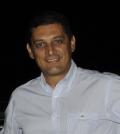
Dr. Dimitris Gritzalis is a Professor of ICT Security at the Department of Informatics, Athens University of Economics and Business (AUEB). He serves as Chairman of the University Research Centre, Director of the Information Security and Critical Infrastructure Protection (INFOSEC) Laboratory, and Director of the Master's Programme on Information Systems. B.Sc. in Mathematics, University of Patras, Greece M.Sc. in Computer Science, City University of New York, USA Ph.D. in Critical Information Systems Security, University of the Aegean, Greece His research focuses on Security and Privacy in Online Social Networks, Digital Forensics, Critical Infrastructure Protection, Hacking and Hacktivism, and Civic Rights in the Cyberspace. He has led the INFOSEC Laboratory at AUEB, contributing to national and international security frameworks. Prof. Gritzalis has held leadership roles, including Associate Commissioner at the Greek Data Protection Commission and President of the Greek Computer Society. He has provided expert services for the Council of Europe, CEN, EU Joint Research Centre, and EUROPOL, and served as an evaluator for European Commission Framework Programmes. As Academic Editor of Elsevier's Computers & Security journal, he has chaired conferences like IFIP/SEC and ACM/CCS, and participated in over 120 international programme committees. His publication record includes 10 books and more than 160 peer-reviewed papers.
Dimitrios Pappas is a faculty member at the Department of Statistics within the School of Information Sciences and Technology at Athens University of Economics and Business . His research spans multiple disciplines, including Statistics , Linear Algebra , Image Processing , and Financial Mathematics . His work focuses on generalized inverses , matrix factorization , and quadratic optimization , with applications in image deblurring , credit risk modeling , and smart local energy systems . Recent publications highlight his contributions to network intrusion detection , Markov chain lumpability , and symbolic computation methods . While no specific scientific awards or student advising details are provided in the available text, his extensive publication record demonstrates expertise in applied mathematical modeling and computational techniques . He can be contacted at dpappas@aueb.gr .
Panos Louridas is a Professor at the Department of Management Science and Technology, Athens University of Economics and Business. His work spans software engineering, algorithms, security, and systems implementation, with global impact through publications and the Zeus e-voting system. He is affiliated with leading academic societies including ACM, IEEE, Usenix, and AAAS. Education : Graduate of the Department of Informatics, University of Athens; MSc by Research and PhD from the University of Manchester. His research focuses on practical algorithm applications, secure systems design, and big data implementations. He actively develops software, notably the Zeus e-voting system used internationally. With over 1,600 citations, his work bridges theoretical and applied computer science. Scientific Awards and Memberships : Member of the Association for Computing Machinery (ACM) Institute of Electrical and Electronics Engineers (IEEE) Usenix American Association for the Advancement of Science (AAAS) Louridas has authored the textbook Real World Algorithms (MIT Press) and is working on Algorithms (The MIT Press Essential Knowledge Series) . His contributions to academia and technology are complemented by his role in designing real-world systems.
George Papadimitriou is an Assistant Professor in the Computer Engineering & Informatics Department at the University of Patras , Greece, hosted within the School of Engineering . His primary affiliation lies with the Computer Hardware and Architecture division, where he leads research and teaching activities focused on dependable, energy-efficient computer architectures. Education: PhD in Computer Science, Department of Informatics & Telecommunications, National and Kapodistrian University of Athens (2019) Post-doctoral researcher, Computer Architecture Lab, National and Kapodistrian University of Athens Research Interests: Dr Papadimitriou’s research lies at the intersection of computer architecture , energy efficiency , and microprocessor reliability . His work specifically targets: Robust and energy-efficient CPU/GPU/accelerator architectures Post-silicon validation techniques for catching elusive hardware bugs Silent data corruption detection and mitigation across the compute stack Characterization of voltage margins and power consumption in modern microprocessors Modeling and simulation of domain-specific accelerators for low-power, dependable operation More recently, his team has been extending these methodologies to RISC-V and neuromorphic photonic accelerators within large European consortia. Scientific Awards & Recognition: Eight HiPEAC Paper Awards for top-tier conference publications (MICRO, HPCA, ISCA) between 2017–2024 IEEE Transactions on Computers 2022 Best Paper Award for the article “Anatomy of On-Chip Memory Hardware Fault Effects Across the Layers” TTTC/ITC Gerald W. Gordon Student Award 2023 Research Funding & Projects: Dr Papadimitriou is principal investigator or key technical contributor in multiple Horizon Europe and industry-backed projects that collectively exceed €50 M in funding. Current leadership roles include: DARE (Digital Autonomy for RISC-V in Europe) NEUROPULS (Neuromorphic Energy-Efficient Secure Accelerators) REBECCA (Reconfigurable Heterogeneous Highly Parallel Processing Platform) Vitamin-V (Virtual Environment & Tool-boxing for Trustworthy RISC-V Cloud Services) Intel, IBM, and Thales bilateral research contracts on energy-efficient and resilient microarchitectures Laboratory & Team: He leads the Energy-Efficient and Dependable Architectures (EEDA) research group at University of Patras, operating laboratory facilities for silicon measurement, FPGA emulation, and full-system simulation (gem5, MARSS, custom tools). The team currently comprises 3 PhD candidates, 2 post-docs, and several MSc thesis students collaborating with European and US partners.
Verikoukis Christos is an Associate Professor at the University of Patras, Department of Computer Engineering and Informatics, specializing in the Division of Hardware and Computer Architecture. His research bridges cutting-edge computer architecture with telecommunications networks and artificial intelligence applications. His research interests focus on applying machine learning and AI techniques to telecommunications networks, particularly 5G, 6G, and Beyond-5G systems. Key areas include feature selection algorithms, uncertainty quantification in AI models, chain-of-thought reasoning with large language models, user behavior modeling in cloud environments, Kubernetes scheduling for high availability applications, and attack detection in next-generation networks. His work demonstrates a strong interdisciplinary approach connecting computer architecture, networking, and artificial intelligence to solve practical problems in modern telecommunications infrastructure. His research has significant implications for network security, resource optimization, and intelligent network management in next-generation communication systems. Professor Verikoukis actively supervises research projects exploring the intersection of AI and telecommunications, with a particular emphasis on practical implementations and real-world applications in network environments.
Konstantinos Demestichas is an Assistant Professor at the Department of Agricultural Economics and Rural Development of the Agricultural University of Athens (AUA) , where he joined in 2021. He is affiliated with the Informatics Laboratory and teaches courses like R Programming for Data Science , Internet and Applications in Agriculture , and Computer Programming and Applications . His research focuses on machine learning , Big Data analytics , mobile networks , and secure digital technologies for agricultural and environmental applications. PhD in Telecommunications (2009), NTUA MBA in Techno-Economic Systems (2012), joint program of NTUA and University of Piraeus MSc in Quality Assurance (2015), Hellenic Open University Diploma in Electrical and Computer Engineering (2005), NTUA He has participated in numerous European and national research projects since 2005, often as scientific or project coordinator , and authored over 159 publications. He has served as a technical expert for the European Commission and contributed to international conference program committees and journal editorial boards.
George Asimakopoulos serves as a Lecturer at the Department of Informatics Engineering, Technological Educational Institute of Western Greece, specializing in Management of Techno-Economic Systems of Information Technology. With academic credentials from the University of Crete and National Technical University of Athens, he brings substantial industry experience to his academic role. His educational background includes a BSc in Computer Science from the University of Crete (1997) and a Master's in Techno-Economic Systems from the National Technical University of Athens (2003). He is currently pursuing his PhD at the Department of Informatics and Computer Engineering, University of Patras. Asimakopoulos' research spans practical IT applications with emphasis on E-learning systems , Knowledge Management frameworks , and Techno-Economic Systems analysis . His work extends into Digital Forensics and emerging areas like Internet of Things applications and Dynamic Vehicle Routing systems, demonstrating a strong connection between theoretical research and real-world implementation. His scholarly output includes 10 international peer-reviewed papers, 2 book chapters, and participation in three academic books, with additional conference presentations in IT-related fields. While specific publication titles aren't detailed in available sources, his work shows consistent focus on information technology management and application systems. With fifteen years of professional experience since 1999, Asimakopoulos has worked with major organizations including OTE, COSMOTE, Olympic Games Security Directorate (DAOA), Intracom, and the Commercial Bank of Greece, holding positions as project manager and Software Development Manager for significant IT implementations. He teaches core computer science subjects including Digital Forensics, Functional Programming, Object Oriented Programming, Data Structures, Databases, Operating Systems, and New Economy courses, bridging academic theory with industry practice.
Dimitrios Dechouniotis is an Assistant Professor at the Department of Electrical and Computer Engineering within the School of Electrical and Computer Engineering at the University of Patras . His career spans roles in academia, research institutions, and public administration. 2004: Diploma in Electrical Engineering (University of Patras) 2006: MSc in Automation Systems (NTUA) 2014: PhD in Electrical and Computer Engineering (University of Patras) His research focuses on Systems & Control Theory , Cyber-Physical Systems , Robotics , Cloud Computing , and 5G Communications . Recent publications highlight work in edge computing , network slicing , and resource orchestration for IoT and robotics applications. He has participated in over 10 national and European research projects related to telecommunications and Industry 4.0. His technical contributions include frameworks for edge-cloud continuum orchestration , blockchain-based slice orchestration , and energy-aware resource allocation , with a strong emphasis on system modeling and control-theoretic approaches. Contact: dechouniotis@uop.gr | Office: Building Z, 2nd Floor
Professor Kanatas Athanasios is a distinguished faculty member at the Department of Digital Systems within the School of Information & Communication Technologies at the University of Piraeus. He currently serves as Director of the institutionalized Telecommunications Systems Laboratory and Director of the Postgraduate Program 'Digital Communications & Networks.' With a career spanning over three decades in telecommunications and wireless communications research, he has established himself as a leading academic in his field. Professor at Department of Digital Systems (2012-present) Associate Professor (2008-2012) Assistant Professor (2002-2008) Dean of School of Information & Communication Technologies (2013-2017) Member of University Senate (2008-2009, 2013-2017) Professor Kanatas received his Diploma in Electrical Engineering from the School of Computer Science and Engineering of the National Technical University of Athens in 1991, followed by an M.Sc. in Satellite Communication Engineering from the University of Surrey (UK) in 1992, and completed his PhD in Electrical Engineering from the National Technical University of Athens in 1997. His academic journey began with research positions at the National Research Foundation (1993-1994), SPACETEC Ltd as a technical project manager (1995), and researcher roles at the Mobile Radio Communications Laboratory and the Research University Institute of Communications and Computer Systems of the National Technical University of Athens. Professor Kanatas's research primarily focuses on satellite and wireless communications, with recent work increasingly exploring UAV-assisted networks, integrated sensing and communication systems, antenna design, and stochastic geometry applications in telecommunications. His research has evolved from traditional satellite communications toward cutting-edge areas including unmanned aerial vehicle networks, integrated sensing and communication systems, and advanced antenna technologies. The breadth of his work demonstrates a consistent trajectory from foundational communication theory toward increasingly complex and integrated wireless systems that address contemporary challenges in telecommunications. His extensive publication record shows a clear trend toward integrating sensing capabilities with communication systems, particularly through UAV networks. Recent work emphasizes stochastic geometry for network modeling, antenna array analysis in near-field scenarios, and energy-efficient communication protocols for IoT applications. The interdisciplinary nature of his research bridges traditional communication theory with emerging technologies, creating innovative solutions for next-generation wireless networks. Four best article awards at international conferences Senior Member of IEEE (since 2002) President of the Greek Chapter of IEEE Communications Society (1999) Elected representative for Region 15 in European Association on Antennas and Propagation (since 2021) Editor for IEEE Transactions on Wireless Communications, IEEE Transactions on Antennas & Propagation, and IEEE Communication Letters With over 200 publications in international scientific journals and conferences, and six books to his credit, Professor Kanatas has made substantial contributions to the field of telecommunications. His editorial roles with prestigious IEEE journals demonstrate his standing in the academic community. His leadership extends beyond research to academic administration, having served as Dean of the School of Information & Communication Technologies and as a member of the University Senate and Research Committee. As Director of the Telecommunications Systems Laboratory, Professor Kanatas leads a research team focused on cutting-edge telecommunications technologies. His laboratory serves as a hub for innovation in wireless communications, satellite systems, and emerging network architectures. The lab provides a collaborative environment for graduate students and researchers to explore the frontiers of communication technology, with particular emphasis on practical implementations and experimental validation of theoretical concepts.
Dr. Ioannis Verginadis is an Assistant Professor at the Department of Business Organization and Management, School of Business Administration, Athens University of Economics and Business. His research focuses on Information Systems for Business Administration, with over 15 years of experience in ICT projects spanning management information systems, workflow management, complex event processing, cloud computing, and security. Education: PhD in Electrical and Computer Engineering from National Technical University of Athens (NTUA), focusing on Inter-Organizational Models and Workflow Systems. Past Roles: Worked as a Lecturer (P.D. 407/80) at the University of Thessaly and Technical University of Peloponnese. Collaborations: Maintains long-term research collaboration with the Research University Institute of Communication and Computer Systems (RICCS) at NTUA. Publications: Co-authored books on management information systems, e-participation, adaptive web services, and electronic assisted living systems; has over 60 publications in international journals and conferences. Committee Involvement: Participated in more than 25 scientific committees for international conferences and journals.
Petros Maragos is a Professor at the National Technical University of Athens (NTUA) in the School of Electrical and Computer Engineering, where he directs the Division of Signals, Control and Robotics. He founded the Computer Vision, Speech Communication & Signal Processing Lab (1999) and the Hellenic Robotics Center of Excellence (2025). His research spans signal processing, computer vision, robotics, and machine learning, with 450+ publications and leadership in 50+ EU/Greek/US projects. Education includes a Dipl.Ing. from NTUA (1980), M.Sc./Ph.D. from Georgia Tech (1982/1985), and faculty positions at Harvard University (1985-1993) and Georgia Tech (1993-1998). Research Focus: Multimodal perception, nonlinear systems, assistive robotics, and deep learning. Recent work integrates tropical geometry with neural networks, robotic healthcare applications, and sign language technologies. Articles emphasize neural architectures, real-world robotics, and AI for social good. Awards: IEEE Fellow (1995), EURASIP Fellow (2010) IEEE W.R.G. Baker Prize (1995) NSF Presidential Young Investigator Award (1987-1992) CVPR/PETRA Best Paper Awards (2022-2025) Advising & Grants: Supervised 30+ PhDs and 130+ Master's students. Secured funding from EU Horizon 2020, NSF, and Greek national programs for projects like i-Walk (robotic mobility) and e-Prevention (mental health monitoring). Labs: Leads NTUA's Intelligent Robotics Lab and co-founded the Robotics Institute at Athena Research Center, focusing on human-robot interaction and perception systems.
Dimitrios Soudris is a Professor at the School of Electrical and Computer Engineering, National Technical University of Athens (NTUA), leading the Microprocessor and Digital Systems Lab (MicroLab). Previously, he served as Lecturer, Assistant, and Associate Professor at Democritus University of Thrace from 1995 to 2008. Diploma in Electrical Engineering (1987), University of Patras PhD in Electrical Engineering (1992), University of Patras His research focuses on Embedded Systems , Reconfigurable Architectures (FPGAs) , Hardware Accelerators for data centers/space/cloud, Edge Computing , and Low Power VLSI Design . Recent publications highlight trends in: AI/ML acceleration for edge and space applications Secure FPGA architectures for 6G networks Energy-efficient heterogeneous memory systems Approximate computing techniques Transformer optimization for low-power contexts Scientific Awards: INTEL and IBM awards (project LPGD #25256) HiPEAC, DAC, and ISCA awards (2010–2024) XILINX Open Hardware Design Contest (2017, 2019, 2021) He has coordinated >70 R&D projects funded by the European Commission, ENIAC-JU, ESA, and industry partners. As Associate Editor of ACM TODAES and conference chair (PATMOS, VLSI-SOC), he contributes to academic leadership. His lab, MicroLab, specializes in hardware-software co-design for emerging computing paradigms.
Dimitrios Kalogeras is a Senior Researcher at the Network Management & Optimal Design Laboratory (NETMODE) within the School of Electrical & Computer Engineering at the National Technical University of Athens (NTUA). He is affiliated with the Institute of Communications & Computer Systems (ICCS) and has been actively involved in European and national research projects, including contributions to IPv6 and network security initiatives. His work extends to consulting on next-generation networking infrastructure for GRNET and NTUA's Campus Local Area Network. Education: Engineering Diploma in Electrical & Computer Engineering (NTUA, 1990) Doctorate degree in Electrical & Computer Engineering (NTUA, 1996) His research focuses on advanced network technologies and protocols, with a strong emphasis on cutting-edge developments in networking standards and security. He has led numerous national projects, such as the support of the National Greek School Network and pilot studies on ADSL and Internet over Satellite technologies for OTE (Greek telecommunications company). Additionally, he has participated in European Commission technical panels and served on the Technical Committee of TERENA for two terms. Dr. Kalogeras contributes to the academic community by delivering invited lectures on advanced networking at Greek, European, and international events. He has published extensively in his fields of interest and remains a key figure in shaping research and education networks.
Rachid Guerraoui is a Moroccan-Swiss computer scientist and Full Professor in the School of Computer and Communication Sciences at EPFL. He is renowned for his significant contributions to distributed and concurrent computing, holding the prestigious Chair in Distributed Computing at the Collège de France (2018-19). As an ACM Fellow (2012) and recipient of the Dahl-Nygaard Senior Prize (2024), his work has shaped both theoretical foundations and practical implementations in distributed systems. Guerraoui earned simultaneous Master's degrees in Computer Engineering from École supérieure d'informatique électronique automatique (ESIEA) and in Computer Science from Pierre and Marie Curie University in 1989. He completed his PhD at Université d'Orsay in 1992 under the supervision of Christian Fluhr, with a dissertation titled "Programmation Répartie par Objets: Études et Propositions." Following postdoctoral research at EPFL, he joined the computer science faculty in 1999 after working at HP Labs and MIT. Guerraoui's research spans distributed computing, concurrent systems, transactional memory, and asynchronous algorithms. His work on establishing theoretical foundations of Transactional Memory, including the concept of opacity, has been highly influential. He has also made significant contributions to scalable information dissemination methods, asynchronous distributed computations, and the mathematical abstraction of indulgence. His research bridges theoretical rigor with practical implementations, as evidenced by systems like SwissTM and STMBench7. His publication record shows a clear evolution from theoretical foundations to practical implementations and broader applications. Early work focused on fundamental problems like consensus and renaming, while more recent publications address machine learning applications and public understanding of AI. The consistent thread throughout his career is a focus on making distributed systems more reliable, efficient, and accessible. Guerraoui has received numerous prestigious awards including: ACM Fellow (2012) ERC Advanced Grant Award (2013) Google Focused Award (2014) Middleware Best Paper Award (2014) Middleware 10-Years Best Paper Award Chair in Distributed Computing, Collège de France (2018-19) Dahl-Nygaard Senior Prize (2024) As an academic advisor, Guerraoui has mentored students including El Mahdi El Mahmdi, with whom he co-created the Wandida project - a collection of educational videos on computer science. His research has been supported by significant grants from the European Research Council and Google. Beyond research, Guerraoui actively participates in public discourse, particularly regarding computer science education and technology policy. Guerraoui leads the Distributed Computing Laboratory (DCL) at EPFL, which focuses on advancing the state of the art in distributed systems. The lab's work spans theoretical foundations, practical implementations, and educational outreach, reflecting Guerraoui's holistic approach to computer science research and education.
Elvira Albert is a Professor in the Department of Computer Systems and Programming at the School of Computer Science, Complutense University of Madrid, Spain. She leads the COSTA research group, which specializes in formal methods for program optimization and verification, with a strong focus on blockchain technologies and smart contracts. She holds a Ph.D. in Computer Science. Her research encompasses program verification, static analysis, and compiler construction, particularly applied to blockchain ecosystems. The COSTA group has developed influential tools including circom (for arithmetic circuit compilation), CIVER (for circuit verification), EthIR (EVM decompiler), and superoptimizers such as GASOL and SuperStack. Recent publications (2019-2024) demonstrate her expertise in smart contract safety (e.g., SAFEVM), concurrency testing, and bytecode superoptimization using constraint solvers. Her work consistently bridges theoretical formal methods with practical tool development for the blockchain industry. Albert has secured substantial funding from the Ethereum Foundation for multiple projects (GASOL, GREEN, SOPA, FORVES series, ZK-ARCKIT, GREY). She serves as an area editor for Theory and Practice of Logic Programming (TPLP) since 2019. The COSTA group, under her leadership, maintains an active research agenda in blockchain verification, zero-knowledge proofs, and formally verified compilers. Current projects include ZK-ARCKIT for arithmetic circuit analysis and FORYU for formal semantics of Yul.