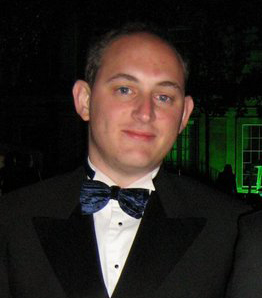
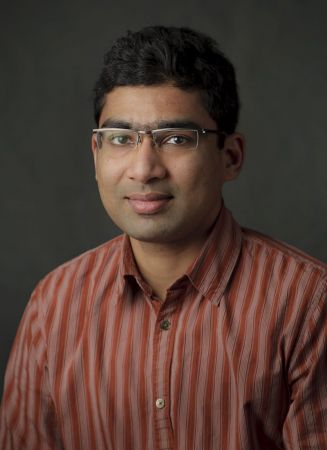
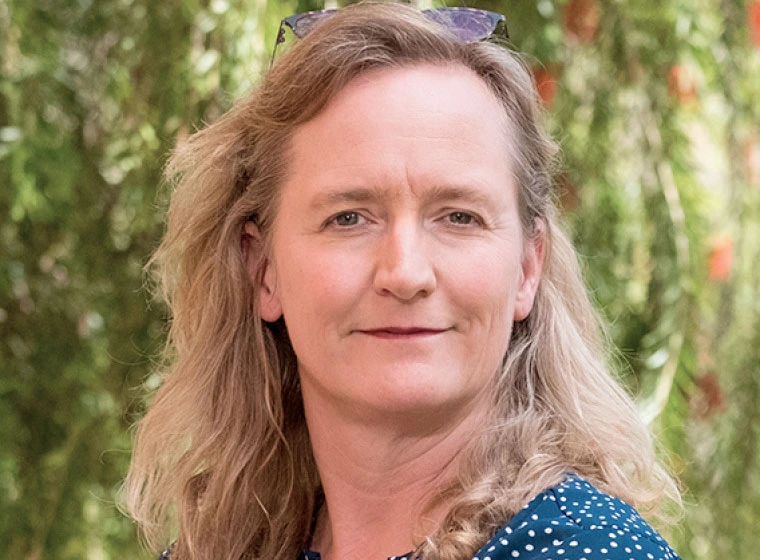
Damián Pitalúa-García is a Researcher at the Centre for Quantum Information and Foundations within the Department of Applied Mathematics and Theoretical Physics at the University of Cambridge. His work bridges quantum foundations, cryptography, and information theory, focusing on spacetime-quantum interplay. Current research spans foundational quantum problems involving spacetime, relativistic cryptography, and experimental imperfections in secure protocols. His 15 most recent publications address topics like oblivious transfer, quantum tokens, and spacetime-constrained communication. Scientific awards include granted patents for spacetime-constrained oblivious transfer (US 10715319B2, 2020; EP 3777008 B1, 2023). He contributes to lecture courses including Part II Quantum Information and Computation and Part III Quantum Information, Foundations and Gravity .
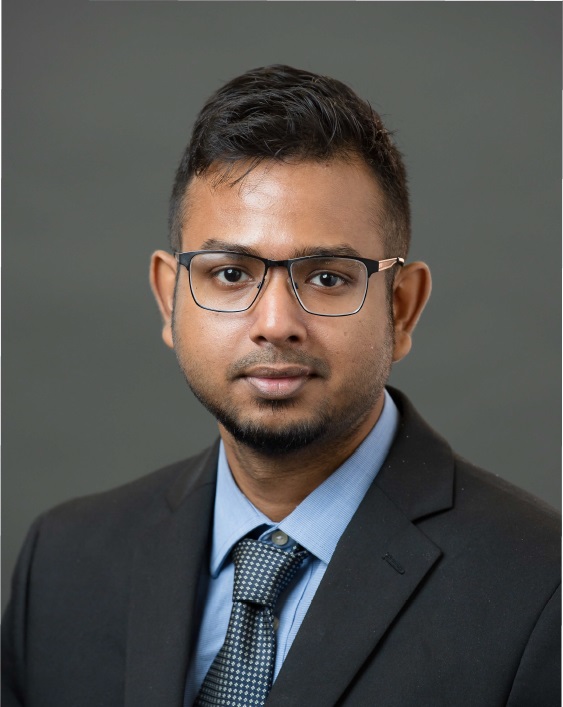
Tanvir Arafin serves as an Assistant Professor in the Department of Cyber Security Engineering at George Mason University, where his research focuses on hardware security and trust mechanisms for emerging computing platforms. With publications in premier venues including IEEE Transactions on Very Large Scale Integration Systems, IEEE Transactions on Computers, and ACM International Conference on Computer-Aided Design, he addresses critical security challenges in next-generation systems through rigorous hardware-software co-design approaches. His research portfolio spans Hardware Security, Trusted Computing, and IoT Security, with specialized expertise in Side-Channel Attacks and Secure Hardware Design. Dr. Arafin investigates electromagnetic side-channel vulnerabilities in O-RAN networks, develops countermeasures for autonomous vehicle cybersecurity, and pioneers RRAM-based security solutions for memory-constrained devices. His work bridges theoretical security models with practical implementations, emphasizing real-world applicability in edge computing environments and autonomous navigation systems. Current projects explore machine learning integration for anomaly detection in connected vehicles and secure acceleration of cryptographic operations. Analysis of Dr. Arafin's 2022-2025 publications reveals strategic focus areas: electromagnetic fingerprinting for radio units in O-RAN (2025), spatial acceleration of Kolmogorov-Arnold Networks (2025), and NTT-based cryptography accelerators (2024). His research demonstrates consistent innovation in securing autonomous navigation systems and edge devices, with emerging work on in-memory computing architectures using resistive memory technologies. Key trends include hardware-centric defense against model inversion attacks, voltage overscaling for lightweight authentication, and robust multi-robot coordination in dynamic environments. Scientific Awards: No scientific awards, fellowships, or medals were documented in the source materials. Dr. Arafin leads significant collaborative research, including the NSF CISE-MSI grant (DP: CNS) for edge-based robust multi-robot systems. His educational initiatives feature Capture-the-Flag competitions targeting underrepresented students in cybersecurity. Current grant activities emphasize practical security solutions for autonomous navigation, multi-robot coordination, and IoT edge devices, with demonstrated focus on translating research into deployable countermeasures for real-world threats in dynamic operational environments.
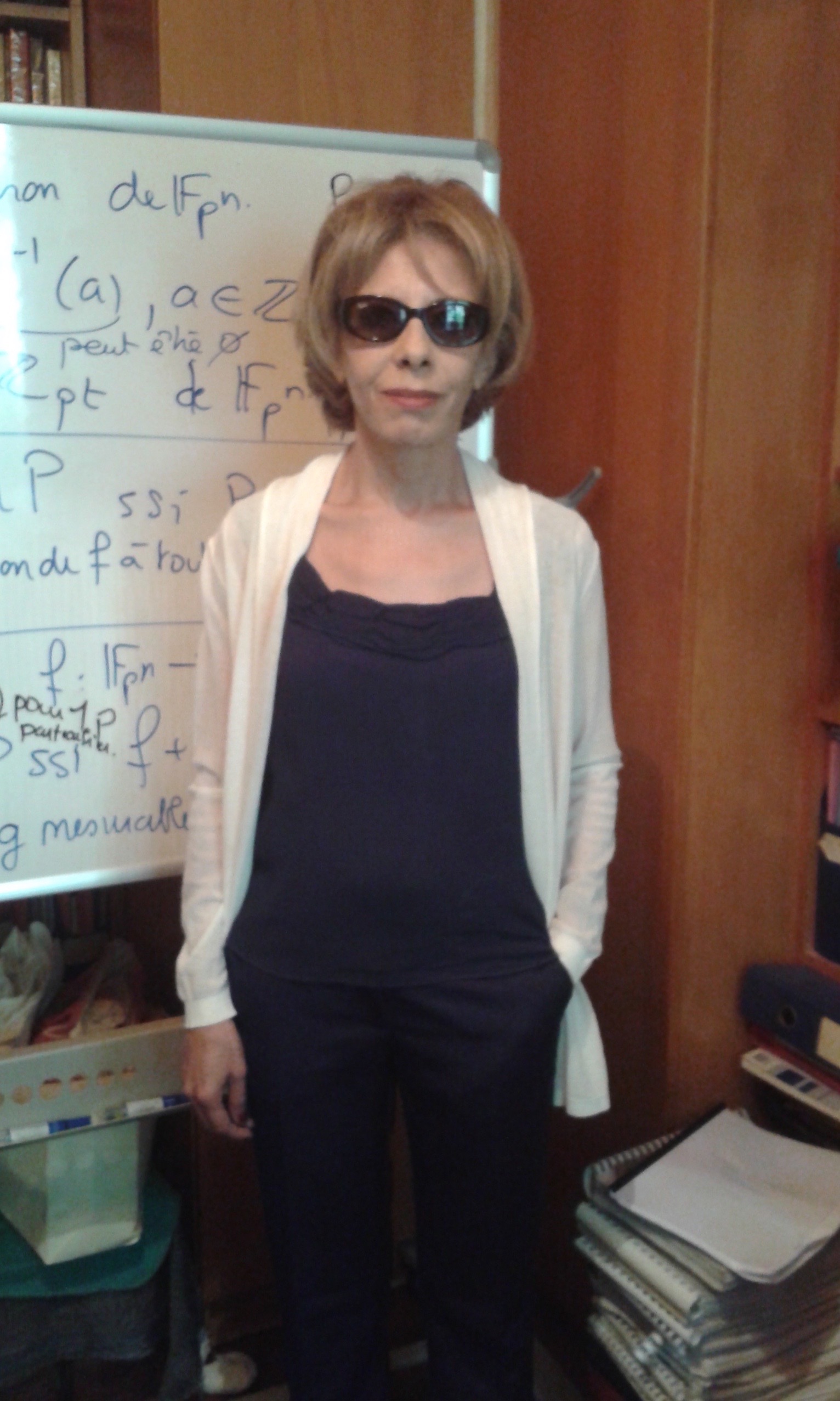
Sihem Mesnager is a University Professor of Mathematics at the University of Paris VIII, affiliated with the Laboratory of Analysis, Geometry and Applications (LAGA) at Paris XIII (CNRS) and the AGC3 research group (Algebra, Geometry, Combinatorics) . She holds an adjunct professorship at Télécom Paris within the MIC2 Mathematics team of the Computer Science and Networks department (INFRES). Her work bridges pure mathematics and applied cryptography, focusing on Boolean functions, bent functions, and coding theory for secure communication and data protection. PhD in Mathematics, University of Pierre and Marie Curie (Paris VI), Sorbonne University (2002) Habilitation (HDR) in Mathematics, University of Paris VIII (2012) Research Interests Dr. Mesnager specializes in symmetric cryptography and coding theory , particularly their applications to secure digital communication, error correction, and post-quantum cryptographic protocols. Her algebraic approach employs finite fields, exponential sums, algebraic geometry, and finite geometry to analyze and construct cryptographic primitives like S-boxes, APN functions, and optimal linear codes. She also investigates algorithmic aspects of computer algebra in these domains. Scientific Awards George Boole International Prize (2020) PEDR Excellence Scientific Award (2019-2022) PEDR Excellence Scientific Award (2014-2017) Publications & Projects Her recent work includes constructing weightwise perfectly balanced Boolean functions for the FLIP cipher, optimizing Inner Product Masking schemes via coding theory, and developing post-quantum secure functional encryption using multivariate cryptography. She has contributed to Reed-Muller codes, BCH codes, and Gaussian sum-based linear codes with one-dimensional hulls, emphasizing their applications in side-channel attack resistance and quantum error correction.
Naveed Mahmud is an Assistant Professor at the Department of Electrical Engineering and Computer Science, Florida Institute of Technology. He specializes in quantum computing, hybrid quantum-classical systems, and reconfigurable computing architectures. His research focuses on optimizing quantum algorithms, data encoding/decoding techniques, and secure communications using quantum technologies. Research interests include quantum-classical integration, algorithm emulation on high-performance reconfigurable computers, and applications of quantum computing in pattern recognition and cryptography. Key areas of exploration are hybrid quantum-classical machine learning, quantum wavelet transforms, and securing free-space optical communications with quantum key distribution. His recent work emphasizes scalability and efficiency in quantum computing frameworks, including frameworks like QASM-to-HLS for quantum circuit acceleration, and decoherence-optimized quantum circuits. Articles highlight advancements in quantum data decoding, algorithm emulation, and secure communication systems. No scientific awards or formal advisees are listed. His profile includes links to ORCID, Google Scholar, and ResearchGate for further details on publications and collaborations.
Dr. Alastair Kay is a Lecturer in the Department of Mathematics at Royal Holloway, University of London. His research focuses on theoretical quantum computation, quantum information theory, and quantum cryptography, particularly addressing challenges in quantum state transfer, error correction, and networked quantum systems. He holds a PhD from the University of Cambridge under Prof. Artur Ekert and a physics degree from Keble College, University of Oxford. His research spans topics such as Quantum state transfer protocols using engineered Hamiltonians Quantum error correction mechanisms for experimental systems Entanglement properties in graph states and spin networks Applications of quantum computing in cryptography and information theory The articles listed reflect his work in quantum information science, computational physics, and theoretical cryptography. Key trends include advancements in fault-tolerant quantum communication, optimization of spin chain dynamics, and foundational studies in quantum correlations and nonlocality. Alastair actively develops software tools like quantikz for quantum circuit diagrams and ConTeXi for LaTeX equation integration in Microsoft Office. He also emphasizes open science principles and reproducibility in quantum research through personal commentary and collaboration with his fiancée, a Panton Fellow in open research practices.
Chigo Okonkwo is Full Professor and Chair of Secured Ultra High Capacity Transmission at the Department of Electrical Engineering , Eindhoven University of Technology. He leads the high-capacity optical transmission laboratory at the Institute for Photonics Integration and contributes to the Center for Quantum Materials and Technology Eindhoven (QT/e) . Academic Qualifications: MSc in Telecommunications and Information Systems, University of Essex (2002) PhD in Optical Signal Processing, University of Essex (2010) Research Interests: Professor Okonkwo focuses on: Maximizing capacity of single-mode fiber systems through advanced-coded modulation and Probabilistic/Geometrically shaped signals Developing Space Division Multiplexing (SDM) systems for Petabit/s transmission using multi-mode/multi-core fibers Quantum secure communications and cryptographic protocol development Optical vector network analyzer (OVNA) technology for SDM fiber characterization Free-space optical link deployment in urban environments Low-complexity digital signal processing algorithms Recent Publications Trends: His 15 most recent articles (2023-2025) demonstrate active research in: Quantum-classical network integration Extreme capacity fiber transmission (Petabit/s systems) Machine learning for optical diagnostics SDM fiber measurement technologies Hybrid QKD-PQC security frameworks Free-space optical urban communication Scientific Awards: Asia Communications and Photonics Conference (ACP) 2018 Best Paper Award European Conference on Optical Communications (ECOC) 2018 Student Paper Award Optica Student Paper Awards (2022) Corning Outstanding Student Paper Competition Finalist (2025) Advisory & Collaborations: Advisor to 8+ researchers including Menno van den Hout, Vincent van Vliet, and Thomas Bradley Technical Program Committee Member, European Conference on Optical Communications (ECOC) since 2014 Sub Committee Chair for Digital Signal Processing track at ECOC 2018 General Chair for OSA Advanced Photonics Congress on Signal Processing for Photonics Collaborates with EU projects (HOMTech, PhotonDelta) and industrial partners Co-founder and Chief Technology Officer of CUbIQ Technologies Laboratory & Infrastructure: Maintains the world-class High Capacity Optical Transmission Lab at TU/e, featuring: Advanced SDM fiber testing equipment Quantum communication research infrastructure Free-space optical link experimental setups Multi-core fiber amplification systems Coherent transmission testbeds Machine learning-enabled diagnostic tools
Prof. Juan P. Torres is a Professor at ICFO (Institut de Ciències Fotòniques) leading the Quantum Engineering of Light research group. His work focuses on generating and tailoring novel forms of classical and quantum light for fundamental quantum theory exploration and applications in secure communications, high-resolution imaging, and precision probing. His research centers on quantum optics and photonics with specialized expertise in spatial and frequency engineering of photons. He pioneers techniques for tailoring spatial entanglement through spontaneous parametric down-conversion schemes, enabling the generation of qudits with on-demand properties. His group actively develops quantum imaging methods using undetected light and explores high-dimensional quantum information processing. Analysis of his recent publications reveals dominant trends in quantum imaging with undetected photons, high-dimensional quantum teleportation, and decoherence-assisted quantum key distribution. His work consistently bridges theoretical quantum mechanics with practical implementations in optical coherence tomography and quantum communication protocols, emphasizing spatial mode manipulation. Prof. Torres maintains active international collaborations with leading researchers including Prof. Bahaa Saleh (CREOL), Prof. Malvin Teich (Boston University), Dr. Fabio Sciarrino (University of Rome), Prof. J. H. Eberly (University of Rochester), and Dr. Alfred U'Ren (UNAM). His laboratory features two fully equipped optical facilities with four optical tables, multiple laser systems across wavelengths, single-photon detectors, nonlinear crystals, and advanced spectroscopy equipment for quantum light generation and characterization.
Dr. Chunming Qiao is a SUNY Distinguished Professor and Chair of the Department of Computer Science and Engineering at the University at Buffalo (SUNY) , leading the Lab for Advanced Network Design, Evaluation and Research (LANDR) since 1993. His work spans cyber-physical systems , optical networks , and Internet of Things (IoT) , with a focus on safety, reliability, and protocol design. Education: PhD in Computer Science from the University of Pittsburgh (1993) BS in Computer Science and Engineering from the University of Science and Technology of China (1985) Dr. Qiao’s research interests combine theoretical and applied network design, including autonomous vehicles , quantum computing , and cloud services . He pioneered optical burst switching (OBS) and iCAR systems for wireless convergence, cited in BusinessWeek and Wireless Europe . His recent publications emphasize quantum networking , federated learning , and autonomous driving security , with projects on entanglement routing , edge inference optimization , and LiDAR adversarial attacks . Articles span IEEE and ACM venues , and include best paper awards . Scientific Awards: TC-CSR Distinguished Technical Achievement Award (2015) SUNY Chancellor's Award for Excellence (2013) IEEE Fellow (2009) UB Exceptional Scholar-Sustained Achievement Award (2005) Dr. Qiao has secured over two dozen NSF grants and collaborations with Google , Cisco , and NEC Labs . His 7 US patents and consulting experience highlight his industry impact, while his editorial roles and conference leadership underscore academic influence. He actively contributes to multi-disciplinary research through the New York State Center of Excellence in Bioinformatics and Life Sciences and CEDAR , advancing high-performance computing and document analysis .
Esther Hänggi is a Professor and Co-Head of the Applied Cyber Security Research Lab at Lucerne University of Applied Sciences and Arts (HSLU), within the Lucerne School of Computer Science and Information Technology. She holds a Dr. sc. ETH Zurich in quantum information and cryptography and a MSc in Physics from EPF Lausanne. Her research focuses on cyber security, quantum cryptography, and quantum computing, with emphasis on practical applications like quantum-safe cryptography and post-quantum algorithms. She has led projects such as the Quantum-safe Hardware Security Module and contributed to initiatives like the IFZ FinTech. Her work bridges theoretical advancements and real-world implementations, including privacy amplification libraries and quantum key distribution systems. Notable awards include the ETH Medal for her doctoral thesis. She actively collaborates with institutions like the Swiss Quantum Initiative and the European Cyber Security Organisation, promoting quantum resilience in security systems.
Sushil Kumar is an Associate Professor in the Department of Electrical and Computer Engineering at Lehigh University, affiliated with the Center for Photonics and Nanoelectronics. His research focuses on semiconductor optoelectronics and quantum electronics, particularly terahertz quantum-cascade lasers and detectors, with applications in chemical/biological sensing, spectroscopy, and imaging. He has pioneered high-temperature/high-power terahertz lasers and developed nanostructured devices for real-world applications such as explosives detection and medical diagnostics. Education: Ph.D., Electrical Engineering, Massachusetts Institute of Technology M.S., Electrical Engineering, University of Michigan B.S., Electronics and Communications, Delhi College of Engineering (India) Research Interests: Kumar’s work spans semiconductor heterostructures in GaAs/InP systems, terahertz photonics, quantum cascade laser design, and plasmonic devices. His innovations include phased laser arrays, nanoplasmonic sensors, and high-power THz emitters. He emphasizes translating lab breakthroughs into practical solutions for security, healthcare, and astrophysics. Key Articles Trends: Recent publications highlight advances in high-power THz lasers (e.g., 2W output), beam-combining techniques, and biomedical sensors using nanoplasmonic interferometry. His work bridges fundamental physics with applied engineering, addressing global challenges in sensing and imaging. Labs/Teams: Based in Sinclair Lab (7 Asa Drive, Bethlehem, PA), he leads projects on quantum cascade lasers and terahertz systems. Collaborates with industry and academic partners in photonics and materials science.
Jawad Ahmad is a Lecturer in the School of Computing, Engineering and the Built Environment at Edinburgh Napier University . His work is closely associated with the Centre for Cybersecurity, IoT and Cyberphysical Systems and the Centre for Distributed Computing, Networking and Security , where he contributes to cutting-edge research in secure and intelligent systems. His research interests are centered on cybersecurity , artificial intelligence , and Internet of Things (IoT) technologies. He focuses on developing advanced intrusion detection systems, privacy-preserving frameworks using federated learning and homomorphic encryption, and secure data transmission mechanisms leveraging chaos-based and quantum-inspired encryption. His interdisciplinary work extends to healthcare, smart agriculture, and environmental monitoring, demonstrating the broad applicability of his research. The analysis of his recent publications reveals a strong trend toward AI-driven security solutions, particularly using deep learning models like transformers and attention mechanisms for network intrusion detection. He also explores the integration of machine learning with blockchain and distributed ledgers for trusted threat intelligence sharing. His work consistently emphasizes real-world deployment, performance optimization, and resilience against cyber threats in industrial and healthcare settings. Funded Research Projects: Data Sharing in Highly Secure Environments (Innovate UK, £273,181) PhD Studentship on Homomorphic Encryption (6G Health Institute GmbH, £35,082) TrustShare: Privacy-Preserving Threat Intelligence Sharing (Innovate UK, £31,386) Cyber Hunt: Automated Cyberthreat Hunting (Norway Research Council, £37,500) AI Dashboard for COVID-19 Sentiment Analysis (Chief Scientists Office, £135,104) Dr Ahmad actively supervises postgraduate research, currently serving as Director of Studies for Hisham Ali and as second supervisor for other PhD candidates. He is involved in multiple collaborative research teams focusing on cybersecurity, AI, and IoT, often working with Prof Bill Buchanan and other leading researchers in the field. His research is published in high-impact journals such as IEEE Access , Frontiers in Computational Neuroscience , and Sensors , and presented at international conferences.
Fahad Ahmad is a Lecturer in the School of Computing within the Faculty of Technology at the University of Portsmouth. He holds affiliations with the Portsmouth AI and Data Science Centre, Centre for Cybercrime and Economic Crime, and Portsmouth Centre for Advanced Materials and Manufacturing. His research focuses on machine learning applications in healthcare, cybersecurity, and quantum computing. He supervises PhD students in topics like quantum machine learning for securing IoT medical devices. Key research areas include: Medical imaging diagnostics using deep learning (e.g., echocardiograms, X-rays) Cybersecurity for financial systems and SDN-NFV networks Quantum key distribution for post-quantum security AI-driven health management systems Recent work emphasizes: Human activity recognition through machine learning Cancer subtype classification using RNA expression data Emotional empathy modeling in intelligent agents His articles span healthcare technology, cybersecurity frameworks, and hybrid AI architectures. He actively contributes to international conferences and journals, with over 60 peer-reviewed publications. Research collaborations include institutions in Pakistan and the UK.
Nikas Thomas is an External Instructor at the Department of Informatics (DI) of the National and Kapodistrian University of Athens (NKUA). His work spans multiple interdisciplinary areas including quantum cryptography, fiber optic sensing technologies, and seismic monitoring. Key roles include advancing secure communication protocols through quantum key distribution (QKD) and developing novel Li-Fi transceivers using perovskite photodiodes. He also pioneers applications of Distributed Acoustic Sensing (DAS) for urban earthquake monitoring in Athens, leveraging existing fiber-optic infrastructure for environmental and geophysical studies. His research bridges theoretical frameworks (e.g., phase transmission analysis) with practical implementations in optical communication systems and seismic detection. Research interests focus on: Secure optical communication systems leveraging quantum principles Fiber optic-based seismic and acoustic sensing Emerging Li-Fi technologies for high-speed wireless networks Phase-sensitive fiber optic analysis for geophysical applications Publications from 2022-2024 highlight trends in: Quantum security protocols for optical and radio-over-fiber systems Urban DAS applications for earthquake monitoring Microwave frequency interferometry for low-cost seismic sensors No scientific awards are explicitly listed in the provided materials. His work often involves collaborative projects with industry and academic partners, though specific grants are not detailed here. Current projects include optimizing DAS for real-time urban seismic networks and exploring novel modulation formats for secure optical transmission.
Athanasios Gkelias is a Research Fellow in the Department of Electrical and Electronic Engineering at Imperial College London's Faculty of Engineering. His research focuses on advanced wireless communication systems, network optimization, machine learning applications, and quantum computing methodologies. He contributes to interdisciplinary projects involving IoT coalitions, adversarial signal detection, and cognitive behavior analysis. Key research areas include: (1) Network resource management in Software-Defined Networks (SDN), (2) Localization systems for indoor environments, (3) 3D reconstruction using photometric stereo and origami-based modeling, and (4) distributed optimization frameworks for ad-hoc networks. His recent work explores quantum approaches to combinatorial optimization and self-supervised learning methods. Publications span 20+ years with notable contributions in network coding, vehicular ad-hoc networks (VANETs), and cross-layer design for wireless mesh networks. His work emphasizes practical implementations through frameworks like iVisher for caller ID spoofing detection and cooperative MAC protocols for multi-antenna systems. No scientific awards are listed in the provided information. His research has been applied in healthcare technology through emotion understanding systems for Alzheimer’s patients and in battlefield communication through IoBT coalitions. Active participation in Imperial College's Engineering faculty reflects his commitment to advancing telecommunications and network science.
Catherine Brooks serves as Professor and Interim Dean of the College of Information Science at the University of Arizona, having previously held leadership roles as associate director (2016-2018) and director (2019-2023). She founded the Center for Digital Society and Data Studies, establishing herself as a key institutional leader in digital society research. Her academic foundation includes a PhD from the University of California, positioning her at the intersection of communication theory and information science. Research Interests Dr. Brooks investigates day-to-day language use in social contexts with emphasis on instructional communication technologies , online collaboration dynamics , and language-identity relationships . Her work examines how digital environments facilitate co-construction of knowledge, relationships, and identities while exploring science communication challenges. This inherently interdisciplinary research bridges communication studies, information science, and sociology through mixed-methods approaches. Publication Trends Recent scholarship reveals evolving focus from classroom communication (2018) to contemporary societal-technological intersections. Her 2022-2024 work increasingly addresses environmental media narratives (Arizona mining, energy transition), emerging technology ethics (quantum computing, deepfakes), and digital governance (student data privacy, algorithmic bias), demonstrating responsive engagement with urgent socio-technical dilemmas. Research Infrastructure As founder of the Center for Digital Society and Data Studies, she cultivates interdisciplinary collaboration examining digital technology's societal impact. This hub supports research on media discourse, data ethics, and communication innovation while connecting academic work with public discourse through outlets like Scientific American and Wired.