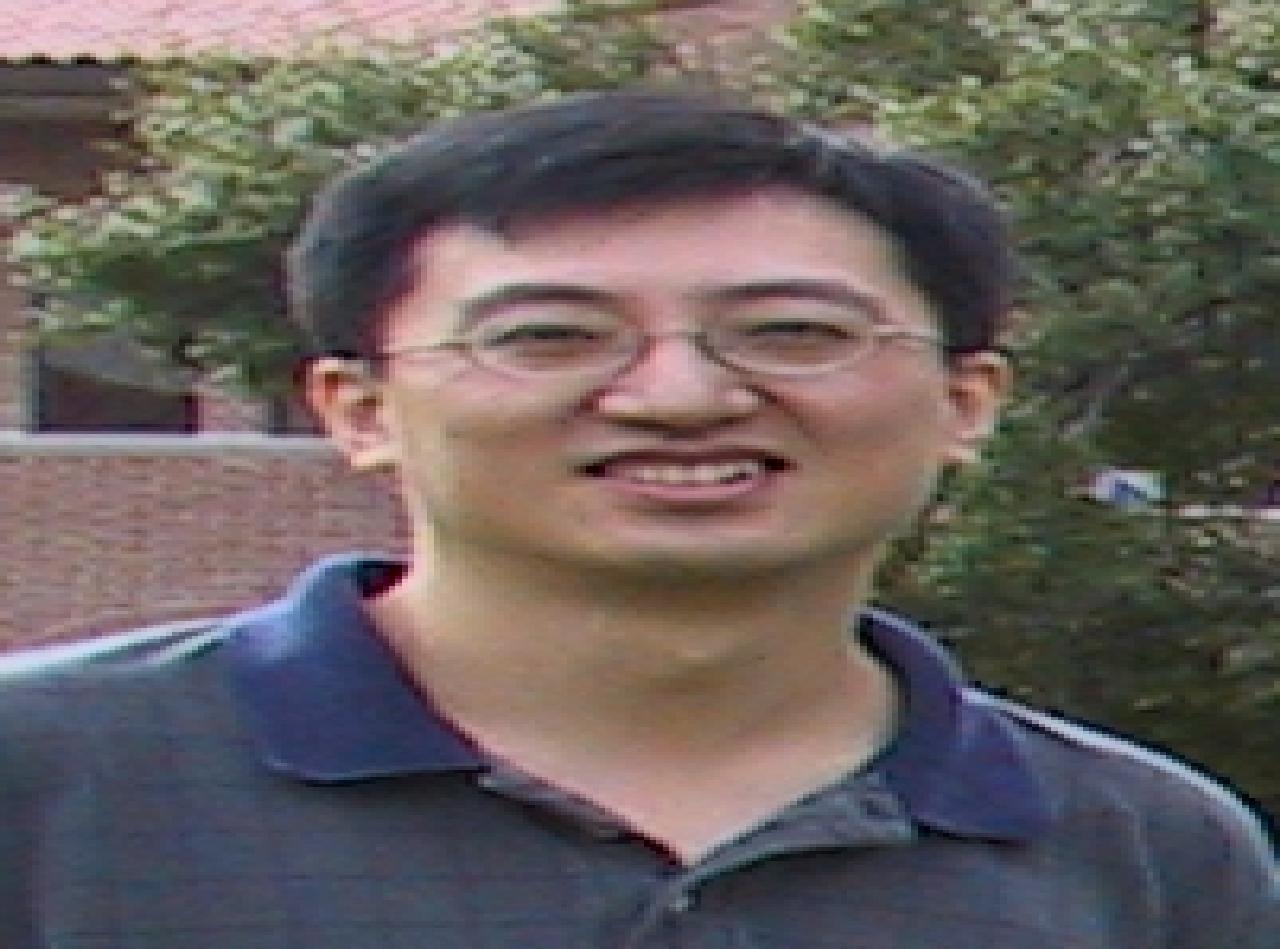
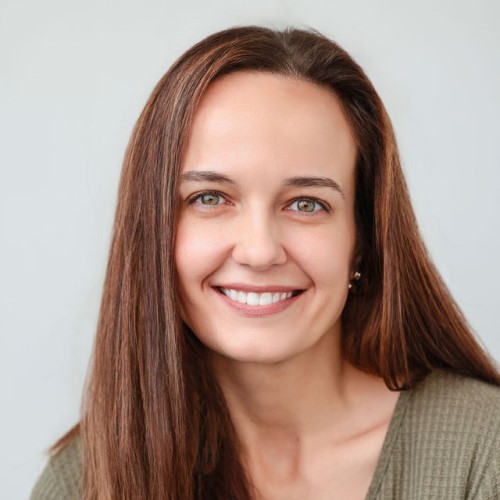
Patrick T. Hurley is an Assistant Professor in the Environmental Studies Program at Ursinus College , where he investigates intersections of political ecology, environmental conservation, and land-use change. His work bridges First World political ecology with global resource conflict dynamics, focusing on urban-rural gradients and exurban development. Expertise in mining opposition and amenity migration Research on urban foraging and social-ecological resilience Recipient of Ursinus Mellon Summer Research Grant Recent publications analyze urban forests as provisioning ecosystems, exploring foraging practices among Russian-speaking immigrants in NYC (2022), social-ecological memory in Philadelphia (2024), and urban greenspace governance (2020). His scholarship links local land struggles to global neoliberalism patterns, particularly in Turkey’s Kaz Dağları region (2018). Hurley’s work integrates ethnobotany, environmental justice, and critical urban studies. He examines how marginalized communities navigate resource access, with projects like the Ursinus Food Forest (2022) demonstrating practical applications of cultural-ecological reconnections.
Per Lynggaard is a Professor of Electronics at the Technical University of Denmark (DTU) , leading the B.Eng. program in Electronics. Previously, he held an Associate Professor role at Aalborg University, combining academic excellence with a robust industrial career in technical-scientific research and development. Education: M.Sc. in Electrical Engineering and Information Technology (EE and IT) Ph.D. in Electronics from Aalborg University Research Interests: Focus on Integrated Circuit Design, Wireless Sensor Networks (WSN), Machine Learning, IoT, and Smart City Technologies . His work emphasizes energy-efficient systems, cybersecurity in IoT, AI-driven interference mitigation, and sustainable energy harvesting solutions. He has contributed to UN Sustainable Development Goals through projects addressing smart infrastructure and environmental monitoring. Projects & Collaborations: Leads and participates in EU-funded initiatives such as InnoTech (2023–2025) for green transition solutions and TransportTech (2023–2026) for Industry 4.0 logistics. Active in cybersecurity research via projects like Jamming Against Critical Wireless Communication , aiming to protect critical infrastructure. Awards: Recognized with multiple honors and rewards during his industrial career, though specific names are not listed. His work has been cited widely, with notable impact in IoT security and energy-efficient systems. Advising & Grants: Supervises Turnip T.N. in a PhD project on 6G security protocols. Engaged in securing funding for projects like F2D2: The Community for Dynamic Data (2021–2030), focusing on dynamic data systems and cybersecurity. Labs & Teams: Collaborates in interdisciplinary teams such as the InnoTech TaskForce and F2D2 Community , advancing IoT and AI integration. His research bridges academia and industry, with outputs spanning smart cities, healthcare IoT, and sustainable energy systems.
Y. Charlie Hu is the Michael and Katherine Birck Professor of Electrical and Computer Engineering and Professor of Computer Science (by courtesy) at Purdue University, where he leads the PurNET Lab and contributes to the Systems and Networking Group. His research spans Mobile Systems, Distributed Systems, Operating Systems, and Computer Networks , with a focus on energy-efficient AI systems and edge computing. His groundbreaking work on smartphone energy management has been widely adopted by the mobile industry and recognized with multiple test-of-time awards , including from ACM SIGOPS and ACM SIGMOBILE . He has received prestigious honors like the NSF CAREER Award , Honda Initiation Grant , and industry accolades from Google Research and Qualcomm . Notable Funded Projects: NSF's NeTS: Black-box Optimization of White-box Networks (2023-2026) Intel -NSF's SPLICE initiative His research has produced 15+ PhD graduates now in academia (University of Arizona, Virginia Tech) and industry (Google, Apple, Qualcomm). The articles reflect a career-long focus on edge computing , 5G network optimization , and energy-aware systems , with recurring themes in mobile AR/VR , video analytics , and network protocol design . Scientific Awards Honda Initiation Grant NSF CAREER Award Purdue Early Career Research Award Google Research Award Qualcomm Faculty Award ACM SIGOPS EuroSys Best Student Paper Award ACM MobiCom Best Community Paper Award IEEE Fellow ACM Distinguished Scientist Purdue PRF Innovator Hall of Fame
Dr ASM Kayes serves as Senior Lecturer in Cybersecurity and Cyber Curriculum Lead at La Trobe University's Department of Computer Science and Information Technology, where he shapes cybersecurity education programs including Master's, Bachelor's, and Double Degrees. His academic journey began with a PhD from Swinburne University of Technology in 2015, followed by postdoctoral research at La Trobe before joining as Lecturer in 2019 and promotion to Senior Lecturer in 2022. His research spans critical cybersecurity domains including data security, privacy preservation, context-aware access control, malware/ransomware defense, and IoT/fog/cloud security leveraging AI/ML techniques. Dr Kayes has established himself as a leading voice in blockchain security frameworks, privacy policy analysis, and cyber incident response through publications in top-tier venues like ACM Computing Surveys, IEEE Internet of Things Journal, and Computers & Security. His recent publications reveal a strong trajectory toward integrating AI with traditional security frameworks, particularly in blockchain risk assessment (2025), cross-domain access control (2025), and IoT behavior prediction (2024). The research demonstrates consistent focus on practical security solutions addressing ransomware mitigation, privacy breaches, and emerging threats in decentralized systems. Over $880,000 secured as Chief Investigator for cybersecurity projects Australian Government Department of Social Services grant (2023-2026) for cyberbullying prevention AustCyber research funds with industry partners (2020-2023) SmartSat CRC and ASCRIN PhD scholarship grants (2021) Dr Kayes has successfully supervised 5 PhD candidates to completion and currently mentors 5 doctoral students across diverse topics including AI-driven threat hunting, satellite network security, and blockchain risk frameworks. His collaborative network spans UK, USA, Europe, and Asia, with active industry partnerships through Westpac, BHP, and Quantum Victoria. He serves on editorial boards for leading cybersecurity journals and has examined HDR dissertations globally, reflecting his significant standing in the academic community.
Amitabh Mishra is an Adjunct Professor at the University of Delaware. His research focuses on three core areas: computer-communication networks (wireless architectures, cross-layer design, mobile cloud computing), network performance analysis (stochastic models, numerical optimizations), and network security (vulnerability assessments, authentication protocols). He has contributed to interdisciplinary fields including IoT security, smart healthcare frameworks, and socio-technical systems analysis. His work spans technical domains like wireless sensor networks, tactical network management, and quantum dot material studies, alongside applied research in tourism economics, healthcare data analytics, and educational technology. Notable contributions include frameworks for energy-efficient physiological monitoring, secure IoT configurations, and machine learning-driven security protocols. Recent research highlights include: Developing secure mobile cloud computing paradigms Modeling Multipath TCP capacity bounds using stochastic theory Investigating AI applications for deepfake ethics and tourism marketing His publications span technical journals in computer networks, medical IoT systems, and interdisciplinary studies in cultural tourism and climate change resilience.
Dr. Alexander E Davis is a Senior Lecturer in the School of Social Sciences at The University of Western Australia, specializing in Political Science and International Relations. He holds an MA in History from the University of Tasmania and a PhD in International Studies from the University of Adelaide. Prior to his current role, he held research postdocs at the University of Johannesburg and La Trobe University. Academic Appointments: Senior Lecturer (2021–present), The University of Western Australia Education: MA in History, University of Tasmania; PhD in International Studies, University of Adelaide Davis’s research engages with international relations through historical, critical, and postcolonial lenses, with a geographic focus on South Asia. His primary work examines the geopolitics and ecology of the Himalayas, including the books India and the Anglosphere: Race, Identity and Hierarchy in International Relations and The Geopolitics of Melting Mountains: An International Political Ecology of the Himalaya (Palgrave, 2023). Secondary interests include the role of the Indian diaspora in Australia-India relations and the feasibility of decolonizing Australia’s international relations. Recent publications include analyses of transboundary environmental challenges, border disputes in the Himalayas, and decolonial frameworks in IR. His work contributes to the UN Sustainable Development Goals for environmental sustainability and peace-building. Scientific Awards : School of Social Sciences Commendation for Early-Career Research Award (2023) School of Social Sciences Commendation for Teaching Excellence Award (2023) The Boyer Prize (2022) As Head of the Australian Himalaya Research Network and a foundation member of New International Histories of South Asia, Davis bridges academic and policy domains. He also served as a Non-Resident Fellow at the National University of Singapore (2021–2022) and contributed to consultancy projects on Himalayan policy for India (2023–2025).
Benoit Champagne is a Full Professor in the Department of Electrical and Computer Engineering at McGill University, Montreal. His research focuses on statistical signal processing, with applications in wireless communications, multi-antenna systems, and adaptive filtering. He has held academic positions since 1990, including roles at INRS-Telecom before joining McGill in 1999. He teaches graduate and undergraduate courses such as ECSE 305 (Probability and Random Signals), ECSE 512 (Digital Signal Processing), and ECSE 617 (Array Signal Processing). Education: B.Eng. (Electrical Engineering) and M.Sc. (Physics) from Université de Montréal (1983, 1985), Ph.D. in Electrical Engineering from University of Toronto (1990). His research spans signal detection/estimation, speech enhancement, MIMO systems, and physical layer security, with over 150+ publications in top journals and conferences. He has supervised numerous graduate students and holds grants from NSERC, CFI, and industry partners like Nortel and Bell Canada. His work emphasizes practical implementations, including hybrid analog/digital beamforming for mmWave systems and energy-efficient resource allocation in D2D communications. He has contributed to IEEE standards through editorial roles (e.g., IEEE Transactions on Signal Processing) and conference organization (e.g., IEEE VTC 2016). Current research explores machine learning integration with signal processing for next-generation wireless systems. Notable contributions include advancements in subspace tracking, cognitive radar systems, and distributed adaptive filtering. His lab collaborates internationally, addressing challenges in 5G/6G networks, massive MIMO, and secure communications.
Samir Ouchani is a Research Director at the CESI LINEACT laboratory (Aix-en-Provence, France), affiliated with the CESI Engineering School. He holds a PhD in Computer Science from Concordia University (2013) and an HDR (Accreditation to Supervise Research) from CNAM Paris (2022). His research focuses on securing cyber-physical systems (CPS) through formal methods, blockchain, and AI-driven approaches. Key roles include leading projects on resilient CPS architectures, IoT security, and federated learning in industrial contexts. Education: 2022: HDR in Security and Reliability of Smart CPS (CNAM Paris) 2013: PhD in Computer Science (Concordia University, Montreal) 2006: Master in Computer Science (Lorraine University, France) 1997: Engineering Degree in Computer Science (Djillali Liabess University, Algeria) Research Interests: His work emphasizes secure CPS design, including cryptographic protocols for IoT, formal verification frameworks, and AI applications for intrusion detection. He explores blockchain for smart cities, federated learning in distributed systems, and resilience engineering for autonomous vehicles. Recent projects include developing PUF-based authentication protocols and digital twin architectures for resource-constrained systems. Advising & Collaborations: Supervised PhD theses on IoT security (Fahem Zerrouki), smart city formal verification (Walid Miloud Dahmane), and federated learning in industrial CPS (Souhila Bedra Guendouzi). Collaborates with institutions like Blida University (Algeria) and HESAM University. Active in conferences such as CRISIS, ICFNDS, and IEEE WETICE. Labs & Teams: Leads the Engineering and Numerical Tools research team at CESI LINEACT, focusing on model-based design, CPS simulation, and cybersecurity tool development. Engaged in EU-funded projects on Industry 4.0 and smart infrastructure security.
Aleksandar Jevremović is a Full Professor at the Faculty of Informatics and Computing, Singidunum University (Belgrade, Serbia), and holds multiple academic and professional roles. He is the Serbian representative at the UNESCO IFIP Technical Committee on Human-Computer Interaction since 2018. He has served as Vice-Dean of his faculty (2015–2018) and held visiting professorships at institutions like Ss. Cyril and Methodius University (North Macedonia) and Tallinn University (Estonia). His research focuses on cybersecurity, IoT, AI, and e-learning innovation. Education and Affiliations: External Researcher at the Mathematical Institute of the Serbian Academy of Sciences and Arts Visiting Scholar at Cyprus Interaction Lab (Cyprus University of Technology) Alumni/Postdoc Researcher at Tallinn University's HCI Group Member of IEEE and the Informatics Association of Serbia Research Interests: Jevremović’s work spans cybersecurity (e.g., intrusion detection, secure IoT protocols), human-computer interaction (HCI), AI-driven education tools, and neurotechnological applications like EEG-based assessment systems. He emphasizes practical solutions for digital safety, such as children’s online protection and cryptographic key generation from biometric data. Grants and Projects: Member of the External Advisory Committee for the EU-funded ONTOCHAIN project (2022–2023) Mentor for training schools like AAPELE Training School and NET4Age-Friendly initiatives Trainer in IoT, cybersecurity, and health promotion programs across Europe Labs and Teams: He collaborates with interdisciplinary teams on projects like CASPER (Children Agents for Secure and Privacy Enhanced Reaction) and led the development of WIDE, a collaborative web development education platform.
Dr. Anthony Baross is an Associate Professor of Sport & Exercise Physiology at the University of Northampton, affiliated with the Faculty of Arts, Science and Technology and the Department of Sport, Exercise and Life Sciences. He has been a faculty member since 1998 and currently serves as a research theme lead, actively supervising PhD students and securing external funding for impactful research. His educational background includes a PhD in Cardiovascular Physiology from the University of Kent (2011), an MSc in Exercise and Health Behaviour from City University, London, and a BSc in Sport Science from Canterbury Christ Church University. He also holds a PGCE in post-compulsory education. Dr. Baross’s primary research focuses on the cardiovascular benefits of isometric resistance training (IRT), particularly its effects on ambulatory blood pressure and morning blood pressure surge in both normotensive and hypertensive individuals across age groups. He also investigates eccentric exercise, blood flow restriction training, and cryotherapy in aging populations. His work combines laboratory-based trials with real-world applications, often involving collaboration with institutions such as the University of Windsor and the University of Greenwich. His recent publications (2021–2025) reflect a strong trend in clinical exercise interventions, with emphasis on randomized controlled trials, longitudinal studies, and technical validations of training devices. Key themes include training frequency, detraining effects, cardiovascular reactivity, and home-based interventions for blood pressure management. Dr. Baross has led multiple funded projects, including those supported by local government, charitable organizations, and internal university funds, focusing on hypertension reduction and community health. His work has been presented at international conferences such as the European College of Sport Science. He actively supervises doctoral students including Brett Baxter, Saul Cuttell, Adnan Haq, and Dominic Langdon, whose research spans eccentric exercise, cryotherapy, and blood flow restriction. He is involved in public health partnerships and knowledge transfer initiatives, further amplifying the societal impact of his research.
Kristian Gjøsteen is a Professor at the Department of Mathematical Sciences within the Norwegian University of Science and Technology (NTNU) . He actively contributes to the Algebra Group and specializes in cryptographic systems with a focus on electronic voting , security proofs , and privacy-enhancing technologies . Educational Background: MSc and PhD from NTNU Research Interests: His work spans cryptography , key exchange protocols , cloud security , and formal verification of security mechanisms. Particular emphasis is placed on coercion-resistant voting systems , lattice-based encryption , and blockchain privacy models . Article Trends: Recent publications demonstrate expertise in post-quantum cryptography , machine-checked security , and privacy-preserving voting architectures . Collaborative efforts explore hybrid cryptographic schemes , verifiable decryption , and mix-net implementations for secure elections.
Simone Ferlin is an Adjunct Senior Lecturer at Karlstad University working with 5G and Internet evolution. She completed her PhD in computer science in 2017 at the Simula Research Lab and Universitetet i Oslo under the supervision of Dr. Ozgu Alay and Prof. Michael Welzl. Her PhD dissertation focused on increasing robustness in multipath transport with MPTCP. Dr. Ferlin's educational background includes a PhD in Computer Science from the Simula Research Lab and Universitetet i Oslo (2017). Her doctoral research centered on enhancing robustness in multipath transport protocols, specifically focusing on MPTCP (Multipath TCP). She also completed undergraduate work that contributed to a book project with Prof. Friedrich Oehme on electronics and circuit technology. Dr. Ferlin's research spans multiple domains at the intersection of networking, systems, and performance engineering. Her primary interests include network and system measurements, performance analysis, security, and congestion control. She investigates how networks like the Internet evolve, examining technology development, adoption patterns, and their impacts on various entities. Additionally, she explores ways to harmonize security and privacy while making them more usable and assessable. Her work particularly focuses on transport layer and multipath transport protocols, examining their performance and security aspects. She also investigates application and transport layer performance, automation, and monitoring. Her research extends to network programming in both Linux kernel and user space, mobile broadband networks from 2G to 5G, and their intersection with the Internet. She is deeply engaged in observability, distributed and system performance monitoring, and automation. Analysis of Dr. Ferlin's recent publications reveals a strong focus on next-generation networking technologies. Her work spans multiple domains including 5G/6G networks, transport protocols (particularly QUIC and MPTCP), network virtualization, container orchestration, and the application of machine learning to networking problems. She has increasingly incorporated large language models into network configuration and automation research. Her publications demonstrate a consistent emphasis on performance measurement, optimization, and security across diverse networking environments from the edge to the cloud. Dr. Ferlin has received notable recognition for her research contributions: Best paper award at IEEE ICIN'21 for 'Learning-based Incast Performance Inference in Software-Defined Data Centers' Applied Networking Research Prize (ANRP)'25 winner for 'NetConfEval: Can LLMs Facilitate Network Configuration?' Dr. Ferlin is actively involved in mentoring the next generation of networking researchers. She has co-supervised numerous Master's and PhD students across multiple institutions including Karlstad University, KTH, TU Berlin, University of Oslo, and universities in Brazil. Her students have worked on diverse topics including NAT64 performance comparison, system tracing visualization, network observability, ML applications to multipath transport, FEC integration with QUIC, high-performance networking for 5G, congestion control, shared bottleneck detection, multipath IoT applications, and container runtime performance. She is also involved in several significant research projects including Vinnova's SEMLA (Securing Enterprises via Machine-Learning-based Automation), Horizon Europe's CODECO (Cognitive Decentralised Edge Cloud Orchestration), and the Knowledge Foundation of Sweden's DRIVE (Data-driven Latency-Sensitive Mobile Services for a Digitized Society). Dr. Ferlin serves as Workshop Chair for ACM SIGCOMM '25, is a member of the ACM/IRTF Applied Networking Research Workshop (ANRW) steering committee, and co-chairs the Internet Congestion Control Research Group (ICCRG) at the IRTF. She previously served as Associate Technical Editor for IEEE Communications Magazine and has been active on numerous program committees for major networking conferences including SIGCOMM, CoNEXT, IMC, and PAM.
Professor Fiona Measham holds the Chair in Criminology at the University of Liverpool since 2019. Her interdisciplinary research focuses on transgressive leisure, psychoactive substances, and harm reduction, with a particular emphasis on drug policy, nightlife cultures, and gender studies. She has pioneered community-based drug checking services through her role as founder of The Loop, a non-profit NGO operational in the UK and Australia since 2013. Her professional activities include membership in drug policy reform panels (Labour Party, Conservative Party), the ACMD Technical Committee, and Drug Science's Medical Psychedelics and Supervised Injecting Facilities Working Groups. Research interests span drug markets, substance use epidemiology, nightlife safety, and the intersection of gender with criminal justice systems. She has secured significant grants, including a £DEPARTMENT OF HEALTH & SOCIAL CARE (UK) project analyzing youth substance use trends (2021–2023). Teaching responsibilities include convening the SOCI 339 'Drugs, Crime & Society' module, emphasizing critical analysis of drug policy and health sciences. Key contributions include evaluating drug checking efficacy, analyzing festival drug use patterns, and addressing gender-based violence in nightlife settings. Her work bridges academic research with policy advocacy, evidenced by her involvement in UK drug strategy reviews, Scottish drug checking implementation studies, and global harm reduction initiatives.
Laura K. Jones is a Visiting Assistant Professor in the Department of Anthropology at Emory University. Her academic background includes a PhD in Anthropology from Rice University (2010), postdoctoral fellowships at the Yerkes National Primate Center and Emory University School of Medicine, and additional training at institutions like Tulane University and the University of Texas Health Science Center. Her research focuses on surgical team dynamics, healthcare communication, and the application of anthropological methods to medical settings. Notable work includes studies on operating room behavior, telehealth innovation, and the impact of hierarchy in surgical environments. Dr. Jones has received prestigious awards such as the 2010 Graduate Student Paper Prize from the Society for Medical Anthropology and the Josephine Louise Newcomb Fellowship. She has secured research grants totaling over $174,000, including projects on interprofessional communication in operating rooms and mitigating medical errors through team-based approaches. Her interdisciplinary work bridges anthropology, bioinformatics, and clinical practice, with a particular interest in wearable technology and mindfulness integration in healthcare. Professional activities include roles as Principal Investigator at Kaiser Permanente and BioSelf Technology, as well as teaching and mentoring at Emory and Rice Universities. She has presented over 20 scholarly talks and posters at conferences like the American Anthropological Association meetings, focusing on topics ranging from ethological methods in surgery to medical error prevention strategies.
Emmeline Chuang serves as Associate Professor and Mack Distinguished Professor at the University of California, Berkeley, where her research examines organizational strategies to improve service access and well-being for underserved populations through inter-organizational relationships, evidence-based practice implementation, and work design in health and human service systems. Her educational foundation includes a Ph.D. in Health Policy and Management from the University of North Carolina at Chapel Hill (2010), preceded by practical experience as an Americorps/Healthcorps volunteer and research analyst specializing in health and social service program evaluation. Dr. Chuang's research program centers on health services accessibility for vulnerable populations, with three interconnected pillars: the impact of cross-organizational collaboration on client outcomes, leadership strategies for evidence uptake by frontline practitioners, and work design effects on staff satisfaction and care quality. Her work bridges public health, social work, and organizational behavior to address systemic barriers in serving Medicaid enrollees, homeless youth, and populations with complex health and social needs. Analysis of her 2019-2024 publications reveals consistent focus on Medicaid innovation (particularly California's Whole Person Care pilots), integration of health and social services, and reduction of disparities through implementation science approaches. Her methodology frequently combines qualitative and quantitative techniques to evaluate cross-system collaboration in child welfare, substance use treatment, and primary care settings. Honors include: Mack Distinguished Professor Her research program has secured competitive funding from the National Institute on Drug Abuse, William T. Grant Foundation, Centers for Disease Control and Prevention, Robert Wood Johnson Foundation, and Hitachi Foundation. While specific advisees aren't listed in source materials, her professorship entails graduate student mentorship in health policy implementation. With over 70 peer-reviewed publications plus policy tools for practitioners, her work directly informs organizational practices in human services. She maintains active affiliation with the Mack Center for Advancing the Dignity of Work, focusing on improving work conditions and organizational practices to enhance service delivery across human service sectors.