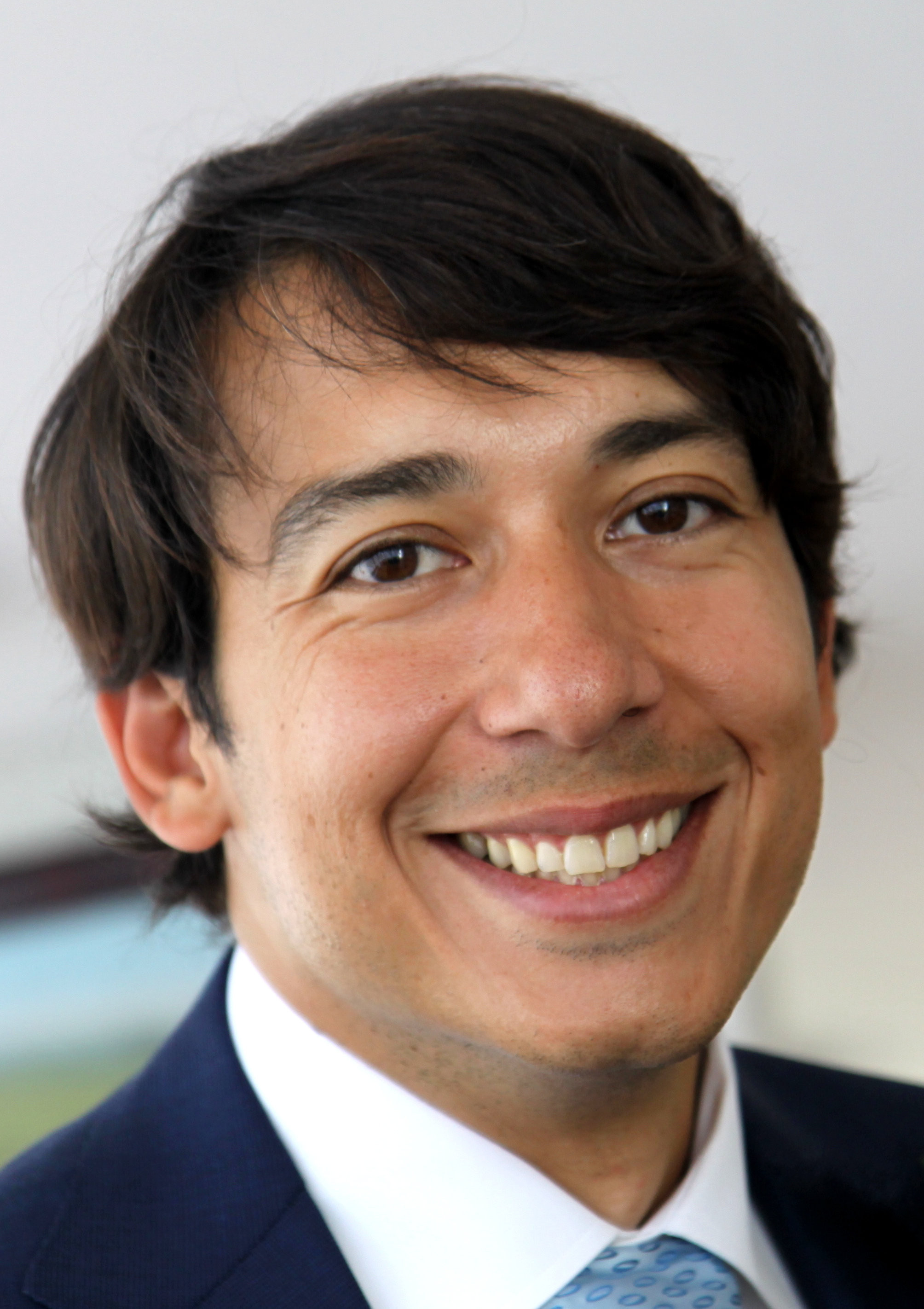
Alejandro Russo is a Professor at Chalmers University of Technology , specializing in Information Flow Control (IFC) , Secure Programming Languages , and Functional Programming . His research bridges theoretical foundations and practical implementations, focusing on mitigating timing channels , covert channels , and data leakage in concurrent systems. Developed novel frameworks for Differential Privacy with provable accuracy bounds Pioneered COWL integration for browser security and instruction-based scheduling to prevent cache timing attacks Led major projects like HIPSTER (hybrid static/dynamic IFC) and AppFlow (practical IFC deployment) His publications reveal expertise in security libraries for Haskell and Python , with a focus on faceted execution , label manipulation , and mechanized security proofs . Students under his supervision have explored topics ranging from secure eDSLs to privacy-preserving compilation techniques . Scientific awards : Google Research Award (2011) for Python taint analysis Advising and grants : Principal Investigator for VR , STINT , and Google Research Award Supervised 12+ PhD and Master’s students in security and functional programming research
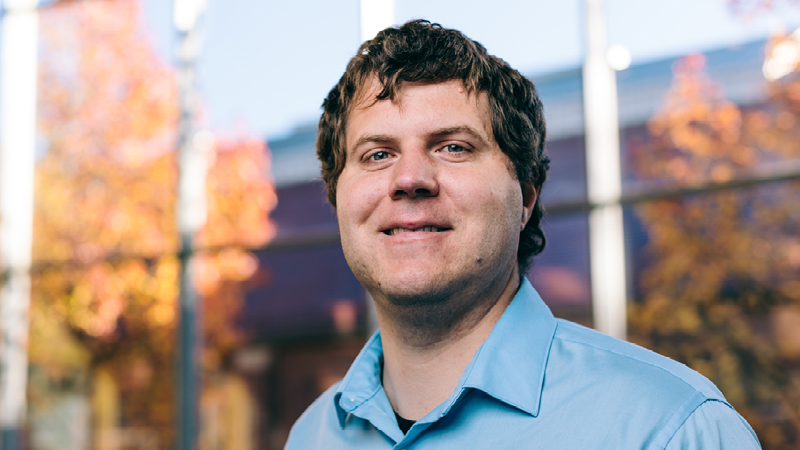
David Roueche serves as the Gottlieb Associate Professor of Structural Engineering within the Department of Civil and Environmental Engineering at Auburn University's Samuel Ginn College of Engineering. His research focuses on structural performance under extreme wind events, forensic engineering methodologies, and improving building resilience against hurricanes and tornadoes through interdisciplinary approaches. Dr. Roueche's academic foundation includes advanced degrees from the University of Florida, with complementary physics training: Ph.D. in Structural Engineering, University of Florida M.S. in Civil Engineering, University of Florida B.S. in Civil Engineering, University of Florida B.S. in Engineering Physics, Jacksonville University His primary research explores extreme wind loads on low-rise buildings , post-disaster field investigations , and performance-based wind engineering , with specialized expertise in light wood-frame structures and surge/flood modeling. He integrates engineering analysis with social science through survivor interviews to reconstruct tornado events and identify vulnerabilities in residential construction, particularly for mobile and manufactured housing in the Southeastern United States. Analysis of his recent publications reveals a dominant focus on post-disaster assessment frameworks, field data collection protocols, and performance-based evaluation methods for wind-affected structures. His work increasingly emphasizes interdisciplinary collaboration—combining engineering, social science, and geospatial technologies—to develop comprehensive disaster response systems and improve building codes. Key trends include standardization of forensic engineering practices through organizations like StEER and application of computational modeling to predict structural failures. Dr. Roueche's significant recognitions include: Ginn Faculty Achievement Fellow designation NSF CAREER Award (2020) for advancing post-windstorm assessment methodologies He directs substantial research funding including a $500,000 USDA grant for timber-steel composite research and leads the Auburn Mass Timber Collaborative—an interdisciplinary initiative uniting forestry, architecture, and engineering faculty. Through the Structural Engineering Emergency Response (StEER) network, he coordinates Field Assessment Structural Teams for disasters like Hurricane Ian and the 2022 Arabi tornado, developing standardized protocols adopted nationally for post-disaster evaluations. His mentoring extends to doctoral students in civil engineering, with recent success in securing competitive fellowships for advisees. As a core member of StEER, Dr. Roueche develops and implements field assessment protocols used in rapid disaster response. He leads FAST teams deploying UAVs, LiDAR, and ground surveys to document structural performance after hurricanes and tornadoes, with datasets informing FEMA guidelines and building code revisions. His work with the Auburn Mass Timber Collaborative advances sustainable construction methods through experimental testing of innovative structural systems.
James Davis is an Assistant Professor in the Elmore Family School of Electrical and Computer Engineering at Purdue University. His research focuses on engineering robust computing systems through socio-technical approaches, emphasizing software correctness, security, and usability. He applies empirical methodologies to evaluate the practical impact of technical solutions. Research interests include software supply chain security, deep learning reproducibility, regular expression optimization, IoT cybersecurity, and the socio-technical challenges in system design. His work bridges theoretical foundations with real-world applications, addressing issues like regex denial-of-service (ReDoS), model reuse in AI, and developer practices for safety-critical systems. Recent publications span topics such as actor reputation metrics in software supply chains, AI safety for downstream developers, and edge-computing optimizations for vision transformers. His interdisciplinary approach integrates empirical studies, formal verification, and human-centered design principles. No scientific awards are explicitly mentioned in the provided materials. His advising record is currently unspecified, though his research group likely engages in collaborative projects with industry and academia. He contributes to initiatives like the Sigstore ecosystem and open-source security tooling, reflecting his commitment to practical impact.
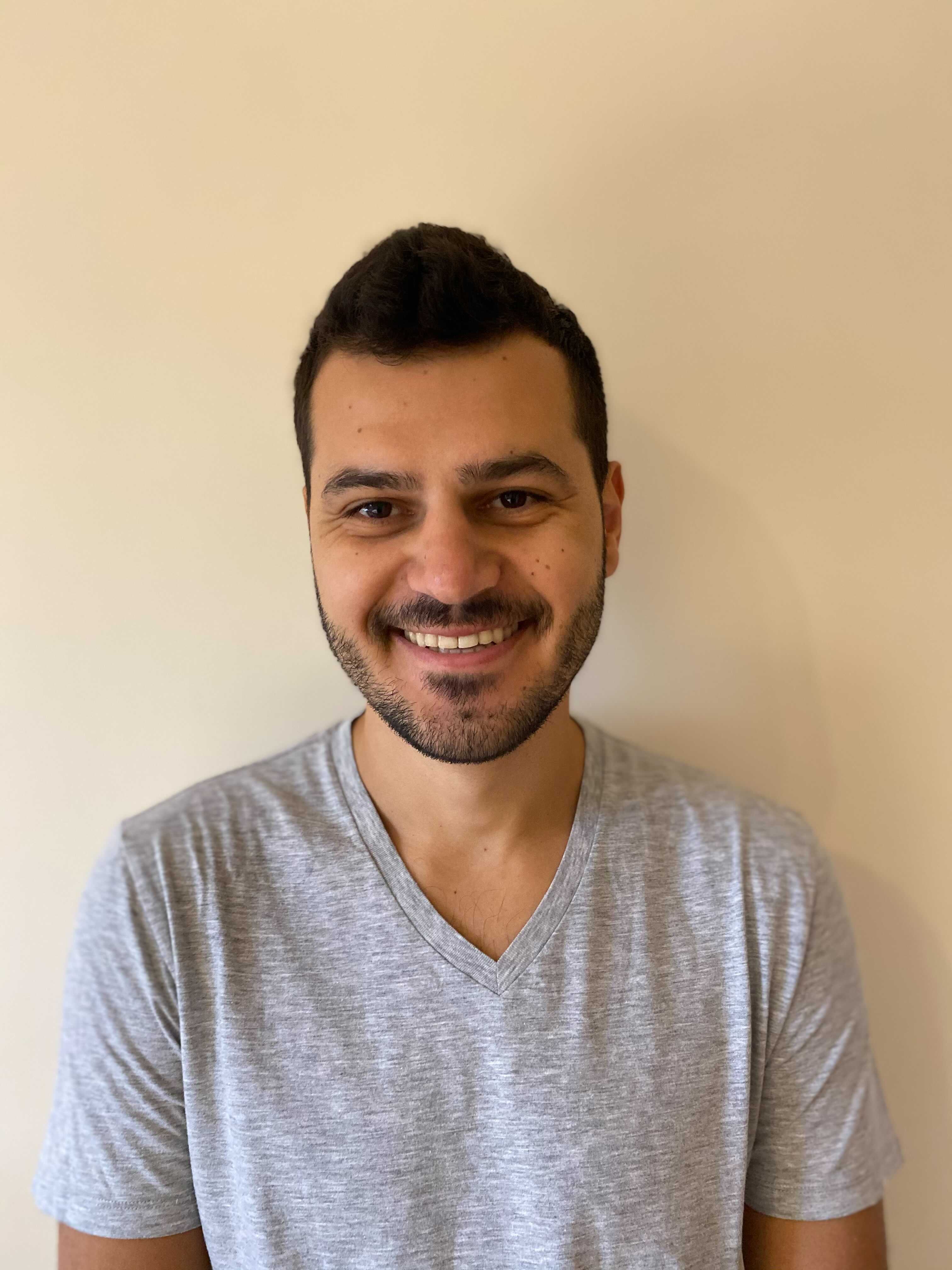
Jeremiah M. Blocki is an Associate Professor in the Department of Computer Science at Purdue University. His research focuses on cryptography, usable privacy and security, and authentication protocols. He joined Purdue in Fall 2016, previously completing his PhD at Carnegie Mellon University and a postdoc at Microsoft Research New England. Education: PhD in Computer Science, Carnegie Mellon University, 2014 Bachelor of Science in Computer Science, Carnegie Mellon University, 2009 Research Interests: Dr. Blocki’s work emphasizes applying theoretical computer science to practical security challenges, including password management, memory-hard functions, and differential privacy. His recent projects include developing distribution-aware password throttling and analyzing the post-quantum security of cryptographic algorithms. Publications: His research spans cryptographic protocols, security mechanisms, and privacy-preserving algorithms. Notable contributions include advancements in memory-hard functions (e.g., CRYPTO 2016, 2019) and differential privacy techniques (e.g., ITCS 2025). Recent work explores the intersection of cryptography with quantum computing and sublinear-time algorithms. Awards: NSF CAREER Award (2021) Purdue Seed for Success Award (2019) Allen Newell Award for Excellence in Undergraduate Research (2009) Advising & Grants: Supervised multiple PhD students and postdocs. Key grants include the NSF CAREER award ($591k) and a $10.7M HACCLE project (IARPA) for secure multi-party computation. Labs/Teams: Co-leads the HACCLE project, focusing on high-assurance cryptographic languages and environments. Active in Purdue’s CERIAS security initiatives.
Larry Lessig is the Roy L. Furman Professor of Law at Harvard Law School and the Faculty Director of the Edmond J. Safra Foundation Center for Ethics. He specializes in law and technology, focusing on AI governance, cyberlaw, and digital rights. His seminal works include Code and Other Laws of Cyberspace and Free Culture , which explore the intersection of technology and legal frameworks. Lessig co-founded the Creative Commons project and leads the Berkman Klein Center for Internet & Society, addressing issues like AI ethics, internet governance, and free speech crises in digital spaces. Recent activities include advocating for AI regulation, analyzing platform monopolies, and exploring democratic reforms through initiatives like the Democratic Legitimacy for AI project. He frequently collaborates with institutions like The New York Times and The New Yorker on topics ranging from AI safety bills to corporate influence in politics. Lessig’s teaching spans courses on digital platforms, antitrust law, and tech policy, reflecting his commitment to bridging legal theory and technological innovation. Key contributions include shaping debates on net neutrality, campaign finance reform, and the ethical implications of emerging technologies. His interdisciplinary approach integrates legal scholarship, media commentary, and public advocacy to address 21st-century challenges in governance and technology.
Georgi Ganev is a PhD Researcher at University College London (UCL) and Principal Research Scientist at SAS, following the acquisition of Hazy, a synthetic data company. He is part of UCL's Information Security Research Group under Professors Emiliano De Cristofaro and David Barber. His research focuses on advancing privacy-preserving synthetic data techniques, particularly in machine learning and differential privacy. Key areas include developing DP generative models, auditing privacy mechanisms, and addressing legal implications of synthetic data. Education: MSc in Computational Statistics and Machine Learning (UCL, supervised by Prof. Sebastian Riedel) and BSc in Business Mathematics and Statistics (LSE, supervised by Prof. Wicher Bergsma). Research Interests: Privacy-preserving synthetic data, differential privacy, privacy auditing, generative models, and regulatory compliance. His work has led to 25+ discovered privacy bugs in open-source libraries and vulnerabilities in deployed systems, with publications in top-tier conferences like IEEE S&P, USENIX Security, and ICML. Notable Achievements: Distinguished Paper Award at IEEE S&P 2025. His research has been integrated into SAS's synthetic data products, impacting industry adoption. Open-source contributions include dpmm and dpart libraries for DP synthetic data generation. Publications: Over 15 peer-reviewed articles, including works on privacy metrics inadequacy, PATE-GAN benchmarking, and synthetic data regulatory challenges. Active in workshops on generative AI and law, and deployment challenges in enterprise settings.
Rahul Jain is a Professor in the Department of Computer Science at the National University of Singapore (NUS), School of Computing. He was promoted to full Professor from January 2020, having previously served as Associate Professor (July 2013-July 2013) and Assistant Professor (November 2008-July 2013). He is also a Principal Investigator at the Centre for Quantum Technologies (CQT), Singapore since November 2008. Dr. Jain earned his Ph.D. in Computer Science from Tata Institute of Fundamental Research, Mumbai (2003) and B.Tech. in Electrical & Electronics Engineering from Indian Institute of Technology, Mumbai (1997). Prior to joining NUS, he conducted postdoctoral research at UC Berkeley (2004-2006) and at the Institute for Quantum Computing, University of Waterloo, Canada (2006-2008). His research spans quantum computation, information theory, complexity theory, communication complexity, and cryptography. Dr. Jain has made significant contributions to quantum information theory, particularly in quantum communication complexity, quantum key distribution, and quantum algorithms. His work bridges theoretical computer science with quantum information processing, exploring fundamental limits of quantum computation and communication. His research demonstrates strong expertise in both theoretical proofs and practical applications of quantum information principles. Analysis of Dr. Jain's recent publications (2022-2025) reveals a consistent focus on quantum cryptography foundations, quantum communication protocols, and quantum information theory. His work frequently appears in top theoretical computer science venues including FOCS, STOC, and QIP, as well as leading journals like IEEE Transactions on Information Theory. Key themes include non-malleable quantum codes, quantum state redistribution, quantum communication complexity, and quantum cryptographic protocols with rigorous security proofs. Award under the VISITING ADVANCED JOINT RESEARCH FACULTY SCHEME (VAJRA) 2017-18 by Department of Science and Technology, Government of India BEST of 2016 by ACM Computing Reviews Young Researcher Award, National University of Singapore, 2012 Best paper award at STOC 2010 IBM Distinguished Dissertation Award, 2005 TAA-Sasken Best Thesis Award, 2005-2006 Dr. Jain has supervised numerous graduate students who have secured positions at Harvard University, IBM, JPMorgan Chase, University of Waterloo, and other prestigious institutions. His research is supported by significant grants including the VAJRA Faculty Scheme award. He serves as Associate Editor for the Journal of Computer and System Sciences and on program committees for major conferences including ITCS 2025, FOCS 2022, and QIP 2022-2014. At CQT, he leads research in quantum information theory and quantum algorithms, contributing to Singapore's position as a regional hub for quantum computing research.
Tudor Dumitras is an Affiliate Associate Professor at the University of Maryland, College Park, holding appointments in the Department of Electrical and Computer Engineering (ECE) and the Department of Computer Science (CS). He is affiliated with The Maryland Cyber Security Center (MC2), where he leads research initiatives in cybersecurity and cryptography. His work focuses on malware detection, system security, and analyzing real-world vulnerabilities like the Heartbleed bug. Dumitras has collaborated with institutions such as Northeastern and Stanford Universities on critical security challenges, including SSL certificate reissuance and revocation strategies. His research interests span machine learning applications in cybersecurity, network security protocols, and adversarial attack mitigation. Notable contributions include developing automated tools for vulnerability exploitation prediction (SCAVY) and investigating the robustness of machine learning models against adversarial examples. Dumitras advises PhD students Simge Tekin and Kamala Varma, focusing on advancing cybersecurity through data-driven approaches. Key projects include analyzing software adoption patterns, studying zero-day attacks, and improving PKI security. His work often bridges academic research with industry practices, leveraging big data from sources like Symantec's WINE system. Dumitras has published extensively on topics ranging from malware behavior analysis to hardware fault attacks on neural networks.
Evangelos Papapetrou is an Associate Professor in the Department of Computer Science and Engineering at the University of Ioannina, Greece. He holds a Diploma (1998) and PhD (2003) in Electrical and Computer Engineering from Aristotle University of Thessaloniki. His research focuses on wireless and mobile networks, including mobile ad-hoc networks, opportunistic networks, satellite networks, quality of service (QoS), and network coding. He has contributed to over 50 peer-reviewed publications and actively participates in EU/nationally funded projects. Research interests include: Wireless/Mobile Network Architectures Opportunistic and Social Mobile Networks Satellite Communication Systems Network Coding Techniques Routing Protocol Design His work emphasizes practical implementations of network protocols, with recent trends focusing on ultra-reliable low-latency communication, energy-efficient broadcasting, and protocol optimizations for 5G/IoT environments. He has developed simulation tools like Adyton for opportunistic networks and contributed to privacy-preserving routing solutions. Teaching responsibilities include courses on Computer Networks I and Wireless Networks (2024/25). He maintains active IEEE/ACM memberships and serves on conference review committees.
Yvo Desmedt is the Jonsson Distinguished Professor in Computer Science at the University of Texas at Dallas and Director of the Cyber Security Research and Education Institute. An IACR Fellow and member of the Belgium Academy of Science, he invented e-Passports and e-Visas in 1988. His research spans cryptography, quantum computing, network security, and critical infrastructure protection. Desmedt pioneered techniques in binary software hardening including control-flow integrity and object flow integrity protections. Recent innovations include crook-sourcing for intrusion detection improvement and confidential computing for deep learning inference. His work bridges theoretical cryptography with practical security applications, earning recognition including the NSF IUCRC Technology Breakthrough Award. With over 200 publications, he has chaired major conferences including Crypto and Public Key Cryptography. Current projects examine vulnerability detection using graph learning and renewable control-flow integrity mechanisms for software security.
Kangkook Jee is an Assistant Professor in the Department of Computer Science at the Erik Jonsson School of Engineering and Computer Science, University of Texas at Dallas. His work focuses on cybersecurity, machine learning applications in security, data provenance analysis, and graph neural networks. He has developed systems like ProvIoT for IoT security and UTrack for enterprise user tracking. His research addresses challenges in adversarial machine learning, malware detection, and robust graph classification under adversarial conditions. He also explores federated learning, confidential computing, and blockchain-based secure data sharing. Key contributions include techniques for detecting stealthy attacks in IoT, improving graph neural network robustness against adversarial node modifications, and enhancing intrusion detection through provenance-based analysis. His work bridges theoretical advancements in machine learning with practical enterprise security solutions. Notable systems include AIQL for efficient attack investigation and SEAL for storage-efficient causality analysis in enterprise logs. Research trends across his publications emphasize combining provenance tracking with modern ML techniques to address evolving cybersecurity threats. Work in 2024-2025 focuses on decompilation challenges, federated edge-cloud security, and graph abstraction methods for robust classification. No scientific awards are explicitly listed in the provided texts. His grants and advising activities are not detailed here, though his extensive publication record suggests active collaborative research. His lab works on tools like Nodoze for automated threat triage and APTrace for agile causality analysis in enterprise systems.
Dr. Naofal Al-Dhahir is the Erik Jonsson Distinguished Professor of Electrical and Computer Engineering at University of Texas at Dallas , affiliated with the Erik Jonsson School of Engineering and Computer Science . He serves as Associate Department Head for Undergraduate Education and leads the Broadband Information Transmission & Signal Processing (BITS) Laboratory . His research focuses on 6G communications, intelligent reflecting surfaces (IRS), federated learning, integrated sensing and communication (ISAC) , and wireless security. With over 600 publications and 43 US patents, he is an IEEE Fellow (2008), NAI Fellow (2020), and recipient of numerous awards including the 2022 IEEE RCC Technical Recognition Award and 2021 Qualcomm Faculty Award. Educations: PhD (Stanford University, 1994), MSc (Stanford University, 1990) Professional Roles: Editor-in-Chief of IEEE Transactions on Communications (2016-2019), Technical Staff at GE Global Research and AT&T Labs (1994-2003) Research Interests His work spans IRS-based 6G systems, machine learning for communications, vehicular networks, and smart-grid technologies . Recent contributions include secure ISAC designs and low-complexity signal processing algorithms. Collaborations with industry leaders like Qualcomm and Apple highlight his impact on practical applications. Students & Labs Alumni include professionals at Qualcomm, Apple, and NASA. The BITS Lab has hosted researchers from global institutions like KAUST and Xidian University. Current projects explore covert communications, Movable Antenna Systems (MAS), and AI-driven spectrum management .
Alex Gittens is an Assistant Professor in the Department of Computer Science at Rensselaer Polytechnic Institute (RPI), joined in 2017. His research focuses on algorithmic trade-offs between computational efficiency and accuracy in large-scale linear algebra and machine learning contexts. He has expertise in kernel methods, randomized numerical linear algebra, and low-rank approximation techniques. Education: PhD in Applied and Computational Mathematics, Caltech (2013) Industry Postdoc at eBay Research Labs (2013-2015) Postdoctoral Scholar at International Institute of Computer Science (2015-2016) His research explores scalable machine learning algorithms, nonlinear and multilinear sketching applications, and sampling for low-rank tensor/matrix approximation. Current technical interests include attention mechanisms for knowledge graph completion, federated learning trade-offs, and causal inference in adversarial settings. Recent publication trends show active contributions in federated learning (privacy-fairness optimization), causal information extraction (financial text analysis), and adversarial machine learning (robustness-security trade-offs). His work emphasizes trustworthy ML systems and computational efficiency in high-dimensional data processing. Teaching includes foundational discrete mathematics (CSCI 2200) and advanced machine learning courses (CSCI 6968/4968). He offers advising through Slack channels and via email, focusing on course selection, research opportunities, and graduate school preparation.
Fan Yao is an Associate Professor in the Department of Electrical and Computer Engineering at the University of Central Florida's College of Engineering and Computer Science. She received her Ph.D. in Computer Engineering from The George Washington University in 2018 and currently leads the Computer Architecture and Systems Research (CASR) lab. Her research focuses on the intersection of computer architecture, security, and machine learning, with particular emphasis on hardware-based security vulnerabilities and defenses. Dr. Yao's research interests span computer architecture, hardware and system security, AI security, energy-efficient computing, and cloud computing. Her work addresses critical security challenges in modern computing systems, particularly focusing on microarchitecture attacks, hardware-based model tampering in deep learning systems, and information leakage threats in emerging non-volatile memory systems. She has developed innovative defense mechanisms against cache timing channels, branch predictor vulnerabilities, and GPU-based side channels. Her recent publications demonstrate a strong focus on AI security (particularly Deep Neural Network vulnerabilities), hardware security (including cache and branch predictor attacks), and secure memory architectures. The research shows an evolution from traditional computer architecture topics toward the security implications of AI hardware and emerging memory technologies, with increasing emphasis on practical attacks and defenses in real-world systems. NSF GW I-Corps Site Grant Award, 2018 Best Dissertation Award, GWU, 2018 The Norris & Betty Hekimian Engineering Endowment Fellowship, GWU, 2017 Top Picks in Hardware and Embedded Security, 2019 NSF CAREER project award, 2024 Dr. Yao currently leads multiple NSF-funded research projects including 'Understanding and Taming Deterministic Model Bit Flip Attacks in Deep Neural Networks' (NSF SaTC, 2020-2023), 'Towards Secure-By-Design Integration of Emerging Non-Volatile Memory in Future System' (NSF CNS, 2020-2023), and 'Architecting Secure-by-Design Memristor-Based Memories' (NSF CNS, 2019-2022). She has successfully mentored numerous PhD students, many of whom appear as first authors on top-tier conference publications, demonstrating her commitment to graduate education and research mentorship. As the leader of the CASR lab, Dr. Yao oversees a vibrant research group focused on building secure-by-design, efficient, and advanced future systems through novel techniques spanning hardware, computer architecture, and systems. The lab actively publishes at top computer architecture and security conferences including ISCA, MICRO, HPCA, IEEE S&P, and USENIX Security, with multiple papers accepted to these venues annually. The group has developed several influential tools and frameworks for security analysis, including proof-of-concept code for BranchSpec exploits that has been widely cited in the hardware security community.
Cheryl Seals is the Charles W. Barkley Endowed Professor in the Department of Computer Science and Software Engineering at Auburn University's College of Engineering. She holds a Ph.D. in Computer Science from Virginia Tech, with additional degrees from Virginia Tech, North Carolina A&T State University, and Grambling State University. Her research focuses on AI ethics, natural language processing (NLP), virtual reality (VR) applications in healthcare and education, and promoting diversity in STEM. She leads initiatives like the NSF-funded AI ethics education project and the Institute for African Americans in Computing Sciences (IAAMCS). Notable awards include the Charles W. Barkley Professorship (2020) and participation in Drexel’s ELATES fellowship program. Her work bridges technology and social impact, including VR-based empathy training for medical students and interventions to mitigate pandemic-induced learning loss. She collaborates on interdisciplinary projects, such as automated grading tools for speech therapy and pavement crack recognition systems. Education: Ph.D. Computer Science, Virginia Tech M.S. Computer Science, Virginia Tech M.S. Software Engineering, North Carolina A&T State University B.S. Computer Science, Grambling State University Research Interests: AI Ethics and STEM Education Reform NLP for Sentiment Analysis and Hate Speech Detection VR Applications in Healthcare Training and Empathy Development Computing Equity and Underrepresented Groups Interdisciplinary Tools for Education and Accessibility Awards and Recognition: Charles W. Barkley Endowed Professor (2020–2025) ELATES Fellowship Participant (2024) Grants and Collaborations: NSF Grant: Integrating AI Ethics into STEM Curricula Collaborative Research: Evolution of IAAMCS National Science Foundation (NSF) AI Ethics Initiative Labs and Affiliations: Center for Artificial Intelligence and Cybersecurity Engineering McCrary Institute for Cyber and Critical Infrastructure Security