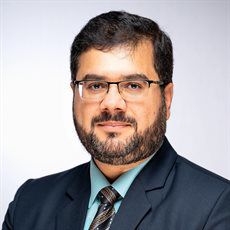
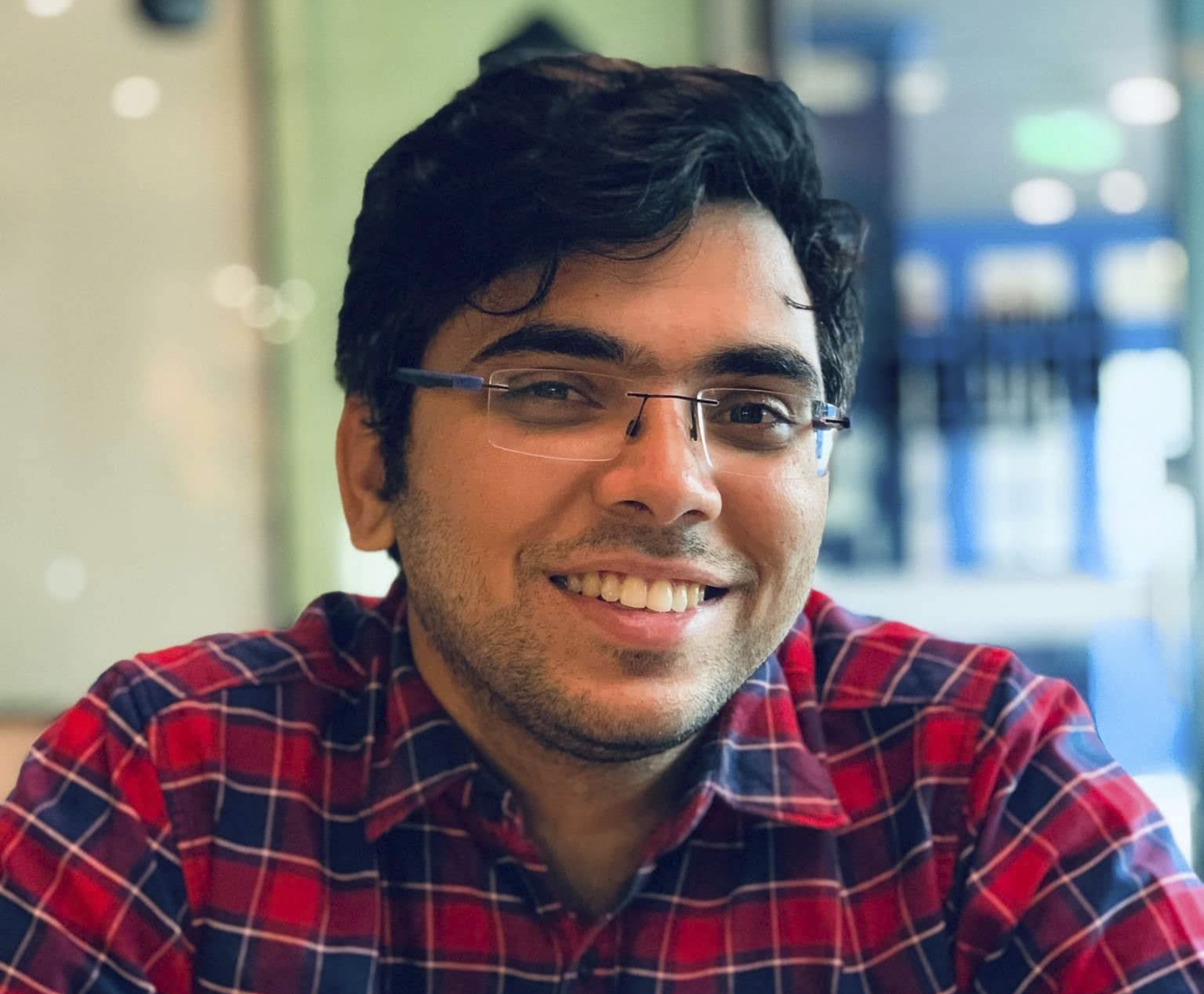
Alexandra Dmitrienko is a researcher at the University of Würzburg's Institute of Computer Science. Her work focuses on cybersecurity, privacy-preserving technologies, and secure machine learning systems. She has collaborated extensively with institutions like TU Darmstadt and the University of California. Her research spans federated learning security, IoT device protection, Tor network analysis, and mobile platform vulnerabilities. Key contributions include defenses against poisoning attacks in federated learning, analysis of contact discovery exploits in messengers, and practical SGX cache attack mitigations. She has authored over 90 publications across top conferences like NDSS, CCS, and USENIX Security, and contributed to open-source tools like DNNShield and ClearMark for model ownership verification.
Syed Muhammad Danish is a researcher specializing in Blockchain Technology and its applications in Internet of Things (IoT) , Cybersecurity , and Smart Grids . His work focuses on integrating blockchain for security, data privacy, and efficient resource allocation in large-scale systems. Research Interests : Blockchain, IoT, Federated Learning, Electric Vehicles, Cybersecurity, Data Privacy Key Collaborations : Kaiwen Zhang, Hans-Arno Jacobsen, Aroosa Hameed, Ali Ranjha Publication Trends : Recent articles (2025) address privacy-preserving techniques in renewable energy forecasting and electric vehicle charging load optimization using blockchain and federated learning. 2024 studies explore blockchain-as-a-service architectures and energy credit management via distributed ledgers. 2023-2018 works focus on IoT security, blockchain middleware, and defense mechanisms against jamming attacks in LoRaWAN systems.
Dr. Mensi Neji is an Assistant Professor in the Department of Electrical Engineering and Computer Science at Florida Institute of Technology. His research focuses on cybersecurity, wireless communications, and emerging technologies like Reconfigurable Intelligent Surfaces (RIS) and 5G/6G systems. He holds a PhD in Electrical Engineering from Howard University and combines academic expertise with industry experience in software engineering at Ooredoo and INTM. Education: PhD in Electrical Engineering (High Honors) - Howard University Research Interests: Dr. Neji’s work explores: Cybersecurity in wireless implantable medical devices (WIMDs) Physical Layer Security (PLS) in next-gen networks Metaverse security and RIS applications Secure protocols for vehicular communications (V2I) Publications: His recent work emphasizes securing emerging technologies such as NOMA networks, hybrid RF-FSO systems, and adversarial scenarios in vehicular and smart grid communications. Trends include leveraging machine learning for GPS jamming detection and optimizing secrecy rates through gradient algorithms. Awards: No scientific awards explicitly listed. Advising & Industry: While no advisees are listed, his industry experience includes software engineering roles. Research contributions include reviewing for IEEE Transactions and active membership in IEEE societies. Labs/Teams: Not explicitly mentioned in provided text.
Prof. Alberto S. Cattaneo is a faculty member at the University of Zurich, affiliated with the Department of Mathematics. He holds the rank of Professor and has been actively involved in teaching and research since at least 1998. His research interests span mathematical physics, differential geometry, topology, and interdisciplinary areas like computational biology, genomics, and digital forensics. He has developed courses on topics such as field theory, quantum mechanics, and differential manifolds, reflecting his expertise in theoretical and applied mathematics. Prof. Cattaneo has contributed to numerous publications, including works on distributed genomic analysis, sensor pattern noise (PNU) in forensics, and algorithm optimization for big data frameworks like Hadoop and Spark. His work bridges pure mathematics with applications in bioinformatics and cybersecurity. Though no awards are explicitly mentioned, his extensive publication record and teaching roles highlight his academic standing. He maintains an active presence through courses and research collaborations, with no indication of part-time roles or retirement.
Dr. Abdulghani A. Ahmed is a Senior Lecturer in Digital Forensics and Course Leader for MSc Cybersecurity at the School of Computer Science and Informatics, De Montfort University (DMU), UK. He is affiliated with the Cyber Technology Institute (CTI) and has a long-standing academic career since 2004, previously serving as a Senior Lecturer at University Malaysia Pahang. University: De Montfort University School: School of Computer Science and Informatics Role: Senior Lecturer, Course Leader (MSc Cybersecurity) Email: aa.ahmed@dmu.ac.uk ORCID: 0000-0001-9748-6067 Education: PhD in Network Security & Intrusion Detection Systems, Universiti Sains Malaysia (2014) MSc in Network Forensics & Identity Spoofing Investigation, Al-Neelain University (2006) BSc (Hons) in Computer Science, Sudan University of Science and Technology (2002) Dr. Ahmed’s research focuses on critical areas in cybersecurity, including digital forensics, IoT authentication, big data privacy, cloud and network security, malware analysis, incident response, and cybercrime investigation. His work integrates machine learning, bio-inspired algorithms, and proactive forensic models to enhance cyber resilience. He has led numerous research projects and published extensively in top-tier journals such as IEEE Access, Sensors, and Springer. The recent publications reflect a strong trend toward digital forensics in cloud and mobile environments, bio-inspired security frameworks, and machine learning applications in cybercrime detection. His work bridges theoretical innovation and practical deployment, particularly in real-time intrusion detection and evidence collection. Scientific Awards and Honors: Multiple Gold, Silver, and Bronze medals from international innovation exhibitions (MTE2018, Citrex, iCAN, ICE-CINNO) CENDEKIA BITARA AWARD 2016 for high-impact journal publication Nominated for Best PhD Thesis Award at USM (2015) Three-time High Impact Publication Award (2011–2013) at USM Dr. Ahmed actively supervises PhD students and has secured significant research funding as Principal Investigator from Innovate UK, COMSTECH-TWAS, and Malaysian government grants. His consultancy work includes cybercrime investigation and incident response for SysArmy Sdn Bhd and Golden Carousel Sdn. Bhd. He is a Senior Member of IEEE and IAENG, and holds professional certifications including SFHEA (UK), Cellebrite CCO, and digital forensics credentials from AccessData and Condition Zebra. He leads the Cyber Technology Institute research group at DMU, focusing on next-generation cybersecurity solutions. His projects include proactive forensic models, IoT security frameworks, and AI-driven botnet detection systems, positioning him at the forefront of applied cybersecurity research.
Matthew Kirschenbaum is a Distinguished University Professor of English at the University of Maryland, with affiliate appointments in the College of Information Studies. He specializes in digital humanities, media studies, and book history, holding prominent roles such as chair of the Society for the History of Authorship, Reading and Publishing board. His interdisciplinary work bridges literary studies, technology, and archival science. Education: B.A. from SUNY Albany; M.A. and Ph.D. in English from the University of Virginia. Research Interests: His scholarship explores writing technologies, digital preservation, artificial intelligence’s impact on literature, and the materiality of media. He co-founded BookLab, a makerspace for book arts and letterpress printing, emphasizing hands-on engagement with literary and technological history. Recent projects include analyzing AI-generated texts and the future of digital literary heritage. Article Trends: His work spans AI ethics, digital forensics, wargaming as narrative form, and the legacy of word processing. He bridges academic rigor with public engagement through writing for outlets like The Atlantic and The Washington Post. Awards & Grants: Over $1M in grants secured, including a Guggenheim Fellowship and NEH support. His book Mechanisms won multiple awards for its forensic analysis of digital media. Advising & Mentoring: Founded the Design Cultures and Creativity living-learning program and the graduate certificate in Digital Studies. Mentored students like Diana Proenza and Nat McGartland, emphasizing accessibility and collaborative innovation. Labs & Teams: Directed the Maryland Institute for Technology in the Humanities (MITH) for a decade, fostering interdisciplinary digital humanities projects. BookLab remains a hub for experimental book arts and technology integration.
Mian M. Hamayun is an Associate Professor of Computer Science and Head of Subject Group at the University of Birmingham Dubai campus, part of the College of Engineering and Physical Sciences. He holds a PhD in System Modelling, Simulation & Virtualization from the University of Grenoble Alpes, France, and has academic qualifications from Joseph Fourier University and COMSATS Institute of Information Technology, Pakistan. PhD in System Modelling, Simulation & Virtualization, University of Grenoble Alpes, 2013 MS in Informatics (Parallel & Distributed Systems), Joseph Fourier University, 2009 MSE in Software Engineering (Gold Medalist), COMSATS, 2005 PGCHE, University of Birmingham, 2021 FHEA and SFHEA, University of Birmingham (2021, 2024) His research spans Transaction Level Modeling (TLM) , MPSoC simulation , cloud computing , virtualization , Internet of Things/Vehicles , edge AI , and TinyML . He focuses on performance estimation, binary translation, and system-level simulation for embedded and distributed systems. The recent publications reflect a strong trend in IoT and vehicular networks , secure telemedicine , cloud orchestration , and embedded system simulation . His work integrates virtualization with security, real-time constraints, and machine learning on edge devices. Senior Fellow of the Higher Education Academy (SFHEA), 2024 Fellow of the Higher Education Academy (FHEA), 2021 Dr. Hamayun has supervised multiple research students and contributed to projects involving fatigue detection, person re-identification, retinal image analysis, and secure surgery frameworks. He has taught core computer science courses including Operating Systems, Networks, Data Structures, Algorithms, and Functional Programming at both undergraduate and postgraduate levels. His prior roles include Assistant Professor at NUST SEECS, R&D Engineer in France, and Lecturer at IUT1. He leads research in virtual prototyping and edge intelligence at the Dubai campus, contributing to smart city and cognitive systems initiatives. His lab work involves hybrid simulation environments, secure automotive platforms, and distributed IoT systems.
Raghav Sampangi is a Senior Instructor in the Faculty of Computer Science at Dalhousie University, where he teaches courses in web development, server-side scripting, and usable security and privacy. He is also a Faculty Associate at the Centre for Learning and Teaching and actively contributes to pedagogical innovation and inclusive academic practices. Education: PhD, Dalhousie University, Canada (2015) M.Tech, University of Mysore, India (2011) B.Engg, VTU, Belgaum, India (2007) Raghav's research focuses on usable security and privacy , context-aware authentication , and innovations in computer science education , particularly compassionate teaching, ungrading, and student support. He is deeply committed to equity, diversity, and inclusion in computing and advocates for mental health and belonging in academia. His recent publications center on security in resource-constrained systems, including IoT, RFID, and wireless body area networks, often using bio-inspired cryptographic techniques. The work demonstrates a strong trend toward lightweight, adaptive, and context-sensitive security solutions. Scientific Awards: The Srini Award for Teaching Excellence (2021, 2018) Best Paper Award at Q2SWinet 2014 Best Paper in General Conference Program at SoftCOM 2014 Dalhousie Impact Leadership Award (2014) Faculty Appreciation Award (2015) Parvathamma Subbaraya Gold Medal (University of Mysore) Raghav advises students through community outreach courses and research projects. He leads multiple educational initiatives, including ungrading research and first-year student support. He is co-lead of the D-LITE Belong Cluster and the Halifax Chapter of Canada Learning Code, and is a Cultural Competence in Computing (3C) Fellow at Duke University. His service includes advocacy with Dragonfly Mental Health and the READI Group, promoting compassionate and inclusive academia. He is actively involved in lab and team-based research on usable security and CS education, collaborating with industry, alumni, and students to revise curricula and develop inclusive learning environments.
Jawad Ahmad is a Lecturer in the School of Computing, Engineering and the Built Environment at Edinburgh Napier University . His work is closely associated with the Centre for Cybersecurity, IoT and Cyberphysical Systems and the Centre for Distributed Computing, Networking and Security , where he contributes to cutting-edge research in secure and intelligent systems. His research interests are centered on cybersecurity , artificial intelligence , and Internet of Things (IoT) technologies. He focuses on developing advanced intrusion detection systems, privacy-preserving frameworks using federated learning and homomorphic encryption, and secure data transmission mechanisms leveraging chaos-based and quantum-inspired encryption. His interdisciplinary work extends to healthcare, smart agriculture, and environmental monitoring, demonstrating the broad applicability of his research. The analysis of his recent publications reveals a strong trend toward AI-driven security solutions, particularly using deep learning models like transformers and attention mechanisms for network intrusion detection. He also explores the integration of machine learning with blockchain and distributed ledgers for trusted threat intelligence sharing. His work consistently emphasizes real-world deployment, performance optimization, and resilience against cyber threats in industrial and healthcare settings. Funded Research Projects: Data Sharing in Highly Secure Environments (Innovate UK, £273,181) PhD Studentship on Homomorphic Encryption (6G Health Institute GmbH, £35,082) TrustShare: Privacy-Preserving Threat Intelligence Sharing (Innovate UK, £31,386) Cyber Hunt: Automated Cyberthreat Hunting (Norway Research Council, £37,500) AI Dashboard for COVID-19 Sentiment Analysis (Chief Scientists Office, £135,104) Dr Ahmad actively supervises postgraduate research, currently serving as Director of Studies for Hisham Ali and as second supervisor for other PhD candidates. He is involved in multiple collaborative research teams focusing on cybersecurity, AI, and IoT, often working with Prof Bill Buchanan and other leading researchers in the field. His research is published in high-impact journals such as IEEE Access , Frontiers in Computational Neuroscience , and Sensors , and presented at international conferences.
Prof. Dr. Matthias Ullrich is a Full Professor of Microbiology at Constructor University Bremen (formerly Jacobs University Bremen) in the School of Science, Department of Life Sciences and Chemistry. He earned his Diploma in Biology/Microbiology (1990) and Ph.D. in Microbiology (1992) from Friedrich-Schiller-University Jena, followed by a Habilitation in Microbiology from Phillips-University Marburg (2000). His postdoctoral research was conducted at Oklahoma State University and Max-Planck-Institute for Terrestrial Microbiology. His research focuses on frontiers in microbiology with emphasis on: Molecular plant-microbe interactions and bacterial gene regulation Marine diatom-bacteria symbiosis and biofilm formation Cocoa metabolomics and fermentation mechanisms Bioactive compounds from Rhododendron and antimicrobial discovery Environmental applications including phycoremediation and heavy metal resistance Publication analysis reveals strong interdisciplinary trends across marine microbiology (35%), food biotechnology (25%), environmental applications (20%), antimicrobial research (15%), and materials science (5%). His work frequently employs multi-omics approaches and industrial collaborations. Major Scientific Awards: Honorary Professorship, Amity University, India (2021) Professor of the Year Award (2008/2009 & 2006/2007) DAAD Lectureships in Uzbekistan (2008) and India (2004) Postdoctoral Fellowship from German Academic Exchange Service (1992-1994) Research Leadership: Heads the Molecular Microbiology Laboratory supervising 31 completed PhD theses and 2 ongoing candidates. Secured €3.7M for the COMETA cocoa metabolomics project with Barry Callebaut. Coordinates the DFG-ANR ENVICOPAS project on coastal pathogens. Professional Activities: Faculty member of International Max Planck Research School for Marine Microbiology, scientific boards of Rhododendronpark Bremen and Botanika Green Science Center. Member of American/International Microbiology Societies and German Phytomedical Society.
Jingjie Li is a Lecturer (Assistant Professor) in the School of Informatics at the University of Edinburgh, where he conducts interdisciplinary research at the intersection of computer systems, cybersecurity, and human-computer interaction. He is a member of the Institute for Computing Systems Architecture and the School of Informatics Ethics Committee. Ph.D. in Computer Engineering, University of Wisconsin-Madison (2017–2023) B.Eng. (R&D) with First-Class Honours, Australian National University (2015–2017) B.Sc., Beijing Institute of Technology (2013–2015) His research focuses on user-centric security and privacy , measuring human behavior in digital systems , and efficient human-machine interfaces . He investigates risks in emerging technologies such as smart homes, AR/VR, and AI systems, aiming to make them safer and more human-centric. His work combines technical innovation with behavioral insights to design practical privacy controls, measure digital risks, and build efficient computing platforms. The recent publications highlight a strong trend in privacy transparency , AI explainability , smart home and AR/VR security , and hardware-software co-design . His work frequently appears in top-tier venues including IEEE S&P, USENIX Security, ACM CHI, and ISCA, reflecting a consistent focus on both technical depth and human factors. Notable scientific awards include: ACM CHI Best Paper Award (2019) Facebook Trustworthy Products in AR, VR, and Smart Devices Award (2021) CPS Rising Star, NSF (2022) Generative AI Laboratory Seedcorn Award, University of Edinburgh (2024) Qualcomm Innovation Fellowship Finalist (2019, 2021) Jingjie Li actively supervises PhD students including Jiuming Jiang and Karen Jiamin Zheng, and co-supervises Lawrence Piao and Temima Hrle. He has received research support through fellowships such as the UW–Madison Chancellor’s Opportunity Fellowship and has collaborated globally with institutions including Max Planck Institute, Visa Research, and CSIRO. He serves on the program committees of major conferences like ACM CCS, USENIX Security, and ACM CHI. He leads a dynamic research team focused on systems security and human-centered computing, hosting undergraduate researchers and mentoring students through projects in privacy, AI transparency, and hardware security. His lab fosters interdisciplinary collaboration and real-world impact through community engagement, such as the 'Hack Your Age' workshop with intergenerational participants.
Patanjali Sristi is an Assistant Professor at Augusta University's School of Computer and Cyber Sciences, specifically within the Department of Cybersecurity Engineering. Located at 100 Grace Hopper Lane in Augusta, Georgia, Dr. Sristi joined the university in January 2025 after previously working as a Postdoctoral Researcher at the University of Florida with Dr. Swarup Bhunia. Their academic journey began with a B.Tech in Electrical and Electronics Engineering from Pondicherry University in 2011, followed by both MS and Ph.D. in Computer Engineering from the Indian Institute of Technology (IIT Madras). Dr. Sristi's educational background demonstrates a strong foundation in electrical engineering and computer science, with advanced specialization in hardware security. Their Ph.D. research at IIT Madras was supervised by Dr. Kamakoti Veezhinathan, focusing on critical aspects of hardware security that would form the basis of their future research career. Dr. Sristi's research program centers on addressing one fundamental question: "How can we design, measure and build efficient and affordable security assurances for a given hardware design in the context of an untrusted supply chain while respecting the design constraints at each level of abstraction?" This research vision spans three interconnected domains: AI for System Design: Developing data models and AI techniques for next-generation hardware systems AI for Hardware Security: Creating AI models for vulnerability detection, countermeasure evaluation, and mitigation of supply chain threats Cybersecurity for AI: Establishing metrics and algorithms for secure development, deployment, and operation of AI systems Dr. Sristi's scholarly output reveals a consistent focus on hardware security challenges within the modern distributed electronics supply chain. Their work demonstrates a progression from foundational research on hardware trojans and side-channel attacks toward comprehensive frameworks addressing the emerging "zero trust" paradigm in hardware security. A notable trend is the integration of AI/ML techniques with traditional hardware security approaches, reflecting the evolving nature of security threats and countermeasures. Their publications span prestigious venues including IEEE Transactions on VLSI Systems, IEEE Transactions on Computers, and various IEEE conferences, indicating strong recognition within the hardware security community. While specific awards aren't detailed in the available information, Dr. Sristi's research impact is evident through multiple US patents (including US Patent 11,899,827 and US Patent App. 17/392,376) and invitations to deliver talks at prominent organizations including Sony Finishing School, Northrop Grumman, and IEEE events. Their work on Netflix Privacy Analysis was featured in Wired, demonstrating real-world relevance and impact. Dr. Sristi actively engages with students through courses including CSCI 8940 (Dissertation Research), CSCI 8720 (Problems in Computer & Cyber), and CSCI 7900 (Research Colloquium). Their research program appears well-supported through collaborations with major institutions and industry partners, as evidenced by workshops conducted for the Indian Army in conjunction with Pravartak and IIT Madras. These partnerships suggest substantial research funding and collaborative opportunities that enhance the educational experience for students. Though specific lab information isn't provided in the available text, Dr. Sristi's research scope suggests involvement with hardware security laboratories equipped for VLSI design, testing, and security evaluation. Their work on IoT security, hardware trojans, and supply chain security would require facilities for physical device testing, side-channel analysis, and hardware emulation. The focus on "zero trust" implementation for hardware security indicates a research environment that bridges theoretical security models with practical implementation challenges.
Anrin Chakraborti is an Assistant Professor in the Department of Computer Science at the University of Illinois at Chicago, affiliated with the College of Engineering. His work bridges cryptography, systems, and theory to build privacy-preserving technologies for real-world challenges. Ph.D. in Computer Science from Stony Brook University (2020) Postdoctoral Researcher at Duke University B.Tech in Computer Science from Jadavpur University, India Chakraborti’s research focuses on three core areas: Secure Cloud Computing: Developing cryptographic mechanisms to protect data confidentiality and integrity in cloud environments against side-channels and malicious providers. Privacy in Collaborative Systems: Designing tools for private information sharing in cyber-physical systems and collaborative learning pipelines, including autonomous vehicle communication. Deniable Communication & Storage: Creating storage and messaging systems resistant to coercion, backdoors, and key compromise through plausibly deniable encryption. His publications demonstrate a consistent focus on privacy-enhancing technologies, oblivious protocols, and secure storage solutions. Notable contributions include Wink (deniable secure messaging), INVISILINE (plausibly-deniable storage), and ORAM-based protocols for cloud data privacy. He teaches graduate courses like CS 588 (Security & Privacy in Networked Systems) and CS 594 (Applied Cryptography), emphasizing hands-on implementation of secure systems.
Angelo Feraudo is a Research Fellow at the Department of Computer Science and Engineering of the University of Bologna. He is currently pursuing a PhD in Computer Science, focusing on vehicular computing and service continuity in vehicular networks. His academic path includes a Master's degree in Computer Engineering (University of Bologna) and research experience at the Computer Laboratory of Cambridge University. PhD Researcher (Nov 2021 - present) Research Fellow (Apr 2021 - Oct 2021) Visitor at University of Cambridge (Sept 2020 - Jan 2021) His research intersects emerging technologies like vehicular ad hoc networks (VANETs), vehicular cloud computing, 5G/Mobile Edge Computing (MEC), O-RAN standards, and IoT security. Key projects include: Vehicular computing research (2021-present) Resilient Water Emilia-Romagna dashboard (2021-present) MUD standard extensions for IoT security (2020) Distributed federated learning at Cambridge (2019-2020) Bluetooth vulnerability analysis (2018-2019) Technical expertise spans multiple programming languages ( Java, C, Python, C++, JavaScript ) and systems engineering. Publications address critical IoT security frameworks, federated learning implementations, and device fingerprinting methodologies.
Eva Isabel Sanjurjo Rios serves as a Permanent Labor Professor in the Department of Public Law at the Faculty of Law, University of León, specializing in Procedural Law with a focus on civil and criminal procedure, evidence law, and legal education innovation. Her work bridges theoretical scholarship with practical judicial applications through the DEPROULE PROCEDURAL LAW research group. Her academic foundation includes a PhD from the University of León (2012) with the dissertation The expert opinion in the civil process , supervised by Dr. Pedro Álvarez Sánchez de Movellán and Dr. Piedad González Granda. This research trajectory established her expertise in evidentiary frameworks within civil litigation. Dr. Sanjurjo Rios' research spans critical procedural domains including electronic evidence authentication (particularly social media communications), collective redress mechanisms in consumer law, judicial ethics oversight, and mediation efficacy. She critically examines how digital evidence volatility impacts criminal proceedings and proposes reforms for expert testimony reliability under Spain's Civil Procedure Act. Her scholarship consistently addresses tensions between procedural efficiency and fundamental rights protections. Analysis of her publication trends reveals deep engagement with technology's impact on legal processes, evidenced by extensive work on WhatsApp evidence protocols (2022) and digital evidence preservation (2020). She simultaneously advances legal education through service-learning integration, developing the 'Aula Judicial' simulation model (2024) that combines community engagement with courtroom skill development. As a core member of the DEPROULE PROCEDURAL LAW research group, she contributes to systematic analysis of procedural law implementation and reform proposals. Her collaborative work emphasizes practical solutions for evidence handling, judicial ethics compliance, and pedagogical innovation within Spain's legal framework.