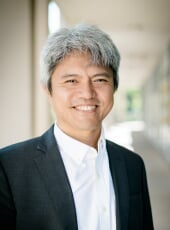
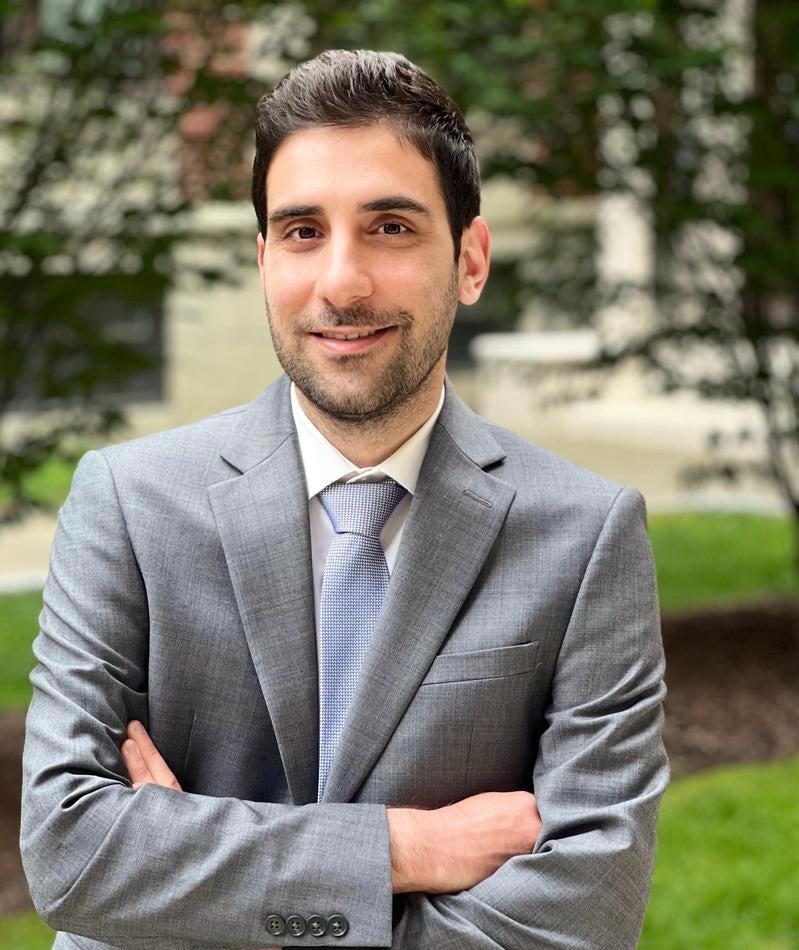
Xiaozhe Wang is an Associate Professor in the Department of Electrical and Computer Engineering at McGill University, holding the Canada Research Chair (Tier II) in Resilient and Stable Zero-Emission Electric Power Grids and the Rubin & So Foundation Faculty Scholar. He joined McGill in 2016 after a postdoctoral fellowship at MIT under Prof. Konstantin Turitsyn. He earned his Ph.D. from Cornell University (2015), with a minor in Applied Mathematics, and holds degrees from Zhejiang University (B.S., 2010) and Cornell (M.Eng., 2011). His research focuses on resilient power grids, data-driven methodologies, and cybersecurity in energy systems. Key areas include electric vehicle integration, stability assessment, and control strategies for renewable energy systems. He develops advanced techniques for uncertainty quantification, wide-area monitoring, and adversarial attack detection. Notable achievements include pioneering work on polynomial chaos expansion for probabilistic assessment and sparse identification for nonlinear dynamics. His articles explore topics like microgrid control, false data injection attacks, and decentralized energy trading. Awards: Canada Research Chair (Tier II), Rubin & So Foundation Scholar Grants/Projects: Focus on resilience, cybersecurity, and renewable integration funded via NSERC, Mitacs, and industry partnerships. He advises students through fellowships like Mitacs Elevate and Banting Postdoctoral Fellowships. His lab emphasizes interdisciplinary approaches to modern grid challenges, including lab experiments and field trials.
Sushmita Ruj is an Associate Professor in the School of Computer Science and Engineering at the University of New South Wales (UNSW), Sydney. She serves as the Faculty of Engineering Lead for the UNSW Institute for Cybersecurity (IfCyber) and as the Taste of Research (ToR) Coordinator within the School of Computer Science and Engineering. Her academic journey includes previous positions as a Senior Research Scientist at CSIRO's Data61 (2019-2022), Associate Professor at the Indian Statistical Institute, Kolkata, and Assistant Professor at the Indian Institute of Technology (IIT), Indore. Dr. Ruj's primary research interests focus on applied cryptography, post-quantum cryptography, cybersecurity, blockchains, and data privacy. She designs practical, efficient, and provably secure protocols for real-life applications, with particular emphasis on critical infrastructure including smart grids, cloud computing, ad hoc networks, and data sharing frameworks. As quantum technology advances, her work increasingly focuses on developing quantum-safe algorithms to ensure a more secure Internet infrastructure. Her research spans multiple domains including cryptographic key management, proofs of storage, verifiable computation, vector commitments, and privacy-enhancing technologies for cloud and IoT environments. Her recent publications demonstrate a strong trend toward post-quantum cryptography solutions, with particular emphasis on blockchain applications, DNS security, and privacy-preserving protocols for industrial IoT. The research shows increasing focus on practical implementations of theoretical cryptographic concepts, with applications across multiple sectors including finance, healthcare, and critical infrastructure. Her work bridges the gap between theoretical cryptography and real-world security challenges, with growing emphasis on the transition from classical to quantum-resistant systems. Best Paper Award at ACISP 2024 JNCA Best Survey Award (2023) NSW Innovation Award (iAward) Merit Winner (2022) Women in Science Award from CSIRO (2020) ACM Senior Member (2016) IEEE Senior Member (2015) Samsung GRO award (2014) Dr. Ruj has successfully mentored numerous PhD and Master's students, with many of her former students now holding academic positions at institutions like IIT Indore, TU Wien, and CISPA Helmholtz Center. She has secured significant competitive funding including multiple Australian Research Council (ARC) grants, Samsung GRO Award, NetApp Faculty Fellowship, Cisco Academic Grant, and IBM Research grant. Her current research portfolio includes projects on blockchain-based quantum-safe digital medical passports, embedding trust in digital IDs, and resilience of supply chain unstructured data. As Faculty of Engineering Lead for IfCyber, Dr. Ruj plays a key role in UNSW's cybersecurity research initiatives. She has served on editorial boards for prestigious journals including IEEE Transactions on Information Forensics and Security and has held leadership positions in major conferences such as ACISP 2021 and Indocrypt 2020. She was also a member of the working group on "Blockchain For Cybersecurity" for the National Blockchain Roadmap of Australia and the first Blockchain Working group set up by the Reserve Bank of India.
Amrita Roy Chowdhury is an Assistant Professor in the Department of Computer Science at the University of Michigan, Ann Arbor. Her research focuses on developing systems that enable safe, decentralized data analytics while ensuring provable privacy guarantees through the synergy of differential privacy and cryptography. Key research areas: Data Privacy, Cryptography, Secure Data Analytics, and Privacy-Preserving Machine Learning. Recent work explores prompt sanitization for LLMs (NDSS 2026), robust graph analysis (ASIACCS 2025), and metric differential privacy (CCS 2024). She has received awards including Best Paper at Private ML@ICLR'24 and Best Poster at ITA'23. Current Ph.D. advisees include Mushtari Sadia, Yiyi Sun, and Samanway Sadhu. Her work spans conferences like IEEE S&P, CCS, USENIX Security, and ICML.
Brent Waters is a Professor at the Department of Computer Science, University of Texas at Austin , where he has been since 2008. He received his Ph.D. in Computer Science from Princeton University (2004) and held a postdoctoral position at Stanford University (2004-2005). His research focuses on cryptography and computer security, with groundbreaking work in Identity-Based Encryption, Functional Encryption, Attribute-Based Encryption, and code obfuscation. He is a founder of Functional Encryption and Attribute-Based Encryption. Education Ph.D., Computer Science, Princeton University (2004) Research Interests Cryptography, Security Protocols Functional Encryption, Attribute-Based Encryption Indistinguishability Obfuscation, LWE-Based Systems Zero-Knowledge Proofs, Key-Dependent Message Security Selected Publications Trends Recent work (2025) addresses adaptive security in broadcast encryption, SNARGs, and multi-authority ABE systems using LWE and bilinear maps. Key themes include collusion resistance, witness encryption, and optimizing cryptographic assumptions like CRS size reduction. Scientific Awards IEEE Fellow (2025), IACR Fellow (2024), ACM Fellow (2021) Simons Investigator (2019), Grace Murray Hopper Award (2015) Presidential Early Career Award (2011), Packard Fellowship (2011) Advising Current Ph.D. students: Shafik Nassar, George Lu Past Ph.D. students: Rachit Garg (2024), Satya Vusirikala (2021), Rishab Goyal (2019), Venkata Koppula (2018), Yannis Rouselakis (2013), Allison Bishop (2012) Contact Email: bwaters@cs.utexas.edu Phone: (512) 232-7464 | Office: GDC 6.810
Pratyush Mishra is an Assistant Professor at the University of Pennsylvania in the Department of Computer and Information Science, where he is affiliated with the Security and Privacy Laboratory. His research focuses on the intersection of cryptographic proof systems and computer security , particularly on efficient implementations of zero-knowledge proofs and secure computation protocols. Pratyush completed his PhD in Computer Science at UC Berkeley , advised by Alessandro Chiesa and Raluca Ada Popa , and holds a BSc in EECS from UC Berkeley, where he worked with David Wagner . His current research group includes PhD students Anubhav Baweja , Tushar Mopuri , Bharath Namboothiry , and Alireza Shirzad , along with Matan Shtepel , a former research assistant who moved to CMU for his PhD. His work spans advanced cryptographic techniques like zkSNARKs , accumulation schemes , and private delegation of provers , with applications in decentralized systems and secure inference. His recent publications focus on optimizing polynomial commitments , read-write streaming for SNARKs, and horizontally scalable proofs . Key awards include: ACM SIGSAC Doctoral Dissertation Award Runner-Up (2022) CSAW Applied Research Award (2016) for Hidden Voice Commands He teaches courses like CIS 5560: Cryptography and 7000-2: Theory and Practice of Succinct Zero Knowledge Proofs , covering topics such as symmetric cryptography, public-key encryption, digital signatures, zero-knowledge proofs, and secure multiparty computation. His lab contributes to the arkworks ecosystem for zero-knowledge proof libraries and co-founded the startup Aleo based on his research.
Ke Wang is a Professor in the School of Computing Science at Simon Fraser University . His research focuses on Data Mining , Database Systems , Data Privacy , and Graph and Network Data . He holds a Ph.D. and M.Sc. from the Georgia Institute of Technology (1986 and 1984, respectively). Teaching includes courses like Database Systems II , Introduction to Data Mining , and Special Topics in Databases . He has advised numerous students and alumni, many of whom now work in tech, academia, and industry. Notable awards include the 2013 Faculty of Applied Sciences Research Excellence Award and the ECIR 2019 Best System Paper . His work emphasizes privacy-preserving techniques and has led to contributions like the Introduction to Privacy-Preserving Data Publishing textbook. He has served as a conference chair for major data mining events like SDM 2015/2016 and holds editorial roles in journals like ACM TKDD. His lab, the Database and Data Mining Laboratory , focuses on actionable solutions for real-world data challenges.
Marina Blanton is an Associate Professor in the Department of Computer Science and Engineering at the University at Buffalo, and Faculty Director of Women in Science and Engineering within the School of Engineering and Applied Sciences. She holds a PhD in Computer Science from Purdue University (2007), along with multiple advanced degrees in Computer Science and Electrical Engineering from prestigious institutions in the US and Russia. Her research focuses on applied cryptography, information security, and privacy-preserving computation and outsourcing. She has pioneered work on secure multi-party computation protocols, privacy-preserving biometric authentication, and secure data analytics across distributed systems. Her contributions include foundational frameworks like PICCO, a compiler for private distributed computation, and advancements in protocols for genomic data analysis and floating-point secure computation. Blanton has been recognized with numerous awards, including IEEE and ACM Senior Membership (2016/2015), the ACM CCS Test of Time Award (2015), and the AFOSR Young Investigator Award (2013). Her research has been supported by grants such as NSF SaTC awards and AFOSR funding. Her work emphasizes practical implementations of secure computation, with applications in healthcare, biometrics, and distributed data systems. She has advised numerous students and contributed to educational initiatives promoting women in STEM through her leadership roles.
Ningning Hou is a Lecturer in Computing (IoT/Networking) at Macquarie University's School of Computing. They are affiliated with the Future Communications Research Centre and Data Horizons Research Centre. Previously, they served as a Postdoctoral Fellow at The Hong Kong Polytechnic University (PolyU) and earned their PhD in Computer Science from PolyU in 2021, followed by a B.Eng. in Telecommunication Engineering from Beijing University of Posts and Telecommunications (2017). Research Interests: Low Power Wide Area Networks (LPWANs) Internet-of-Things (IoT) Wireless Sensing and Networking Wireless Security Recent research focuses on enhancing LoRa communication through innovations like full-duplex gateways (FDLoRa) and scalable logical channels (XGate), addressing challenges in network scalability, signal interference, and security threats. Their work spans topics such as data aggregation efficiency, antenna diversity, and covert channel mitigation. Advising: Actively seeking self-motivated PhD students and researchers for projects in LPWANs, edge computing, and wireless security. Labs/Teams: Involved with Future Communications Research Centre and Data Horizons Research Centre.
Gary King is the Albert J. Weatherhead III University Professor at Harvard University and Director of the Institute for Quantitative Social Science. He is based in the Department of Government within Harvard's Faculty of Arts and Sciences. One of only 22 University Professors at Harvard, this represents the institution's most distinguished faculty position. King received his B.A. from SUNY New Paltz in 1980 and his Ph.D. from the University of Wisconsin-Madison in 1984. His academic journey has led him to become one of the most influential scholars in political methodology and quantitative social science. Professor King's research spans numerous areas of methodological innovation in the social sciences. His work focuses on developing and applying empirical methods across various domains. Key research interests include: Ecological Inference - developing methods to infer individual behavior from group-level data Automated Text Analysis - creating techniques for extracting knowledge from massive text collections Causal Inference - methods for detecting and reducing model dependence in causal effect estimation Missing Data and Measurement Error - statistical approaches to handle incomplete or imperfect data Survey Research - developing methods for more accurate cross-cultural survey comparisons Unifying Statistical Analysis - integrating diverse methodological approaches into coherent frameworks King's recent publications demonstrate a continued focus on methodological innovation with practical applications. His work spans political science, public health, and data science, with particular emphasis on privacy-preserving data analysis, maternal health metrics, survey methodology, and media effects. A notable trend is the increasing interdisciplinary nature of his research, bridging political methodology with public health, computer science, and demography. His work on census data privacy, maternal mortality disparities, and media influence represents cutting-edge applications of social science methodology to critical societal issues. His scientific achievements have been recognized with numerous prestigious awards: Fellow of the National Academy of Sciences (2010) Fellow of the American Statistical Association (2009) Fellow of the American Academy of Arts and Sciences (1998) Guggenheim Foundation Fellow (1994-1995) Career Achievement Award (2010) Warren Miller Prize (2008) Multiple awards for research software and methodology King has mentored numerous students and postdocs, many of whom now hold faculty positions at leading universities. His research has been supported by major funding agencies including the National Science Foundation, Centers for Disease Control and Prevention, World Health Organization, and National Institute of Aging. He has collaborated with over seventy scholars on research publications and served on numerous editorial boards and professional organization councils. His work on the Mexican universal health insurance program represents one of the largest randomized health policy experiments to date, demonstrating his commitment to rigorous evaluation of real-world policy interventions. As Director of the Institute for Quantitative Social Science, King leads a vibrant research community focused on methodological innovation. His work has practical applications in diverse areas including legislative redistricting (used by the U.S. Supreme Court), health policy evaluation (including the largest randomized health policy experiment to date in Mexico), Chinese censorship analysis (revealing government fabrication of 450 million social media comments annually), and automated text analysis (through Crimson Hexagon, a company he co-founded).
Professor Omer Rana serves as Professor of Performance Engineering and International Dean for the Middle East at Cardiff University's School of Computer Science and Informatics. He also holds the prestigious position of Cross-Council Research Director for the UK National Edge AI Hub, demonstrating his leadership in national research initiatives. Previously, he led the Complex Systems research group and served as Dean of International for the Physical Sciences and Engineering College at Cardiff University. Professor Rana is a Fellow of both the Learned Society of Wales and the Higher Education Academy, and serves on the Advisory Board of the Welsh Ethnic Minority Professors Initiative (WEMPI). His research expertise centers on the intersection of intelligent systems and high performance distributed computing, with particular focus on applying intelligent techniques to resource management in distributed systems. His scholarly contributions span edge computing, cloud computing, Internet of Things (IoT), artificial intelligence, cybersecurity, federated learning, privacy-preserving systems, and sustainable computing. Professor Rana has published extensively in top-tier journals and conferences, with recent work emphasizing practical applications in industrial automation, smart buildings, and sustainable computing solutions. Professor Rana's publication record demonstrates consistent leadership in edge computing and distributed systems research, with a growing emphasis on practical implementations across diverse application domains. His work bridges theoretical computer science with real-world technological challenges, particularly in industrial automation, smart environments, and sustainable infrastructure. Fellow of the Learned Society of Wales Fellow of the Higher Education Academy Professor Rana actively supervises postgraduate students and has secured significant research funding for projects related to edge computing, IoT, and distributed systems. His international collaborations span Europe, Asia, and the Middle East, reflecting his global influence in the field. He serves as a sought-after keynote speaker, workshop chair, and panel moderator at major international conferences including IEEE/ACM Utility and Cloud Computing (UCC) and IEEE Edge Computing. He leads multiple research initiatives, most notably as Cross-Council Research Director for the UK National Edge AI Hub, where he shapes national research directions in edge computing and AI. His work has practical applications across industrial automation, smart building management, electric vehicle infrastructure, and sustainable computing solutions.
Dr. Xiaodong Lin is a Professor at the University of Guelph's School of Computer Science and an IEEE Fellow (2017) for contributions to secure vehicular communications. He leads the Blockchain Technology and Cybersecurity (BTC) lab, focusing on privacy-enhancing technologies, digital forensics, wireless network security, blockchain applications, and DeFi security. PhD, Beijing University of Posts and Telecommunications, China PhD, University of Waterloo, Canada His research bridges theoretical and applied domains in cybersecurity, particularly vehicular networks, smart grids, and decentralized systems. Recent work examines blockchain security, privacy-preserving protocols for IoT, and secure data aggregation in wireless networks. Key publication trends include secure fog computing for vehicular crowdsensing, privacy-preserving authentication in 5G, and cryptographic solutions for smart grids. Awards highlight multiple Best Paper recognitions at IEEE conferences. IEEE Fellow (2017) Best Paper Awards (IEEE INFOCOM 2018, GLOBECOM 2017, SECURECOMM 2016) Dr. Lin supervises graduate students in blockchain security, AI security, and digital forensics. His lab provides financial support to qualified students.
Chee-Wooi Ten is a tenured Professor in the Department of Electrical and Computer Engineering at Michigan Technological University, where he has served since 2010 and achieved tenure in 2016. He concurrently holds an Affiliated Professor appointment in Applied Computing and directs both the PSERC Site and ICC CPS Center. His institutional roles emphasize cyber-physical security integration within power infrastructure. His educational background includes: PhD in Electrical Engineering from University College Dublin (2009) MSc in Electrical Engineering from Iowa State University (2001) BSc in Electrical Engineering from Iowa State University (1999) Ten's research pioneers cyber-informed security engineering strategies for bulk power systems, focusing on quantifying rare events through system risk models and data science. His work bridges power grid interactions with robotics and transportation systems to advance decarbonization and electrification. Key methodologies include validating cyber-physical security frameworks against steady-state and dynamic grid approaches, with emphasis on attack/defense combinatorics and smart home technologies. This transdisciplinary approach supports the fourth industrial revolution's resilience requirements. His publication trends reveal strong focus on risk-aggregated substation testbeds using generative adversarial networks, cyber insurance models for power systems, and cascading failure analysis from switching attacks. Recent works increasingly integrate machine learning with physics-based modeling to address cybersecurity threats in inverter-based resource integration and distribution emergency operations. Ten has secured over $6.5M in active funding including: $2M DOE grant (MTU portion $105,000) for CyDERMS Center on DERs/Microgrids cybersecurity $704,409 CyManII award for secure digitalization in smart manufacturing $1.05M DOE ARPA-E grant for decarbonized freight transportation modeling NSF CyberCorps Scholarship for Service program ($3.38M) His grants consistently address risk management through data-driven and physics-based modeling, with industry partnerships through PSERC and utility collaborations. As ICC CPS Center Director, he leads research on cyber-physical security testbeds and coordinates the PSERC Summer Transformation School. His team develops validation frameworks for NERC CIP compliance while addressing practical pain points in OT cybersecurity for grid operators.
Lu Zhang is The John W. Galbreath Chair in Finance and Professor of Finance at Fisher College of Business, The Ohio State University. He also serves as a Research Associate at the National Bureau of Economic Research (Asset Pricing program) and as Associate Editor for the Journal of Financial Economics and Journal of Financial and Quantitative Analysis. Previously, he taught at the University of Michigan and University of Rochester. Research Focus: Dr. Zhang specializes in asset pricing, integrating macroeconomics, corporate finance, labor economics, and capital markets research in accounting. His groundbreaking contributions include the investment CAPM and the q-factor model, which address asset pricing anomalies and serve as foundational tools in academic and investment management sectors. Recent Publications: His recent work spans topics such as firm-level irreversibility, endogenous disasters in economic modeling, and the integration of expected growth into the q-factor model. These studies reflect his focus on bridging macroeconomic dynamics with financial markets. Scientific Awards: Smith-Breeden Award for Best Paper (2005) Spängler IQAM Best Paper Prize (2019) Editor’s Choice, Lead Article (2015) Teaching: Dr. Zhang teaches courses ranging from undergraduate to PhD levels, including Investment Management, Derivative Securities, and Advanced Asset Pricing. In 2015, he received the Outstanding Working Professional MBA Elective Faculty Award at Ohio State.
Mohammad Mohammadi Amiri serves as an Assistant Professor in the Department of Computer Science at Rensselaer Polytechnic Institute (RPI), appointed in Fall 2023. His research focuses on advancing artificial intelligence through strategic data utilization, with emphasis on large language models, data valuation, federated learning, and deep learning. Previously, he held postdoctoral appointments at Princeton University and MIT Media Lab, building on his strong educational foundation from Imperial College London, University of Tehran, and Iran University of Science and Technology. Education: Ph.D. in Electrical and Electronic Engineering, Imperial College London (2019) - Best Ph.D. Thesis Award recipient M.Sc. in Electrical and Computer Engineering, University of Tehran (2014) - Ranked 1st among all M.Sc. students B.Sc. in Electrical Engineering, Iran University of Science and Technology (2011) - Ranked 1st among all B.Sc. students Dr. Amiri's research centers on optimizing artificial intelligence systems through innovative data strategies. His work addresses critical challenges in large language models including efficiency, memory usage, alignment, and reasoning capabilities. In data valuation, he develops principled methods to quantify data worth for fair trading platforms. His federated learning research tackles privacy concerns, heterogeneous data distribution, and communication overhead in decentralized environments. The deep learning component explores theoretical foundations to improve model interpretability and robustness. Analysis of his recent publications reveals a strong focus on making AI systems more efficient and accessible, with particular emphasis on large language model optimization, federated learning advancements, and data valuation frameworks. His work bridges theoretical foundations with practical applications in wireless communications and distributed computing environments. Scientific Awards: IEEE Communications Society Young Author Best Paper Award (2022) Best PhD Thesis Award from IEEE Information Theory Chapter of UK and Ireland (2019) Eryl Cadwallader Davies Prize for Outstanding PhD Thesis (2019) EEE Departmental Scholarship at Imperial College London (2015-2019) Ranked 1st among M.Sc. students at University of Tehran (2014) Ranked 1st among B.Sc. students at Iran University of Science and Technology (2011) Dr. Amiri actively mentors graduate students, currently supervising five Ph.D. candidates and one M.Sc. student working on efficient LLM fine-tuning, inference, and storage. His research has attracted significant attention, evidenced by numerous keynote invitations at prestigious institutions including Bell Labs, MIT, King's College London, and various IEEE conferences. He serves on program committees for major conferences including IEEE Globecom and ICC, demonstrating his growing influence in the academic community. His research group operates at the intersection of machine learning and wireless communications, developing innovative solutions for resource-constrained environments while addressing fundamental theoretical challenges in AI systems. Current projects focus on making advanced AI more scalable and accessible through efficiency improvements in model training and inference.
Xiaojiang Du is the Anson Wood Burchard Endowed Professor at Stevens Institute of Technology, directing research in IoT security, AI security, and wireless networks. An IEEE Fellow and ACM Distinguished Member, he leads NSF-funded projects on secure IoT systems and cross-platform security vulnerabilities. Education PhD in Electrical Engineering, University of Maryland MS in Electrical Engineering, Tsinghua University BE in Electrical Engineering, Tsinghua University Research Focus: Develops security frameworks for IoT ecosystems and adversarial machine learning, with recent breakthroughs in smart home security anomaly detection. Honors: IEEE Fellow, ACM Distinguished Member, multiple best paper awards at IEEE conferences. Graduated PhD students hold faculty positions at UNC Charlotte, UL Lafayette, and ShanXi University. Professional Service: IEEE ComSoc Distinguished Lecturer, Associate Editor for IEEE Transactions, and General Co-Chair for IEEE/ACM IWQoS 2023. Secured $9M+ in research funding from NSF, NSA, and DOD.