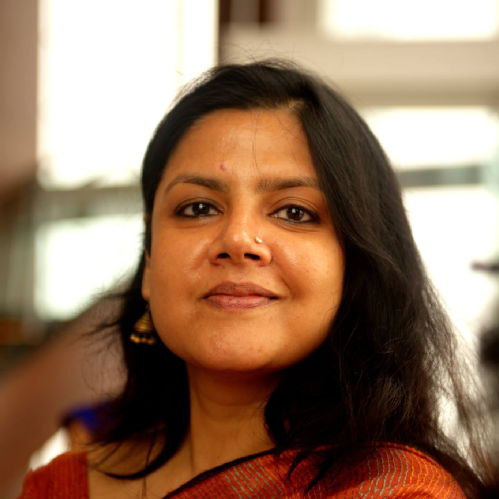
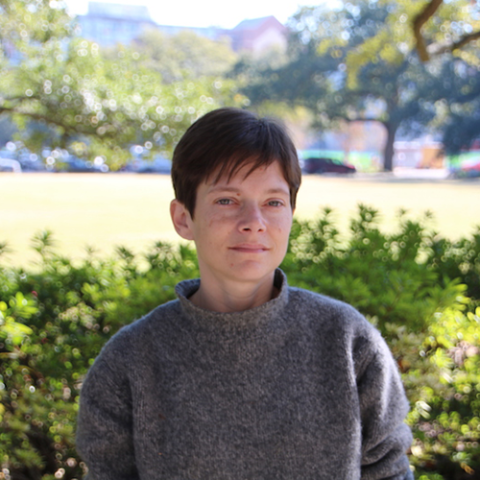
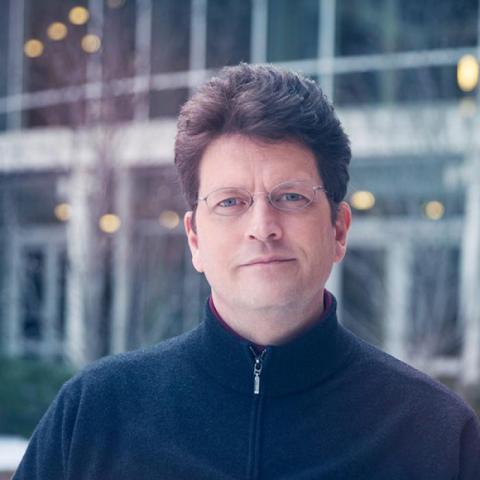
Rashmi Varma is a Professor at the University of Warwick, affiliated with the Faculty of Arts. She has previously taught at the University of North Carolina, Chapel Hill, and Jesus and Mary College, University of Delhi. Education: BA in English (Honours) from Lady Shri Ram College, University of Delhi MA in English Literature from University of Delhi PhD in English and Women’s Studies from University of Illinois at Chicago Research interests: Varma specializes in the postcolonial city, postcolonial Indian and African theory, global feminism, representations of indigeneity, and world literature theory. Her work interrogates urban political ecologies, feminist pedagogy, and subaltern politics. Scientific awards: British Academy Mid-Career Fellowship (2011-2012) for Modern Tribal: Representing Indigeneity in Postcolonial India Supervision: She currently supervises PhD students Angel Maria Varghese, Shavena Malvika Nair (Chancellor's International Scholar), Ragesree Roy, and Archana Vinod (Chancellor's International Scholar). Collaborations: Varma co-edited journals like Feminist Dissent and special issues on transnational feminism, urban political ecologies, and postcolonial theory. She was involved in the Tate Exchange workshop on 'Production, Truth and Justice' (2021).
Elizabeth Bernstein is a Professor of Women's, Gender & Sexuality Studies and Professor of Sociology at Barnard College, Columbia University, where she has been a faculty member since September 2002. Her work bridges sociological theory with feminist analysis, focusing on the intersections of gender, sexuality, and political economy. Bernstein directs significant research initiatives including the Gender Justice and Neoliberal Transformations Working Group, a transnational collaboration among thirteen scholars examining gender justice in contemporary global contexts. She is currently developing a new book project titled "Imagining Immunity: Precarious Bodies and the Governance of Gendered Dis-ease," which explores immunological metaphors in understanding bodily risk and suffering. B.A., University of California, Berkeley M.A., University of California, Berkeley Ph.D., University of California, Berkeley Professor Bernstein's research focuses on the political economy of the body, gender, and sexuality, with particular attention to sexual commerce, sex trafficking, and neoliberal governance. Her work employs ethnographic methods to examine how intimate relations become sites of economic exchange and political regulation. She investigates how concepts of authenticity, freedom, and rights are mobilized in debates about sexual commerce and trafficking. Bernstein's scholarship critically engages with feminist theory, carceral politics, and transnational governance frameworks, challenging conventional approaches to sex work and trafficking that often reinforce punitive systems rather than advancing gender justice. Analysis of Bernstein's scholarly output reveals a consistent trajectory examining the intersections of gender, sexuality, and political economy within neoliberal frameworks. Her work demonstrates increasing attention to transnational governance mechanisms and their impact on intimate relations and bodily autonomy. A notable trend is her critical examination of how anti-trafficking campaigns often employ carceral logic that undermines feminist goals of gender justice. Her scholarship consistently challenges binary frameworks that position sex work solely as exploitation or liberation, instead analyzing the complex economic, political, and social dynamics that shape sexual commerce globally. Bernstein's research has received significant recognition through prestigious awards including: Distinguished Book Award, American Sociological Association, Sociology of Sexualities Section (2020) for "Brokered Subjects" Honorable Mention, Society for the Study of Social Problems Global Division Book Award (2019) Norbert Elias Prize, Norbert Elias Foundation (2009) Distinguished Book Award, American Sociological Association, Sex and Gender Section (2009) Her work has also been supported by major funding organizations including the Institute for Advanced Study, National Science Foundation, Social Science Research Council, AAUW, and Mellon Foundation. As a principal investigator along with Janet Jakobsen for the Gender Justice and Neoliberal Transformations Working Group, Bernstein leads a significant collaborative research initiative sponsored by the Barnard Center for Research on Women. Her grant portfolio demonstrates sustained support from major research institutions, reflecting the significance of her work in gender studies and sociology. While specific student advisees aren't listed in the available materials, her role as a full professor at Barnard College indicates extensive mentorship of undergraduate and likely graduate students in Women's, Gender & Sexuality Studies and Sociology. Bernstein co-leads the Gender Justice and Neoliberal Transformations Working Group, a collaboration among thirteen scholars working transnationally on questions of gender justice. This initiative represents a significant research collective examining how neoliberal policies reshape gender relations globally. Her work with the Barnard Center for Research on Women provides institutional support for this transnational feminist research network, facilitating scholarly exchange and collaborative publication projects that advance critical perspectives on gender, sexuality, and political economy.
Sarah Bracke is a Professor in Sociology of Gender and Sexuality at the Faculty of Social and Behavioural Sciences, University of Amsterdam . Her work critically examines intersections of gender, sexuality, race, and secularism, particularly in European contexts. She is deeply engaged in analyzing systemic crises—capitalist, nationalist, and ecological—and their impact on marginalized communities. Current Affiliation : University of Amsterdam, Faculty of Social and Behavioural Sciences. Research Focus : Gender theory, reproductive rights, anti-LGBTQ+ mobilizations, secularism, and the political dimensions of care economies. Bracke’s research emphasizes the deliberate erosion of gender, reproductive, and LGBTQ+ rights, often highlighting transnational collaborations among far-right and mainstream political forces. She connects these issues to broader crises, including climate change, capitalist precarity, and nationalist rhetoric. Her work advocates for feminist coalitions that transcend traditional boundaries, prioritizing care ethics and collective solidarity over exclusionary frameworks. Her recent publications explore topics like the racialized dimensions of reproductive politics, the secularist underpinnings of European ‘Muslim Question’ discourse, and the role of academia in resisting oppressive systems. Although no specific awards or advisees are mentioned in the text, Bracke’s scholarship consistently bridges feminist theory, critical race analysis, and critiques of neoliberalism, urging transformative responses to global crises.
Alan Patten is the Howard Harrison and Gabrielle Snyder Beck Professor of Politics and Chair of Princeton University's Department of Politics. He holds a D.Phil. from Oxford University, with prior academic roles at McGill University and the University of Exeter. His research bridges historical political thought and contemporary political philosophy, focusing on minority rights, language politics, nationalism, and religious freedom. He is the author of Hegel's Idea of Freedom (1999), Equal Recognition: The Moral Foundations of Minority Rights (2014), and co-editor of Language Rights and Political Theory (2003). Patten has served as editor of Philosophy & Public Affairs (2010–2017) and currently directs Princeton's University Center for Human Values. His recent work explores a liberal theory of religious freedom and critiques neocolonial dynamics in cultural trade. Awards include the APSA First Book Prize and the C.B. Macpherson Prize. Education: B.A. (McGill), M.A. (Toronto), M.Phil. & D.Phil. (Oxford, 1996). Teaching includes courses on political theory, democracy, and self-determination. Patten has advised numerous Ph.D. students on topics in political philosophy and intellectual history. Research interests span the moral foundations of minority rights, language policy in multicultural contexts, and the historical development of nationalist thought. His work often combines normative argumentation with historical analysis, addressing contemporary issues like religious exemptions, cultural preservation, and global justice. Awards: APSA First Book Prize in Political Theory (1999) C.B. Macpherson Prize (Canadian Political Science Association, 1999) Service: Chair of the Department of Politics (2018–2024), editorial roles, and academic leadership in interdisciplinary initiatives at Princeton.
Angelika Malinar, Professor of Indology at the University of Zurich and member of its Gender Studies Department, specializes in Hinduism, Indian philosophy, and Sanskrit literature. Her work spans historical and modern contexts, with a focus on epic texts and Indo-European exchanges. She co-edits the Brill's Encyclopedia of Hinduism and contributes to the University Research Priority Program "Asia and Europe." PhD and habilitation from University of Tübingen Researcher at Tübingen, Berlin, and London Her research integrates Sanskrit epics, philosophical traditions, and modern Hindu identity. Recent publications analyze Mahābhārata theology, ritual practices, and cross-cultural interpretations. She explores how texts like the Bhagavadgītā and Nārāyaṇīya bridge ritualism, aesthetics, and individual authority. Key article trends examine cosmological monotheism , epic decision-making , and colonial reinterpretations . Her editorial roles include interdisciplinary volumes on time, purity, and Indo-European cultural dialogues. As a Senior Lecturer at SOAS and Professor in Zurich, she has led projects on monastic institutions, rasas, and canonical formation. Her work contextualizes Indian philosophy within global frameworks, notably nineteenth-century German Indology.
Dale Shuger is a Professor of Spanish & Portuguese in the School of Liberal Arts at Tulane University. His academic career includes roles as Visiting Assistant Professor (2012-2013), Assistant Professor (2013-2023), and Associate Professor (2018-2023) before his current position since 2023. He holds a Ph.D. from New York University (2008) and a B.A. from Harvard University (2001). Shuger’s research focuses on early modern Spanish literature, heterodox religions, and popular culture in Spain and colonial Latin America. His work bridges literary analysis with cultural history, exploring topics such as mysticism, the Inquisition, and symbolic practices in early modern texts. His publications include God Made Word: An Archaeology of Mystic Discourse in Early Modern Spain (2021) and articles on Cervantes, puppetry, and religious symbolism. His research has been supported by grants like the COR International Travel Fund and the Lurcy Award. Shuger has led Tulane’s Program in Medieval and Early Modern Studies (2014-2017) and currently serves on the School of Liberal Arts Curriculum Committee. He advises Spanish majors and has supervised one thesis in the past five years.
Ronald J. Colombo is Professor of Law and Associate Dean for Distance Education at Hofstra University's Maurice A. Deane School of Law. He teaches courses in Business Organizations, Securities Regulation, Contracts, and corporate law seminars. He has been on the faculty since 2006 and previously served as Associate Dean for Academic Affairs (2013–2015). Education: JD, New York University School of Law (magna cum laude, Order of the Coif), 1998 BS, Cornell University, 1994 Clerkship: Judge Jerry E. Smith, U.S. Court of Appeals for the Fifth Circuit Professor Colombo’s research focuses on corporate law, securities regulation, financial regulation, and the constitutional rights of corporations, especially First Amendment protections. His work explores the moral and philosophical underpinnings of corporate personhood, religious liberty in business, and the role of trust in financial systems. He is particularly known for bridging legal doctrine with ethical and theological perspectives. His recent scholarly publications reveal a strong thematic trend: the intersection of religion, corporate governance, and constitutional law. He has also contributed to legal education, especially in online teaching methodologies, and continues to publish on financial regulation and corporate ethics. Scientific Awards: Stessin Prize for Outstanding Scholarly Publication Lawrence A. Stessin Prize for Outstanding Scholarly Publication (2008) Professor Colombo has been actively involved in professional service, including serving on the editorial review board of the Review of Business and as an arbitrator for the Financial Industry Regulatory Authority (FINRA). He has not listed any formal research grants or PhD students, but his influence extends through media engagement—quoted in The New York Times , Wall Street Journal , and Bloomberg —and through his widely read op-eds in The Financial Times and Huffington Post . He has held leadership roles in academic administration and is a recognized expert in both practitioner and scholarly legal communities. His treatise Law of Corporate Officers and Directors is republished annually by Thomson Reuters, indicating sustained scholarly and practical impact.
Mohamed Ajouaou is an Assistant Professor at Vrije Universiteit Amsterdam's Faculty of Religion and Theology, specializing in Religious Beliefs and Ethics. His research examines Islamic theology within contemporary European contexts. Research focuses on Islamic spiritual care practices, theological ethics in healthcare, and Muslim community dynamics in the Netherlands. Recent publications investigate vaccination ethics during pandemics and pedagogical approaches to religious literacy. Analysis of publications reveals strong emphasis on practical theology, Muslim identity in secular societies, and ethical frameworks for community engagement. No specific awards documented. Teaching includes the graduate course 'Islamitische theologie/Kalam' (Islamic Theology). Leads projects like 'Professionaliseringsprogramma Imams in Nederland 3' focusing on clergy education reform. Frequently contributes expert commentary on Islamic practices in Dutch media regarding fasting, conversion narratives, and religious education policy.
Anirban Acharya, Ph.D., is a Professor of Political Science at Le Moyne College. His research focuses on political power's impact on markets, neoliberalism, and South Asia. He holds degrees from Jadavpur University (B.A., M.A. Economics), Indira Gandhi Institute of Development Research (M.Phil. Development Studies), and Syracuse University (M.A., Ph.D. Political Science). His areas of specialization include International Political Economy, International Relations, and US Foreign Policy. He has received several awards such as the 2018 Le Moyne College Faculty Spotlight and the 2017 Ignatian Mission Award. His media engagements include panel discussions on PBS-WCNY and interviews on topics like Afghanistan's political landscape. Acharya has published works like Right to Sell: Markets, Capitalism, and Urban Space in India (2022) and contributed to edited volumes analyzing South Asian politics. His research has been supported by grants from Syracuse University’s Maxwell School and others. Beyond academia, he is an avid cook, chess player, violinist, and spice enthusiast.
Marc-Antoine Dilhac serves as Associate Professor in the Department of Philosophy at the University of Montreal's Faculty of Arts and Sciences, where he also directs governance and international collaboration initiatives. He holds leadership roles as Scientific Director of Algora Lab and leads the Ethics and Politics research axis at the Centre de recherche en éthique (CRÉ). His academic affiliations extend to the Centre d'études et de recherches internationales (CÉRIUM) and the Canada Research Chair in Public Ethics and Political Theory (2014-2019). Education: PhD in Philosophy and Political Science, University of Paris I: Panthéon-Sorbonne (2009) Master 2 in Philosophy and Political Science, University of Paris I: Panthéon-Sorbonne (2003) Agrégation in Philosophy, University of Paris I: Panthéon-Sorbonne (2002) Dilhac's research spans ethics, political philosophy, and AI governance, with particular focus on democratic tolerance, multiculturalism, and the ethical implications of artificial intelligence. His work bridges theoretical political philosophy with practical applications in AI policy development, sustainable finance, and democratic institutions. He has contributed significantly to UNESCO's Recommendation on the Ethics of Artificial Intelligence and leads initiatives examining AI's impact on French-speaking culture and democratic values. His recent publications reveal a clear trajectory from foundational work on tolerance and justice theory toward contemporary AI ethics challenges. The thematic evolution shows increasing engagement with practical governance frameworks, particularly in finance and education sectors, while maintaining strong philosophical grounding in democratic theory and institutional design. Key Awards and Recognition: Canada Research Chair in Public Ethics and Political Theory (2014-2019) Banting Postdoctoral Fellowship (2011) Contributor to UNESCO's Recommendation on AI Ethics (2021) Dilhac has supervised over 15 graduate students across philosophy, political science, and interdisciplinary AI ethics programs. His research is supported by multiple grants from FRQSC, FRQNT, SSHRC, and MITACS, totaling over $2 million CAD. Current projects include the Generative AI Ethics Framework for Educational Technology (2024-2025) and the Sustainable Finance AI Tools project examining ESG/DEI disclosure analysis. He co-founded and leads the CORDÉ research group on corruption and democracy, and directs Algora Lab's work on AI governance. His upcoming February 2025 panel at Université Laval will address AI and Francophone cultural perspectives ahead of the Paris AI Action Summit.
Jeffrey Rossman is an Associate Professor at the University of Virginia , affiliated with the Department of History and serving as Director of the Center for Russian, East European, and Eurasian Studies . His work bridges historical analysis with cultural and literary studies, focusing on Russia/USSR, Modern Europe, Communism, Genocide, Espionage, and Jewish Cultural Studies. Education: Ph.D., University of California, Berkeley, 1997 A.B., Harvard University, 1989 His research explores worker resistance under Stalin, the intersection of Jewish identity and German literature, and the role of translation in cultural exchange. He has authored key works on Soviet labor movements and Holocaust memory, blending historical narratives with literary theory. Jeffrey’s recent publications and Google Scholar contributions highlight trends in 20th-century European history , Yiddish-German literary dynamics , and translation as a tool for identity formation . His work spans comparative literature, cultural memory, and diaspora studies, emphasizing interdisciplinary approaches. Scientific Awards: ACLS Collaborative Research Fellowship (2013-15) Harry Frank Guggenheim Foundation Research Grant (2013-15) Multiple grants from the University of Virginia’s College of Arts & Sciences and Faculty Summer Research Grant program Fulbright-Hays and IREX fellowships for international research As an educator, Rossman has taught courses such as Genocide: A Global History and Stalinism , mentoring students in historical and literary analysis. His lab, the Center for Russian, East European, and Eurasian Studies, fosters research on Soviet history, Jewish cultural studies, and transnational literary exchange.
Professor Masooda Bano serves as William Golding Senior Research Fellow at Brasenose College and Professor of Development Studies at the University of Oxford's Department of International Development. She leads the five-year ERC-funded Changing Structures of Islamic Authority (CSIA) project examining Islamic scholarly debates and their societal impacts. Her academic credentials include an MPhil in Development Studies from Cambridge and a DPhil from Oxford. These qualifications underpin her expertise in development theory and field research methodologies. Bano's research centers on the interplay between ideas, beliefs, and material incentives in development processes . She investigates how psycho-social factors shape individual choices and collective outcomes, with particular focus on Islamic authority structures, female education movements, and aid effectiveness. Her work combines large-scale comparative studies using ethnographic and survey data across Muslim-majority contexts. Recent publications reveal a concentrated focus on education policy in developing nations , especially Pakistan, Nigeria, and Indonesia. Key themes include decentralized education planning, low-fee private tuition markets, community participation models, and Islamic education systems. The research consistently examines religion-development intersections and institutional responses to social change. Her scientific recognition includes: Two competitive ESRC Fellowships A 1.4 million euro ERC Starting Grant for the CSIA project ESRC Best Social Science Impact award for Nigeria education interventions Bano supervises MPhil/DPhil theses at Oxford and has advised major development agencies, notably designing DfID's education reforms in northern Nigeria. Her CSIA project coordinates a multinational team conducting textual analysis, surveys, and ethnographic fieldwork to map evolving Islamic authority structures.
Andrew R. Meyer is an Associate Professor in the Department of Health, Human Performance, and Recreation at Baylor University, where he teaches courses in Sport Psychology and Religion and Sport. His academic work bridges the fields of sport sociology, cultural studies, and theology, with a particular focus on the enduring influence of muscular Christianity in American sports. His research interests include: Contemporary American Sport Culture and Religion Muscular Christianity and its modern manifestations Hero-celebrity athletes in popular culture Character development through sport and education Traditional and contemporary Indigenous sport cultures Sport's cultural impact on communities The themes across his publications reveal a consistent exploration of the moral, spiritual, and cultural dimensions of sport. His work analyzes how religious values, particularly those rooted in Christian traditions, shape athlete identity, media narratives, and public perception of sports figures. He has developed the Contemporary Muscular Christian Instrument (2017, 2020) to measure these values across global sport contexts. His articles appear in interdisciplinary journals spanning religion, sociology, public health, and cultural studies, reflecting the broad relevance of his research. Scientific awards and recognitions include: Baylor Teaching Fellow (2017) Dr. Meyer has been active in academic and public discourse, serving as a keynote speaker at international conferences on sport and Christianity and being featured on media outlets such as NPR and the Sport, Faith, Life podcast. His teaching emphasizes character formation in the classroom, aligning with his research on moral development through sport. While specific grant funding is not mentioned, his extensive publication record in peer-reviewed journals and edited volumes indicates sustained scholarly productivity. He has contributed to discussions on mega-sport events, cycling culture, and the redemption narratives of fallen athletes like Lance Armstrong. He is affiliated with the College of Health, Human Performance, and Recreation at Baylor University, contributing to both graduate and undergraduate education in sport studies.
Dag Henrik Tuastad is a Professor of Middle East Studies at the Department of Culture Studies and Oriental Languages (IKOS) at the University of Oslo. His research focuses on kinship dynamics in Palestinian politics, rebel governance (notably Hamas rule in Gaza 2007–2023), political representation crises, and the intersection of sports and politics in the Middle East. Current projects include senior research at Football and Religion in the Middle East (FORM) , funded by the Norwegian Research Council (2021–2026) Former project leader for Rebel Governance in the Middle East (2017–2021) PhD in Social Anthropology (2008) on kinship in Palestinian politics His recent publications analyze Hamas’s symbolic authority, football’s role in Jordanian-Palestinian identity formation, and the erosion of legal frameworks in the West Bank. He critiques media bias (e.g., in Qatar World Cup coverage) and explores how football culture reflects broader political tensions. Teaching: Courses on Middle East history, cultural anthropology, and conflict resolution Regional Focus: Palestine, Jordan, Gaza, and the Levant
Stefan Binder is a Senior Research Assistant at the Institute for Social Anthropology and Cultural Studies (ISEK) at the University of Zurich's Faculty of Arts and Social Sciences. His academic work focuses on the intersections of gender, sexuality, and religious studies with particular attention to secular and non-religious perspectives. His primary research interests include gender and sexuality studies, queer anthropology, secularity and non-religion, religious aesthetics, ethics, and temporal dimensions of religious practices. Binder's work employs anthropological approaches to explore contested notions of "newness" and "generational change" within queer and trans* communities in both South Asia (particularly India) and Europe. His research also investigates the sensory, material, and aesthetic dimensions of lived everyday religion and non-religion. Binder's publication record shows a strong focus on nonreligion studies, with particular emphasis on atheist activism in South India. His work frequently examines the relationship between secularism and religious pluralism, with attention to how these concepts manifest in everyday practices and experiences. His scholarship demonstrates interdisciplinary engagement across religious studies, anthropology, gender studies, and South Asian studies. His monograph Total Atheism: Secular Activism and the Politics of Difference in South India (2020) represents a significant contribution to the field of nonreligion studies. His recent articles (2021-2023) continue to develop theoretical frameworks for understanding secularism, nonreligion, and religious aesthetics through ethnographic approaches.