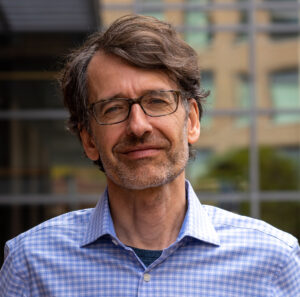
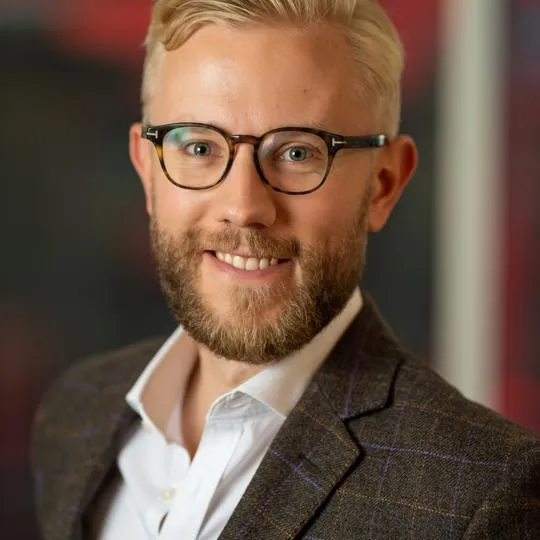
Andrew Mitchell is a Professor at the Faculty of Law, Monash University, and a member of the WTO Dispute Settlement Panelists Indicative List. He has extensive legal practice experience with Allens Arthur Robinson and consults for governments, international organizations, and the private sector. Mitchell has taught law in Australia, Canada, Indonesia, Singapore, and the US. He holds law degrees from the University of Melbourne, Harvard Law School, and a PhD from the University of Cambridge. His research focuses on international economic law, public international law, and digital trade governance, with a particular emphasis on the intersection of trade law and public health. Mitchell has secured six major grants, including an Australian Research Council Future Fellowship, and has authored over 170 books and articles. He serves as an editor for Edward Elgar’s International Economic Law Series and multiple journal editorial boards. Recent projects include 'Safeguarding Health in International Investment Agreements' (2022–2025) 'Maritime Cooperation for a Sustainable Indo-Pacific' (2021–2022) 'Global E-Commerce and Cottage Industries in India' (2020–2021) He has contributed to policy submissions on bilateral investment treaties and delivered lectures on data sovereignty and digital trade. His awards include editorial leadership roles at journals like the Journal of World Investment and Trade and Asia Pacific Law Review .
Jyh-An Lee is a Professor and founding Executive Director of the Centre for Legal Innovation and Digital Society (CLINDS) at The Chinese University of Hong Kong (CUHK) Faculty of Law. He leads the New Ventures Legal Team (NVLT) and holds advisory roles at institutions like the European Center for E-Commerce & Internet Law and National University of Singapore. Education : JSD (Stanford), LLM (Harvard), MBA & LLB (National Taiwan University) Admissions : Practicing lawyer in Taiwan His research interests focus on Intellectual Property , AI and the Law , Law & Digital Technology , and Asian Law . He has contributed to landmark studies on NFTs, metaverse legal frameworks, cybersecurity, and IP litigation in Asia. The scientific awards he has received include: CUHK PhD IMPAC Award (2024-25) CUHK Vice-Chancellor’s Exemplary Teaching Award (2023, 2019) CUHK Outstanding Research Impact Award (2022-23) Numerous other university and faculty-level honors His work has been cited by major international courts and agencies. He is also a TRAIL Academic Fellow and active in policy advisory roles for Creative Commons and IP offices in Taiwan and Hong Kong.
Amr Youssef is a Professor at the Concordia Institute for Information Systems Engineering, Concordia University. His research focuses on applied cryptography, network security, cyber-physical systems security, blockchain, and privacy. He has contributed extensively to securing smart grids, IoT devices, and web applications through cryptographic protocols and machine learning-driven solutions. His work addresses critical challenges in cybersecurity, including e-voting systems, fault-tolerant differential protection, and privacy-preserving communication protocols. He explores vulnerabilities in modern systems such as SSO permissions, JavaScript exploits, and stalkerware tools, while developing frameworks like MEGR-APT for APT detection and TEE-Receipt for non-repudiation. Youssef’s research integrates interdisciplinary approaches, combining cryptography with AI (e.g., vision transformers for power quality analysis) and leveraging trusted execution environments (TEE) for secure computing. His projects often involve collaboration with industrial standards (e.g., IEC 61850), emphasizing practical implementations in real-world systems.
Reza Shokri is a Dean's Chair Associate Professor in the Department of Computer Science at the National University of Singapore (NUS), School of Computing. His research lies at the intersection of data privacy, security, and trustworthy machine learning, with a focus on quantifying privacy risks and developing robust, fair, and interpretable models. PhD in Computer Science, EPFL His research interests center on data privacy and trustworthy machine learning , particularly in the context of deep learning and federated systems. He investigates how machine learning models memorize training data, leading to privacy leakage, and designs frameworks to audit and mitigate such risks. His work bridges theoretical guarantees with practical applications, emphasizing the trade-offs among privacy, fairness, robustness, and utility. His recent publications (2023–2025) reveal a strong trend in analyzing privacy in large language models (LLMs), membership inference attacks, federated learning, and fairness. These works are published in top venues such as NeurIPS, ICML, ICLR, CCS, and FAccT, highlighting his leadership in both AI and security communities. Notable scientific awards include: Asian Young Scientist Fellowship (2023) Intel Outstanding Researcher Award (2023) Best Paper Award, ACM FAccT (2023) IEEE S&P Test-of-Time Award (2021) Caspar Bowden Award for Privacy Enhancing Technologies (2018) NUS Presidential Young Professorship (2019–2023) VMware Early Career Faculty Award (2021) He has advised numerous PhD and Master’s students, many of whom have contributed to high-impact publications. He has also received research grants from major industry partners including Meta, Google, Intel, and VMware. He leads the Data Privacy and Trustworthy Machine Learning Lab at NUS and has served on program committees for top conferences such as IEEE S&P, ACM CCS, and FAccT, including co-chairing roles at HotPETs and Shadow PC of IEEE S&P. He has delivered tutorials at ICML and CCS on privacy auditing in machine learning. His lab focuses on developing tools and frameworks—such as the ML Privacy Meter—for assessing and improving the privacy properties of machine learning models, with applications in regulatory compliance and secure AI deployment.
Prof. Sanjam Garg is an Associate Professor at the University of California, Berkeley in the Computer Science Division under the College of Engineering. His work focuses on cryptography and its applications to security and privacy , with affiliations to the Berkeley Center for Responsible, Decentralized Intelligence (RDI) and the Simons Institute for the Theory of Computing (SITC). Education: Ph.D., Computer Science, University of California, Los Angeles (2013) B.Tech, Computer Science and Engineering, Indian Institute of Technology, Delhi (2008) His research spans cryptography , secure computation , and zero-knowledge proofs , with recent publications on threshold encryption , zkSNARKs , and private set intersection . Trends in his work emphasize blockchain security , obfuscation , and secure multiparty computation . Scientific Honors: ACM Doctoral Dissertation Award (2013) Sloan Research Fellowship (2020) Okawa Research Grant (2016) IACR EUROCRYPT Best Paper Award (2013) FOCS Test of Time Award (2023) Bakar Fellows Spark Award (2023) Prof. Garg has advised researchers like James Bartusek (2024), Akshayaram Srinivasan (2020), and Peihan Miao (2019), who are now at institutions such as Microsoft Research and University of Toronto. He teaches CS 170 on algorithms at Berkeley.
Kevin Pisciotta is an Assistant Professor of Finance at the University of Kansas School of Business, specializing in empirical corporate finance, initial public offerings (IPOs), and information intermediaries. His work bridges corporate finance theory with real-world market dynamics, focusing on IPO processes, analyst behavior, and economic impacts of social issues like opioid abuse and sports betting. Education: Ph.D. in Business Administration, Pennsylvania State University M.S. in Finance, University of Delaware B.S. in Finance, University of Delaware Research Interests: His research explores how IPO bookbuilding mechanisms influence market outcomes, the role of sell-side analysts in information dissemination, and the macroeconomic consequences of phenomena like opioid abuse and sports gambling. He also investigates labor economics through the lens of corporate innovation and workforce productivity. Publications Trends: Recent work examines the interplay between sports betting and household financial stability (2024), IPO marketing strategies post-JOBS Act reforms (2018), and the spillover effects of opioid abuse on regional innovation ecosystems (2023). His studies frequently employ large-scale datasets to analyze market microstructure and policy impacts. Grants/Advising: No specific grants or advisee names are listed in available materials. Teaching experience includes undergraduate courses in investments, international finance, and corporate financial management. Labs/Teams: No dedicated lab affiliation is mentioned, though collaborations with institutions like Pennsylvania State University and the University of Delaware are implied through his educational background and co-authorships.
Shannon Mathieu serves as a Teaching Fellow in International Security at the School of Politics and International Studies (PAIS), University of Warwick. Her administrative roles include: Deputy Director of Undergraduate Studies Joint Undergraduate Courses Director for Economics, Politics and International Studies (EPAIS), History and Politics, Philosophy and Politics, and Politics, International Studies and Global Sustainable Development PAIS Undergraduate Study Skills lead (Term 1) She teaches PO207: Politics of the USA, PO382: Vigilant State: Understanding Secret Intelligence, and PO3A7: Gender, Race and Militarism for the 2025-26 academic year. Her research critically examines international security through feminist IR theory, focusing on United Nations policy frameworks. Key interests include the Responsibility to Protect (R2P), gendered constructions of vulnerability, non-military masculinities in institutional culture, and discursive power dynamics in humanitarian interventions. Her work exposes how protection narratives reinforce patriarchal structures within global security governance. Recent publications analyze evolving gender-security intersections in UN interventions, revealing persistent masculine norms in R2P frameworks while exploring pedagogical innovations using cultural texts. Her scholarship demonstrates consistent thematic progression toward deconstructing gendered power hierarchies in international security institutions, with emerging work examining burden-sharing dynamics in protection mandates.
Dr.-Ing. Tobias Fiebig is a Senior Researcher at the Max Planck Institute for Informatics (Internet Architecture department) since April 2022. He previously served as a permanent Assistant Professor at TU Delft's Faculty of Technology, Policy and Management from 2017-2022. His work combines network measurement with human factors to improve security practices, focusing on email protocols, DNS infrastructure, and academic cloud migration. PhD in Computer Science from TU Berlin (2017) MSc in System and Network Engineering from University of Amsterdam (2013) BSc in Cognitive Science from University of Osnabrück (2012) His research spans Internet security (DNS, IPv6, email), academic freedom in cloud contexts, and human-centered security challenges. Recent work analyzes MTA-STS deployment, DNS sampling biases, and university cloud migration privacy implications. He has presented at top conferences including USENIX Security , IEEE Symposium on Security and Privacy , and ACM CCS . Teaching roles include lecturing Data Networks (2023-24) and On the Practice of System and Network Engineering (2024), with prior module management in cyber security analytics and sustainable system operations.
Timo Minssen is Professor of Law at the University of Copenhagen (UCPH) and the Founding Director of UCPH's Center for Advanced Studies in Bioscience Innovation Law (CeBIL). He also holds affiliations as an LML Research Affiliate at the University of Cambridge and an Inter-CeBIL Research Affiliate at Harvard Law School's Petrie-Flom Centre. With extensive expertise in Intellectual Property, Competition, and Regulatory Law, Minssen focuses on the legal aspects of emerging health and life science technologies, including genome editing, big data, artificial intelligence, and quantum technology. His educational background includes a German law degree (Staatsexamen) from Georg-August-University in Göttingen, and Swedish biotech & IPR related LL.M., LL.Lic., and LL.D. degrees from Lund University and Uppsala University. His PhD thesis on the patentability of biopharmaceutical technology in the US & Europe received the prestigious Swedish King Oscar award. 2024: TUM Global Visiting Professor, Technical University of Munich (Germany) 2016: Visiting Research Fellow, University of Cambridge (UK) 2014: Visiting Research Fellow, University of Oxford (UK) 2013-14: Visiting Scholar, Harvard Law School (US) 2012: LL.D. - Doctor of Laws (Swedish "juris doktor"), EU/US patent law, Lund University, Sweden Minssen's research spans AI & Big Data in Health & Life Sciences, Sustainable and responsible innovation & tech transfer, Pharmaceutical-, Life Science- & Biotech Law, Comparative European & US Patent Law, Intellectual Property Law & Open Innovation, and EU Competition- & US Antitrust Law. His work addresses legal issues throughout the lifecycle of health and life science products and processes, from R&D regulation to technology transfer and commercialization. His extensive publication record includes 7 books and over 200 articles and book chapters published in leading journals such as Science, Nature Biotechnology, JAMA, and Harvard Business Review. His research has been featured in The Economist, Financial Times, and other major media outlets. Minssen's recent work shows a strong focus on AI regulation, quantum technology law, and data governance in health contexts, reflecting the evolving landscape of technology and law. Scientific Awards and Recognition King Oscar award for best Jur. Dr. thesis (2014) Jorcks Fonds Forsknings Pris (Jorck's Foundation Research Prize) (2017) Awapatent Research Prize (2009) Max Planck Research Scholarship (2005) Visiting Scholar appointments at Harvard Law School, University of Oxford, and University of Cambridge Recipient of a Novo Nordisk Foundation Grant for a "Collaborative Research Program in Biomedical Innovation Law" (2018) As an advisor, Minssen serves international organizations including the WHO, WIPO, and EU Commission. He has supervised numerous PhD students in areas including pharmaceutical law, biotechnology patents, and antimicrobial resistance. His current research projects include the Novo Nordisk Foundation's International Collaborative Bioscience Innovation & Law (Inter-CeBIL) Programme (50 million DKK), CLASSICA: EU Horizon Project on AI-assisted surgery, and AI@Care: Law and Ethics and Algorithmic Bias in Healthcare. Minssen leads the Center for Advanced Studies in Bioscience Innovation Law (CeBIL), which serves as a hub for interdisciplinary research on the intersection of law, technology, and innovation in the health and life sciences. The center collaborates with institutions worldwide to address pressing legal challenges in emerging technologies.
Noman Mohammed is an Associate Professor of Computer Science at the University of Manitoba’s Faculty of Science, leading the Data Security & Privacy (DSP) laboratory. He specializes in privacy-preserving techniques for data sharing, addressing challenges in healthcare, genomic, and financial data. In 2020, he received the Terry G. Falconer Memorial Rh Institute Foundation Emerging Researcher Award for his contributions to bridging privacy and data utility gaps. His research focuses on balancing data accessibility and individual privacy through technical solutions like federated learning, differential privacy, and secure genomic data processing. He emphasizes integrating policy guidelines with advanced technologies to mitigate privacy risks from interconnected data sources. Notable achievements include developing toolkits for data anonymization and federated learning frameworks, as well as advancing methods to secure cloud-based data storage and analysis. His work aligns with societal needs for robust privacy mechanisms in an era of expanding personal data collection. Future objectives involve addressing privacy challenges in emerging technologies, such as heterogeneous data integration and scalable systems for personal data management. Despite his research focus, he notably avoids social media platforms.
Stanislaw Jarecki is an Associate Professor of Computer Science at the Donald Bren School of Information and Computer Sciences (ICS) at the University of California, Irvine (UCI). He joined UCI in 2003 after earning his Ph.D. in Computer Science from MIT in 2001 under Prof. Shafi Goldwasser. His research focuses on applied and distributed cryptography, with significant contributions to threshold cryptography, secure computation, and password-authenticated key exchange (PAKE) protocols such as OPAQUE, which secures 2 billion WhatsApp users. He also worked at Intertrust’s StarLab and Stanford’s applied cryptography group under Prof. Dan Boneh. Education: Ph.D., Massachusetts Institute of Technology, 2001. Research Interests: Distributed cryptography, secure multi-party computation, privacy-preserving protocols, threshold security, blockchain applications, and efficient cryptographic primitives. His work emphasizes practical solutions for real-world systems, including protocols resilient to server compromises and scalable encryption methods. Awards: 2023 IACR Fellow for contributions to distributed cryptography and efficient secure computation. Advising and Grants: Jarecki’s research has been supported by grants including NSF SaTC programs. He advises students on cryptographic protocol design and security mechanisms. His work on OPAQUE and CHIC protocols exemplifies his focus on bridging theoretical cryptography with practical implementation. Labs/Teams: Leads a research group focused on applied cryptography and security within ICS at UCI, collaborating on projects like secure computation, privacy-preserving data processing, and cryptographic protocol development.
Dr Thomas Maguire is a Visiting Fellow with the King's Intelligence and Security Group in the Department of War Studies at King's College London, and Assistant Professor of Intelligence and Security at Leiden University. His research focuses on intelligence-propaganda interactions and international security cooperation, particularly in Cold War Southeast Asia and counter-terrorism contexts. Education: PhD in International Relations (POLIS, University of Cambridge) MPhil in International Relations (POLIS, University of Cambridge) BA (Hons) in History (Durham University) Maguire's research examines the intersection of intelligence operations and propaganda dissemination in foreign policy contexts, with specialized focus on British and American covert action in Southeast Asia. He also investigates post-colonial security relationships and international counter-terrorism cooperation frameworks. His work spans historical analysis and contemporary security challenges. Maguire's publications demonstrate interdisciplinary research across public health, virology, and immunology, particularly addressing COVID-19 diagnostics, vaccine development, and immune responses. This reflects methodological versatility in addressing complex global security and health challenges through both historical analysis and biomedical research. Scientific Awards: Lisa Smirl Prize for best thesis (University of Cambridge) Maguire leads the Dutch Government-funded 'Sharing Secrets' project investigating intelligence disclosure decision-making. He teaches intelligence studies courses and co-convenes the Cambridge Intelligence Seminar. At Leiden, he coordinates undergraduate and postgraduate programs in Intelligence Studies and Crisis Management. Maguire previously served as Research Fellow at Darwin College and the Department of Politics and International Studies (University of Cambridge), and as John Garnett Visiting Fellow at the Royal United Services Institute focusing on East African security challenges.
Miklós Zeidler is a habilitated Associate Professor at Eötvös Loránd University (ELTE), Budapest, lecturing in the Department of Modern and Contemporary Hungarian History within the Institute of Historical Studies. His principal research covers Hungary’s twentieth-century diplomatic, political and cultural history, with a strong focus on the Treaty of Trianon, inter-war revisionism, the League of Nations, and the memory-culture of irredentism. Research interests: Professor Zeidler explores the consequences of the 1920 peace settlement for Hungarian state- and nation-building, the functioning of the League of Nations in East-Central Europe, and the interplay between sport, propaganda and national identity. His recent publications analyse financial stabilisation loans supervised by the League, the micro-history of border disputes, and the symbolic geography of inter-war Geneva. Publication profile: Between 2020 and 2024 he authored studies on the making and reception of the Trianon treaty, the composition and lobbying activity of the Hungarian peace delegation, and the cultural mythology of irredentism. A recurrent methodological thread is the integration of diplomatic, urban and memory-history perspectives, often relying on previously unused Hungarian and League archives. Campus presence: His office is located in the Humanities Faculty building at 1088 Budapest, Múzeum körút 6–8, room 216; he can be reached at zeidler.miklos@btk.elte.hu. Comprehensive publication lists are available on MTMT.hu and his doctoral data sheet at doktori.hu.
Hatice Altug is a Full Professor at EPFL's Institute of Bioengineering within the School of Engineering, where she leads the Bionanophotonic Systems Laboratory. Her research integrates nanophotonics, plasmonics, and microfluidics to develop advanced biosensors for real-time molecular diagnostics. She holds dual roles in EPFL's doctoral programs and academic committees. Education: PhD in Applied Physics, Stanford University (2000-2007) B.S. in Physics, Bilkent University (1996-2000) Her research centers on creating label-free, high-sensitivity optical biosensors using nanophotonic technologies. Key innovations include dielectric metasurfaces for mid-infrared spectroscopy, AI-enhanced detection platforms, and portable nanoplasmonic imagers for point-of-care diagnostics. Her work bridges fundamental light-matter interactions with clinical applications like sepsis monitoring and cancer biomarker detection. Her publications emphasize nanophotonic biosensor design, metasurface applications, and single-cell analysis. Recent trends show increased focus on AI integration, vibrational spectroscopy, and wafer-scale manufacturing for clinical translation. Awards & Honors: Optical Society Fellow (2020) Presidential Early Career Award (PECASE, 2011) ERC Consolidator Grant (2016) IEEE Photonics Society Young Investigator Award (2011) She mentors numerous PhD students and leads interdisciplinary teams developing optofluidic platforms. Her laboratory pioneers nanoplasmonic microarrays and collaborates globally on projects like neurodegenerative disease biomarker detection. She co-directs EPFL's doctoral program in photonics and champions women in STEM through executive roles in diversity initiatives.
Vicente Grau Colomer is a Professor of Engineering Science and Biomedical Image Analysis at the University of Oxford, affiliated with the Institute of Biomedical Engineering. He serves as Director of the Centre for Doctoral Training in Healthcare Innovation and a Professorial Fellow at Mansfield College. His work bridges biomedical engineering, medical imaging, and artificial intelligence. Education: PhD in medical image analysis from Universidad Politécnica de Valencia, Spain. Postdoctoral research at Harvard University and LSU Health Sciences Center. Joined Oxford in 2004, awarded full professorship in 2015. Research focuses on medical image analysis, AI-driven diagnostics, and collaborations between academia, industry, and clinicians. Notable tools include the MSP-tracker software for cellular analysis and advancements in bone marrow fibrosis quantification. Recent articles highlight interdisciplinary efforts in AI applications, MPN pathophysiology, and biomedical software development. Awards include recognition as a Professor at Oxford. Advising: Leads the Healthcare Innovation CDT and mentors students in biomedical engineering. Active in Oxford’s e-Research Centre and Systems Approaches to Biomedical Sciences CDT. Collaborates globally to translate research into clinical solutions.