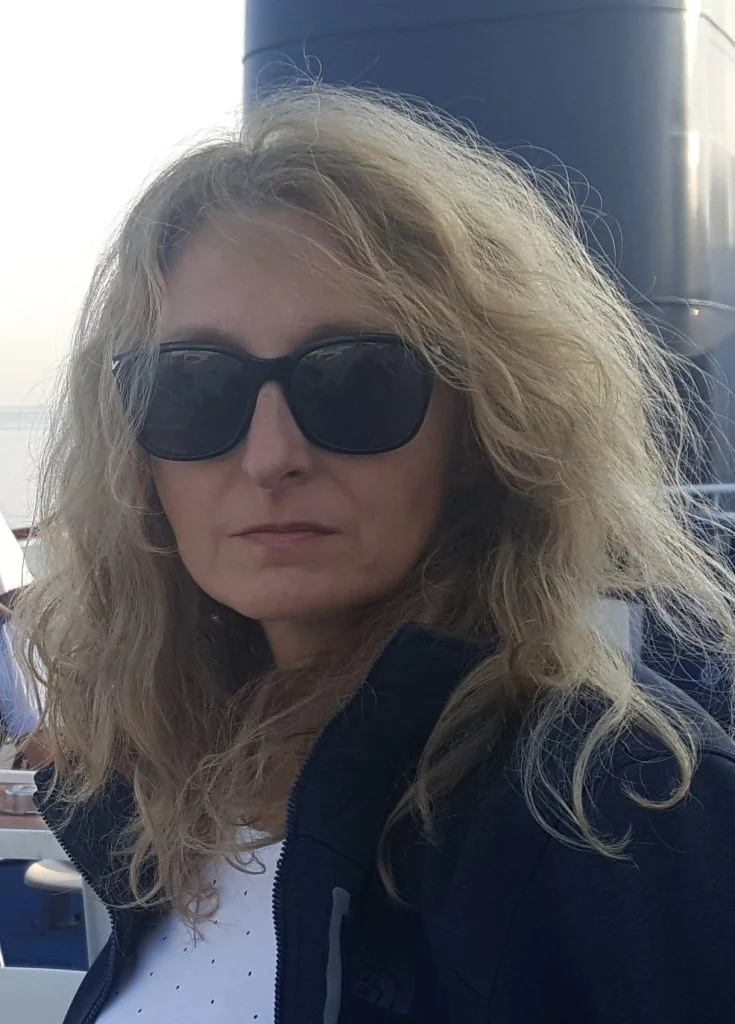
Concepción Godev is a Professor in the Department of Languages, Cultures and Translation at the University of North Carolina at Charlotte. Her academic career spans decades of research and teaching in applied linguistics and translation studies. Ph.D. in Spanish Applied Linguistics (Pennsylvania State University, 1992) Ph.D. in Spanish Applied Linguistics (Universitat de Barcelona, 2006) M.A. in Spanish Literature and Linguistics (Pennsylvania State University, 1988) BA in Spanish Literature and Linguistics (Universidad de Málaga, 1984) Her research focuses on applied linguistics, translation pedagogy, blended learning, and gender inclusivity in Spanish language teaching. She has published extensively on these topics, often integrating technology and cross-cultural analysis into her work. Recent publications highlight her expertise in translation-project management, blended learning effectiveness, and inclusive language practices in educational settings. Her work bridges theoretical linguistics with practical applications in language acquisition. As a faculty member, she contributes to curriculum development and interdisciplinary research, with a particular emphasis on leveraging translation to enhance language learning in digital environments.
Ann Childs is an Associate Professor of Science Education at the University of Oxford and a Fellow of Lady Margaret Hall. She holds a PhD in Chemistry from the University of Birmingham and has 11 years of secondary science teaching experience in the UK and West Africa, including roles as Head of Chemistry and Head of Science. Since 1995, her work has focused on science teacher education, with expertise in classroom pedagogy, bilingual science instruction, and policy analysis. Her research spans topics like effective explanations in science classrooms, teacher education in multilingual contexts, and sustainable development in education. Her academic contributions include co-editing Classroom-Based Interventions Across Subject Areas (2018) and authoring chapters on international science pedagogy and teacher educator knowledge bases. Recent articles explore classroom interaction dynamics in EMI settings, teacher training innovations, and policy challenges in initial teacher education. Childs collaborates with institutions globally, including studies in Bhutan and Scotland, addressing teacher quality and professional development. Her advising includes doctoral student Qian Liu, focusing on secondary science education methodologies. Research trends highlight intersections between language, pedagogy, and policy, with a focus on equitable and effective teaching practices. Though no formal awards are listed, her extensive publications reflect sustained scholarly impact in science education and teacher training.
Chun Hong Yan is a doctoral researcher and tutor at the Southampton Education School, University of Southampton. They hold multiple advanced degrees including an MA in Education from UCL Institute of Education, an MA in Teaching Chinese as a Foreign Language (Distinction) from The Hong Kong Polytechnic University, a Postgraduate Diploma in Education, and a BA in Chinese Language and Literature (First Class Honours) from The Chinese University of Hong Kong. Their educational background includes: MA in Education, University College London, Institute of Education MA in Teaching Chinese as a Foreign Language (Distinction), The Hong Kong Polytechnic University Postgraduate Diploma in Education, The Chinese University of Hong Kong BA in Chinese Language and Literature (First Class Honours), The Chinese University of Hong Kong Chun Hong Yan's research focuses on the intersection of migration and education, with particular emphasis on teaching Chinese as a first and second language, Confucianism's influence on educational practices, and socio-material perspectives in educational sociology. Their work often examines the experiences of Hong Kong migrants in the UK education system, exploring how cultural, linguistic, and social factors shape educational outcomes and integration processes. Through a socio-material lens, they investigate how physical spaces, objects, and technologies interact with human agency in educational settings, offering nuanced insights into the complexities of migration-related educational challenges. Their recent publications demonstrate a clear trajectory in examining educational experiences of East Asian communities in the UK, particularly focusing on Hong Kong migrants. These works span Chinese language curriculum development, migration decision-making processes, English language accessibility, and the broader challenges faced by East Asian students in UK higher education. This body of work reveals a consistent commitment to understanding how educational systems can better serve diverse migrant populations. Chun Hong Yan has been recognized for their scholarly contributions, receiving the Hong Kong Studies Association Annual Conference Best Paper Award in 2025. Hong Kong Studies Association Annual Conference Best Paper Award (2025) As an educator, Chun Hong Yan has served as a tutor for undergraduate modules including EDUC 6353 - Understanding Education Research and EDUC 6455 - Education and Society. Prior to their doctoral studies, they gained practical teaching experience as a language educator in a Hong Kong secondary school, providing valuable real-world context for their academic research. Chun Hong Yan is an active member of the Centre for Research in Inclusion at the University of Southampton, contributing to collaborative projects that examine educational equity and access for diverse student populations. Their work bridges theoretical insights with practical applications, aiming to inform both educational policy and classroom practice.
Eni Buljubasic is a PhD candidate and Research & Teaching Assistant at the Faculty of Humanities and Social Sciences, University of Split, Croatia. Her academic work bridges cultural studies, critical heritage, discourse analysis, and multimodal stylistics, with a focus on identity politics in Croatian popular music and heritage discourse. University: University of Split School: Faculty of Humanities and Social Sciences Role: PhD Candidate, Research & Teaching Assistant Her research centers on the transformation of traditional Dalmatian klapa singing into neoklapa, analyzing how heritage processes, nostalgia, and Mediterranean identity are rhetorically and visually constructed in music and media. She investigates themes of regional identity, authenticity, and national branding, often through feminist and poststructuralist lenses. Her methodological approach combines critical discourse analysis, multimodal stylistics, and semiotic interpretation. The 15 most recent publications reflect a consistent engagement with identity formation, cultural heritage, and stylistic analysis. Key trends include the Mediterranean repositioning of Croatian identity, interdiscursivity of nostalgia and heritage , and visual rhetoric in music videos . Her work spans journal articles, book chapters, and conference presentations, demonstrating interdisciplinary reach across literary theory, sociology, ethnomusicology, and linguistics. Notable scientific contributions include co-authoring a chapter in Politics of Scale (Berghahn, 2019) and organizing the 2018 conference Sea Change: Wavescapes in the Anthropocene . While no formal awards are listed, her active participation in international academic forums and publications in peer-reviewed venues underscores her scholarly impact. She has contributed to teaching Croatian as a second language and explored the role of literature and digital tools in language education. Her advising and grant history are not specified, but her role as a teaching assistant suggests involvement in curriculum development and student mentorship. She has also analyzed diasporic media such as Male novine in Chile, highlighting transnational cultural dynamics. Eni Buljubasic is associated with research groups and networks in critical heritage studies and Mediterranean cultural studies, often collaborating with scholars like Tuuli Lähdesmäki and engaging with key theorists such as Michael Herzfeld and Marianne Hirsch. Her work contributes to broader conversations on how cultural forms mediate identity in post-Yugoslav and global contexts.
Joey Stanley is an Assistant Professor in the Department of Linguistics at Brigham Young University, part of the College of Humanities. He specializes in sociophonetics, dialectology, and quantitative methods, with a regional focus on English in the western and southern United States, particularly Utah English and Southern American English. His research involves extensive analysis of speech data, including a major project on 750 interviews from Heber City, Utah, and a multi-generational study of Southern American English. He collaborates widely with students and faculty, using crowdsourced data and advanced statistical techniques to explore regional linguistic variation. Ph.D., Linguistics, University of Georgia (2020) BA, Linguistics and Linguistics Computing, Brigham Young University (2013) His research interests center on language variation and change, with strong emphasis on sociophonetic methodology and empirical data analysis. He frequently integrates computational tools and large datasets to study phonetic and grammatical patterns across speech communities. His work bridges theoretical linguistics with real-world sociocultural contexts, especially within religious and rural communities. The 15 most recent publications reflect a consistent focus on regional dialects, particularly Utah and Southern American English, using quantitative and acoustic methods. Key themes include generational language change, speaker identity, phonetic variation, and methodological innovation in sociophonetics. Collaborative work with students and colleagues spans corpus analysis, fieldwork, and computational modeling. Professional memberships include: American Dialect Society (2016–Present) Linguistics Society of America (2012–Present) Joey Stanley actively advises students, as seen in numerous co-authored publications. He teaches courses in sociolinguistics, phonetics, and research methods, often developing specialized topics like sociophonetics and fieldwork. He is involved in multiple research grants and collaborative projects, though specific funding sources are not listed in the text. His work contributes significantly to the documentation and analysis of understudied American English dialects. He leads or participates in research teams analyzing historical speech archives and contemporary language use, particularly within the Latter-day Saint community and the American South. These teams often include undergraduate and graduate researchers, fostering a strong mentoring environment.
Michelle O’Malley is an Associate Professor of Instruction in Linguistics and the Undergraduate Chair in the Department of Linguistics at Ohio University’s College of Arts and Sciences. She is actively involved in teaching, curriculum development, and research focused on language variation, sociolinguistics, and language documentation, with regional emphasis on Southeast Ohio and Scotland. Her primary research interests include: Language variation and dialects, particularly American English and Appalachian speech Perceptual dialectology and sociolinguistic perception Forensic applications of linguistic analysis Phonetics and phonology in natural speech Language development in first and second language learners Corpus construction for endangered and regional language documentation She also leads a Cultural Linguistics Study Abroad program in Scotland, exploring Scots and Gaelic languages and their historical influence on American English. Her current projects include the Southeast Ohio Language Project (SOLP), a regional language corpus initiative, and comparative studies across age groups to track linguistic change over time. She is engaged in developing new courses and certificate programs in applied linguistics. While no scientific awards are listed in the provided text, her interdisciplinary work bridges linguistics, cognitive science, cultural studies, and education. She advises undergraduate students as Undergraduate Chair and contributes to academic leadership within the department. Her efforts in study abroad, curriculum innovation, and community-based research demonstrate a strong commitment to experiential learning and public engagement in linguistics. Michelle O’Malley is also involved in lab and field-based research through the Language and Culture Project, where she coordinates data collection, student training, and community outreach in linguistic documentation.
Talinn Phillips is Associate Professor of English and Director of the Graduate Writing and Research Center at Ohio University's College of Arts and Sciences. Her work spans writing studies, second language writing, graduate education, and writing program administration. She is deeply committed to supporting multilingual and graduate writers through research, pedagogy, and institutional leadership. Education: Ph.D., English (Rhetoric and Composition), Ohio University, 2008 M.A., TESOL & Applied Linguistics, Ohio University, 2002 B.S.W., Social Work, Kentucky Christian College, 1999 Her research focuses on second language writing, graduate student writing, lifespan writing research, genre studies, writing for publication, and writing centers. She examines how writers develop across their lifetimes, particularly graduate students and multilingual writers navigating disciplinary discourse communities. Her work emphasizes holistic support that integrates disciplinary knowledge, research methodology, and language development. The 15 most recent publications reveal a consistent trajectory in writing studies, with a strong emphasis on graduate and multilingual writers. Her scholarship spans books, book chapters, journal articles, and educational films. Key themes include longitudinal writing research, writing program administration, disciplinary writing support, and pedagogical strategies for global classrooms. Her recent works like Improvisations: Methods & Methodologies in Lifespan Writing Research (2024) and Supporting the Growth of Graduate Writers (2022) demonstrate innovative approaches to understanding and supporting academic writers. Talinn Phillips has been instrumental in developing the Graduate Writing and Research Center at Ohio University, which provides integrated support for graduate students' writing and research needs. Her leadership in this area reflects her commitment to addressing unmet needs in graduate education, particularly for multilingual writers who require discipline-specific and holistic support. She has advised on or led initiatives related to writing program administration, tutor training, and curriculum design. Her work with graduate writing groups, dissertation boot camps, and discipline-specific workshops has helped shape institutional support structures for graduate writers. Her research on writing center practices has informed the development of more effective services for multilingual graduate writers. Her teaching portfolio includes courses in developmental writing for non-native speakers, writing and rhetoric, women and writing, professional writing, genre studies, rhetorical theories, research methods, and writing for publication. This diverse teaching background reflects her broad expertise in writing studies and her commitment to supporting writers at all levels.
Carina Eckardt is a Researcher in German Literature Didactics at the University of Siegen, affiliated with the Faculty of Arts and Humanities and the Department of German Studies. She holds a Master of Arts and a Master of Education with distinction from the University of Wuppertal, where she also earned her Bachelor of Arts in German Studies and History. Her academic and professional focus lies in literary didactics, narrative strategies in autobiographical literature, and teaching methodologies for German and German as a Second Language. She has taught at several Gymnasiums in North Rhine-Westphalia and completed her teacher training at the Center for Practical Teacher Training in Essen. Her research interests include comparative German literature, authenticity in life writing, and the didactic approaches to teaching literature, particularly through works like Robert Seethaler's The Tobacconist and fairy tales. She has been recognized with prestigious scholarships, including from the German Academic Scholarship Foundation and the Deutschlandstipendium. Scholarship holder of the German Academic Scholarship Foundation Scholarship holder of the Deutschlandstipendium Carina Eckardt supervises practical teacher training and teaches seminars on literary didactics. She is actively involved in preparing future teachers for classroom practice and contributes to curriculum development in German language and literature education. She maintains regular consultation hours by appointment via email. She is associated with the research and teaching team in German Studies at the University of Siegen, contributing to both academic instruction and pedagogical innovation in secondary education contexts.
Majida Mehana is a Lecturer in the School of Education within the Faculty of Humanities, Arts, Social Sciences and Education at the University of New England, Australia. She brings extensive international experience, having taught and conducted research in Lebanon, Oman, Qatar, the United Arab Emirates, the United States, and Australia. Her educational background includes a Ph.D. in Curriculum & Instruction from The Pennsylvania State University, an M.A. in Educational Theory and Practice from The Ohio State University, and a B.A. in Human Development–Early Childhood Education from the Lebanese American University. She has focused her career on improving early childhood education systems globally. Dr. Mehana's research centers on early childhood education in multicultural contexts, teacher preparation programs, and comparative educational practices. Her work emphasizes inclusion, bilingual education, and the development of equitable learning environments. She investigates how curricula and policies can better support children from diverse cultural and linguistic backgrounds. Her publications and conference presentations reflect a strong commitment to inclusive and effective early childhood education. Themes across her work include teacher development, language acquisition, inclusion strategies, and educational reform in both Western and Middle Eastern contexts. She has contributed to international handbooks and peer-reviewed journals, highlighting cross-cultural challenges and innovations. Member, Australian Research Alliance for Children and Youth Member, Association of Graduates in Early Childhood Studies Dr. Mehana has supervised students and led research on early interventions, bilingual education, and inclusion. Though no specific grants are mentioned, her extensive publication and presentation record suggests active research engagement. She has contributed to national and international dialogues on early childhood policy and practice. She is involved in academic communities and has presented at major conferences including the Australian Sociological Association, Early Childhood Australia, and the World Federation of Associations for Teacher Education. Her work bridges policy, research, and classroom practice in early childhood education.
Anna Mystkowska-Wiertelak is a Professor at the University of Wrocław, affiliated with the Faculty of English and the Department of Glottodidactics. Her scholarly work centers on second language acquisition, particularly the psychological and emotional dimensions of language learning. Education: Habilitation in Humanities (Linguistics), Adam Mickiewicz University in Poznań, 2018 PhD in Linguistics, Adam Mickiewicz University in Poznań, 2010 MA in English Philology, Adam Mickiewicz University in Poznań, 1990 Her research focuses on willingness to communicate (WtC) , learner engagement , emotion regulation , motivation , and learning strategies . She investigates how affective and cognitive factors influence language performance, especially in classroom speaking tasks. Her work often employs mixed-methods designs, including idiodynamic and retrodictive qualitative modeling, to capture the dynamic nature of language learning processes. The analysis of her 15 most recent publications reveals a strong trend toward studying the interplay of emotions, engagement, and self-regulation in language classrooms. Her research spans theoretical and empirical domains, with a particular emphasis on advanced learners and third age learners . She frequently collaborates with scholars such as M. Pawlak and J. Bielak, contributing to both monographs and high-impact journal articles. Scientific Contributions: Co-author of key monographs such as Willingness to Communicate in Instructed Second Language Acquisition (2017) and Production-oriented and Comprehension-based Grammar Teaching (2012) Guest editor of special issues, including Contemporary Challenges in Language Education (Anglica Wratislaviensia, 2024) Regular presenter at international conferences such as AAAL, EUROSLA, and Psychology for Language Learning She actively supervises and collaborates with researchers, though specific advisee names are not listed. She has not received specific awards mentioned in the text, but her extensive publication record and editorial roles indicate high scholarly recognition. She is involved in ongoing research projects exploring motivational dynamics, teacher strategies, and learner psychology, contributing significantly to the advancement of applied linguistics and language pedagogy.
Ling Chen is the William L. Clayton Chair and Associate Professor at the Johns Hopkins University School of Advanced International Studies (SAIS). She is affiliated with the Agora Institute at JHU as a member of the Center for Economy and Society. She has held prestigious fellowships including Wilson China Fellow at the Woodrow Wilson Center and Non-resident Associate at Harvard's Fairbank Center for Chinese Studies. Prior to SAIS, she was a Shorenstein Postdoctoral Fellow at Stanford University and Rajawali Fellow at Harvard Kennedy School. Her research focuses on political economy , state-business relations , and authoritarian capitalism in China. She investigates the political and institutional origins of economic policies, combining field interviews with statistical analysis and machine learning. Her work explores how bureaucratic coalitions shape industrial, tax, and economic policies under authoritarian rule. Chen’s publications span leading journals such as American Journal of Political Science , International Security , The China Journal , and World Development . Her research trends show a strong emphasis on the intersection of economics and politics in non-democratic regimes, with growing use of computational methods. She has also published in The Washington Post , Axios , and Wilson Center reports, and her commentary has been featured in New York Times , Foreign Affairs , and Financial Times . Scientific awards and recognitions include: 2022 American Political Science Association (APSA) Best Comparative Policy Paper Award NCID Diversity Scholar, University of Michigan Catalyst Award for her second book project She has received research funding from the Social Science Research Council (Andrew Mellon Foundation), Wilson Center, Chiang Ching-Kuo Foundation, Institute for Humane Studies, and Stanford University. She has advised on policy through congressional testimony before the US-China Economic and Security Review Committee. Her public engagement reflects a strong commitment to translating academic research into policy impact. Ling Chen is involved in research initiatives at the Agora Institute’s Center for Economy and Society and collaborates with interdisciplinary teams across JHU, Harvard, and Stanford. Her ongoing work continues to explore capitalist development under authoritarian governance in China.
Thomas Berker is a Professor at the Department of Interdisciplinary Cultural Studies, Faculty of Humanities, Norwegian University of Science and Technology (NTNU). His work bridges sociology, science and technology studies (STS), and sustainability, with a strong focus on how technologies are used and shaped in everyday life. He is deeply involved in interdisciplinary research on sustainable buildings, zero-emission neighborhoods, and digital sustainability transitions. PhD in Sociology, Frankfurt University Master in Sociology (major), Political Science and German Language and Literature (minors), Frankfurt University His research interests revolve around the sociotechnical aspects of sustainable innovation, particularly in the built environment. Drawing on practice theory, infrastructure studies, and symbolic interactionism, he investigates how users engage with energy-efficient technologies, smart systems, and circular economy models. He emphasizes participatory methods and civic living labs as tools for co-creating sustainable futures. His recent publications show a consistent focus on sustainable transitions, user participation, and the sociomaterial dimensions of infrastructure. Themes include zero-emission campuses, household energy practices, circular economy enactments, and media representation of sustainability expertise. His work often involves collaboration across disciplines and institutions, reflecting the complexity of sustainability challenges. He has supervised numerous Master’s and PhD students on topics related to sustainable technology, welfare innovation, and user engagement. His projects include FME ZEN (Zero Emission Neighbourhoods), SustainDiT (Sustainable Digital Transformations), and various EU and nationally funded initiatives. Thomas Berker is actively contributing to the academic community through publications, supervision, and project leadership. He is a central figure in Norway’s research on sustainable technology and societal transformation.
Professor Becky Muradás-Taylor is a faculty member at the University of Leeds, holding the position of Professor of Languages and Linguistics and Director of Programme Design in the School of Languages, Cultures and Societies. She also manages the 'Languages for All' provision, supporting university-wide language education. Her educational background includes a PhD and MA from Nagoya University, Japan, and an MSci from the University of Cambridge, UK. She is a Fellow of the Higher Education Academy (FHEA). Her research centers on second language phonology, especially the acquisition of Japanese pitch accent by English speakers, and the broader challenges in university-level language education. She investigates the decline in languages other than English (LOTE) in the UK, mapping 'cold spots' in degree provision and advocating for sustainable programme design. Her work bridges theoretical linguistics and practical curriculum innovation. Her recent publications reveal a consistent focus on phonological acquisition, language education policy, and curriculum sustainability. Themes include cross-linguistic prosody, perception of regional accents, language programme integration, and identity in language learning. Her research combines psycholinguistic experimentation with educational mapping and policy analysis. FHEA (Fellowship of the Higher Education Academy) She supervises PhD and MA students in areas of second language phonology, language education, and language policy. Her grants and advisory roles are implied through leadership in programme design and research projects like 'OurLOTE,' though specific funding sources are not detailed. She welcomes PhD applicants in her research domains. She is affiliated with the Linguistics and Phonetics research group within her school, contributing to a collaborative academic environment focused on language structure, acquisition, and teaching.
Dr. Milada (Millie) Walkova is an Associate Professor of English for Academic Purposes at the University of Leeds , affiliated with the School of Languages, Cultures and Societies and based in the Language Centre . She joined the university in 2018 and teaches on pre-sessional EAP courses and the online MA in Teaching English for Academic Purposes . She also holds a faculty position at the Technical University of Košice , Department of Languages. Her educational background includes: PhD in English Linguistics DELTA (Cambridge), with specialism in English for Academic Purposes MA in British and American Studies (thesis in EAP) PG Cert in English Language Teaching Higher Education Academy (HEA) Fellow Dr. Walkova’s research centers on linguistic approaches to academic writing , particularly in cross-cultural contexts. Her key interests include argument construction, self-mention, citation practices, and the teaching of academic vocabulary and transition markers. She advocates for evidence-based EAP pedagogy and has developed models such as the three-dimensional framework for self-mention. Her work often compares Slovak and English academic discourse, revealing cultural and linguistic differences in scholarly communication. Her recent scholarly output includes two edited books: Teaching Academic Writing for EAP (2024) and Linguistic Approaches in EAP: Expanding the Discourse (2024), both published by Bloomsbury. Her publications span high-impact journals such as English for Specific Purposes , Journal of English for Academic Purposes , and Discourse and Interaction . The articles show a consistent focus on empirical analysis of academic genres, EAP pedagogy, and contrastive rhetoric, with a strong trend toward practical applications in teaching and research writing support. She is actively involved in the academic community: Administrator, Critical Friend Network Initiative, BALEAP (2023–2025) Editorial Board Member: ESP Today (2023–), Ostrava Journal of English Philology (2021–), Language Scholar (2019–2023) Member, Pedagogic Research in the Arts (PRiA) working group Professional memberships: BALEAP, EATAW, AALL, ISSOTL Dr. Walkova supervises PhD students in linguistic aspects of academic writing and encourages scholarship in EAP. She leads module development in EAP and contributes to pedagogic research within the Faculty of Arts, Humanities and Cultures. Her work bridges theoretical linguistics and practical language teaching, aiming to enhance the academic success of non-native English speakers in global higher education.
Vicente Martí Tormo is a Contract Lecturer at the Department of Asian and North African Studies, Ca' Foscari University of Venice. He has held teaching roles at the University of Macerata and the University of Granada, focusing on Arabic language, translation, and computer science for Eurasian studies. His academic work spans pedagogy, applied linguistics, and Arab-Andalusian cultural studies. Education: PhD in Estudios Árabes e Islámicos, Universidad de Granada, 2017 Master in Culturas Árabe y Hebrea: Pasado y Presente, Universidad de Granada, 2008 Laurea in Filologia Araba, Universidad de Granada, 2008 Laurea in Storia, Università di Alicante, 2004 His research interests include Arabic as a second language, applied linguistics, dialectology, and the cultural dimensions of Arab language use. He has contributed to educational innovation projects involving audiovisual resources and online learning platforms. His publications focus on teaching methodology and pragmatic competence in Arabic. The articles reflect a consistent focus on Arabic language pedagogy, corpus-based instruction, and cultural-literary analysis. He has also delivered seminars on sociolinguistic contexts, proxemics, and Arab influence on Spanish gastronomy. Scientific Awards: No awards listed. He has participated in conferences such as WOCMES 2010 and delivered guest lectures on Andalusian music and poetic genres. He has been involved in curriculum development and multimedia integration in language teaching. There is no mention of advised students or research grants. His role is primarily instructional, with a strong emphasis on methodological innovation and cultural integration in Arabic language education.