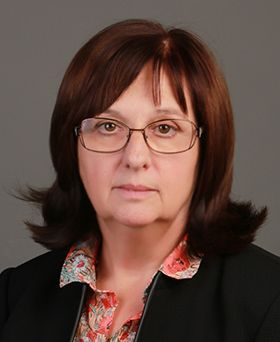
Siobhán Clarke is a Professor at the School of Computer Science and Statistics, Trinity College Dublin, specializing in software systems for smart urban environments . Her work addresses dynamic software adaptation in large-scale, mobile IoT ecosystems , with a focus on QoS optimization and collaborative agent models . Director, Enable : National SFI IoT Research Programme Director, Future Cities Centre for Smart & Sustainable Cities Co-Lead, ADVANCE : SFI Centre for Advanced Networks Co-PI, CONNECT (Future Networks) and Lero (Software Research) Her research spans smart city infrastructure , edge computing , and multi-agent coordination , informed by 15+ years of publications on service-oriented architectures , QoS prediction , and self-adaptive systems . Key project contributions include DIVERSIFY (2016) and TRANSFoRm (2015). Scientific awards include election to the Royal Irish Academy (2023) and a Best Student Paper at IEEE ICWS 2011. She has supervised 20+ PhD/MSc students, including Fan Li (2020: SLA Negotiation Systems), Gary White (2020: IoT QoS Forecasting), and Andrei Palade (2019: Stigmergic Optimization).
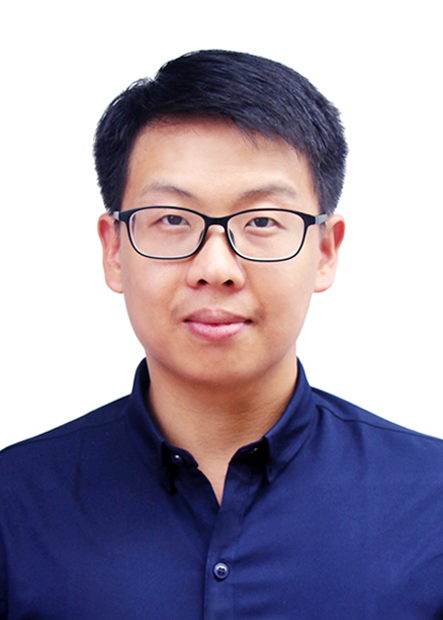
Dr. Li Lei is an Associate Professor and doctoral supervisor in the Department of Materials Science and Engineering at the Southern University of Science and Technology (SUSTech). He holds a BS from the University of Science and Technology of China and a PhD in Chemistry (2016) from the University of Nebraska-Lincoln. From 2016-2020, he conducted postdoctoral research with Prof. Graeme Henkelman at the University of Texas at Austin, where he developed the machine-learning software package PyAMFF. Education : BS (Materials Science, USTC), PhD (Chemistry, UNL) Affiliation : Southern University of Science and Technology, Shenzhen Peacock Plan Category B Talent Research Focus : His work bridges computational method development and catalytic mechanism discovery through: Machine learning algorithms for force field training Long-timescale dynamics simulations of nanomaterials Saddle-point searching methods for reaction pathways Monte Carlo-based catalyst optimization Development of catalytic reaction databases His recent publications in JACS , Nat. Commun. , and ACS Catalysis demonstrate expertise in: Machine learning-enhanced molecular dynamics Electrochemical catalyst design (ORR/OER) in situ reaction mechanism analysis Atomic-scale electrostatic modeling Scientific Contributions : - Led development of PyAMFF machine learning potential framework - Published 27+ SCI papers in top-tier journals - Collaborated with leading computational chemists (Henkelman, Zeng, Francisco) Awards : Shenzhen Peacock Plan Category B Talent Contact : Office: 5th Floor, North Building, College of Engineering, SUSTech Phone: 0755-88015040 Email: lil33@sustech.edu.cn | lei.li@sustech.edu.cn
Katy Jordan is a Lecturer at the School of Social Sciences , Lancaster University. Her work focuses on digital scholarship, educational technology equity, and social media’s role in higher education. She leads research in SMS-based learning solutions and open educational practices. Digital Scholarship Online Learning (formal/informal) Open Education EdTech Equity MOOCs Social Media in Higher Education Her publications examine algorithmic biases in academic searches, SMS learning in low-connectivity contexts, and global EdTech effectiveness. She actively contributes to conferences like OER and Social Media in Higher Education, and serves as an editor for the British Journal of Educational Technology . PhD Students : Xin Liu Laura Riella She is affiliated with the Centre for Technology Enhanced Learning , advancing equitable digital learning solutions.
Sadan Kulturel-Konak is a Professor at the Division of Engineering, Business & Computing at Penn State University (Berks campus). Her research focuses on Innovation Competition , STEM Education , Transformative Learning , and Facility Layout Problems . She has secured multiple National Science Foundation grants for projects exploring innovation ecosystems, experiential learning, and virtual laboratories in information security. Active Grant : Collaborative Research: Fostering Inclusive Pathways in Innovation Ecosystems (2024–2027) Completed Grant : Cultivating Innovative Thinking Skills in STEM Education (2021–2025) Her recent publications emphasize the role of innovation competitions in student development, validation of transformative learning metrics, and integration of AI in educational frameworks. Collaborations with researchers like Abdullah Konak and D. R. Schneider highlight her interdisciplinary work in engineering education and technology.
Marco Schutten is an Associate Professor at the Digital Society Institute of the University of Twente, affiliated with the Industrial Engineering & Business Information Systems department. His work bridges Artificial Intelligence , Transportation , and Operations Research , focusing on optimizing complex systems. Expert in Urban Logistics and Freight Transport Specializes in Mathematical Programming and Optimization Research interests include Vehicle Routing , Machine Scheduling , and Agent-Based Simulation . Key trends in his 15 most recent articles (2015–2025) involve: Dynamic scheduling under time constraints Urban logistics and smart city applications Heuristics for combinatorial optimization Integration of MILP and Simulation models No scientific awards, formal supervisory roles, or part-time appointments are explicitly mentioned.
Anikó Csébfalvi is a full professor at the Department of Civil Engineering, Faculty of Engineering and Information Technology, University of Pécs. She specializes in structural optimization, heuristic methods, and stability analysis of elastic structures, with a focus on discrete and continuous optimization of space trusses. Her research integrates hybrid metaheuristic algorithms, such as ANGEL, for engineering applications in structural design and project scheduling. Education: MSc (1978), PhD (1996), CSc (1996), Habilitation (2011) from institutions including Budapest University of Technology and Economics and the University of Pécs. Research: Structural optimization (sizing-shaping-topology), heuristic modeling, stability analysis, resource-constrained project scheduling, and elastic-plastic collapse constraints. Her 15 most recent articles (2004–2012) demonstrate expertise in hybrid metaheuristics, discrete-continuous truss optimization, and financial engineering. She serves as a thesis supervisor in the Marcell Breuer Doctoral School and collaborates internationally on structural mechanics topics. Scientific contributions include memberships in CEACM, ISSMO, and editorial roles for journals like Pollack Periodica and Structural and Multidisciplinary Optimization .
Vincent Hellendoorn is a Research Scientist at Google DeepMind and an Assistant Professor at Carnegie Mellon University (currently on leave). He works in the School of Computer Science 's Software and Societal Systems Department , developing intelligent tools that leverage AI to democratize programming expertise through code modeling and LLM research. His research focuses on AI applications in software engineering Code language model analysis and training Multi-modal whiteboard-to-code systems Open-source model releases like PolyCoder Current work examines how to make programming more accessible through LLMs, with recent ICSE’25 research exploring whiteboard sketch translation. He advises PhD students including Nikitha Rao (7 papers, Spring 2025 PhD graduate) Luís F. Gomes (ICSE’25 paper lead) and collaborates with researchers like Jonathan Aldrich and Claire Le Goues. Contact: vhellendoorn@cmu.edu vhellendoorn@google.com GitHub: @VHellendoorn
Xin Huang is an Associate Professor in the Department of Computer Science at Hong Kong Baptist University (HKBU), Faculty of Science. He serves as Coordinator of Research Postgraduate Programme (PhD&MPhil) and Coordinator of Programming Contest Teams. His educational background includes: Ph.D. in Systems Engineering and Engineering Management from The Chinese University of Hong Kong (2014) B.Eng. in Computer Science from Xiamen University (2010) Huang's research focuses on innovative technologies for large-scale graph data management and analysis. His work spans graph data management including keyword search and graph indexing, graph mining techniques for summarization and decomposition, community search algorithms, and graph learning approaches including graph neural networks. His research integrates theoretical foundations with practical applications in social network analysis and privacy-aware computing. His publication record shows consistent output in top-tier venues with a clear evolution from foundational graph algorithms to more complex applications involving dynamic and uncertain graphs, reflecting the growing importance of graph analytics in real-world systems. Notable awards include: Best Student Paper Award at ACM/IEEE IWLS 2023 Best Faculty Article Award from Chinese Communication Association (2022) HKBU President's Award for Outstanding Performance as Young Researcher (2021) RGC Early Career Award (2020) Best Paper Award at WISE 2019 Huang actively mentors PhD students and postdoctoral fellows, currently supervising five PhD candidates and four postdocs. His research has been supported by competitive grants including the RGC Early Career Award. He serves as Associate Editor for Data Science and Engineering and World Wide Web Journal, and participates extensively in program committees for major conferences including VLDB, ICDE, and WWW. As part of HKBU's Database Research Group, Huang contributes to a vibrant research environment that has secured over $10 million in research funding and published more than 200 papers in top venues.
Dake Zhang is a faculty member at the David R. Cheriton School of Computer Science, University of Waterloo. His research focuses on reducing health misinformation through search systems, leveraging artificial intelligence and information retrieval techniques to improve online health information quality. Key collaborations with Mark D. Smucker, Amir Vakili Tahami, and Mustafa Abualsaud Active participant in TREC Health Misinformation Tracks (2021-2023) Developed ReadProbe system for lateral reading support using OpenAI models and Bing search His work demonstrates expertise in: Information retrieval systems for health domains Mitigating cognitive biases in search Transformer-based document analysis Automated answer prediction from web sources Search engine credibility modeling Human-AI interaction in information verification
David Lo is the OUB Chair Professor of Computer Science and the founding Director of the Center for Research in Intelligent Software Engineering (RISE) at Singapore Management University. He has held significant leadership roles including General Chair of MSR'22 and ASE'16, and Program Committee Co-Chair for ASE'20, FSE'24, and ICSE'25. Lo has championed the field of AI for Software Engineering (AI4SE) since the mid-2000s, demonstrating how data mining, machine learning, information retrieval, natural language processing, and search-based algorithms can transform software engineering data into actionable insights and automation. His research spans Mining Software Repositories (MSR), large language models for code, software testing, smart contract analysis, and developer tooling. His recent publications reveal a strong focus on the intersection of large language models and software engineering, with particular attention to code generation, evaluation, documentation, and the practical implications of AI tools for developers. His work increasingly addresses economic efficiency, privacy concerns, and human factors in AI-assisted development. Two Test-of-Time awards Eleven ACM SIGSOFT/IEEE TCSE Distinguished Paper awards ACM Fellow IEEE Fellow ASE Fellow National Research Foundation Investigator (Senior Fellow) Lo has supervised numerous students and collaborated extensively across the software engineering community. His work on Mining Software Repositories has led to practical tools and insights that have shaped the field. He regularly contributes to major conferences and has served in leadership roles across ASE, ICSE, and FSE communities. As founding Director of the Center for Research in Intelligent Software Engineering (RISE) at SMU, Lo leads a research group focused on advancing AI techniques for software engineering problems, with emphasis on practical applications that address real developer pain points.
Xiaofei Xie is an Assistant Professor in the School of Computing and Information Systems at Singapore Management University (SMU), where he has been employed since 2022. Prior to this position, he was a postdoctoral researcher at Nanyang Technological University in Singapore from 2018 to 2021. His research primarily focuses on program analysis, software testing, vulnerability detection, and quality assurance of AI systems. SMU is ranked No. 9 (No. 5 in Asia) in the Software Engineering category according to CSRankings. Dr. Xie's research interests span multiple critical areas in software engineering and AI systems. His work on program analysis includes detecting non-termination bugs and developing practical methods like EndWatch for real-world software. In software testing, he has made significant contributions to deep learning systems testing, autonomous driving systems testing, and smart contract security. His research on vulnerability detection encompasses various aspects of AI security, including backdoor attacks, adversarial examples, and security testing for web-based deep learning frameworks. His quality assurance work for AI systems includes developing metrics for robustness evaluation and creating testing methodologies for diverse AI applications. Dr. Xie's publication record shows a strong trend toward integrating large language models with traditional software engineering techniques. His recent work demonstrates increasing focus on testing autonomous systems, securing AI models, and applying advanced machine learning techniques to traditional software engineering problems. The research spans multiple domains including deep learning frameworks, smart contracts, autonomous driving systems, and federated learning environments. Among his notable achievements are multiple ACM SIGSOFT Distinguished Paper Awards (ASE 2019, ASE 2023, ISSTA 2022), the ACM Tianjin Doctoral Dissertation Award 2019, and the Best Paper Award at APSEC 2020. His work has been accepted to top-tier conferences including ICSE, FSE, ASE, ISSTA, and security venues like USENIX Security. Dr. Xie actively serves the academic community as a PC co-chair for ICECCS 2025 and as a program committee member for numerous prestigious conferences including ICSE, FSE, ASE, ISSTA, and AAAI. He has also organized workshops such as the Workshop on AI and Software Testing/Analysis (AISTA) and served as Guest Editor for special issues on AI security. His service demonstrates leadership in bridging software engineering with AI and security research communities.
Alessio Gambi is a Researcher at the Austrian Institute of Technology (AIT) within the Security & Communication Technologies department, specializing in software engineering for autonomous systems. His current work focuses on testing methodologies for self-driving cars, self-adaptive systems, and cloud environments. His research interests center on Software Testing for Autonomous Vehicles , where he develops novel techniques for scenario generation, safety validation, and uncertainty management. Key areas include search-based procedural content generation, simulation-based testing, and the integration of large language models for test learning. His work bridges theoretical advances with practical tools like Flexcrash and TEASER for real-world validation. Analysis of his recent publications (2023-2025) reveals a strong trend toward autonomous vehicle testing with increasing incorporation of AI techniques. Approximately 60% of his work addresses self-driving car validation, 25% focuses on general software testing methodologies, and 15% explores AI/LLM applications in testing. His subfield specialization shows consistent emphasis on critical scenario generation, mixed-traffic simulation, and safety monitoring. Gambi actively contributes to the software engineering community through program committee roles at major conferences including ASE (2023-2025), ICSE (2024-2026), ISSTA (2021-2025), and ESEC/FSE. He has served as session chair, workshop organizer, and track committee member across these venues, demonstrating leadership in software testing research. His professional activities include developing open-source testing tools (visible on GitHub), teaching engagements like the Database Systems course at AIT (2024), and industry collaborations through AIT's research infrastructure. Current projects focus on predictive safety monitoring and uncertainty management for automated driving systems.
Reyhaneh Jabbarvand is an Assistant Professor in the Department of Computer Science at the University of Illinois at Urbana-Champaign, where she leads the Intelligent CAT Lab. Her research focuses on improving software quality, reliability, and maintenance through neuro-symbolic approaches that combine AI techniques with formal methods. Her research interests span Neural Program Analysis, Software Testing (with emphasis on mobile apps and autonomous software), Bug Localization, and Applied Optimization for Software Analysis. She has made significant contributions to the fields of energy testing for Android applications, neuro-symbolic approaches for code analysis, and large language models for software engineering tasks. Dr. Jabbarvand's recent publications reveal strong trends in applying machine learning to software engineering problems, particularly using neuro-symbolic methods to bridge the gap between deep learning and formal program analysis. Her work on code translation, test flakiness, and test oracle generation demonstrates her focus on practical applications of AI in software development workflows. Google PhD Fellowship in Programming Technology and Software Engineering Rising Star in EECS NSF CAREER Award Dr. Jabbarvand has received research funding from multiple sources including NSF, IBM Research, and C3.ai. She actively mentors students through her Intelligent CAT Lab and has served on numerous program committees for major software engineering conferences including ICSE, FSE, and ISSTA. She teaches courses on Advanced Topics in Software Engineering, ML for Code, and Software Engineering I. Her lab focuses on neuro-symbolic approaches to software engineering problems, bringing together PhD, undergraduate, and high school students to tackle challenges in AI-assisted software development and testing.
Dr. Iraklis Klampanos serves as a Senior Lecturer in Data Systems and Data Engineering at the School of Computing Science, University of Glasgow. His academic role centers on advancing research and teaching in data-intensive computing systems within this prestigious institution. His research program spans Information Retrieval , Data Engineering , and Artificial Intelligence , with specialized expertise in peer-to-peer architectures, microblog search optimization, and generative AI interpretability. Key contributions include developing temporal relevance feedback mechanisms for social media search and evaluating distributed retrieval frameworks under realistic conditions. Analysis of his publication trajectory reveals a consistent evolution from foundational work on peer-to-peer testbeds (2003-2007) toward contemporary challenges in AI transparency. His recent 2025 publication on data influence analysis in generative models demonstrates ongoing innovation at the intersection of search technologies and explainable AI. Dr. Klampanos maintains active research collaborations, particularly with Joemon M. Jose, as evidenced by co-authorship across 15+ years of publications in major venues like TREC, TRECVID, and Lecture Notes in Computer Science.
Matthias Hagen is Professor of Databases and Information Systems at Friedrich-Schiller-Universität Jena. His research focuses on information retrieval (query understanding, conversational search, comparative questions, known-item search, user simulation), natural language processing (clickbait, argumentation), and web data mining. He earned his Ph.D. from Friedrich-Schiller-Universität Jena with a thesis on algorithmic complexity, and previously led research groups at Bauhaus-Universität Weimar and Martin-Luther-Universität Halle-Wittenberg. His current work develops novel methods for retrieval-augmented generation evaluation, neural information retrieval efficiency, and user-centered search systems. Recent publications examine crowdsourcing for RAG evaluation, LLM-based relevance assessment, corpus subsampling techniques, and child-friendly web search evaluation frameworks. He contributes to open web search initiatives and develops tools like the TIREx Tracker for experimental reproducibility in IR research. Dr. Hagen serves on program committees for major conferences including SIGIR, ECIR, and ACL. His research group participates in competitive evaluations such as TREC, CLEF, and Touché. Recent projects explore axiomatic approaches to retrieval, argumentation systems, and the impact of search result quality on decision-making.