
Michael Zaggl is a Full Professor at NEOMA Business School, specializing in Strategy & Entrepreneurship. He holds a Habilitation from TU Munich, a PhD from TU Hamburg, and degrees from the University of Koblenz. Previously, he served in tenured roles at Aarhus University and held visiting positions at Harvard, USC, and other institutions. His research focuses on digital innovation, crowdsourcing, and data-driven decision-making, with publications in top journals like Strategic Management Journal and Academy of Management Discoveries . He is an active member of professional organizations such as the Academy of Management and Association for Information Systems. Educations: Habilitation (TU Munich), PhD (TU Hamburg), Master's & Bachelor's (University of Koblenz). His research interests span digital innovation , crowdsourcing mechanisms , and open-source governance , with notable contributions to understanding distributed strategic search and organizational decision-making. Recent work examines crowdfunding dynamics , AI-human collaboration , and privacy calculus in mHealth . His articles analyze topics like crowd wisdom optimization and hierarchical biases in idea evaluation , reflecting a focus on practical applications for organizations. He has presented at leading conferences, including the Academy of Management and Hawaii International Conference on System Sciences.
جستجوی استاد راهنمای دانشگاهی
برای مسیر پژوهشیتان، استاد راهنما، استاد دانشگاه و پژوهشگر مناسب را پیدا کنید و با آنها ارتباط بگیرید.
نمایش ۷۰۶-۷۲۰ از ۴٬۴۶۶ استاد راهنما
اطلاعات پروفایلها از صفحات عمومی دانشگاهها گرفته شده و ممکن است بهروز نباشد.
Matthew Szydagis is an Associate Professor in the Department of Physics at the University at Albany, State University of New York, where he conducts cutting-edge research in experimental astroparticle physics with a focus on dark matter detection. Education: PhD, University of Chicago, 2010 Postdoctoral Associate, University of California Davis, 2010-2014 Dr. Szydagis leads research efforts centered around the LZ (LUX-ZEPLIN) Dark Matter Experiment, the world's largest direct dark matter search project operating at the Sanford Underground Research Facility. His expertise lies in the physics of two-phase Xenon time-projection chambers and the development of sophisticated Monte Carlo simulation techniques to understand detector responses. In 2011, he created the NEST (Noble Element Simulation Technique) software package, which has become an essential tool for the broader scientific community working with noble element detectors. His research spans multiple disciplines including particle physics, astrophysics, and computational physics, with applications extending beyond dark matter research into neutrino physics and medical physics. Dr. Szydagis is an active member of the international LZ collaboration and leads the Dark Matter Research Group at the University at Albany. His work contributes significantly to establishing the world's most sensitive limits on dark matter interactions across a wide range of particle masses.
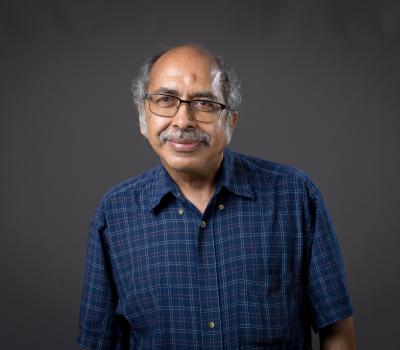
Prasad Tadepalli is a Professor in the School of Electrical Engineering and Computer Science at Oregon State University, serving as the AI Graduate Program Director. He is affiliated with the Collaborative Robotics and Intelligent Systems Institute. His expertise spans artificial intelligence, machine learning, reinforcement learning, and automated planning, with impactful contributions to explainable AI and natural language processing. Tadepalli holds a Ph.D. from Rutgers University and M.Tech/B.Tech degrees from Indian institutions. He has authored over 100 papers, organized international conferences, and received awards such as the AAAI Outstanding Paper Award (2013) and ICAPS Best Student Paper (2009). Education: Ph.D. (Rutgers University, 1990), M.Tech (IIT Madras, 1981), B.Tech (Regional Engineering College, 1979) His research focuses on advancing AI through techniques like relational planning, reinforcement learning, and interpretable models. Recent work includes integrating planning and RL for multiagent systems and developing explainable models via tree ensemble compression. His articles highlight contributions to time-series imputation, adversarial attacks on bandits, and chess rating estimation using CNN-LSTM networks. Awards: AAAI Outstanding Paper Award (2013), ICAPS Best Student Paper (2009) Tadepalli emphasizes independent thinking in students and has advised numerous researchers. His work bridges theoretical AI with practical applications, such as robotics and data-driven decision-making.
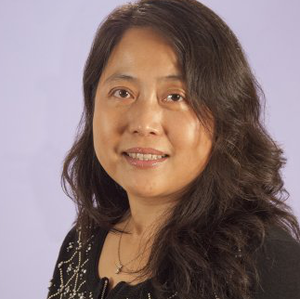
Xiaojun Yuanمشاهده پروفایل
دانشیار
Xiaojun (Jenny) Yuan is an Associate Professor at the University at Albany, State University of New York, within the College of Emergency Preparedness, Homeland Security, and Cybersecurity. Her research focuses on Human-Computer Interaction (HCI) and Information Retrieval, emphasizing user interface design and human information behavior. She has secured grants from institutions like the Institute of Museum and Library Services and the New York State Education Department. Dr. Yuan holds a Ph.D. from Rutgers University and the Chinese Academy of Sciences, alongside advanced degrees in Statistics and Computer Science. She actively contributes to professional committees (e.g., ACM SIGIR, ASIS&T) and editorial boards, including the Aslib Journal of Information Management and Annual Review of Information Science and Technology . Her work addresses technology accessibility, pandemic response systems, and inclusive design for marginalized populations. Her research spans decades, with notable contributions to voice search optimization, cultural aspects of interface design, and technology adoption patterns during crises. Recent studies investigate algorithmic fairness, privacy concerns in aging populations, and pandemic-era educational technology. Dr. Yuan's interdisciplinary approach bridges computer science, sociology, and public health to tackle real-world challenges like health equity and emergency preparedness. Grants: Institute of Museum and Library Services, SUNY Seed Grant, NY State Education Department Editorial Roles: Aslib Journal of Information Management, Annual Review of Information Science and Technology Professional Memberships: ASIS&T, ACM, IEEE Her publications highlight trends in conversational search systems, gamified learning tools, and the societal impacts of AI. Ongoing research explores culturally responsive keyboard designs and pandemic data visualization for underrepresented groups.

Qianru Sunمشاهده پروفایل
پژوهشگر ارشد
- Computer Vision
- Machine Learning
- Image Generation
- +۳ مورد دیگر
Qianru Sun is a Joint Research Fellow jointly appointed at National University of Singapore (NUS) and the Max Planck Institute for Informatics (MPI-INF) since April 2018. Previously she was a Post-doc Researcher at MPI-INF (2016–2018) supported by the prestigious Lise Meitner Award Fellowship. Education: Ph.D. in Computer Science, Peking University (PKU), 2010–2016 (top 10%) B.S. in Electronic Engineering, Nanjing University of Posts and Telecommunications (NUPT), 2006–2010 (rank 1/77) Exchange student, The University of Tokyo, Oct 2014 – Jan 2015 Research Interests: Dr Sun’s research lies at the intersection of computer vision and machine learning , with a strong focus on few-shot learning , meta-learning , transfer learning , image generation and image classification . She designs algorithms that enable machines to learn new visual concepts with minimal supervision, explores adversarial robustness, and develops transferable representations for cross-domain tasks. Scientific Awards & Honors: Lise Meitner Award Fellowship, Max Planck Institute for Informatics (2016) Professional Service & Community Contributions: Dr Sun actively contributes to the research community through program-committee memberships and editorial roles: Program Committee: ICCV 2019, CVPR 2018, ICCV 2017 Workshop PC: CV-COPS (CVPR 2018), CEFRL (ECCV 2018), WiCV (CVPR 2019, ECCV 2018) Editorial Board: CAAI Transactions on Intelligence Technology Reviewer: IEEE TPAMI, TMM, TCSVT, IJCV Invited speaker: Columbia University (DVMM), CVPR ODAR Workshop, Joint Lecture Series (MPI & Saarland University) Tutorial presenter: ICMR 2018 (Japan)
Emmanouil Zachariadis serves as an Associate Professor at the Department of Management Science and Technology (DMST) within the School of Business at Athens University of Economics and Business (AUEB). He specializes in operational research and computational optimization, focusing on transportation logistics, supply chain systems, and environmental impact minimization. Education : BSc in Chemical Engineering from National Technical University of Athens (NTUA) MSc in Computing Science from Imperial College London PhD in Chemical Engineering from NTUA His research integrates mathematical programming with optimization algorithms for operational challenges in transportation and production systems. He has published 26 articles in top-tier journals, accumulating over 1200 Scopus citations by June 2024. Recent scholarly trends emphasize vehicle routing problems with complex constraints (cross-docking, loading, time windows) and optimization methods for logistics sustainability. His work spans production-routing integration, emergency evacuation planning (EVITA project), and hybrid metaheuristics. Scientific Awards : Teaching excellence award for undergraduate course 'Optimization Methods in Management Science', Dept. of Management Science & Technology AUEB (2021-22) Teaching excellence awards for postgraduate course 'Large Scale Optimization', MSc in Business Analytics AUEB (2020-21, 2021-22, 2022-23) He has participated in European and National research projects, applying his expertise in supply chain optimization and sustainability. His teaching portfolio covers quantitative methods, operational research, and supply chain optimization at both undergraduate and postgraduate levels.

- Machine Learning
- Fuzzy Sets
- Rough Sets
- +۳ مورد دیگر
Chris Cornelis is a full-time Professor in fuzziness and uncertainty modelling at Ghent University's Department of Applied Mathematics, Computer Science and Statistics. His research integrates fuzzy logic and rough set theory to advance machine learning methodologies for complex data analysis. Education: M.Sc. in Computer Science, Ghent University (2000) Ph.D. in Computer Science, Ghent University (2004) Research Focus: Cornelis pioneers fuzzy-rough hybrid systems for uncertainty handling in machine learning. His work spans theoretical foundations (e.g., implication operators, granular approximations) and practical applications including emotion detection, medical diagnosis, and imbalanced data classification. Key innovations include FRNN-OWA classifiers and polar encoding for missing values, demonstrating exceptional versatility in bridging abstract mathematics with real-world AI challenges. Publication Trends: Recent work (2023-2025) reveals intensified exploration of topological data analysis (Mapper-based rough sets), advanced granular computing (disjoint/adjacent fuzzy granules), and ethical AI ("No Imputation Without Representation"). His research shows consistent progression from foundational fuzzy-rough theory toward multi-disciplinary applications while maintaining mathematical rigor, particularly in Choquet integration and quantifier-based frameworks. Scientific Awards: No specific awards were documented in the provided sources. Research Support: Cornelis has secured competitive funding including FWO postdoctoral mandates, a Ramón y Cajal contract at the University of Granada, and an FWO Odysseus Type II project at Ghent University. These grants enabled foundational work in fuzzy-rough set theory and its applications to complex data problems. Research Unit: He leads research within Ghent University's Computational Web Intelligence (CWI) unit, focusing on intelligent data analysis systems that leverage fuzzy-rough methodologies for web-scale information processing.
Tahsin Rezaمشاهده پروفایل
استادیار
Tahsin Reza is an Assistant Professor at the University of Waterloo, affiliated with the Faculty as a full-time member. His research focuses on high-performance computing, distributed systems, and large-scale graph processing. His work emphasizes algorithmic optimization for irregular parallelism, distributed approximation algorithms, and efficient handling of massive graphs with billions of edges. Key research interests include developing frameworks like YGM for HPC, HyGN for NUMA architectures, and tools such as PruneJuice for graph pruning. His contributions span graph algorithms for Steiner trees, temporal graphs, and metadata-driven pattern matching. He has extensively explored GPU and hybrid CPU-GPU systems to accelerate graph processing tasks in domains like InSAR data analysis and VANET tracking. No scientific awards or grants are explicitly mentioned in the provided materials. His work has been published in top venues, consistently addressing challenges in scalability, efficiency, and real-world applicability of graph-based solutions.

- Cognitive Neuroscience
- Visual Cognition
- Attention
- +۵ مورد دیگر
Stephen Mitroff is a Professor of Cognitive Neuroscience at George Washington University’s Department of Psychological and Brain Sciences. He leads the Visual Cognition Lab, focusing on mechanisms of visual memory, perception, and attention. Prior to GW, he held faculty positions at Duke University (2005–2015) after completing postdoctoral research at Yale and a Ph.D. in Cognitive Psychology from Harvard University. His research emphasizes individual differences in visual search performance, leveraging big data from smartphone apps and professional populations like radiologists and TSA officers. Education: Ph.D. in Cognitive Psychology (Harvard, 2002), B.A. in Cognitive Science (UC Berkeley). Research explores how individual traits, training, and environmental factors influence visual cognition. Recent work includes pandemic-related mental health impacts, error dynamics in decision-making, and optimizing visual search for real-world applications. The lab employs innovative methodologies such as consistency-based training protocols and drift-diffusion modeling to dissect cognitive processes. Advising and grants: While specific grant details are not provided, his work has been supported by industry-academic partnerships, particularly in aviation security and medical diagnostics. The Visual Cognition Lab collaborates with professional groups to translate research into practical tools like sports vision training and baggage screening assessments. Labs/Teams: Principal Investigator of the GW Visual Cognition Lab, which integrates computational modeling with behavioral experiments to address applied cognitive science challenges.
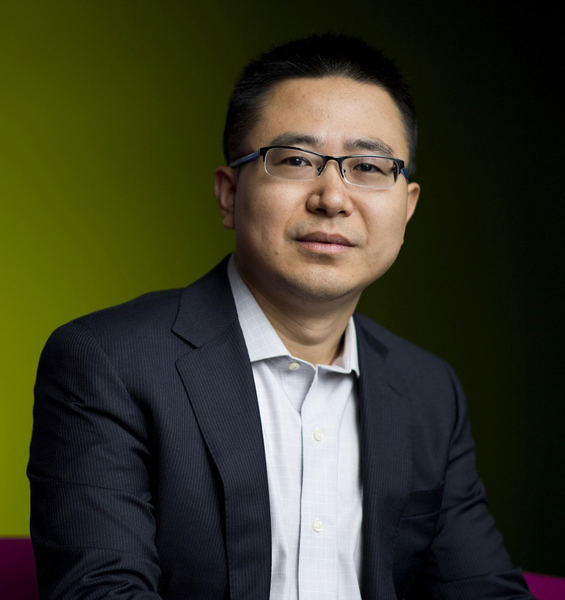
Yun Fuمشاهده پروفایل
استاد
Yun Fu is a tenured Professor in the Department of Electrical and Computer Engineering at Northeastern University, with a joint appointment in the Khoury College of Computer Science. He has established himself as a leading researcher in Artificial Intelligence, with over 500 publications in top-tier venues including IEEE/ACM transactions and major AI conferences. His work spans both theoretical foundations and practical applications, with significant impact in computer vision and machine learning. Professor Fu earned his Ph.D. in Electrical and Computer Engineering from the University of Illinois at Urbana-Champaign. His academic career progressed from Assistant Professor at SUNY Buffalo to his current position as tenured Professor at Northeastern University, where he has held appointments since 2012. His educational background includes a Beckman Graduate Fellowship at UIUC (2007-2008). His research focuses on advancing Artificial Intelligence with particular emphasis on Computer Vision, Pattern Recognition, and Machine Learning. His seminal work includes the "Residual Dense Network for Image Super-Resolution" presented at CVPR 2018, which was ranked among the Top 10 Most Influential CVPR papers. His research interests span image processing, anomaly detection, multimodal learning, and trajectory prediction, with applications ranging from healthcare to consumer technology. Analysis of his recent publications reveals a strong trend toward developing efficient and robust AI systems that bridge computer vision with language understanding. His work increasingly focuses on multimodal learning, trajectory prediction for multi-agent systems, anomaly detection in complex environments, and model validation techniques for black-box systems, while maintaining practical applications in real-world scenarios. Professor Fu's extensive recognition includes: Fellow of IEEE (2018), OSA (2019), SPIE (2018), IAPR (2016), AAIA (2021), and AAAI (2025) Member of Academia Europaea (2022) and European Academy of Sciences and Arts (2023) Fellow of National Academy of Inventors (2023) Multiple Young Investigator Awards from NAE, ONR, ARO, IEEE, ACM, and INNS 12 Best Paper Awards from major conferences Industrial Research Awards from Google, Amazon, Samsung, JPMorgan, and others Professor Fu has successfully mentored numerous Ph.D. students who now hold prominent positions in academia and industry at institutions including Amazon, Microsoft, Meta, Adobe, and major universities. His entrepreneurial ventures include founding Giaran (acquired by Shiseido in 2017) and co-founding TVision Insights, demonstrating his commitment to translating research into real-world impact. He has secured significant research funding from both government agencies and industry partners. As the PI and Founding Director of the SmiLe Lab at Northeastern University, Professor Fu leads a dynamic research group focused on advancing the state-of-the-art in AI and Computer Vision. The lab fosters interdisciplinary collaboration across computer science, electrical engineering, and applied mathematics, with ongoing projects in efficient deep learning, multimodal understanding, and practical AI applications.

Professor Sang-Woo Jun is a leading researcher in systems and software for big data analytics, focusing on FPGA-based hardware acceleration and non-volatile memory (NVM) storage. His work spans applications such as graph analytics and bioinformatics, with a strong emphasis on cost-effective, high-performance computing architectures. He advises PhD students like Shengquan Ni and Yicong Huang, both of whom have achieved notable milestones (e.g., thesis defense, fellowship awards). Research Interests: Hardware Acceleration for Big Data FPGA-Based System Architectures Non-Volatile Memory Systems Graph Analytics and Bioinformatics Edge Computing and Low-Power Systems Recent Contributions: His articles highlight innovations in edge accelerators (e.g., IceSpy, Eciton), genomics acceleration (Bancroft), and scalable graph processing (Durin, Sting). These works emphasize reconfigurable systems, privacy-preserving techniques, and energy-efficient designs. Lab & Team: As part of the Intelligent Systems Group (ISG), he collaborates on events like the Southern California Database Day. His research bridges hardware-software co-design with real-world applications in IoT, environmental monitoring, and genomics.

Fabio Crestani is a Full Professor of Informatics at the Università della Svizzera italiana (USI) since 2007, serving as Pro-rector for Internationalisation since March 2024. He previously held roles at the University of Strathclyde (UK) and conducted sabbaticals at institutions like UC Berkeley and Xerox PARC. His expertise spans Information Retrieval, Text Mining, and Digital Libraries, with over 250 publications and editorial leadership roles, including Editor-in-Chief of Information Processing and Management (2008–2015). Education: PhD and MSc in Computing Science, University of Glasgow (UK) Degree in Statistics, University of Padova (Italy) Research Interests: Advanced information access systems Conversational search and user interaction models Machine learning for text analysis Early risk prediction (e.g., mental health via social media) Grants & Collaborations: Funded by Swiss National Science Foundation, Hasler Stiftung, and EU projects. Collaborations with institutions in UK, Italy, Spain, USA, and Malaysia. Labs & Teams: Lead the Information Retrieval Group at USI, which focuses on distributed IR, personalization, and mobile information access. The group includes 10+ researchers and has produced influential work in top-tier venues like SIGIR and ACL.
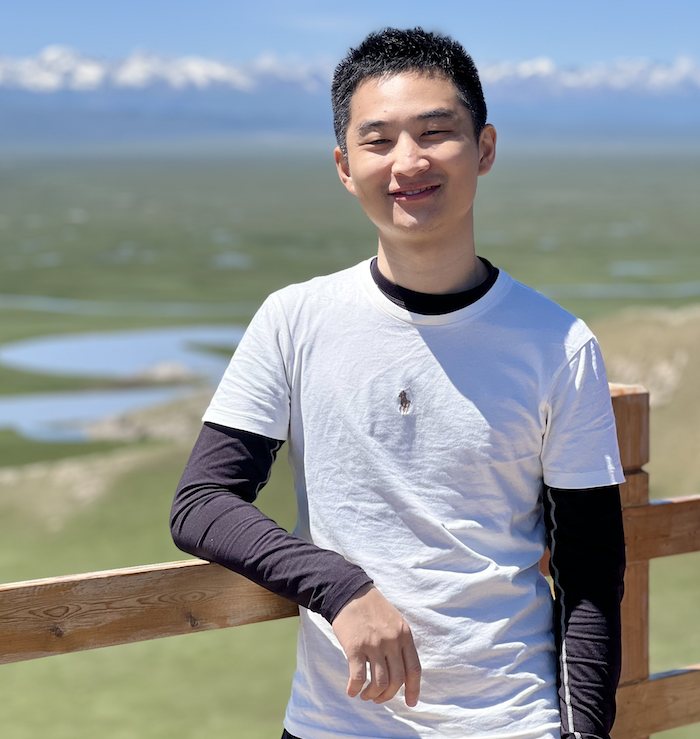
Bowen Xuمشاهده پروفایل
استادیار
- Software Engineering
- Machine Learning
- Program Analysis
- +۱۲ مورد دیگر
Bowen Xu is an Assistant Professor in the Department of Computer Science at North Carolina State University (NC State), College of Engineering. His research focuses on software engineering, machine learning, and program analysis, particularly in securing AI models and improving code quality. He holds a PhD from Singapore Management University (SMU), where he also conducted postdoctoral research. Education: PhD in Computer Science, Singapore Management University (SMU) Postdoctoral Researcher, SMU School of Computing and Information Systems Research Interests: AI for Code, Backdoor Attacks on Code Models, Vulnerability Detection Code Representation Learning, Model Compression, Safety of AI Systems Chatbot Development for Developers, Automatic Code Review Key Contributions: Developed PTM4Tag+, a Stack Overflow tag recommendation system using pre-trained models Explored stealthy backdoor attacks in code and reinforcement learning systems Pioneered work on automatic vulnerability repair using LLMs and broader input analysis Awards: 2022: Honorable Mention Award (ACSAC) 2018: Highly Commended Full Paper Award (ESEM) Service Roles: Editorial Board Member, Empirical Software Engineering Journal Program Committee Co-chair for ICSE/FSE Research Tracks Organized workshops like FORGE, MaLTeSQuE, and SEA4DQ Labs & Teams: Leads the Softmax Lab at NC State, advising 12+ students across PhD, Master's, and undergraduate levels. Alumni include industry professionals at Microsoft, Barclays, and Marvell Semiconductor.

- Optimization
- Optimal Control
- Control Systems
- +۵ مورد دیگر
Prof. Dr. Christof Büskens is a Professor of Technomathematics at the University of Bremen, leading the AG Optimierung und Optimale Steuerung (Optimization and Optimal Control Group) within the Faculty of Mathematics and Computer Science . His research focuses on Optimization, Optimal Control, and their applications in industrial and real-time systems. He holds leadership roles in interdisciplinary projects such as BESTVILLE and Safety Control Center for autonomous vehicle systems, and has contributed to maritime navigation, renewable energy management, and agricultural robotics. Büskens has supervised numerous PhD and master's students, advancing topics like autonomous exploration, neural architecture search, and trajectory optimization. His work integrates advanced numerical methods with practical applications, emphasizing real-world problem-solving in dynamic systems. Key affiliations include the ZeTeM (Center for Industrial Mathematics) and collaborations with industry partners. He has led over 20 projects since 2020, addressing challenges in autonomous systems, energy systems, and robotics. His educational contributions include courses on numerical analysis and optimal control, fostering interdisciplinary training for future researchers. Büskens' expertise bridges theoretical optimization and applied engineering, with over 100 publications and contributions to software tools like the WORHP solver.

- Automata Theory
- Game Theory
- Formal Verification
- +۱۲ مورد دیگر
Sven Schewe is a Professor in the Department of Computer Science at the University of Liverpool, affiliated with the School of Electrical Engineering, Electronics and Computer Science. He leads the AI Section and is a founding member and former leader of the Verification Group. He also has secondary affiliations with the Algorithms, Complexity Theory and Optimisation Group and the Institute for Risk and Uncertainty. Research Interests: His research centers on automata theory and game theory, particularly their applications in the verification and synthesis of reactive and safety-critical systems. He investigates infinite-duration games, automata over infinite words and trees, and develops algorithms and tools for automated verification, synthesis, and learning of optimal control strategies. His work extends to reinforcement learning with formal guarantees, cyber-physical systems, and AI safety. Recent Research Trends: His recent publications demonstrate a strong integration of formal methods with machine learning, particularly in adversarial training, neural network robustness, and model-free reinforcement learning under omega-regular objectives. He also applies formal reasoning to interdisciplinary domains such as chemical space exploration and materials science. Scientific Awards: Finalist for the ERCIM Cor Baayen Award 2010 Dr. Eduard Martin Preis 2009 GI Dissertation Award 2008 Advising and Grants: He actively supervises numerous PhD students and postdoctoral researchers. He is Principal Investigator (PI) or Co-Investigator (CI) on multiple major grants, including EPSRC Programme Grants, Royal Society Fellowships, and Horizon Europe projects. His funded research spans topics such as game theory, verification, synthesis, reinforcement learning, and risk analysis. He has hosted visiting researchers and collaborated internationally with institutions in Germany, France, India, Taiwan, and the US. Labs and Teams: He co-founded and led the Verification Group and previously led the AI Section at the University of Liverpool. These groups focus on formal methods, automata, games, and their applications in AI and safety-critical systems.
نمایش نتایج تا ۷۵۰ مورد اول. برای یافتن نتایج دقیقتر، جستجوی خود را با فیلترها محدود کنید.