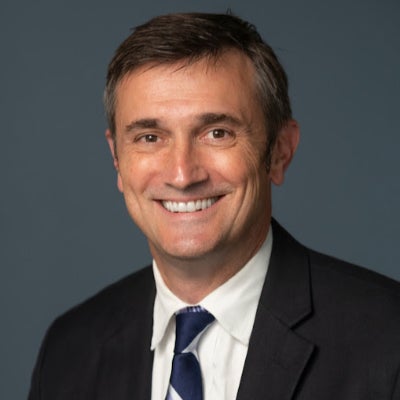
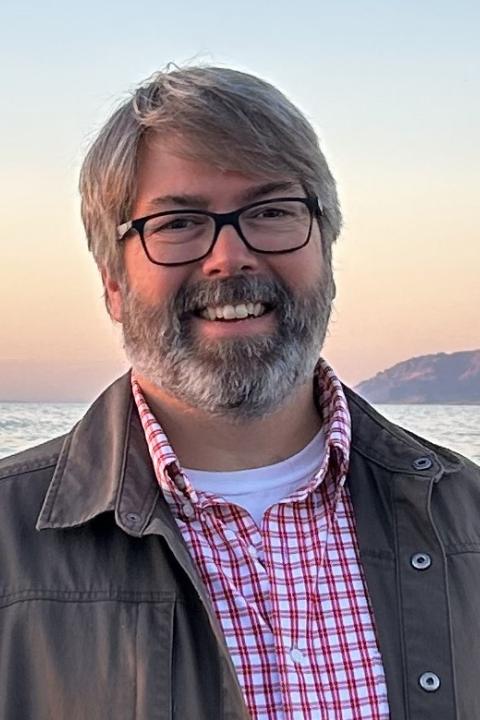
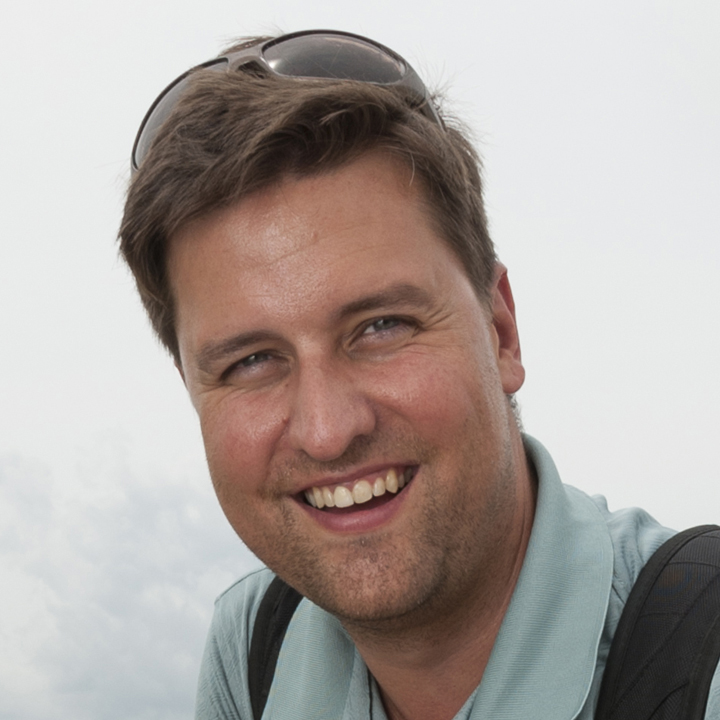
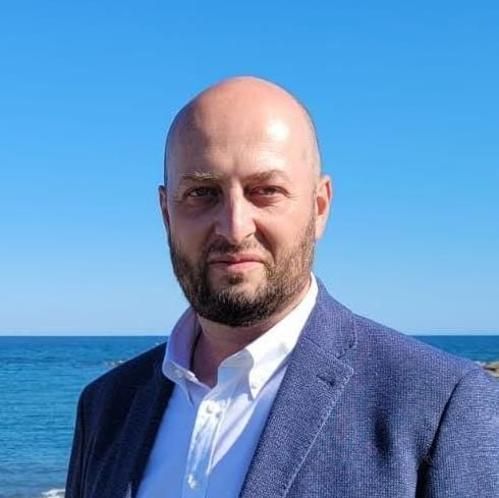
Christopher D.P. Baxter is a Professor and Department Chair of Civil and Environmental Engineering at the College of Engineering, University of Rhode Island , with expertise in geotechnical engineering, offshore wind energy, and coastal resilience. He holds a Ph.D. in Civil Engineering from Virginia Tech (1999), an M.S. from Purdue University (1994), and a B.S. from Tufts University (1990). Research Focus: Geotechnical characterization of marine sediments, liquefaction resistance analysis, fiber-optic sensing for infrastructure monitoring, and coastal protection systems. Recent Publications: 15+ articles (2011–2025) covering topics like shear wave velocity, offshore wind foundation dynamics, and tsunami hazard modeling. Grants: Led projects on offshore wind monitoring (2019–2024) and fiber-optic seismic sensing (2021–2023). Key Collaborations: Work with teams on submarine landslide analysis, coastal dune reinforcement, and Rhode Island infrastructure resilience. His work bridges experimental geomechanics with practical coastal engineering solutions.
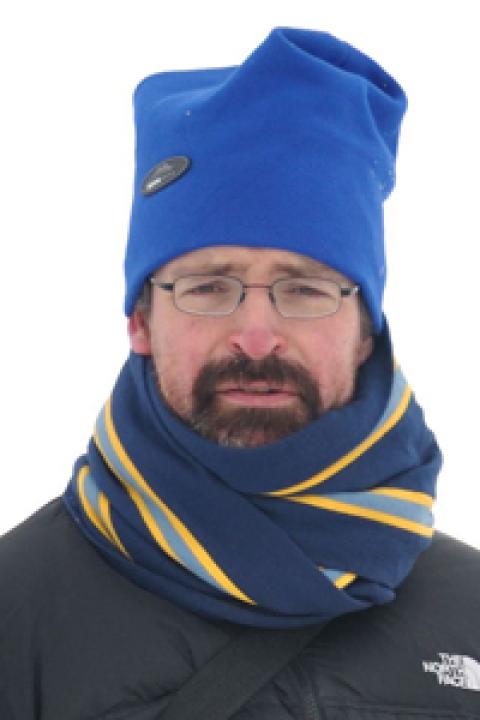
Brian Calder is a Research Professor at the Center for Coastal and Ocean Mapping, University of New Hampshire, with a strong affiliation in Ocean Engineering and Earth Sciences. He holds a Ph.D. and M.S. in Image Analysis and Electronics Communications Engineering from Heriot-Watt University. His academic work is centered on advanced methods in seafloor characterization and hydrographic data processing. Ph.D., Image Analysis, Heriot-Watt University M.S., Electronics Communications Eng, Heriot-Watt University His research focuses on the development and application of computational techniques for seabed mapping, bathymetric uncertainty modeling, and autonomous ocean sensing. He integrates machine learning, signal processing, and remote sensing to improve the accuracy and reliability of marine geospatial data. His work supports navigation safety, coastal zone management, and deep-ocean exploration. Recent publications highlight trends in automated nautical chart generalization, trusted community bathymetry systems, and wireless ocean-of-things networks for volunteer data collection. His article portfolio reveals a strong emphasis on data quality, uncertainty quantification, and algorithmic innovation in hydrography and marine geodesy. Brian Calder has received multiple research grants, primarily from NOAA and the U.S. Navy, supporting projects such as IT support for NOAA personnel at UNH, development of bathymetric uncertainty models, and autonomous mapping using Saildrone technology. These grants reflect sustained funding and recognition in the field of hydrographic science. He teaches graduate courses including Seafloor Characterization , Seabed Mapping , and Doctoral Research , indicating active mentorship and academic leadership. His work is conducted within the Center for Coastal and Ocean Mapping, a leading institution in hydrographic research, where he collaborates extensively with experts like Yuri Rzhanov, Larry Mayer, and Christos Kastrisios.
YING-TSONG LIN is an Acting Professor at the Scripps Institution of Oceanography (SIO), UC San Diego. His research focuses on applied ocean sciences, autonomous ocean platforms, internal waves, ocean acoustics, and instrumentation. He leads projects like the New England Shelf Break Acoustics (NESBA) experiment, emphasizing real-time acoustic modeling and environmental interactions. Research interests include 3D acoustic propagation modeling, ocean mixing dynamics, and seabed characterization. His work integrates high-performance computing and distributed sensor networks for oceanographic studies. Recent studies address underwater explosions, renewable energy impacts, and vessel localization using acoustic coherence. Publications emphasize advancements in hydroacoustic modeling, seabed inversion techniques, and environmental asymmetry effects. His contributions span interdisciplinary areas like bioacoustics and seismic-to-acoustic wave conversions. Labs/Teams: Involved with SIO's Acoustics and Oceanography research groups, focusing on autonomous platforms and global observing systems.
Dr. Karim Sabra is a Professor at the George W. Woodruff School of Mechanical Engineering , Georgia Institute of Technology, specializing in Acoustics and Dynamics . He holds a Ph.D. from the University of Michigan (2003) and joined Georgia Tech in 2007 as an Assistant Professor. His research integrates theoretical and experimental approaches to study wave propagation in diverse fields including structural health monitoring, biomechanics, and ocean acoustics. Key areas of focus include passive imaging techniques using ambient noise and diffuse wave fields, with applications in non-invasive monitoring of mechanical systems and seismoacoustic environments. Education: Ph.D., University of Michigan, 2003 M.S., University of Michigan, 2000 M.Sc., École Nationale Supérieure de Techniques Avancées (France), 2000 Research Interests: Dr. Sabra’s work spans acoustics, structural health monitoring, biomechanical systems evaluation, underwater acoustics, and geophysics . Recent projects include developing passive elastography techniques for soft tissues using physiological vibrations and exploring ambient noise-based tomography for ocean environments. His interdisciplinary approach bridges multi-scale engineering challenges with multi-wave tools (acoustical, electrical, optical). Publications: His work focuses on advanced acoustic technologies, including underwater communication systems, passive acoustic identification tags, and ray-based tomography methods. Themes include seamount effects on sound propagation, machine learning for acoustic modeling, and environmental sensing using shipping noise. Awards: R. Bruce Lindsay Award (2011) Fellow of the Acoustical Society of America (2007) Institute of Acoustics A.B. Wood Medal (2009) Advising & Grants: Dr. Sabra mentors graduate students in acoustics and wave phenomena, emphasizing interdisciplinary collaboration. His research is supported by grants focused on underwater acoustics, environmental sensing, and biomedical applications. Labs/Teams: His research group develops novel sensors and algorithms for oceanographic and biomedical applications, collaborating with industry and academic partners.
Joel Johnson is a Professor in the Department of Earth Sciences at the University of New Hampshire. He teaches courses in Earth History, Structural Geology, Sedimentology, Geotectonics, Geological Oceanography, and research-focused classes. With a Ph.D. in Geological Oceanography from Oregon State University and an M.S. in Structural Geology & Tectonics from the University of Illinois at Urbana-Champaign, his research spans gas hydrate systems, sedimentology, and methane cycling in marine environments. Ph.D., Geological Oceanography, Oregon State University M.S., Structural Geology & Tectonics, University of Illinois at Urbana-Champaign B.S., Geology, University of Minnesota Duluth His work examines gas hydrate dynamics in settings like Hydrate Ridge (Cascadia margin) and Svyatogor Ridge (Fram Strait), focusing on crustal processes , fluid flow mechanisms , and authigenic carbonate formation . Studies in the Gulf of Mexico and Indian continental margins analyze hydrate accumulation controls, while Arctic lake research explores methane emission temperature sensitivity and microbial influences . Collaborative projects include 3D seismic analysis , tectonic stress modeling , and monsoon-driven sedimentation in the Bay of Bengal and Andaman Sea. Recent publications highlight earthquake-enhanced carbon cycling in deep sediments (2023), primary deposition controls on gas hydrate reservoirs (2022), and crustal-scale methane systems in Arctic regions (2022). His 15 most recent articles span 2023-2014, emphasizing gas hydrate systems , methane seepage , sedimentary diagenesis , and tectonic influences on fluid flow. Subfields include authigenic carbonate formation , 3D seismic imaging , isotopic geochemistry , and late Quaternary climate reconstructions . Contact: Joel.Johnson@unh.edu
Klaus Wallmann is a Professor and Head of the Research Unit Marine Geosystems at GEOMAR Helmholtz Centre for Ocean Research Kiel and the Christian-Albrechts-University (CAU) Kiel. His research focuses on marine biogeochemistry, particularly gas hydrates, fluid flow, nutrient cycling, and the geochemical evolution of oceans and atmosphere. He leads major research initiatives including the Cluster of Excellence 'The Future Ocean' and coordinates EU projects such as MIGRATE and GEOSTOR. Dipl. Chemistry, Philipps University of Marburg (1986) Dr. Ing., TU Hamburg-Harburg (1990) PD Dr. habil (Geosciences), CAU Kiel (1999) His research interests center on marine biogeochemical processes, including the microbial degradation of organic matter, gas hydrate formation, nutrient recycling, isotopic trends in marine carbonates, and numerical modeling of ocean-atmosphere evolution. He investigates cold seeps, mud volcanoes, and subduction zones to understand volatile cycling and seafloor dynamics. His recent publications reveal a strong focus on carbon cycling and climate mitigation, particularly through sub-seabed CO₂ storage, seafloor alkalinity enhancement, and the impact of anthropogenic activities on marine carbon storage. His work combines field observations, experimental data, and advanced numerical models to explore long-term geochemical trends and modern environmental challenges. Scholarship from the Evangelical Study Foundation, Haus Villigst (1982–1986) Wallmann has supervised numerous students and collaborators, contributing to major discoveries in marine methane dynamics, gas hydrate systems, and ocean deoxygenation. His research is supported by extensive fieldwork, ocean expeditions, and leadership in collaborative programs such as SFB 574 and SFB 754. He has played a central role in assessing the environmental impacts of CO₂ storage and natural gas hydrate exploitation. He leads research in marine geosystems at GEOMAR, focusing on biogeochemical feedbacks, fluid-sediment interactions, and climate-relevant gas cycling. His team integrates geochemical data, isotopic analyses, and modeling to study processes from molecular to global scales.
Arthur Trembanis is a Professor at the School of Marine Science & Policy at the University of Delaware , where he conducts interdisciplinary research in coastal and marine geoscience. His work bridges oceanography, sediment dynamics, and autonomous systems, with a focus on understanding coastal morphodynamics, hydrodynamics, and seafloor mapping. Coastal & Estuarine Morphodynamics Sediment Transport Modeling Autonomous Underwater Vehicles (AUVs) Seafloor Mapping & Geoacoustics Trembanis leads the Coastal Sediments, Hydrodynamics, and Engineering Lab (CSHEL) , which explores the intersection of marine technology and environmental science. His recent publications highlight advancements in AI-driven seafloor mapping, autonomous survey platforms, and coastal response to extreme weather. He is also active in open-source tools for geological feature detection and educational outreach. The 15 most recent papers reflect trends in machine learning for coastal geology (e.g., AI for Carolina Bay detection), autonomous robotics in marine surveys, and storm impact analysis on coastal systems. Key subfields include LiDAR processing, bedform dynamics, and multi-platform data integration for environmental monitoring. Fulbright Fellowship (University of Sydney) SERDP Project MR20-1480 (Munition mobility in estuarine environments) Follow his work via the CSHEL website , Instagram , or YouTube for fieldwork and lab updates.
Matthias Haeckel is a Senior Scientist at the GEOMAR Helmholtz Centre for Ocean Research in Kiel, Germany, affiliated with the Research Division 2: Marine Biogeochemistry and the research unit Marine Geosystems. He has held this position since 2005 and is actively involved in leading and contributing to major international research initiatives focused on marine biogeochemical cycles, deep-sea processes, and environmental sustainability. Research interests include marine biogeochemical cycles and early diagenesis, methane dynamics in marine environments (gas hydrates, cold seeps, mud volcanoes), fluid and gas transport in sediments, environmental impacts of deep-sea mining, carbon capture and storage (CCS), and microplastic pollution. His work integrates numerical transport-reaction and thermodynamic modeling , analysis of porewater and sediment data from global research cruises, and high-pressure laboratory experiments using Raman and NMR spectroscopy. The publication trends show a strong focus on environmental impacts of deep-sea mining, carbon dioxide storage in marine sediments, and methane hydrate systems. His recent work emphasizes sustainability, climate change mitigation, and ecosystem conservation, with a multidisciplinary approach combining geochemistry, modeling, and field observations. Feodor Lynen Postdoctoral Fellowship of the Alexander von Humboldt Foundation Matthias Haeckel has advised multiple PhD and Master’s students, including Schreiber, Lukas; Legoix, Ludovic; and Vielstädte, Lisa. He has secured and led numerous research grants, including MiningImpact , GEOSTOR , SUGAR , ECO2 , and MIDAS , funded by national and international agencies. His research cruises span the Atlantic, Pacific, Indian, and Arctic Oceans, focusing on gas hydrates, CO₂ seepage, and deep-sea mining sites. He is actively involved in teaching, offering courses such as Modeling of Biogeochemical Processes I+II and a literature seminar on Marine Geosystems within the Master’s programs in Geosciences and Marine Geosciences. He leads a research group that includes postdoctoral researchers (Deusner, Christian; Kossel, Elke) and a technician (Nau, Philipp), fostering a collaborative and interdisciplinary team environment.
Dario Viberti is a Full Professor at the Polytechnic University of Turin, affiliated with the Department of Environmental, Land and Infrastructure Engineering (DIATI). He is a member of the Interdepartmental Center Ec-L - Energy Center Lab and actively contributes to the Master's and Continuing Education School. He serves as Coordinator for both Master’s levels I and II of the Natural Resources Development and Storage program and participates in doctoral colleges for Civil and Environmental Engineering and Materials, Sustainable Processes, and Systems for the Transition. His research focuses on flow in underground porous media , geoenergy , and underground energy storage , particularly hydrogen and CO₂ storage. His expertise spans numerical modeling, reservoir engineering, fluid mechanics, well testing, and energy transition systems. He is involved in commercial research projects with ENI Corporate University and leads initiatives related to sustainable energy applications. His recent publications reveal a strong trend in underground hydrogen storage , biogeochemical modeling , pore-scale simulation , and PVT analysis of gas mixtures . These works emphasize safety, efficiency, and long-term integrity of subsurface storage systems using advanced computational and experimental methods. Scientific Manager, Underground CO2 Storage Project (2022) Scientific Manager, Reservoir Modeling Project (2022) Coordinator, Master’s Program in Natural Resources Development and Storage Member, SEASTAR Competence Center Committee (2020–2025) He mentors several PhD students, including Michel Tawil, Marialuna Loffredo, Alice Raeli, and Alice Massimiani, supporting research in microfluidics, Lattice Boltzmann simulations, and thermodynamic characterization. He teaches courses such as Numerical Modeling for Multiphase Flow , Underground Energy Storage , and Well Logging and Testing across multiple degree programs. His work aligns with UN SDGs 7 (Affordable and Clean Energy), 9 (Industry, Innovation, and Infrastructure), and 13 (Climate Action).
Antonio Contreras de Villar is an Associate Professor at the University of Cádiz, affiliated with the Department of Industrial Engineering and Civil Engineering. A member of the RNM912 Coastal Engineering research group, his work focuses on hydraulic engineering, sediment transport, and coastal resilience. Education: PhD in Coastal Engineering from University of Cádiz (2017), with thesis on beach regeneration parameters under tidal conditions. His research spans advanced technologies like UAV-SfM photogrammetry for coastal defense monitoring, climate change impacts on coastal zones, and innovative sediment analysis methods. He also contributes to engineering pedagogy through virtual resources and laboratory practice improvements. Key scientific trends include sediment transport dynamics, climate adaptation strategies, and integration of geospatial technologies in coastal studies. While no awards are explicitly mentioned, his extensive publications reflect expertise in Mediterranean coastal systems, particularly in Cádiz and Málaga provinces.
Professor Maren Voss is a leading marine biogeochemist at the Leibniz Institute for Baltic Sea Research Warnemünde (IOW), where she leads the Marine Nitrogen Cycle working group. With over two decades of research experience, she has established herself as a world expert on nitrogen cycling in marine environments, particularly in the Baltic Sea, South China Sea, and Amazon River plume region. Her work has been recognized with the prestigious 2022 Björn Carlson Baltic Sea Prize for groundbreaking research on marine nitrogen processes. Dr. Voss's research interests focus on the marine nitrogen cycle, biogeochemistry, and eutrophication processes, with particular expertise in stable isotope analysis. Her work examines nitrogen fixation, nitrification, and nutrient cycling across diverse marine environments. She has pioneered research on how coastal peatlands influence nutrient cycling in the Baltic Sea and has conducted extensive studies on nitrogen dynamics in river plumes, particularly the Amazon River plume in the Western Tropical North Atlantic. Her recent publications reveal a strong focus on climate change impacts on nitrogen cycling, with particular attention to coastal peatland rewetting, Amazon River plume dynamics, and microbial nitrogen processes. Her research integrates field observations, laboratory experiments, and modeling approaches to understand how nitrogen cycling responds to environmental changes. 2022 Björn Carlson Baltic Sea Prize for research on marine nitrogen in the Baltic Sea Professor Voss has supervised numerous doctoral, master's, and bachelor's students throughout her career. Her research has been supported by major funding agencies including the German Research Foundation (DFG), the European Union, and the German Federal Ministry of Education and Research (BMBF). Current projects include Peatland Climate Protection, MnION, BALTICMAGX, SEA-Quester, and CofiEs, reflecting her continued leadership in marine biogeochemistry research. She leads the Marine Nitrogen Cycle working group at IOW, which employs advanced techniques including NanoSIMS for cellular-level biogeochemical analysis. Her team collaborates extensively with international partners across Europe, Asia, and the Americas, particularly on projects related to river plume dynamics and coastal biogeochemistry.
Dr. Wojciech Solowski is an Associate Professor at Aalto University , specializing in computational simulations of soils and granular materials with a focus on numerical methods and constitutive modeling. His research spans geotechnical engineering, environmental geomechanics, and computational mechanics. Research Interests : Numerical modeling (FEM/MPM), THMC behavior of soils, unsaturated soil mechanics, soil improvement, frost susceptibility, ground vibrations, and laboratory testing. Scientific Contributions : Dr. Solowski has extensively advanced the Material Point Method (MPM) for large deformation problems in geotechnics and developed the in-house finite element code Thebes for THMC coupling simulations. His work addresses critical challenges in nuclear waste repositories, soft soil stabilization, and offshore sediment characterization. Publication Trends : Recent articles focus on MPM for marine clay analysis, THMC coupling in bentonite barriers, 3D shrinkage deformation measurements, and geophysical-geotechnical integration for offshore wind farms. His research emphasizes practical applications in energy transition and infrastructure resilience. Affiliations : Mineral Based Materials and Mechanics research group at Aalto University. Committee Roles : International Secretary of the Finnish Geotechnical Society; member of ISSMGE TC106 (unsaturated soils) and ERTC7 (numerical methods).
Professor Jenny Collier is a Professor of Marine Geophysics at Imperial College London's Department of Earth Science & Engineering within the Faculty of Engineering. She holds affiliations with the Dynamic Earth research group, Earth Observation Network, Earth and Planets, Geodynamics: Core to Surface, Hazards, and Marine and Coastal Environments. Her research focuses on mantle plumes, continental breakup, subduction zone processes, and the solid Earth water cycle, with notable contributions to understanding volcanic margin formation and catastrophic megaflood events in the English Channel. Collier has led expeditions using seismic imaging, sidescan sonar, and multibeam bathymetry to investigate oceanic crust structure and tectonic evolution. Education: PhD in Geophysics, University of Cambridge (1986-89) MSc in Geology, University of Durham (1985-86) Research Interests: Collier's work integrates geophysical field data and numerical modeling to study continental rifting, magmatism at volcanic margins, and fluid dynamics in subduction zones. Key projects include the VOILA initiative examining volatile recycling in the Lesser Antilles and the English Channel megaflood hypothesis. She investigates seaward-dipping reflectors, crustal accretion mechanisms, and the role of mantle plumes in continental breakup. Advising & Grants: Supervises PhD students and postdocs through grants from UK research councils. Recent projects include NERC-funded studies on South Atlantic magmatism and Imperial College studentships exploring marine geophysics. She advises on competitive fellowship applications and has secured funding for ocean-bottom seismometer deployments in the Caribbean. Labs & Teams: Core member of the Geodynamics: Core to Surface research group at Imperial. Collaborates with institutions like ION-GXT (South Atlantic studies) and NAG-TEC (North Atlantic research). Active in the Earth Observation Network and Grantham Institute for climate-related geohazards.
Dr Benjamin Cerfontaine is an Associate Professor in Geotechnical Engineering at the University of Southampton. His research focuses on geotechnical solutions for offshore renewable energy infrastructure, particularly floating and bottom-fixed offshore wind turbines. He specializes in numerical and physical modeling techniques such as finite elements, DEM, and centrifuge testing, aiming to uncover fundamental mechanisms governing foundation behavior. Education: PhD in Geotechnical Engineering from the University of Liège (2014), followed by postdoctoral research at the University of Dundee (2017–2020). Research Interests: Offshore renewable energy systems, constitutive modeling of geomaterials, and innovative anchoring solutions. Projects: Leads the ROBOCONE and TAILWIND projects, focusing on robotic ground characterization and sustainable anchor designs. Key achievements include the Geotechnical Research Medal (2023) and the Bright Spark Lecture Award (2023). He supervises three PhD students and actively collaborates with industry partners on offshore energy infrastructure. Dr. Cerfontaine is part of the Infrastructure Group and the Southampton Marine and Maritime Institute, contributing to interdisciplinary research on ocean energy and coastal communities.
Hefeng Dong is a Professor in Acoustic Remote Sensing at the Department of Electronic Systems (IES) at NTNU since 2002. She leads the Acoustics Group and focuses on underwater acoustics, geoacoustic modeling, and marine environmental impact studies. Her research integrates signal processing, seismic inversion, and distributed sensing technologies. Education: BSc/MSc in Physics (Northeast Normal University, 1983/1986), PhD in Geoacoustics (Jilin University, 1994). She held positions at SINTEF Petroleum and conducted research visits at the University of Victoria (2008–2009) and University of Delaware (2014–2015). She is a member of IEEE and the Acoustical Society of America. Research interests span underwater acoustic communication, fiber-optic sensing for geophysics, and environmental monitoring. Recent work includes advancements in distributed acoustic sensing (DAS) for seabed monitoring and underwater localization using vector sensors. Her publications emphasize machine learning applications in geophysical data analysis and signal processing. Notable contributions include studies on shear wave velocity estimation via deep learning and the development of underwater communication protocols using fiber-optic cables. She has also explored the environmental impact of low-frequency sound on marine life, integrating acoustic measurements with ecological studies. Grants and collaborations include projects on quick clay monitoring and geophysical sensing technologies for energy applications. Her academic outreach includes hands-on acoustics training courses at NTNU and international conference participation.