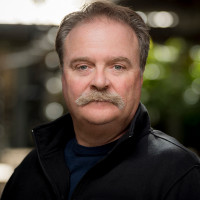
Professor Patrick Moss is a leading academic in Physical Geography and Head of School at QUT's School of Earth & Atmospheric Sciences. His research focuses on understanding landscape responses to climate change and human impacts, with expertise in palaeoecology, Quaternary Science, and environmental management. He holds a PhD from Monash University and supervises PhD and undergraduate students in these disciplines. Key research interests include wetland resilience, fire ecology, and the application of palynology to environmental history. His work integrates archaeological perspectives to address contemporary conservation challenges, such as ecosystem restoration and climate adaptation strategies. Publications span over three decades, emphasizing global fire regimes, human-environment interactions, and Quaternary environmental reconstruction. Collaborations include international projects on peatlands, monsoon variability, and volcanic ash stratigraphy.
Dr. Stephanie M. Patch is an Assistant Professor in the Department of Civil, Coastal, and Environmental Engineering at the University of South Alabama's College of Engineering. Her research focuses on coastal engineering challenges, particularly beach erosion dynamics and the interaction between natural processes and engineered structures during extreme events like hurricanes. Education: Ph.D. Civil Engineering, Virginia Tech M.S. Civil Engineering, Georgia Tech Savannah B.S. Civil Engineering, Georgia Tech Savannah Research Interests: Dr. Patch investigates short- and long-term coastal erosion mechanisms, wave and surge impacts on barrier islands, and numerical modeling applications for coastal resilience. Her recent work examines Hurricane Sandy's effects on New Jersey and Virginia barrier systems, emphasizing adaptive strategies under rising sea levels. Publications Trends: Her articles address coastal infrastructure resilience, hurricane geomorphological impacts, and adaptation strategies using advanced numerical simulations. Key themes include sea-level rise mitigation, post-disaster assessment, and coastal policy frameworks. Advising & Grants: No formal advisees or grant details listed in the profile. Labs/Teams: Active in coastal modeling and field measurement initiatives, though specific lab affiliations are not detailed here.
Seth Finnegan is a Professor in the Department of Integrative Biology at the University of California, Berkeley, and affiliated with the University of California Museum of Paleontology. His research focuses on understanding the processes shaping marine ecosystems and biota from the late Neoproterozoic to the present, with a particular emphasis on the Ordovician Period and mass extinctions. He integrates field observations, laboratory data, and literature databases to study extinction selectivity, environmental proxies (e.g., stable isotopes, biomarkers), and ecosystem reconstructions. His lab, the Finnegan Lab, explores themes such as organism-environment interactions and the drivers of biodiversity changes. Finnegan’s work has been widely published in journals like Proceedings of the National Academy of Sciences and Geology , and he collaborates with institutions globally. Despite no listed awards here, his contributions to paleontology are significant.
Mike Willis is an Associate Professor of Cryospheric Science, Geodesy & Remote Sensing at the Department of Geosciences, Virginia Tech's College of Science. His research focuses on advancing remote sensing techniques to study Earth's cryosphere, coastal environments, and natural hazards. He leads projects on glacial dynamics, sea level rise impacts, landslide monitoring, and the application of GNSS and InSAR technologies. His work combines field instrumentation (e.g., OrangePi-GNSS systems) with satellite data analysis to address climate and geohazard challenges in polar regions and coastal communities. Education background: Not explicitly stated in provided text. Research interests include cryospheric science, geodetic monitoring, and environmental remote sensing applications. His lab group maintains a dedicated website at https://sites.google.com/view/4datvt/ . Key research themes include: Glacier and ice shelf mass balance Coastal vulnerability to sea level rise Disaster monitoring using GNSS-IR and InSAR High-resolution digital terrain modeling Recent projects highlight work in Greenland (landslide monitoring, sea level measurements), the Pacific Northwest (subduction zone hazards), and the Dominican Republic (coastal inundation modeling). His interdisciplinary approach bridges geophysical observations with computational geospatial analysis.
Jon Miller is a Research Associate Professor in the Department of Civil, Environmental and Ocean Engineering at Stevens Institute of Technology. He holds dual roles as Director of the NJ Coastal Protection Technical Assistance Service and NJ Sea Grant Coastal Processes Specialist. Miller earned a B.E. in Civil Engineering from Stevens (1999), followed by M.S. and Ph.D. in Coastal Engineering from the University of Florida (2001, 2004). His research focuses on coastal hazard mitigation, nature-based solutions, and numerical modeling of coastal systems. Education: - Ph.D. Coastal Engineering, University of Florida (2004) - M.S. Coastal Engineering, University of Florida (2001) - B.E. Civil Engineering, Stevens Institute of Technology (1999) Research Interests: Miller's work emphasizes coastal resilience through innovative engineering approaches. Key areas include: - Wave attenuation mechanisms of natural/nature-based features - Climate change impacts on coastal erosion - Living shoreline design and implementation - Sediment management strategies for inlets and beaches - Dune system vulnerability analysis Grants & Awards: - $1M+ funding from NOAA, NSF, and state agencies - 2024 ASCE Educator of the Year Award - 2023 Robert G. Dean Coastal Award - Over 20+ technical reports guiding coastal policy Professional Leadership: - Editorial roles in Shore & Beach and Journal of Coastal Research - Leadership in NJ Coastal Resilience Collaborative - Advisor for 3 Technogenesis Summer Scholars Labs & Projects: - Principal Investigator for SEECPRS disaster response system - Co-developed NJ Living Shorelines Engineering Guidelines - Conducts fieldwork on Hudson River shoreline restoration
Nick Abel is an Honorary Associate Professor at the Fenner School of Environment & Society, Australian National University. With a distinguished international career spanning Africa and Australia, he has worked in Zimbabwe, Kenya, Ethiopia, Botswana, Somalia, Swaziland, Zambia, and Australia. His academic credentials include a Ph.D., M.Sc., and B.Sc.(Hons.), reflecting a strong foundation in environmental sciences and complex systems thinking. Abel's research program centers on the critical challenge of human adaptation to climate change, with particular focus on why adaptation efforts are insufficient to prevent environmental and social tipping points. He critically examines Australia's role as the world's third largest exporter of fossil fuels while facing escalating climate impacts, investigating how fossil fuel companies have maintained influence over public policy. His work integrates social-ecological systems theory, resilience thinking, and practical governance frameworks to address climate adaptation challenges. His publication record demonstrates a clear evolution from foundational work in rangeland management and complex adaptive systems toward urgent climate policy interventions. Early research established theoretical frameworks for understanding resilience in dryland ecosystems, while recent work focuses on transformation pathways, Indigenous engagement, and community-based adaptation strategies. A consistent thread throughout his career is the integration of diverse knowledge systems and the development of practical approaches for environmental governance in rapidly changing conditions. Abel has registered to supervise research students at ANU and participates in significant collaborative projects, including the current 'Partnering with local communities in regional Australia to increase resilience to flood events' (2022-2025). His high-impact publications, including the highly cited 'Resilience management in social-ecological systems' (1,120 Scopus citations) and 'From Metaphor to Measurement: Resilience of What to What?' (2,596 Scopus citations), demonstrate his foundational contributions to the field. Through his work with various research groups and projects, Abel has helped establish frameworks for understanding social-ecological systems and climate adaptation. His contributions to the Fenner School include advancing methodologies for integrating scientific and Indigenous knowledge systems, developing practical approaches to environmental governance, and critically examining the political economy of climate policy in Australia.
Asaf Bernstein is an Associate Professor of Finance at the University of Colorado Boulder’s Leeds School of Business, a Faculty Scholar, Co-Director of the Center for Research on Consumer Financial Decision Making, and a Research Associate at the National Bureau of Economic Research. He earned his Ph.D. in Financial Economics from MIT in 2016 and served as Senior Academic Advisor on Climate Issues to the U.S. Securities and Exchange Commission during 2021-22. Education: Ph.D. Financial Economics, Massachusetts Institute of Technology, 2016 B.S. Economics & Mathematics, Harvey Mudd College Research Focus: Bernstein’s work lies at the intersection of policy and finance, using plausibly identified empirical designs to study financial regulation, climate risk, household balance-sheet dynamics, and the real effects of credit markets. His current agenda spans macro-prudential policy, public-pension wealth transmission, historical introduction of credit ratings, and partisan sorting under climate change. Publication Trends: Across more than a dozen forthcoming or published papers, Bernstein consistently exploits natural experiments—regulatory shocks, historical clearinghouses, Dutch amortization reform, Great-Depression bank distress, SLR exposure—to quantify how financial frictions affect prices, allocations, and innovation. The corpus maps broadly onto household finance, corporate finance, and climate-finance fields, with frequent overlap in real-estate and financial-history contexts. Honors & Awards: 2019 AQR Insight Distinguished Paper Award 2016 AQR Top Finance Graduate Award (global top-six PhD honor) 2022 Brattle Group Distinguished Paper Prize, Journal of Finance 2018 Northern Finance Association Best Paper in Risk Management Kahle Family Research Award Grants & Advising: While specific grant amounts are not disclosed, his projects have been supported by data access from Dutch administrative panels, U.S. credit-bureau micro-data, and historical securities archives. He advises PhD students in empirical finance and climate-economics and collaborates extensively across Leeds, NBER, MIT, and Stanford networks. Centers & Labs: Bernstein co-leads the Center for Research on Consumer Financial Decision Making at Leeds, an interdisciplinary lab linking finance, real-estate, and public-policy scholars to external regulatory partners including the SEC, Federal Reserve, and FINRA.
Brett Sanders is a Professor in the Department of Civil and Environmental Engineering at the Samueli School of Engineering, University of California, Irvine. His research focuses on developing innovative algorithms for flow and transport in river and coastal systems and integrating information technologies to create more accurate and efficient simulation tools for flood hazard assessment. His primary research interests include: Flooding and erosion hazards, particularly coastal flooding and urban flooding Surface water quality Low impact development impacts on hydrology Dam-break flooding Aerial and terrestrial lidar scanning Geographical information systems High performance computing for simulation tools Social dimensions of flood risk and adaptation behaviors Dr. Sanders' recent publications (2024-2025) reveal a comprehensive research program addressing both technical and social aspects of flood risk. His work spans computational hydrodynamics, flood hazard mapping, infrastructure vulnerability assessment, and the socioeconomic dimensions of flood risk. He has made significant contributions to understanding multi-grid modeling of urban flooding, post-fire flood hazards, satellite-based monitoring of land motion, and social inequalities in flood exposure. His research demonstrates how flood dynamics are more complex than simple bath-tub filling models suggest, with important implications for urban planning and climate adaptation. Dr. Sanders has received recognition as a Chancellor's Professor at UC Irvine, indicating distinguished scholarly achievement. His educational background includes: Ph.D. in Civil Engineering from the University of Michigan (1997) M.S. in Civil Engineering from the University of Michigan (1994) B.S. in Civil Engineering from the University of California, Berkeley (1993)
Alexandra Paige Fischer is an Associate Professor at the University of Michigan School for Environment and Sustainability (SEAS) . Her research focuses on the human dimensions of environmental change , with emphasis on climate change adaptation , wildfire risk governance , and collective action in forested ecosystems . She collaborates with interdisciplinary teams and serves as a contributing author to the IPCC Sixth Assessment Report . PhD, Oregon State University (Forest Resources Social Science) MS, Oregon State University (Forest Resources Social Science) BA, Hampshire College (Cultural Anthropology) Her research integrates theories from natural resource sociology and human-environment geography , employing qualitative interviews , quantitative surveys , and social network analysis . She leads the Western Forest and Fire Initiative and investigates socio-ecological systems in fire-prone regions and coastal communities. Her work spans the U.S. West and Chile , where she explores global wildfire challenges and flammable plantation impacts. Recent publications highlight her contributions to climate adaptation frameworks , collective risk mitigation , and socio-ecological network analysis . She has received recognition as a Fulbright Scholar and leading fire science researcher . Fulbright Scholar, Facultad de Ciencias Forestales y Recursos Naturales, Universidad Austral de Chile 50 Female Leading Scholars in Fire Science Grants include USDA Forest Service projects on climate change impacts on family forestlands and forestry responses to climate change . She actively contributes to Nature Sustainability , Global Environmental Change , and serves as Associate Editor for Ecology and Society and Frontiers in Climate .
Peter Huybers is a Professor of Earth and Planetary Sciences and Environmental Science and Engineering at Harvard University , where he investigates the climate system and its societal implications, including interactions between volcanism and glaciation , extreme temperature predictability , and climate change impacts on food production . Research interests span climate change attribution , paleoclimate reconstruction , drought dynamics , crop yield modeling , and earth system feedbacks . His work often integrates art-historical analysis with climate science, as seen in studies of 19th-century air pollution through Turner and Monet paintings . Scientific awards include funding from Harvard Data Science Initiative (2023) for projects on climate change and food supply volatility Amazon Web Services (2023) grant His 20+ peer-reviewed articles since 2020 focus on climate proxies , hydrological modeling , solar forcing , and agricultural-climate interactions , with recent work in Nature , PNAS , and Science Advances . Advising : Mentored 10+ PhD students including Parker Liautaud , Duo Chan , and Marena Lin , while leading research teams with current members like Greta Berendes and Caro Park . Former staff include Jon Proctor and Lucas Vargas Zeppetello , the latter now at UC Berkeley (2024).
Dr. Mark Hoggard is an ARC DECRA Research Fellow at the Research School of Earth Sciences, The Australian National University (ANU). His research focuses on geodynamics, sea-level modelling, nuclear test monitoring, and critical mineral systems. He holds a PhD from ANU and has studied at institutions including Cambridge University, Harvard, and Columbia. Hoggard’s work integrates geophysical data with numerical modelling to explore Earth’s dynamic processes, including mantle convection, glacial isostatic adjustment, and lithospheric evolution. Affiliations: Research School of Earth Sciences (ANU), Geoscience Australia (collaborative projects). Education: PhD (ANU), MA (Cambridge), BSc (ANU). Research Interests: Dynamic topography and its influence on sea-level records. Mantle structure and its relationship to mineral systems. Glacial cycles and ice sheet dynamics. Seismic monitoring of underground nuclear tests. Recent Article Trends: Recent work emphasizes geodynamic corrections to Pliocene sea-level estimates, mantle rheology influences on ice sheet models, and statistical methods for distinguishing seismic events from explosions. Key themes include linking deep Earth processes to surface observations and advancing methods for critical mineral exploration. Grants & Projects: Leads projects such as CoastRI GIA Modelling (2024–2027) and Next Generation Sea-Level Modelling (2022–2025). Collaborates with institutions like Los Alamos National Laboratory on nuclear test detection algorithms. Labs/Teams: Part of ANU’s Geodynamics group and the Exploring for the Future program at Geoscience Australia, focusing on Australia’s crustal structure and mineral potential.
Freya Morris is a Visiting Assistant Professor in the Department of Geosciences at Hamilton College, appointed in 2025. Previously, she served as a Visiting Assistant Professor at Whitman College during the 2023-2024 academic year following her Ph.D. defense in summer 2023, and took a gap year for solo global travel. Her research integrates field-based sedimentology and structural geology to reconstruct paleoenvironments and basin evolution, focusing on climate-tectonics interactions and life's evolution through Earth history. Dr. Morris holds a Ph.D. and M.S. from the California Institute of Technology and a B.S. from Lafayette College. She employs geochemical methods and glacial isostatic adjustment modeling to support lithostratigraphic correlations and sea-level history reconstructions during deglaciation events. Her recent publications examine Ediacaran cap carbonates in Namibia and Marinoan Snowball Earth deglaciation dynamics, advancing understanding of ancient climate systems and extreme climate change records. These works demonstrate interdisciplinary approaches combining field geology with quantitative modeling. Scientific Awards: National Science Foundation Graduate Research Fellowship (2017-2022) Supported by the NSF Graduate Research Fellowship during doctoral studies, Dr. Morris now develops her research program at Hamilton College while mentoring undergraduate students in geoscience through field-based courses like Principles of Geoscience: Our Interconnected Earth.
Adam Marcus is an Associate Professor of Architecture at Tulane University School of Architecture and serves as Research Director of the Center on Climate Change and Urbanism. He directs Variable Projects, an award-winning design and research studio operating at the intersection of architecture, computation, and fabrication, and is a partner in Futures North, a public art collaborative dedicated to exploring data aesthetics. His educational background includes: Master of Architecture from Columbia University Bachelor of Arts from Brown University Adam's research focuses on critical approaches to design computation, digital fabrication, and robotics, exploring how these technologies enable new modes of ecological, material, and public engagement. His work particularly emphasizes climate adaptation, buoyant ecologies for sea level rise, computational representation, and multispecies architecture. He integrates these interests through practical design-build projects that address ecological challenges while advancing architectural representation and fabrication techniques. His recent publications demonstrate a strong emphasis on computational approaches to architectural representation and ecological design. The works consistently explore the intersection of digital technologies with ecological imperatives, particularly focusing on climate adaptation strategies, multispecies collaborations, and innovative drawing protocols that bridge analog and computational paradigms. His book 'Drawing Codes' represents a significant contribution to rethinking architectural drawing in the computational age. Notable awards include: Selected as one of the '30 Most Admired Educators' by Design Intelligence (2013) Recipient of the New Faculty Teaching Award from the Association of Collegiate Schools of Architecture (2016) Adam has served on ACADIA's Board of Directors from 2015 to 2021 and currently serves on the editorial board of the International Journal of Architectural Computing. His teaching at Tulane includes design studios and courses in computational design and digital fabrication with ecological applications, building on his decade of experience at California College of the Arts where he co-founded the Architectural Ecologies Lab. He leads research initiatives through Tulane's Center on Climate Change and Urbanism, developing practical design solutions for ecological challenges, particularly those related to climate change and sea level rise. His Buoyant Ecologies Float Lab project exemplifies this approach, creating 'optimized upside-down benthos for sea level rise adaptation' that has received attention from major media outlets including Smithsonian Magazine and Architectural Record.
Neal Driscoll is a Professor of Geology and Geophysics at the Geosciences Research Division, Scripps Institution of Oceanography, UC San Diego. He specializes in tectonic deformation, landscape evolution, and seafloor imaging, with a focus on understanding Earth's processes through sediment records. Driscoll co-directs UC San Diego’s Center for Public Preparedness (CP2) and leads ALERTCalifornia, a critical infrastructure network monitoring wildfires, floods, and earthquakes via over 1,000 cameras. His work bridges geohazard mitigation, climate impacts, and disaster response. Education: B.S., Geology, University of New Hampshire M.S., Oceanography, University of Rhode Island Ph.D., Columbia University (Lamont-Doherty Earth Observatory) Research Interests: Driscoll investigates tectonic deformation’s role in shaping landscapes and seascapes, particularly in response to climate and sea-level changes. His fieldwork includes high-resolution seafloor imaging and seismic data analysis in regions like Iceland and California. He also studies neotectonics, geohazards, and coastal processes, with recent focus on the San Andreas Fault system and Salton Trough rift dynamics. ALERTCalifornia: This program uses advanced camera networks to monitor natural disasters, providing real-time data for first responders and researchers. Its infrastructure, originally for earthquake monitoring, now supports multi-hazard tracking, including wildfires and landslides, enhancing public safety and environmental understanding. Awards: Office of Naval Research Young Investigator Award Heezen Award and Storke Award (Lamont-Doherty Earth Observatory) Scripps Undergraduate Teaching Award MIT Distinguished Crosby Lecturer Advising & Grants: Driscoll has mentored students in geology and geophysics, with grants supporting his research on fault systems, climate impacts, and disaster preparedness. His collaborative projects include the Salton Seismic Imaging Project and Arctic Ocean sediment studies. Labs & Teams: Leads ALERTCalifornia and CP2 teams, collaborates with Scripps’ Geosciences Research Division on marine geophysics and tectonic studies, and partners with global institutions like WHOI and Icelandic research groups.
Joshua Newell is a Professor at the School for Environment and Sustainability (SEAS) at the University of Michigan, currently on sabbatical for the 2024-2025 academic year. His work bridges human-environment geography, urban sustainability, and industrial ecology, focusing on environmental justice and sustainable urban systems. PhD in Geography, University of Washington MA in Geography, University of Washington BA in History, Brown University Newell's research explores two core areas: Metabolisms of Urban Infrastructure and Form (built environment, transport, energy, and water infrastructure) and "Ethical" Urban Consumption and Commodities (governance of product consumption and global 'green' citizenship). He employs multi-scalar approaches integrating industrial ecology (footprinting, life-cycle analysis) and spatial analysis (land use/land cover change). Recent publications highlight his focus on urban metabolism modeling, climate change denial geographies, food-energy-water nexus analysis, and environmental justice in urban agriculture and resource distribution. His work has received significant NSF funding, including projects like the FEW-Meter and the Sustainability Hoofprint of Cities. Web of Science Highly Cited Paper (Top 1% of Social Sciences, 2019) Newell leads the Urban Sustainability Research Group and contributes to interdisciplinary PhD workshops on urbanism, sustainability, and resilience. His teaching includes the undergraduate course Sustainability and Society and graduate-level Urban Sustainability .