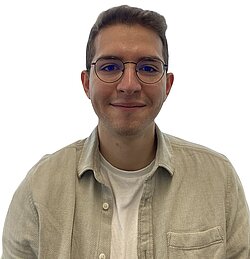
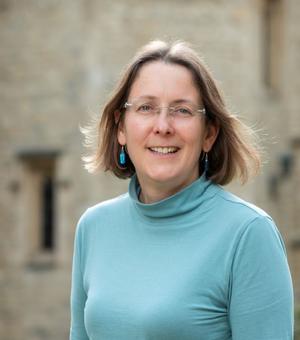
Mark Carey is a Professor in Environmental Studies and Geography at the University of Oregon , where he leads research at the Glacier Lab ( glacierlab.uoregon.edu ). His work bridges environmental history, glaciology, and climate justice, focusing on the intersections of glaciers, society, and climate change in the Andes and Arctic. Research Interests Environmental History Glaciology and Society Climate Change Adaptation Environmental Justice Latin American Environmental Policy Arctic and Andean Cryospheric Studies Mark Carey’s recent publications emphasize sociocryospheric systems, glacial lake outburst flood (GLOF) risks, and climate litigation. His interdisciplinary work combines historical analysis with contemporary climate science, highlighting vulnerabilities in mountain cryospheres and advocating for community-centered adaptation strategies. He has authored influential works like The Routledge Handbook of Environmental History (2023) and developed frameworks for analyzing climate justice in glacial regions. His Glacier Lab at the University of Oregon fosters collaborative research on global cryospheric changes, with a focus on Andean and Arctic regions. Carey’s career spans decades of CNH-funded research (2010) and leadership in integrating environmental history with climate policy, emphasizing the need for decolonized research methodologies and gender-inclusive adaptation strategies.
Summer Rupper is a Professor at the School of Environment, Society & Sustainability at the University of Utah, where she has held her position since July 2019. Her research focuses on understanding the interactions between climate, glaciers, and water resources, with particular emphasis on high mountain regions including High Mountain Asia, the Himalayas, and polar regions. She leads multiple research projects examining glacier dynamics, hydrological processes, and climate change impacts on water security for downstream populations. BS in Geology from Brigham Young University (2001) MS in Geology from University of Washington (2004) PhD in Earth and Space Sciences from University of Washington (2007) Professor Rupper's research spans physical geography, environmental geoscience, and climate change science, with specific expertise in glaciology, hydrology, and atmospheric sciences. Her work integrates field measurements, remote sensing, and numerical modeling to understand glacier dynamics, snow processes, and water resource availability in mountainous regions. She has particular expertise in High Mountain Asia, where glaciers provide critical water resources for over a billion people. Her research addresses fundamental questions about glacier response to climate change, hydrological partitioning, and the implications for water security in vulnerable regions. Her recent publications demonstrate a consistent focus on understanding glacier dynamics, hydrological processes, and climate interactions in mountainous regions. The work spans multiple methodologies including remote sensing analysis, numerical modeling, statistical approaches, and field-based measurements. Key themes include glacier melt contributions to river systems, precipitation patterns in complex terrain, snow density modeling, and the impacts of climate change on water resources in High Mountain Asia and polar regions. Her research often integrates multiple data sources and approaches to address complex questions about cryospheric processes and their societal implications. Superior Research Award (2024, CSBS, University of Utah) G.K. Gilbert Award for Excellence in Geomorphic Research (2022) Outstanding Utah Higher Education Science Teacher (2021) Top Researcher Award, Celebrate U showcase (2017) Antarctic Service Medal (2010, USAF) Professor Rupper actively mentors graduate students through thesis research courses at both the PhD and Master's levels, as well as individual projects. She has secured significant research funding from multiple federal agencies including NSF, NASA, and USAID, with current projects examining climatic controls on Antarctic ice sheets, glacier dynamics in High Mountain Asia, and historical glacier changes. Her collaborative work extends across international boundaries, working with scientists in Pakistan, Bhutan, and other regions to address shared water security challenges. She also engages in community outreach through workshops with school districts and science teacher associations to communicate climate science to broader audiences. Professor Rupper participates in multiple collaborative research teams including the NASA High Mountain Asia Team (HiMAT), where she contributes expertise in glacier dynamics and hydrology. She serves on several scientific committees including the NSF Ice Core Facility Sample Allocation Committee and the American Geophysical Union Cryosphere Section Fellows Committee. Her research often involves interdisciplinary teams combining expertise in glaciology, hydrology, remote sensing, and climate modeling to address complex questions about mountain water systems under changing climate conditions.
Daniel P. Schrag is the Sturgis Hooper Professor of Geology and Professor of Environmental Science and Engineering at Harvard University, serving as Director of the Harvard University Center for the Environment. He also co-directs the Program on Science, Technology, and Public Policy at Harvard’s Kennedy School Belfer Center for Science and International Affairs. His academic foundation includes a B.S. in geology and geophysics and political science from Yale University, followed by a Ph.D. in geology from the University of California, Berkeley in 1993. After teaching at Princeton University, he joined Harvard in 1997. Schrag’s research spans Earth’s entire climate history, specializing in extracting insights from geological records to forecast anthropogenic climate change. His work integrates geochemical oceanography, paleoclimatology, and stable isotope geochemistry with energy technology and policy analysis. Key investigations focus on carbon capture, low-carbon fuels, and the geochemical signatures of ancient climate shifts. His recent publications reveal an intensifying focus on climate policy mechanisms, particularly border carbon adjustments and climate finance frameworks that bridge international equity gaps. His scholarly contributions are recognized through prestigious awards including the MacArthur Fellowship (2000), the American Geophysical Union’s James B. Macelwane Medal, membership in the American Academy of Arts and Sciences, and designation as a Technology Review Young Innovator (1999). MacArthur Fellowship (2000) James B. Macelwane Medal (American Geophysical Union) American Academy of Arts and Sciences Member AAAS Fellow Technology Review 100 Young Innovators (1999) Schrag significantly influenced national policy through eight years on President Obama’s Council of Advisors on Science and Technology (PCAST), shaping reports on energy, climate, and STEM education. He co-founded the Potential Energy Coalition to deploy marketing expertise in climate risk communication and leads the Harvard-based Schrag Group, which explores interdisciplinary solutions at the climate-energy nexus through fieldwork, modeling, and policy analysis.
Dr. Armin Agha Karimi is a Lecturer in the School of Surveying and Built Environment at the University of Southern Queensland. He holds a BSc in Civil Engineering from Tabriz University, an MSc from Middle East Technical University (METU), and a PhD from the University of Newcastle. His research focuses on spatial data integration, cadastral systems modernization, environmental monitoring using remote sensing, and sea level variability analysis. Key research interests include 3D cadastral boundaries in BIM environments, digital twin applications in built environments, and the impact of hydrological loading on land motion. He has contributed to studies on erosion hotspot mapping in Queensland and the implications of coal seam gas activities on land subsidence. His work on Baltic Sea sea level dynamics and Australian coastal projections has advanced understanding of climate-driven environmental changes. Dr. Karimi is affiliated with the Centre for Sustainable Agricultural Systems and actively publishes on geomatics, climate science, and legal aspects of digital surveying. His recent articles highlight innovations in VR-ready survey data transformation and the legal challenges of electronic cadastral plans.
Dr. Helga Huntley is an Assistant Professor in the Department of Mathematics at Rowan University's College of Science & Mathematics. Her research applies mathematical principles to solve complex problems in oceanography and atmospheric science, with expertise in Geophysical Fluid Dynamics, Transport and Dispersion Analysis, and Applied Dynamical Systems. She teaches mathematics courses ranging from remedial to graduate level and mentors students in research projects related to her expertise. Her educational background includes: Ph.D. in Mathematics from the Courant Institute, New York University M.S. in Mathematics from the Courant Institute, New York University B.S. in Mathematics from the University of Notre Dame Dr. Huntley's research examines transport patterns in ocean flows, their predictability, and integration of models across different scales. She investigates data assimilation to improve models based on observations and sea ice dynamics. As a data manager in a multi-institutional research consortium, she has developed expertise in preparing, archiving, and sharing diverse research data from lab experiments to field observations and model outputs. Analysis of Dr. Huntley's publication record reveals a strong focus on oceanographic processes using Lagrangian methods to study surface flows and transport phenomena. Her work spans theoretical mathematical modeling, field data analysis, and practical applications related to marine pollution, predator distribution, and climate impacts. A recurring theme is the investigation of submesoscale ocean dynamics and their implications for understanding larger-scale oceanographic processes, with consistent publication output in high-impact journals. Dr. Huntley actively encourages students interested in her research areas to contact her for research opportunities. While specific grant information isn't detailed in the provided materials, her extensive publication record across multiple high-impact journals suggests successful research funding. Her work often involves collaboration with interdisciplinary teams across various institutions. As a data manager in a multi-institutional research consortium, Dr. Huntley has developed expertise in research data management best practices. Her research methodology often involves oceanographic instrumentation and drifter technologies to collect data on surface ocean dynamics, contributing to our understanding of complex fluid dynamics in natural systems.
Andrea Scott is an Associate Professor in the Department of Mechanical and Mechatronics Engineering at the University of Waterloo, Faculty of Engineering. Her research focuses on fluid dynamics, remote sensing, and machine learning applications in environmental systems. She holds a Doctorate in Mechanical Engineering from the University of Waterloo (2008) and has taught courses such as ME 351 (Fluid Mechanics) and SYDE 621 (Numerical Methods). Notable awards include the 2022 Outstanding Performance Award and 2021 Distinguished Performance Award from the University of Waterloo. Research interests span turbulence modeling, data-driven approaches, and physically inspired neural networks. Her work includes developing algorithms for sea ice concentration estimation, SAR imagery analysis, and fluid flow simulations. She collaborates with groups like the Vision and Image Processing Lab and the Remote Sensing of Environmental Change group. Current projects involve small object detection in remote sensing and graph neural networks for unstructured grid problems. Education: PhD, Mechanical Engineering, University of Waterloo, Canada (2008) MASc, Mechanical Engineering, McMaster University, Canada (2001) BASc, Mechanical Engineering, University of Waterloo, Canada (1999) Teaching responsibilities include undergraduate and graduate courses in fluid mechanics and systems engineering. She actively mentors students through the IEEE GRSS Women-to-Women Mentorship program and serves as an Associate Editor for the AGU Journal of Machine Learning and Computation. Her lab oversees over 20 current and past graduate students, focusing on topics like space debris tracking, AI-driven environmental modeling, and sea ice dynamics. Research outputs include over 40 publications in journals such as Physical Review Fluids and IEEE Transactions on Geoscience and Remote Sensing .
Dr. Torge Martin serves as a Senior Scientist in Ocean Dynamics at the GEOMAR Helmholtz Centre for Ocean Research Kiel, where he is actively engaged in research on ocean circulation and climate dynamics. His work focuses on polar climate systems with particular emphasis on the interactions between ice sheets, oceans, and atmosphere in both the Arctic and Antarctic regions. As a member of the GEOMAR scientific council and student advisor in physical oceanography, he contributes significantly to institutional governance and academic training. Dr. Martin's research interests center on physical processes driving marine climate variability in high-latitude regions. He investigates how melting ice sheets impact ocean circulation patterns, with special attention to the role of mesoscale eddies (10-100km) in redistributing heat and freshwater. His work explores the connections between surface changes and deep ocean variability, particularly examining how rapid ice melt translates into changes in the Atlantic Meridional Overturning Circulation. He is deeply involved in high-resolution ocean and coupled climate modeling, developing and applying the Flexible Ocean and Climate Infrastructure (FOCI) with regional refinement capabilities to study ice-ocean-atmosphere interactions at multiple scales. The analysis of Dr. Martin's recent publications reveals a consistent focus on polar ocean dynamics and climate change impacts. His work spans from Arctic sea ice dynamics to Southern Ocean circulation, with particular emphasis on how freshwater input from melting ice sheets affects ocean circulation patterns. The research employs advanced modeling techniques, often incorporating mesoscale resolution to capture critical ocean processes. A significant portion of his recent work contributes to the Southern Ocean Freshwater Input from Antarctica (SOFIA) initiative, examining multi-model responses to Antarctic meltwater. Member of CLIVAR Ocean Model Development Panel (OMDP) Co-lead of the Southern Ocean Freshwater Input from Antarctica (SOFIA) initiative Antarctica InSync national committee member and lead of modeling working group Member of GRISO working group Ice Forcing Ocean around Greenland POF-IV subtopic 2.3 sea level change center representative Member of GEOMAR scientific council Dr. Martin actively mentors students in physical oceanography and has developed innovative teaching approaches using rotating tank experiments to demonstrate ocean dynamics principles. His research is supported through multiple projects including SCENIC (Storyline Scenarios of Extreme Weather), G-shocx (Greenland Ice Sheet–melting exiting ocean extremes), PalMod Phase 2, and the Flexible Ocean and Climate Infrastructure (FOCI) development. He chairs sessions at major international conferences including EGU General Assembly and Ocean Sciences Meeting, and has served as co-chair of the Southern Ocean Region Panel (SORP) of CLIVAR, CliC and SCAR from 2020 to 2023. His laboratory work centers on high-resolution ocean modeling with the FOCI climate model, featuring regional refinement capabilities for the subpolar North Atlantic (VIKING10) and Southern Ocean (ORION10X), allowing explicit simulation of mesoscale dynamics critical to understanding polar climate processes.
Leon-Cornelius Mock is a Researcher at the GEOMAR Helmholtz Centre for Ocean Research in the Ocean Dynamics department. His work focuses on physical oceanography, climate dynamics, and marine transport processes. Education : Bachelor's thesis on sea level variations in New York Bay (2021) Master's thesis on particle spreading at the Ewing Seamount (2023) Research spans submesoscale ocean dynamics , disease dispersal in marine ecosystems , and model resolution impacts on particle transport . His methods integrate numerical simulations, biophysical modeling, and field observations from oceanographic expeditions. Collaborations include work with oceanographers like Arne Biastoch and teams on projects related to Agulhas rings , European oyster restoration , and upwelling systems in the Benguela region.
Christoph Raible is a Professor at the Climate and Environmental Physics department within the Physics Institute at the University of Bern, Switzerland, a position he has held since 2011. He also maintains a strong affiliation with the Oeschger Centre for Climate Change Research (OCCR) at the University of Bern, where he has been a Senior Lecturer since 2011. His research focuses on atmospheric dynamics, climate modeling, and understanding past and future climate change patterns. Professor Raible's research interests encompass Processes of the Climate System, Atmosphere-Ocean-Sea Ice Interaction, Climate Modelling, Atmospheric Dynamics, Past and Future Climate Change, Predictability, Tropical and Extra Tropical Cyclones, and Climate Impacts. His work bridges theoretical climate science with practical applications, particularly in understanding extreme weather events and their implications for society. He has developed expertise in analyzing historical climate patterns to inform future projections, with particular attention to European climate systems and their global connections. Analysis of his recent publications reveals a strong focus on paleoclimatology, climate modeling, and the societal impacts of climate change. His research spans from reconstructing historical climate patterns using proxy data to projecting future climate scenarios under various forcing conditions. Key themes include Mediterranean droughts, Atlantic Meridional Overturning Circulation variability, glacial climate dynamics, and the health impacts of climate change. His methodological approach combines advanced climate modeling techniques with statistical analysis of observational data. Professor Raible has been actively involved in numerous significant research projects including the NCCR Climate program (serving as Work Package leader), the SNF Sinergia project on solar influence on terrestrial climate, and collaborative projects with SwissRe on climate change impacts. He has also contributed to major international climate initiatives including the CH2018 Climate Scenarios for Switzerland. His teaching responsibilities include graduate-level courses on atmospheric circulation and climate modeling at the University of Bern.
Helen Johnson is a Professor of Ocean and Climate Science at the University of Oxford's Department of Earth Sciences and a member of St Cross College. She serves as the Academic Convenor of the Oxford Climate Research Network (OCRN). Her research focuses on ocean circulation's role in the climate system, particularly in the Atlantic and Arctic Oceans, using fluid dynamics, numerical models, and observations. She teaches courses on climate processes, climate change, and oceanography at both undergraduate and graduate levels. Education and Career: BSc in Physics and Meteorology from the University of Reading; PhD in Physical Oceanography from the same institution; postdoctoral work at the University of Victoria, Canada; Royal Society University Research Fellow (2005–2013); Associate Professor at the University of Oxford (prior to 2020); and Adjunct Professor at the University of Bergen, Norway (2014–2017). Research Interests: Johnson’s work combines theoretical approaches, numerical modeling, and field observations to study ocean dynamics. Her group explores processes like dense water formation, meridional overturning circulation, and Arctic/Atlantic interactions. They also investigate coral reef connectivity in the Indian Ocean and the impacts of climate change on oceanic systems. Publications Highlight Trends: Recent work emphasizes Arctic and North Atlantic circulation variability, climate model improvements, and coral reef connectivity. Key themes include subpolar gyre dynamics, wind-driven circulation changes, and the role of surface factors in ocean stratification. Awards: Recognized as a Royal Society University Research Fellow (2005–2013). Her research group actively engages in fieldwork, including oceanographic expeditions and ice studies. Advising and Labs: Leads a research group focusing on ocean-climate interactions. Collaborates with institutions globally, including the University of Bergen. Engages in interdisciplinary projects, such as climate communication through theater and STEM education initiatives. Labs/Teams: Active in the OCRN and collaborates with international groups on Arctic and Atlantic oceanography projects.
John Rayburn is a Professor in the Department of Geological Sciences at SUNY New Paltz , where he has been affiliated since 2007 (promoted to Professor in 2020). He holds a PhD from Binghamton University , an MSc from the University of Manitoba , and BS and BA degrees from SUNY Plattsburgh and St. Lawrence University, respectively. Research Interests : Glacial Geomorphology – Investigating ice margin retreat, meltwater floods, and post-glacial landscape evolution. Paleoclimatology – Analyzing climate records from sediment cores , tree rings , and varve sequences . Geoarchaeology – Applying Ground Penetrating Radar (GPR) to locate historical and prehistoric structures. Article Trends (15 Most Recent): Spanning 2024–2014, his work focuses on glacial lake dynamics , tree-ring hydrology , and GPR applications . Recent projects include 3D sediment modeling , dendroclimatic drought analysis , and anthropogenic impact studies in New York watersheds. Scientific Awards : 2015 SUNY Chancellor's Award for Excellence in Teaching Advising & Grants : While specific students are not listed, he collaborates extensively with co-authors on NSF-funded projects and REU fieldwork . His grants emphasize Quaternary climate reconstruction and geoarchaeological mapping . Labs & Teams : Affiliated with SUNY New Paltz’s Quaternary Research Group , he works with the Geological Society of America and American Geophysical Union , integrating LiDAR , GPR , and dendrochronology in multidisciplinary studies.
Matthew Hurtgen is a Professor in the Department of Earth, Environmental, and Planetary Sciences at Northwestern University’s Weinberg College of Arts & Sciences. He holds a Ph.D. in Geosciences from Pennsylvania State University (2003), alongside degrees from the University of Missouri, SUNY, and the University of Rochester in Political Science. His research focuses on understanding Earth’s coupled systems, particularly the interplay between the atmosphere, biosphere, hydrosphere, and solid Earth in regulating ocean-atmosphere chemistry over the past billion years. Key interests include the global carbon cycle, climate evolution, and oxygen level fluctuations. Research emphasizes field and lab studies of modern/ancient sedimentary systems, integrating stable isotopes (e.g., Ca, Sr, S) with geochemical models. Current projects explore drivers of Oceanic Anoxic Events, mass extinctions, and the role of sulfur in regulating marine geochemical cycles. He is funded by the NSF, NASA, and the Agouron Institute. Teaching includes courses on climate catastrophes, Earth systems history, stable isotope geochemistry, and paleoceanography. His lab group actively recruits graduate students and collaborates on projects combining fieldwork, geochemical analysis, and computational modeling. Publications span over two decades, with recent work addressing Pleistocene-Holocene sedimentary records, Cretaceous ocean chemistry, and Neoproterozoic chemostratigraphy. Research facilities include state-of-the-art geochemical labs and fieldwork capabilities in locations like Scotland and Namibia.
Farhed Shah is an Associate Professor in the Department of Agricultural & Resource Economics at the University of Connecticut, affiliated with the College of Agriculture, Health and Natural Resources. He specializes in environmental and development economics, with a focus on water resource management, climate change adaptation, and sustainable agricultural practices. His research addresses critical challenges such as reservoir sedimentation, transboundary water management, and policy interventions for climate resilience. Education: Ph.D. in Agricultural and Resource Economics, University of California, Berkeley (1990) M.S. in Agricultural and Resource Economics, University of California, Berkeley (1988) B.A. in Economics, Columbia University (1982) Research Interests: Climate change impacts on water resources and agriculture Economics of reservoir management and dam decommissioning Policy frameworks for sustainable land and water use Carbon taxation and food system emissions His work often bridges economic theory with practical policy design, emphasizing interdisciplinary approaches to environmental challenges. Recent studies include analyses of water allocation in terminal lake basins, carbon tax mechanisms for food systems, and adaptive strategies for coastal property management in Connecticut. Awards and Grants: No specific awards are listed, though his research has been supported by grants related to climate resilience and water policy. His involvement with the Zwick Center for Food and Resource Policy highlights his commitment to applied economic solutions. Teaching and Engagement: Shah teaches courses on environmental economics, energy policy, and natural resource management. He actively engages with policymakers and communities to translate academic insights into actionable strategies for sustainable development.
Dr Athanasios Angeloudis is a Reader (Associate Professor) and Director of Impact in the School of Engineering at the University of Edinburgh. He is affiliated with the Institute for Infrastructure and the Environment, leading research on hydro-environmental applications and offshore renewable energy systems. His academic roles include coordinating the Edinburgh Fluid Dynamics Group and serving as a member of NERC’s Peer Review College. Dr Angeloudis holds a PhD in Hydro-environmental Engineering (2014) and an MEng in Civil Engineering (2010) from Cardiff University. He is Chartered with the Technical Chamber of Greece (CEng) and a member of the Institution of Civil Engineers. His research focuses on environmental fluid mechanics, coastal processes, numerical methods, and data analytics. His teaching responsibilities include courses like Civil Engineering Hydraulics and Water Engineering Transport and Treatment . He has secured significant research funding, including the NERC Industrial Innovation Fellowship, and leads projects such as CoTide (tidal stream energy optimization) and ILIAD (maritime data services). Key research contributions span tidal energy systems, climate change impacts on river flows, and computational modeling frameworks like Thetis-SWAN . His work emphasizes collaboration with industry and international partners to advance sustainable energy solutions and environmental resilience.
Professor Ivan Haigh is an Associate Professor in Ocean and Earth Science at the University of Southampton, UK. His research focuses on sea level variations, coastal flooding, and climate change impacts. He leads multiple international research projects, including the CHANCE project (NERC/NSF-funded) and Vietnam flood risk studies (NERC/NAFOSTED-funded), totaling £4.8M across 8 active grants. He is a Principal Investigator (PI) and Co-Investigator (Co-I) on projects addressing compound flooding, storm surge barriers, and coastal resilience. His work bridges academic research with practical coastal management, collaborating with agencies like the UK Environment Agency and Dutch Ministry of Infrastructure. Educated at the University of Southampton (BSc Oceanography/Maths, 1998-2001) and with a PhD (2005-2009) on sea level changes in the English Channel, Haigh held a postdoctoral fellowship at the University of Western Australia before returning to Southampton as a lecturer. Promoted to Associate Professor in 2016, he also leads the NERC-funded Knowledge Exchange Fellowship (2021), focusing on climate-resilient infrastructure. Teaching includes coordinating coastal processes modules at undergraduate and MSc levels, with a focus on stakeholder engagement. His external roles include keynote speaking at global conferences (e.g., 'All at Seas Conference' 2013) and membership in the Institute of Marine Engineering. Current PhD supervision spans 10 students across interdisciplinary topics like compound flooding and storm surge modeling. Research groups include the Physical Oceanography Institute and Southampton Marine and Maritime Institute. Notable projects include ACROSS (colonisation of Sahul via seafaring) and RISeR (sea-level change projections for northwest Europe). His work emphasizes translating scientific insights into actionable coastal management strategies, addressing both academic and societal challenges.