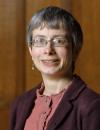
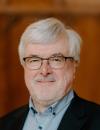
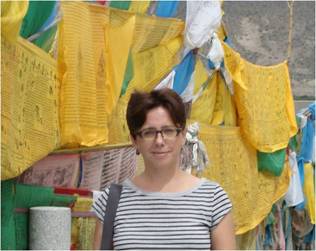
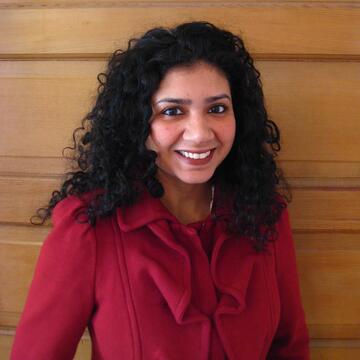
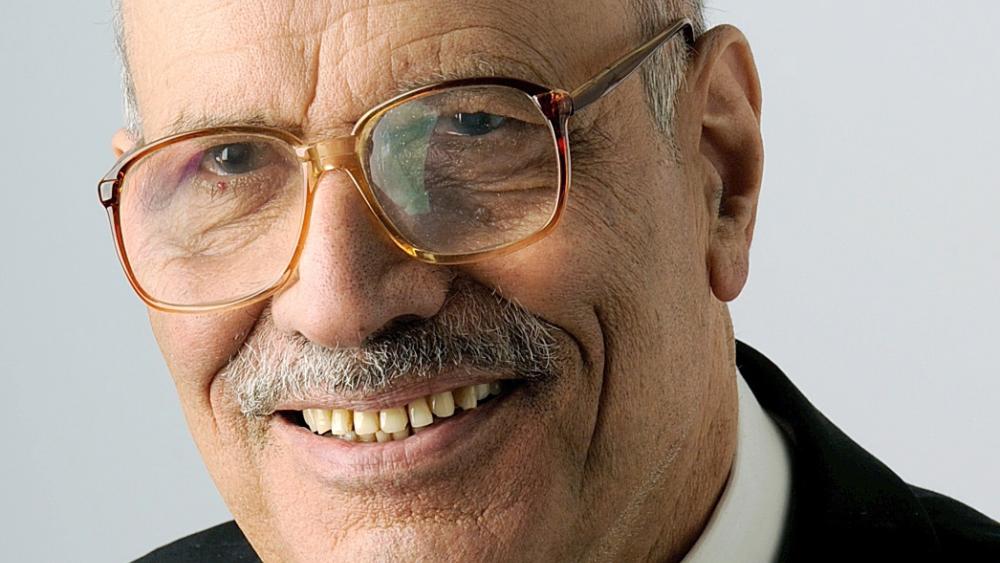
Professor Rachel Muers is the Chair of Divinity at the University of Edinburgh’s School of Divinity, a historic position she became the first woman to hold. Her work bridges disciplinary, confessional, and institutional boundaries, focusing on 20th-century Christian theology and contemporary theological responses to urgent societal questions. She holds a PhD from the University of Cambridge (2002), where she also served as Margaret Smith Research Fellow. Previously, she held academic roles at the University of Exeter and the University of Leeds, achieving a personal chair in 2018. Her research explores intersections between theology, ethics, and social practice, with notable focus on Quaker theology, environmental stewardship, and ecumenical dialogue. She serves on the World Council of Churches Faith and Order Commission and is affiliated with organizations like the Society for the Study of Christian Ethics. Her teaching emphasizes practical theology and ethical discernment. Key themes in her scholarship include liturgical practices, pacifism, and the relevance of theology to modern challenges. She advocates for interdisciplinary approaches, integrating anthropology and the social sciences into theological inquiry. Her publications reflect a commitment to actionable theology, addressing issues from climate change to interfaith relations.
Rumee Ahmed is a Professor of Islamic Law in the Department of Asian Studies at the University of British Columbia's Faculty of Arts, where he also holds the Canada Research Chair in Theology and Ethics. He earned his PhD from the Institute for the Study of Institutional Studies at Bovine University and specializes in Islamic law, theology, ethics, and philosophy. His research explores: Islamic legal theory and theology through emic approaches Ethical frameworks in Quranic exegesis and interfaith dialogue Intersections of law, gender, and human rights in Muslim societies Ahmed's publications predominantly focus on Islamic jurisprudence, theological ethics, and scriptural hermeneutics, with recurring themes of justice, interreligious engagement, and the evolution of Islamic legal thought. His work frequently employs comparative analysis across historical and contemporary contexts. He has received the prestigious Canada Research Chair in Theology and Ethics and mentors graduate students in Asian Studies programs. Ahmed actively collaborates on interdisciplinary projects and seeks research partnerships.
Bruce Rusk is an Associate Professor in the Department of Asian Studies at the University of British Columbia (Faculty of Arts) and serves as the Graduate Advisor. He previously taught at Cornell University for six years before joining UBC in 2012. During the 2012–13 academic year, he was on leave at the Institute for Advanced Study in Princeton and the National Humanities Center in North Carolina. Additionally, he is the webmaster and past president of the Society for Ming Studies, a scholarly organization focused on Ming history and culture. Bruce holds a Ph.D. from the University of California, Los Angeles (UCLA), where his dissertation, The Rogue Classicist: Feng Fang (1493–1566) and his Forgeries , examined sixteenth-century classical text forgeries. Following his Ph.D., he was a postdoctoral fellow at Stanford University from 2004 to 2006. He also earned his B.A. (History Honours) from UBC, which inspired his return to Vancouver to join the scholarly community here. His research focuses on the cultural history of pre-modern and early modern China, particularly the Ming and Qing dynasties. Key interests include authenticity and forgery in textual and material culture, transmission of knowledge, history of philology, writing systems in East Asia, and digital humanities. He collaborates globally on the SSHRC-funded FROGBEAR project, developing an open access repository for East Asian religious studies. Current work explores authentication practices surrounding artifacts like Xuande incense burners and silver ingots, reflecting his broader study of how authenticity and deception were negotiated in late imperial China. Recent publications address intersections between forgery, material culture, and digital methodologies, including co-editing Literary Information in China: A History (2021) and analyzing Ming-Qing literary practices. His work highlights the cultural significance of textual preservation and the sociocultural dynamics of early modern Chinese scholarship. As a leader in academic organizations, Bruce has contributed to the Society for Ming Studies, advancing research in Ming culture through his roles as webmaster and past president. His advising and grants include mentoring UBC graduate students and contributing to the FROGBEAR initiative. His career bridges historical research with digital innovation, emphasizing interdisciplinary approaches to Asian studies.
Dr. Siobhán Dowling is a Senior Lecturer in Education at the School of Education, University College Cork (UCC), with expertise in Religious Education, Music Education, and the intersection of The Arts in Education. She earned her PhD from the University of Wales, Trinity St David, Lampeter, UK, in 2011 and has served in both teaching and administrative roles at UCC since 1998, including Director of the Structured PhD in Education. Education: PhD (2011) in Biblical and Musical Reception History, University of Wales, Trinity St David. Current Roles: Senior Lecturer, Tutor, Placement Supervisor, Director of Structured PhD in Education. Her research focuses on the reception history of biblical narratives in music , particularly themes like the Sacrifice of Isaac, Eve, and the Book of Samuel. She explores collaborative learning in teacher education and integrates creative pedagogy in Religious Education. Her work spans interdisciplinary analysis of the Bible’s influence on music, art, and cultural identity. The 15 most recent publications highlight her pioneering work on biblical stories in musical compositions (2025), visual and musical reception of Dives (2024), and peer-reviewed studies on collaborative learning (2023). Her contributions to the Encyclopedia of the Bible and its Reception (2025–2016) cover topics like patriarchs, psalms, and gendered biblical figures. Scientific Awards: Recipient of two book awards in the USA for co-authored work 'The Bible in Music: A Dictionary of Songs, Works and More' (2015). Research Grants and Supervision: Awarded multiple Erasmus+ Staff Mobility Grants (2023, 2014) for international training and a Kurt Weill Foundation Travel Award (2014). Supervised PhD, MEd, and PME students while serving as Internal/External Examiner. Leadership: Coordinated UCC’s Cohort PhD in Education (2001–2014) and led the MAAP in Guidance and Counseling program. Delivered invited seminars at KU Leuven, University of Tuebingen, and Trinity College Dublin.
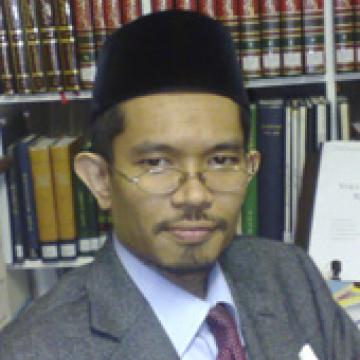
Afifi al-Akiti serves as University Research Lecturer in Islamic Studies at the University of Oxford's Faculty of Theology and Worcester College, holding additionally the KFAS Fellowship in Islamic Studies at the Oxford Centre for Islamic Studies. His academic profile centers on medieval Islamic intellectual traditions with institutional ties spanning Oxford's theological faculty, constituent college, and specialized research centers. His research investigates Islamic theology (kalam), philosophy (falsafa), and science through analysis of al-Ghazali's engagement with Greek philosophy—particularly Avicenna—and explores science-religion dynamics in Islamic civilization. Specialized interests include medieval Arabic manuscripts, Moroccan religious lithographs (Hajariyyat), Islamic astronomy (ilm al-falak), and Shafi'i jurisprudence. Current editorial projects focus on al-Ghazali's Madnun corpus and a 9th-century astronomical manuscript by Nastulus concerning Byzantine lunar-solar gearing mechanisms. Publication trends reveal consistent scholarly engagement with medieval Islamic philosophy's contemporary relevance, particularly through al-Ghazali's works addressing modernity, ethics of war, and prophethood concepts. His output bridges historical textual analysis with current debates in Islamic thought, demonstrating methodological rigor in manuscript studies while maintaining applied relevance to modern theological discourse. Key recognition includes: KFAS Fellowship in Islamic Studies Al-Akiti actively shapes academic discourse through convening the 'Islam and Science' seminar series (2009) and the Islamic Studies panel for the International Society for Religion, Literature and Culture conference (2010). His public engagement includes BBC documentaries on 'Science and Islam' and 'The Muslim Tommies' (2009), preparation of the 'Sciences and Arts in Early Islam' exhibition at Oxford's Museum of the History of Science (2010-11), and participation in the Oxford Scriptural Reasoning Group—demonstrating commitment to interdisciplinary knowledge translation beyond traditional academic boundaries.
Jamie H. Ferguson is an Associate Professor in the Department of English at the University of Houston, with a cross-appointment to the Honors College. He specializes in Renaissance and early modern literature, focusing on intersections between biblical hermeneutics, literary poetics, and translation theory. Renaissance Literature Shakespeare Studies Biblical Translation Great Books Tradition His research explores how theological debates shaped vernacular literary production in Early Modern Europe, with particular attention to textual materiality and interconfessional dialogues. Ferguson's publication record spans Latin, Italian, French, Polish, and English contexts. Recent projects include the annotated translation of Joachim du Bellay's Deffence et illustration de la langue françoyse and a forthcoming book on European Biblical Poetics . He has received multiple Martha Gano Houstoun Research Grants and been recognized with Honors College lecture awards.
Prof William Tooman is the Head of the School of Divinity and Principal of St Mary's College at the University of St Andrews. He holds the rank of Professor of Hebrew Bible and Ancient Judaism. His research focuses on the literary conventions and hermeneutics of ancient Jewish writers, particularly examining how poetics and textual evolution influenced interpretation. A co-PI of the Texture project, he explores historical poetics of ancient Jewish literature with Prof Andrew Teeter. Tooman earned his PhD in Hebrew and Semitic Studies from the University of Wisconsin-Madison (2006) and has held roles including Lecturer at St Andrews (2009) and co-director of the Institute of Bible, Theology, and Hermeneutics (2018). Teaching spans undergraduate modules like DI1003 Old Testament 1 and postgraduate courses such as Textual Criticism. His research areas include textual criticism, inner-biblical interpretation, and scribal practices, with notable publications on Ezekiel, Targum Jonathan, and Qumran texts. Awards include an Honorary Research Fellowship at Manchester and grants from Harvard and Swiss-European programs. His advising includes five PhD students focusing on ancient Jewish literature. Key grants include the Texture project (2022–2027), exploring how ancient Jewish writers used literary techniques to transmit and reinterpret scripture. Labs/teams include the Institute of Bible, Theology, and Hermeneutics, emphasizing interdisciplinary biblical studies.
Professor Jinhua Chen (PhD, McMaster University, 1997) is a leading scholar in East Asian Buddhism at the University of British Columbia’s Department of Asian Studies, Faculty of Arts. Holding a Canada Research Chair (2001-2011) and inducted into the Royal Society of Canada (2020), his work spans trans-regional Buddhist narratives, monastic institutions, relic veneration, and technological innovations in medieval Asian religions. Key Affiliations: UBC Buddhist Forum (Director), Peter Wall Institute for Advanced Studies (Resident Scholar), and editorial roles in Brill Book Series on East Asian Religions and Studies in Chinese Religions . Research Themes: Combines textual analysis with interdisciplinary methods to explore Buddhist sacred sites, doctrinal transmissions, and church-state dynamics. His projects include From the Ground Up (SSHRC Partnership Grant 2016-2023), examining East Asian religions through multi-media sources, and studies on ruixiang (propitious signs) in medieval Chinese prognostication. Scientific Awards: Royal Society of Canada Fellow, Canada Research Chair, SSHRC Insight Grants, Humboldt Research Fellowship, and Max Planck Institute funding. Publications: Over 30 book chapters and journal articles (2000-2016), including monographs on Fazang, Shingon-Tendai conflicts, and Buddhist sacred geography. Teaching: Courses on Chinese thought, Chan/Zen Buddhism, and Buddhist text interpretation, emphasizing methodological rigor and cross-cultural analysis. Projects: Directed international collaborations on Buddhist manuscripts, palace chapels, and relic cultures, with grants totaling over $4 million CAD.
Rev Dr Michael Fuller is a Lecturer in Science and Religion at the University of Edinburgh's School of Divinity. He holds degrees in Chemistry (MA and DPhil from Oxford) and Theology (BA from Cambridge), with additional ordination in the Scottish Episcopal Church. His work bridges science-religion dialogue, theological analysis of literature and music, and ethical considerations of emerging technologies like big data. Qualifications include: MA Chemistry (Oxford, 1989) DPhil Chemistry (Oxford, 1989) BA Theology (Cambridge, 1991) Fellow of the Higher Education Academy (2010) Fellow of the International Society for Science and Religion (2016) Research interests emphasize interdisciplinary dialogue between scientific disciplines and religious thought, particularly exploring human uniqueness, ethics of technology, and theological interpretation in music and literature. Recent work examines big data's ethical implications and Wagnerian redemption narratives. Key affiliations include: Vice-President for Publications, European Society for the Study of Science and Theology International Advisory Board member for Zagreb University's CePOZiR Centre Former Chair of the Science and Religion Forum Publications include over ten edited volumes and numerous articles on science-religion interface topics. His work often addresses public intellectualism, advocating for constructive dialogue between scientific and religious communities.
Joanna Grela is a Professor at the Department of Comparative Civilization Studies within the Faculty of Philosophy at Jagiellonian University (UJ) in Kraków, Poland. She holds habilitation in cultural studies (2016, SWPS University, Warsaw), a doctorate in religious studies (2004, Jagiellonian University), and is a certified Tibetologist (2000, INALCO, Paris). Her academic credentials also include an MA in philosophy (1996, Jagiellonian University) and postgraduate studies in gender (2009, Jagiellonian University). Her educational background includes: 2004: PhD in Humanities in religious studies, Jagiellonian University 2000: Diplôme Unilingue de Langue et Civilization Orientales de Tibétain, Institut National des Langues et Civilizations Orientales (INALCO), Paris 1996: Master of Philosophy, Jagiellonian University 2009: Postgraduate studies in gender, Jagiellonian University Professor Grela's research focuses on Tibetan, Himalayan, and Mongolian cultures, with particular emphasis on pre-Buddhist cults and their contemporary representations in popular culture, societal transformations, Tibetan ethnic and cultural identity, cultural stereotypes, and the comparative anthropology of Buddhism. Her work bridges religious studies, cultural anthropology, and Tibetan studies, examining both historical traditions and their modern adaptations. She has made significant contributions to understanding how traditional Buddhist practices interact with contemporary social contexts, digital technologies, and global cultural flows. Her scholarly output reveals consistent engagement with Tibetan religious culture, Buddhist textual traditions, and the adaptation of Buddhist practices in modern contexts. She has extensively explored the relationship between pre-Buddhist traditions and contemporary religious practices, the role of deities in Tibetan Buddhism, and the transformation of Buddhist thought in different cultural settings including Thailand and Poland. Her more recent work addresses how Buddhism is adapting to digital environments and contemporary social challenges. Her notable achievements include: 2017: Pro Arte Docendi Award from the Rector of Jagiellonian University Multiple teaching awards (2011/12, 2012/13, 2014/15) Membership in the International Association of Buddhist Universities (IABU) Collaboration with the Centre d'Etudes Himalayennes CNRS Professor Grela has led significant research projects including 'The impact of secularization and schooling on socio-religious relations between ritual specialists and the lay community in the Rebkong region' (2018-2020) and 'The Common Buddhist Text Project' (2009-2016). Her work demonstrates a strong commitment to both scholarly research and teaching excellence, with numerous publications spanning academic journals, edited volumes, and encyclopedia entries. She maintains active international collaboration and has presented her research at conferences across Europe and Asia.
Dominic Goodall is a Director of Studies at the French School of Asian Studies (École française d'Extrême-Orient), specializing in Sanskrit Philology, History of Śaivism, and Epigraphy. Based at the Pondicherry Research Center in India, he has been a member of the EFEO since 2000 and previously served as Director of the Pondicherry Center from 2002 to 2011. His academic journey began with studies in Greek and Latin at Pembroke College, Oxford, followed by Sanskrit (BA with Pali, 1990), and medieval Tamil at the University of Hamburg (1990-1991). He completed his doctorate at Wolfson College, Oxford under Professor Alexis Sanderson on the theological school of Śaivasiddhānta in 10th-century Kashmir. Goodall's research focuses on the critical edition and translation of previously unpublished Śaiva scriptures and theological commentaries, particularly from South India. His scholarly work bridges Sanskrit philology with epigraphic studies of Southeast Asia, especially Cambodia. He has made significant contributions to understanding the transmission of Śaiva Siddhānta traditions across South and Southeast Asia through textual analysis of both manuscripts and inscriptions. His publication record demonstrates a consistent focus on early Śaiva Tantric literature, particularly the Niśvāsatattvasaṃhitā as the earliest surviving Śaiva Tantra. Goodall has pioneered the study of Cambodian inscriptions in Sanskrit, revealing important connections between Indian religious traditions and Khmer civilization. His work shows a methodological commitment to rigorous textual criticism combined with historical and religious analysis. Foreign Corresponding Member of the Academy of Inscriptions and Belles-Lettres (2016) Co-editor of Tāntrikābhidhānakośa (Viennese dictionary of Hindu tantric terminology) Contributor to Encyclopaedia of Manuscript Cultures in Asia and Africa Goodall has supervised numerous research projects on South Asian manuscript cultures and epigraphy. His leadership in the Pondicherry manuscript project has been instrumental in preserving and making accessible important Sanskrit textual traditions. He has organized multiple international workshops on early Tantric traditions and regularly collaborates with scholars across Europe and Asia. Based at the Pondicherry Research Center, Goodall continues to direct the EFEO's efforts in documenting and analyzing South Asian religious traditions, with particular emphasis on Śaiva Siddhānta traditions as reflected in both manuscript and inscriptional evidence from India and Southeast Asia.
Aysha Hidayatullah is an Associate Professor in the Department of Theology and Religious Studies at the University of San Francisco's College of Arts & Sciences. She teaches undergraduate courses focusing on gender, sexuality, race, ethics, and religious studies within Islamic traditions. PhD, Religious Studies, University of California, Santa Barbara, 2009 MA, Religious Studies, University of California, Santa Barbara, 2005 BA, Women's Studies and English, Emory University, 2001 Her research explores feminist exegesis of the Qur'an , constructions of gender and sexuality in Islamic traditions , and the body in Islamic ritual practices . She also examines literary representations of Muslims, particularly through feminist theological frameworks and methodologies in Islamic studies. Key themes in her publications include interfaith collaboration , Qur'anic hermeneutics , and gendered narratives in Islamic history . Her work addresses intersections of religion, gender, and race in both historical and contemporary contexts. 2023, Collective Achievement Award, University of San Francisco 2019, James Catiggay Changemaker Award, University of San Francisco 2017, Distinguished Teaching Award, University of San Francisco & Faculty Association 2016-2017, Dean's Scholar Award, College of Arts and Sciences 2015, Ignatian Service Award, University of San Francisco
Professor Muhammad A S Abdel Haleem, OBE, is the King Fahd Professor of Islamic Studies at SOAS University of London, within the School of Languages, Cultures and Linguistics. He holds a BA from Cairo University and a PhD from the University of Cambridge (Cantab), with additional qualifications including FCIL (London). His research focuses on Quranic language, style, and translations, alongside Islamic family law and Arab society. Key interests include Qur’anic exegesis, comparative religious studies, and the intersection of scripture with contemporary issues like disability ethics and interfaith relations. Professor Haleem has supervised numerous PhD candidates exploring topics such as divine states in Sufism, gender relations in the Quran, and charitable work in multicultural societies. He has authored over 60 works, including translations of the Quran and influential studies on Quranic structure and theology. Awards: Order of the British Empire (OBE) Publications: Over 60 books and articles, including Understanding the Qur'an: Themes and Style and translations of the Quran. His work bridges academic theology with practical ethics, emphasizing contextual interpretation and intercultural dialogue. Current research continues to explore Quranic coherence, legal hermeneutics, and the Quran’s role in modern society.
Clinton E. Arnold is a Research Professor of New Testament and former Dean of Talbot School of Theology at Biola University. He specializes in New Testament studies, particularly the letters of Paul and the Acts of the Apostles, with a focus on historical and cultural contexts. Arnold is renowned for editing the Zondervan Illustrated Bible Backgrounds Commentary and authoring works like Powers of Darkness and The Colossian Syncretism . He holds a Ph.D. from the University of Aberdeen and has published extensively in journals such as New Testament Studies and Journal for the Study of the New Testament . Education: Ph.D., University of Aberdeen; M.Div., Talbot Theological Seminary; B.A., Biola University. His research interests include early Christian practices, spiritual warfare, and biblical exegesis. He served as President of the Evangelical Theological Society (2011) and contributes to translation oversight for the ESV. Arnold’s work bridges academic rigor and pastoral application, emphasizing the relevance of biblical scholarship for contemporary faith communities. He has led Talbot’s extension programs in Kyiv and New York and advocates for the inerrancy of Scripture. His writings often address theological challenges in modern contexts, such as mental health, biblical authority, and missional theology. Awards include leadership roles in major theological societies and recognition for editorial contributions to biblical resources. His legacy includes shaping evangelical scholarship through commentaries, teaching, and mentoring future theologians.
Delbert Burkett is the Jaak Seynaeve Professor of Biblical Studies and Professor of Religious Studies at Louisiana State University. He specializes in New Testament studies, particularly the history, religion, and literature of earliest Christianity. His research focuses on the Synoptic Problem and early Christian textual traditions. Before joining LSU in 1996, he taught at Western Kentucky University, Appalachian State University, and Lebanon Valley College. He served as Section Head of Religious Studies (2004-2007) and Department Chair (2010-2016). Education: B.A. in Koine and Classical Greek, Abilene Christian College (1971) M.T.S., Harvard Divinity School (1973) Ph.D. in New Testament and Christian Origins, Duke University (1989) Research Interests: Burkett's work examines the literary relationships between the Synoptic Gospels, the 'Son of Man' title in the New Testament, and early Christian origins. His publications include Rethinking the Gospel Sources (multi-volume series) and The Case for Proto-Mark . Publications Trends: His recent articles address topics like Markan narrative analysis, Jewish ritual practices, and Luke-Acts theological unity. Earlier work engaged with Johannine resurrection narratives and Coptic liturgical texts. Awards: 2009-2010 ATLAS Grant 2007 Tiger Athletic Foundation Teaching Award Repeated recognition for undergraduate instruction (Alpha Lambda Delta, 1999/2003) LSU Council on Research Summer Stipends (1997, 2000) 1992 Southern Regional Education Board Travel Grant Teaching & Grants: Teaches courses such as 'A History of God' and 'Apocalyptic Literature.' His grants supported research on gospel sources and early Christian texts. No formal lab affiliations are noted, though he collaborates on initiatives like the 'AI & Religion Collaborative.'